Feeds:
Posts
Comments

Archive for the ‘perception’ Category

I’ve been fortunate to have had the chance to visit Japan on a number of occasions. One of the things I always loved to do there was to visit temples and shrines (if I understand it correctly there are buddhist temples are shinto shrines). I’m not a Buddhist and I know only a bare amount about Shinto but I found these places to be what some would call “sacred” places. They feel sacred because they feel special, they stir something inside which surpasses wonder and appreciation of beauty. They are amongst those places in the world where the boundary between the material world and the spiritual world seems thin. I have had similar experiences in stone circles in Scotland, and in the cloisters of old monasteries in southern Europe.

What makes a place a sacred space? For you, I mean. What places in the world have you had experiences of stepping into somewhere enchanting, somewhere which stirs energies deep within you?

This photo is of a particular part of a particular place, but I want to focus on it today because every time I return to this image it calms me, it soothes me, it draws me out of myself and into a deeper connection with the whole. Let me just draw your attention to the elements (which I think are repeated in some form again and again in these Japanese temples and shrines).

There is running water. I do think this is a key element – not that you need running water to make a place sacred but in the context of these Japanese places it seems to be essential, and I love it. I love that the running water isn’t dramatic and showy like so many huge city centre fountains in France and Italy (although I must say I DO like those fountains too!). I like how it really demonstrates a continuous flow. It seems to me that this is the basis of all Life – continuous, always changing, but somehow also always constant, flow. We understand water so poorly, yet without it nothing of what we know would exist.

There are rocks and often one or more of them form a basin for the water to pour into. The rocks have age, they bring the past into the present, and they expand the range of time available to us as we stand in front of them. Have you ever stopped to wonder where rocks come from? Well, that’s a whole other story, but a truly fascinating one.

Lying on the rock are two strips of bamboo which are bound together to create a rest for the bamboo ladle. The ladle is used to scoop out some water and pour it over your hands…..a ritualised cleansing. I wonder if all religions have this element? This use of water to “cleanse” as part of a spiritual experience?

There is also a small sprig of flowers……Japanese flower arranging creates great beauty by simple and sparse combinations of plants. It inspires both wonder and delight. But the flower isn’t the only plant there…..there’s also moss. Now, moss has a particular special place in Japanese gardens and spiritual places. It’s revered in ways I haven’t encountered anywhere else in the world. Are there other cultures which revere moss? I would say it’s my encounters with moss in Japanese gardens and temples which completely changed my opinion of it. I love it now. I only saw its beauty once I had encountered it in places where it was revered. Isn’t that interesting?

This image still works for me, and I hope it brings you some delight and joy as well.

Here are my leaving thoughts – What places feel special this way for you? Do you have photographs of them? Did you paint them? Or write about them? How might you create such a special place for yourself? What elements would you like to include? And, don’t you think your life could be enriched by encounters with such places?
Read Full Post »

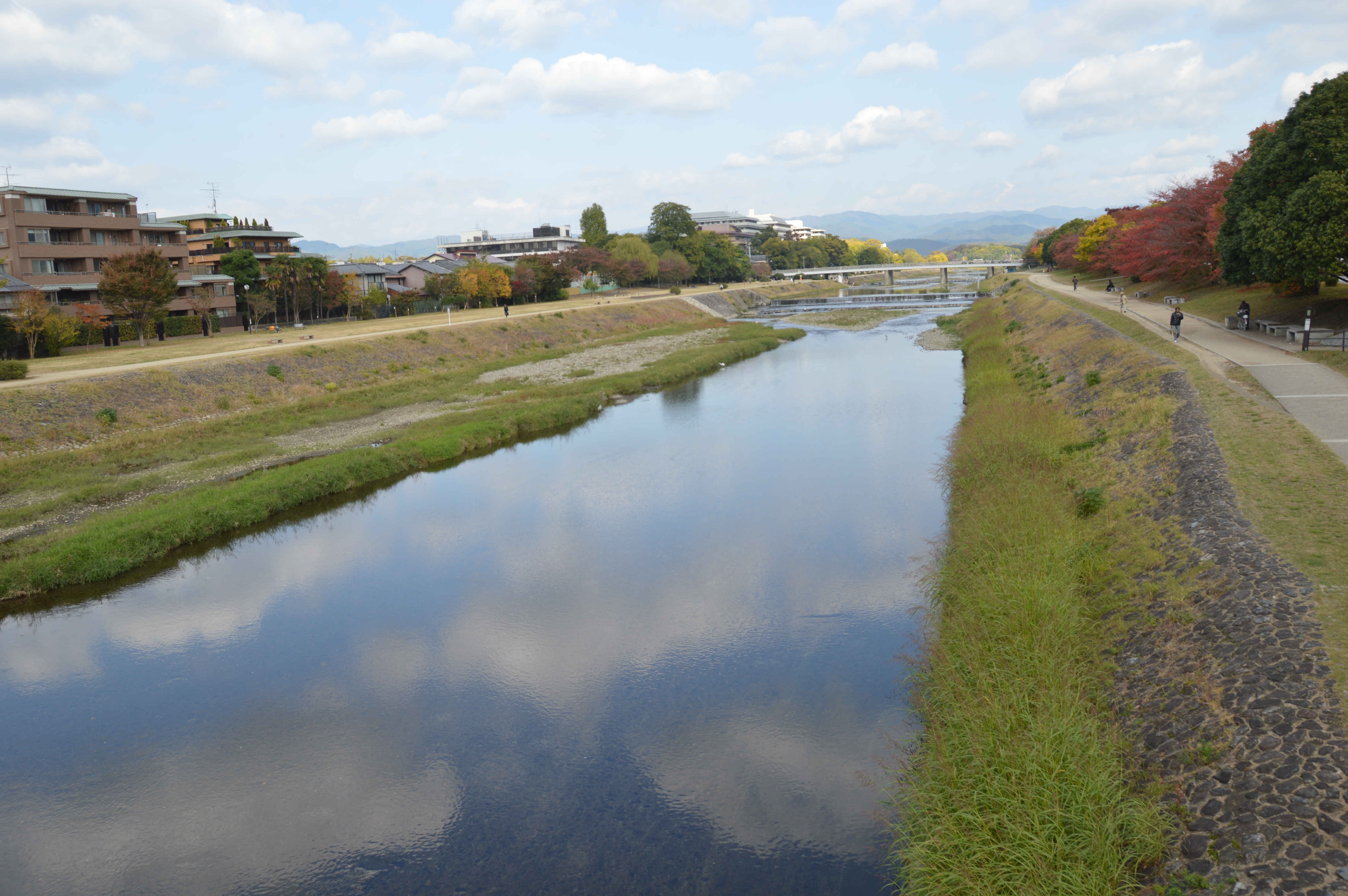
This is the Kamo River which flows through Kyoto. I took this shot because I liked the colours of the trees on the bank, and the reflection in the river of the clouds floating on a blue sky. I still like it for those reasons. However, I’ve found that, in the many years since I took this photo, that I’ve returned to it over and over again. I’ve used it to illustrate what I think are some of the most fundamental lessons of the universe.

On one bank you see trees, and a pathway running between the trees and the river. The trees are diverse. They are different species, different shapes, and different colours. For me they represent diversity and a “natural” habitat. You could argue they represent “wildness” – that universal force which continuously strives for growth, difference and diversity. It’s a “multiplicity”, not a “mono-culture”.

On the other bank you see houses, hotels and offices. This is the built environment. It is planned, constructed and ordered. Yes, I agree, the buildings are not all the same, and there is a saving grace in the Kyoto architecture. In some parts of other cities the buildings really are “cookie cutter” in their shape and construction. Let’s say this represents a second universal force – that which organises and builds.

Thomas Berry, in his “The Great Work”, describes these two forces beautifully and points out that an excess of “wildness” produces destruction, chaos and disorder….things can fall apart, whilst an excess of “discipline” produces too tight limits, narrow boundaries and a level of organisation which makes life impossible. I see this story represented in this photo.

Right down the middle of these two forces we see a calm, harmonious, “integrated”, flowing river. This is the “sweet spot”, that place where the interplay of these two great forces produces both Life and beauty. In this photo, there is even a bridge connecting the two. The bridge is a connector, and it’s through the creation of “mutually beneficial bonds between well differentiated parts” that we experience “integration”, harmony and growth.

You can think of a life journey sailing down this river, sometimes veering off towards more organisation, and sometimes off to the other bank to find diversity and wildness. As we navigate our way between these two opposites, we experience a full life, a rich life, a life of depth, meaning and purpose, a life of beauty and joy.

The final thing I’d say about the universal lesson I see in this photo is that it encourages us to appreciate the “whole”, not to judge one bank as “good” and the other as “bad”. After all, if we only had one bank, we wouldn’t have a river……we wouldn’t have a life.

Read Full Post »

One day, as I was walking to the railway station to go to work, I saw this little guy apparently checking out surfing! Ok, I know, it’s actually the stick from an ice lolly but, hey, to a snail, maybe that looks like a surf board? I paused to take a photo, smiled, then continued on my way to work. But this photo still makes me smile every time I look at it.

It reminds me of two of the most important things in life – slowing down and playing.

I emigrated from Scotland to France when I retired in 2014, and I now live in the Charente. This region of South West France has a snail as part of its logo. There is a strong culture here of slowing down, staying calm, and enjoying the everyday. Slowing down is what I had to do to take this photo. I was on my way to work, and for most of us, that’s something we do somewhat hurriedly. After all, I had a train to catch. However, stopping for a moment, getting my camera out of my bag and taking the photo, pulled me right out of my head full of “to do” lists and schedules, right back into the here and now. That’s what slowing down does. It gives us the opportunity to be present, and to savour the moment. It gives us the opportunity to pay attention to reality, right here and right now, instead of surfing across the face of life with our head in the clouds. It also prompts you to reflect and consider. I find that when I pause, or slow down, and notice what is around me, that whatever I’ve noticed lingers for a bit. It affects my mood for a bit. It stimulates a line of thought that I carry forward…..on that particular day, into the train, where I got out my notebook and jotted down some thoughts about the “slow movement” – “slow cities”, “slow food“, “slow medicine“.

The second thing is that this is just fun. It’s amusing to think of a snail taking up surfing. It’s about play. The neuroscientist, Panskepp, describes seven fundamental emotions we can find in many living creatures (including humans!). The three “negative” ones, are the ones we are all probably familiar with – Rage, Fear and Panic. Interestingly, though, he names four “positive” ones – Seeking, Care, Lust and Play. (read this interview with him in the “Journal of Play” – yes, there really is such a thing!) Play turns out to be a really important driving force, stimulating curiosity, experimentation, imagination and creativity.

You only need to spend a few minutes with a toddler to see how important play is. They press every button (yes, including your buttons!), as they explore what each object can do, and what they can do with each object. As they get a little older you see children totally absorbed in imaginary worlds….whether playing with toys, with found objects, or with other children. Give a child a piece of paper and some crayons or paint and they don’t stop to wonder if their art skills are up to the challenge of creating something, they just start to draw and to splash the colours around. How much do children like dressing up? Building spacecraft, houses, vehicles from cardboard boxes (thank you Amazon)? Play is absolutely fundamental. Pansepp has studied this in depth, and much of his work has been on the way animals play. He’s gone a long way to help us understand the importance of play and thank goodness for that, because otherwise we are likely to dismiss it as “childish”. It isn’t.

So, here’s my recommendation for this week – follow the surfing snail’s example – slow down and play a little!

Read Full Post »

I love this photo of a tree in winter. Without its leaves you can see how the tree has a classic structural pattern – a pattern which we call “branching” – no doubt in reference to where we see this most – in trees!

This is a pattern we see in many, many places. You can see how water runs down the mountainsides in small streams which gather together into larger streams, then rivers, until one big river makes its way down to the sea. You can also see it at the coast where rivers form an estuary. You see it in root structures under the ground, as well as in bushes and trees above ground. And, perhaps more for me because of my lifetime work as a doctor, you see this pattern throughout the human body – in our circulatory system, in our lymphatic system, in our urinary system, nervous system, our liver, and especially in our lungs.

So when I see an image like this I see something “universal” – something fundamental. It gives me a glimpse of some of the underlying structure of the world. And I find it beautiful. I love how seeing this in the tree brings to mind all those other locations – out in the countryside and within the human body – so that the single tree elicits a broader and deeper reality.

Mind you, we mustn’t get carried away and think that this is the only kind of structure we find in the universe. Of course it isn’t. It’s just one of THE main ones. Equally, or maybe even to a greater extent, we uncover the patterns of networks and webs.

And in those places where we find a beautiful merging of both of these core forms.

Deleuze and Guattari clarified this best for me when they described these two structures as “arboreal” and “rhizomal”.

Take a look around you and see where you can spot them. It’ll help you to become more aware of how often you use these structures when you think, and when you try to make sense of your world.

Read Full Post »

This pandemic is giving us a really clear experience of living within limits. We experience that as a series of constraints. It’s frustrating and uncomfortable. We want to be free, don’t we? Free to do whatever we want, whenever we want, without a care in the world.

Wouldn’t that be bliss?

But, wait, isn’t that kind of naive? Because there is no such thing as living without limits. We are never free to do absolutely anything we could imagine or desire. That’s a fantasy. Or even a delusion.

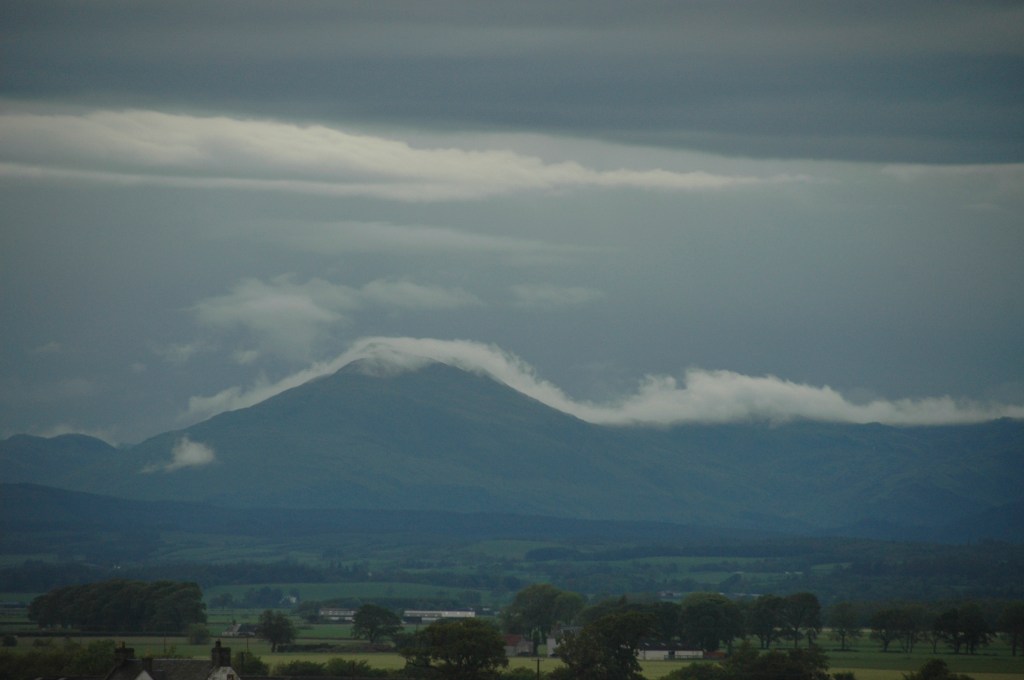
I found myself thinking that as I looked at this old photo of a thin layer of cloud hugging the contours of Ben Ledi.

I have just read “Ou suis-je?” by Bruno Latour where he describes some of the limits we live. One of those is what scientists call “the critical zone” – which is the space in which Life can exist. It’s an astonishingly narrow space. You can probe down into the Earth about ten kilometres and you’re down to rock where nothing lived, and you can soar up into Space about ten kilometres and beyond that the atmosphere becomes so thin nothing can live there.

The actual numbers aren’t that important. What is amazing is that all of Life exists within a very, very narrow zone. I don’t know if you’ve seen a photo of the Earth from Space which captures the thinness of the atmosphere. Let me find it for you.

There you are.

Well that’s the image which came to my mind as I looked at my photo of Ben Ledi.

We all live within these very narrow limits. We share, with every other living organism, this astonishingly thin “critical zone”.

The fact that living with limitations has become such an intense experience for so many during the pandemic has woken us up. We live in One interconnected world, a world of precious and limited resources. Now we have to learn to change the way we live – to change away from consumption and destruction to sustainability and creativity.

The pandemic has also shone a strong light on inequality showing us, perhaps more clearly than ever, that too many people are struggling to live with financial and social limitations which make them most vulnerable to serious illness and death.

So maybe now is a good time to think about the reality of living with limits and start to make the changes which increase the chances of better lives for more of us, rather than keeping our eyes closed and hoping for the impossible.

Read Full Post »

“Don’t draw attention to yourself!” “Keep your head down!” “Don’t stick out like a sore thumb!”

Social pressure to conform.

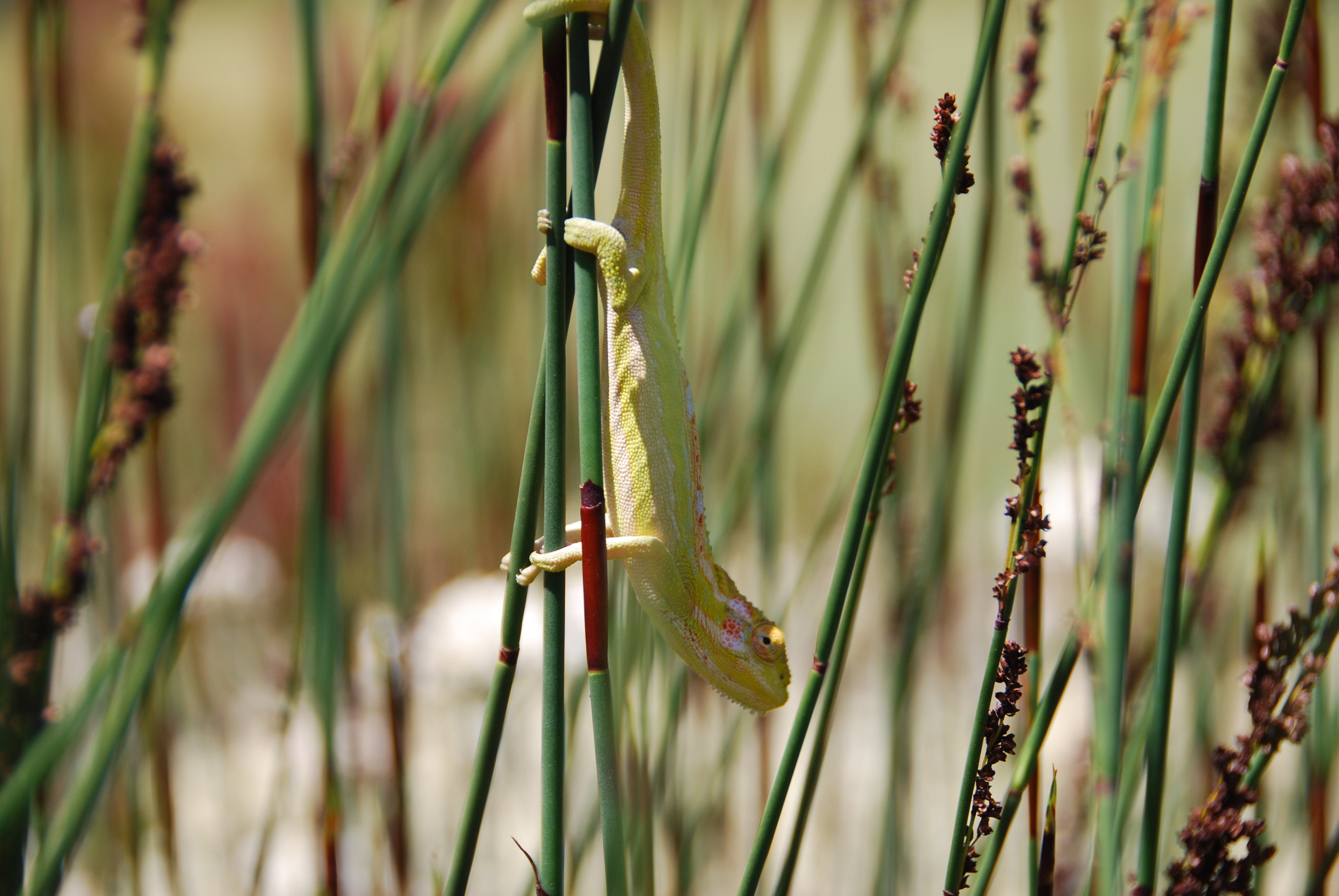
I bet you’ve heard a few of those instructions before. Or others which say pretty much the same thing. The basic idea is that to be safe you need to hide yourself away. Isn’t it a common experience at school that the kid who is really different gets picked on? You can see where all this advice comes from…..as this chameleon demonstrates, disappearing into your environment is a good way to avoid predators, and so stay alive!

But we aren’t chameleons. While there are real advantages to “fitting in” and conforming, every single one of us has a strong sense of Self, and deep feelings of uniqueness. There is, after all, nobody who is “just like you”. The truth is we need to do both – we need to function well socially, which means building healthy mutually beneficial relationships with others, and we also need to develop our autonomy and our self-expression.

The social powers of human beings are incredible, and, as a species, they are responsible for a lot of our survival and development….our success, if you like. But, equally, is there any greater diversity possible between members of the same species as their is between two humans? I’m not sure there is. We’ve evolved such complex nervous systems, such sophisticated bodies and brains. We have consciousness, imagination, language. We just can’t stop ourselves from co-creating and from expressing our uniqueness.

I wrote a book based on “and not or” because I think this is perhaps the most important characteristic we have – the ability to handle paradoxes. It’s built in. The cortex of the human brain is divided into two almost equal parts, with each part (hemisphere) engaging with the world in its own distinct way……the right seeking connections, the new, relationships and an understanding of the raw whole, whilst the left focuses, analyses, labels and categorises. One half giving priority to living relationships, the other most at home with objects and machines which can be measured and controlled.

It’s the same then with conformity and uniqueness. We do actually need both, because we need to be aware of our uniqueness and self-fulfillment involves fully expressing that uniqueness, and we equally need to form mutually beneficial relationships with others, which involves finding points of connection, shared values and desires, tolerance and respect.

Read Full Post »

When I look at this photo I think “This is what life feels like, and this is what life really is”.

What I mean is this – look at those bubbles (I’m going to guess that when you looked at this photo the first thing you noticed were the bubbles). Each one looks perfect, and perfectly separate from the rest. Each bubble is distinct, different in size, different in location, different in the exact way it reflects the light, and also, although you can’t see this in a still photo, each moving along its own distinct, and different path (there are hints of that in the flows of water currents which you can see creating that marbling effect between the bubbles).

We feel like this. Separate, distinct, different. We feel, and we are, unique. There are no two of us with identical characteristics, identical stories, living in exactly the same time and place having exactly the same experiences. We have a membrane which seems to separate us from the rest of the world. On the outside, that membrane is our skin. On the inside it’s mucous membranes lining our lungs, our digestive system and our urinogenital system. Inside, and within, that, is our immune system, a distributed network of cells and chemicals which recognise “foreign” substances and protect us from their potential harm.

But actually, we are not separate. Those membranes are porous. They are not impermeable. And that’s for a very important reason. They enable us to connect. They enable us to interact with others and with the rest of the planet. They enable us to ingest nutrients, inhale oxygen, expel waste materials and exhale carbon dioxide, amongst many other exchange processes. So, to see them as simple barriers or borders is wrong. They do distinguish what is “me” from what is “not me”, but they enable my life by enabling these, and multiple other connections and flows.

Look again at these bubbles. Where do they come from and where do they go? They emerge from the water itself, and they dissolve back into the water they emerged from. So do we. We emerge within the rest of this “natural” world, come into existence for a brief period of time, then we dissolve back into the great web of being from which we came. In the part between birth and death, that part we call life, we don’t disconnect from that great web. We live in communion with it. We live as part of it, not apart from it.

Life is flow – flow of molecules and chemicals, flow of energy, flow of information. Our existence is a delicate but distinct dynamic interplay of those flows, creating the appearance of separateness and difference, but never disconnecting from, or existing apart from, the whole.

Our lives are distinct and beautiful, but they are not separate.

Read Full Post »

Why do we open up? Why do we “unfurl”? As I wrote the other day, my word of the year is “épanouissement” – which means to flourish, to blossom, to fulfil – we follow that path by uncurling, unfolding, unfurling, just like these ferns. And why do we do that? Because, just like these ferns suggest – it enables us to connect.

Opening up, vastly increases our chances of making meaningful, healthy, nourishing connections. Closing down does the opposite.

There are times we need to enfold ourselves, to close down, curl up like a hedgehog for defence, but actually, much, much more, we need to do the opposite. Because without making connections we die.

We do not exist in isolation. Even if it feels like we are being asked to do exactly that during this pandemic, what we’ve discovered is that it isn’t possible. None of us can live without the vast world wide web of others…..without whom we wouldn’t have shelter, food, water, comfort or care. It’s the natural state of affairs – connectedness. And connections aren’t worth much unless they act as channels of exchange – of materials, energies and information.

When I look at this photo, I don’t just see two ferns unfurling, opening up, but I see two ferns touching gently, almost as if they are having their first kiss.

Isn’t this what we need to grow in our world? Not grow our consumption of “stuff”, nor grow our production of waste. We don’t need to grow our destruction of ecosystems. We’ve been doing that all too well. It’s time to change course, isn’t it? To grow our connections, our “integrated” connections – the ones which enable mutually beneficial relationships to thrive. We need to grow our capacity for care and creativity. We need to grow our passion for love, tolerance and acceptance. And to do all that we need to open both our minds and our hearts.

Read Full Post »

At one point in my career I flew to Tokyo to teach a number if times over a ten year period. I loved it. Japan was THE most different culture and society I had ever experienced at that point, and when you are somewhere so different from what you are used to, then you notice things which might otherwise have passed you by.

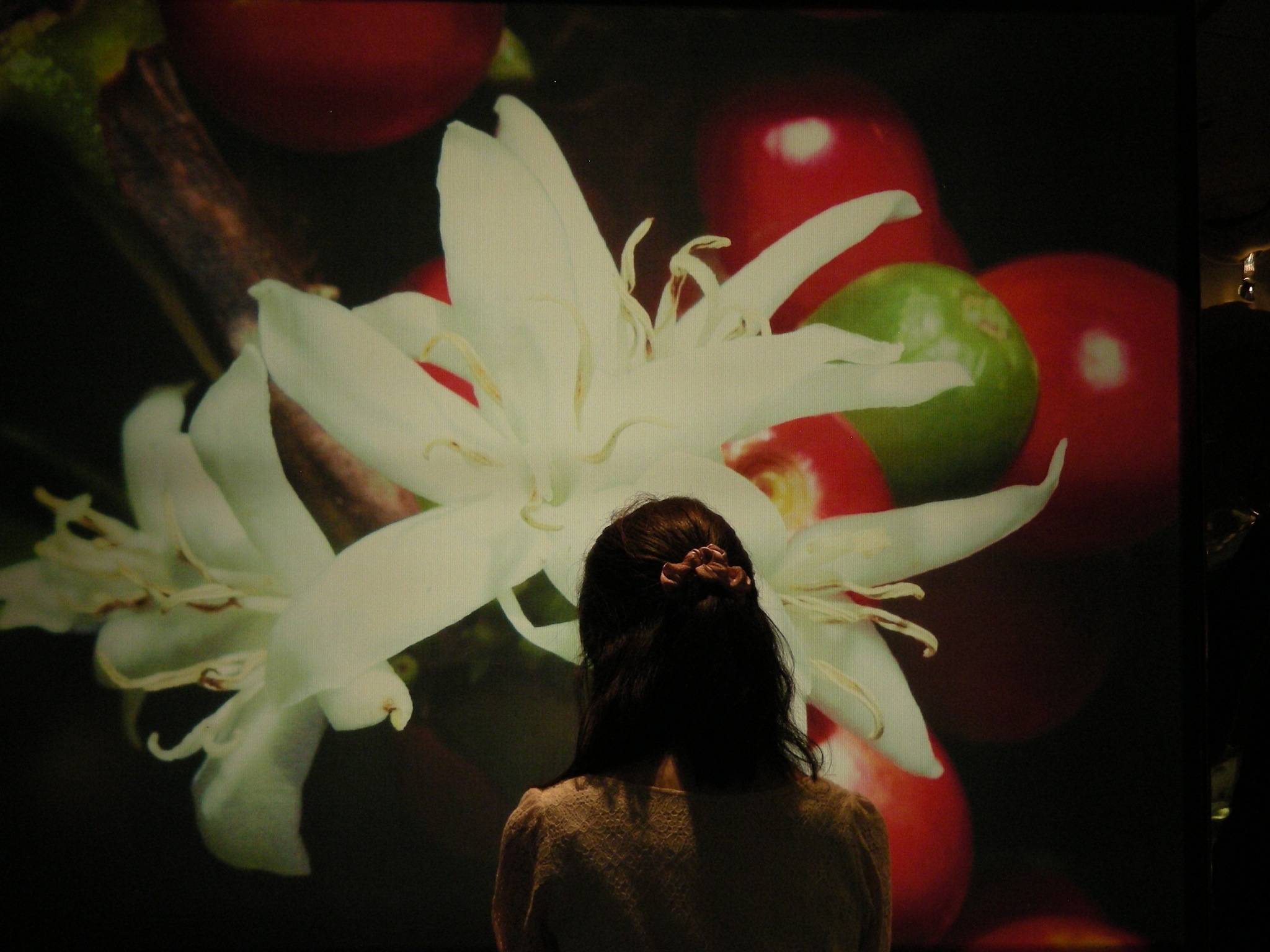
One morning I was in a coffee shop for breakfast and it struck me as strange that I, like pretty much everyone else in the shop, was sitting drinking my coffee alone. In fact I took this photo of a woman who was sitting on a bar stool facing a wall – I guessed that they had decorated the wall with such a lovey photo of a flower to make it more pleasing to sit there with your back to the rest of the room. I tended to seek out a seat next to a window, but it was a tiny coffee shop so there wasn’t much choice.

Now, as I look at this photo again, in the midst of this pandemic with coffee shops in France having been closed since October, it doesn’t seem so strange any more. I can imagine a new norm emerging where people choose to sit more separately than they used to. Maybe not, but it just seems that “normal” isn’t “normal” any more!

What will “normal” be like later this year, and into next year? I guess none of us know. But I do remember how odd it seemed to me that so many people went about their ordinary business in Tokyo wearing masks all the time, and I sure don’t see that as odd any more. Will that become part of our new norm? Here in France people have always had a degree of physical intimacy which was significantly beyond what I’d experienced in Scotland. The normal greeting would be to “faire la bise” – to kiss on both cheeks (for someone you knew anyway!) Well, that’s all gone. Will it return? Or will keeping a social distance become the “new normal”?

I genuinely don’t know. Part of me thinks this pandemic is changing us forever, and, after all, there is never any “going back” in life. But part of me also thinks that people will “revert to form” at the very first opportunity, and rapidly re-establish their pre-Covid habits and behaviours.

All that raises the question of what we are going to do collectively……how we are going to live together having gone through this experience. After all, a lot has become more obvious, not least how interconnected we are on this planet. The massive inequalities have become clearer. Is there political and Public will to tackle that? People who were pretty much disregarded have now been shown to be “essential workers” (which does get me wondering who the non-essential workers are……I’ll leave you to think about that one for yourself!). Will we change our priorities about Public Health and Social Care? Will we change the way we look after our elderly and vulnerable? Perhaps even more importantly will be turn against mass consumption and so called “growth” to put our efforts into tackling the big problems of climate change and loss of biodiversity which are probably at the root of the pandemic anyway?

There are plenty of reasons to hope that “normal” has changed, will change, and that we will not even attempt to hang on to the ways of living which got us into this mess in the first place.

Thank goodness “normal is not fixed”.

Read Full Post »

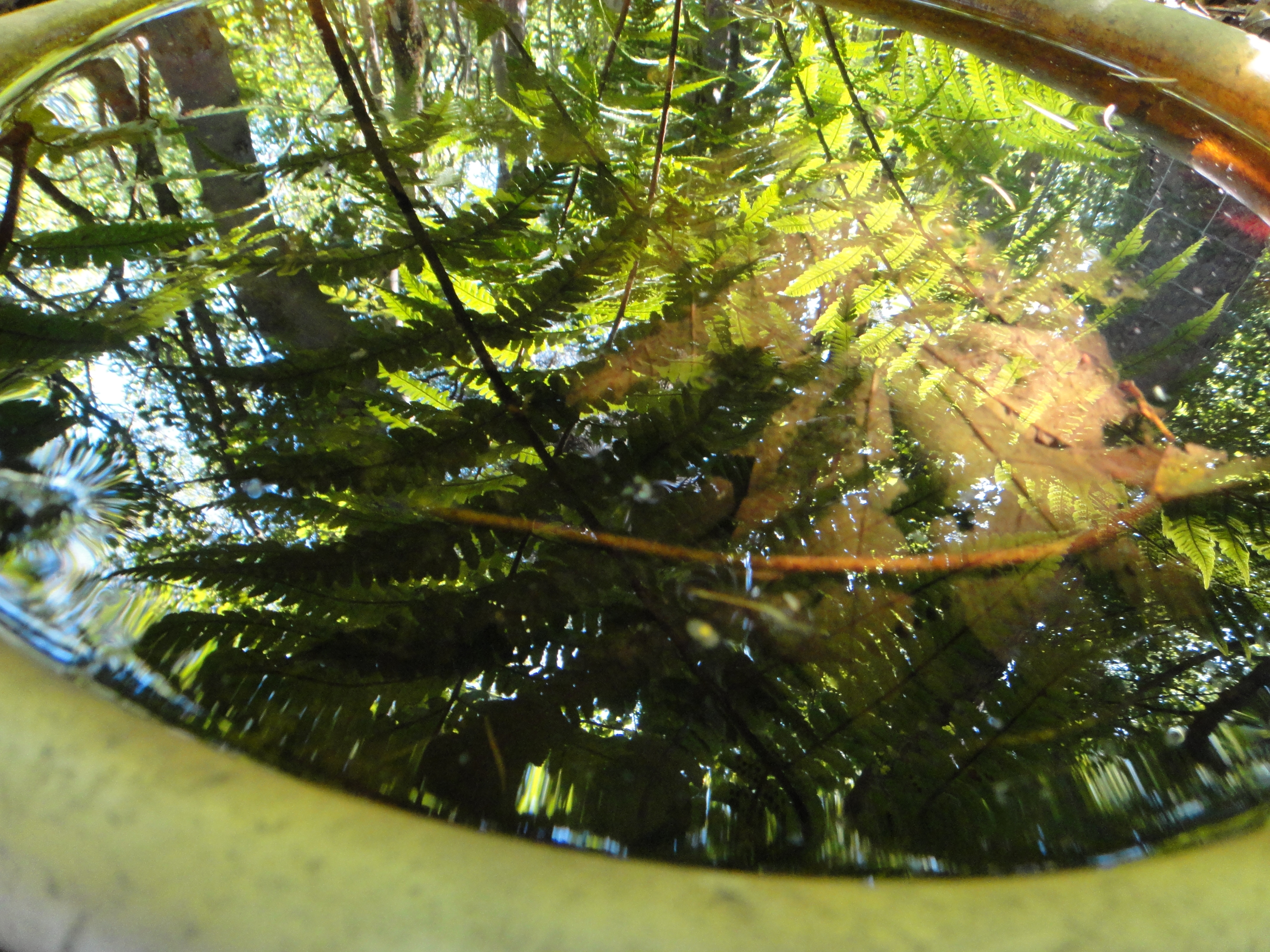
I have a fascination for reflections. I love to gaze into pools, ponds and fountains where the water is fairly still and you can see the world around you reflected on the surface. So, this is one of my favourite photos. I found this old stone basin full of water just sitting abandoned in a forest. I don’t know if the forest makes the image more magical for you, but it does for me.

As I gaze at this simple bowl of water I see the reflections of the trees and ferns which surround it, but I also immediately see fallen leaves lying below the surface….in other words I can both the living leaves and the dead leaves at the same time. That superposition strikes me as both interesting and beautiful. It’s as if I can see a snapshot of the past and the present in exactly the same moment, as if time itself collapses. Then I also notice the ripples on the surface of the water…..the water’s surface has its own shape. It’s not the same as a sheet of mirror glass. It’s moving, changing, dynamic. I’m sure if I had a microscope and sampled some of the water I’d find whole families of creatures in here, but with the naked eye, I see only the plant life and the water itself.

An image of Galadriel in Lord of the Rings gazing into her magical pool comes to my mind, and that layer of fantasy, of fiction, of story, just enriches the experience of the encounter.

I see green life everywhere and stand amazed at the abundance and diversity. I see the water itself as filled with life, filled with history and filled with potential……a memory bank, a lens and a crystal ball all rolled into one.

You know, I think one of the best ways to enrich our daily experiences is to see the connections, the threads, the traces, the reflections, echos, and to follow them for a bit. That way I don’t see a simple “object” but I encounter another aspect of manifest reality, a changing, particular, and unique aspect which involves me, the “subject” who is having the encounter. But that old “object”/”subject” split doesn’t satisfy me any more. It now seems that there really isn’t a clear division between objects and subjects in this universe. Rather that there are an infinite number of layers of connection, some of which appear as “objects” and others of which appear as “subjects”.

There really is nothing which exists in isolation.

Prove it to yourself by exploring some connections for yourself. Notice the threads, the roots, the knots, the intersections, the reflections……..I bet you find it an enriching, enchanting experience.

Read Full Post »

« Newer Posts - Older Posts »