Feeds:
Posts
Comments

Archive for the ‘personal growth’ Category

heart felt

In the A to Z of Becoming, T stands for Thanks.

I’ve written about the value of gratitude journals before (here it is if you want to click through)

It’s strange but I think the things we value most in life are not easy to have if we set off to go and get them.

I’m thinking of happiness, health and love for example.

If you decide to go and find any of those things today I suspect you might do a lot of looking but they aren’t so easy to find. You can’t go and buy them in a shop. And you can’t go and ask someone else for them.

What you can do is create the conditions which makes it more likely they will turn up in your life. I think there’s a number of things we can do to create such conditions – certain choices we can make, certain actions we can take, certain thoughts we can think.

But one of the ways is through gratitude.

I’m saying thank you to YOU today.

Thank you for stopping by.

Thank you for reading these words I write.

Thank you for looking at these photos I take.

Thank you, most of all, for being the unique you that you are, and for embracing this journey of “becoming not being”.

There.

Already I feel happy, healthy, and loving.

Your turn.


Read Full Post »

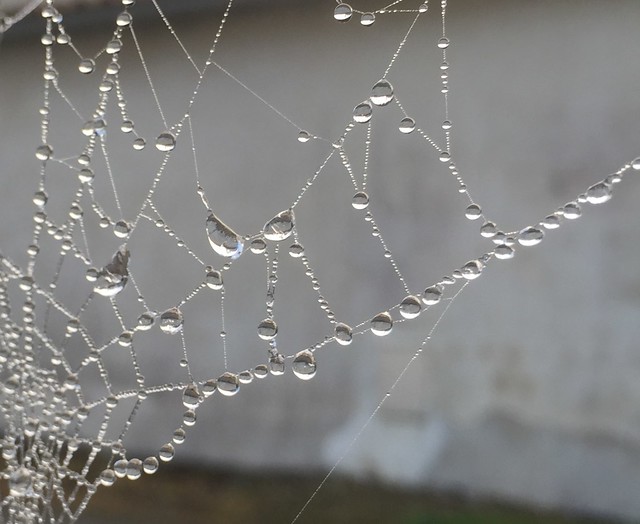
webdrops

beehive

Marx wrote –

A spider conducts operations that resemble those of a weaver, and a bee puts to shame many an architect in the construction of her cells. But what distinguishes the worst architect from the best of bees is this, that the architect raises his structure in imagination before he erects it in reality. At the end of every labour-process, we get a result that already existed in the imagination of the labourer at its commencement.

What I like most about that quote is the emphasis on the creative power of imagination.

Our imagination is one of our most incredible resources.

It would be a shame to use to to scare ourselves each day with fears instead of using it to dream and to help us achieve our hopes.

Read Full Post »

strawberries ripening

In my A to Z of Becoming, S stands for “Slow”.

This is one of my favourite verbs. I find the “slow movement” very appealing. I’ve no doubt that slowing down, taking your time, allows you to be more fully present and so, to more fully appreciate and enjoy the everyday.

Too often we find our lives are so full of…..what? Stuff, tasks, duties, distractions?? And time flies past so fast. But time, of course, isn’t something that exists outside of us, it’s an experience (as Bergson, I think, says with his idea of “duration”).

So, how to find a way to experience time differently? To find the ways to enjoy life more fully?

I’ve a tendency to look to Life, Nature, and the Body, when I want to learn something. And here’s what a strawberry teaches me.

This photo, taken recently, is of strawberry plants in my garden. Slowly, little strawberries began to appear. Slowly, they started to grow, and now, slowly they are turning red. Only one thing remains – to eat them – SLOWLY!

You can’t hurry a strawberry.

Why hurry anything else?

What a joy to watch the daily growth and ripening of these fruits.

And what a joy to pick them one at a time, enjoying just one each day as it comes to fruition, savouring it, a bite at a time.

What a joy to live, slowly.

Read Full Post »

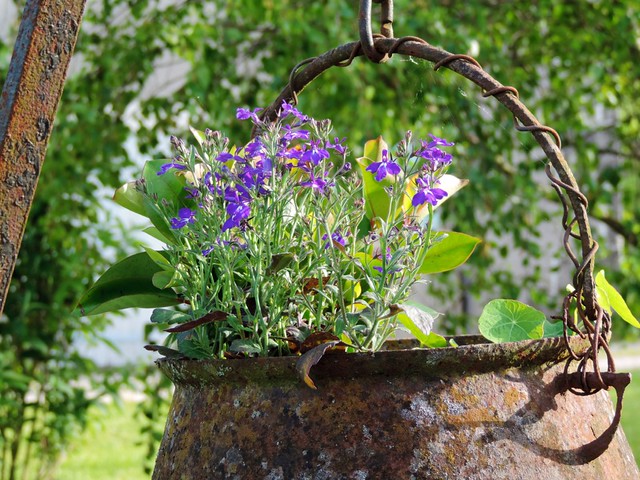
cauldron flowers

When you look at this photo you’ll see something living, the plants, and something “inanimate”, the cauldron. Some of you will also say you notice the sunlight and the shadows.

Every day these plants look different as they grow, flower, and, ultimately wither.

Every day the cauldron doesn’t look that different, but if we could see what it looked like on that first day when it was carried from the foundry to the shop, we’d see that it has changed a lot.

Everything changes. Just at different rates. Living organisms change rapidly, whilst inanimate objects change much more slowly, except for moments of catastrophic change where, for example, an object is broken.

We forget that, don’t we? That change isn’t optional, but the speed of change can be.

We are creators, we humans, and when we create we embrace change, we engage with it, we bring our imaginations to bear upon it, and so we make the world we live in.

“All power to the imagination”

Read Full Post »

sand pit

The world is different with you in it. It wouldn’t have been this way without you.

Each of is alive in this world, and living is a process of change.

Your breathing changes the air in the room where you are now. You breathe in oxygen, and breathe out carbon dioxide.

The heat of your body changes the temperature of the room and the temperature of the room changes your circulation, your consumption of energy and your expenditure of it.

Every action you take, every thought you have, changes the world you live in.

Sometimes we change the world quite consciously – as I did when I took the rake to the sand pit the other day.

But all the time, we are changing the world with our choices, our behaviours and just by living.

Each of us in unique. Every one of us lives in a different place and different time. Every one us thinks our own thoughts, has our ideas, tells our own unique story.

The world is different with you in it.

Read Full Post »

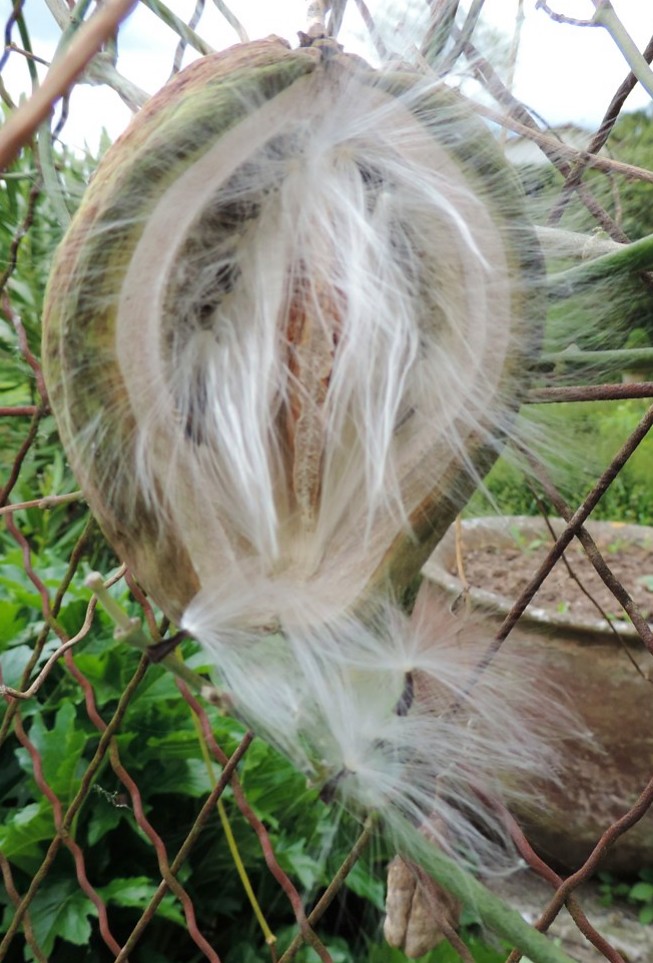
seeds

I’ve no idea what this is.

Some kind of seed head with soft, fluffy, fibres attached to the seeds so they will fly off in the wind, but I’ve never seen this actual plant before.

There’s something satisfying about naming things, isn’t there? We see a plant like this and instantly we want to say “what it is”. But it isn’t it’s name anyway.

It is what it is becoming…

And that’s what interests me even more than its name…..what does this seed grow into? So I collected a couple of them, and planted them in my garden. Will they grow into a plant? “On vera” (“We’ll see”)

Read Full Post »

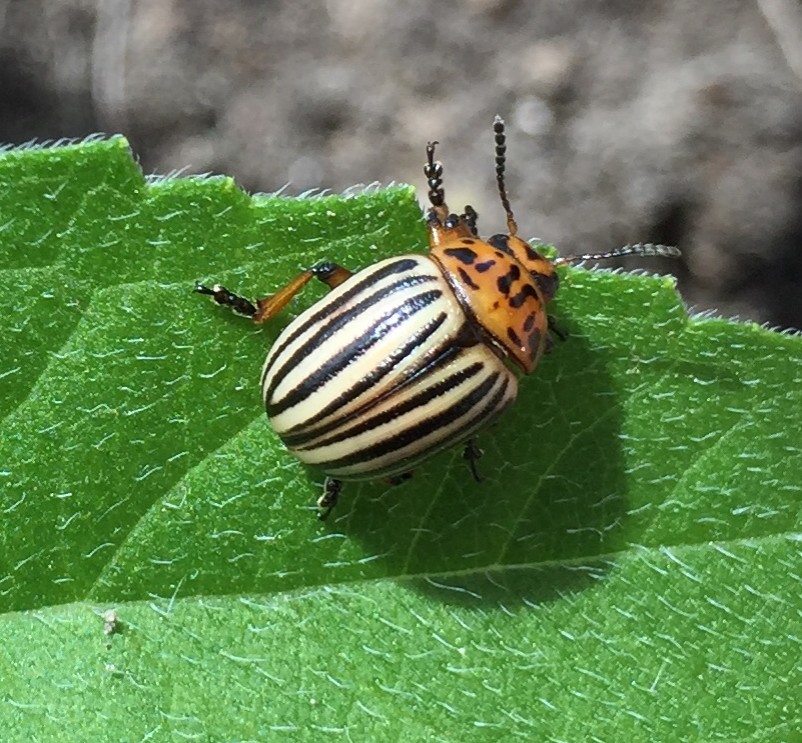
Beetle

Even when kneeling down pulling out weeds, turning over the soil, you can encounter something for the first time.

Look at this little beetle! What astonishing markings!

For me, it’s these little first time, unexpected, brief encounters which can really make a good day great.

I have no desire to catch, kill, or collect creatures like these, but to see them, be amazed by them, and to take a photograph – I like all that.

What little, unexpected but amazing encounter did you have today?

Read Full Post »

home herbs

In my A to Z of Becoming, I have two verbs for the letter “R” – reflect and relish.

Both reflecting and relishing have a part to play in deepening our experience of life. I think there’s a subtle difference in these two verbs which is revealed when we think of time – we reflect on what was. We reflect on what we did, what we thought, what we felt….at a particular time. We also reflect in the here an now, as in reflecting back to someone else what they have just said, but even in this “here and now” reflection is focused on what just happened. Isn’t it?

Relish, however, is very firmly focused on the here and now. Even if you decide to relish a memory, your relishing is still happening now – the focus of the experience is the re-living, or re-enjoying, whatever it was as you bring it back into the present.

Relish means to “enjoy greatly” (synonyms include – enjoy, delight in, love, like, adore, be pleased by, take pleasure in, rejoice in, appreciate, savour, revel in, luxuriate in, glory in)

To relish something involves intensifying the experience you are having, because to really “enjoy, delight in etc” you have to fully focus on it. So, let’s think for a moment about some of the qualities associated with relishing.

Presence. To really relish something, someone, or some experience, you have to turn up. You have to “be here now“, as Ram Daas said, and as Eckhart Tolle teaches in “The Power of Now“. Our minds often wander off into the past or the future, remembering something, worrying about something, planning something. Presence requires us to bring ourselves, and our attention into this moment. If you set out to relish something, that very intention will help you to be present….and being present will increase your relishing!

Awareness. A main theme of this blog is “heroes not zombies”. We live a lot on auto-pilot. To relish something we need to become aware of the sensations, feelings and thoughts which are being evoked. We need to be aware, awake, or “mindful”. My first encounter with awareness was in the book of the same title by Anthony De Mello (you can get a pdf of that book here). Mindfulness is the word made popular by Jon Kabat-Zinn. I found Dan Siegel, the founder of Interpersonal Neurobiology (IPNB), to be a really good teacher of mindfulness meditation. However you do it, whatever practice you follow, the key is to break the habits of non-awareness.

Open-ness. If you’ve already made you mind up about something, you’re not going to fully appreciate it in the here and now. If you think you’ve seen all there is to see, or know all there is to know, about something, your mind will have closed up. To really relish something you have to open your mind to the specific, the new and the amazing.

Gratitude. Finally, gratitude is a great partner to relishing. When we approach an experience with gratitude in our hearts, it sets us up to relish it. On the other hand, the practice of relishing something increases the gratitude we feel.

I know we often think of relish in the context of taste and food (I’ve even used a photograph here of the mint and chives near my front door), and food can be a good place to practice relishing, but if you go back and look at those synonyms for relish, I’m sure you’ll find a huge variety of targets for you practice on.

Ask yourself each morning this week when you wake up – what am I going to relish today?

Ask yourself each evening this week – what did I relish today?


Read Full Post »

Thistle in the vines

A thistle in the vineyard.

I stumbled across this thistle in the vineyard up behind the house in the Charente where I’m living now. I thought the symbolism captured something about this phase of my life.

When I retired from clinical practice last year, I sold my house and Scotland and moved to France.

I had the idea to move to France, having never lived anywhere other than Scotland throughout my whole life, because I thought if I put myself into a different culture, and worked to become fluent in the language of that culture, then I might stimulate my imagination and my creativity. I thought that it would also be good for my brain – a lot of people suggest that learning a second language is good for the brain at any age. I thought that moving to a more rural community in France would also allow me to enjoy food which was grown locally and available fresh in the markets. (Adopting the Michael Pollan Food Rules – Eat food. Not too much. Mostly plants) I thought it would enlarge and deepen my experience of the world.

It’s doing all that, and more.

Then today, I read a review of David Graeber’s “The Utopia of the Rules“, which really inspired me, so I set off to read more reviews, interviews and articles by this author. In one of the first pieces I read he quoted the following –

Putting yourself in new situations constantly is the only way to ensure that you make your decisions unencumbered by the nature of habit, law, custom or prejudice – and it’s up to you to create the situations

(It’s from “Crimethinc.” – an anarchist collective which says it is “in pursuit of a freer and more joyous world”.)

Well, wherever it’s form, it’s spot on!

Putting yourself in new situations constantly is certainly a way to move from zombie mode to hero mode.

David Graeber, by the way, is the man responsible for the slogan “We are the 99%”, and his book, “Debt: the first 5000 years” called for debt to be written off around the world.

What new situations do you plan to put yourself in, in the year ahead?

Read Full Post »

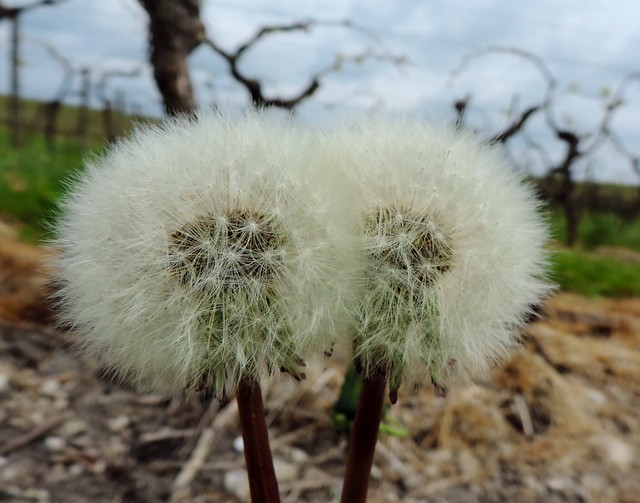
Twins dandelions

What might health care look like if we base it on the values which emerge out of a prioritisation of difference?

Uniqueness.

Whilst a knowledge of pathology and the natural history of diseases aid a good diagnosis, a focus on disease is not a focus on a person, or on health. Even when running a specialist clinic, such as an Asthma Clinic, every single patient who attends is unique. Their asthma symptoms will be specific to them – the circumstances where their asthma is most troublesome will be specific to them – the strategies they have found bring greatest ease will be specific to them – and, crucially, their narrative will be unique. Where asthma appeared in their lives, and when, will be part of that narrative. What impact it has made and how they have responded to that impact will be part of that narrative. How the asthma will progress will also be part of that narrative. This latter part is unknowable, as the future is always an emergent phenomenon in a complex living organism. It cannot be accurately predicted. Last, but not least, each individual has a personal world view created by their genes, their nurturing, their life experience, their connections to others and so on – everything which influences values, beliefs and attitudes. Understanding that world view will help the patient to make sense of the asthma in their life, and understanding that world view is essential in helping them to choose therapeutic interventions as well as adaptive strategies. Whatever the general, the shared, or the common, all the findings, test results and so on, need to be re-integrated into the context of this unique human being’s life.

Diversity

Because every patient is unique, the interventions which a particular patient finds beneficial will be specific to them. One-size-fits-all is a terrible approach to health care. Every single treatment protocol has an end point, and none of those end points can encompass benefit and a good outcome for each individual patient who goes through that protocol. So, what happens to the patients who make it all the way to the end of the protocol and are still suffering just as much? What does the doctor do with them? If we make only certain treatments available then there will always be patients who get no relief from their suffering. We need a diversity of treatment options, approaches and techniques available if we are to find the best, most effective treatment for every single patient.

Are protocols compatible with uniqueness and diversity? Can truly individualised health care be delivered by protocol? Can health care which actually relieves the suffering of every single patient be delivered by protocol? This might be extreme, but I’ve a feeling we should trash the protocols. Let’s get back to sound, clinical judgement which is flexible and focused ultimately on the needs of the individual who is in the consulting room here and now.

Tolerance

This goes with diversity. If there are a plurality of needs, and a plurality of solutions, with both being deeply affected by the world view of the individual, then we need to genuinely tolerate, in a non-judgemental way, those differences. There is no place in health care for rubbishing a patient’s experience and world view. Whose life is it anyway? Who is a professional to say that they know what the best life choices are for a patient? A professional should be caring, empathic, compassionate and supportive. Not judgemental, superior or authoritarian.

Integration

There is no such thing as a cure. Other than the cures which the body achieves. Human beings have the most incredible bodies. One way to think of a human body is to see it as a complex adaptive system. Complex adaptive systems have a number of characteristics but one of them is a self-healing capacity. The only healing which occurs in the natural repair, defence and growth of the living organism. It does this not least through integration – through the creation of mutually beneficial relationships between highly differentiated parts. All health care should be directed towards an increase in integration. Any treatment which impedes integration, impedes healing.

Flourishing

A lot of health care seems limited and disappointing to me. Sure, nobody wants to suffer, and a doctor’s duty is to relieve suffering. If we can do that by enabling a patient to get a handle on what’s happening, supporting them in the creation of a more meaningful narrative, whilst easing suffering and reducing difficult and limiting symptoms, then we are doing a good job. But is it enough? Is it enough to reduce the symptoms and stop there? Is it enough to support a patient through an acute illness but then stop when it comes to an end? Or if we really want HEALTH care, don’t we need to think beyond disease? Don’t we need to think about flourishing? About assisting an individual to grow, and, yes, to flourish – to feel well, to feel able to become whatever it is they have the potential to become?

If we begin to think about health in its fullest sense and in its greatest diversity, then we need to think beyond institutionalised health care systems. We need to think about what we can do to maximise the chances of people experiencing the best health they can – and that will take us into thinking about society, the environment, the economy, and indeed everything which is involved in creating the conditions for the health of human beings.

Read Full Post »

« Newer Posts - Older Posts »