Feeds:
Posts
Comments

Archive for the ‘philosophy’ Category

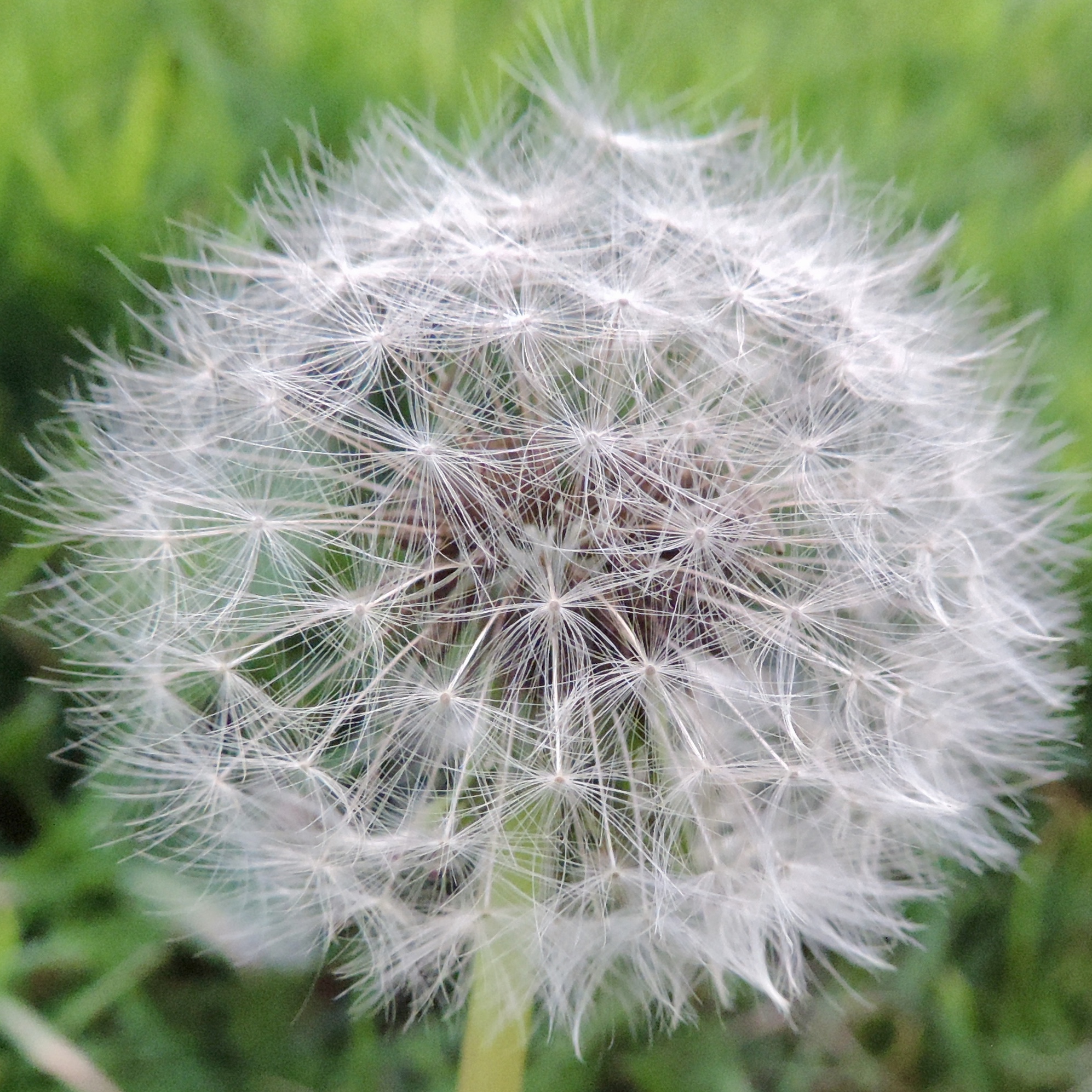
I know, you’ll have seen photos like this one many times. It’s almost a cliche. But, hold on, let’s just pause for a moment and take a closer look.

Plants which use wind dispersal of their seeds often produce a spherical display like this one. Even at first glance, they are beautiful, but once I stop to look closer, I can see each individual seed held on the end of its own delicate stalk and surrounded by a myriad of soft, fluffy, fibres, just waiting to catch to the wind. In that moment I am amazed. I am caught, the way the seeds hope to catch the wind. The delicacy, intricacy and complexity of this structure is actually quite mind boggling, but, still, it’s just part of normal life for a little plant like this.

I think we are apt to pass this by too easily. I think that when we stop, look more closely, and reflect on what we are looking at, we can’t help but be impressed by the creative power of plants, the creative power of Nature.

But I think something else now when I see a seed-head like this. Because this has been the year of the pandemic, of the rapid, global spread of a tiny virus, hopping from one human to the next, infecting millions, killing hundreds of thousands. If that hasn’t given us pause for thought to realise that we might live in a civilisation of nation states, but we share the one, small, utterly inter-connected planet, then I don’t know what will.

So, I see this little plant now, waiting for the wind to come and spread her seeds far and wide, and I am reminded of how Nature is One, and how we humans are neither separate from each other, nor from the rest of the living planet.

Aren’t we going to have to move on from the dominant mythologies of capitalist materialism? Don’t we realise now that we cannot dominate Nature, that we are not separate from Nature, and that if we want to survive and thrive we need to learn to live together by creating mutually beneficial bonds and relationships – do you remember that definition? It’s the definition of “integration”.

I think that’s the new story we need to learn, those are the new myths, beliefs and principles we have to adopt…..the ones which teach us about, and which promote, “integration”.

My actions are like these seeds.

My words are like these seeds.

My thoughts are like these seeds.

They are going to spread far and wide, and so are yours. That’s just how it is. So maybe I should consciously choose the actions, words and thoughts which will spread “integration”, will spread kindness, will seed happiness, love and joy….wouldn’t that be something?
Read Full Post »

I’ve long since been drawn to Romanticism. I feel they bring some extra, something deeper, something substantial to the dominant perspectives of the rationalist Enlightenment thinkers. It’s a funny thing, because in many ways I think I’ve lived with a foot in both camps. I trained in Medicine, practised as a General Practitioner for the first half of my career, then as a Specialist in what we came to call “Integrative Care” for the second half. That second half move was enabled by my training in Homeopathy which gave me a different framework to understand individual health and illness, as well as a set of therapeutic tools. We specialised in the care of people with long term conditions at the “NHS Centre for Integrative Care” in Glasgow, with the majority of our patients coming to us for help when they felt orthodox care wasn’t helping them enough. But we had a foot in both camps there, because our hospital was embedded within the Scottish NHS and we had access to all the tools, specialist help and advice of all that orthodox care could offer.

What does that have to do with Romanticism? I’m not sure, but I’ve recently been inspired to explore the Romantics in more depth, because I heard an interview with Eugene McCarraher about his new book, “The Enchantments of Mammon“. He talked a lot about the Romantics and I remembered that Iain McGilchrist had written about them too, so I picked “The Master and His Emissary” off my “most significant books bookshelf” (yes, I do really have such a shelf in my bookcase!), and yesterday sat down to re-read his chapter on Romanticism. One of the first lines in that chapter is

As always it was the clashes of theory with experience that showed up the cracks in the edifice of rationalism.

Well, that’s it in a nutshell……it was the “cracks in the edifice of rationalism” which opened the door to my enlarging my Practice to include a focus on the qualitative, and the “unmeasurable”. And, boy, was that a set of “clashes of theory with experience”!

Then this

Differences are as important as generalities

Now, this must be what became THE foundation stone of my Practice as a doctor. It still makes me a mixture of sad and annoyed when Medicine is conducted as if generalities trump differences every time. There continues to be a real struggle for individuals to have their stories heard and believed, especially when they don’t fit with either “generalities” or “theory”.

The idea of individual difference is central to romanticism

Well, if that is true, then I need to know more about romanticism, because the importance and the inescapable reality of individual difference lies at the heart of my life values.

What’s all this got to do with the photo I’m sharing today? Well, I just read this line

The Romantics perceived that one might learn more from half-light than light

OK, I’ve taken it out of the context of the rest of the chapter but Iain is arguing that a difference between the left and right hemispheres is that the left wants certainty, clarity and exactness, where the right is more interested in the whole, in the synthesis of opposites, in the distance between where we are and where we can almost see.

There’s real beauty here. There’s mystery and enchantment. There’s wonder and amazement. Well, I just love all of that.

Read Full Post »

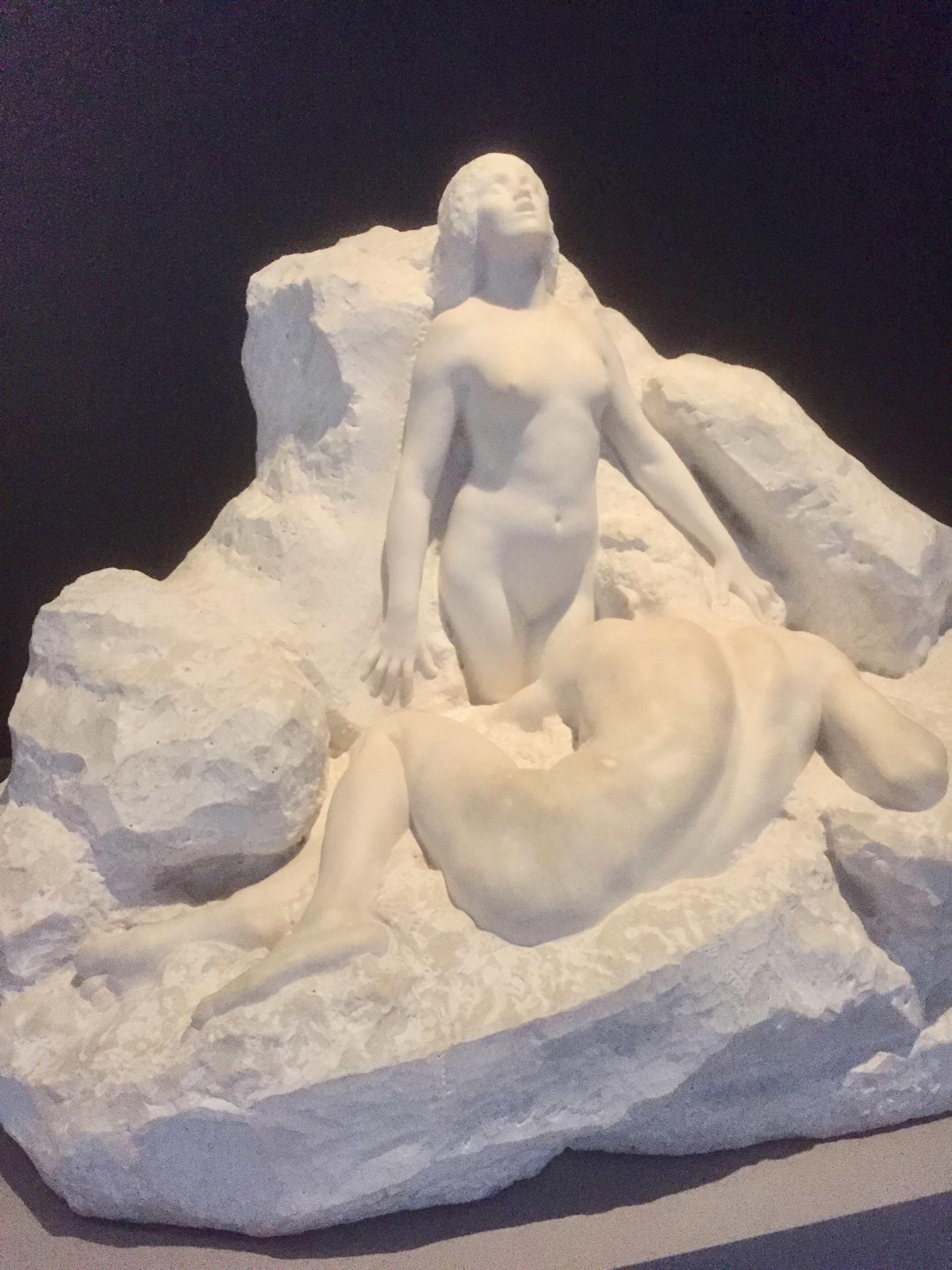
This sculpture in the Glyptotek Museum in Copenhagen is called “Creation Fantasy”, and it’s by a Norwegian-Danish sculptor called Stephan Abel Sinding.

It reminds me of some of Rodin’s work, not least the “Hand of God“, which is one of my most favourite of Rodin’s works.

I love how the male and female bodies are emerging from, but are not separate from, the rock. It think this captures a deep truth – that we are not separate from the Earth, not separate from “Nature”, not separate from each other. But instead we emerge within all that exists, and we remain forever, embedded in everything. I think one of the most pernicious beliefs human beings have adopted is the notion that we humans are “apart from” not “a part of” Nature, that Nature is something “out there”, maybe even something to go and visit from time to time. Worse still, that The Earth and all that “out there” Nature is a resource to be plundered, consumed, polluted at will, as if none of that activity will affect “us”, we humans, because we are outside of Nature.

I hope we are beginning to move away from that terrible misconception. I hope we are beginning to KNOW that we emerge within Nature, and that we live inextricably within all that exists.

It reminds of me of the “Universe Story” – which tells how all the elements of the Periodic Table were created in the giant furnaces of stars throughout the universe, and how once the Earth was formed, all the elements which had been created in distant stars were gathered together, almost like being dealt a hand in cards. How every material substance which has ever existed on Earth has been made from those initial elements. The Earth doesn’t create new elements. She transforms what she has into every molecule, every cell, every organism, every substance which we find on our one small blue planet.

This sculpture makes me think of something else – the relationship we have between men and women. It seems to me we need to learn from sculptures like this one. For far too long we’ve built civilisations and societies on the basis of male dominance. It’s well past time to redress that imbalance and create more loving, more respectful, more mutually nurturing relationships between the sexes.

So, there’s my “Creation Fantasy” – that we are called to live by – that we humans emerge within Nature on this single planet, and that men should not dominate women.

Read Full Post »

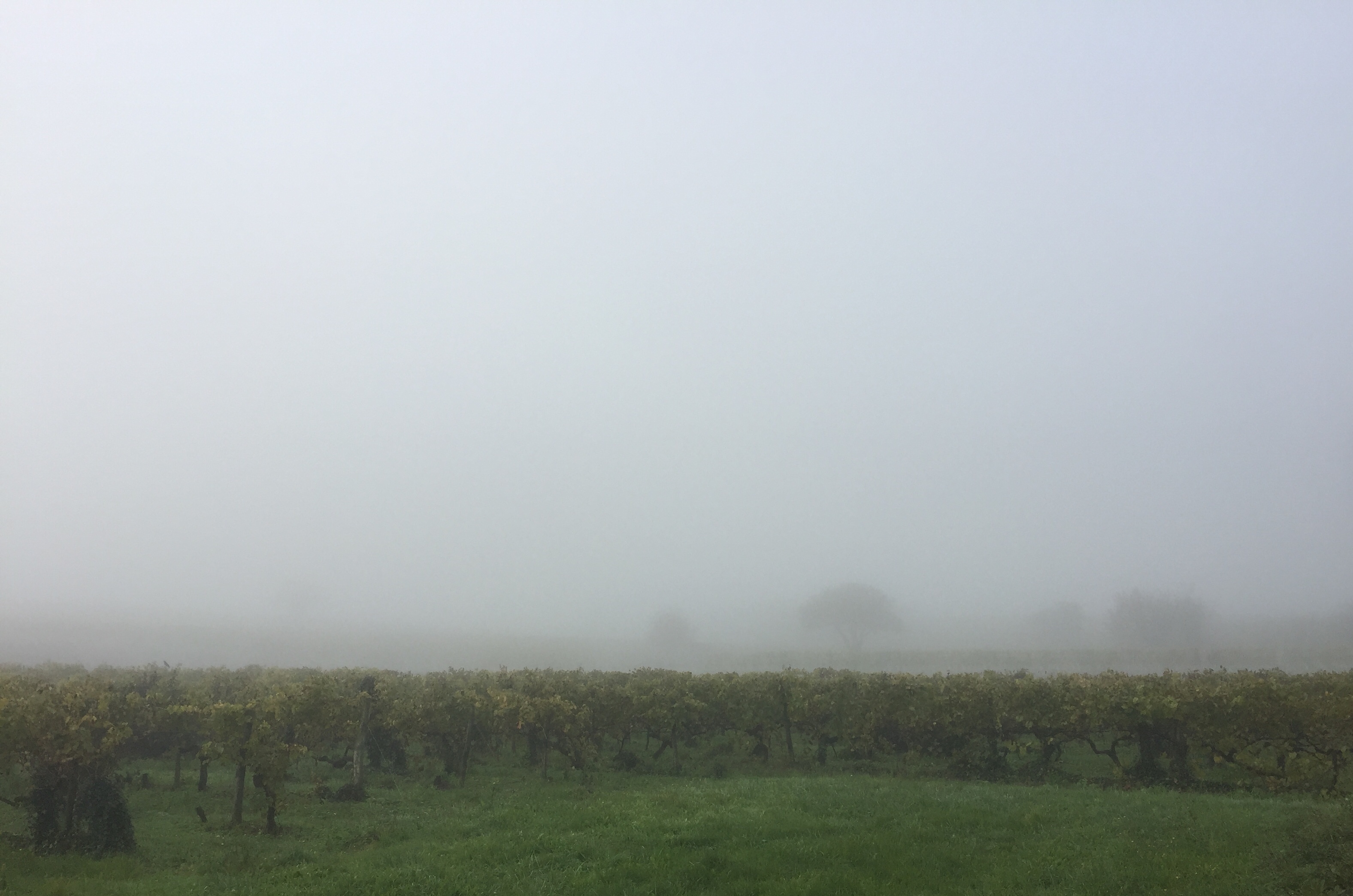
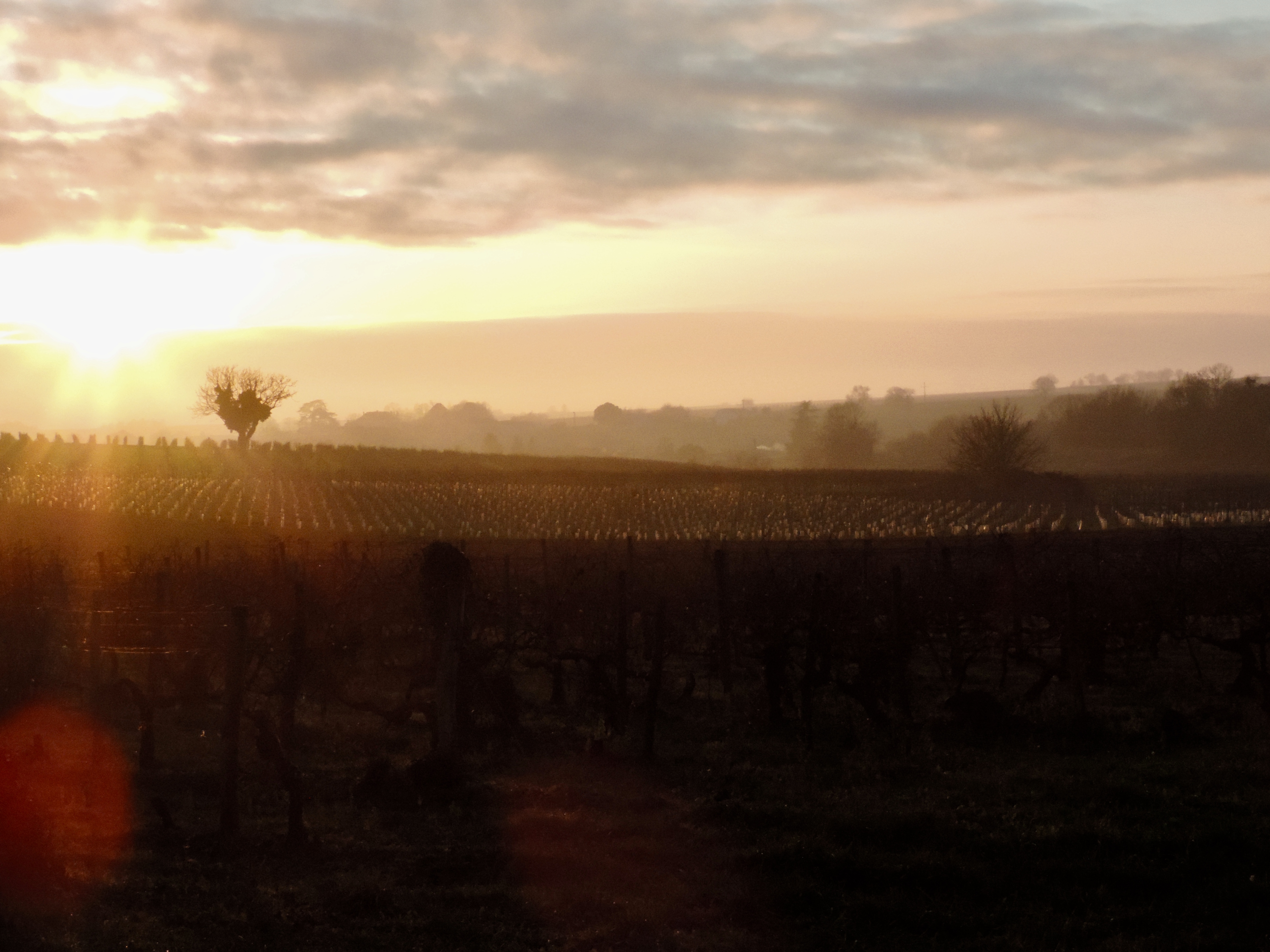
This time of year it’s not uncommon to wake up and find that the vineyards have disappeared. They are hidden in dense morning mist. Just like in this photo here.

I can almost see some of the trees. I can see the nearest vineyard but I know there are several others beyond this one. I can’t see the next village.

The fog brings the horizon much closer. I can only see what is close to me. I’m reminded of a passage by the late, great John O’Donohue –

Today the light is very low so the fog is covering the mountains. When the fog is there, half of them are missing. But, in some sense, that is the duty of the imagination: to help us connect with that which is invisible but is actually very close.

What a great reminder that we need our imagination to “help us connect with that which is invisible but is actually very close”.

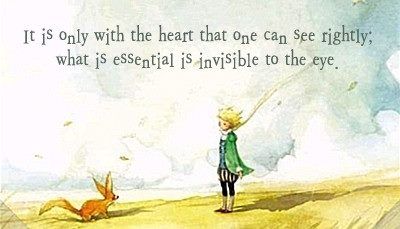
How do we see the invisible? Well, Saint-Exupery told us

Read Full Post »

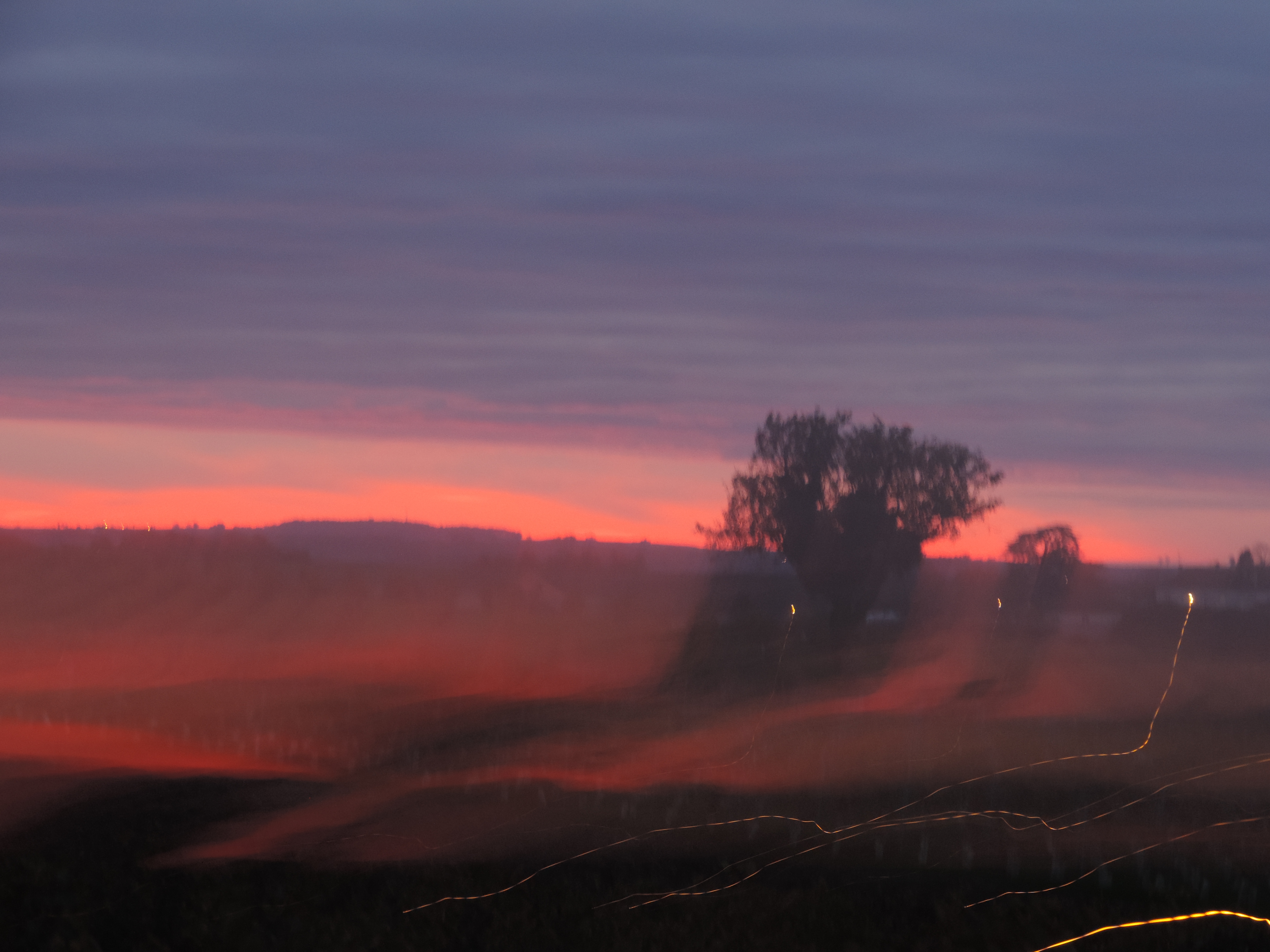
I took this photo of a sunset with a long exposure time and my hand moved a bit but when I looked at the result I really liked it.

OK, it’s obviously not exactly what I saw as I looked out over the vineyards that evening. In fact, it’s almost more like a water colour painting than an exact representation of what I could see with my eyes. But don’t you think that makes it, somehow, all the more appealing?

We have a tendency to prefer clear boundaries, to be able to pick out an object or an individual as separate from all the others, in order to recognise them, to name them. This recognition and categorisation skill takes us a long way. Such a long way that we tend to forget the power of fuzziness, the reality of uncertainty, and the unavoidable fact of dynamic change.

Nothing exists in isolation. Everything changes all the time. The future is unpredictable with any accuracy when we pay attention to the details, to the unique and to the individual.

Seeing how everything flows into everything else, how there are streams of substances, energies and information flowing through us and everything else constantly, streams which form us, which we process, which flow through us on into the future and into other beings and other objects.

We need that skill too. That ability to shift our perspective away from labelling and categorising to flows, to connections, relationships and uniqueness.

Maybe that’s why I find this image so beautiful. Because reality can’t be fully understood as made up of separate “bits”.

Read Full Post »

I’m convinced the images we encounter daily influence what we feel, what we think and how we behave. In fact, I don’t just mean images such as artworks, adverts or photos. I mean how things look – including the shapes and sizes of buildings, the presence of trees, flowers and bushes, the colours of walls, the landscape or the cityscape, depending on where we live, and the decor, light and shapes of the rooms we live in, as well as the objects which surround us.

All of these images influence us deeply, and, largely unconsciously, creating moods, emotions and feelings which stimulate or inhibit well-being, and which change the course of our lives.

One dramatic example of that is in hospital design. There is a lot of research about this, but, to give one example, it was found that patients who had a view of nature from their hospital bed recovered more quickly, needed less painkillers, and had less complications than those who only had a view of a wall.

Of course the advertising industry is well aware of the power of the image. These days there is even a specialist area of knowledge and advised described as “neuro-marketing” which seeks to employ the findings from neuroscience to persuade customers to buy certain products. These things work at the level of image, sound and smell. Mostly, they work unconsciously.

So, I think it’s good to notice our here and now, our everyday reality. I think it’s good to be aware of the images we absorb as we work, play and relax in our home and shared environments.

Taking photos is a good way to become aware. When you look around, or go out somewhere with a conscious intention of photographing what you notice, then your awareness is automatically heightened. These days most of us have smartphones which are more than ably equipped to take photos. You don’t have to have a fancy camera.

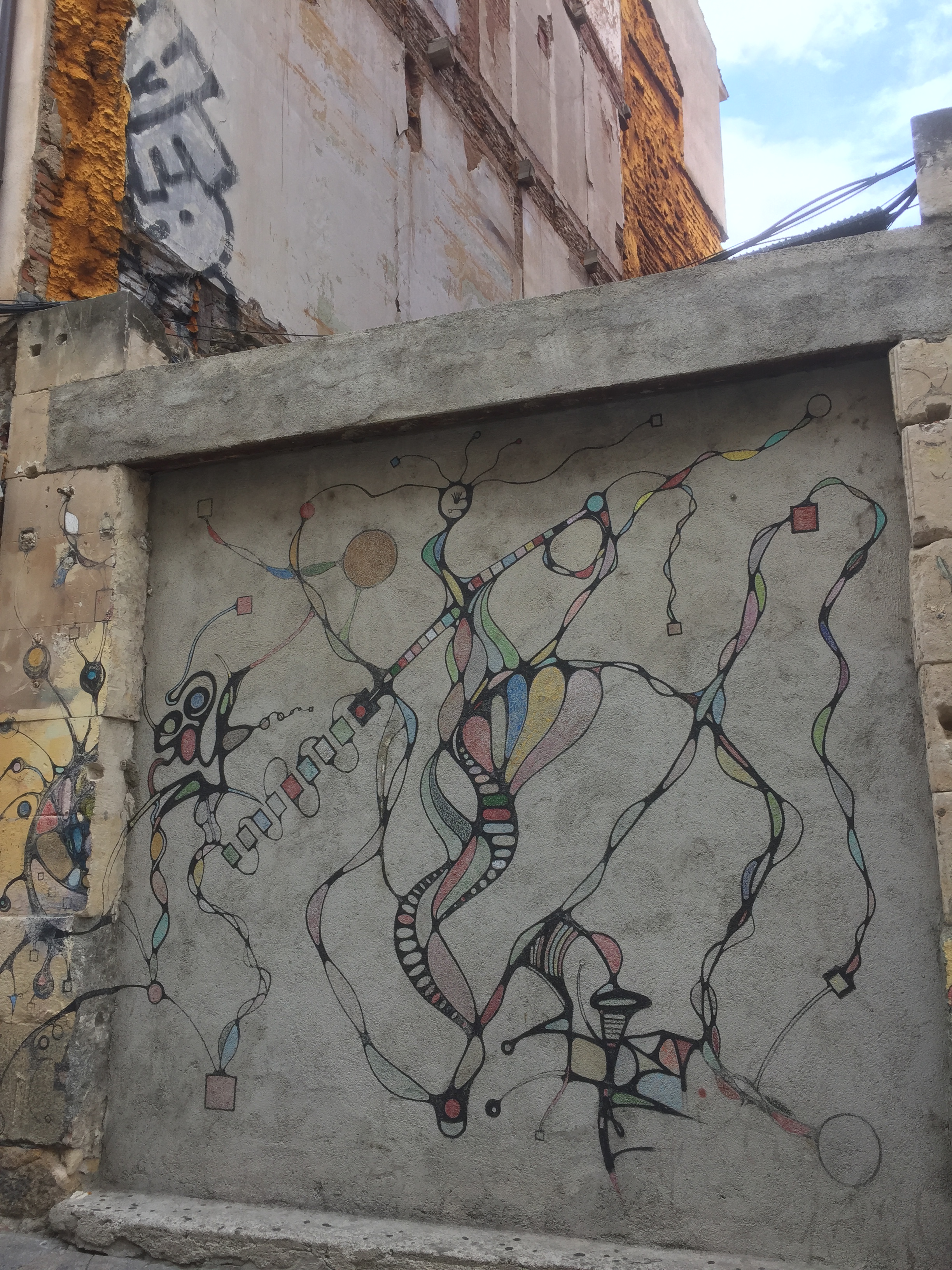
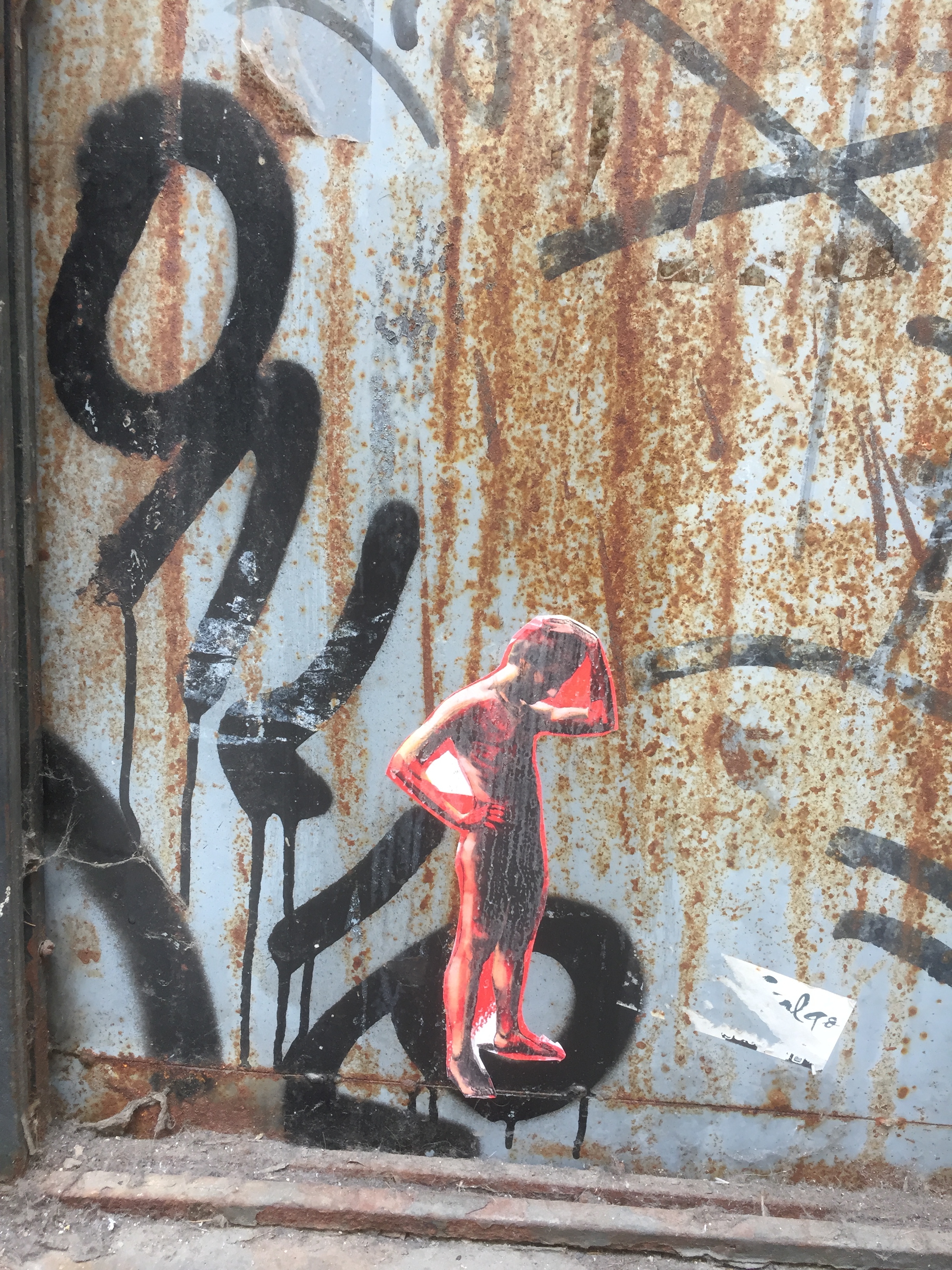
These two photos I’m sharing today are of street art I noticed as I walked around the streets of Salamanca one day last year. The image on the left is like a work of modern art. It looks a bit “Miro” to me! What I really notice about it is how the artist has used the walled off entrance as a frame, using the concrete filling the space as a canvas, but, he or she hasn’t stopped there. They’ve spread their artwork beyond the bounds of that frame….reaching out to cover the left hand pillar. I like that. I like how it demonstrates how creativity can be opportunistic, inspired by what is already there (the walled-in entrance way), and how that inspiration can come from the most unlikely places. Would you have thought that entrance way represented a canvas? I like how the artist isn’t bound by that either. How they kept creating outside of the frame – thinking and creating “outside of the box”. This work inspires me to be creative, to see opportunities for creative work, and to refuse to be constrained by other people’s frames.

The second photo shows the power of stencil. I mean just look at this person holding their head. Are they in despair, or are they trying to figure something out? I can see both. So it’s an image of hopelessness which reflects something we all feel from time to time, but, instantly, it’s also an image of someone thinking, someone deep in thought, trying to come up with a solution. At least, that’s what I see there. How about you?

I know, with every interpretation we bring our own standpoint, our own sets of values and beliefs, our own moods and preoccupations. But that’s one of the great things about art, isn’t it? It isn’t just the power of the work to convey “percept and affect” (as Deleuze would say). It offers us the chance to wake up and change by engaging with it. And even if we don’t wake it, it influences us without us realising. It interacts with us, and we interact with it. It’s a relationship.

Read Full Post »

Picking up on yesterday’s post about threads and weaving life stories, I thought I’d share this photo I took in an old weaving factory in Aubusson. Isn’t this a fabulous stock of yarns? Look at the colours!

Probably because I was thinking about the metaphor of threads and weaving in the way we create our reality through our stories, I looked at this image again today and thought “Well, that’s what they have to work with. That store of colours and shades” So what if we think about how that idea might apply to how we create our daily experiences?

What is there in your palette? What can you select to weave together to create your unique, singular experience of today?

What if these yarns are like beliefs, ideas, thoughts and emotions? Which ones do we have to draw on, and which do we keep going back to, perhaps over-using, when we could be shifting our attention and using a different section of the palette if we want today to be really different?

I remember reading about a theory, which seemed to be validated by studies and observations, that when a baby is born, at the moment when the umbilical cord is cut, they experience their first existential threat. In those first few seconds if the baby doesn’t take their first breath, they won’t live. Perhaps, in those few seconds, the baby experiences certain strong emotions. We don’t have access to those memories because in our early years, our consciousness and memory functions haven’t formed to allow us to access them, but that doesn’t mean to say they aren’t happening, all the same. After all, most emotions occur below the level of consciousness, and becoming aware of them takes time, attention and practice.

So, what emotions might a baby experience in the midst of this first existential crisis? The theory proposes three – fear, anger or separation anxiety. Makes sense to me. So, the idea is that maybe which of the three dominates is genetically determined, but, whether it is or not, that particular pattern of those three emotions sets itself up as a core as we continue through life and try to make sense of our experiences.

So, some people have fear at the core, and that’s the main colour they use in their daily palette. For others, it is anger, and for yet others it is separation anxiety. You can try this for yourself. See if you can think back to your very earliest memory. Preferably one form before the age of five, from before you started school. When you recall that event, what emotions do you associate with it? Is it fear, anger or separation anxiety? I found with patients that some would identify one of these very clearly, some would identify a mix, or find more than one strong early memory, each with a different dominant emotion. Others would find none. They either couldn’t access any early memories at all, or they wouldn’t be able to say which emotions they associated with any they could remember.

For people who can find one, it is interesting to then follow that thread through life. To what extent does that emotion seem a foundation to other significant life events? Remember that with each emotion, we might suppress it, express it, or deal with in some hybrid way. So, if it is fear, then both fear and courage might appear. If it’s anger, both temper and avoidance of conflict might appear. And so on…..

Well, that’s one way to start to think about what palette you have, and what section of the palette you draw upon most frequently to create your daily reality.

You can also become aware of your dominant emotions, thoughts and beliefs by journaling….for example by doing “morning pages”. In fact, there are many ways to become aware of our habitual patterns of emotion, thought and belief.

I think it’s good to explore this, but we can take it a stage further by deliberately choosing certain part of the palette, or even adding new sections. We can decide we want to colour each day with more joy, more wonder, more love. We can decide we want to see each day through more half full glasses than half empty ones. We can do that with affirmations, with visualisations, with making more conscious choices about where to focus our attention, our time and our energies.

But all that is maybe for another day. Today, I’m just suggesting an exercise in awareness. Can you become more aware of what your personal palette looks like? Can you become more aware of which sections of that palette you keep going back to again, and again, and again? Finally, which underused sections of your palette would you like to pay more attention to? Or as you look at the vast range available, which colours of yarn would you like to add now?

Read Full Post »

How much do you think love motivates you to do what you do, to say what you say, to think what you think?

Are there serious arguments against making love our priority, our touchstone, our foundation, our core?

What couldn’t be improved by bringing a loving attitude to bear?

I think good health care requires love….love in the form of caring about, caring for, and wanting the best for, every patient. Love in the form of non-judgemental listening and attending. Love in the form of respect for the unique individual. Love which values personal relationships above techniques, tools and processes.

I think good education requires love…..love for children, love for knowledge, love for wisdom, love for growth, development and maturity. Actually, education isn’t something we should restrict to children, we could all do with learning all our lives. We could all benefit from life long education based on loving each person and wanting to try to help them realise their potentials.

I think good work requires love….love for craft, for skill, for quality, for service to our fellow workers, our families and our communities.

So how about a politics of love and an economics of love ….. love of Nature, of Planet Earth, of our fellow creatures, and of other people? What would that look like?

Maybe it’s time for us to be less shy about love. Maybe it’s time for us to speak up and say it’s important. More than important….essential.

Can we learn from this pandemic and move towards a society based more on creativity and care, than the present model which is based on consumption and competition? Can we move towards a society based more on qualities than on quantities, challenging the current dominance of figures, statistics and “data”, and insisting instead on loving, caring relationships, on experiences, on individual uniqueness, and on diversity?

I’d like to see that. How about you?

Read Full Post »

This is a machine. It is manufactured by human beings. It has a number of solid, pretty unchanging parts (ok, they all gradually wear out with use), which are assembled into fixed relationships with each other by other parts…. nuts, bolts, springs, cogs and hinges.

These parts don’t grow. They don’t develop or mature. They don’t develop new ways of connecting to each other and they don’t change their function. Their relationships are linear. A always leads to B.

This machine looks a bit complicated but everything can be taken to pieces and understood. We can learn how it works and predict how it is going to work. It does what it was designed to do and if it stops doing that we can find the parts which are “defective” and replace them with new parts.

Living creatures are not like this. Human beings are not like this. We are not manufactured by human beings. Every cell, every tissue, every organ within the body changes all the time. The massive network of inter-connected feedback loops create relationships in the human body between cells, tissues and organs. These relationships are non-linear. A influences B in the presence C, D, and a host of others, whilst B, in turn influences A. These relationships are not fixed. They are not predictable.

Living creatures, like human beings, are “Complex” not “Complicated”. You can’t take them to pieces and understand the whole.

We are all “complex adaptive systems”, constantly bathed in flows of molecules, energies and information, which we transform within ourselves before contributing to their onward flow into others.

Machines can exist in isolation. Human beings cannot. We live only because we are embedded in the complex biosphere of Nature, dependent on the lives of a myriad of other forms of life, dependent on our relationships with others.

Machines are not unique. You can produce millions of identical machines. Human beings are unique. There has never been “YOU” before in the whole history of the universe, and there will never by “YOU” again, once you die.

The truth is every one of us is special, and every one of us deserves to be treated as unique. Every one of us deserves to be understood within our individual web of connections, relationships and life story.

Read Full Post »

It strikes me there is a paradox at the heart of what it is to be human. We each have a sense of being different from other people. We experience what Freud termed “the ego”. It’s a sense of “self”, of a kind of centre of the universe from which we observe and interact with everyone and everything else. Our immune system is finely tuned to quickly recognise anything that is “not me”, to identify it as a potential threat and to mount inflammatory and/or allergic responses to contain and/or expel it. We need to know that we matter, that we have value and worth, and whilst some of that comes self-referentially as “self-belief” and “self-worth”, a lot of it comes from that other, somewhat paradoxical theme – the fact that we are social creatures.

We need to belong. Complete isolation is a punishment – we call it “solitary confinement”. We need to find common ground with others, to be accepted by a family, a group, or a community. We need to find and express what connects us to others so that we can share our experiences with them.

This paradox of separateness and belonging is never “resolved” if we see them both as opposite, unconnected poles. Although they are undoubtedly difficult to reconcile, they need to be “integrated” – in other words we need to find how we can connect them to each other in ways which will enhance and develop both.

It’s important to grow and mature as an individual. It’s important to feel free, to have personal autonomy. It’s also important to grow as communities, as a species, (if we want to evolve), and even as an integral part of all Life on Planet Earth. We share the same air, the same water, the same limited “resources”. We create waste which cannot be contained. What I do affects others. There’s no getting away from that.

If an individual takes a strong exclusive position on one of these two needs, they lose their necessary connection to the other one. That results on the one hand in selfishness and narcissism, and on the other, as auto-pilot, group-thinking, which sets them up for domination and manipulation by others.

These things make us sick. They set in train the forces of dis-ease.

To be healthy and fully human we need self-belief and self-knowledge. We need freedom and autonomy. We need to belong, to form loving, caring and mutually beneficial relationships. We need to find common ground with others. And we need to see ourselves as inseparable individuals emerging from, and embedded within, the whole – the whole species, the whole living planet, the whole universe.

Read Full Post »

« Newer Posts - Older Posts »