Feeds:
Posts
Comments

Archive for the ‘philosophy’ Category

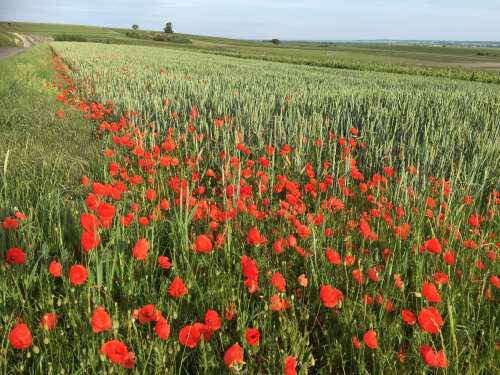
I drove out of the village, as I have done countless times, and I noticed a bloom of poppies in a field of wheat.

I’ve noticed these poppies each day for several days, and I remember noticing them at this time last year too.

But this time, I pulled over onto the grassy verge and stepped out to have a better look. I looked at one or two of them up close. I crouched down and looked at them against the wheat, then against the sky. I stood up and gazed over the whole extended scene. Then I took some photos.

When we travel along familiar roads and paths, both physical paths from one place to another, and mental paths, or habits of thought, we slip easily into automatic mode. Automatic mode makes it easy to get from one place to another, or to complete a task with a minimum of effort, but it by-passes reality.

When we stop, hit the pause button, take a moment to turn our attention to what’s here and what’s now, then we immerse ourselves in reality.

That attentive focus slows the heart, calms the body and stills the mind as we allow the five senses to present us with the world around us. For a little moment the flood of memories and imaginings, the stuck loops of thought, the anxious repetitions of what-ifs, ebb away, to be replaced with colour, light, sound, and sensations of smell, touch or taste.

I find that when I do this, the world becomes a more and more wonderful place, filled to overflowing with beauty, novelty and presence.

I recommend it.

Read Full Post »

Many years ago I discovered the writings of a French philosopher called Gilles Deleuze. I found some of his writing really hard to understand but several of his basic ideas and concepts completely changed the way I saw the world. That “becoming not being” phrase at the head of my blog is one of them. That shift from seeing the world as a collection of separate objects to seeing that everything is connected and always changing was a radical shift for me.

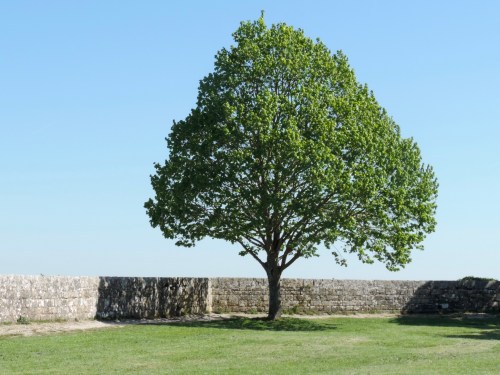
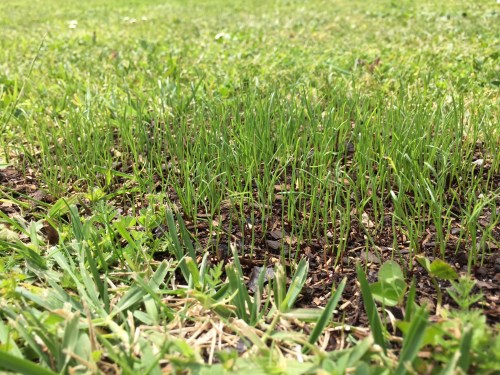
One of the other concepts was exploring the difference between trees and grass….what he termed “arboreal” vs “rhizomal” thinking.

You know the basic shape of the tree….a single stem or trunk which bifurcates again and again producing more and more branches and twigs as it grows upwards, and more and more roots and rootlets (is there such a word?) as it grows down into the soil, the one a kind of mirror image of the other.

This tree like form is everywhere. It’s the shape of our circulatory system as arteries branch out into smaller arteries which branch out into capillaries. It’s the shape of our lungs as the trachea bifurcates into bronchi which bifurcate into smaller bronchi, bronchioles (there is such a word!) and ultimately into alveoli.

We use it as a way of ordering and organising what we see in the world. It’s the most fundamental way of categorising and classifying the world. Everything is ultimately connected back to the single trunk or stem….the same original root, but everything exists in a separate category way out along the furthest branches, each ultimately distinct from, and separate from, everything else.

Grass is a rhizome. It doesn’t grow in this branching way from a single root. You can’t find the original stem or root of the grass. It’s like it has multiple points of origin, and each blade is connected to roots which then connect to other roots in a vast web or network. This rhizome structure is everywhere too. Because there is nothing which isn’t connected. The connections are multiple, diverse and ever increasing.

Two things became clear to me when I compared these two phenomena.

One was that the tree like view was produced by a sequence of “or” choices – at each division we say this is either this or that. The rhizome view is produced from a sequence of “and” choices. We don’t say “I’ll use either Facebook or Twitter”, we’ll use them both and connect them to each other. That’s what I do when I started to blog. I created my blog on WordPress but automatically connected every post to a tweet and a Facebook post. That way I could write once and share on several different platforms, for different audiences.

The other thing, which came after I read “The Master and His Emissary” was discovering how well adapted our left hemisphere is to the “arboreal” view of the world, and our right is adapted to the “rhizomal” one. We use the left to discriminate, categorise and classify. We use the right to see the whole by focusing on the relationships and connections.

How amazing that we have evolved this incredible brain with its ability to engage with the world in both tree-like, and grass-like, ways simultaneously.

Read Full Post »

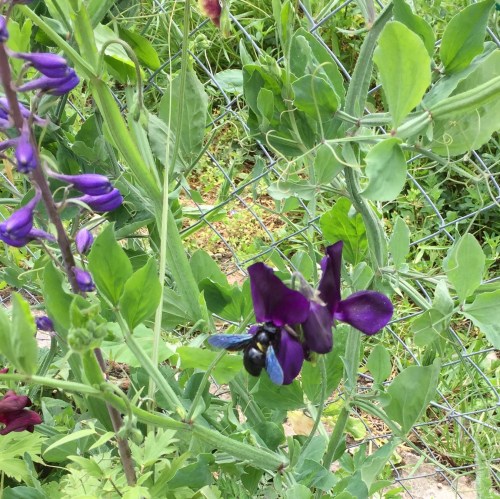
Look at this! I mean, just look at this! I know, it’s not one of my best, my sharpest photographs, but I was in the garden the other day and I heard this deep low buzzing sound. It wasn’t as deep as the humming-bird moths which will arrive when the buddleia bushes bloom later in the year, but it was a lot deeper than the various species of bees and wasps I usually hear in the garden. Luckily, when I turned to the sound I saw the source. This inch long jet black bee with iridescent blue wings. I quickly got my iPhone out of my pocket and did my best to snap a shot before the bee flew away. I have never seen anything quite like this. There were two or three of them buzzing around the flowers but they just never settled long enough to be able to focus a camera and take a nice close up (not yet anyway – I haven’t given up!).

I looked it up online and it seems this is a “violet carpenter bee”. Never heard of such a creature. What a thrill! What a delight! Made my day!

There’s an important lesson to learn here. I’m sure you’ll have come across “mindfulness”. It’s quite the thing these days. Mostly the term is used in relation to certain meditation practices and they are good ones. It seems that mindfulness meditation can have a lot of benefits, from easing depression and anxiety, to stimulating “neuroplasticity” (that’s the phenomenon of how the brain changes and develops itself). But even before the meditation practices were popularised Ellen Langer researched mindfulness in everyday life. She claims we can either go through life mindfully or mindlessly. Seems a clear choice, huh? How do we lead a more mindful life? Search for the new.

By new, she means what’s new to you. The trick, you see, is that every day is new. You have never lived this day before. Nobody has ever had, or ever will have, the same experience as you are going to have today. Once you are aware of that you can set out to be aware of what’s new.

Iain McGilchrist points out in “The Master and His Emissary” that our left cerebral hemisphere has a preference for what is familiar, whilst the right hemisphere thrives on curiosity – it leads us to seek out what’s new. His larger thesis is that we have become very left brain dominant in our present society and that some deliberate change of focus to the right brain might bring about a much more healthy, more integrated level of brain function.

I recently read a book by French author, Belinda Cannone, “S’émervieller”, which explores many of the ways we can bring a heightened sense of wonder and awe into our everyday lives. Bottom line is the same as Langer and McGilchrist say – seek out what’s new. And that’s exactly the experience I had the other day when this violet carpenter bee turned up amongst the garden flowers. Cannone gives various different examples of the places, times and activities which seem most likely to stimulate “l’émerveillement” (“amazement”) and the strongest one is “Nature”.

The thing is the natural world, especially the world of living forms, is constantly changing. Pretty much any time we spend in natural environments will be likely to gift us the delights of something new.

Let me just clarify what I mean by “new” in this piece. I mean it’s anything you haven’t seen before, heard before, smelled before, touched or tasted before. It’s also the newness of the present moment. You have never ever lived this present moment before, so what do you notice? Right here, right now. It’s also the encounter with anything you don’t know or don’t understand. These are the experiences which stimulate our curiosity and our drive to learn. They are the every day experiences of adventure and discovery.

From the Japanese art of forest bathing, to Richard Louv’s claim that we are suffering from “Nature-deficit disorder” which can be treated with a good dose of “Vitamin N” (Nature), to l’émerveillement, to mindfulness and neuroscience, it’s clear that one of the best ways to develop a healthier brain is to spend some time in Nature – whether that’s a forest, a beach, a park, or a garden. I recommend it.

You’ll be amazed.

Read Full Post »

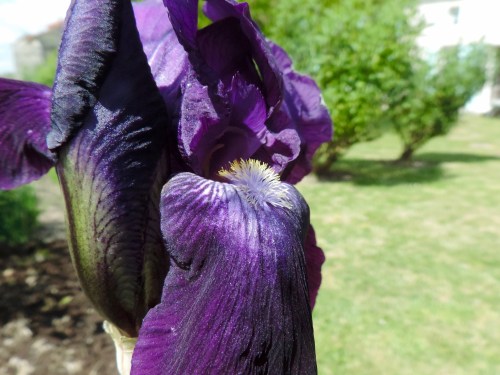
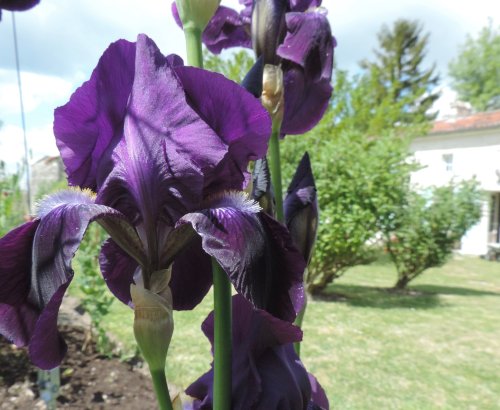
Irises are the most astonishingly beautiful and attractive flowers. Whenever I see them I think of the story ‘Iris’ by Herman Hesse where he wrote this –

He had a great love for this flower and peering into it was his favourite pastime; sometimes he saw the delicate upright yellow members as a golden fence in a king’s garden, sometimes as a double row of beautiful dream trees untouched by any breeze, and between them, bright and interlaced with living veins as delicate as glass, ran the mysterious path to the interior. There at the back the cavern yawned hugely and the path between the golden trees lost itself infinitely deep in the unimaginable abysses, the violet vault arched royally above it and cast thin, magic shadows on the silent, expectant marvel. Anselm knew that this was the flower’s mouth, that behind the luxuriant yellow finery in the blue abyss lived her heart and thoughts, and that along this lovely shining path with its glassy veins her breath and dreams flowed to and fro.

oh, I loved that the first time I read it and it’s stayed with me for over forty years now.

Iris, in Greek mythology, was the messenger of the gods. Her symbol was the rainbow, which in many cultures is the symbol of hope. But her main role was in carrying messages from one to another. She connected the sea to the sky. She was a bridge builder (not literally but in terms of making connections).

When I thought of her role in facilitating connections I thought of flow, of the to and fro of communication and I thought how much do we need that now? In a time where politics has become more about hate than love, where there are calls for more walls when we need more bridges, when there are demands to close down, isolate and see the ‘other’ as an enemy or a competitor to be defeated.

Oh, how we need Iris, to open peoples’ hearts and minds and to facilitate communication between them.

How we need her, the idea of her, the energy of her, the meaning of her, to create mutually beneficial relationships between different peoples with different ideas, different world views. To make the case for constructive co-operation rather than destructive competition and division….

Read Full Post »

I listened to an interview with Yuval Noah Harari recently. I read his “Sapiens” some time ago and mostly enjoyed it, but I haven’t been tempted to read his more recent “Homo Deus”. This latter book looks ahead to consider how things might go as artificial intelligence and robotics develops apace. He argues that our technology could give us incredible powers, so that we may end up more like gods, but he also says things could go the other way and create an increasingly large class of people he labels as “useless”.

That “useless class” terminology is certainly a way of getting attention, but when he specifies what he means by it, there’s a lot in it –

“I choose this very upsetting term, useless, to highlight the fact that we are talking about useless from the viewpoint of the economic and political system, not from a moral viewpoint,” he says. Modern political and economic structures were built on humans being useful to the state: most notably as workers and soldiers, Harari argues. With those roles taken on by machines, our political and economic systems will simply stop attaching much value to humans, he argues.

He goes from there to imagine a future where this class spends its time on drugs and Virtual Reality games machines. Depressing, huh?

So, two things struck me immediately. Firstly, this connects to some of the debate about “Universal Basic Income” – the idea that every citizen should receive a monthly allocation because we are heading towards a system which will be “post-work” – robots and algorithms will take over most of the jobs and the increased automation will increase unemployment. Our current economic system will either be adapted to take account of that, or human beings will have to adapt to the current economic system. Or not. It’s this “or not” that Harari explores by describing the “useless class”. One question then is what do we value in society and how do we allocate resources to what we value? As a society.

The second thought was, what, if people don’t have jobs in factories, shops or offices, the only thing they’ll be able to do is take drugs and play VR games? What popped into my mind straight away were caring and creating.

Human beings are great at caring. Sure, we don’t do nearly enough of it, and we could sure do with developing our capacities to care, but take, as one example, the response to an earthquake, a storm, a flood, a terrorist attack. In all of those situations we hear story after story of human kindness, human sacrifice and human caring. With declining infant mortality and increasing life expectancy more and more people in the world are living longer and in need of more care. We won’t run out of opportunities to care for others.

Human beings are great creators. We are problem solvers, scientists, home makers, gardeners, cooks, and artists of all kinds – writers, sculptors, painters, musicians, dancers. We won’t run out of opportunities to create.

Thirdly, I’d argue, human beings are great learners. We have whole neural circuits primed to seek out what’s new or different. We have whole systems dedicated to learning skills, acquiring knowledge, understanding and making sense of things. We won’t run out of opportunities to learn.

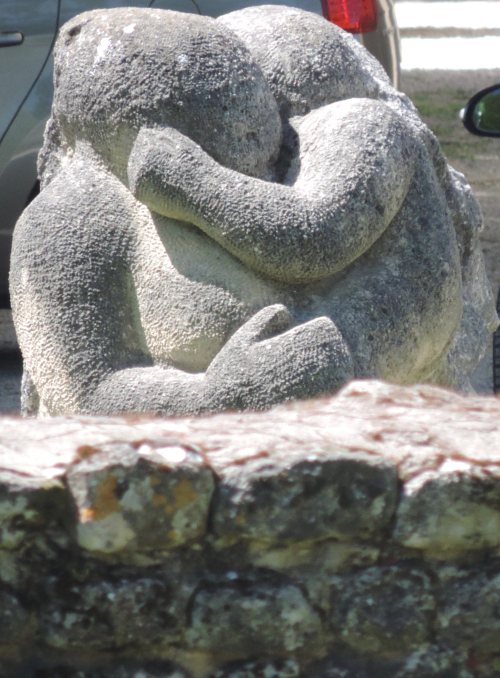
So, when I visited the town of Blaye recently, I saw this artwork in a car park. Isn’t it beautiful? Simple, and beautiful. Doesn’t it capture something about the human ability to care and to create.

Isn’t there an opportunity at this point in civilisation to change our focus away from grabbing and consuming, to caring and creating? And learning!

Read Full Post »

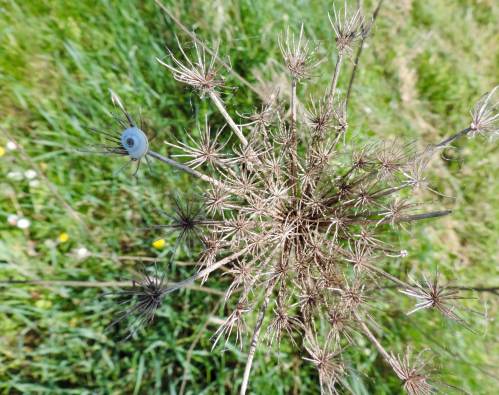
Out walking I was attracted to the shape of this plant. I’m no botanist but I think this type of plant used to be known as an “umbellifera“, although I believe the classification system has been changed and botanists don’t use that term any more. Still, I quite like the name. It came from the observation that the form of this flower was of “umbels” which is from the Latin for parasols.

They look like the skeletons of upturned umbrellas.

In fact, each single “umbel” looks a bit like a starburst to me, and isn’t that one of the commonest, most pleasing forms we see in Nature? Who wouldn’t want a Life which shone like stars?

It reminds me of the Sun.

It looks like it’s reaching out in several directions at one.

It’s expansive, growing, developing, reaching out to the rest of the universe.

Then I looked a little more closely as I focused my camera and saw this tiny snail shell on the top left. See it? At about the 10 o’clock position?

And there, in that tiny shell, I see another of my most favourite forms – the spiral.

Oh, how I love spirals.

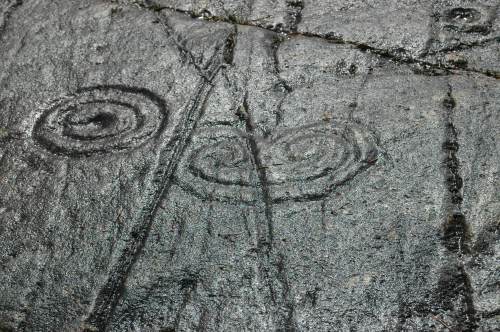
Is that my Scottish heritage, with its mix of Celt and Pict? I think of the Celtic knots, the triskeles, the Pictish stones. I think of the cup and ring markings at Achnabrek

But most of all I think how life stories are like that – how the path of a life is so much more like a spiral than a straight line.

Here, in this one little image, I see two of the most common, most beautiful of natural forms – the star and the spiral.

The shapes of Life? Or the shapes which give life its form?


Read Full Post »

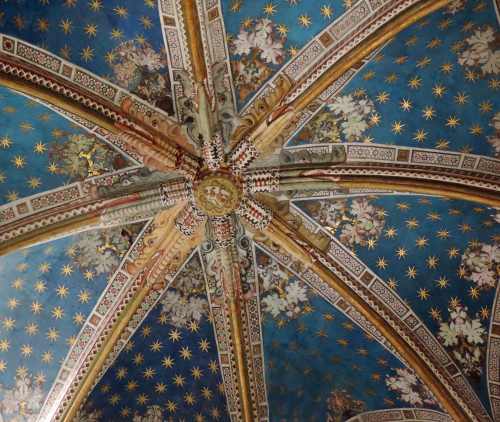
There’s an old ruined tower in the middle of one of the vineyards nearby. The other day there I went inside it, looked up, and took this photo.

My first thought was, wow, what a beautiful blue sky! How perfectly framed!

Then I thought, whoah, wait a minute, this is a metaphor isn’t it?

Because I’ve been thinking a lot recently about how we define who “we” are. I’ve been getting disturbed with all the xenophobic comments flying around the world these days. The people who say they don’t like “foreigners” and want them “to go back to their own countries”, or want to “close the borders” to protect “us” from “them”.

See, there’s at least two questions there. There’s how shall we live together? And who is included in that classification “we”?

Imagine you live in that tower. How big does your world appear? Where are your boundaries, your walls? If “we” are the people inside these walls, then “they” are the ones who live outside.

And don’t we all set our walls?

Don’t each of us feel similar to certain others, and maybe even connected to certain others, or maybe even in relationship with certain others?

Are those just the people who live in the same house as us?

Or those in the same street, the same town, or city, or nation state?

Or do we set the walls around those who are similar to us in some other way? Same sex, same religion, same ethnic group, born in the same nation state?

Isn’t the kind of world do we create for ourselves at least partly down to where we set those walls? How narrow we create our perspective? Or how wide?

How do you feel when you broaden your perspective? When you can see further, see wider, see deeper even?

I don’t know about you but I feel I breathe more easily. I feel my body, my mind, my soul, is nourished by the broader, more expansive view.

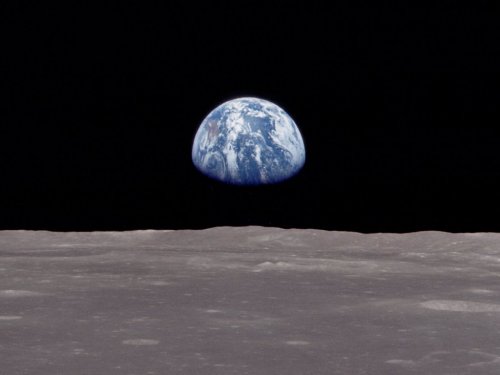
Let’s take this a wee step further and look at the famous “earthrise” image.

The earth rising over the horizon of the moon.

What if we think of “we” as being all of us who live on that beautiful, small, blue, white and green planet?

Because we do.

Every single atom in your body has previously been shared with other people, or other animals, or other plants, or other rocks or gases in this one small planet.

Every breath you take, draws in molecules from the same atmosphere as every other living, breathing form of life.

Every breath you breathe out contributes to that very same atmosphere.

We all share the same air.

We all share the same water.

We all share the same sunlight.

Don’t we all share the same earth?

Why divide it artificially into boxes? Little boxes marked “my country”, “my race”, “my family”, “my religion”?

If we are going to divide this planet up into these little boxes, then we still have to answer the question of how we can best live together – box to box. From within my walls, to you, within yours.

Here’s two short videos which changed my perspective on these questions…..


Read Full Post »

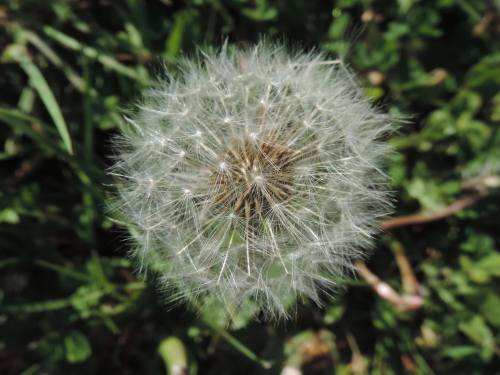
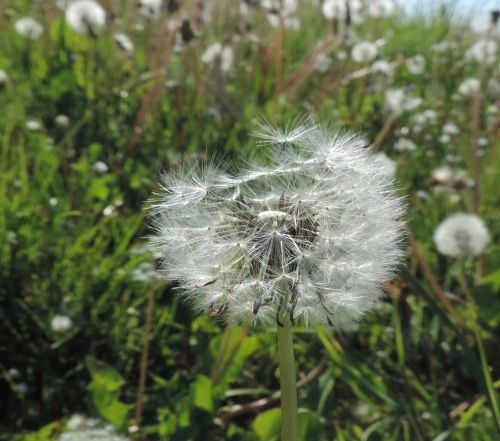
Common sense would tell you the world is made of things. We are objects surrounded by other objects. The left hemisphere of the brain is great at narrowing our focus so we can separate some of what we are looking at from its environment, and its connections. So I can stumble across this beautiful dandelion seed-head and focus the lens of my camera right onto “it”. Isn’t “it” gorgeous?

But then and object, or a thing, needs to have some kind of consistency for us to see it. I mean, look what happens a second or two later, when the wind blows –

It’s changed already! And why did it change? Because something happened. Some of the seeds blew away when the wind blew. So if I want to understand this “thing”, this “dandelion” that I’m looking at, I need to see more than what the first image can show me. I need to know that these plants we call dandelions have evolved a method of multiplying and thriving – they have created these astonishing little means of dispersal of their offspring, of their seeds. So when the wind blows, as it always does, these children of the parent plant will fly away to land somewhere else, maybe far away, maybe close by –

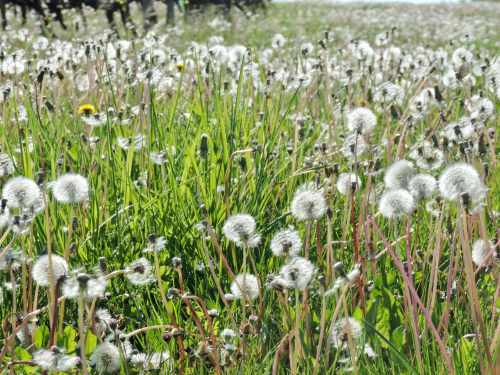
and then the cycle starts again with each seed germinating, pushing its roots down into the dark earth, and it’s leaves and flower up to reach the sun, and the bees and the butterflies and who knows how many other kinds of insects will come along and spread the pollen in the yellow flowers to fertilise them and produce these magnificent seed-heads again.

So this is what this object, this thing, called the dandelion does. And it’s hard to know to where to begin its story, but maybe we begin by following one single seed, blown on the wind. We don’t know which way the wind will blow, how far the seed will travel, whether or not the ground it lands on will enable it to germinate and whether or not it will be able to successfully grow into a green leafed, deep rooted, yellow flower and whether or not the insects will cross pollinate it with its neighbours, whether near or far, and produce seeds of its own.

So many unknowns.

But also, and here’s the point, so many happenings.

So many events.

So many occurrences.

This object, this thing, which we call a dandelion. Is it really reasonable to think of it as a thing? Or is it more useful to consider it as so many happenings.

That’s the point I heard the physicist, Carlo Rovelli, make in his interview with Krista Tippett, in an OnBeing podcast. Have a listen. He puts it more beautifully than I do. He says the universe isn’t made of stones, its made of kisses. (Not things, but happenings)

Read Full Post »

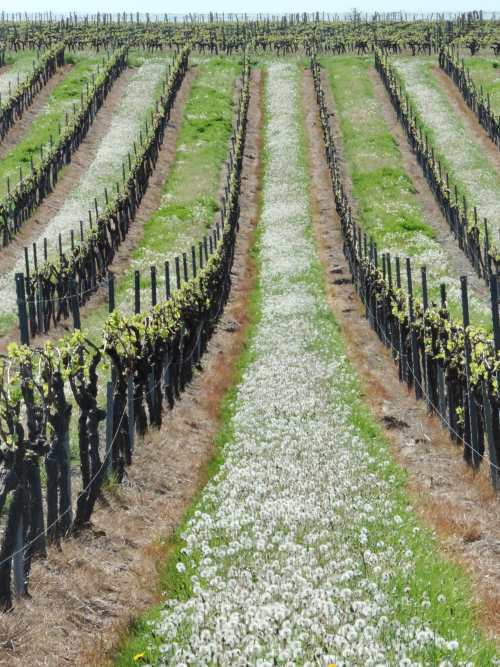
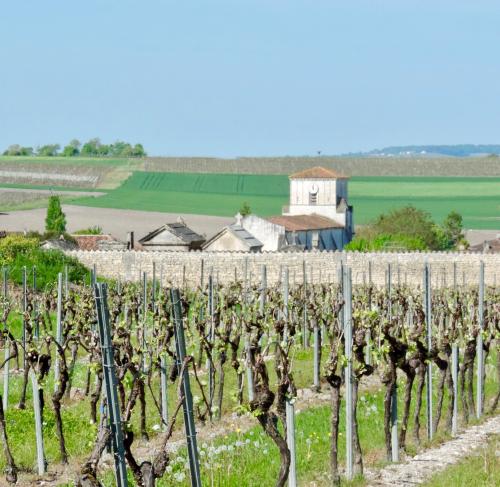
As I was out walking the other day I noticed an interesting alignment of places.

Right in front of me was a vineyard, just beyond that, over the high wall, a graveyard, and just beyond that stood the church.

How interesting, I thought. Here’s some kind of representation of Life – the world of the “spirit” (in this case Cognac and Pineau), the world of memories of those who are alive no longer, and the world of the “Spirit” (in this case Catholicism).

The vineyard in this part of the world is more than a job. It’s more than a business. It’s a way of life. All year round the vines and the ground they grow in need tending, need cared for. I wonder what percentage of the land in France is dedicated to producing grapes to be turned into alcohol? I wonder what percentage of the land surface of the Earth is used by human beings to make alcoholic drinks? Wine, beer, whisky, vodka……and so on. I bet it’s a lot. I’m reading a book about the influence of plants in the colonisation of “the Americas” by the Spanish in the past. Actually it’s a book about the influence of the knowledge of plants rather than simply of plants. How the native peoples of what we now call Mexico, Central and South America, had learned what particular plants could do. What influence they had on the human body. And how they used them to treat diseases, to create altered states of consciousness in rituals (to allow them to access the world of the “dead” and of the “Spirit”), and how they used them in the rituals of sacrifice and justice (the poisons). I’m only in the beginning section of the book but already I’m finding it a real eye opener – the two way processes of influence between the “old world” and the “new world”, between native “indian” knowledge and “continental, European” knowledge and how each was changed by the other.

We see the use of wine in the rituals of the Catholic Church. And we certainly see the place of alcohol in drinking to the dead, at their funerals and in their remembrance.

The graveyards here are often surrounded by high walls. This particular one has one gate set in a large archway. It’s often locked. I’m not sure if that’s to keep people out or just to protect the tombstones, some of which are enormous. You can see a couple of them over the wall in this photo. They are like tiny buildings. When there are many of them like that in one graveyard it gives the whole place a feel of a little town. A walled town.

The churches here are mostly Catholic churches. France might be a secular state but the Catholic traditions are well embedded in national festivals and Public holidays. Many of the annual calendars distributed by local businesses or newspapers include the name of a saint on every single day of the year, and the local newspaper has on it’s back page, beside the weather forecast and other useful details, like the times of sunrise and sunset, also which saint’s day it is today. Even if church-going and belief in God has declined a lot here, as it has done in most other European countries, the cultural influence of this tradition remains strong.

Plenty to get me wondering – this triad of vineyard, graveyard and churchyard.

Read Full Post »

I’ve noticed there is a phase of consciousness between sleep and waking up, a kind of half-asleep/not-quite-awake phase. It’s different from being asleep and it’s different from being awake. Maybe it’s a time of surfacing which sways between those two distinct states. Whatever it is the other morning, in that phase, I became aware of a number of different things “coming to my mind”….an image, a memory, an idea, a bit of a conversation, some things on a list to remember to do….it was really quite a mixture. At about the same moment I became aware of the feeling that I wasn’t in control of any of this. Whatever images, words, thoughts, ideas, memories there were, it was if they just appeared, or as if they were flowing by and I was just noticing them.

It got me to wondering where the contents of the mind come from, how many there are, and how, probably, the ones we notice are just the tips of an iceberg.

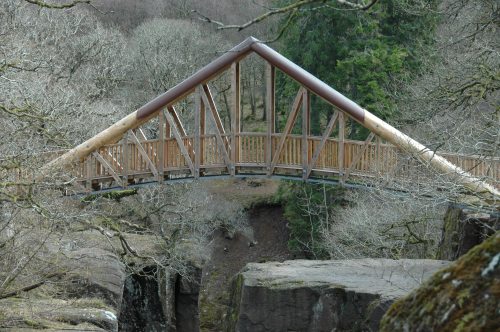
I remembered a number of occasions when I’ve stood on a bridge (like the one in the photo above) and looked down at the water as it flows towards, beneath or away from me.
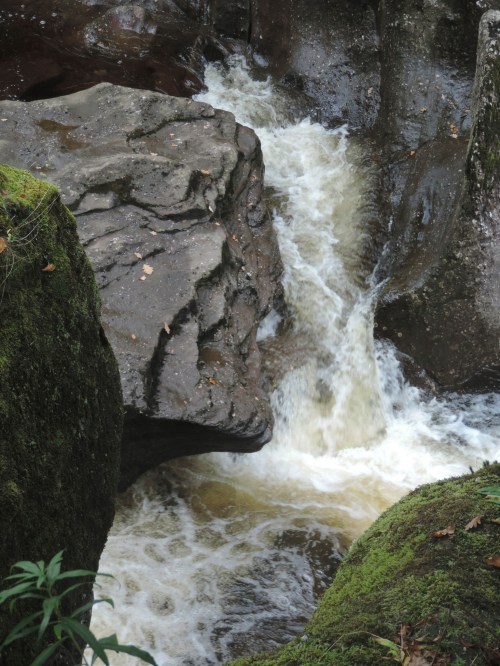
This experience of noticing the contents of the mind flowing past reminded me of those times.

Sometimes what would catch my attention from the bridge would be movement. Like the flow of the water over the rocks, or leaves on the trees in the banks of the river blowing in the wind, or birds darting down to catch an insect or even a fish, or even a fish swimming in the water. Movement catches our attention. Change catches our attention. Something appears….like a branch or some leaves tumbling over the rocks to be carried away by the river. We notice that.
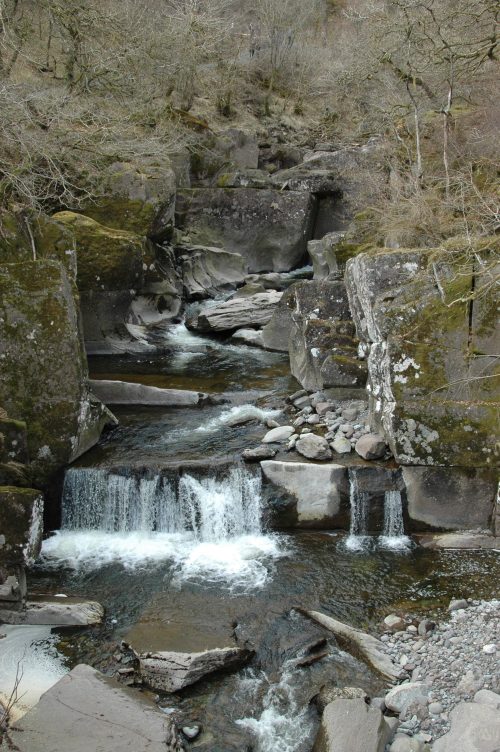
Sometimes my attention would be broad rather than narrow. I wouldn’t zoom in on any particular element but just gaze upstream and take in the whole scene. Seeing the general colours, the shapes of the rocks and the falling water, the patches of turbulent white and the still, dark pools…all at once.

Meditation is a bit like that. You sit and watch to see what turns up, then, after just noticing it, you choose not to interact with it, or hold on to it, but just notice it floating on by. Images pop up and then disappear, a thought half forms and then unravels, a memory emerges and then fades……
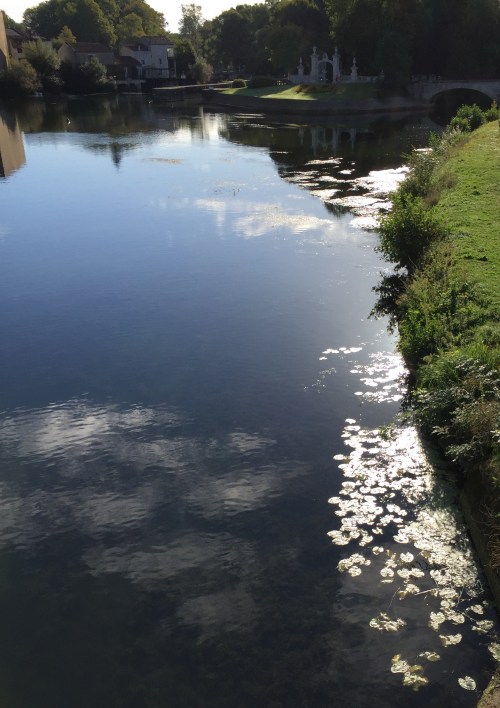
And it’s not always rushing and tumbling either. Sometimes what comes to the fore does so quite slowly and gently….

I thought of a number of bridges I’d stood on. The ones over the waterfalls, the ones of the gently flowing rivers, the ones over the big city rivers, the ones over little ponds in Japanese gardens. Each one was a vantage point. Each one allowed me to take a few minutes to stand and gaze and notice and to turn my attention towards something, then let my focus drift over to something else. Never getting stuck, never staying the same, always bringing something different, something new…….

It’s a nice metaphor for the interaction between the conscious and unconscious regions of our minds.

But, wait. I’ve got more big questions now.

Where is the bridge?

Who is the me, the observer, who is standing there watching the flow of mental content?

Where is the mental content coming from and where is it going to?

Strange how hard it is to pin down this idea of the “self”. Two things pop into my mind right now…….Mary Midgley, the philosopher, who tackles the idea that the self doesn’t exist at all…it’s an illusion….in her book, “Are you an illusion?”, where she asks the question – if the self is an illusion, who is it who is having this illusion? And Dan Seigel, who in “Mindsight” and other books, defines the mind as “an embodied, inter-relational, process of regulation of energy and information flow”.

And something else pops up now…my training in TM. Sitting, repeating the mantra, noticing words, thoughts, ideas, images and memories bubbling up and just gently returning to the mantra, letting them all flow on by.

Well, one thing at least is pretty clear to me. The origins of all this mental content are multiple. Sometimes they are a response to an external stimulus, a sound, a light, noticing something. Sometimes they emerge from memory, from imagination, or from whatever area of the mind we use for gnawing away at things….problems, worries, things to do, things we want to say. But wherever they come from, I really don’t think we have much control over that flow. What we can do is to notice, to become aware. Then we can begin to choose where to direct our attention and decide how which ones we want to follow and which we want to let go off.


Read Full Post »
« Newer Posts - Older Posts »