Feeds:
Posts
Comments

Archive for the ‘philosophy’ Category

blue butterfly

Whether we think about this butterfly, think about a tree, or think about a person, we know we are not looking at machines.

Yet the reductionist, mechanistic model seems to retain a dominance in our culture.

Here, I think, is a better way to think of living creatures –

Complex, open, dynamic beings.

Complex

All living creatures are composed of millions of cells. In each creature, all of those cells develop from a single fertilised egg. All of those cells interact, but not in simplistic, “linear” ways. Instead the interactions can be described as “non-linear”. (Connections such as positive and negative feedback loops which produce exponential changes, rather than simple changes of addition or subtraction)

An assembly of cells connected in a non-linear manner is a complex being. And complex beings have certain characteristics, not least of which are the abilities to self-repair, self-regulate, defend themselves and to replicate.

We can focus down on the individual elements of a complex being, for example on a single cell, or a group of cells working together to form an organ, but we can’t fully understand any of those cells or organs until we consider them again as parts of the whole creature.

Open

An open system exchanges energy, materials and information with the rest of the environment in which it exists.

All living creatures are open systems. They are constantly breathing in, breathing out, consuming and excreting (amongst other things!)

We can focus on an isolated single creature but we can’t fully understand it unless we consider it again as part of the whole environment in which it exists.

Dynamic

Living creatures are dynamic. They are constantly (and I do mean constantly) changing. They change because they are open and they change because they are complex. Every day some cells break down and die, and others are created new, but overall they have a direction of growth – becoming ever more complex and ever more unique every single day.

This dynamism in a complex, open being leads to the manifestation of “emergent” properties. They develop, change and behave in unpredictable ways. It is impossible to know with certainty what changes are going to occur at any particular moment in any single individual.

Look again at that lovely blue butterfly I’ve photographed.

Have you ever watched a butterfly fly?

Would you be able to predict which way it’s going to move next? Have you ever met anyone who can even explain how butterflies manage to fly the way they do?

Look at that lovely blue butterfly again.

Isn’t it beautiful? Isn’t it a work of art? Isn’t it astonishingly more complex and unpredictable than any machine?

And that’s a butterfly. What about a person?
Read Full Post »

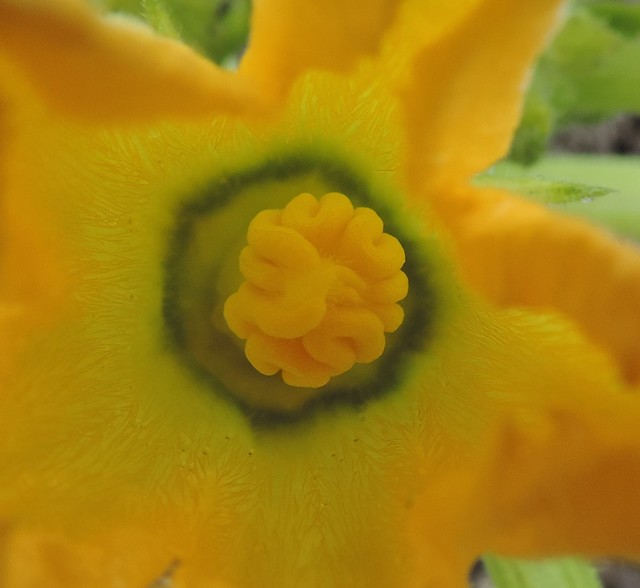
courgette stamen

This is a close up of the stamen of a courgette (zucchini) flower growing in my garden.

Doesn’t it remind you of the human brain…..just a little? Picking up on my last post, isn’t it amazing how many echoes there are between the three “kingdoms” of Nature?

And the other thing I thought was how the intelligence of a flower is certainly not found in its brain (it doesn’t have one!) but that doesn’t mean to say it can’t perceive, respond and communicate. Plants do all of those things all the time.

And how true is it that even though we do have brains you can’t find our minds or our intelligence solely in there.

Like all other life forms, we perceive, process and respond with our whole beings.

Read Full Post »

strawberries ripening

In my A to Z of Becoming, S stands for “Slow”.

This is one of my favourite verbs. I find the “slow movement” very appealing. I’ve no doubt that slowing down, taking your time, allows you to be more fully present and so, to more fully appreciate and enjoy the everyday.

Too often we find our lives are so full of…..what? Stuff, tasks, duties, distractions?? And time flies past so fast. But time, of course, isn’t something that exists outside of us, it’s an experience (as Bergson, I think, says with his idea of “duration”).

So, how to find a way to experience time differently? To find the ways to enjoy life more fully?

I’ve a tendency to look to Life, Nature, and the Body, when I want to learn something. And here’s what a strawberry teaches me.

This photo, taken recently, is of strawberry plants in my garden. Slowly, little strawberries began to appear. Slowly, they started to grow, and now, slowly they are turning red. Only one thing remains – to eat them – SLOWLY!

You can’t hurry a strawberry.

Why hurry anything else?

What a joy to watch the daily growth and ripening of these fruits.

And what a joy to pick them one at a time, enjoying just one each day as it comes to fruition, savouring it, a bite at a time.

What a joy to live, slowly.

Read Full Post »

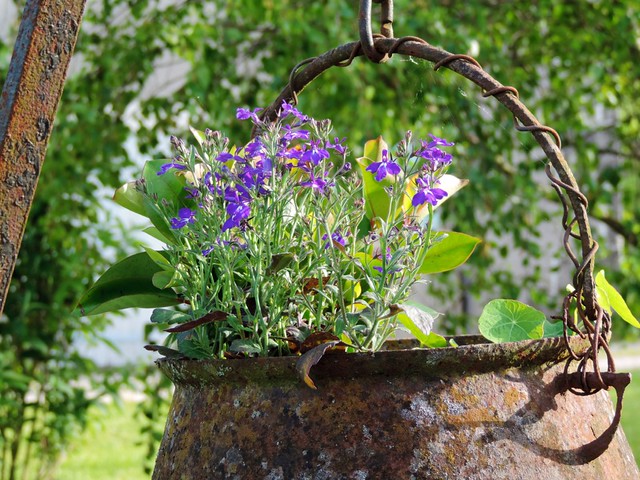
cauldron flowers

When you look at this photo you’ll see something living, the plants, and something “inanimate”, the cauldron. Some of you will also say you notice the sunlight and the shadows.

Every day these plants look different as they grow, flower, and, ultimately wither.

Every day the cauldron doesn’t look that different, but if we could see what it looked like on that first day when it was carried from the foundry to the shop, we’d see that it has changed a lot.

Everything changes. Just at different rates. Living organisms change rapidly, whilst inanimate objects change much more slowly, except for moments of catastrophic change where, for example, an object is broken.

We forget that, don’t we? That change isn’t optional, but the speed of change can be.

We are creators, we humans, and when we create we embrace change, we engage with it, we bring our imaginations to bear upon it, and so we make the world we live in.

“All power to the imagination”

Read Full Post »

sand pit

The world is different with you in it. It wouldn’t have been this way without you.

Each of is alive in this world, and living is a process of change.

Your breathing changes the air in the room where you are now. You breathe in oxygen, and breathe out carbon dioxide.

The heat of your body changes the temperature of the room and the temperature of the room changes your circulation, your consumption of energy and your expenditure of it.

Every action you take, every thought you have, changes the world you live in.

Sometimes we change the world quite consciously – as I did when I took the rake to the sand pit the other day.

But all the time, we are changing the world with our choices, our behaviours and just by living.

Each of us in unique. Every one of us lives in a different place and different time. Every one us thinks our own thoughts, has our ideas, tells our own unique story.

The world is different with you in it.

Read Full Post »

Cotard

I was watching an episode of Vikings the other day, and was startled when one of the character, King Ecbert recited a few lines of poetry which were completely familiar.

Time present and time past
Are both perhaps present in time future,
And time future contained in time past.
If all time is eternally present
All time is unredeemable.
What might have been is an abstraction
Remaining a perpetual possibility
Only in a world of speculation.
What might have been and what has been
Point to one end, which is always present.
Footfalls echo in the memory
Down the passage which we did not take
Towards the door we never opened

T S Eliot! From the Four Quartets! Dramatically it worked, even if you couldn’t help thinking, whoa there, T S Eliot in the Vikings??!

I studied Eliot at school and he is still one of my most favourite poets. I remember reading this passage and feeling enthralled by it, but I had no idea what he was talking about. Now, as I encounter it again, I’m surprised how well it fits with what I have since discovered about time and memory.

In fact, by one of those strange quirks of synchronicity, this month’s “Philosophie” magazine has a central section on Bergson’s concept of memory. Bergson was way ahead of his time and many of his philosophical ideas about the mind have since been backed up by research findings in the field of neuroscience.

Much as I can be thrilled by reading the work of a philosopher, or research work in neuroscience, neither of these comes close to the power and beauty of Eliot’s poetry.

Draw all three of these strands together, and we have a vision of experience which is not of the past filed away in some cabinet or pigeon hole in the brain, nor of the future lying like the landscape just over the next hill, waiting for us to discover it. No, instead we have a vision of the present which contains the past and the future. This is where we encounter time and reality, in a never ceasing interplay of the ripples of the past, the imagined possibilities of what might be, and the phenomena of the present moment.

So it isn’t just what happened which influences us now, but those passageways we didn’t take, and doors we didn’t open, are also still influencing what we see, hear, feel and think about today.

Read Full Post »

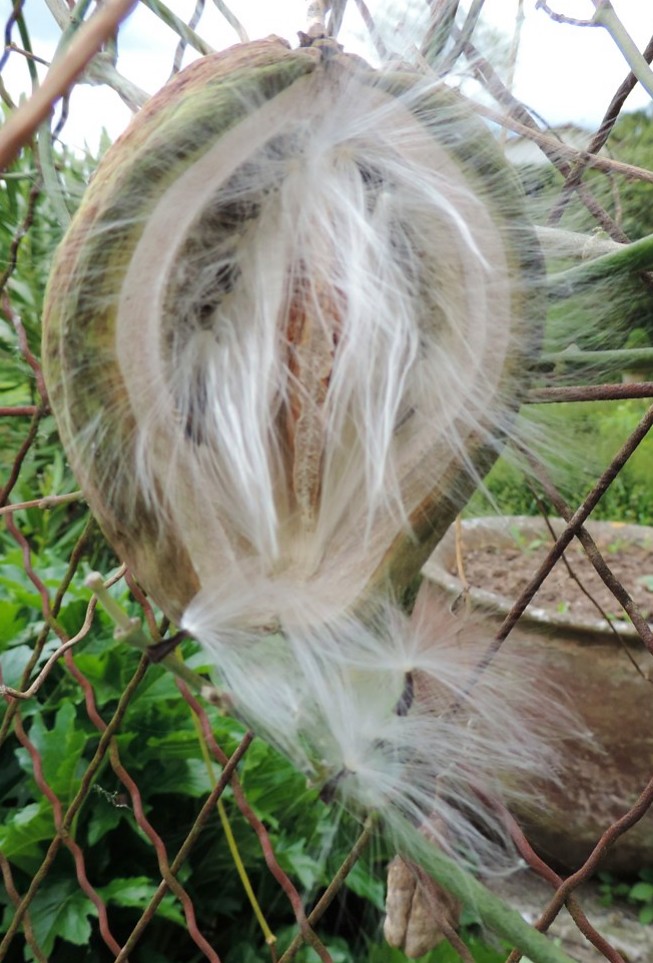
seeds

I’ve no idea what this is.

Some kind of seed head with soft, fluffy, fibres attached to the seeds so they will fly off in the wind, but I’ve never seen this actual plant before.

There’s something satisfying about naming things, isn’t there? We see a plant like this and instantly we want to say “what it is”. But it isn’t it’s name anyway.

It is what it is becoming…

And that’s what interests me even more than its name…..what does this seed grow into? So I collected a couple of them, and planted them in my garden. Will they grow into a plant? “On vera” (“We’ll see”)

Read Full Post »

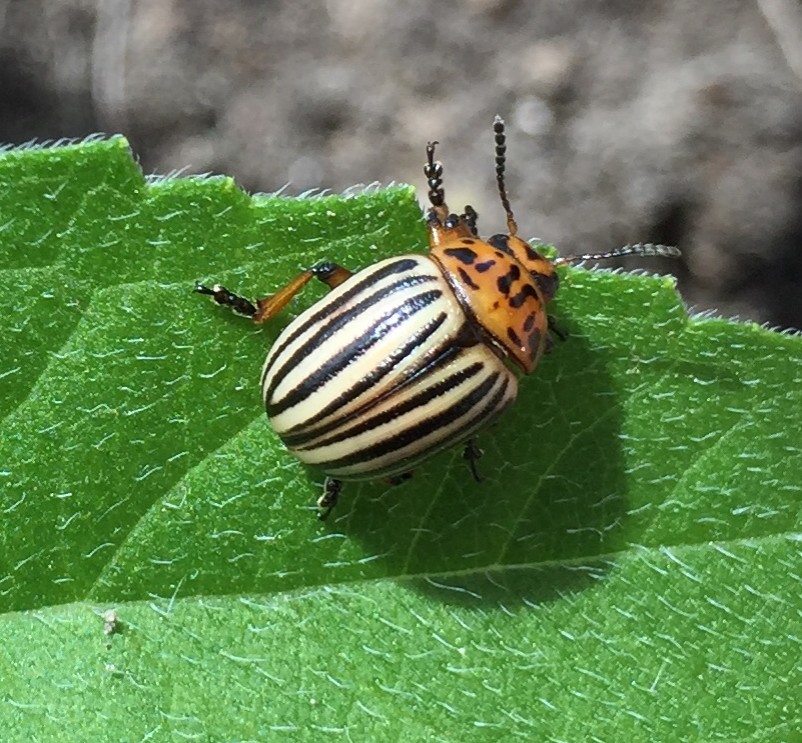
Beetle

Even when kneeling down pulling out weeds, turning over the soil, you can encounter something for the first time.

Look at this little beetle! What astonishing markings!

For me, it’s these little first time, unexpected, brief encounters which can really make a good day great.

I have no desire to catch, kill, or collect creatures like these, but to see them, be amazed by them, and to take a photograph – I like all that.

What little, unexpected but amazing encounter did you have today?

Read Full Post »

home herbs

In my A to Z of Becoming, I have two verbs for the letter “R” – reflect and relish.

Both reflecting and relishing have a part to play in deepening our experience of life. I think there’s a subtle difference in these two verbs which is revealed when we think of time – we reflect on what was. We reflect on what we did, what we thought, what we felt….at a particular time. We also reflect in the here an now, as in reflecting back to someone else what they have just said, but even in this “here and now” reflection is focused on what just happened. Isn’t it?

Relish, however, is very firmly focused on the here and now. Even if you decide to relish a memory, your relishing is still happening now – the focus of the experience is the re-living, or re-enjoying, whatever it was as you bring it back into the present.

Relish means to “enjoy greatly” (synonyms include – enjoy, delight in, love, like, adore, be pleased by, take pleasure in, rejoice in, appreciate, savour, revel in, luxuriate in, glory in)

To relish something involves intensifying the experience you are having, because to really “enjoy, delight in etc” you have to fully focus on it. So, let’s think for a moment about some of the qualities associated with relishing.

Presence. To really relish something, someone, or some experience, you have to turn up. You have to “be here now“, as Ram Daas said, and as Eckhart Tolle teaches in “The Power of Now“. Our minds often wander off into the past or the future, remembering something, worrying about something, planning something. Presence requires us to bring ourselves, and our attention into this moment. If you set out to relish something, that very intention will help you to be present….and being present will increase your relishing!

Awareness. A main theme of this blog is “heroes not zombies”. We live a lot on auto-pilot. To relish something we need to become aware of the sensations, feelings and thoughts which are being evoked. We need to be aware, awake, or “mindful”. My first encounter with awareness was in the book of the same title by Anthony De Mello (you can get a pdf of that book here). Mindfulness is the word made popular by Jon Kabat-Zinn. I found Dan Siegel, the founder of Interpersonal Neurobiology (IPNB), to be a really good teacher of mindfulness meditation. However you do it, whatever practice you follow, the key is to break the habits of non-awareness.

Open-ness. If you’ve already made you mind up about something, you’re not going to fully appreciate it in the here and now. If you think you’ve seen all there is to see, or know all there is to know, about something, your mind will have closed up. To really relish something you have to open your mind to the specific, the new and the amazing.

Gratitude. Finally, gratitude is a great partner to relishing. When we approach an experience with gratitude in our hearts, it sets us up to relish it. On the other hand, the practice of relishing something increases the gratitude we feel.

I know we often think of relish in the context of taste and food (I’ve even used a photograph here of the mint and chives near my front door), and food can be a good place to practice relishing, but if you go back and look at those synonyms for relish, I’m sure you’ll find a huge variety of targets for you practice on.

Ask yourself each morning this week when you wake up – what am I going to relish today?

Ask yourself each evening this week – what did I relish today?


Read Full Post »

ava charlie

I was recently sent a copy of an article published in Norway back in 2011. The article’s title is “The human biology – saturated with experience“. Here’s the summary –

SUMMARY

BackgroundHuman beings are reflective, meaning-seeking, relational and purposeful organisms. Although experiences associated with such traits are of paramount importance for the development of health and disease, medical science has so far failed to integrate these phenomena into a coherent theoretical framework.

Material and methodWe present a theory-driven synthesis of new scientific knowledge from a number of disciplines, including epigenetics, psycho-neuro-endocrino-immunology, stress research and systems biology, based on articles in recognised scientific journals and other academic works. The scientific sources have been deliberately chosen to provide insight into the interaction between existential conditions in the widest sense (biography) and biomolecular processes in the body (biology).

Results. The human organism literally incorporates biographical information which includes experienced meaning and relations. Knowledge from epigenetics illustrates the fundamental biological potential for contextual adaptation. Intriguingly, different types of existential stresses can enhance disease susceptibility through disturbances to human physiological adaptation systems, mediated in part through structural influences on the brain. Experiences of support, recognition and belonging, on the other hand, can help to strengthen or restore a state of health.

It’s a fascinating review of research literature on the links between “biography” – an individual’s unique story, and “biology” – the biomolecular processes of the body. It seems clearer to me than ever that talk of “mind and body” as if these are two separate entities is both unhelpful and misguided.

We are certainly “reflective, meaning-seeking, relational and purposeful organisms” and it’s long seemed to me that to practice medicine without that understanding demeans both patients and practitioners. Human beings are not objects which can be reduced to genes, molecules or cells. We are complex adaptive organisms with consciousness. As these authors say, we have  –

a capacity for self-reflection, for designing sophisticated symbolic structures, for attaching metaphorical concepts to experiences and for building models and categories with the aid of the imagination.

We create art, music, poetry and stories. We play. We make sense of our daily lives. (See my recent series of posts on re-enchanting life for more about these very human activities) We connect. We live embedded in a mesh of relationships. We use language, myths and symbols to interpret and experience the world.

Unfortunately, such experience does not lend itself easily to standardised interpretation; it is always an experience of something for someone, in a unique context

All of our experiences are personal and unique. To be fully human, to really understand another person, we must consider the personal and unique. My contention is that we must not only consider it, but must hold that focus as central come what may.

Yet, as these authors point out, contemporary “evidence based” approaches to medicine have failed to include the subjective –

Human subjectivity is not only absent from contemporary evidence-based medicine, it is in fact explicitly eliminated by the mathematical analyses performed during assembly of evidence.

Should we allow statistics and “controlled” de-humanised research (with the experiences of the human beings who are the subjects of the research removed) be our “gold standard”? We need the research which incorporates the subjective and the personal if we want the findings to be relevant to the real, everyday lives of human beings.

Right up in the “Results” section of this paper the authors say “Experiences of support, recognition and belonging, on the other hand, can help to strengthen or restore a state of health”. That is completely congruent with the clinical experience of my lifetime’s work as a doctor. The essential elements of healing are based on the relationship – as a doctor it is my role to recognise each patient – to see each one as a unique individual with a particular issue or problem to discuss – and to be able to say “I see you”, “I hear you” and “I understand what you are experiencing” (and that includes making a diagnosis and being aware of the natural history of diseases). It is also my role to support, not judge. To provide what help and care I can. And finally, at the base of it all, it is my role to create a relationship with each patient, a meaningful connection which reduces the feelings of isolation or alienation a person who is suffering can experience.

It is heartening to see the beginnings of a scientific method which will help us all in the future to create the conditions for health. And if the start of that is to create “Experiences of support, recognition and belonging”, then we will be starting from a good place.

Read Full Post »

« Newer Posts - Older Posts »