Feeds:
Posts
Comments

Archive for the ‘photography’ Category

rock weathering

sparkling water

stained glass light

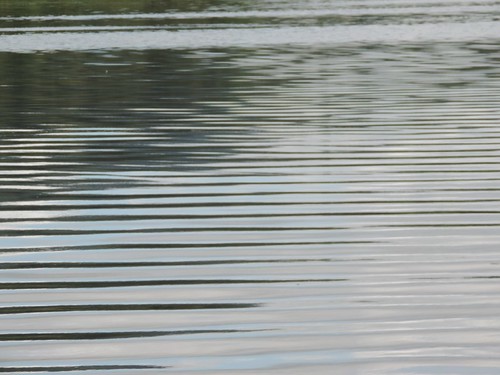
tree ripples

It seems the way are brains are made we are predisposed to notice patterns.

The scientific method is based on noticing patterns, describing them, and, in particular spotting patterns which repeat. Patterns which repeat give us the ability to predict – not just what might happen next, but what might happen if we take a particular action. In other words we can use what we learn from pattern spotting to manipulate objects. But there are no patterns which ALWAYS repeat and none apply in ALL contexts of time and place. The danger of pattern spotting is to generalise and turn repeating patterns into “laws” or “rules”.

Science can easily go wrong when it hardens into arrogance…….the arrogance which often arises out of conviction.

A good doctor recognises a pattern of symptoms and signs, makes a diagnosis, takes an action known to be likely to produce a particular desired outcome, but retains their awareness and curiosity to seek new patterns, to reconsider their assessment of the patterns and tries different actions when the first one fails to achieve what the doctor was trying to achieve.

After all, even weather patterns are unpredictable…..


barometer

Read Full Post »

Just seeing – vision – amazes me. We know so little about how it happens.

At university I learned about the visual cortex – the area of the brain which processes the signals from our eyes and created the images we “see”. I remember being strangely surprised to think through what it meant that light waves hit the backs of our eyeballs and then that energy was transformed into electro-chemical signals which sent information back along the “optic nerve” and how the exit point from the eyeball where the nerve goes off to the brain received no light information at all so should always be present a gap in the image we see. But there is no gap to see! Our brains seamlessly, instantaneously and constantly process all the information from our eyeballs and creates this experience of moving images which never have any holes in them!

We now know that there is a lot more of the brain involved in creating images for us than we previously thought. Read this wikipedia article for starters.

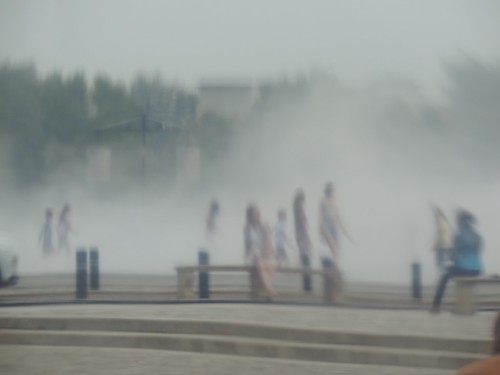
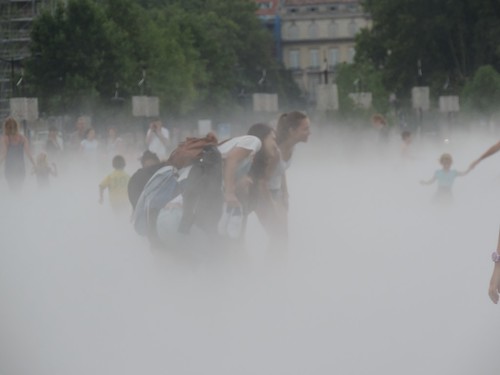
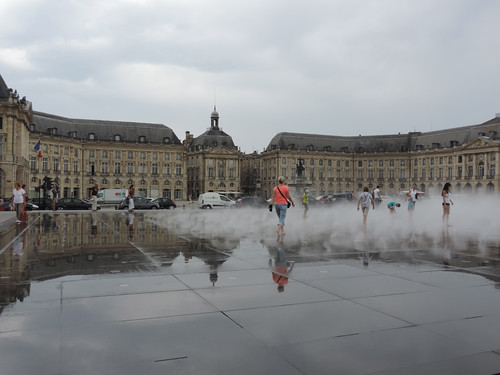
So, what amazes me is not just how we experience this seamless visual image, but how we instantly know what we are looking at. Take a look at these photos I took of people on the Miroir D’eau in Bordeaux. The first one is taken pointing the camera at a mirror which is reflecting the image from outside the building I’m in. People are in the mist created by the water spray. The second is outside with me actually on the Miroir and the people in the mist. The third is a shot taken after the mist has settled.


Through the window

Lost in the mist

miroir d'eau Bordeaux

In all three shots we know we are looking at people. Sure, as the images become more clear we can see more detail, but isn’t it interesting that we have a pretty good idea of what we are looking at right from the first image?

Wow! Isn’t the ability to SEE just amazing? And how wonderful that we continue to learn how we do that. We often forget that our level of understanding is just our current level. It’s never complete. It’s never the “full story”. What more will we learn even in my lifetime?

Read Full Post »

From small, delicate, beginnings…..

forest floor

…..to a life really lived……

a tree story

Amazing!

How such small seedlings grow to become such old and experienced trees…….!

What stories could they tell?

Who could have predicted the twists and turns, the traumas, the wounds, the opportunities, the new directions, the crises of survival, the creative responses to challenges, the relationships with the others in the forest?

How much more so for a human being?

Read Full Post »

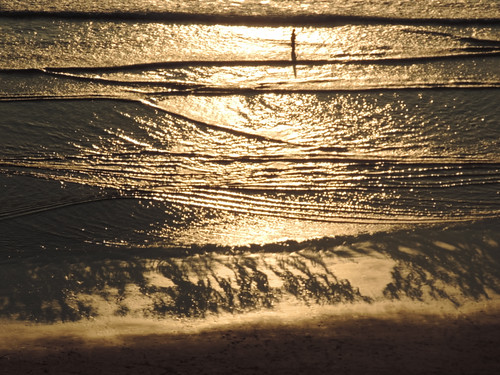
in the sea at sunset


 There is no out there which can be known in any way other than from in here

Read Full Post »

Ripples

Ripples stimulate my thinking about influences – how every action we take has “unintended consequences”; how the future can never be predicted because emergence is a characteristic of all Life; and how the past appears again in the present as a co-creator of what we experience today.

Read Full Post »

In the A to Z of Becoming, one of the verbs beginning with an “F” is to feel.
 

amv

To feel something means at least two distinct yet inextricably connected things in the English language.

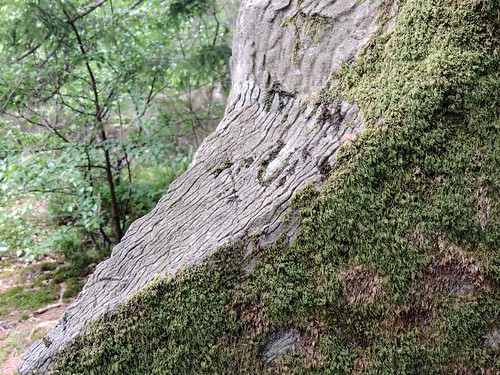
Firstly, it refers to the sense of touch. Look at the moss covered rock in this photo. When I was actually in the forest and encountered this, I found it impossible not to touch it. Some surfaces, some textures seem to beg to touched and feeling them is both an experience of pleasure, and a voyage of discovery. Our bodily sense of touch allows us to feel things in this way. We can feel objects and we can feel the sensations which arise within our own bodies. For example we can feel hot or cold, heavy or light, stiff or supple.

Secondly, we use feel as a verb related to emotions. If you hurt someone’s feelings, you are upsetting them emotionally. We can say we feel happy or sad, anxious or relaxed.

What strikes me is that these two variations of feeling are inextricably linked. The verb, to feel, is a connecting word – it joins our bodies to our psyches.

We see this best in the way we use embodied metaphors in our language. If I say I feel hot and bothered, then I am probably experiencing both an increased temperature and a feeling of irritation. If I say I feel comfortable then I’m probably referring to both a feeling of physical comfort and ease and a mental state of relaxation. Tension is felt in the body and the mind at the same time.

There are many psychology studies which have examined this linkage. One of the ones which most surprised me was where the subjects in the study were asked by a researcher to hold a cup as the went up together in the lift to the room where the study was to take place. Sometimes the researcher had a hot drink in the cup, sometimes a cold one. At the end of the study session each participant was asked what the thought about the researcher and those subjects who had held a hot drink felt much more positive about the researcher than those who had held a cold drink. (You might like to think about that next time you’re having a meeting!)

Dan Seigel describes a meditation exercise he calls the “wheel of awareness” – you can read, and/or listen, to it here. You can try a variation of it focused on feeling –

Sit in a quiet place, get comfortable and close your eyes.

Take a deep breath in, filling your lungs with air, then slowly let the breath out, until your lungs are completely empty. Repeat that three times, then bring your attention to the physical sensations you can feel. Can you feel the ground under your feet? The cushion you are sitting on? The arms of the chair you are relaxing in? Does the room feel warm or cool? Take your time just to notice each of these feelings. Notice them, then return your awareness to your core.

Next, bring your awareness, methodically, to the sensations arising within your body. This section of the meditation is often described in mindfulness practice as a “body scan” (you can read the detail elsewhere, or here)

Finally, notice the feelings which are arising, or are present, in your mind. Notice them, name them, then return your awareness to your core.

Stop when you want to. Open your eyes, and, if you like, write down in your notebook a description of what you have just experienced. What links do you note between the feelings or sensations arising from the external world, those from within your body and the feelings which are present in your mind?


Read Full Post »

Celtic knots

I love Celtic designs. I suppose I’ve grown up with them all around me, although what exactly is a Celt? And how Celtic am I? (As far as I know part of my ancestry goes back through Orkney to Scandinavia, and part goes back for centuries here in Stirling then maybe from northern France before that – my own ancestral Celtic knot!)

I think that apart from their sheer beauty, I like their intricate looping interconnected-ness.

There’s something of this kind of knot which is mandala-like and something about it which captures similar themes to the yin-yang symbol, but I feel more deeply in tune with these Celtic designs.

This one is on a gravestone in Inchmahome Priory on Inchamhome Island in the middle of the Lake of Menteith.

Which traditions of drawing touch you most deeply?

Read Full Post »

Spirit

I came across this symbol on a flat gravestone in Inchmahome Priory.

The way the moss had grown on the stone emphasising the symbol itself was what caught my eye.

At first glance I thought it was the symbol for the planet Mercury – but in fact, that’s a bit different.

With a bit of searching around I came across one of the alchemical symbols for spirit and that looks much more like this (the difference being that the only spirit symbols I’ve found have the cross bar through the shaft rather than at the end of it as it is in this one)

What do you think?

Is this the symbol for spirit? Or something else?

Read Full Post »

From the island


There’s something special about islands.

Looking back over the water to the land you’re just leaving……

Read Full Post »

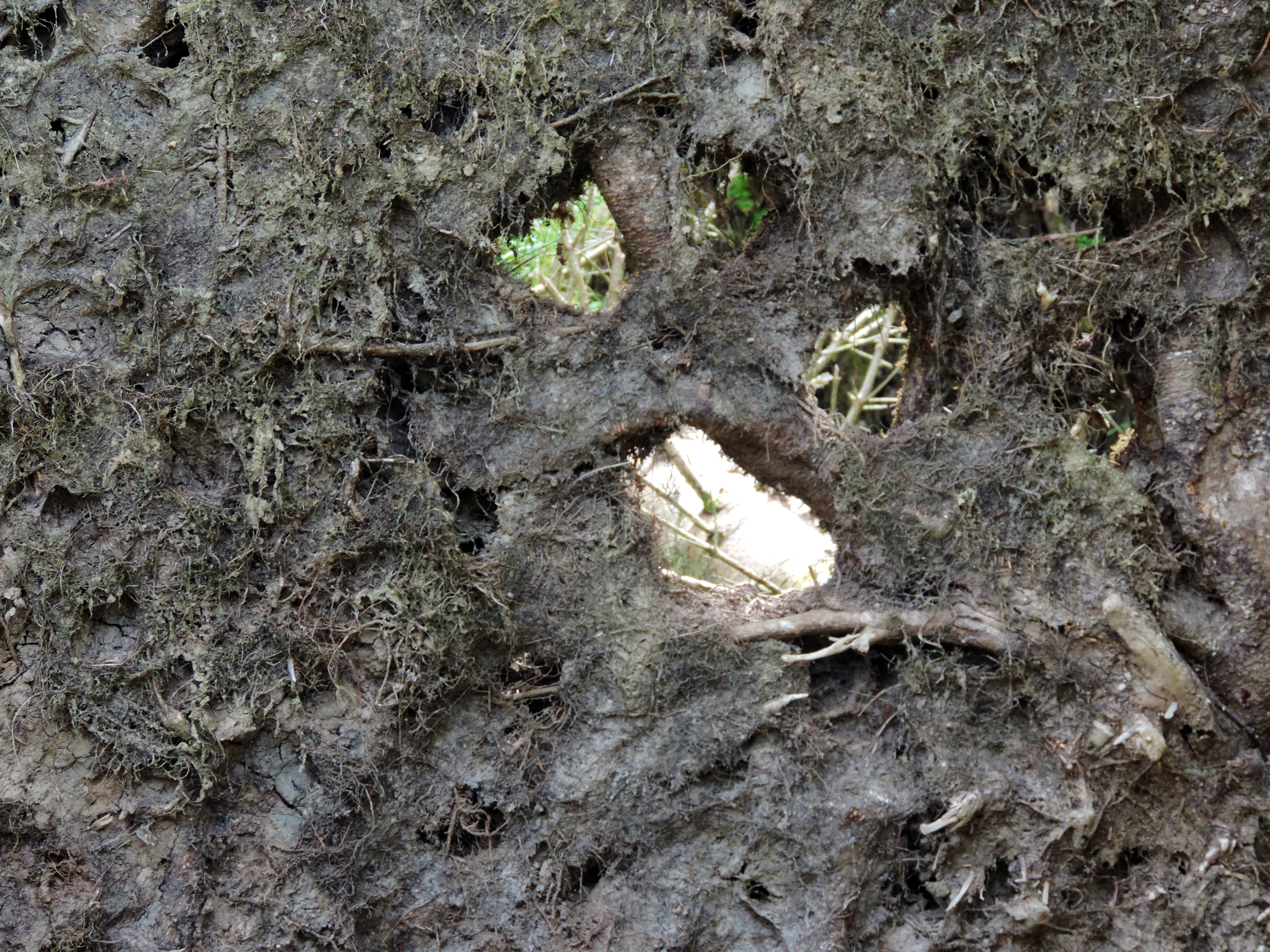
DSCN2157

What’s this? What are you looking at here? What do you see?

Sometimes we just see a part of the world from a different angle, an unusual perspective. Then when you take a photo and look at it later, you see something even more different from when you were actually there – in this case, what strikes me when I look at this photo is how there seems to be a face there – but I didn’t notice that at the time.

Read Full Post »

« Newer Posts - Older Posts »