Feeds:
Posts
Comments

Archive for the ‘photography’ Category

A seat in the garden

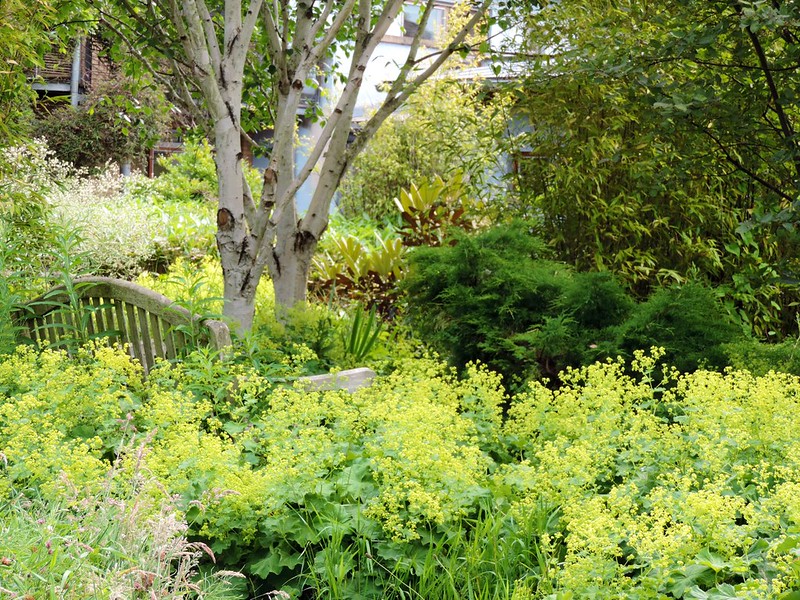
I took this photo the other day in the garden at the Centre for Integrative Care. It provokes certain thoughts for me, because in this view I see an abundance, a flourishing, a diversity of green Life and I see a place to facilitate its full enjoyment, a place to pause, to slow down, to be present.

So, here’s what I’m thinking today……Life is for living, and that living has at least two important aspects – the full enjoyment of Life, and the creation of uniqueness.

Whatever other reasons we might find for being here, we all, moment by moment, have the opportunity to fully enjoy this Life – that captures for me the sense of émerveillement du quotidien which I often to refer to, that sense of wonder, of seeing and experiencing everything as if for the first time and for the last time. It captures the teaching about slowness, of mindfulness and of being present in the NOW.

If there is one quality of Life I’d focus on it’s change. Change is constant. Nothing, but nothing, stays the same. Life is a continuously unfolding, creative, emergent process. We are creative creatures. We create our perception of reality. We c0-create our daily experiences with others, and with the world in which we are alive.

So, when I look at this photo I see these two phenomena – a full enjoyment of the flourishing diversity of Life, and the creative expression of the Universe.


Read Full Post »

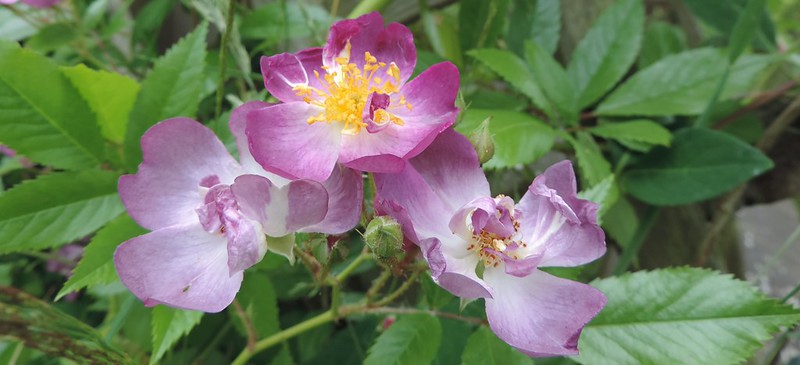
Wild rose

This is a photo of a wild rose (or, in this case, I believe, the “dog rose”)……one of my most favourite flowers.

Traditionally this flower is a birth month flower for those born in June – that’s me. And symbolically the rose is a flower of love, ideal love, and passion. For the homeopaths amongst you, Jan Scholten places the Dog Rose at Stage 10 in the Rosaceae family.

The rose in this photo lives in the garden at the NHS Centre for Integrative Care, where I’ve worked for many years…..(only another few days now, last day at work there will be July 4th – “Independence Day”).

I like that there is a rose in the garden there which will always connect me to that place and all the people there who make it such a special place.

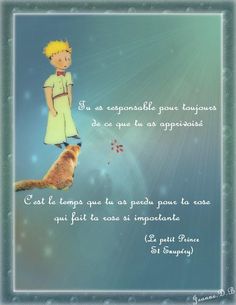
I love the story of the rose in “The Little Prince”…..

c39828f1cd0bd47793250773344d123e

“It’s the time you have spent with your rose which makes it so important.”


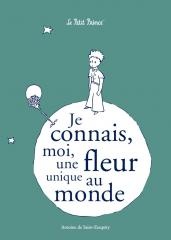
And I also like Saint Exupery’s insistence on the uniqueness of each rose…..

556fff4c58fd69cc9a642c2ffcb9c4b4

Let’s not forget the uniqueness of each and every flower, each and every person, each and every moment.

I also like that in this photo I have a “Wild Rose” which echoes so nicely with the Mary Oliver poem I read at our farewell retirement celebration last Friday – “Summer Day” – especially her closing lines……

Tell me, what is it you plan to do
with your one wild and precious life?


Read Full Post »

pleiades

Which of the constellations in the night sky do you recognise? I wonder if one of them is the seven sisters – “Pleiades”.

I read the following in Gary Lachman’s “A Secret History of Consciousness”

In a fascinating chapter of Cities of Dreams, Gooch sets forth the evidence that this undistinguished group, made up of fourth-magnitude stars—not particularly brilliant—was not only known to our ancient ancestors, but appears in the mythology of many disparate peoples, and in exactly or nearly exactly the same context. For example, for the ancient Greeks, the story went like this: Orion the hunter came upon six sisters and their mother one day in a wood. Burning with lust, he chased the sisters through the wood for five years, whereupon Zeus took pity on the girls and changed both them and Orion into stars, hence the constellations of Orion and the Seven Sisters. Strangely, a very similar myth exists among the Aborigines of Australia. Wurrunna the hunter was out in search of game, when he too came upon a group of seven girls. He grabbed two of them and took them as wives on the spot. However, the trees in the forest took pity on the girls and suddenly grew to a tremendous height; the five free sisters climbed to the sky, as did the other two, thus escaping Wurrunna……..The Pleiades are always known as the Seven Sisters, and they are always hunted. Likewise, they always escape, either through magical means or through the intervention of a god………The Pleiades also have the unchallenged distinction of being the only constellation noted and named by every culture on the planet, past or present.
What do you think of that?
The night sky has always fascinated me. I love the way we humans connect up the individual stars with invisible lines to create constellations, which we then don’t just name, but tell stories about…..stories which help us make sense of the Life and this World. But how did this happen? How did we end up with such similar clustering of stars and such similar stories attached to these clusters (or constellations)? I find that especially fascinating when there are these close similarities in the stories of such disparate and disconnected cultures.

Read Full Post »

In the A to Z of Becoming, Y stands for “yearn”.

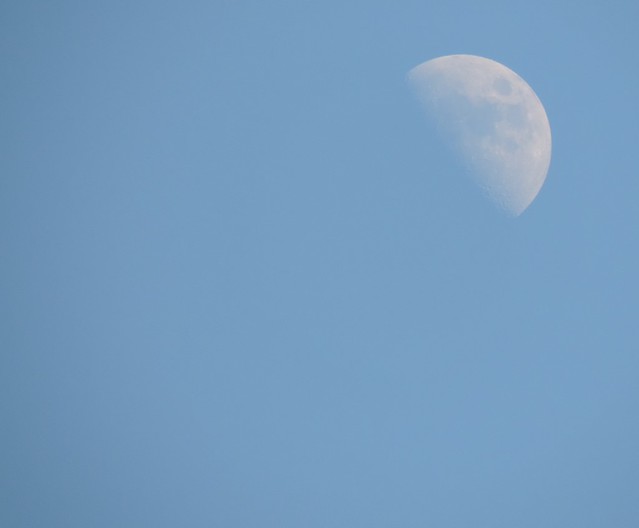
Afternoon moon

I’m not sure this is a verb we use a lot, but it has such a deep, heart felt quality.

Thomas Moore, who wrote “The Care of the Soul”, and “The Care of the Soul in Medicine”, captures what the word “soul” means to us by reminding us how we use the word. We talk of “soul mates”, “soul food”, “soul music”. It’s a deep, embodied concept. I think this is where we yearn from. To yearn is to become aware of what our soul hungers for.

Yearning involves longing. It’s more than desire, more than getting in touch with a goal, it’s a deep, heart-felt connection which fills us with its presence. Such a particular kind of presence…….the kind of presence which contains an absence. There’s something missing, and in yearning there is often an element of sadness, maybe even of melancholy. We’ve lost touch with the value of a feeling like this, I think. The thing is, we might yearn for something we no longer have, for the presence of someone who is no longer with us. But we can also yearn with an eye to the future, and it’s this yearning in particular which I think is of value for us.

If we stop to think about what we actually yearn for in the future, then we are likely to become aware of what matters most to us. We are likely to be able to clarify just what is that bliss which Joseph Campbell said we should follow?

I don’t think yearning is about joy. I don’t think it is about hope. And it’s about more than wishes, but its a way of revealing what is really important to us, what lies deep within our souls. To yearn is feel a sap rising…..


Tall pines

To yearn is to feel something deep unfolding….

fern

What do yearn for?

Read Full Post »

sparkle and wave

light and dark

reflect and ripple

The surface of water always amazes me….it’s texture, it’s colour, it’s interaction with the light.

The deep always makes me curious…..what lies below?

Read Full Post »

I reckon we often think about time as a line. We stand at a point on the line and we call that point the present. Everything from the start of the line up to that point is the past. It’s behind us. And everything from that point to the end of the line is the future. It’s ahead of us. In fact, I’ve used just this idea many times in the consulting room.

It’s neat.

But it’s not a good model of reality!

Time in many ways is a more cumulative process. We grow, not by leaving the past behind us. Every moment emerges from the accumulated past. The past is always within us, always present. It’s probably more like the rings of a tree. Each day grows out of all the other days.


Emerging branch


Henri Bergson puts it this way, in his “Creative Evolution”

……the past grows without ceasing, so also there is no limit to its preservation. Memory, as we have tried to prove, 1 is not a faculty of putting away recollections in a drawer, or of inscribing them in a register. There is no register, no drawer ; there is not even, properly speaking, a faculty, for a faculty works intermittently, when it will or when it can, whilst the piling up of the past upon the past goes on without relaxation……..the past is preserved by itself, automatically……The cerebral mechanism is arranged just so as to drive back into the unconscious almost the whole of this past, and to admit beyond the threshold only that which can cast light on the present situation or further the action now being prepared—in short, only that which can give useful work.
He is saying that we select elements of the past (memories) which might be useful to us in the present. He’s describing something ideal there, explaining something about the mind, but it is really more complex than that, isn’t it? Quite often, it seems, some memory is evoked seemingly against our will, and without it being at all clear that its becoming conscious in a helpful way. But in those moments, in those experiences, we have the opportunities to learn a lot about ourselves.
To what extent do we operate on a kind autopilot ( a major theme of this heroes not zombies site ), with the past memories, habits, loops, paths, somehow running our whole lives?
Not that we can act without these influences. Here’s Bergson again…
it is with our entire past, including the original bent of our soul, that we desire, will and act
Just to put this in context, when he refers to our entire past, he includes what we brought into this world when we were born, not just our accumulated experiences of this life. One common fascinating aspect of that view is our common experience of behaviours and traits which we see in our children or ourselves which seem identical to those of certain predecessors….a father, grandmother, great grandparent, or some other relative who was never alive at the same time as this child.
We don’t have to operate only on autopilot of course. We can develop our understanding of ourselves, become more aware of our present moment, of our choices and why we are making them, and create some small spaces (the neuroscientist’s “necessary distance”) between what comes up and what we do……we can learn to respond rather than react, and in so doing grasp that opportunity to become the active author of our own story.
To become heroes, not zombies.

Read Full Post »
Is change like a series of steps….

The Stairway to...

or a continuous flow, like a river….

river


Bergson writes, in Creative Evolution

The apparent discontinuity of the psychical life is then due to our attention being fixed on it by a series of separate acts : actually there is only a gentle slope; but in following the broken line of our acts of attention, we think we perceive separate steps.

So, reality is continuously changing. It really is a flow of becoming…….

Read Full Post »

Sailing

In the A to Z of Becoming, I’ve chosen a different verb to focus on every week, starting with a verb beginning with the letter “A” and moving forward through the alphabet. We’re down to the last three now, and if you’ve been following this so far, you’re probably wondering, “what verb starts with an x?”

Well, I wondered about that for a quite a while too (wonder was last week’s verb by the way) and I reckon “xylophone” isn’t a verb, and while I could have chosen “X ray” (which you might think I would have done, given that I’m a doctor), I haven’t done that. I could have mused on looking below the surface of things to what lies on the inside, but I’m not doing that. I could have chosen “X marks the spot” and considered the “here” element of “be here now” – as in “x” marking the spot, right here, where we are now.

We rented an apartment on the outskirts of “Aix en Provence” for a few years, and if you know a little French geography, you’ll know that that beautiful town is pronounced “X en Provence”. That gives the locals a mass of opportunities to use the sound of the letter x at the start of words to describe some of the town’s attractions. I’m going to use one of those this week.

X is for Xcite!

Yep, I know that in English “excite” starts with an “e” but this week it starts with an “x”!

I want to look at this verb from two sides.

What, or who, excites you?

and

What, or who, do you excite?

Think about these questions and maybe take your notebook and see what you can list. When do you feel most excited? Do you feel excited very often? I think it’s wonderful to see little children bouncing with excitement. They are little bundles of energy and happiness in those moments. We lost that, don’t we? I’m not suggesting you start bouncing like a child (but if you want to, please go ahead and give it a go!), but I am suggesting you specifically ask yourself about “excitement” in your life. There must be something, or someone, you find excites you, even if not currently.

And, spend a little time too, on the question, what, or who, do you excite? I reckon we don’t think that way very often. We don’t often consider how we create excitement, where we create excitement, or who we create excitement for.

Go on, make this week a little more XCITING!


Read Full Post »

According to a government report workers who retire early risk “boredom, loneliness and poverty“.

Well, that’s something to look forward to, huh? Strange report – probably part of a fear campaign to try and keep people in employment for longer. What are they suggesting, actually? It’s better to retire later? Or that if you are working, even on a minimum wage, zero hours contract in your 60s and 70s you will avoid “boredom, loneliness and poverty”?

I suspect this kind of thinking says more about how we live than it does about the respective benefits of employment and retirement.

Funnily enough, I just stumbled over this quote from Goethe –

“A man should hear a little music, read a little poetry, and see a fine picture every day of his life, in order that worldly cares may not obliterate the sense of the beautiful which God has implanted in the human soul.”
― Johann Wolfgang von Goethe

I’ll be continuing to do that once I start my early retirement next month! And much else besides. I’m anticipating that the post-employment years will include lots of discovery, creativity, personal development and fun.

Meantime, here’s a little music

and a little poetry

Tell me, what is it you plan to do
with your one wild and precious life?

– from Mary Oliver’s The Summer Day

and

Here’s a fine picture

glorious seedhead


Read Full Post »

Any botanists reading this?

If so, what’s going on here?

Why do some of these flowers have six petals…..

Six

and some have seven…….?

Seven


Nature loves diversity

Read Full Post »

« Newer Posts - Older Posts »