Feeds:
Posts
Comments

Archive for the ‘photography’ Category

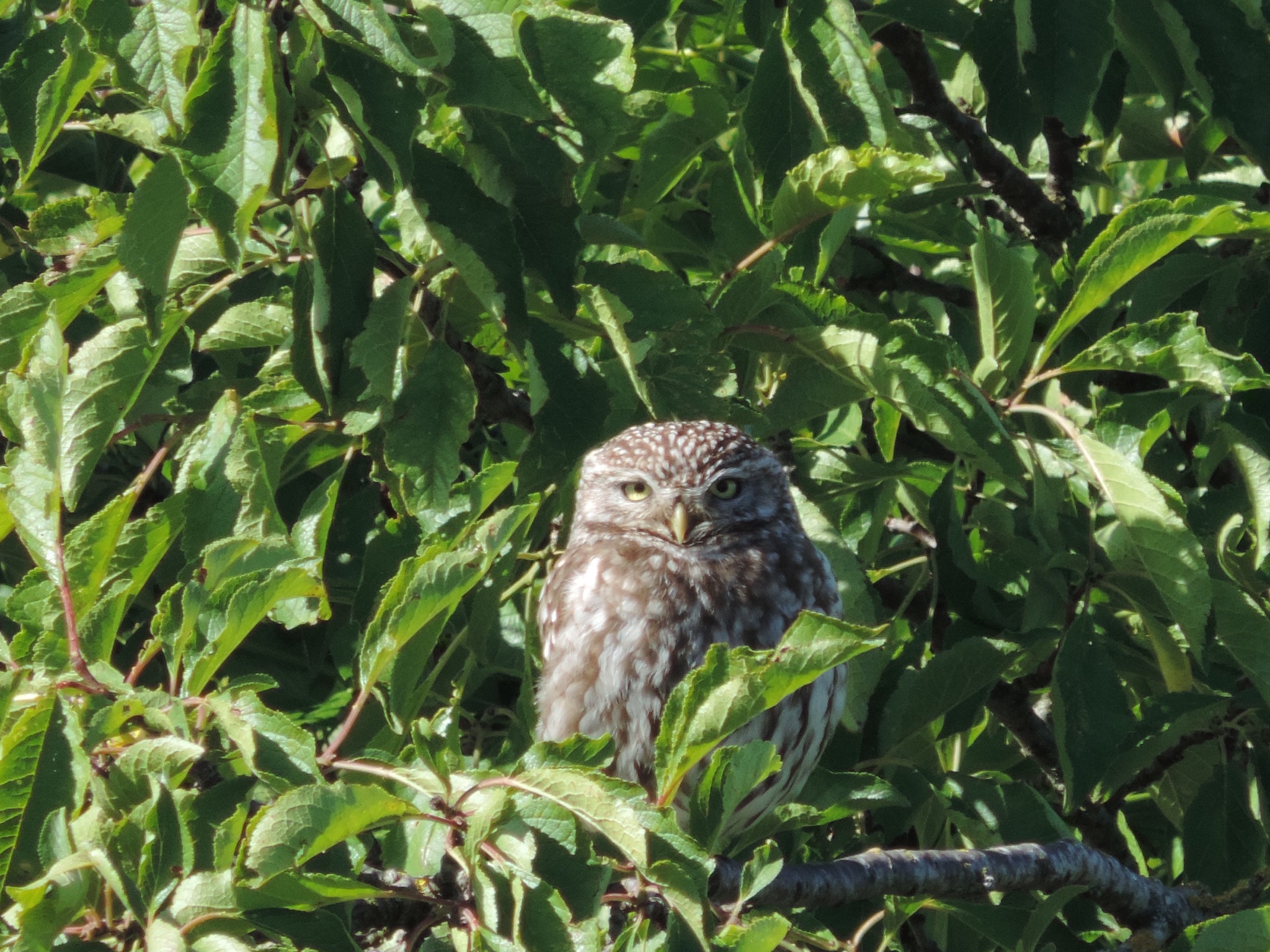
Can you see the two owls?

The “Little Owl” sitting in the plum tree at the corner of my garden is watching me, watching him…..as usual! On the right is a photo I took in a forest in Southern France last year. Can you see the carving of the owl at the top of the tree? Instead of just cutting the branches (I don’t know if there was something wrong with them, or they broke in a storm), someone has carved an owl at the top of one of the stumps.

These two photos make me think of our relationship to the world…..just how interactive that relationship is. I have many experiences now of noticing another creature noticing me. Maybe it just makes sense that we would both have the natural ability to be aware of each other, but when it happens directly like this, it shifts the experience into another gear. It’s a bit like when I do a whistling “conversation” with the Redstart who lives in the garden every summer. Those “call and response” sessions are delightful and they really do give me a deep sense of connection to the non-human, living world.

The carving speaks to another aspect of our relationship with the world brought about by our powers of imagination and creativity. The truth is we change the world every second just by living….just by breathing, just by walking, gathering, eating and drinking, just by our behaviour which is determined by our values, beliefs, our thoughts and our bodies. But this conscious interaction, again takes our relationship to another level. This fashioning of an owl changes the experience of this tree, and so, too, of the whole forest. It’s a point of wonder, of delight. It made me pause, raise my camera and take a photo. It made me wonder about the artist….who he or she is, when they did this, and why……what did it mean, and what does it mean, to them? The sculpture raises the awareness of the observer to the fact that the forest is full of life, not just of plant life, but of birds and other creatures, but given the symbolism of owls, for me, at least, it also raises my awareness of the wisdom of the forest, and the wisdom of Nature.

Seeing this example of human imagination and creative expression in Nature reminded me, also, of an article I read in “Le Monde” a few days ago, about another cave complex full of wall art in the Dordogne. This one near Cussac. It isn’t open to the public and has still not been completely excavated but has many, many drawings of animals, just like in nearby Lascaux, but in addition they have found the skeletons of six Paleolithic human beings. There’s something else different about Cussac – (click that link if you want to read a good English language article about this cave complex) there are, so far, four clear drawings of the female form. Yep, that’s right, the female, not the male, form…..gets you wondering, huh?
Read Full Post »

I have to go back about forty years or more to remember a collection of short stories I read. It was called “Strange News from Another Star”, by Hermann Hesse. Those stories made a big impact on me….so big, I remember most of them even now. Oddly, I haven’t re-read them over the years, but I did read them more than once back in my student years.

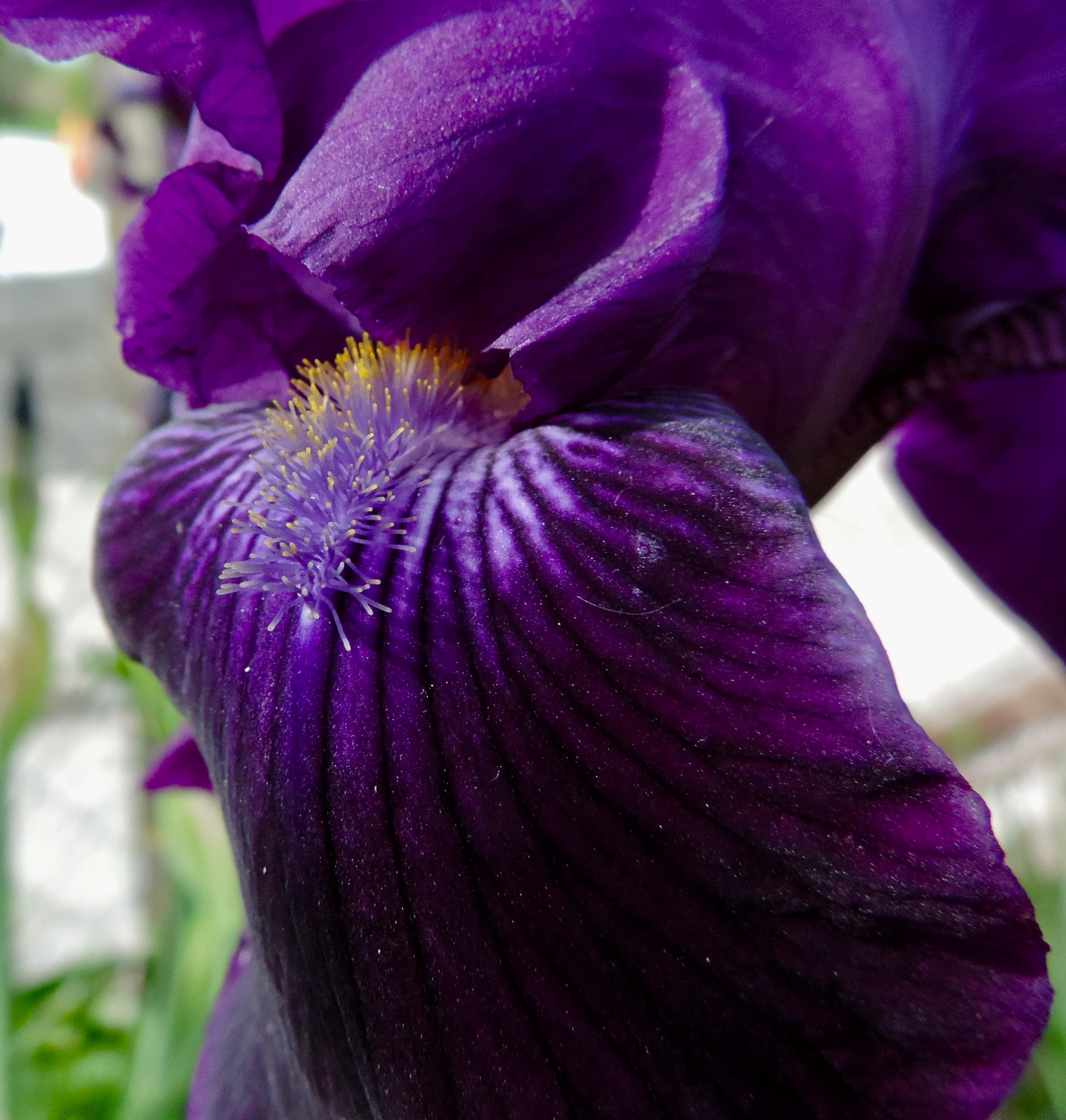
One of the stories from that book is entitled “Iris” and I always think of it when I see a flowering iris like this one. I remember the boy Anselm describing how he could follow the little yellow stalks as if they were a picket fence marking a path which led deep down into a secret garden. That image of looking at a flower really close up and losing yourself in the depths of that one flower has stayed strong in my memory and imagination. It feels like a description of one of those moments when you lose your boundaries and connect with another living creature so completely that you begin to experience the reality of the wholeness of everything.

Here’s a passage from that story (I looked it out today to write this post)

Iris smiled at him as he stood there at a loss, rubbing his forehead with his hand. “I always feel the same way,” she said to Anselm in her light, birdlike voice, “whenever I smell a flower. My heart feels as though a memory of something completely beautiful and precious were bound up with the fragrance, something that was mine a long time ago and that I have lost. It is that way too with music and sometimes with poems – suddenly there is a flash for an instant as though all at once I saw a lost homeland lying below in the valley, but instantly it is gone and forgotten. Dear Anselm, I believe we are on earth for this purpose, for this contemplation and seeking and listening for lost, far-off strains, and behind them lies our true home.”

I mean, how magical is that? Do you believe we are on this earth for a purpose? Do you agree that at least part of that purpose is “contemplation and seeking and listening….”? Because I’m pretty sure that those three things….contemplating, seeking and listening…..open us up to see more than what just flashes before our eyes.

Isn’t that ability to weave stories into our experiences of everyday encounters one of the key ways in which we make this a more enchanted life?

Read Full Post »

I love forests. I love how the sunlight filters between the trees, drawing my attention from shadows and patches of sunlight, up towards the trees themselves, and further up to the Sun itself.

It’s one of those magical, enchanted scenes we encounter in life. It takes the Sun, the trees, the forest, and an observer (in this case me) to have this encounter, to experience this event, to delight in this moment.

I know it’s said that a rainbow only exists with the triad of sun, rain and observer are in place, so that we need to be standing at a particular angle to the sun and the rain to see the rainbow appear.

I think the light in the forest is like this too. The world is not an object “out there” waiting to be seen by me “in here” witnessing everything from disconnected observer’s box, like a birdwatcher crouching in a hide.

No, I am the co-creator of this life I am living. These experiences I have come into being, emerge, if you wish, from the interactions of everything that is……from the Sun, the trees, the forest, from consciousness. Everything changes in that moment….my consciousness, the forest, the trees, and even the Sun. We “commune” together.

You would have a different experience from me. Maybe you have had similar ones, but, we never have the same ones. I have had similar experiences at different times, but they are not the same experience, because I can only have this particular, this special, this unique, experience one, single time.

How wonderful, how amazing, how delightful…….I hope I don’t miss it next time.

Read Full Post »

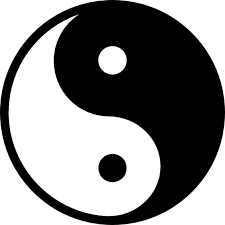
When I looked up and saw these black and white clouds I immediately thought of the yin yang symbol….that brilliant representation of wholeness, the union of opposites, and the permanency of change.

I think those are three of the most significant principles I return to again and again to make sense of the world, of life, of other people and of me.

Wholeness because all reduction, every move to separate and isolate, every attempt to disconnect, to abstract, to re-present, is fraught with the potential for delusion. There are no separate, isolated, disconnected phenomena in Nature. All our abstractions and re-presentations which we carry out with our left hemispheres are a step away from reality. Which is not to say they aren’t useful. They are. But you can’t rest there. You have to re-contextualise, to hand back the analysis to the right hemisphere to understand what you are looking at as only an aspect of the whole.

The union of opposites because we humans, Nature, Life and the Universe are full of opposites….dark and light, heat and cold, attraction and repulsion, organisation and disintegration. In fact it seems that there is no universe without opposites. We are tempted to construct the myths of competition and conflict from that fact, but we must not miss the deeper understanding – that all of existence emerges from the integration of opposites, not from the elimination of one pole by another, not from the unchallenged dominance of one over another.

The permanency of change because that’s the nature of reality. There is nothing fixed, nothing which is not in the process of growing, or adapting or degenerating, whether we see that as three Gods, or as the natural cycles of the biosphere and of the seasons.

So when I look again at these clouds, these beautiful black and white clouds, I am captured by their beauty and entranced by the teaching they can give me.

Read more about this in my book, “And not Or”. You can get it from Blurb at https://www.blurb.co.uk/b/10155078-and-not-or

There’s also a Kindle version – https://amzn.to/2UozjIw – if you are in the UK. If you are not in the UK, go to your local Amazon site and search for “Leckridge” – you’ll find it quickly that way (let me know if you don’t!)

Read Full Post »

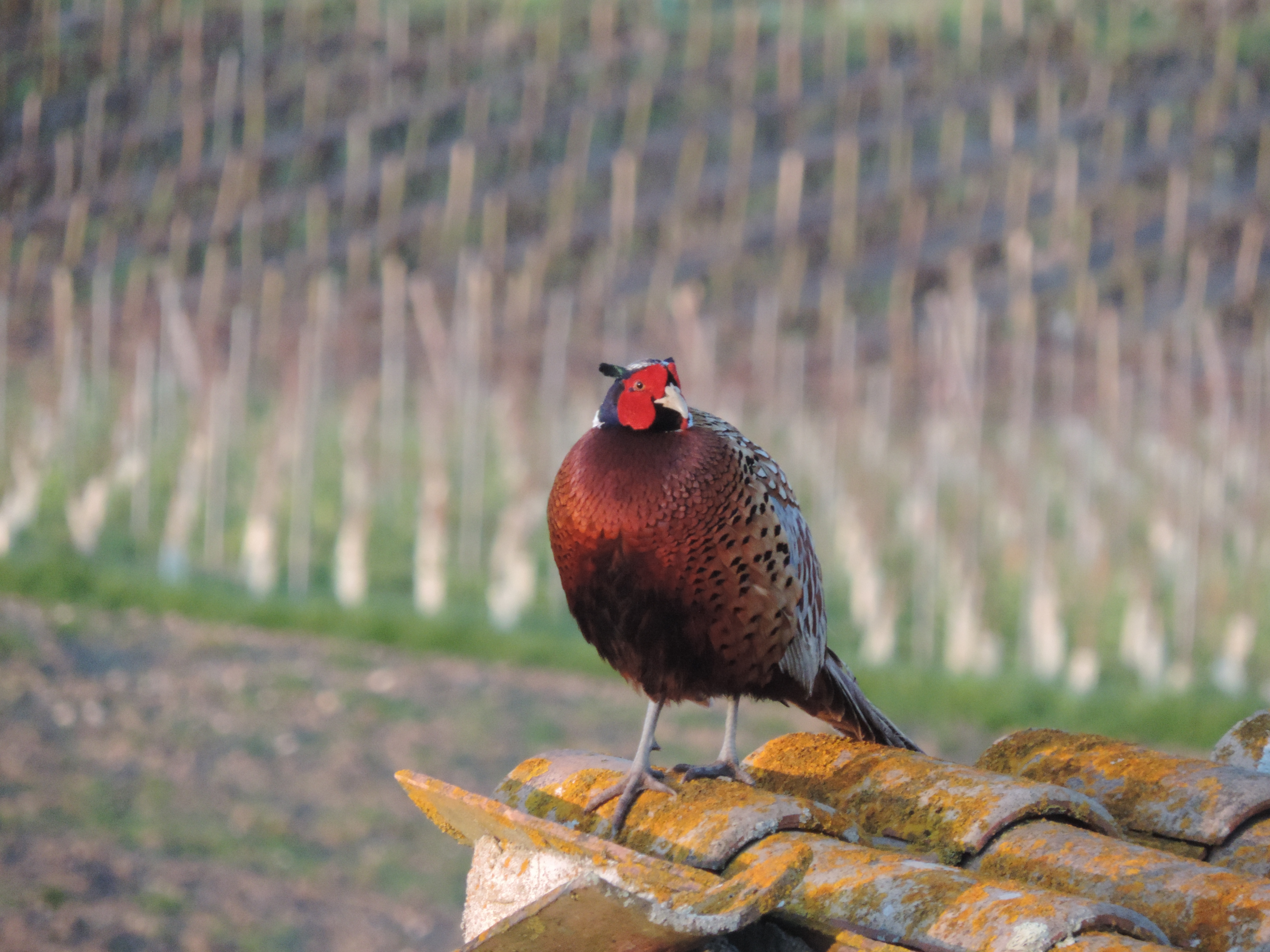
In the exact same place this year I saw two strikingly different birds. Of course, not at the same time! But standing on the same tile on the same roof.

The pheasant on the left, and the “Little Owl” on the right, are both delightful. But don’t they both transform the same view?

The bright colours of the pheasant are in striking contrast to the browns and greys of the owl, and despite the fact that the tiles, the lichen on the tiles, and the background vineyards are pretty much the same, each image is strikingly unique.

It’s not just the image though….it’s the experience. My experience. The day I saw the pheasant and the moment I saw the owl were completely different for me. Each thrilled me, but each in its own way. They were great examples for me of how our being in the world is not something fixed, not a collection of objects waiting to be discovered, but, rather is constantly changing, and teaming with qualities. We co-create our lived experiences with all the other creatures who also inhabit this little planet, Earth.

I was very struck by how the owl seemed to be looking directly at me looking at him. But I didn’t have the same experience with the pheasant. However, looking more closely, I can see that pheasant, too, is looking directly at me. The difference is that because it is a predator, the owl has both eyes on the front of his face, whereas the pheasant has its eyes on the sides of its head. You can see the pheasant has turned his head to look at me with his right eye.

Now, according to Iain McGilchrist birds, like humans, have two asymmetric halves to their brain. The left eye is controlled by the right hemisphere and is used for broad vigilant awareness, whereas the right eye, controlled by the left hemisphere focuses right in on things and is used to clearly find food, for example. I don’t think the pheasant was regarding me as food, but I do think it interesting that he turned to get a better a focus on me using his right eye!

Well, I had another reason to share these photos with you today – they are two of my most favourite shots of 2020! I just think they are beautiful, and I hope you do too.

Read Full Post »

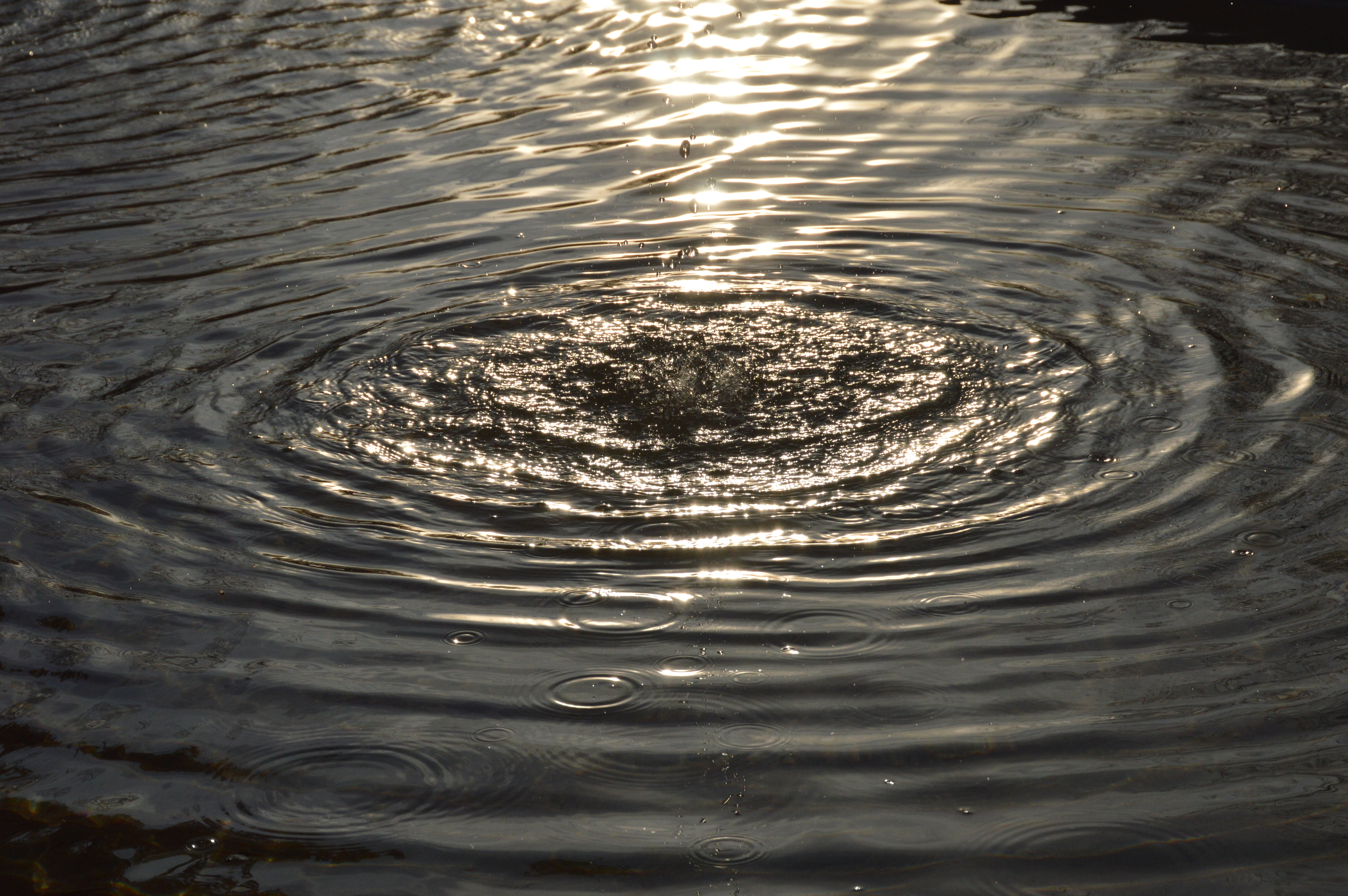
Aix en Provence is a city of fountains. There are dozens of them throughout the town. This one, in the Cours Mirabeau, is a simple bubbling up of water in the middle of a round basin. It’s not a dramatic spray or jet of water, but I love it. I can sit and watch the patterns on the surface of this water for ages. They are mesmerising.

At first, you could have the impression that there is one main point of activity, where the water emerges from the bottom of the basin, sending out concentric rings of ripples towards the outer edges of the fountain. They look like the rings inside a tree, and they remind me of how a small action spreads its effects over the whole body of water.

But, you don’t have to look terribly closely to notice that there is more than one centre of action in this fountain. I’ve zoomed in on just one of the several points where the water bubbles up onto the surface. Up in the top left of the image you can see some of the ripples which are clearly coming from another source. Those ripples interlace themselves with the ones from the centre focus, reminding me of a lesson I learned in school when we were studying waves – it’s called “interference” – two concentric circles of waves meeting each other, with two peaks creating a big peak, two troughs creating a deeper trough, and peaks and troughs cancelling each other out when they meet in the same time and space. It’s a beautiful pattern and you’ll be familiar with it.

This image of “interference” from two sets of ripples already demonstrates the beauty of interaction and complexity. It reminds me of the “attractors” we see in all complex systems, and also reminds me that “attractors” do not necessarily pull everything towards them the way the pole of a magnet does. Rather, they are organisational centres, influencing the structures and patterns of the environments in which they exist.

But, wait a moment, we aren’t done. Look a bit closer and you see a number of smaller circles dotted across the larger pattern of the concentric circles. Each of these is caused by a drop of water falling from higher up in the fountain, or from a splash which releases a few water molecules from the mass, a few molecules which fly through the air, then fall onto the surface a short distance from their origin. Look how each of those circles enhances the beauty and complexity of the overall pattern.

In the real world, in the natural world, there is no such thing as simple cause and effect. Everything which happens, occurs within an interconnected web of events, influences and forces. There is always this interplay. There is always this complex beauty which renders the future unpredictable.

What we experience, our health, our illnesses, our joys, delights, our sorrows and pains, are always multi-factorial, always complex in origin, always multiply connected. We pull out some of the threads, focus on some of the events and factors, and create a story which helps us to make sense of what we experiencing. that story is necessarily always complex, always changing, always developing.

I read a passage written by Umberto Eco the other day –

Per ogni problema complesso esiste una soluzione semplice. Ed è sbagliata. (For every complex problem there’s a simple solution. And it’s always wrong.)

Read Full Post »

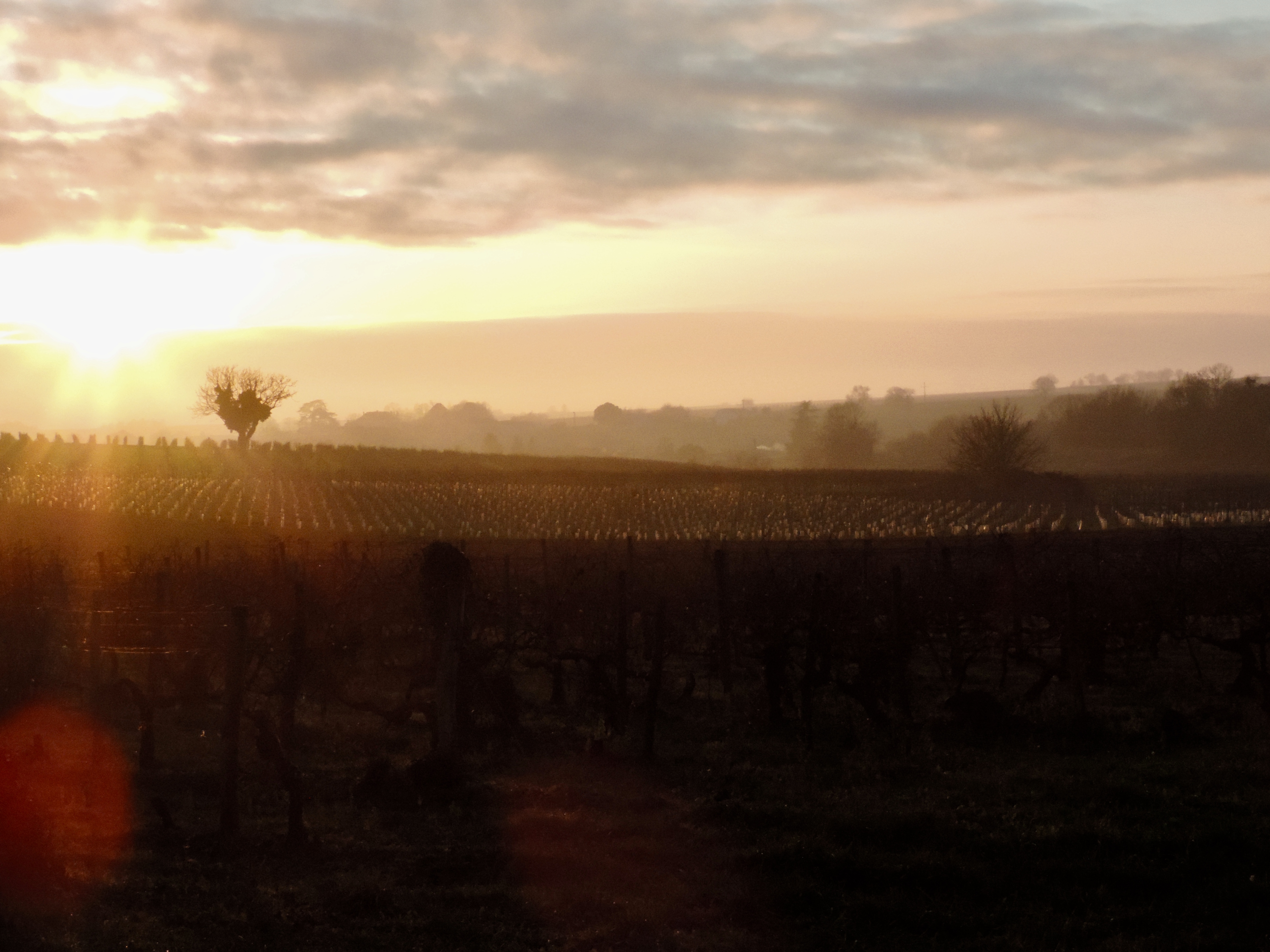
I was never aware of the “Belt of Venus” before I moved to South West France. The first time I saw it, I thought, how come there’s that’s pink colour just above the Western horizon as the Sun rises in the East? When I looked it up, I discovered it was the “Belt of Venus”. Since then, I’ve noticed it many times.

I suspect I am more likely to look towards the East in the morning as Dawn breaks, and to the West in the evening as the gorgeous sunsets transform the sky into works of gold, tobacco brown and all shades of red.

But now I know to look the other way. I look towards the West when I am up at dawn, and what beautiful rewards await me for making that decision.

We are creatures of habit. We tend to observe in habitual ways. We tend to think in habitual ways. So, we repeat the same experiences again and again. Sometimes that can be a good thing, when our habits bring us joy, comfort and contentment. But, it seems to me that often those habits extort a high price, keeping us stuck, blinding us to opportunities, engulfing us in rumination and regret.

So, I find it’s good to look the other way sometimes. Not as in denial, neglect or in choosing ignore someone or something which needs our attention, but in consciously setting up the opportunities to change the tune, to open a few more doors, to release our abilities to imagine and to dream….in other words to increase our joy, our wonder and our delight, and to embrace our natural capacities to create, to invent, and to change.

You might think that this is a call to do the opposite of whatever it is you are doing, but I don’t think it’s limited to that. Looking to the West in the morning is not a simple opposite to looking to the East (after all, I do look to the East to see the sun rising as well). It’s more about expanding the attention, stepping out of narrow, well-trodden paths, and seeing what else is here…..right here, right now.

This exercise of looking the other way is, for me, one of releasing myself from the familiar, sticky, narrow focus of the left brain, to develop the broader, novel-seeking, particular-seeking, connection-making focus of the right brain.

Read Full Post »

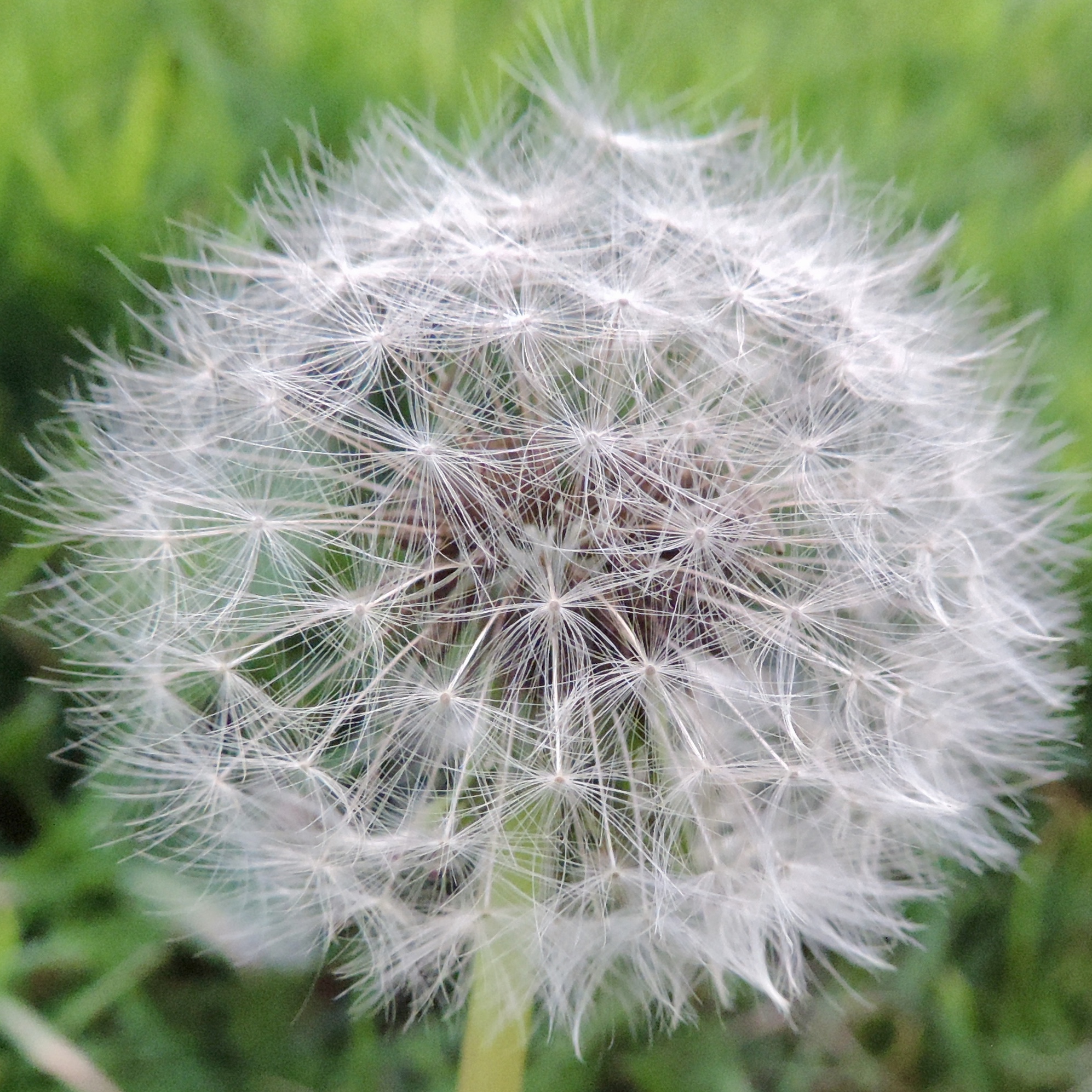
I know, you’ll have seen photos like this one many times. It’s almost a cliche. But, hold on, let’s just pause for a moment and take a closer look.

Plants which use wind dispersal of their seeds often produce a spherical display like this one. Even at first glance, they are beautiful, but once I stop to look closer, I can see each individual seed held on the end of its own delicate stalk and surrounded by a myriad of soft, fluffy, fibres, just waiting to catch to the wind. In that moment I am amazed. I am caught, the way the seeds hope to catch the wind. The delicacy, intricacy and complexity of this structure is actually quite mind boggling, but, still, it’s just part of normal life for a little plant like this.

I think we are apt to pass this by too easily. I think that when we stop, look more closely, and reflect on what we are looking at, we can’t help but be impressed by the creative power of plants, the creative power of Nature.

But I think something else now when I see a seed-head like this. Because this has been the year of the pandemic, of the rapid, global spread of a tiny virus, hopping from one human to the next, infecting millions, killing hundreds of thousands. If that hasn’t given us pause for thought to realise that we might live in a civilisation of nation states, but we share the one, small, utterly inter-connected planet, then I don’t know what will.

So, I see this little plant now, waiting for the wind to come and spread her seeds far and wide, and I am reminded of how Nature is One, and how we humans are neither separate from each other, nor from the rest of the living planet.

Aren’t we going to have to move on from the dominant mythologies of capitalist materialism? Don’t we realise now that we cannot dominate Nature, that we are not separate from Nature, and that if we want to survive and thrive we need to learn to live together by creating mutually beneficial bonds and relationships – do you remember that definition? It’s the definition of “integration”.

I think that’s the new story we need to learn, those are the new myths, beliefs and principles we have to adopt…..the ones which teach us about, and which promote, “integration”.

My actions are like these seeds.

My words are like these seeds.

My thoughts are like these seeds.

They are going to spread far and wide, and so are yours. That’s just how it is. So maybe I should consciously choose the actions, words and thoughts which will spread “integration”, will spread kindness, will seed happiness, love and joy….wouldn’t that be something?

Read Full Post »

When I looked up at these trees and the sky above them, I saw the clouds as leaves on the outstretched branches of the trees….almost an impressionistic presentation of leaves of course….white, fluffy, almost like individual brush strokes painted onto the blue canvas.

Just a moment of imagination.

I didn’t at any point misconstrue the clouds. I knew they were clouds floating high above, and the trees were trees growing far below the blue sky, but in that moment of imagination the experience becomes a little magical, a little less mundane.

What’s the alternative? To notice severely pruned trees in the foreground and clouds in the sky above with absolutely no connection to what was growing down here on the surface of the Earth?

Well, that’s one of the reasons I like imagination…..not only does it enable us to see the invisible connections between everything…..in the same way that we humans have seen invisible lines joining stars at night into constellations which we can then use to navigate, or to know when to plant and when to harvest. But it enhances our daily experiences, giving them qualities which feel enchanting, delightful, joyful, or expansive. Qualities which would be hard to experience from a “simple” consideration of “facts”.

The world is not full of disconnected “objects” dispassionately viewed by disconnected “subjects”.

It is a whole, a fully integrated web of connections, contexts, environments, and flows of matter, energy and information, which is alive, vibrant, beautiful and awe-inspiring.

I don’t think we would realise that, were it not for the powers of our imagination.

Read Full Post »

I’ve long since been drawn to Romanticism. I feel they bring some extra, something deeper, something substantial to the dominant perspectives of the rationalist Enlightenment thinkers. It’s a funny thing, because in many ways I think I’ve lived with a foot in both camps. I trained in Medicine, practised as a General Practitioner for the first half of my career, then as a Specialist in what we came to call “Integrative Care” for the second half. That second half move was enabled by my training in Homeopathy which gave me a different framework to understand individual health and illness, as well as a set of therapeutic tools. We specialised in the care of people with long term conditions at the “NHS Centre for Integrative Care” in Glasgow, with the majority of our patients coming to us for help when they felt orthodox care wasn’t helping them enough. But we had a foot in both camps there, because our hospital was embedded within the Scottish NHS and we had access to all the tools, specialist help and advice of all that orthodox care could offer.

What does that have to do with Romanticism? I’m not sure, but I’ve recently been inspired to explore the Romantics in more depth, because I heard an interview with Eugene McCarraher about his new book, “The Enchantments of Mammon“. He talked a lot about the Romantics and I remembered that Iain McGilchrist had written about them too, so I picked “The Master and His Emissary” off my “most significant books bookshelf” (yes, I do really have such a shelf in my bookcase!), and yesterday sat down to re-read his chapter on Romanticism. One of the first lines in that chapter is

As always it was the clashes of theory with experience that showed up the cracks in the edifice of rationalism.

Well, that’s it in a nutshell……it was the “cracks in the edifice of rationalism” which opened the door to my enlarging my Practice to include a focus on the qualitative, and the “unmeasurable”. And, boy, was that a set of “clashes of theory with experience”!

Then this

Differences are as important as generalities

Now, this must be what became THE foundation stone of my Practice as a doctor. It still makes me a mixture of sad and annoyed when Medicine is conducted as if generalities trump differences every time. There continues to be a real struggle for individuals to have their stories heard and believed, especially when they don’t fit with either “generalities” or “theory”.

The idea of individual difference is central to romanticism

Well, if that is true, then I need to know more about romanticism, because the importance and the inescapable reality of individual difference lies at the heart of my life values.

What’s all this got to do with the photo I’m sharing today? Well, I just read this line

The Romantics perceived that one might learn more from half-light than light

OK, I’ve taken it out of the context of the rest of the chapter but Iain is arguing that a difference between the left and right hemispheres is that the left wants certainty, clarity and exactness, where the right is more interested in the whole, in the synthesis of opposites, in the distance between where we are and where we can almost see.

There’s real beauty here. There’s mystery and enchantment. There’s wonder and amazement. Well, I just love all of that.

Read Full Post »

« Newer Posts - Older Posts »