Feeds:
Posts
Comments

Archive for the ‘photography’ Category

Richard Louv once coined the expressing “Nature Deficit Disorder”, arising from not spending enough time in Nature and proposed a treatment – “Vitamin N” – a dose of Nature. In Japanese research there have been discoveries showing positive chemical changes in the human body in relation to the immune system and a settling of inflammation when practising “forest bathing”, which consists of spending some time in a forest.

I like those ideas and so, last week, on a sunny day, we took a trip into the Limousin, found a nice forest, and had a walk.

Do you do that from time to time? I thoroughly recommend it. I mean, who really cares about the biochemical markers of immunity and inflammation when spending a bit of a day amongst the trees is just such a treat anyway? But it’s good to know the benefits are so deep.

Le Monde group has just launched a new publication entitled “Sens et Santé” – I like how French words often have several meanings all at once – “Sens” can mean “sense” or “meaning” but also “direction” (“santé” is health). One of the larger, beautifully illustrated articles in the inaugural issue focuses on “forest bathing”, describing how you can take time to become aware of the sounds, the sights, the smells, the feel of the trunks of the trees, and even, if you are so disposed, to spend a little time meditating.

Of course, I wouldn’t go without my camera, but that’s just my personally favourite way of raising my level of awareness. I notice more when I have a camera in my hand and an intention to take photos.

Look at this particular tree. I posted about a strange shaped tree a few months back, wondering what had happened in its life to bring about its peculiar shape. Well, here’s another one to stop me in my tracks and get me wondering….what on earth happened here?

And immediately another thought pops up – what resilience! What an incredible power to overcome what looks like it could have been a fatal event, to grow again, not just a new trunk, but six of them! Wow! There’s an inspiration!

Read Full Post »

When I lived in a village just outside of Stirling I would look out of the bedroom window of my top floor apartment every morning and I’d see Ben Ledi. The shape of the mountain became very familiar to me but I was struck by just how different it looked every single day. Some days the clouds were so low I couldn’t see it at all. Some days its summit was dusted with snow. Some days the clouds or mist dressed it differently. Other days it was the changing colours of the earth in the moving sunlight which caught my eye.

Since moving to rural France my view is completely different. I look out onto a garden which is surrounded by vineyards which stretch to the horizon at the top of the hill. Each season shows me a unique different view of the vineyards and I’ve already grown to love the characteristics of every one of them. But my “every day” now begins with a view of the garden and, in particular, of the very varied bird life which spends time here. Many of the species are new to me and I’ve never been very good at naming either creatures or plants – at least not in naming them scientifically. I think there’s something in me resists labelling, categorising and putting living forms into boxes. But another part of me is curious and wants to know – just what is this?

I can have that experience noticing a small yellow flower in the grass, or spotting a brightly coloured little bird pecking at the seeds in the bird feeder. My experience is that every day is different. My experience is that every day I see something that amazes me, something which is literally awe inspiring. The French have a great word for that experience – émerveillement. It means to wonder, to marvel, to delight in, to be in awe of, to be amazed by. The first time I encountered this word was in a phrase – “l’émerveillement du quotidien” – kind of means, the wonder of the daily, the everyday. It’s a philosophical phrase and I’ve quickly adopted it as one of the core principles of my life. Not that I’ve had to change anything to adopt this principle. It’s more that this core principle reinforces one of my most natural, instinctive habits. I’m an insatiably curious person and I’m constantly noticing the world I live in….and wondering about it.

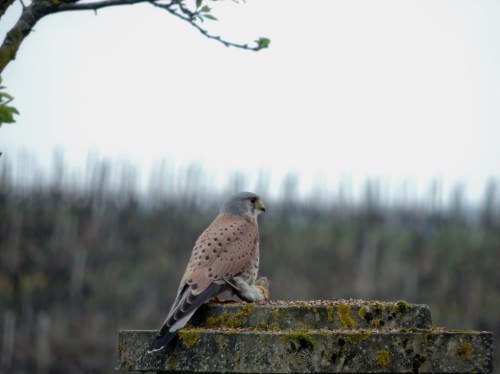
So, you can imagine just how excited I was yesterday when I looked out of the window at lunch time and saw this large bird standing on one of the fence posts. I went for my camera and saw he had moved to the pillar at the corner of the garden and I had enough time to zoom in and get these photos. It wasn’t until I did that that I could see what he held in his claw.

At first I was quite shocked. I’ve taken photos of little birds pecking at seeds many times, and even some catching worms, but this is the first time I’ve seen and managed to photograph a bird of prey with its prey. Well, this is how it is for these creatures. We humans are part of that lengthy food chain where one creature consumes another to survive. Only the plants in this world survive without preying on any other living creatures (and not even all plants do that exclusively either).

But just let’s return to wonder and amazement. Look at the beauty of this bird. Look at the patterns and colours of the feathers, the yellow circle around his eye, his yellow feet. Look at that eye! What an eye! And look at that beak! What an astonishing combination of beauty, elegance and power!

I did set off into books and google afterwards and as best I can tell, he’s a kestrel.

Made my day!

Read Full Post »


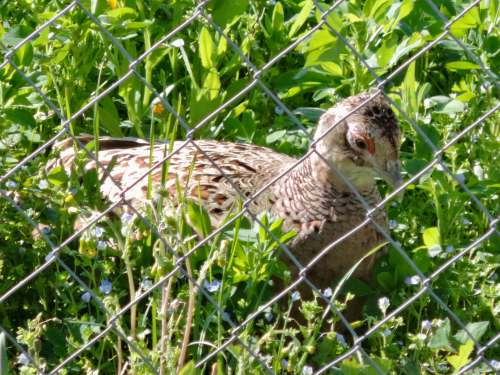
The first thing which caught Hilary’s attention was a movement on the other side of the fence. But what was it? A cat? No, it was a bird…..this bird…

It’s often movement which catches our attention, or at least it’s change. Something changes. You’ve had that experience where you only notice a noise when it suddenly stops haven’t you?

One of sign of Spring here is that a barn owl starts to nest in a box embedded in the front of our house. Each evening this week, once it’s dark, I notice him flying past. Well, I say I notice him. I’m not looking out of the window but all of a sudden I say “That was the owl flying past” because I caught something out of the corner of my eye. The moment I turn to look, and I mean the absolute split second that I turn to look, I see nothing. He’s past already. So how did I see him? It wasn’t just a blur of movement. I recognise it’s him. Not a blackbird, or a pigeon, or a bat. It’s the owl. Then one evening this week I looked out when I thought I’d seen him fly past and there he was in the tree, sitting looking back in through the window at me. And in that moment, he was gone. Flown away.

Somehow I see him before I become aware of seeing him. It reminds me of lying in bed one sunday morning and waking to the sound of church bells. I counted “Seven, eight, nine” and then they stopped. I looked at the clock and it was nine o’clock. But I was only aware of counting “seven, eight, nine”, not “one, two, three…..” you know what I mean. So, when did I first perceive the church bells? Right from the first one surely. But I was asleep and I had no conscious awareness of hearing them at all.

Those experiences fascinate me. They are tiny glimpses into how much goes on at the subconscious level in our minds. How awareness comes just a little later….

Read Full Post »

Last November I was invited to address the Faculty of Homeopathy at their Congress in Belfast. I prepared a talk entitled “Images of Health. Pictures and stories” based around some of my own photographs and covering the key principles of health which guided me through my career as a doctor.

Here’s the video of that talk. I hope you enjoy it, find it interesting, or even inspiring. (by the way, if Google pops up any ads along the bottom of the video, just click the “x” box to make them go away 😉 )

I wrote a book to accompany this talk. It’s called “Escape to Reality” and I’ve published it (so far) only as a Kindle e-book. You can find it on Amazon.


//ws-eu.amazon-adsystem.com/widgets/q?ServiceVersion=20070822&OneJS=1&Operation=GetAdHtml&MarketPlace=GB&source=ac&ref=tf_til&ad_type=product_link&tracking_id=leckridgecom-21&marketplace=amazon&region=GB&placement=B01LZE4UVL&asins=B01LZE4UVL&linkId=&show_border=true&link_opens_in_new_window=true

Read Full Post »

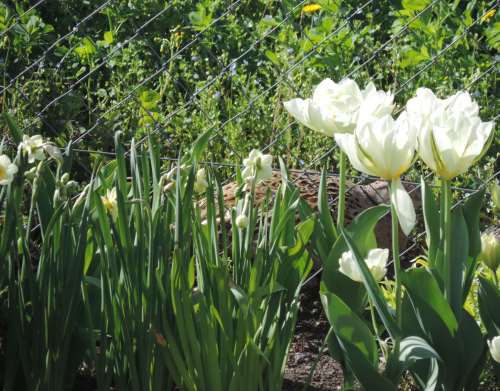
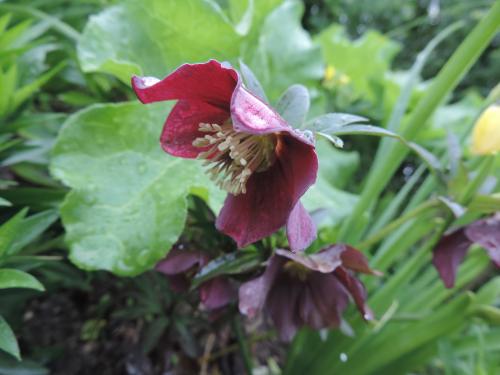
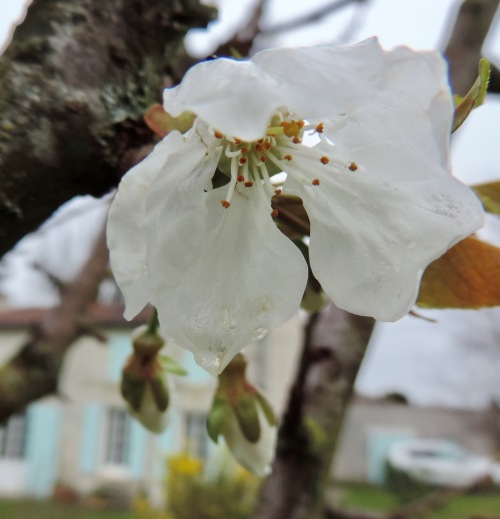
Do you ever look outside and see a grey sky and rain and think, shame, “it’s not a nice day”? I do.

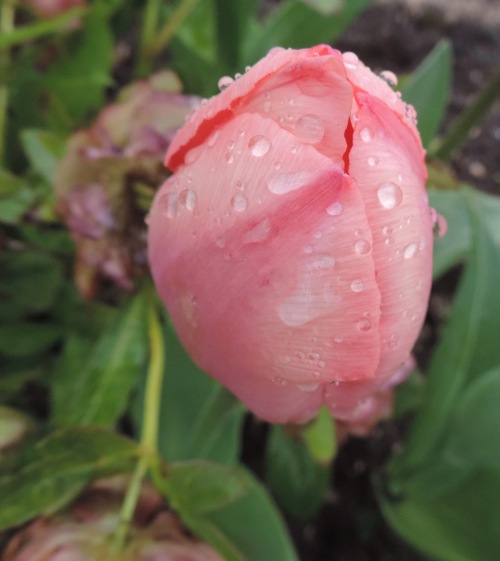
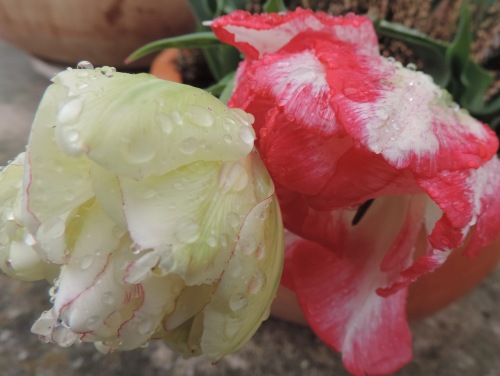
But the other day when I caught myself saying that I thought, hang on, when the rain falls on the flowers it makes them extra specially beautiful, I think I’ll go out and take some photos.

Here are some of my favourite ones.

I think the rain magnifies their beauty, not making them similar in any way, but highlighting how unique each and every one is.

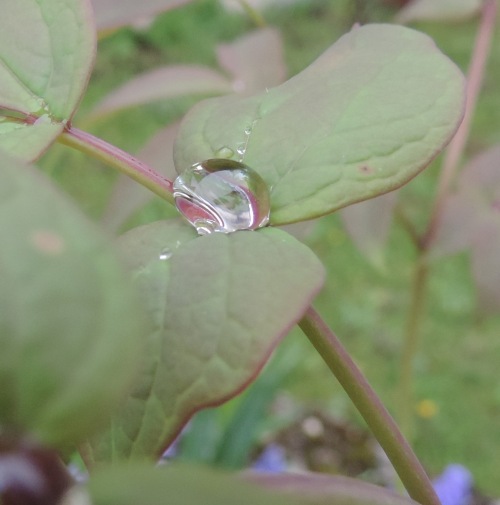
I also love the image of the single rain drop. It’s like a jewel. I’m never finished finding water extraordinarily wonderful. And, in a certain sense, water is never finished finding us extraordinarily wonderful either, is it?

Here’s to the sparkling beauty of uniqueness.

Here’s to the magic of water.

Read Full Post »

When I commuted to work in Glasgow I’d often squeeze my way through the hundreds of people spilling off the trains onto the platforms and make my way to one of the coffee outlets, joining a pretty fast moving queue to buy a coffee in a disposable cup with a plastic lid and sip it as I continued down the stairs to catch my second train. By the time I reached my workplace I’d be ready to drop the empty container into one of the bins on the platform, or, sometimes, I’d finish it as I walked up the path to hospital door and discard it in a bin at reception.

That’s one way to have a coffee. Here’s another.

In France, you choose a seat at one of the tables in front of the cafe. You can sit at one of the sunny ones, or go for a bit of shade. Settle yourself down and look around. You’ll likely have time to take in the blue sky, the architecture of the old buildings around you and start to notice the passers-by. Or you might get out the book you’re reading, the morning paper you just bought, or the notebook or diary you write in.

There’s an interval between sitting down at one of the tables and someone coming to take your order. I don’t know what determines the length of that interval but at first it felt a lot longer than I was used to. Is it longer than the time taken to get to the front of the queue in Queen Street Station? I don’t know, but when I first experienced this different coffee experience I’d start to feel impatient or irritated. I could even convince myself I was being ignored. But you know what? Those feelings have melted away. I don’t feel that any more. I’ve adjusted, or adapted. Now I sit and enjoy the moments until someone takes my order.

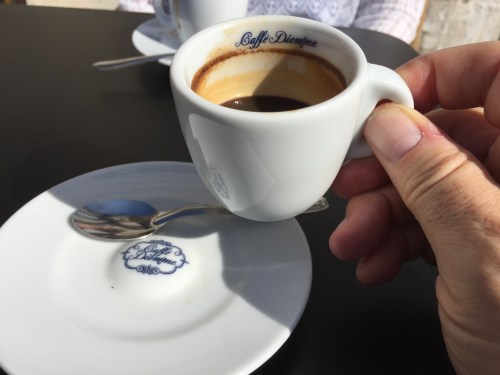
“Un café” – in France, “a coffee” is an expresso. You can make other choices, but the default is an expresso.

There’s another interval until the coffee arrives, easily filled by chatting to your partner, your friends, or your colleagues, by reading your book or newspaper, or jotting down your ideas or lists in your notebook.

Look at this little coffee. Look at the little porcelain cup. I love the feel of it between my fingers. I love the weight of it in my hand. Look at this little saucer, with its dimple in the middle comfortably waiting to receive the cup so that they sit perfectly together. Look at the blue writing, “Caffe Diemme”. Caffe Diemme is the name of a coffee company. The French love to play with words. You can’t see that without hearing “Carpe diem” (“seize the day”) in you head, can you?

The taste is intense and express. A couple of sips and it’s gone. Look around. There’s a young woman reading a novel. There’s a couple talking intimately, delighting in each other’s company. There’s the business man with his laptop. There’s an old man taking in the ebb and flow of people.

You leave your coins on the table or on the little plastic tray  with the bill folded onto it, which the waiter left with the coffee.

You get up, gather your belongings, and continue off into your day.

All this can take only a few minutes…..or several. You choose. Nobody is going to hurry you.

I’m not a great fan of seizing or grabbing, but I do believe life is better when you consciously savour it.

Savour the day.

Read Full Post »

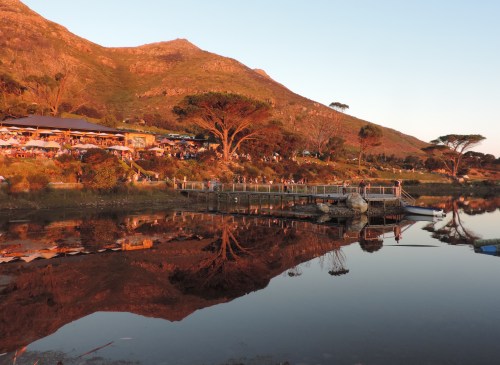
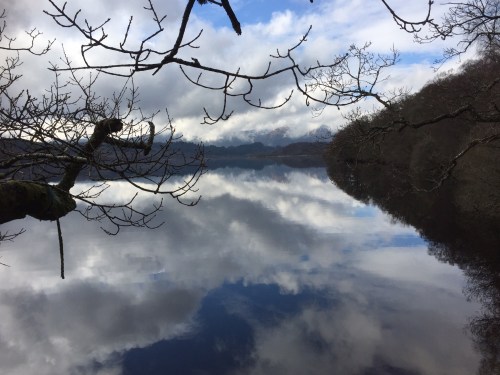
Here are two photos I’ve taken recently. Both have wonderful reflections in water but each of them has an utterly distinct and particular character which is, I think, captured in the wholeness of each shot, rather in their detailed elements.

The first one is taken in South Africa, and the second one in Scotland.

How different is Africa from Europe?

What different colours, different tones, different atmospheres. It’s not just that the seasons in the two hemispheres are opposite with South Africa slipping from summer into autumn, whilst Scotland awakens from winter into Spring.

I find both of these images beautiful and delightful. I couldn’t rank them and say one is “better” than the other.

Rather, I’m just deeply grateful to be able to experience such diversity in this astonishing planet which we inhabit together.

Read Full Post »

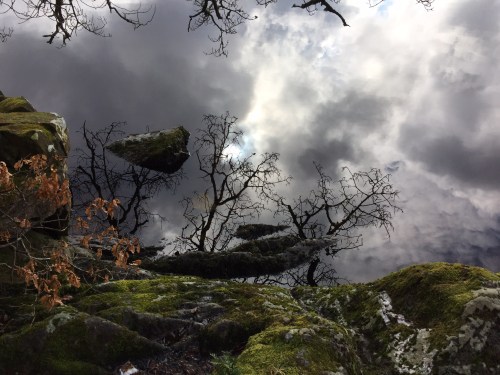
Yesterday whilst out in the Trossachs just north of Stirling in Scotland, the clouds opened up to reveal some patches of blue sky and allow the sun to reveal itself. Loch Venachar was as still as I’ve ever seen it. The reflections were simply stunning. I took a number of photos. Here’s one I’m particularly pleased with.

What you’re looking at here is the edge of the loch at the bottom of the image. The rocks are at the water’s edge. The branches stretch out from a few leafless trees which grow amongst the rocks and the rest of the image is the still water reflecting the sky.

I love how this image catches my attention straight away. My first thought is just how beautiful it looks. Then as I start to look more closely I feel a bit disorientated. What’s that rock doing up in the sky? Is it just hanging there, or is it impossibly supported by the tree’s spindly branches? Then the image resolves itself as I become more aware of the reflection.

I think it’s like this in life sometimes. We engage at an intuitive, emotional, even aesthetic level, taking in the whole as it is, then we start to focus on elements, or parts, and become a bit thrown off course, until we put what we are focusing on back into the contexts where they exist. Then the whole experience of standing at the edge of the water comes together again, but now intensified by our way of engaging with it.

Read Full Post »

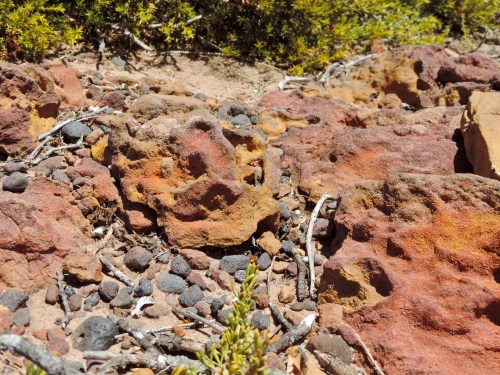
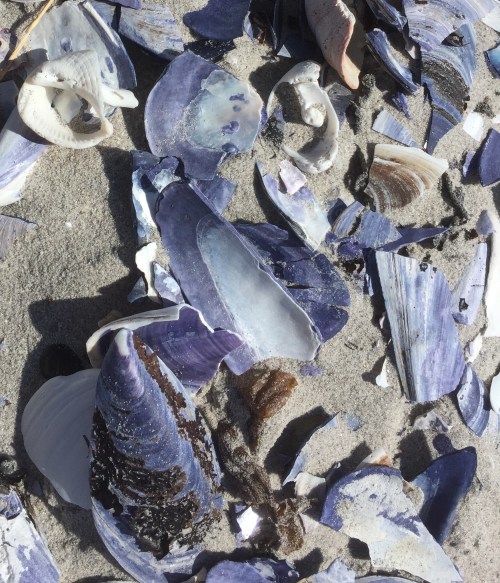
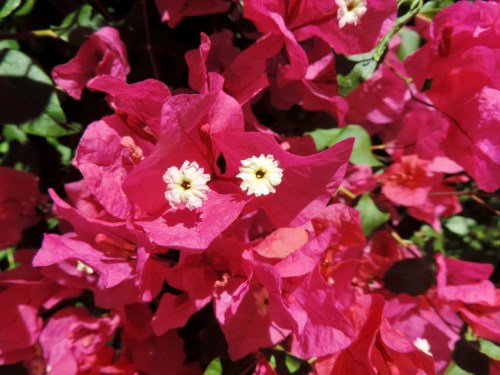
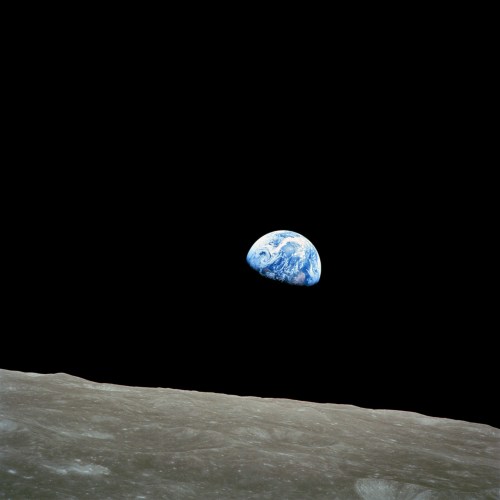
The range and intensity of colours in these recent photos takes my breath away. Here are rocks, shells and petals, representing the kingdoms of the minerals, the animals and the plants. These three kingdoms are part of a whole. In my mind’s eye I see an image of the blue planet, the Earth seen from the surface of the Moon

and I recall the story of Edgar Mitchell’s journey back to Earth after walking on the Moon. He saw the alignment of the Moon, the Earth and the Sun appearing each time his spacecraft turned on its axis and had a profound experience of seeing the particular and the whole in the same moment. He looked at the beautiful planet he called home and wondered about human beings waging wars and killing each other over invisible lines they called borders and over beliefs in invisible gods and this new perspective gave him a deep desire to see humans live together peaceably.

When I look again at the beauty in these photos I’m motivated ever more strongly to contribute to such a change. We share this little planet, not just we humans, but we, the members of all the kingdoms of Nature.

We desperately need to find more creative, more just, more sustainable ways of living together.

Read Full Post »

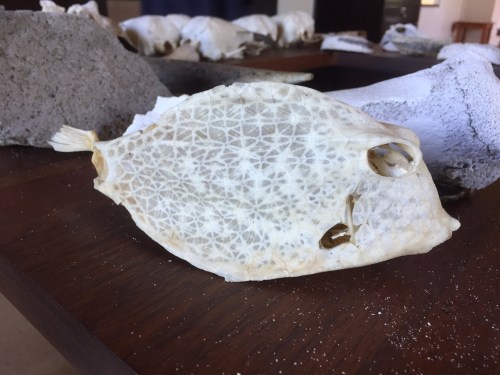
Look at the skeleton of this beautiful fish. The intricate and delicate structure of the bones is a stunning demonstration of the nature of networks. We can see the whole skeleton is made up from two simple elements, nodes and connectors. Whether we zoom in to study just one group, or out to look at the larger regions we see a variety of different patterns based on these two simple elements.

If you start at any point on this skeleton you’ll be able to trace a path to any other point without ending up down some disconnected cul de sac. In other words every single point is connected to every other one….either in simple one or two step connections, or through an almost infinite variety of pathways across the whole structure.

This is one of the most fundamental patterns at the heart of reality – networks of nodes and connectors.

You can see the same design in all forms of life, especially in multicellular organisms, all kinds of plants, animals and human beings.

Networks of nodes and connectors are the essential fabric of the universe.

Two of the best books I know about this phenomenon are Linked by Barabasi, and Connected by Nicholas Christakis and James Fowler. I recommend them both. They show how this apparently simple structure builds up into the most complex of phenomena, from individual organisms, to social groups and whole ecosystems.

Once you see things this way you can’t help but see connections everywhere. It’s the science which demonstrates the limitations of reductionism and abolishes the notion of atomisation.

Read Full Post »

« Newer Posts - Older Posts »