Feeds:
Posts
Comments

Archive for the ‘photography’ Category

The opposite pole of my last post about taking the view from on high, is to focus on the particular.

In the autumn as the leaves reveal  an astonishing range of colours, one of the greatest delights is to look at a few, just one at a time. Yesterday morning, as the sun rose in the sky, I took a few photos of individual leaves as they caught my attention.

This one has beautiful yellows and reds in the one leaf. It was the contrast and range of colour which caught my eye, but as I look at the image now I see the sunlight shining through the leaf, and through the smaller green leaf close by. That sunlight surprise me because the leaf was lying on the ground but it looks as if the light is shining through from behind it. At first, that’s puzzling and draws me to look even closer. It shows how low the sun was in the sky, to be able to illuminate fallen leaves and grass from this angle…
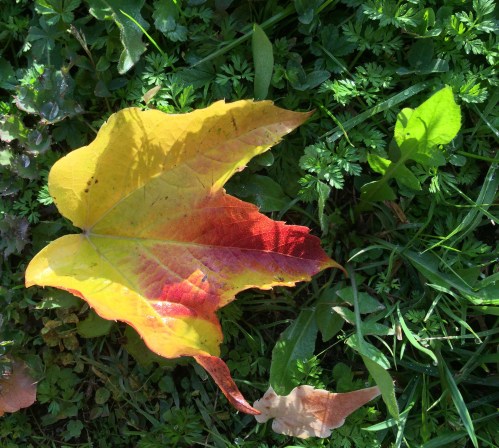
img_5666

This next one also grabbed my attention because of the colour. Such a rich, vivid red. But I was also instantly drawn to the shadows cast by the leaves of grass behind the leaf. They seem almost calligraphic – is that an “A” I can see there?
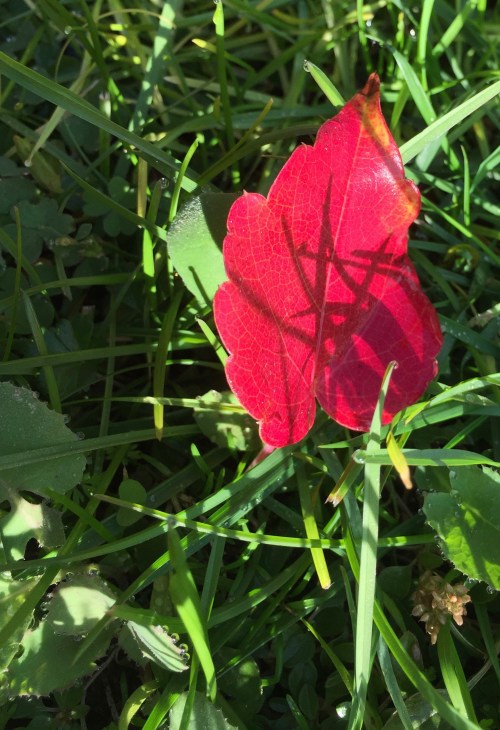
img_5668

Having noticed the interesting effect of the low sunlight casting shadows behind the colourful leaves, I got down on the grass and photographed this one. Despite the fact this is  a two dimensional image, the shadows make it appear almost three dimensional (which, of course, it was when I was standing next to it!)
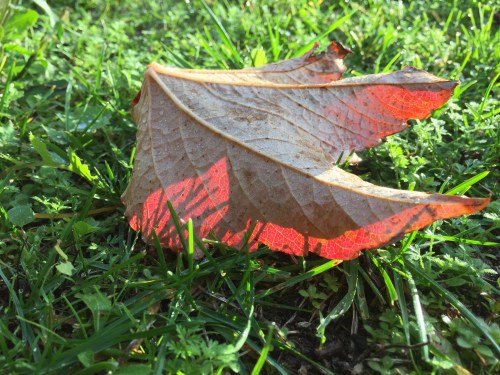
img_5669

Finally, the sunlight making dew drops sparkle on the surface of a leaf always seems magical. What is it about water droplets that makes them so attractive? Every time they transform whatever they lie on in a way which reveals to us not just the beauty of the water, but of the surface it lies on.

img_5670

Read Full Post »

img_5648

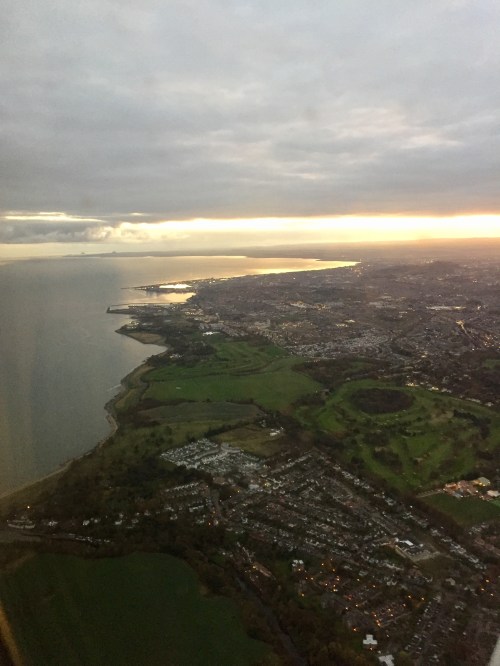
Edinburgh from above.

img_5653

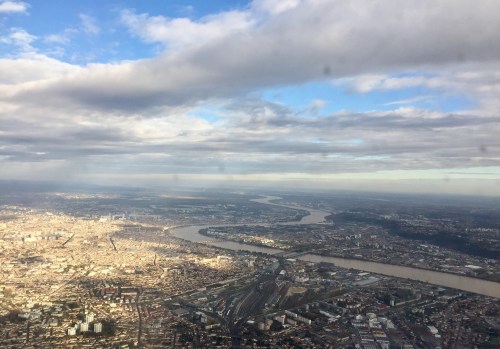
Bordeaux from above.

The other day I flew from Edinburgh to Bordeaux and took a photo of each from the plane.

These images immediately make me think of the concept from classical philosophy…”the view from above”, or “the view from on high”. It refers to the practice of standing back and taking an overview. It’s useful when we feel we can’t see the wood for the trees and when we want to see anything in its contexts…the contexts of time, space, environment, culture etc.

I often found this helpful for people who were experiencing high levels of anxiety or grief. Standing back a bit to see the bigger picture helps us to regain our stability when we are feeling a bit wobbly. That bigger picture might be the sweep of an era, spread over many decades, or it might be seeing the connections between whatever we are focused on and the global reality.

It’s important to consider details too, of course, and that’s the other pole – the ability to see the individual uniqueness of each moment, event, or person. But taking the “view from above” is, I would argue, equally important.

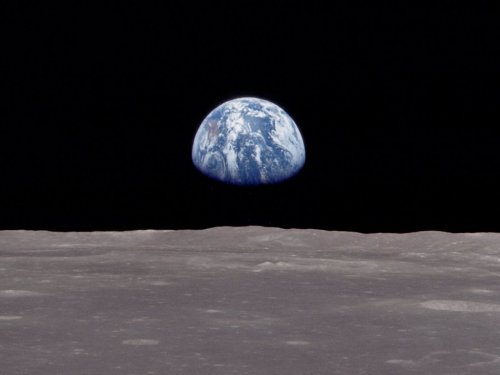
Think of that classic image of the earth rising over the horizon of the moon. Didn’t the sight of that beautiful, fragile, small blue marble hit us right between the eyes? Didn’t it make us realise that the Earth and all of us living on it is a single, living, vibrant whole?

earthrise-1-1myztsb

Read Full Post »

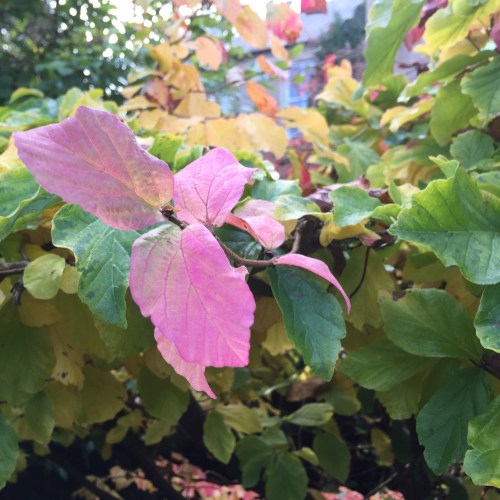
pink-and-green

Of all the hundreds of trees and thousands of leaves I saw on my walk the other day, why did I stop and photograph this particular group?

It was difference which caught my eye. The striking pink of these leaves amongst the abundance of green ones stopped me in my tracks.

I love diversity. I find it beautiful.

Everywhere I look I see uniqueness. Every patient who walked through my consulting room door was different. Every one brought a brand new, unique story to tell me. And next time, when they would return, they, too would be different, because all of us change all of the time.

Mary Oliver begins her new collection of essays, “Upstream” with

One tree is like another tree, but not too much. One tulip is like another tulip, but not altogether. More or less like people – a general outline, then the stunning individual strokes.

Nature loves diversity. Mono-cultures are more vulnerable, less resilient. By making new connections between diverse, well-differentiated individuals, the processes of integration create novelty and stimulates growth.

So I hope this current wave of division and hatred of “the other” which we are witnessing in the world today will diminish.

I hope the current wave of homogenisation which characterises globalisation will be countered by millions of us reclaiming, not just our individual uniqueness, but the beauty and value which we find in diversity.

We need to find a better way to live together than the creation of binary divisions and calls to exclude, remove or eliminate “the other”.


Read Full Post »

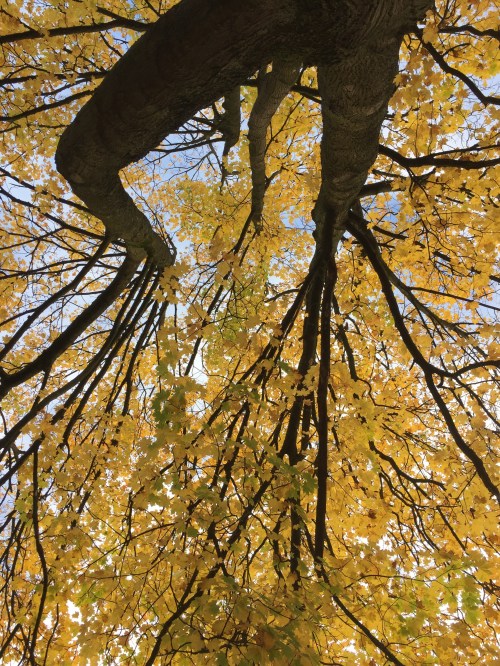
img_5606

I named this blog “heroes not zombies” because we humans have a tendency to go about the world on autopilot. As we walk through the day the thoughts which fill our heads are often ones from the past or the future. We go over what people said or did, recall events and circumstances which made a big impact on us….even the ones which seemed quite inconsequential to others. And we go over and over what might lie ahead and worry about it. All these thoughts squeeze out our attention to the present. I’m sure you’ve had that experience of traveling from one place to another, maybe even driving a car, only to arrive and realise you were so preoccupied with something you are surprised you’re at your destination already.

There’s something else which prevents us from experiencing the here and now. We become habituated. We are creatures of habit and when we stay within the bounds of the familiar we have a tendency to become oblivious to the detailed differences of the every day.

And there’s another thing. People who want power over others, whether that be politically, socially or commercially, pressurise us to conform and be compliant. Difference is singled out as a negative and suppressed. Governments, institutions, authorities, corporations want to control us a mass. The Romans did that through the provision of “bread and circuses”, but maybe now its “sugar and screens”.

Living in a zombie-like autopilot submissive way means we lose touch with reality. Reality is the here and now. Reality is uniqueness. Reality is diversity. Reality is freedom, opportunity and change.

The alternative is to become the authors and main characters, or heroes, of our own life stories. We can co-create our daily reality and claim this one wild and special life as our own.

OK, so how did I get all that from that photo today?

The other day I was walking a route I’ve walked thousands and thousands of times over a lifetime. It’s autumn here in the northern hemisphere and the colours of the leaves on the trees this year is particularly eye catching. In fact I think to walk amongst trees is one of the best ways to draw yourself and your attention into the here and now. So I was stopping every now and again and taking a photo. Then, I don’t know quite why, but I looked up from the base of a tree towards the sky and took this photo.

It wasn’t just the colours which caught my eye, it was the shape and form of the branches. As I look at it now my imagination kicks in and I’m more and more convinced I just managed to glimpse the legs of one of the spirits of the forest as they leapt over my head in the canopy of the trees.

Well, I did say my imagination had kicked in……

Read Full Post »

big-door-little-door

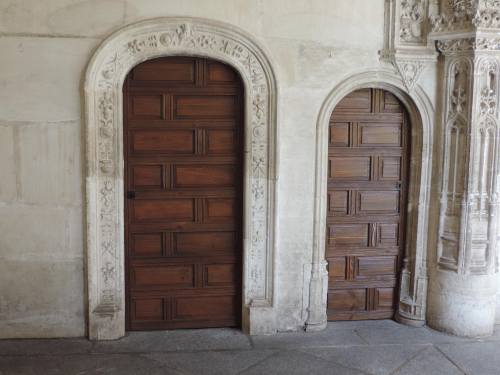
In the cathedral in Segovia I recently spotted these two doors right next to each other. They immediately struck me as curious.

Firstly, one is so much bigger than the other, and secondly, the little one seems to have been squeezed in as some kind of after-thought. Look how it almost disappears behind the pillar, and how the stone work overlaps the arch around it.

Why have two doors so close to each other but such different sizes? Are there two rooms behind them? Is the room on the left a bigger room than the one of the right? Or do they both lead into the same room – that would be even more strange.

But maybe there is another reason. Maybe each door is for different people. Maybe the bigger door is for more “important” people, and the smaller one for servants, or those of lower standing. That would be odd, wouldn’t it? I know lots of old mansions had a main door at the front and a servants, or “merchants” door at the back, but this is different. Here they are right next to each other.

Then this morning as I looked at this photo again I thought well just as each of us engage with the world from our own perspective, our own unique subjective viewpoint, I wonder if we enter into each day through an individually shaped door?

And if we do, then are you starting today by going in through the big door, or the smaller one? What will that be like?

Read Full Post »

img_5502

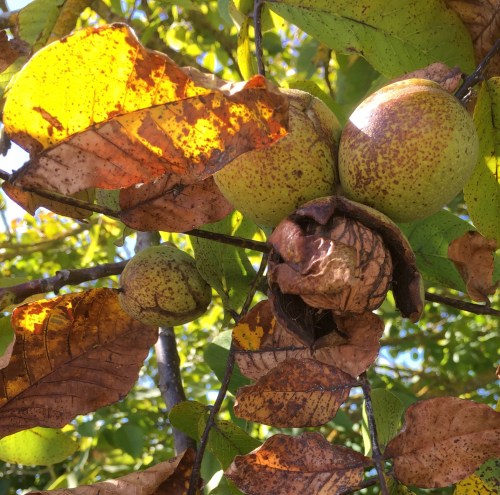
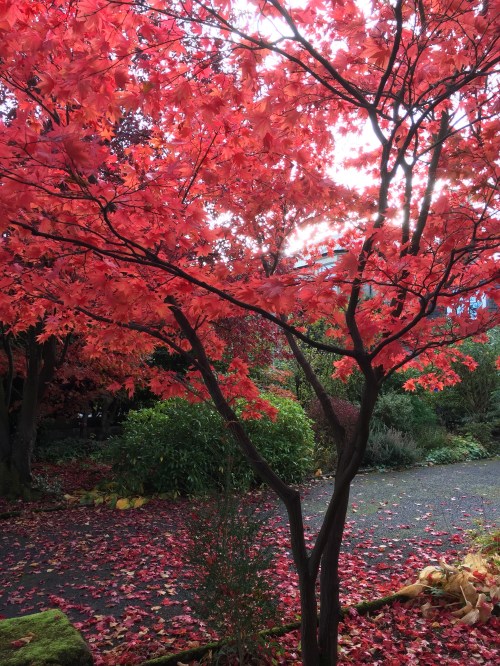
Is it possible to go anywhere in the northern hemisphere just now and not be astonished by the colours of autumn?

Here are just two scenes which caught my eye recently. Above is one of the several walnut trees which I pass on my walk through the vines near where I live in the Charente.

Below is just one striking Acer which leapt out and said “Look at me! Look at me!” when I walked into Stirling the other day.

img_5609

Two very different scenes, two different countries, one season.

Read Full Post »

dragons-and-crystals

Everywhere you look you can see the effects of the interplay between the universe’s two forces.

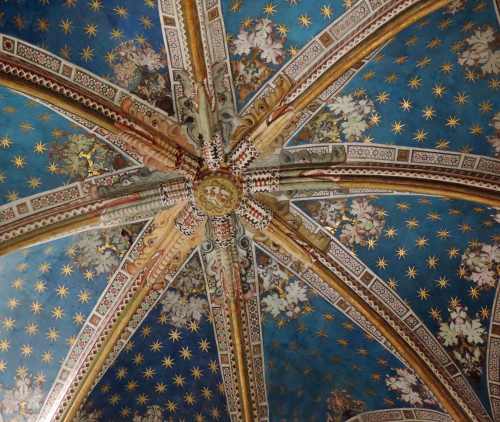
When I looked up at the ceiling of the Chapel of Saint Blaise in Toledo I was entranced by the colour, the gold and the eight pointed stars. It was only later when I was back home that I realised that the centre piece contained eight dragons, out of whose mouths poured not fire but crystals…..at least that’s how it looks to me.

Dragons for wildness, crystals for discipline, to bring together David Ward and Thomas Berry, for this is how they each describe the two forces.

Without the integration of these two polar opposites our planet would not exist, and nor would we. Astonishing. Awe inspiring. Wondrous.

Look around and I’m sure it won’t take long for you to spot these forces at work.


Read Full Post »

dscn6887

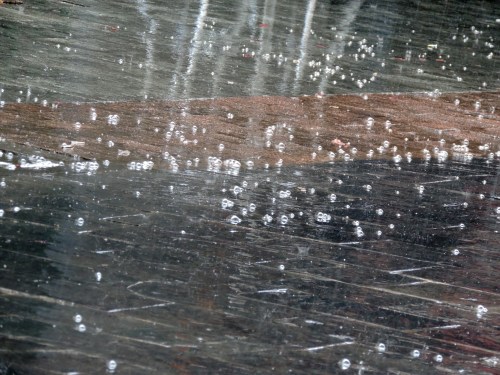
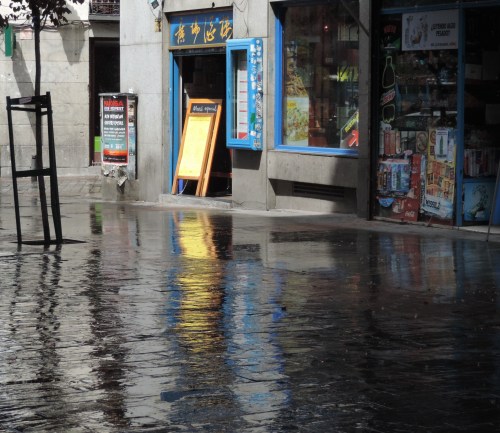
I expect many of us put away our cameras when the rain comes on, but the rain can bring out the beauty in a city street.

dscn6889

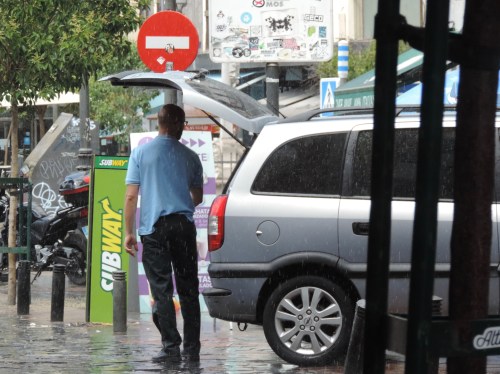
These two photos were taken in Madrid in the summer time when the temperatures were high, but a ten minute rainfall which forced everyone to take cover in doorways really made the streets sparkle.

And I liked how this guy improvised by using the back door of his car for shelter…

dscn6886

Read Full Post »

on-reflection

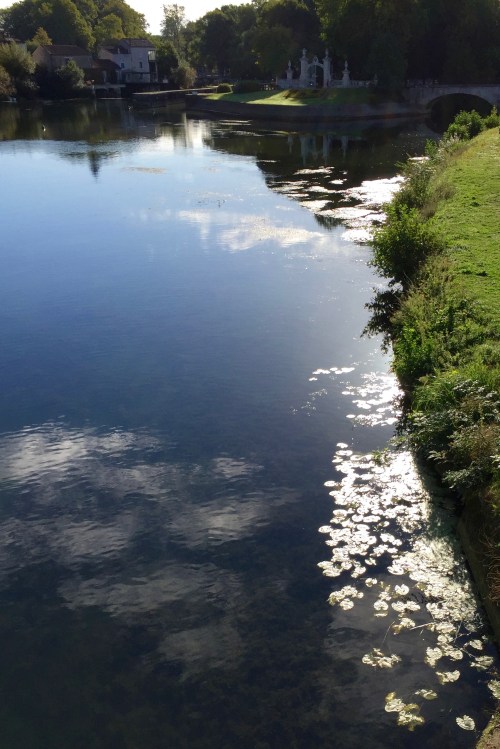
The sunlight reflecting on the leaves of the lilies caught my eye, but once I’d uploaded the photo and looked at it more closely I realised there were three completely separate areas of reflection in this one image.

There is the one which initially caught my eye. It’s so bright that the leaves are hardly green at all. They are like silver plates floating on the river. Right next to them is a reflection of the clouds passing up above. The ripples in the river give these clouds the appearance of a water colour painting. Quite beautiful.

Between them, these two reflections put me in mind of Monet’s paintings of lilies in the Musée de l’Orangerie in Paris….which is definitely one of those places to put on your bucket list.

monet-lilies

To stand in one of those galleries with Monet’s astonishing paintings filling the entirety of your visual field is one of the most amazing experiences you could have in an art gallery.

Finally, right at the top of the photo, there are the reflections of the old watermill, the entrance to the park, and a bridge, all seemingly a much more literal kind of reflection somehow.

I hadn’t really thought much about different types of reflection before, but this one image has inspired me. I hope it does the same for you.

Read Full Post »

img_5491

I recently came across Rebecca Solnit’s contemplation of the colour blue through the Brainpickings site.

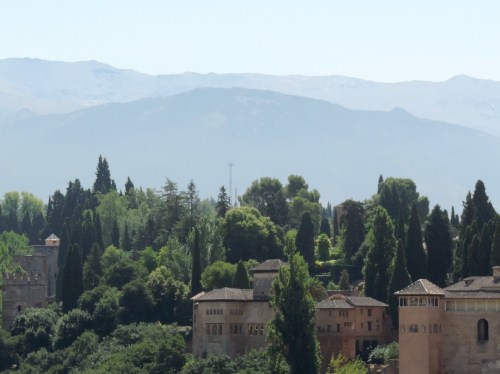
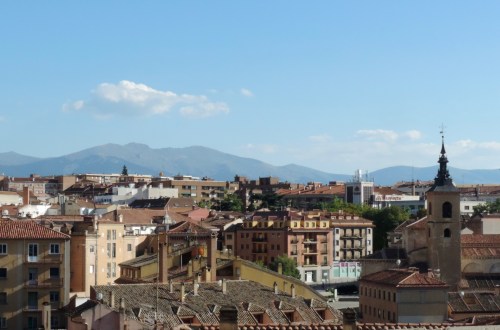
The world is blue at its edges and in its depths. This blue is the light that got lost. Light at the blue end of the spectrum does not travel the whole distance from the sun to us. It disperses among the molecules of the air, it scatters in water. Water is colorless, shallow water appears to be the color of whatever lies underneath it, but deep water is full of this scattered light, the purer the water the deeper the blue. The sky is blue for the same reason, but the blue at the horizon, the blue of land that seems to be dissolving into the sky, is a deeper, dreamier, melancholy blue, the blue at the farthest reaches of the places where you see for miles, the blue of distance. This light that does not touch us, does not travel the whole distance, the light that gets lost, gives us the beauty of the world, so much of which is in the color blue. For many years, I have been moved by the blue at the far edge of what can be seen, that color of horizons, of remote mountain ranges, of anything far away. The color of that distance is the color of an emotion, the color of solitude and of desire, the color of there seen from here, the color of where you are not. And the color of where you can never go. For the blue is not in the place those miles away at the horizon, but in the atmospheric distance between you and the mountains.

and

img_5450

If you can look across the distance without wanting to close it up, if you can own your longing in the same way that you own the beauty of that blue that can never be possessed? For something of this longing will, like the blue of distance, only be relocated, not assuaged, by acquisition and arrival, just as the mountains cease to be blue when you arrive among them and the blue instead tints the next beyond. Somewhere in this is the mystery of why tragedies are more beautiful than comedies and why we take a huge pleasure in the sadness of certain songs and stories. Something is always far away.

I got to thinking about a couple of photos I took recently in Spain, one in Grenada and one in Segovia.

dscn7483

dscn7509

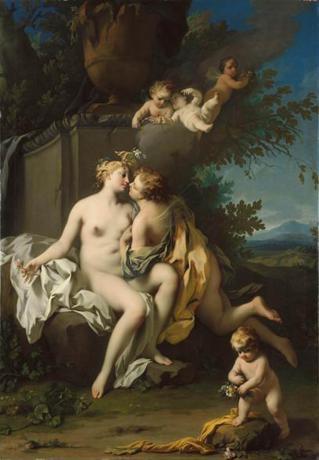
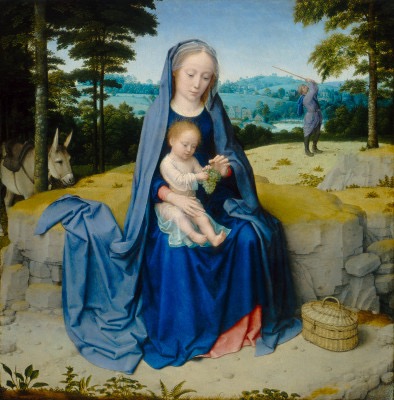
She talks about how artists used the colour blue, and cites the following classical paintings amongst her examples –

img_5534

img_5531

img_5533

img_0100

Isn’t the blue of distance in these paintings really beautiful?

Here are another few examples from an old French book which we have at home –

img_5512

img_5515

img_5510

Read Full Post »

« Newer Posts - Older Posts »