Feeds:
Posts
Comments

Archive for the ‘photography’ Category

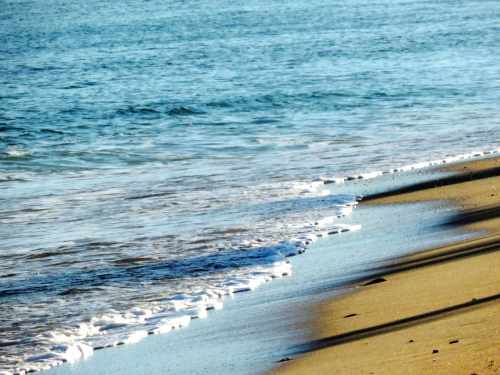
present.jpg

In “The Book of Tea” the present is described as “the moving infinite”. When I heard that phrase this morning an image appeared in my mind. It was an image of an “eye-beam”, like the beam of light from a lighthouse, but a symbolic beam running from my eye to the point of focus of my vision. This eye-beam was ranging over the surface the sea, skimming over the waves.

We often hear about “living in the present”, or “in the now”, but of course there is no such “thing” as the present. What I mean by that is there is no such object. The present isn’t a series of frames in a video or a movie running past us so fast it gives the appearance of movement. It isn’t made up of discrete fixed states. It flows. It contains the past from which it emerges and the future it becomes.

I often think of that when I take a photograph.

Look at these beautiful waves breaking on the sand in the photo above. It feels like capturing the present…..at least for a moment. But, of course, it doesn’t capture anything. When my finger presses on the shutter release button, I and my camera create something new. This image.

“Live in the present” is actually another way of say “live with awareness”.

What I really like to do is be aware of where I am casting my eye-beams, and asking myself, what am I going to create with what my vision reveals?

It’s this interplay of awareness and creation which allows me to share a moment with you.

Thank you for sharing your presents.

Read Full Post »

weather phenomenon

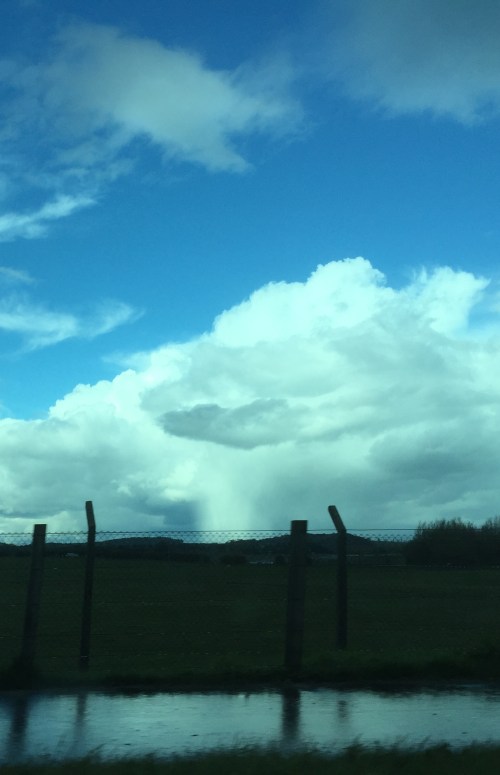
Looking out of the back window of the car as I traveled to Edinburgh airport the other day I noticed a strange phenomenon in the clouds.

It looked almost like a tornado funnelling down to touch the earth. Or maybe it was just an area of heavy, pretty well circumscribed rain.

Whatever it was, I’d never seen anything exactly like it before.

We have two cerebral hemispheres, a left and a right. One of the things the right is really good for is looking out for what is new or different. It turns out that seeking novelty in this way is a great way to stimulate mindfulness and healthy, youthful brain.

It’s worthwhile keeping your eyes open for the unusual, the striking, the different. You’ll be surprised just how often you discover something…..

Read Full Post »

shells

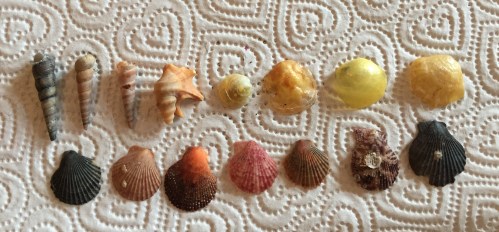
Here are a few shells we found on a beach recently.

One of the ways we see the world is by looking for similarities. See how these different shells have certain similarities – if you wanted to, you could classify them according to one or two of their characteristics.

We do that with people too.

In fact, I think there’s way too much of that approach in the world today. We look for some similarity, label it, classify it, and then stop seeing the individual. You could look at that photo and say, oh yes, shells. And move on. Or you could cluster together the ones which have similar shapes, and move on.

Iain McGilchrist, in his “Divided Brain”, shows us how we use our left cerebral hemisphere to do that. It’s a fantastic tool for spotting similarities, and for classifying things according to what is already familiar. Fortunately we have another cerebral hemisphere, the right, which seems to have a completely different set of priorities. It notices uniqueness, sees the connections and contexts of whatever we are looking at, and prioritises a more holistic appreciation of what makes something different.

I reckon this is particularly important when it comes to people.

You are unique.

You have certain similarities with others but there is not another person alive who is exactly the same as you. Nobody has the same story that you do. Nobody has the same particular connections to others, to places and to events, that you do.

And you know what’s even more amazing? There has never been another person in the whole history of this planet who is exactly the same as you. There never will be.

I was very lucky to do the work I did. Every patient I met was unique. Every person had a different story to tell. Nobody was the same as anyone else. I think that reinforced the importance of the right hemisphere approach for me.

What are you going to do with your uniqueness? What are you going to notice, how are you going to respond, what choices are going to make, what story are you going to tell?


Read Full Post »

charente

I was born in the town of Stirling, in the middle of Scotland’s Central Belt. So, for most of the first couple of decades of my life I lived near the River Forth. When you look down on the River Forth from Stirling Castle you see it winding and snaking its way east. I twists and turns the way a vine grows. Some of the loops almost join up as if they are trying to create small islands. Old maps show that the exact route of the river has changed many times over the centuries.

Rivers are like that. They never stay the same.

For most of my next two decades I lived in Edinburgh….next to the River Forth. But by the time it reaches Edinburgh the River Forth has grown and changed out of all recognition. It no longer curls and winds its way. By now it’s become the “Firth of Forth” and has two (soon to be three) huge bridges spanning it, connecting Lothian to Fife. It’s hard to fully understand that the river which passes by Stirling and Edinburgh is actually the same river.

Rivers are like that. They change as they cross the land from the hills to the sea.

After my Edinburgh days, I spent the best part of the next couple of decades near the River Clyde. I traveled to work by train every day and looked out at the Clyde as the train passed Partick. Before my time those banks of the Clyde were covered with shipyards and docks. By the time I was passing by all that had gone. The Clyde wasn’t the great shipbuilding river any more.

Rivers are like that. They serve different purposes as societies and economies change.

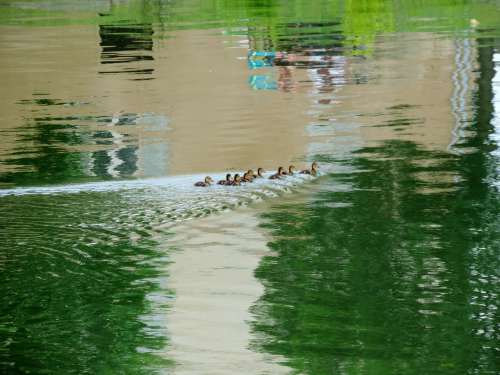
Now I’m near where I took that photo at the top of this post. That’s the River Charente as it flows through Cognac in France. The Charente is said around here to be a relaxed river. It flows pretty calmly and steadily, influencing the whole way of life here.

Rivers are like that. They influence our lives.

I often think of rivers. How do you pin down the identity of a river? As Heraclitus said you can’t step in the same river twice, because the water which flows by is literally different water minute by minute. So if we can’t define a river by its water, can we define it by its boundaries, its banks? But they change too. Some not so much, some quite a lot.

I think we are all a bit like rivers. Life flows through us, changing our cells, our fluids and our structures day by day. We are bounded in some way by where our bodies meet the rest of the world. But these surfaces are constantly changing.

How do we retain our identity? Much as the River Forth has changed so much in the time it takes to meander from Stirling to Edinburgh, so do I change as I grow from my first two decades to the next two. Yet I still feel I have the same identity. It’s just that everything about me has changed.

Well, I wonder how much of the next two decades I’ll spend near the Charente?

Or will some other river beckon?

How about you? Which rivers mean the most to you?


Read Full Post »

the well

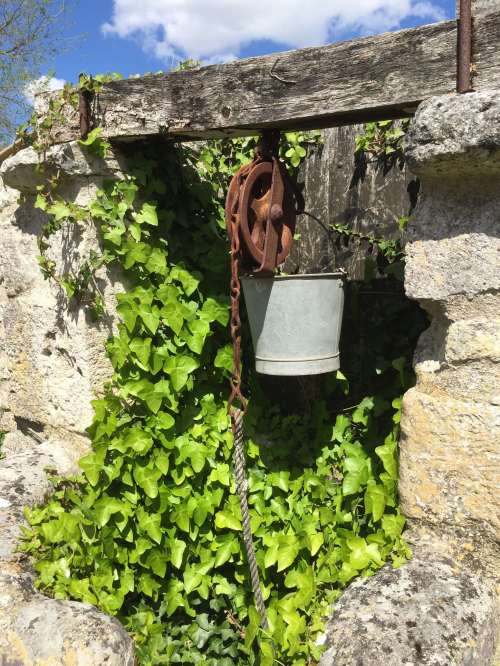
I saw this old well the other day and although the metalwork is rusted and the rope looks dry as dust, clearly there’s water there….just look at that abundance of foliage.

I’ve got an old well in my garden too. It’s a long way down to the water but plants push their way out of the mouth of the well all year around.

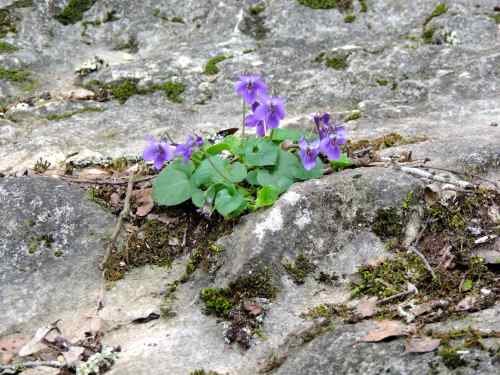
rock plant

Sometimes I think we take plants for granted. Look how they can take root and flourish in the least likely situations. They can spread their seeds far and wide, take root in pretty nutrition-deficient environments, capture carbon and oxygen from the air, soak up the sun’s rays and with a little water added can make themselves big and beautiful.

Human technologies just can’t match them.

Read Full Post »

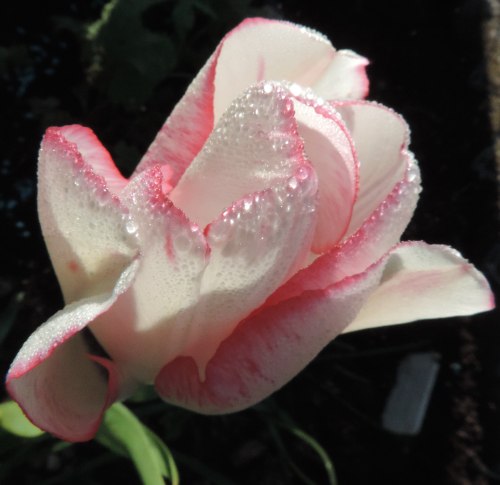
pink tulip

In the morning, when the sun encourages the flowers to open their petals, and the heavy dew begins to evaporate, there’s a moment where everything just comes together.

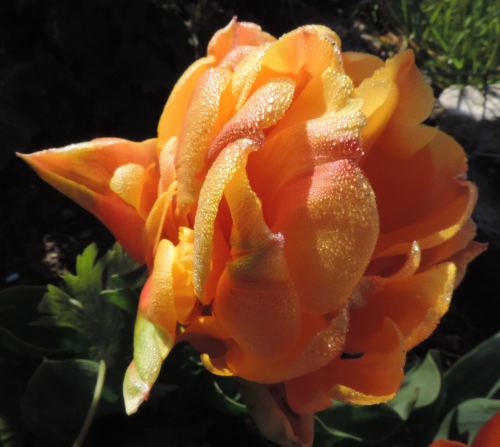
orange tulip

Beauty….hard to capture with words, but impossible to miss when you go looking for it….

Read Full Post »

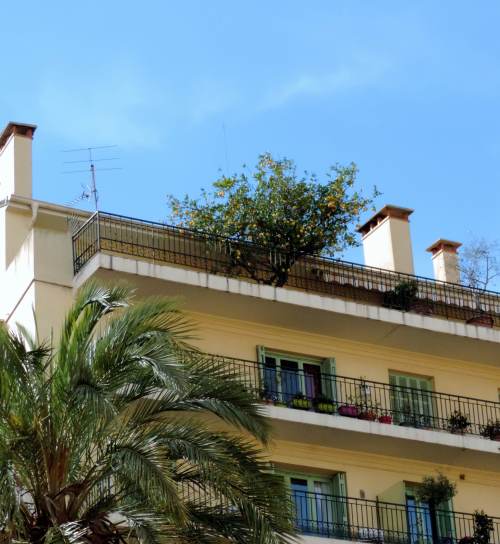
lemon tree balcony

Menton is a town famous for its lemons. As I wandered around I looked up and noticed that somebody in a top floor flat had decided at some point to grow their own.

Wow! Look at that lemon tree! I wonder what size it was when they put the pot on the balcony, and how long its been growing there.

Just goes to show that not having a garden needn’t necessarily prohibit you from enjoying plants.

Read Full Post »

redstart

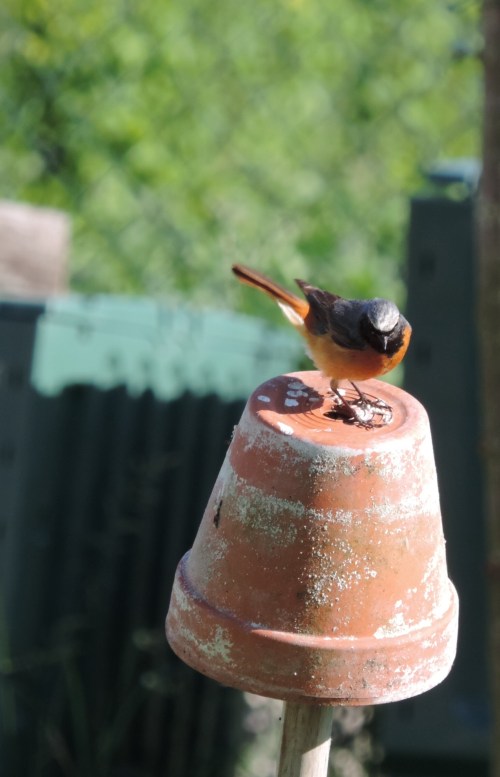
This little bird is, I believe, a “redstart”. “Start” is an old English word for “tail” and when he flies you can really see the lovely red-ochre colour of his tail feathers. I first noticed him in the garden last summer and he has a very distinctive call. I got quite fond of him so was a little sad when he disappeared in the late autumn.

In turns out that redstarts fly off to Africa for the winter – “sub-sahara but north of the equator” “from Senegal across to Yemen”. He came back on April 1st. I heard him calling so went out into the garden and there he was.

He’s taken to sitting in the tree near my chair when I’m out so I have the impression that he’s at the very least comfortable around me. Maybe he even recognises me? I’m certainly convinced he’s the same redstart who was here last year.

Can you imagine that these little birds fly all the way from the Charente to Africa, crossing the Sahara?  Then he flies back again to arrive back here, in the very same garden. Honestly, I find that totally astonishing. How does he do that? Not just how does he find his way there and back again? But how does he have the energy, the stamina, the sheer ability to fly such a distance?

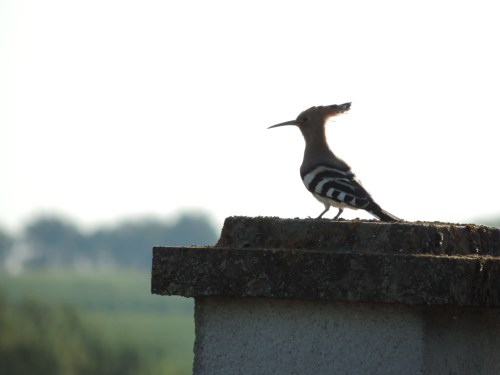
I saw two swallows fly over the roof of the house yesterday. I know “one swallow doesn’t make a summer”, but, hey, there were two of them! Must be a good sign, right? And then, late yesterday afternoon, the first of the returning “hoopoes” made it’s appearance, collecting something from the vine on the wall then flying off flashing his stripes and his fancy hair style! I think he’s been off to Africa for the winter too….

hoopoe

I know one way to be aware of the seasons is by noticing the flowers and trees, but there’s something very pleasing about this rhythm of the birds too.


Read Full Post »

marqueyssac

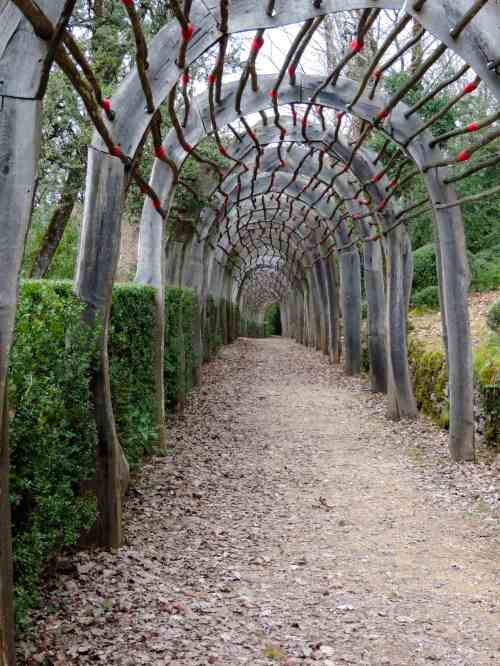
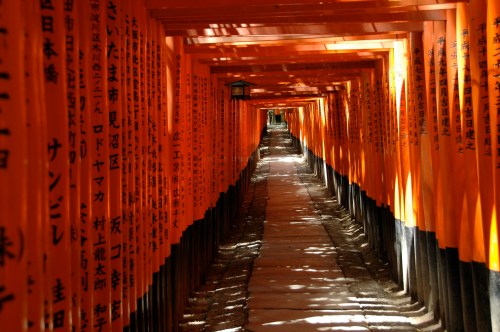
When I stumbled across this arched pathway in Marqueyssac Gardens in the Dordogne in France, I recalled the Fushimi Inari Shrine just outside Kyoto, Japan.

fushimi inari

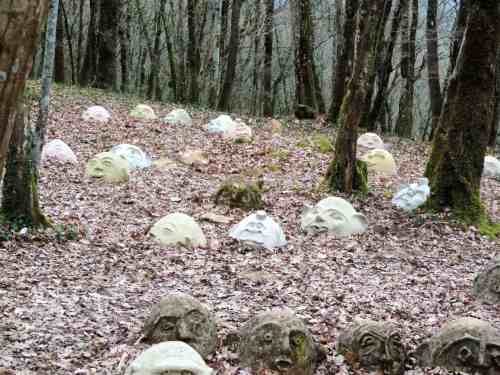
Then in another part of the Marqueyssac Gardens I came across these heads….

heads marqueyssac

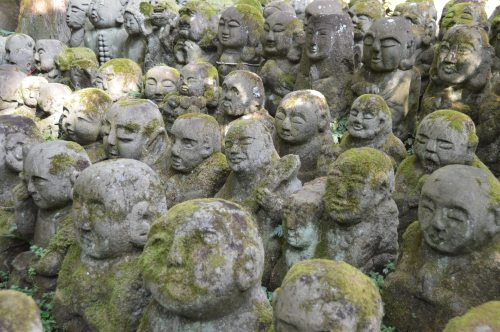
and their quirkiness, humour and installation amongst the trees reminded me of a visit years ago to the Otagi Nenbutsuji Shrine near Arashiyima in Japan.

otagi nenbutsuji arashiyima

Echoes of similarity between East and West but oh, how different!

Read Full Post »

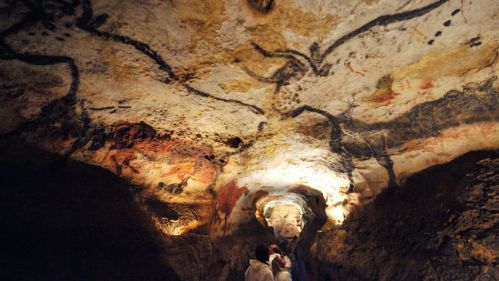
FRANCE CAVE DRAWINGS

Part of Lascaux famed cave drawings are photographed in southwest France, during a rare visit, Friday, July 25, 2008. Clusters of black fungus have been spreading over the drawings said scientists in 2007. The stains were the latest biological threat to the Lascaux cave drawings, which were discovered in 1940 and are considered one of the finest examples of prehistoric art. Carbon-dating suggests the murals of bulls, felines and other images were created between 15,000 and 17,500 years ago in the caves near Montignac, in the Dordogne region. In 1963, after green algae and other damage appeared, the caves were closed to the public. Only scientists and a few others are allowed to enter at certain times. (AP Photo/Pierre Andrieu, Pool)

I recently visited the Lascaux caves which are about a three hour drive from where I’m living now. I’d heard of them but I hadn’t realised they were as close as this.

You’ll see from that photo above, which isn’t mine, that the incredible wall art in the caves was deteriorating quickly due to the effects of fungi and carbon dioxide brought in by visiting tourists, so the government closed the caves to preserve them and did something astonishing.

They built an exact replica of part of the cave network, faithful down to 5mm, using teams of artists to recreate the artwork using the same kinds of pigments used by the original artists on artificial cave walls.

The caves were discovered in 1940 when a group of boys were exploring a forest. A storm had blown down some trees and one of the fallen trees had opened up a hole in the ground under its roots. Their dog disappeared down the hole so they went after it, quickly realising it was a tunnel into caves. After retrieving their dog, they went back home and got lamps, returning to squeeze along the dark tunnel until it opened up into a cave. Can you imagine how astonished they were when the light from their flames lit up the huge paintings of bulls, bison, cows, horses and deer which covered the walls and ceiling of the cave?

There was a lot more down there than what the boys found in the first cave. The paintings are thought to have been created up to 18,000 years ago and had remained, perfectly preserved, once the cave network was sealed off by the forest.

Lots of questions immediately spring to mind – how did they manage to paint such life-like depictions of animals under the ground in the darkness using just small lamps for light? They covered not only the walls but the ceilings. How did they get up there? They used the contours of the cave walls to make their paintings seem three dimensional. How did they have the imagination and the skill to do that? And WHY? Why did they put so much time and effort into the creation of this fabulous art?

It didn’t take long before the effects of thousands of visitors started to degrade the art work so the government sealed it off and created Lascaux 2, a replica. If you click through on that link you’ll go to an interactive tour of the re-creation.

So, I went down the stone steps with a couple of dozen other visitors and a guide. In the ante-room after the great doors were pulled closed, our eyes adjusted to the low level of light and the guide talked us through the story of the discovery of the Lascaux caves and the creation of Lascaux 2. Then he opened the far doors and we all squeezed down a narrow passageway between rough walls of rock. The passageway opened up into the Hall of the Bulls, so called because of the four, almost life size paintings of bulls which completely cover the ceiling of the cave.

He switched off the lights and lit a cigarette lighter. As the small, single flame cast its faint light up onto the walls and ceiling you could swear the animals were moving. It was quite cold down there and without artificial light it would be pitch dark.

We spend the best part of an hour exploring the cave and hearing about the different paintings.

So, you’re thinking. You just visited a replica? How did that feel?

You know what? It was magical. I thought it might be a bit Disney-like, but it wasn’t. You know what it was like? It was like standing in the middle of an art installation. That’s exactly what the replica is. It’s a work of art designed to communicate to you something of the experience of the artists. And that’s what this replica represents, isn’t it? A work of art. Created by unknown artists almost 18,000 years ago….

So there it is…one work of art, touching the viewer, stirring some kind of feelings which the artists had after they’d been inspired in a similar way by other artists, long gone, who left these astonishing creations.

Here’s my final thought. Isn’t it just wonderful that we humans create art? Not for a sum of money, fame, or some utility, but to…..what? Interpret our world? Interact with our world? Make sense of our world? Express ourselves, just because we can?


Read Full Post »
« Newer Posts - Older Posts »