Have you ever thought “What the world could do with is a bit more love in it?”
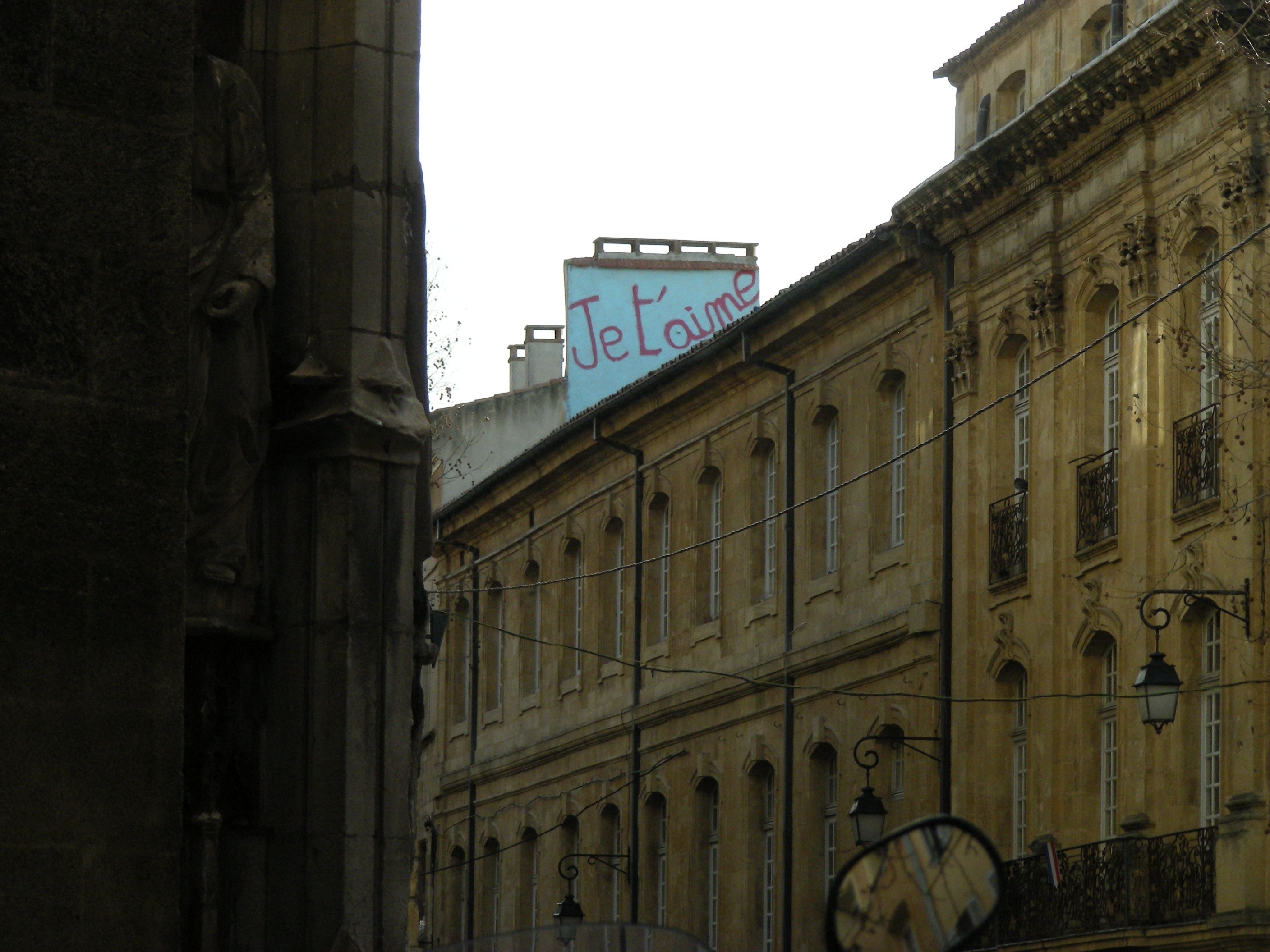
When I saw this graffiti a few years ago it reminded me of the late, great John Peel, whose radio show I used to listen to regularly in my teens. I remember him one year saying he enjoyed picking up autumn leaves, writing “Hello” on them, and dropping them back down on the ground, because he could imagine the joy and surprise it would bring people who came across them.
Well, how about, today, you say “I love you”?
Say it to someone you love. Or say it to your cat, your dog, or any other animal you love. Or say it to your favourite tree, or a beautiful flower which is blooming in your garden.
Or say I love you to the Earth or to the Universe.
You choose.
Whoever, or whatever, you choose to say “I love you” to, really mean it. Don’t just throw the words away. Feel the love in your heart, and visualise radiating that love outwards. Unconditionally.
Write it down if you want. This graffiti artist certainly wrote it big, but you can write it any size…..in an email, a message, on a leaf, a piece of paper…..you decide.
If we all do this today, there will be more love in the world. Not one day, not just sometime, but today.
And you know what? Nobody can stop you. Nobody can prevent it. It’s up to you to become aware of the love in your heart, and to choose to radiate that love outwards.
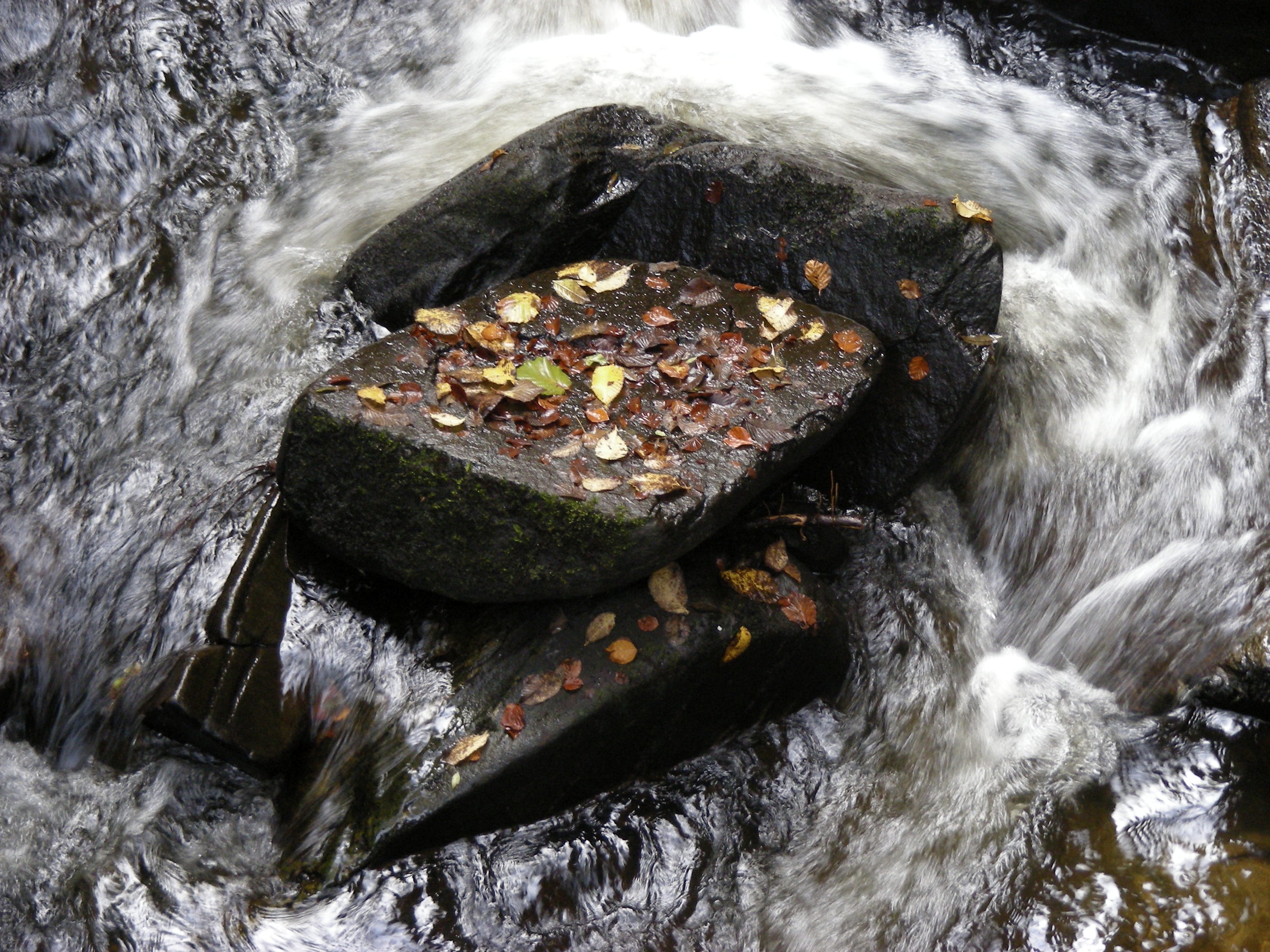
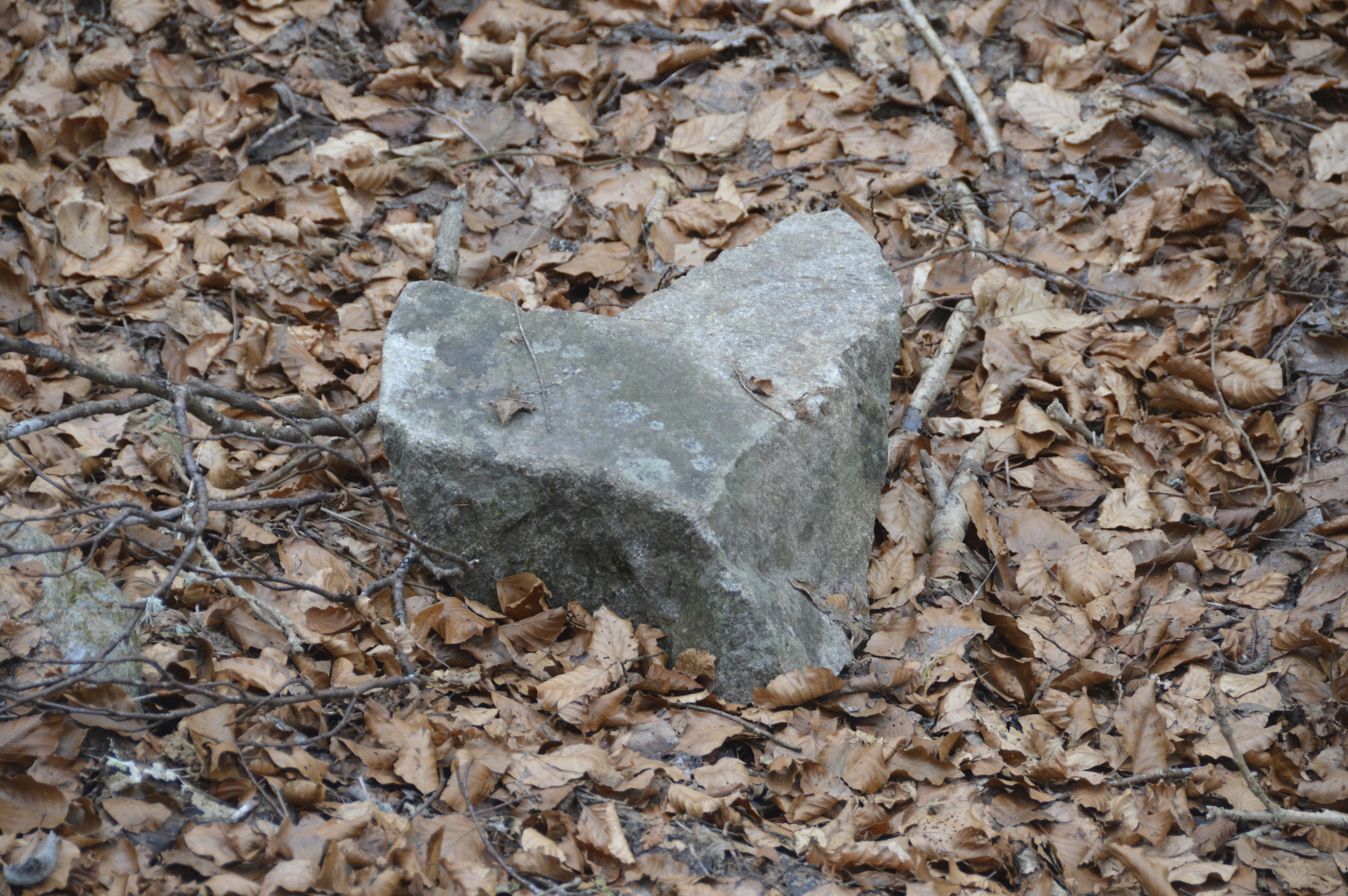
When I look at this photo the leaves seem like pieces of gold at first. Perhaps golden coins. But then I quickly see that they are fallen autumn leaves, with gold, brown, yellow and even green ones. The rock they have landed on, or stuck onto, seems like a collecting point, or a resting point. Maybe the leaves fell here from overhanging trees, but, in fact there weren’t any trees directly overhanging this rock, so maybe they were blown onto this rock. Alternatively, maybe they were swept downstream on the fast flowing water. Whatever their origin and mode of transport, they stuck to this wet rock.
Here’s what comes up for me as I reflect on this image……
Life flows past fast. It rushes by, moment by moment, day by day, even year by year. It never stops. Life is continuous and full of movement, just like this tumbling highland stream. There are places, however, where we can pause. Places or moments where we can step out of the rush and flow of things for a moment and take a breather. It’s important to do that.
When we do step onto the rock, which represents the time out moment, we find that there is some gold there. We find that stuck onto that place of rest there are some golden moments, and some of the gifts from golden moments, from the past. This reminds me of gratitude practice. Many people have demonstrated the benefits to our mental health and wellbeing of doing regular gratitude practice.
Quite simply, there is much to gain from taking a pause, a few moments, and either writing down some of the experiences, events, relationships, gifts for which we are grateful, or even calling them to mind, re-creating them in our imagination, and stirring the benefits of those special times all over again.
The rock, in these musings, becomes a place in the mind. A place where I rest, stand apart for a moment, create what Iain McGilchrist calls “the necessary distance” which allows us to reflect, to set new perspectives, and to see the whole. It’s a place of integration……where I reinforce the mutually beneficial bonds between me and “the other”.
Then I step off into the stream again, and flow off onto the next part of the journey.
Why don’t I just keep my photos in albums which I flip through from time to time?
Why don’t I just write my thoughts and ideas in a personal journal which nobody can read but me?
Because I’m driven to share.
We humans have developed as intensely social creatures. We haven’t evolved to survive as independent, isolated creatures. We have one of the longest dependent infancies on the planet. The little birds I see hatching in nests in the mulberry tree go from looking like small bald dinosaurs with open beaks, to feathered individuals which fly from the nest, successful on first flight, within days. It takes babies many months to walk, to speak and to be able to feed themselves with the food which they have no ability to find by themselves.
You know what I mean. We are created with the social means, the relationship-forming means, to survive and thrive.
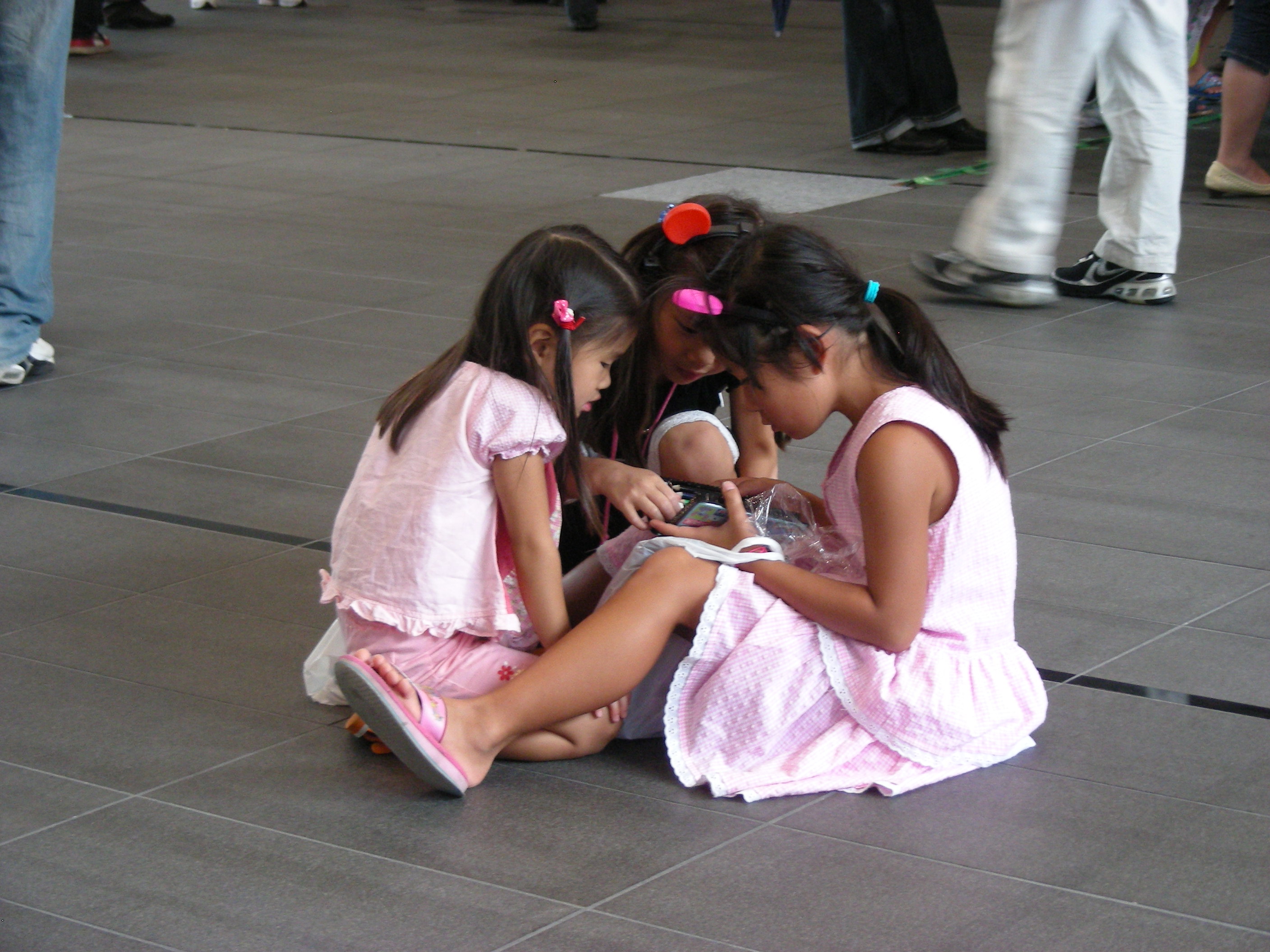
Look at these wee girls. I don’t know what they are sharing but you can tell just from their body language how enthusiastically they are sharing. This is a basic, fundamental, necessary drive in all humans.
OK, I know, some people prefer to be more private, to limit their sharing to one or two, or a small handful of, people. But if we have no-one to share with, then, over time, that becomes a problem. We feel alienated, separated, lonely or abandoned. Depression sets in as a kind of implosion obscuring our view of others and of the rest of the world. When I worked at the Centre for Integrative Care in Glasgow, we would sometimes take a patient into the garden and sit with them noticing…..seeing the flowers, the bushes and trees, hearing the birds, spotting the squirrels and the fox. Those times enabled people to safely take the first steps out of the dark hole of depression. Their attention was captured by the natural world and their energy and focus began to flow back into a positive form of connection.
I made a commitment to write a post every day when the first lockdown came in here in France. I suppose, like all of us, I had no idea how long this pandemic would last, and so, it’s something of a surprise to find I’m still creating these daily posts. My thinking was to share one of my photos and also some of the thoughts and feelings which came up within me when I looked at particular images. The main reason to do that was that I find these photos and the reflections they elicit, a source of joy, wonder, delight and positivity.
So, this was my original thought – what if I shared something positive every day? What ripples might that set off? Whose lives might they touch? Might the joys, the wonders and delights become magnified in the sharing? I think they do. Because that’s the really fascinating thing about sharing – it’s not giving away – it’s not losing something that somebody else gains – it magnifies its positive effects on both or us. My life feels better at least in part because of this daily sharing. And I hope yours does too.
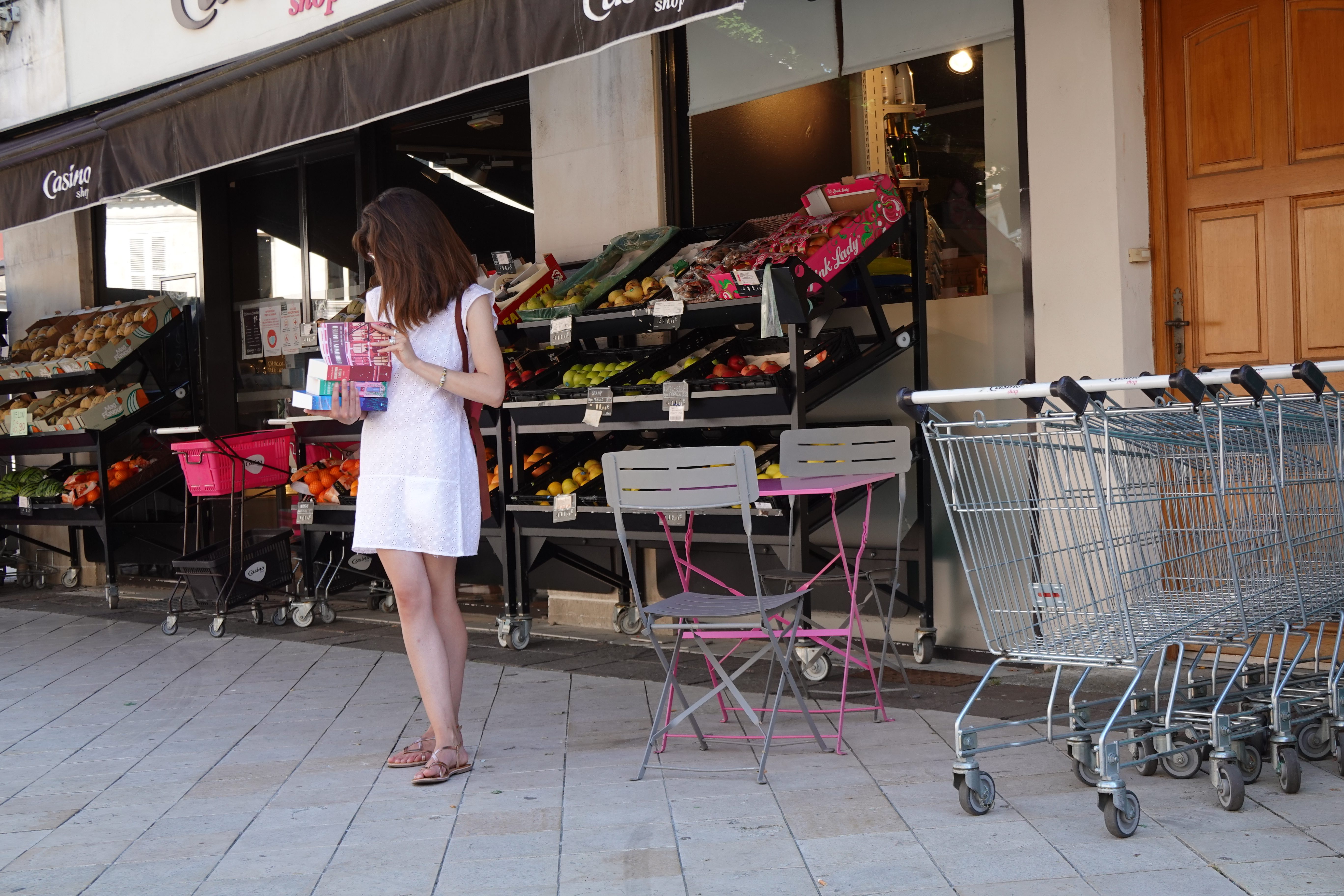
I saw this woman yesterday standing outside a supermarket in the middle of town. I was struck by the size of the books she was holding, and which she couldn’t resist opening and starting to read. It turns out they are a trilogy of YA fiction by a famous French author, the third volume having just been published, which is maybe what inspired this woman to buy all three.
I understand this compulsion. I’ve always had way too many books on my shelves….well, way too many in the sense that I couldn’t read them all in one lifetime. But that doesn’t stop me buying new ones. Suffice it to say I read a LOT!
I’ve had a fascination for stories all my life. In my earliest years I remember my Grandpa reading to me – he read me all of Walter Scott’s “Tales of a Grandfather” and he read me collections of myths, legends and fairy stories which he bought for me when I was born. My mum used to have a photograph hanging on the wall of her living room. It was a black and white print showing my Grandpa reading in the local library. I guess I got that gene!
I’ve told countless people that when I worked at the NHS Centre for Integrative Care (which I did for the latter two decades of my career), I used to look forward to meeting a new patient every Monday morning because I knew they would tell me a unique story – one I’d never heard before. In fact, story was the very heart of my engagement with these patients who, largely, suffered from long term conditions which had failed to respond to drug treatments.
Did it surprise me that they had failed to respond to drug treatments? Nope. Because there aren’t any drugs for people, there are only drugs for diseases and drugs to suppress symptoms. Drugs don’t heal. At best they create an environment conducive to healing. It turns out it’s people who heal, not drugs. It’s people with self-defending, self-repairing, self-balancing, self-creating and growing interwoven complex systems who heal.
I found that stories were the way to understand a patient. Not symptoms.
I read a piece about a psychiatrist and neuroscientist, Karl Deisseroth, yesterday, and in that interview he said
Anybody can read a diagnostic manual and see a list of symptoms, but what really matters to the patient is a different story
which reminded me of a passage by the English philosopher, Mary Midgely, which I read many years ago –
One cannot claim to know somebody merely because one has collected a pile of printed information about them.
Wisdom, Information and Wonder. Mary Midgley
and of this passage from philosopher Richard Kearney
Telling stories is as basic to human beings as eating. More so, in fact, for while food makes us live, stories are what make our lives worth living.
On Stories. Richard Kearney
In fact, that latter passage came into my head as I took this photo – here’s a woman absorbed in stories, standing next to empty supermarket trolleys and with her back to the stalls of food laid out in front of the shop.
Stories, I found, weren’t just the way to understand a person (to make a diagnosis even), but they were also the way to heal. By helping someone create a new story, I could stimulate that complex of healing systems within them, and spur them on to more than relief from suffering…….More than? Yes, to more self-awareness, more self-compassion, and to a re-evaluation of their life choices, habits and behaviours.
Stories can set us free.
Mind you, it’s also true that we can get trapped by stories – the stuck, multilayered ones we’ve been taught as children, or been brainwashed into believing by others. But even then, the answer, the release, the movement forwards, lies in the creation of new stories……our own, unique stories which allow us to realise our hopes, express our singularity, and live the life we want to lead.
Stories, you see, have a magnetic pull. We don’t live without them.
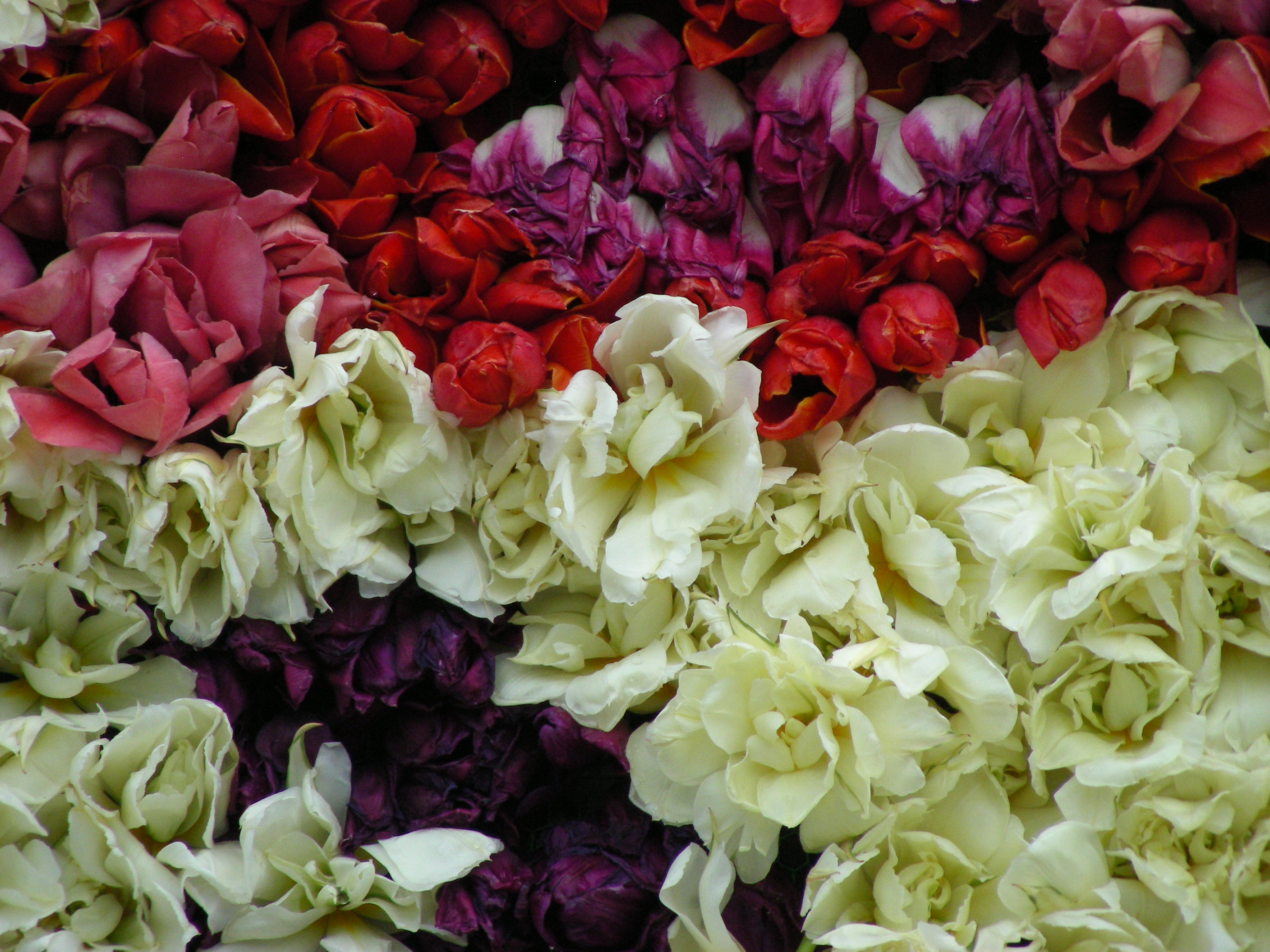
I walked into the courtyard of a temple in Kyoto one day and saw this display of flowers. Well, actually, this first photo is what I saw once I got closer to the display which had caught my attention.
When you look at these flowers, all you see is some flowers. It’s not possible to see the pattern which is revealed only from a distance.
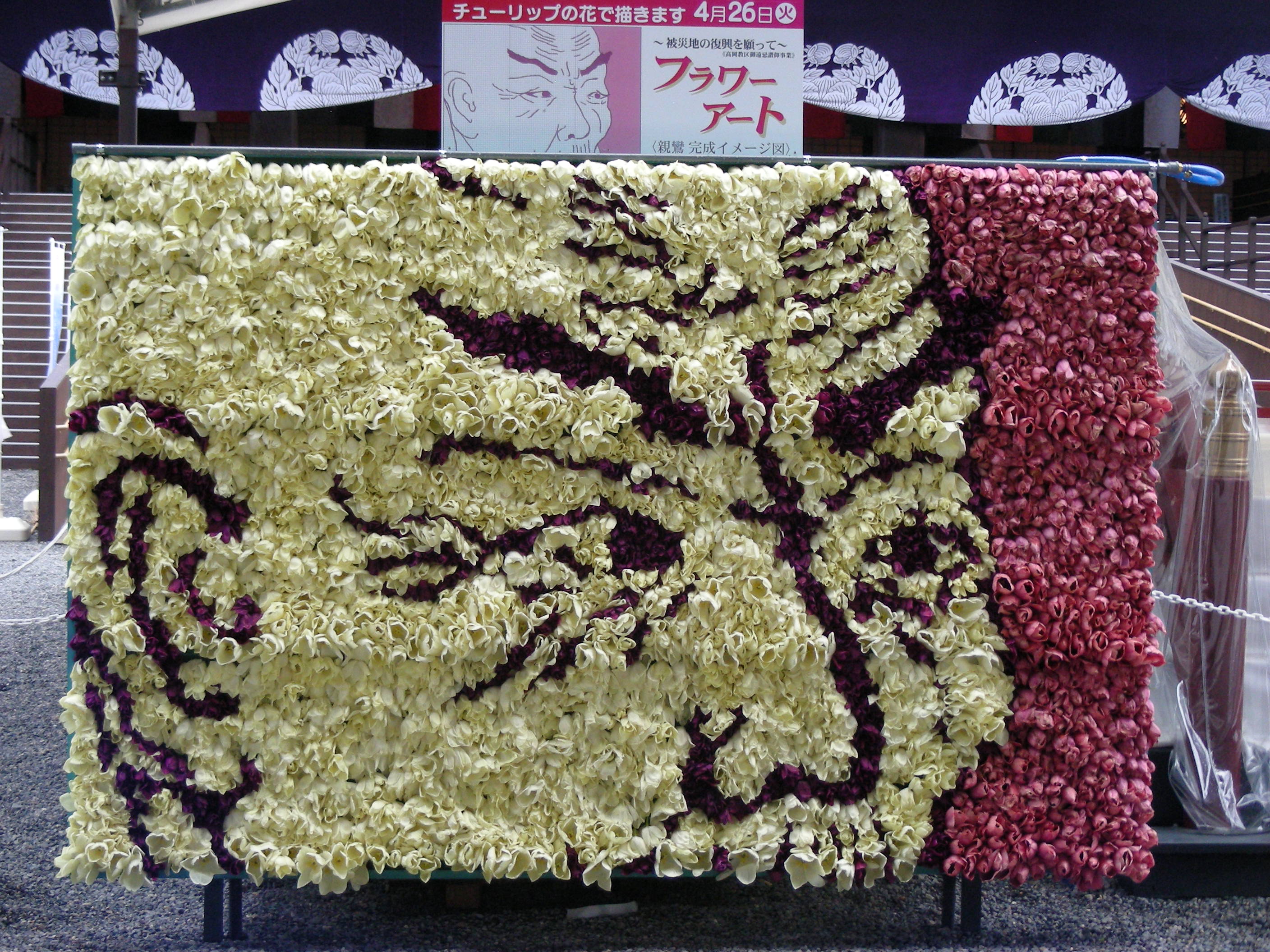
This is what you see when you stand back…
Isn’t this amazing?
Actually, whether you encounter the full image first, then get closer in order to realise that it is constructed from hundreds of flowers, or whether you start close up seeing only the flowers, and gradually stand back to see the full image, the two positions are a huge contrast, aren’t they?
These are the two perspectives we bring to everything. We use the left cerebral hemisphere to zoom in on individual elements. To do that it focuses on parts and identifies them, matching them up to whatever we have previously encountered and categorising them. In this case, it identifies the objects as flowers and labels them according to their colour. But at the same time, we use the right cerebral hemisphere to take in the whole picture, to see whatever we are looking at within its contexts. To do that it focuses on the connections and relationships, and, at the same time brings a heightened awareness for novelty – it homes in on whatever is new, whatever is unique, whatever is special.
You’ll know already from my writing that I believe the principle of “and not or” is a good one in life, and that’s in no small part due to the fact that this is exactly how we have evolved. We don’t have only one way of looking at things. We have multiple ways, and we throw them into the complex mix of reality so that we can do more than perceive the world in which we live, we explore, play, learn and create. We adapt, we grow and we evolve.
I’m very wary of black and white, rigid, fixed, narrow views of reality. The world is richer than any of us can conceive. The universe has more potential than any of us can imagine. And there is much to gain from diversity and tolerance.
I think I first became aware of research suggesting that even a view of natural surroundings could be good for us in the paper about recovery times after surgery. The findings showed that post-op patients required less painkillers, had less post-op complications and required shorter stays in hospital if their bed had a view outside to a natural environment (as opposed to no view, or a view of a wall).
Then I came across the Japanese concept of “forest bathing” and work from a university in Tokyo which showed that spending a few minutes in a forest could increase the levels of helpful immune chemicals in the blood.
Today I read a paper about “Attention Restoration Theory” suggesting that spending time in nature improves the concentration levels of children with ADHD. This “ART” concept describes two kinds of attention – an easy, effortless, “bottom up” (neurologically speaking) attention to the environment, and an effortful, focused “top down” attention which we use when deliberately concentrating on something. We use the former when gazing out of a window to the natural environment, and the latter when trying to do a difficult mental task. The research study I read split children into three groups, putting one group in a classroom with no windows, one in a classroom with windows looking out onto a bare, built environment, and a third group in a classroom with windows looking out onto nature. They gave them all the same difficult lesson, took a five minute break where they stayed in their classroom, then tested their concentration after the break. Only the third group, the one in the classroom with a natural view, improved their concentration.
One of the things I like about this paper is that it showed two things – that turning our awareness towards the natural world is good for us, and, that the way to improve concentration wasn’t to “concentrate harder” but to build in a break where the mind could drift into a more natural state of open awareness.
Well, you know, I don’t really need any scientific research or “evidence” to convince me I like to have a view of nature from my window, or that I enjoy walking in forests, parks or along beaches, but, hey, it’s still good to learn about some of the measurable effects of open awareness and engagement with natural environments.
There are a few stories circulating which I find really disturbing. Stories of EU citizens being detained at the UK Border when attempting to visit the UK for a holiday or to visit family or friends….detained then being refused entry and sent back home because the Border Guards didn’t believe what they were being told about the visitor’s intention. There are so many such stories now that some EU citizens are saying they’ll never try to visit Britain again. The Home Office response is to say that the vote for Brexit was one to make it more difficult for EU citizens to enter into Britain so they are are just doing what “the people” voted for. I’m not sure even the minority of UK voters who voted for Brexit really wanted stop young people from Europe visiting family and friends in the UK.
What especially bothers me about these stories is that they fit with the harsh rhetoric used against asylum seekers and immigrants. I think it was Theresa May who started the “harsh environment” policy which has been developed into this present form. “Harsh environment” – make life difficult for certain people – what a starting point! What a sad, hardening of hearts
Another group of stories which are disturbing me is about the daily abuse and threats directed at doctors, nurses, health care staff, and paramedics. The British Medical Association say a majority of their members receive abuse or threats daily, and England is currently considering fitting body cameras to all paramedics to try to protect them from abuse and violence, or to catch the perpetrators of such actions.
In my four decades as a doctor, half of them as a GP, I don’t remember a single episode of abuse or threat directed at me, at any of my colleagues, or at our staff. What a tragedy!
Isn’t that also part of a de-humanisation, or de-personalisation of care? A hardening of hearts? The entire health care system has been reformed along lines consistent with managerialism – it’s now the language of consumers, customers and clients, of targets, financial “efficiencies” and of tasks – the language of people has got a bit lost. Yet health care is surely based on the doctor-patient relationship – where the people involved – the doctors and the patients – should be paramount, not the protocols, the processes and the financial constraints.
I could go on…..we see a harsh language and deliberate cruelties inflicted on the most vulnerable who need State help. The Ken Loach film, I, Daniel Black, described very well the sad, and unnecessarily mean ways in which the poor and the sick are treated in society. Harsh environment seems to have spread to the treatment of the poor as well.
I can’t help thinking this is a loss. A loss of quality of life and loss of decency, kindness and justice.
Maybe its the result of the wrong “-isms”? Of the financial and economic wrongs wrought by “capitalism”, of the wrong-headed priorities set by financial-ism, and the dehumanising nature of materialism and managerialism. Maybe you could add a few -isms that you think are contributing to this?
I guess what I’d like to see is a rise in “people-ism” – in actions, policies, strategies and behaviours which put people first – people before profits, and before processes.
I’d like to see some softening of hearts as we allow ourselves to be curious about everyone, and to find out just how inter-related and inter-dependent we all are on this little planet Earth.
I’d like to see more priority given to open handed-ness, to open hearted-ness and to kindness.
That’s a trick question really, because if it doesn’t, I have a hunch that you’re not looking!
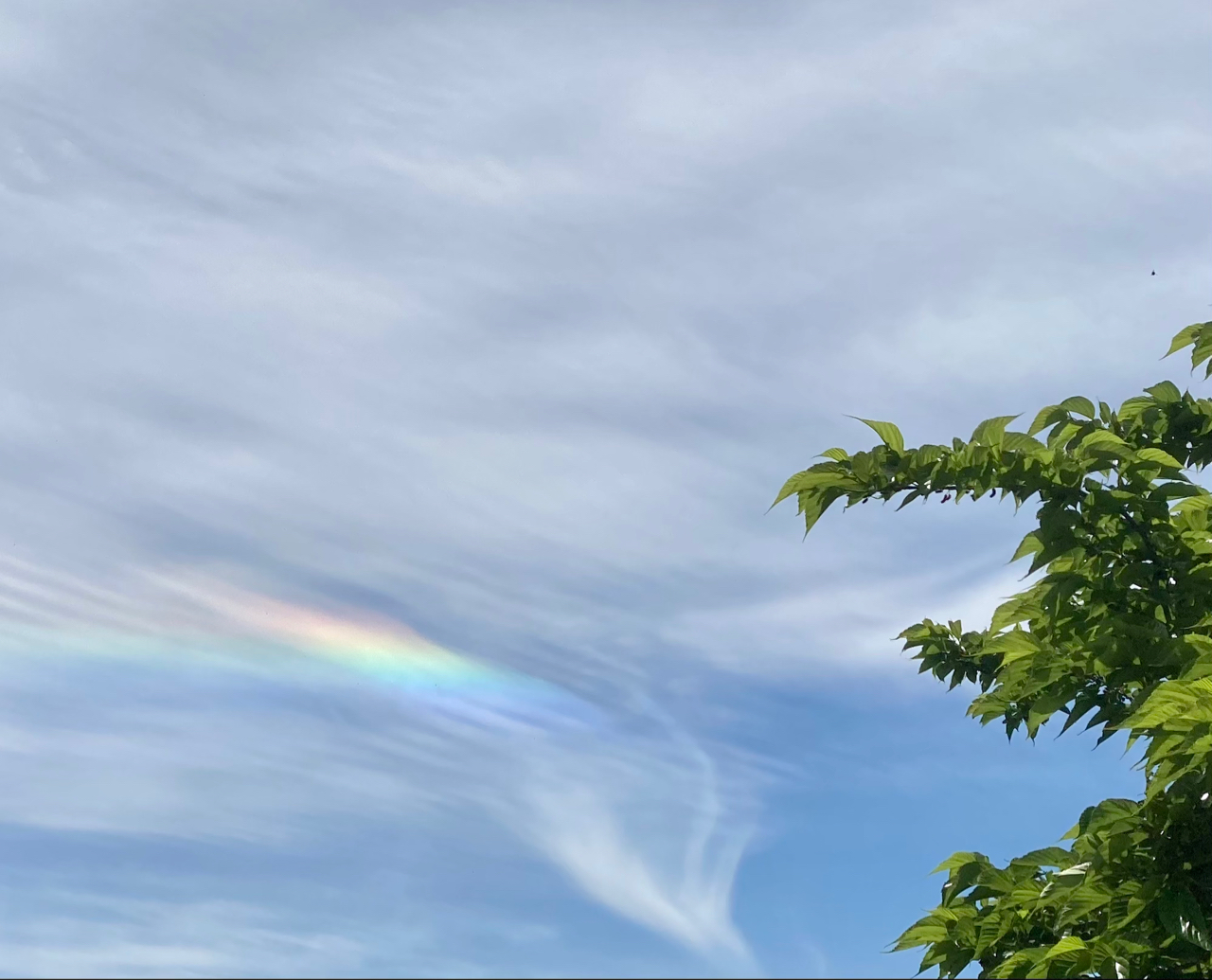
The sky often surprises me. Sometimes it catches my attention because it is blue from horizon to horizon, or it is covered in fast moving, rapidly shape-shifting clouds, or because it catches fire and turns crimson as the sun sets. But other times it’s because something appears which I’ve never seen before.
This sort of rainbow is one of those. Two of them appeared at the same time, but in different parts of the sky, a couple of days ago. I guess it’s not really a rainbow because it isn’t a bow and it wasn’t raining! Perhaps it is more like what you would see if light is passed through a prism.
Given the age I am, it might not surprise you that when I think of light passing through prisms I think of the cover of Pink Floyd’s album, “Dark Side of the Moon” (google it, if you don’t know it)
I have a fascination for kaleidoscopes and one day I was in Kyoto and it started to rain quite heavily. We noticed that the building we were passing was called “The Museum of Kaleidoscopes” so we dashed in to get out of the rain. When we signed the visitors book and put our country of origin as “Scotland” the staff all gathered around and excitedly welcomed us. It turns out that the inventor of the kaleidoscope was a Scotsman, Sir David Brewster. Ha! Who knew? Not us! Well, I’ve never seen so many different types of kaleidoscope in my life, and if you ever visit Kyoto, I recommend a visit to that museum. I bought a couple of different types while I was there and I still enjoy looking through them, watching the patterns change before my eyes.
Well, those are some of the thoughts which came up for me as I looked at this colourful, but pretty subtle, display in the sky.
As I look at the image again now it seems that the colours are pouring out of a spout-shaped cloud – and one of my friends said it looked like a rainbow genie escaping from a bottle!
Ooh, I love that! So, have a look at this rainbow genie and make a wish. Let’s see this as a good omen, a symbol of hope, a sign of better days ahead.
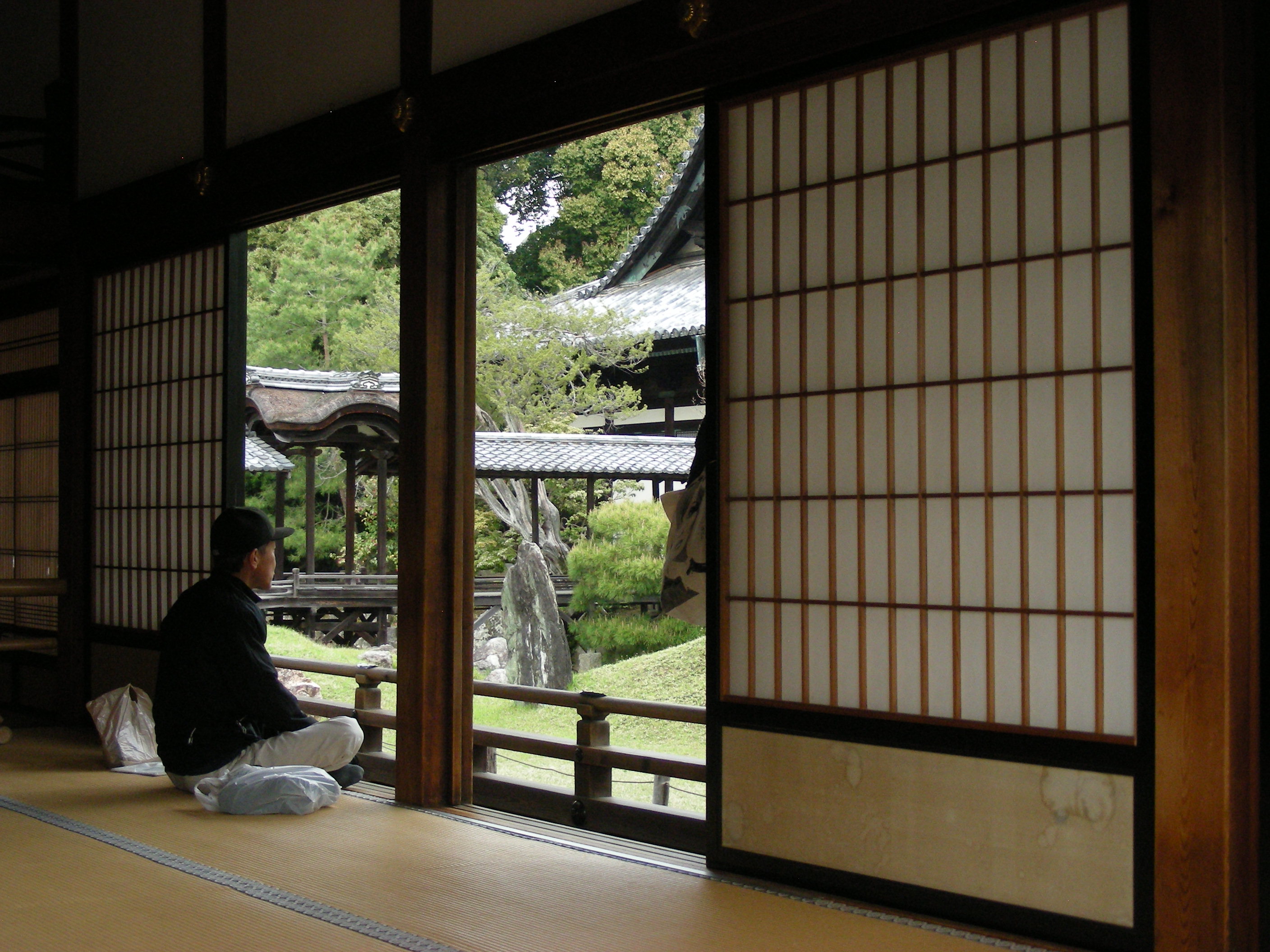
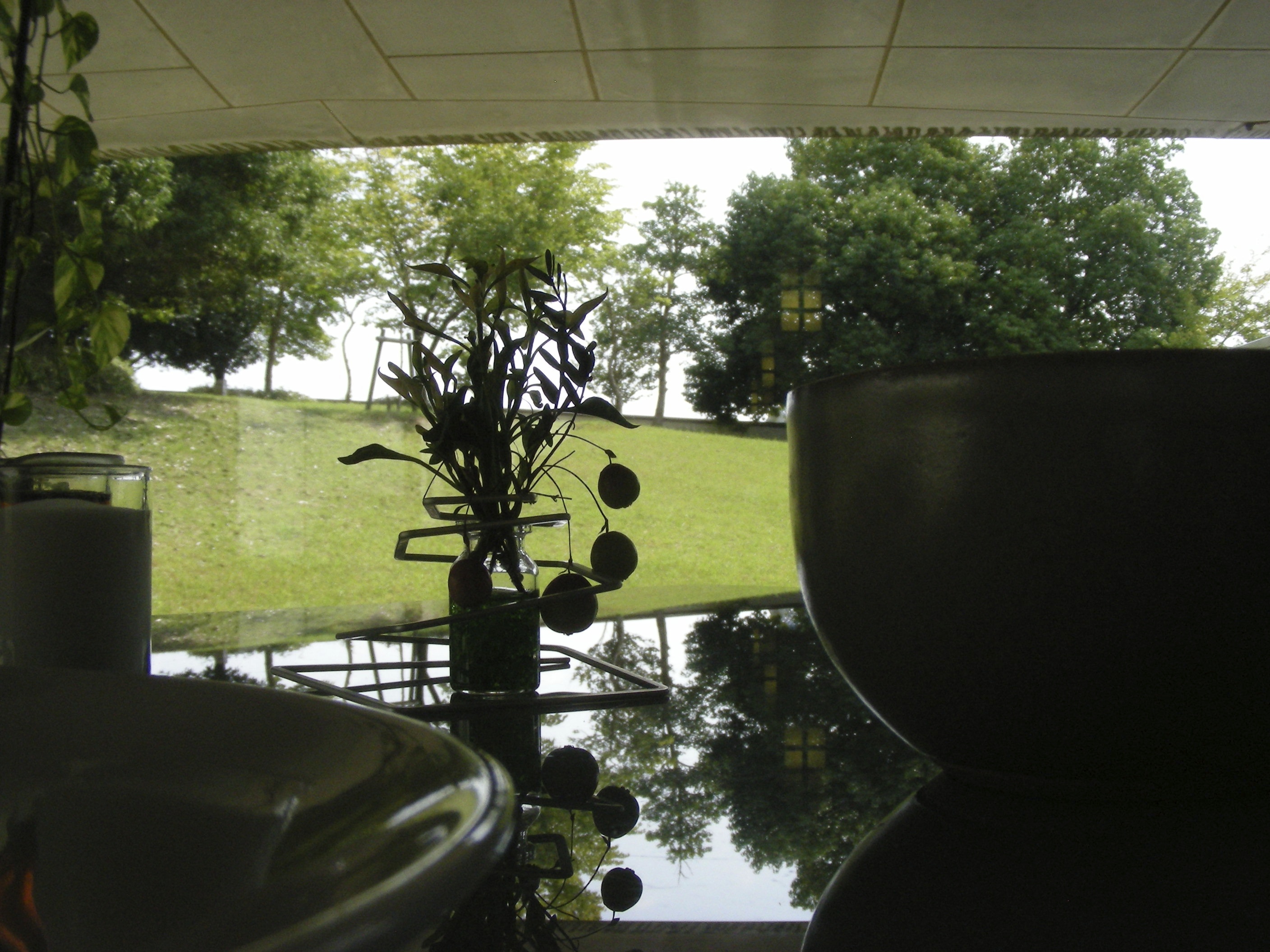
I took this photo in a tea house when visiting Japan a number of years ago. That tea house was one of the most peaceful places I’ve ever been, and I think part of what made it feel such a positive, healing place, was that they slid back the paper screens over the windows to reveal a terrace with an awning, and then all you could see were trees, bushes, and grass.
I was very fortunate to spend almost half my career working in Glasgow Homeopathic Hospital, which became the NHS Centre for Integrative Care once it moved into new, purpose built premises. Although the location of the new build was at the back of a major hospital site, just next to the railway station, the architect designed the L-shaped building around a garden. All the patient care rooms and spaces faced into the enclosed garden, which could be accessed by stepping out onto decking once you’d slid aside the French windows. Everybody commented on it. Patients and staff. We all felt the peace, the calm, the comfort, and the security which seemed to come from such closeness to green nature.
There’s pretty famous research into that phenomenon in the world of architecture. We know that patients recover more quickly, with less complications and less need for painkillers post-op if their hospital room has a view of green nature (as opposed to having no window, or a view of a wall).
We know, too that there are social as well as health benefits from the “greening” of cities.
But the other thing which occurred to me when I was remembering my trip to the tea room, was that those moments of peace which we all need, don’t have to involve learning any special techniques. There’s no doubt that various forms of meditation, and of cognitive behavioural exercises can be helpful, but there’s something powerful, even necessary, about just taking a pause.
Maybe not even just pausing by sitting and looking, which I’ve recommended before, but sitting with a cup of tea, or coffee, or some other favourite beverage, sipping, gazing, and contemplating freely.
I think it add to the quality of life. It’s a way of slowing down.
At one point in my life I was reflecting on what I was trying to achieve as a doctor. Maybe that seems an odd statement to you, but I think we fall very easily into routines and paths which we then “live” largely unconsciously. That’s what’s behind my “heroes not zombies” blog title. Whether it’s about saying “an unexamined life is not worth living”, or it’s simply about wanting freedom and autonomy, I’m wary of the automatic pilot approach to life. I want to be aware, to understand and to consciously choose, as much as I can. I want to move from being a zombie, controlled by hidden, and some not so hidden, forces, to being the hero of my own story – the main character, the subject, the one who is living this life.
I’m sure we all go through cycles and phases of self-reflection. For many people there is a peak of this around the age of 40, but, really it can happen any time and at any age. I believe it’s a good thing to pause and reflect from time to time. I think that’s essential to our personal growth.
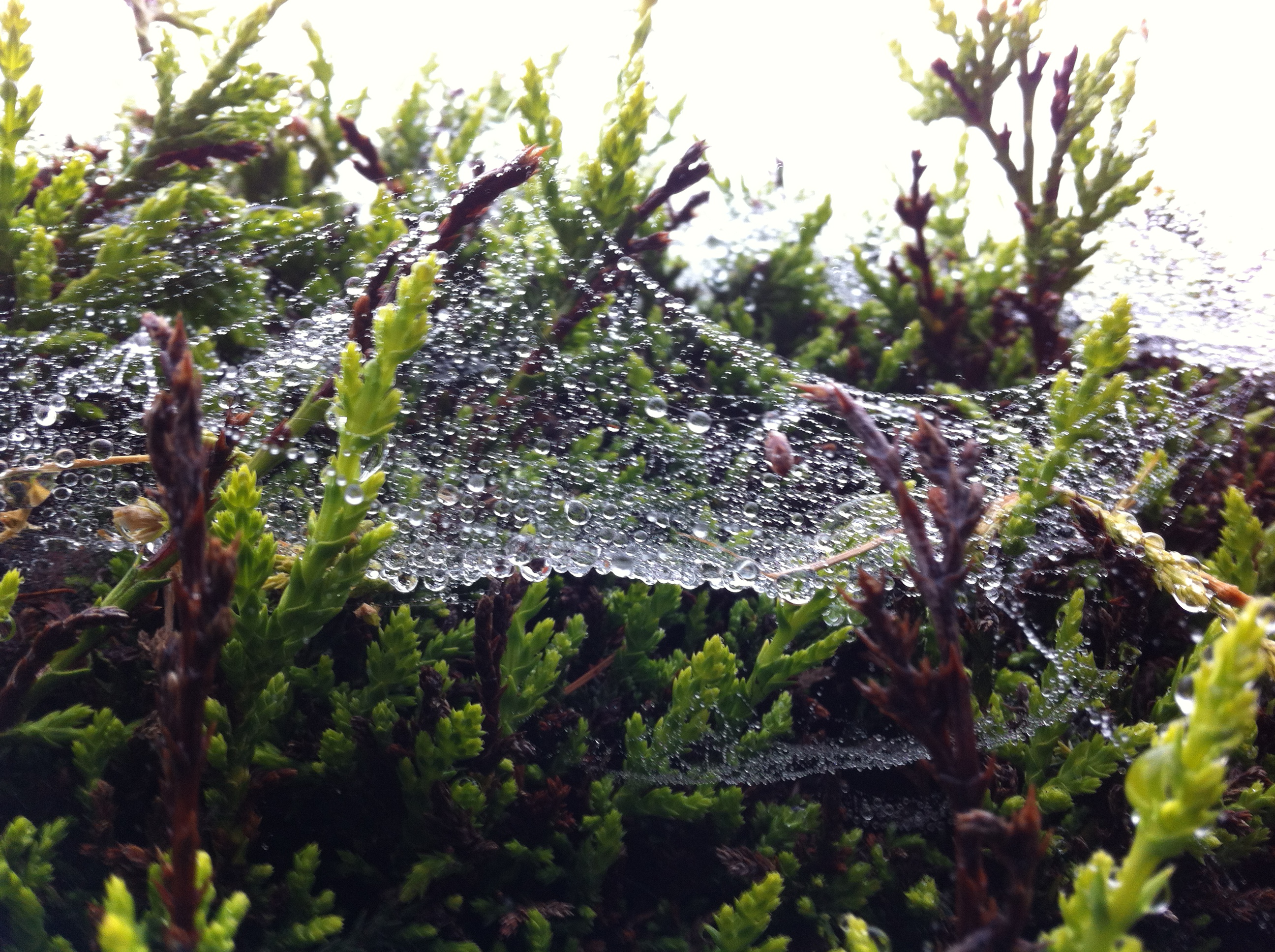
So, as I reflected on that question which would appear to me from time to time – “what does a doctor do?” – I looked at a spider web like the one above, early one morning as the dew drops sparkled on it, making it all the more beautiful, and revealing both its presence and its structure. What struck me was that whilst there were many elements coming together to make this web appear as it was, that morning, one element, light, suddenly seemed the one I wanted to focus on.
As I played with the words we use which are based on light, I hit upon three which I thought captured some of the most important aspects of my job.
Lighten. In all cases, I saw my job as trying to lighten other’s load. Maybe this was the first, and most important, part of all that I did. My job was to alleviate suffering. When someone left my consulting room, their life should feel a little lighter than it was when they entered. Certainly, it shouldn’t feel darker, and it shouldn’t feel heavier. Even when I’d had to give news of a serious disease. Giving news wasn’t enough. I needed to lighten the burden of that news by increasing how much the person understood, helping them to make more sense of what was happening, and helping them to realise that they were cared for, that they weren’t alone with this.
In fact, “diagnosis” is a big part of that. To me, diagnosis is not simply an act of labelling and categorising. It’s an act of understanding. It’s taking the messy chaos of experience and saying “I recognise this pattern” “I know what’s going on here”. What I found, time and time again, was that the very act of diagnosis lightened the load. Almost universally people start to feel better once they have a sense that they know what they are dealing with. Understanding, in my experience, shines a light.
Brighten. But then I thought, that’s not enough. Well, maybe it’s enough for some people who will go off with their new understanding and deal with it in their own way, but for many patients, I could do more. I could start to relieve the suffering, but I could also begin to help them build the positives in their life. I could help to actually brighten their days, both by giving reasonable hope, and by establishing an ongoing relationship of care focused on identifying and supporting their inner strengths, and teaching, coaching and enabling them to begin to grow in the light of this illness. This was a kind of turning a negative into a potential positive, because I’d find that for many of us, an illness was telling us something. It was suggesting that we should change something. And that required a development of strengths and skills.
Enlighten. In some cases, that work went to a whole other level. Someone would get nothing short of a revelation. They would suddenly understand the origins of their suffering, and they would gradually become aware of their own thought patterns, their own behaviours, and of the conditions in which they were living which were impacting on them so adversely, and they would say “That’s it. I’m changing.” Not just they would change some habit or other, but they would change direction. Get out of a toxic relationship. Leave a soul crushing job. Enter into education or training, or take the leap to begin something their heart had longed for, for many years. It was like they had a sudden enlightenment and said “I’m not going to live my life this way any more. I’m going to choose this other path instead”.
So, there I had it. My three light-based verbs. Lighten, brighten and enlighten. And of course, what happened from there? I applied those same three verbs to myself. That’s how I made the biggest changes in my life…..seeking some understanding which would lighten my load, turning towards positives, strengths, and emotions like joy, awe and wonder to brighten my days, and thinking outside the box I’d built, to change direction in the bright light of enlightenment.
I welcome constructive criticism and suggestions. I will not, however, tolerate abuse, rudeness or negativity, whether it is directed at me or other people. It has no place here. ANYONE making nasty comments will be banned.

 Heroes Not Zombies