Feeds:
Posts
Comments

Archive for the ‘psychology’ Category

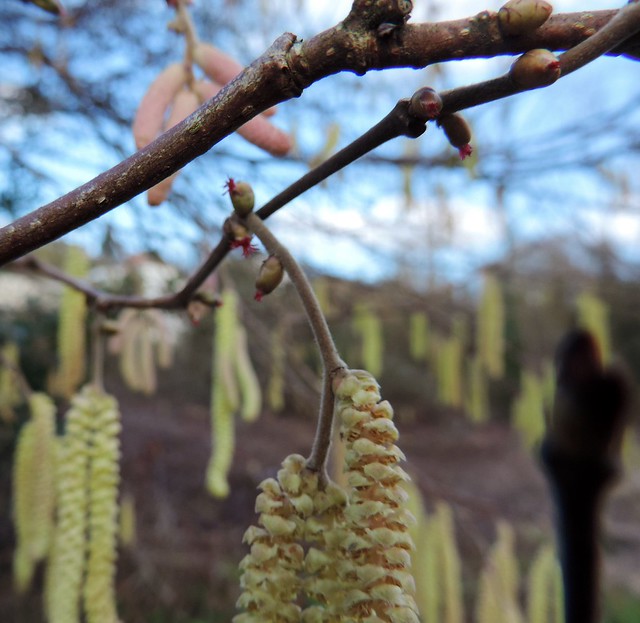
Dragon

A few years ago I wondered why the twelve months of the year have the names they do, and around the same time I was thinking, for many of us, there is a lack of awareness of rhythm and ritual in our lives, so I put the two ideas together and came up with a theme for each month of the year.

I use the theme as a touchstone of a kind. It’s a reminder, a meditation focus, a thought to return to each day….

March, the month which is named after Mars, has become, for me, the month to focus on strength.

There are two aspects of that which have come up for me this year as I reflect on this theme.

The first has been prompted by my reading of an article by Richard Sennett about “open cities”. He focuses on the issues which arise from us trying to live together – as we do as human beings, clustering together and building huge cities. That reminds me of T S Eliot’s Choruses from the Rock –

When the Stranger says: “What is the meaning of this city?

Do you huddle close together because you love each other?”

What will you answer? “We all dwell together

To make money from each other”? or “This is a community”?

And the Stranger will depart and return to the desert.

О my soul, be prepared for the coming of the Stranger,

Be prepared for him who knows how to ask questions.

Before I wander too far off topic, one of the key points Richard Sennett makes is about boundaries and borders. He says

The boundary is an edge where things end; the border is an edge where difference groups interact. At borders, organisms become more inter-active, due to the meeting of different species or physical conditions; for instance, where the shoreline of a lake meets solid land is an active zone of exchange where organisms find and feed off other organisms. Not surprisingly, it is also at the borderline where the work of natural selection is the most intense. Whereas the boundary is a guarded territory, as established by prides of lions or packs of wolves. No transgression at the boundary: Keep Out! Which means the edge itself is dead.

That’s a pretty new idea for me, but I’ve long since known the importance of healthy borders. In thinking about health, we need healthy boundaries which are maintained by our immune systems, but we also need healthy borders where we meet and interact with what is “other”.

So, here’s the first thing I’m going to reflect on this month, the month of strength – how are my boundaries and how are my borders? How healthy are they, and how might I make them healthier?

I think the answers to those questions are unique for each of us, but if you are inspired by this, why not reflect on boundaries and borders in your own life? See what you come up with?

The second aspect which has come up for me is Seligman’s idea of strengths. If you’ve never done it, or it’s some time since you did it, go and take the free questionnaire on his site and find out what your own core strengths are.

Just as I reflected on the difference between positive and negative hope, I think we can build our strengths by paying attention to them – not by beating ourselves up over our weaknesses!

So, there you are – March – the month of strength. What does that mean for you?
Read Full Post »

Plant feet

In the A to Z of Becoming, I’ve reached the letter “H” again, and one verb which begins with “H” is “hope”.

So I’ve been thinking about hope, but recently I’ve also been thinking a lot about negativity and how frequently we come across people who are against something. There are so many “anti-s” about and I often wonder what exactly an “anti” would say they are “pro”. What are they for, as opposed to what are they against.

When I bring those thoughts to the action of hoping I can see that on many occasions people are practising a kind of “negative hope” – “I hope I don’t fail at….” “I hope I don’t miss my train”, “I hope I don’t…..” – it’s about fear.

And fear is used a lot to control people so we are often sold messages on the basis of what might be avoided, rather than what might be achieved.

The positive psychology movement grew out of the understanding that whatever we focus on gets bigger. So if you try to treat someone’s fear by focusing on reducing that fear, you still end up focusing on the problem, not the solution.

It might seem there is a subtle difference between hoping for something and hoping that the opposite does not happen, but I think that difference is significant, because the focus of the hope has an influence on us.

If we spend our lives hoping that this or that does not happen, then we are living from a standpoint of fear, and our behaviours become avoidance behaviours.

If we spend our lives actively hoping for this or that, then we can live engaged with the creative efforts which can lead us to the fulfilment of those hopes.

Maybe the universe really does conspire to bring about what we focus on…..and if that is true, then ask yourself what you hope for, not what you hope you can avoid.

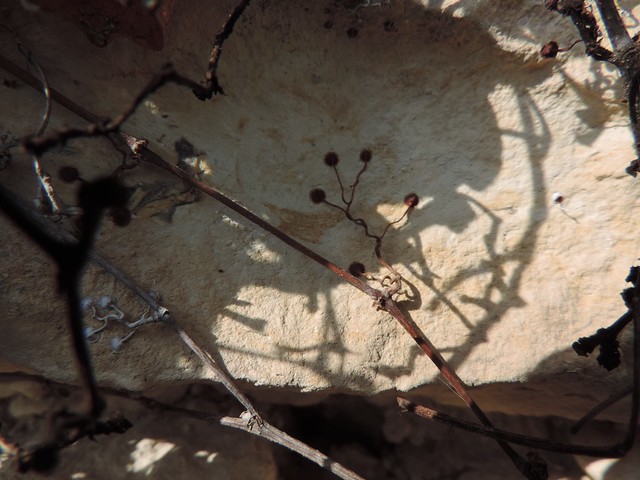
The vine in the photograph at the beginning of this post is actively seeking out and creating opportunities to grow. It is sending its out its tendrils to support itself in growing bigger, climbing higher, and spreading further. I like to see this as a positive behaviour focused on enriching and developing Life.


Read Full Post »

The dark observer

When I loaded this image up onto my Mac, and looked at it, I jumped.

I was taking a photo of the seeds hanging from the tree, but when I looked at it now I could see a skinny dark figure watching me.

The figure looked cloaked and hooded to me and had seemed to step right into my field of vision, even though I had not seen him when I was taking the photograph.

What was this?

Was it a spirit or ghost of some kind? Out in broad daylight? What was it doing there watching me? Was it watching with good will, or evil intent?

I shuddered.

Then I looked again and saw the out of focus foreground twig which must have been sticking up in front of my lens.

But when I look again, the first thing I see, every time, is the dark, shadowy figure.

We bring our active imaginations into our every day perceptions. It happens automatically. Then, when we pause, stand back, and look again, everything changes.

Doesn’t it?

Read Full Post »

jet

In the A to Z of Becoming, one of the verbs starting with G, is GO!

Every day I look up into the sky and see a mass of jet trails as planes fly from south to north, north to south, and sometimes in other directions too! I often wonder where the people are going.

Where are you going to go this year?

Physically. Are you going to go back again to somewhere you’ve been before and visit it with fresh eyes? Are you going to go and explore somewhere you’ve never been? I love to travel. It always changes my world, gives me a chance to reflect from a completely different vantage point. I hope you can have that experience too.

I don’t think you need to go far to have that kind of experience, and I don’t think you necessarily have to make it a long visit. Even a day trip can be not only a pause, but a turning point.

Just choose somewhere different from where you usually live, and GO!

But thinking about this verb, “go”, brings up something else for me too. Not just travel and visiting different places, but doing what your heart longs for.

What does your heart long for? What are the dreams you have for this life? Have you started to listen to what your heart says? Have you started to give the universe the chance to make your dreams come true?

None of that is going to happen if you are just waiting…..waiting for the “right” time, the “right” opportunity, or until this or that other thing happens. It’s never going to happen unless you start.

So, make this week be the week you hear “GO!” – and you are off and running!

Read Full Post »

DSCN2811


In the A to Z of Becoming, D can stand for Dream. Let’s consider three different kinds of active dreaming this week.

Probably when you first think of dreaming, you think of the dreaming you do when you are asleep. Dream experiences are astonishingly diverse. From almost mundane rehearsing a day’s events, to bizarre, symbolic totally baffling dreams, to dreams which feel important somehow. And how annoyingly common it is for the dreams to vanish in a flash as you wake leaving you with some kind of memory of having been dreaming, but the content has suddenly become inaccessible. Lucid dreams are ones where the dreamer is aware of dreaming. It doesn’t happen often for me, but when it does the dream always has the feel of significance. My most recent lucid dream was like that. As I flew above the Earth I was aware I was dreaming and that this experience was potentially important to me so chose to zoom down and look carefully to see what I could see. What I saw astonished me and is working its way out in my life in a myriad of incredible ways. (Maybe I’ll describe it some time for you)

Scientists have discovered something very interesting about lucid dreams. The part of the brain which seems active during self-reflection is especially well developed in lucid dreamers, raising this interesting prospect –

Researchers from the Max Planck Institute for Human Development in Berlin and the Max Planck Institute of Psychiatry in Munich have discovered that the brain area which enables self-reflection is larger in lucid dreamers. Thus, lucid dreamers are possibly also more self-reflecting when being awake.

This is one of those fascinating chicken and egg scenarios. If you could train people to experience lucid dreaming more frequently, would that assist them in becoming more self-reflective? And the other way too…..if you practice more self-reflection, do you have more lucid dreams?

So, there’s the first type of active dream to consider – lucid dreaming. If you have a lucid dream stick with it. My experience suggests that it will pay off in abundance. If you don’t have lucid dreams, developing daily self-reflective practices such as journaling, or meditation, might increase your chances of having one. (And you will probably receive the benefits of the self-reflective practices anyway)

A second kind of active dream is the conscious, heading towards something kind of dream. I find it is very common to discover that top musicians, artists, or sportsmen and women, dreamed of their achievements even as children. If you have such a dream, if you desire with all your heart to develop a particular skill or talent, then that dream may well contribute to its coming true. Whilst we can’t all be top performers in some area, I do think that the consistent dreams which run over many years generate both motivation and commitment. I dreamed of being a doctor when I was three years old, and I can’t remember a time throughout my whole childhood that I didn’t have that dream. Once I became a doctor, the dream modified to become more specific. I dreamed of being a particular kind of doctor. By that, I mean a doctor who practiced according to certain values. That dream underpinned all my career choices. I’ve also had a dream since childhood to become a writer, and that’s something I’m realising more consistently now, than at any previous stage of my life.

What dreams do you have for you life? What does your heart desire? What does your soul long for? If you know, why not take some time to write it out. Describe it, make it more concrete, lay the foundations for the life you hope for. If you don’t know, you could start to journal about it, or to meditate about it, or to discuss it with a loved one. Explore potential dreams and see what makes your heart sing. (By the way, that constitutes self-reflection, so such a practice might increase your chances of lucid dreaming)

Finally, a third kind of dream is a day dream. Now you might think day dreaming is a passive experience, not an active one. But that’s only partially true. Day dreams usually begin with a contemplation or a reflection. They usually have a focus. However, instead of rigorously wrestling with whatever we are focusing on, day dreaming involves an active letting go. Letting the mind find it’s own way without being too directive.

I think day dreaming has a bad press. It’s one of the things children are scolded for, and is considered to be sloppy or lazy. I think that completely fails to see the potential in day dreaming. Actively choosing to day dream can bring a whole other dimension to your life. What comes up may well surprise you, bringing you much deeper insights than other exercises can. Solutions to problems can appear in day dreams as “aha!” moments.

So, there’s three kinds of active dreaming to consider and play with this week – lucid dreaming, getting in touch with the foundation dreams of your life, and active day dreaming.

Read Full Post »

path

In the A to Z of Becoming, C can stand for Choose.

We choose all the time. Unconsciously. We choose what to eat, where to eat it, what path to follow to any particular regular destination (like the workplace), and so on, and on.

Every day is filled with choices about what we want to put energy into, what we want to focus on, and what we want to do in the next minute.

A lot of these unconscious (or minimally conscious) choices are created through habit. If you have ever attended a course or conference which runs over a number of days or weeks, you’ll have noticed how quickly people find a particular seat to occupy every day they attend. Most of our eating choices are largely unconscious. There will be certain meals you eat frequently, certain drinks you ask for in cafés, certain shops you shop in, even particular brands you stay “loyal” to.

As I’ve written about other unconscious actions, there is nothing wrong, per se, in their being unconscious, but I find life changes when you make conscious choices. Making a conscious choice does not require you to actually make a different choice. You might still choose a particular beverage, a particular routine or whatever, but the deliberate act of bringing your choice to awareness and saying “I choose to do this” can be incredibly empowering, affirming, and heighten your experience of whatever you have chosen.

Give it a go.

Bring some of your routines and habitual choices up into your consciousness this week, and either actively choose to stick with them, or choose an alternative.

See how it feels.

Read Full Post »

I used to support this idea that you ‘write what you know.’ You hear that advice given to young writers all the time and even to kids in school. It’s one of the greatest disservices – even in elementary school, teachers ask students just back from holidays to write about what you did, what happened to you, what you know. What about what you imagine? The imagination is the richest tool you will ever have as a novelist and, really, as a person. Anybody can do research. To use your imagination is to use a gift of the gods. The imagination is really disrespected when you’re telling people over and over to write what you know. This idea that what you experienced in your backyard when you were 15 is more significant or more real is just not true. Lawrence Hill

I’m increasingly convinced that imagination is indeed a “gift of the gods” and that it is the “richest tool” any creative person can use, not just writers. 

In fact, I’m increasingly convinced that more imagination is needed to solve the problems and crises we face, to feel genuine empathy with others, to develop tolerance, and to re-enchant our dis-enchanted lives.

Read Full Post »

In the London Review of Books, Hilary Mantel has written an extremely thought provoking review of Brian Dillon’s “Tormented Hope: Nine Hypochondriac Lives”.

For some of us, the question ‘Am I ill or well?’ is not at all straightforward, but contentious and guilt-ridden. I feel ill, but have I any right to the feeling? I feel ill, but has my feeling any organic basis? I feel ill, but who am I to say so? Someone else must decide (my doctor, my mother) whether the illness is real by other people’s standards, or only by mine. Is it a respectable illness? Does it stand up to scientific scrutiny? Or is it just one of my body’s weasel stratagems, to get attention, to get a rest, to avoid doing something it doesn’t want to do? Some of us perceive our body as fundamentally dishonest, and illness as a scam it has thought up.


We understand, almost instinctively, the nuanced difference between disease and illness. As Eric Cassell put it so clearly – “illness is what a man has, and disease is what an organ has”. Or “illness is what you go to the doctor with, and disease is what you come home with”. However, both doctors and patients are caught up in the blurred boundary between these two concepts. For doctors, once a sensation is classified as a symptom, it becomes a signpost to a pathology (or it is dismissed as “psychological”). For all of us, though, we live with the possibility that any sensation might be a symptom. For the hypochondriac, every sensation might be a symptom. As Hilary Mantel says – 


In hypochondria, the whole imagination is medicalised; on the one hand, the state is sordid and comic, on the other hand, perfectly comprehensible. It is the dismaying opaqueness of human flesh that drives us to anxiety and despair. What in God’s name is going on in there? Why are our bodies not made with hinged flaps or transparent panels, so that we can have a look? Why must we exist in perpetual uncertainty (only ended by death) as to whether we are well or ill?

Am I well, or am I ill? Who decides?

Brian Dillon consoles us that ‘hypochondriacs are almost always other people.’ The condition exists on a continuum, with fraud at one end, delusion in the middle and medical incompetence at the other end; he is a benefits cheat, you are a hypochondriac, I am as yet undiagnosed.

One issue is symptoms, which are a particular way of classifying sensations. Are some more real, somehow, than others? Do they need accompanying physical changes in the body to be real?  

Many people are simply hyper-aware of bodily sensations, and so are driven continually to check in with themselves, examining visceral events as a man about to confess to a priest examines his conscience; like the believer scrutinising himself for sin, they expect to find something bad, perhaps something mortal. Forgiveness, and cure, are only ever partial and temporary; there will always be another lapse, some internal quaking or queasiness, some torsion or stricture, some lightness in the head or hammering of the pulse, some stiffness in the joint or trembling of the limb, or perhaps even an absence of sensation, a numbness, a deficit, a failure of the appetite.

A researcher called Kurt Kroenke has published many studies where he shows, time and again, that not only is the percentage of people listing symptoms which they have equal whether they are attending medical clinics, or are simply stopped in the street and asked, but the actual symptoms people complain of are the largely the same whether they are attending for health care, or just going about their normal lives. Clearly, not only are sensations not usually symptoms but symptoms do not equal disease.

Bodily, and psychic sensations are part of being alive. But we humans are compelled somehow to try to find the underlying meaning of everything..including sensations. Isn’t this the crux of the issue? Who gives meaning to your daily life, your lived experience, your sensations, thoughts, and feelings?

In the days before internet information and misinformation became available, patients often came away from a consultation with the feeling that they did not own their own bodies, that they were in some way owned by the doctor or the NHS. Now perhaps Google owns our bodies; it is possible to have access, at a keystroke, to a dazing plurality of opinion. There is an illness out there for every need, a disease to fit any symptom. And it is not just individuals who manufacture disease. As drug patents expire, the pharmacological companies invent new illnesses, such as social anxiety disorder, for which an otherwise obsolete formulation can be prescribed. For this ruse to work, the patient must accept a description of himself as sick, not just odd; so shyness, for example, becomes a pathology, not just an inconvenient character trait. We need not be in pain, or produce florid symptoms, to benefit from the new, enveloping, knowledge-based hypochondria. We are all subtly wrong in some way, most of the time: ill at ease in the world. We can stand a bit of readjustment, physical or mental, a bit of fine-tuning. Our lifelong itch for self-improvement can be scratched by a cosmetic surgeon with his scalpel or needle, our feelings of loss assuaged by a pill that will return us to a state of self-possession. For hypochondria, the future is golden.

It’s not just doctors who interpret your sensations now, there are interpretations everywhere, and some of them are deliberately invented for marketing purposes. 

Living involves experiencing sensations, and being human involves sense-making. Trying to understand what is happening now may be an inescapable part of Life. Deciding what meaning fits best is, ultimately, down to the individual – either by simply accepting the interpretation of an other, or by consciously, rationally, working it out in our own terms.

Entangled as they might be, the untangling of sensations is up to us.

Read Full Post »

John Berger writes

Because true translation is not a binary affair between two languages but a triangular affair. The third point of the triangle being what lay behind the words of the original text before it was written. True translation demands a return to the pre-verbal. One reads and rereads the words of the original text in order to penetrate through them to reach, to touch, the vision or experience that prompted them. One then gathers up what one has found there and takes this quivering almost wordless “thing” and places it behind the language it needs to be translated into. And now the principal task is to persuade the host language to take in and welcome the “thing” that is waiting to be articulated.

Interesting, huh? That mechanical translation matches word to word then seeks to get the grammar correct, but is the original idea or meaning translated well that way?

As I begin to live in a country where the language is not my first language, I find that, at least in this first phase, I’m translating all the time. Reading or hearing French and translating it into English in my head to understand the meaning. But already there are phrases which seem to require no translation, and phrases that pop into my head fully formed in French. I’m guessing that gradually I’ll do less and less translation.

But actually although Berger is talking about translating a text from one language into another, I think maybe the same issues apply to all communication. I have an idea or a feeling to express, pick some words, some phrases. I’m translating it into written or spoken language. Aren’t I? Which leads me to wonder about the rich diversity of inner lives. I’m sure we all get that experience, from time to time, where we think that someone else seems to come from another planet. Where their worldview is so different from ours that we don’t even seem to be speaking a common language, despite the fact that a superficial observation would lead to the conclusion that we are indeed speaking the same language.

When Berger mentions the third point of the triangle, I suspect he is thinking of our inner lives. That leads me to three questions today.

  1. How can I know my inner life?
  2. How can I express or show my inner life?
  3. How can I know the inner life of another?

For me, the first involves practices of awareness and reflection, the second, creative acts, and the third requires ongoing dialogue. Isn’t it interesting that all three have no end? I will never know myself completely, never be able to fully express myself, and never fully know another. That makes me feel both excited and humble.

Excited because all that is an adventure, a voyage of discovery, and a constant stream of revelation and wonder. It is the ‘émerveillement du quotidien‘.

Humble because nothing can be known completely, fully or finally. Montaigne knew that with his ‘Que sais-je?

Over to you now. How do you answer those three questions? You, personally, in your own life?

  1. How can I know my inner life?
  2. How can I express or show my inner life?
  3. How can I know the inner life of another?

Read Full Post »

a wish

In the second part of the A to Z of Becoming, W stands for Wish.

How nice, that we’ve come to this verb at this time of year!

You might want to make a single wish, like the Japanese one I saw above, or to create a whole flourishing bush of wishes, like in this next photo….

blossom of wishes

Or you might be a more organised type, and like your wishes in rows and columns! –

making a wish

Whether or not you choose to tie your wishes to a tree, or a fence, or a line of thread, I think it’s a great idea to actually write your wishes down and put them somewhere! This Japanese tradition is an attractive one. Why not try it?

Do you think wishes come true? Well, have you ever heard the phrase “Be careful what you wish for!”?

What does that mean? Does it mean you might not like what you get even when you’ve longed for it? Or because you might not have thought through the consequences of your wish? Does it mean you shouldn’t wish lightly? But only after careful consideration?

Whatever it means, the person saying it clearly thinks that wishes might indeed be fulfilled. Otherwise, why be careful?

I think wishes are often fulfilled. But I don’t think wishes are the same as magic spells. There’s some similarity between wishes and goals. Both provide some kind of focus, some kind of direction and I think a wish is more likely to come true if you apply something like the “SMART” principles which people apply to goals – “Specific, Measurable, Assignable, Realistic, Time related”.

I wouldn’t map the same criteria directly onto wishing, but I do think wishes are more likely to be fulfilled if they are at least specific, realistic and time focused.

I think there is also a relationship between wishes and hopes. Someone without hope is unlikely to make a wish.

What about you?

What place is there for wishing in your life?

Would now be a good time to draw up your own list of wishes for yourself for the coming year? Would that be a nice complement, or alternative, to resolutions, or goals?

And what do you wish for others?

When you wish something for someone else, maybe the wish is more likely to be granted if you actually do something to help make the wish come true. What could you do to help make your wishes for others come true?

I think that also applies to your own wishes, by the way – the ones more likely to come to pass, are the ones you actively work towards……

One final thought about wishes. Values-based wishing is likely to orientate you towards acting according to that value. For example, if you wish there was more kindness in the world, you are reminding yourself how much you value kindness, so you are giving yourself a chance, not just to act more kindly every day, but to open yourself up to acts of kindness in your life.

Read Full Post »

« Newer Posts - Older Posts »