Feeds:
Posts
Comments

Archive for the ‘Uncategorized’ Category

Certainty

One day a patient came to see me and I asked how things were. She replied, “not so good, my husband has been diagnosed with cancer and he’s been told he’s got six months to live.”

“Oh dear, how do you feel about that?” I asked.

“I’m angry”

Not a response I expected but I was interested to understand. “Why are you angry?”

“Well, how come he gets to know how long he’s got and I don’t get to know how long I’ve got?!”

This led to a discussion about certainty. I’ve never been a fan of doctors telling patients they have x months or years to live. Many people take it as a death sentence and either go downhill turning it into a self fulfilling prophecy or they reject it and soldier on.

The point is we can’t be that certain. The further ahead we look the less certain we can be. You see that every day with the weather forecast. But even over a short period of time we can’t be 100% certain. Thanks to diversity, chance and constant change, we cannot be certain.

But we crave certainty. We want to know for sure that we’re making a good choice. We would like to be sure we have at least another x years to live. (We would like to know the value of x!)

We want the pilot to be certain he’s pressed the right buttons, made the necessary pre flight checks. We want the surgeon to be certain they are about to make an incision exactly where it should be made. And so on…..

But, on the other hand, those who are utterly convinced of the rightness of their own views can be scary and dangerous people. From religious fundamentalists to despots like Hitler, Stalin, Mao or Pol Pot. To narcissistic politicians who refuse to tolerate any opinion different from their own (don’t we have way more of those than are good for us in the world just now?)

Or how about the “new atheists” who are so certain of their own position that they mock and dismiss anyone who has any faith? Or the so called “sceptics” who are so sure of their own “evidence” that they campaign to prevent others making different health choices?

When I was taught how to make a good diagnosis, I was taught to draw up a short list of possibilities….a “differential diagnosis” then to act according to the most likely one whilst remaining constantly alert, observing, examining, testing as time past, ready to drop the chosen diagnosis if the facts no longer fitted.

Maybe what we need is enough certainty to make choices and to live the life we want to live, but to hold those certainties loosely….ready to change and adapt as we encounter the ever evolving reality of daily life?
Read Full Post »

Loving attention

Many years ago I used to listen to a pirate radio station called Radio Caroline. It was broadcast from a boat in international waters which got around the broadcast licensing issues of the time. At one point they went through a phase of promoting something they called “the LA habit”, encouraging the listeners to “get the LA habit”. LA, in this phrase, was short for “Loving Awareness”.

I remembered this when reading Iris Murdoch’s “The Sovereignty of Good” recently. She wrote about the benefit of paying a particular kind of attention to – loving attention. When we pay loving attention to the world we see more beauty, develop more compassion and experience the Good.

“Loving Awareness” is probably a good idea, but, actually, I’m even more persuaded of the benefits of “Loving Attention”. Our dominant way of attending to the world comes from the left cerebral hemisphere, and it’s what we employ to grasp and manipulate the world by dividing reality up into manageable pieces. The right hemisphere, on the other, pays a broad attention to the world, which we need to see and create connections. We need a holistic attention to better understand others. We need it to engage and understand.

This is what we need today to counter the alienation, division and despair which is so prevalent in our societies.

We need it to build bridges, form mutually beneficial bonds and to deepen our engagement with nature and with each other.

We need to pay more loving attention – the evolution of the LA habit!

Read Full Post »

A 3 E Life

Yes, you read that right – a 3 E Life – not a 3 D one!

I’ve been doing a lot of reflecting these last few months, not least because a diagnosis I received last summer has made me more acutely aware of both mortality and the vulnerability of Life.

What I’ve come up with feels very important to me and I don’t know if it would be good for you as well, but I decided I’d share it and then you can decide for yourself.

I started with the age old questions – what am I here for? and what makes a “good life”?

I reckon every one of us will come up with our own answers to those questions but here’s mine – they are both answered by paying attention to three actions every day – Exploring, Enjoying and Expressing.

Exploring. I have always been curious, I love to learn, to discover, to deepen my understanding of others and myself. I love to travel to see other places, see how other people live. I read A LOT, both non fiction and fiction. When I was at work my greatest delight was learning more and more about each of my patients. People fascinate me. I’m astonished by Nature pretty much every day. The plant world and birds especially fascinate me. I love art – music, painting, sculpture, photography, literature, poetry, cinema.

Enjoying. I think every experience should be engaged with, paid attention to. I love to slow down and really see, really hear, really smell, taste, touch. “Savour the Day” works better for me than “Seize the Day”. Every day is full of experiences and events to be relished, to be amazed by, to be enjoyed. I love the French saying “l’émerveillement du quotidien”, I love “forest bathing”, I love to immerse myself in the here and now.

Expressing. I think we create change all the time. Just by living we change the environment, the planet. What we do, say, write, affects others. Everything we do ripples out across the world, and I think every one of us is unique. Only I can share with the world what it’s like to be me. Only I can radiate out the emotions and thoughts I have. And only you can share yours. I think we are all here to share our experiences and creativity with each other. For me this mostly takes the form of the photos I take and the words I write as I reflect on them. You’ll have your own ways.

But there’s something else I want to add beyond the 3 Es and that’s LOVE. It’s loving attention which creates both a better world and a good life. It’s the love given and received that makes every day so good.

So, I hope to practise my 3 Es every day – explore, enjoy, express – always from my heart, always in love.

Read Full Post »

Lifelong

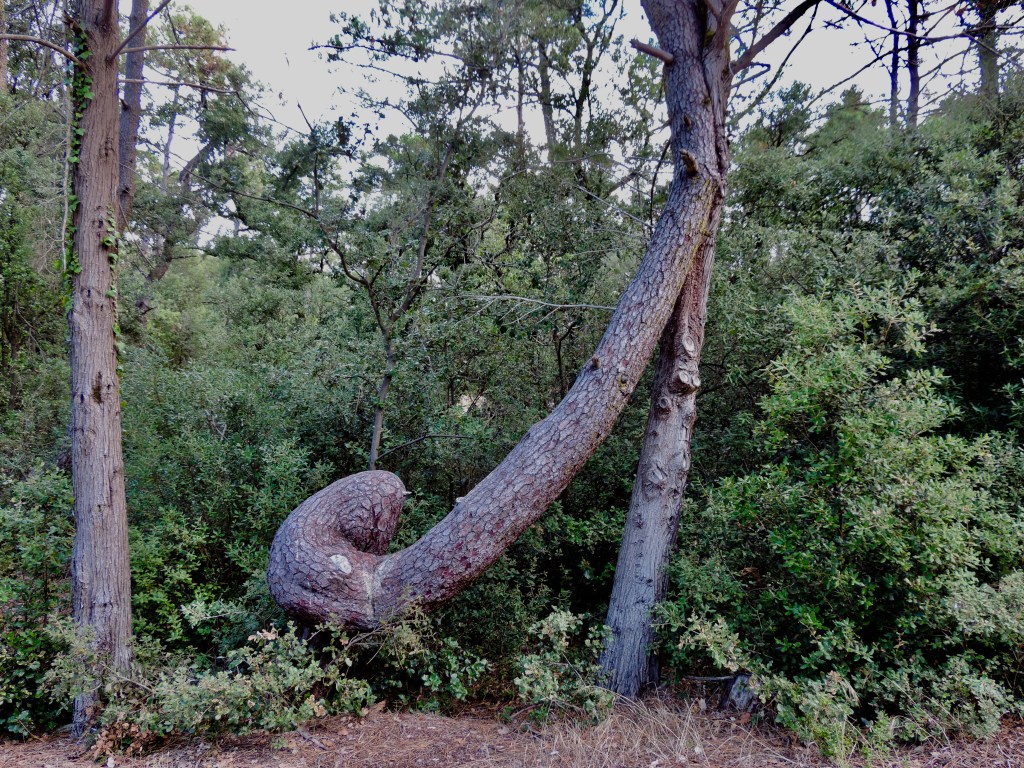
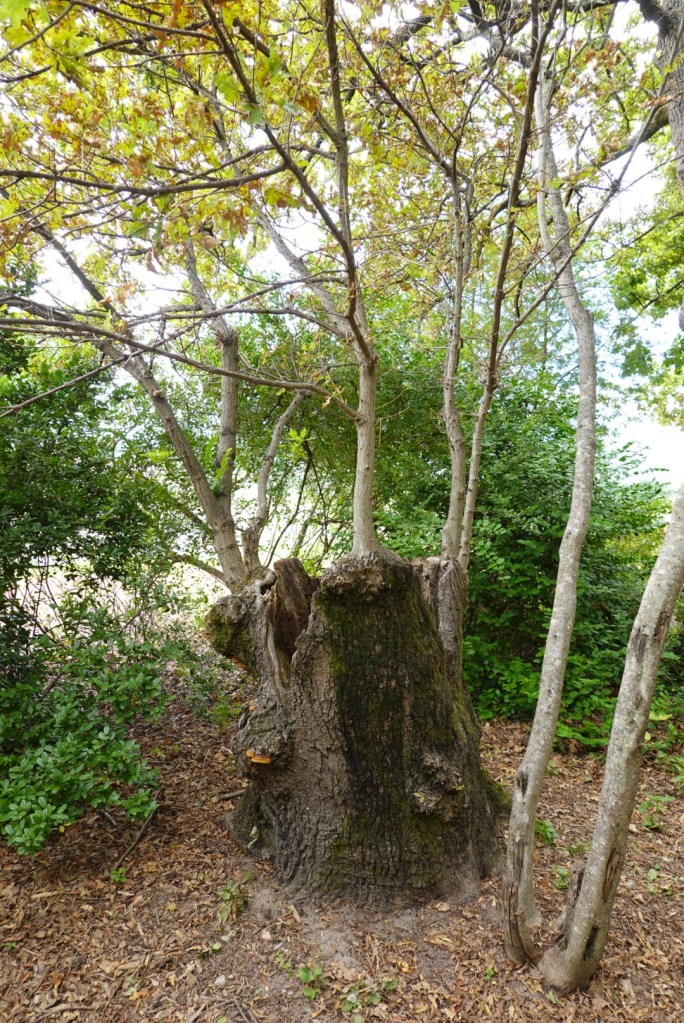
This photo is one of several I’ve taken where I’ve been really astonished by the shape of a tree. Actually it’s not just the shape that catches my eye, but the impression of movement which appears. It’s as if you can see the past, the present, and the future all at once.

For the first half of my medical career I worked as a GP, what we used to call a “family doctor”. My childhood role models for this work were our own family doctor, Dr Haig, and a fictional one, Dr Finlay. Initially I worked in a small rural town in south west Scotland, and then a city Practice, in Edinburgh. The organisation of our partnership privileged the idea of “personal lists”. People selected the particular doctor they wanted to see and would seek consultations with that individual in preference to the others. If their preferred (or “named”) doctor was on holiday, or not available today, they’d come and see one of the others. This system meant continuity of care was at the heart of our work. I’d get to know an individual through several life stages, sometimes from their birth until they became parents and even grandparents.

For the second half of my career I worked at Glasgow Homeopathic Hospital where we specialised in looking after people with long term conditions. Again, continuity of care was our core principle. From the first consultation onwards we would get to know an individual a little bit more at each subsequent consultation, over months, or even years.

So for my whole career I worked in contexts which privileged taking a whole of life perspective.

Yet, that is not how Medicine had developed. Following the dual influences of a reductive, often mechanistic, approach to illness, and a management methodology more suited to factories and shops than to Primary Care or hospitals. Illness is reduced to disease, to disorder or pathology in particular cells or organs.

Whilst the body can heal after physical trauma, and after most infections, most diseases do not go away. Yes, we can “manage” long term illness better….diabetes, asthma, hypertension etc…but only by using drugs for life. There are few genuine “cures” in modern Medicine.

One of my frustrations with medical research is not just that participants are studied for relatively short periods of time, but little, or no, attention is paid to any whole of life perspective.

If a particular treatment reduces the chances of dying from a specific disease, what do those patients die from instead? What experiences do they have of this disease, and others, months and years later?

Don’t we need a better knowledge of whole of life experiences to make good decisions….decisions only an individual can make with the best information and care?

I have a wish and a hope for the future – that we begin to shift our attention from short term to long term, that we seek out the connections, explore the contexts……in other words that we move towards more joined up, more holistic, more lifelong perspectives.

Read Full Post »

I listened to an interview with Iain McGilchrist recently where he said the difference between imagination and fantasy is that imagination engages us with reality where fantasy takes us away from it.

Iris Murdoch makes the same point about imagination in her “The Sovereignty of Good”…..

We use our imagination not to escape the world but to join it….

Imagination is our super power. We can’t know the inner life of another….whether that be a person, an animal or a plant.

When patients told me their stories I used my imagination to “see” them, to “hear” them and to “feel” what they were feeling. I think, and Iris Murdoch makes this point too, that we have to focus our imagination with a particular kind of attention – loving attention.

I know love has many forms and is different in different contexts and in every relationship but we need a loving attention if we want to get to know another. We need to regard them positively, to listen without judging and we need to care. All of that falls into place when we act with love, when we pay a loving attention.

Imagination, then, is essential to empathy because it connects, it builds bonds between us. I remember after 9/11, the author, Ian McEwan, described the terrorist act as a “failure of imagination”, and the 9/11 Commission picked up on that in its report. It seems to me that all such cruelties, such acts of heartless violence, are failures of imagination…..the perpetrators don’t know their victims, don’t pay loving attention to them.

Fantasy on the other takes us away from the world, from reality. Fantasies about immortality, fantasies about the human race leaving planet Earth to live on Mars, fantasies about consciousness downloaded into computers or robots…..they all take us away from reality.

Fantasy can be fun. It’s good to escape or dream from time to time. But it’s good to remember that fantasies remove us from real life because they involve a direction of attention away from reality.

There’s a lot more I could say about this but I’ll leave it at that and ask, what comes up for you when you reflect on the differences between imagination and fantasy?

Read Full Post »

Pulling together

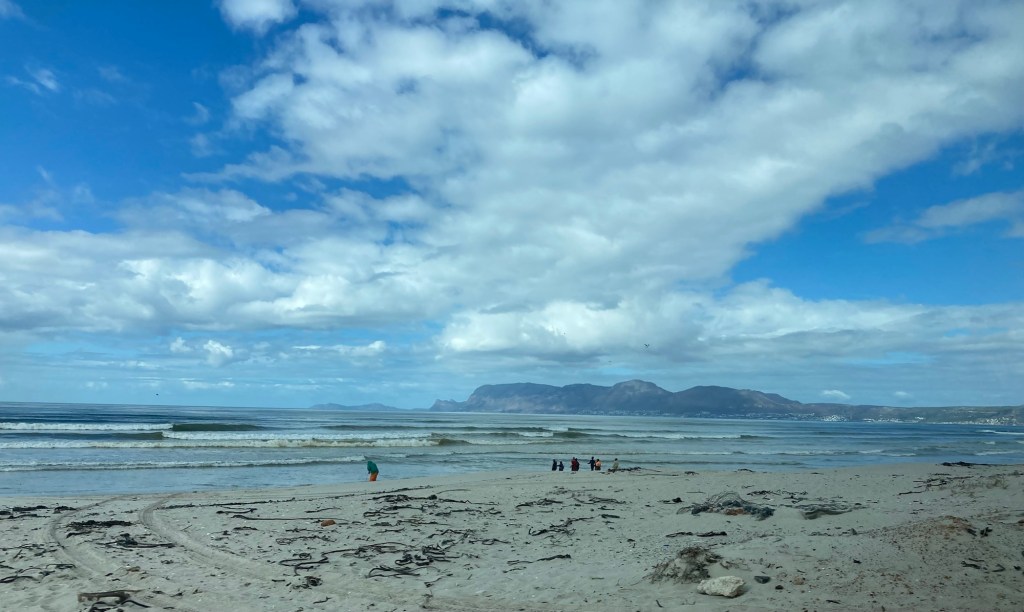
As we drove along the coast road round False Bay towards Muizenberg in the Western Cape I saw several groups of fishermen standing in lines, pulling on ropes, looking for all the world like teams in a tug-of-war contest. However, this was no competition. There were no opposition teams pulling in the opposite direction.

They were pulling in their nets to harvest what they had caught together.

I know that competition is a fact of life. I know we’ve made competition the foundation of our society. It’s what we built capitalism on.

However, I’m convinced that’s been a mistake. A human baby couldn’t survive without all the people who care for him or her, right from day one, and for the rest of their life.

We are intensely social creatures. Our super power isn’t so much competition, it’s cooperation and collaboration.

The “self made man” is a myth. And “homo economicus” is a delusional mistake created by neoliberal fanatics.

We all “stand on the shoulders of giants”. None of us parachuted into this life unconnected to ancestors, family and biosphere.

If we could change our focus and our priorities towards relationships, to how we influence others, and how others influence us, we’d create a different way of living on this planet – especially if we extended our understanding of “the other” to those of other communities, traditions and beliefs, to our non-human neighbours, the animals, plants and all other forms of life.

Isn’t it time for all of us to shift from “me” to “we”? To explore, grow and nurture our connections. For our own sakes, for our children, and for Life on Earth.

Read Full Post »

The faraway path

When you’re very young the future seems so very far away. Children are better at living in the here and now than adults are.

As you get older the faraway path becomes clearer, but, still it seems far away.

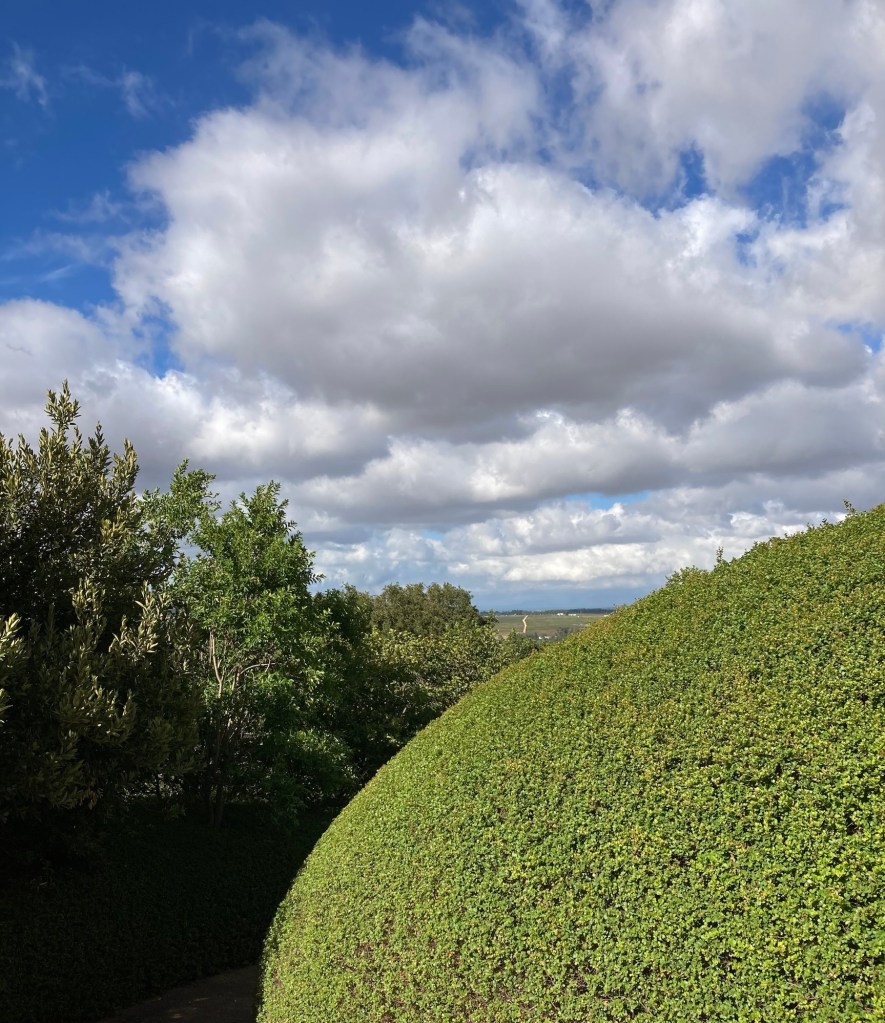
Now, as I head towards 70, the faraway path seems much closer.

Still, I’ve no idea when I’ll get there so I’ll keep going forward, day by day, a wonder-filled day at a time, and another one opening up tomorrow.

Read Full Post »

Growing and changing

Here are two characteristics of all living beings – they grow and they change.

We all experience significant challenges, traumas, gifts, opportunities and events of countless different kinds. We are changed by them. We adapt. We take a new path, step through a new door, carry on with determination but in the light of new circumstances.

Life, like the universe, is made of relationships and events. We are in constant interaction with “the other”, and with ourselves, living in a constant flow of materials, energies and information. We are continually forming mutually beneficial bonds….integrating.

Every day we encounter wonders, events we’ve never experienced before, sights we’ve never seen, sounds we’ve never heard.

Every day is filled with firsts and lasts….experiences we’ve never had, and will never repeat.

Savour the day.

Read Full Post »

Twists and turns

Every day there are surprises, things we didn’t expect, events which we didn’t imagine. Some seem like miracles, many astonish or amaze us. Others strike us because they are synchronicities.

Some of them are obstacles, demanding we change direction, follow a diversion, or that we adapt.

Over the course of a lifetime we don’t follow a straight path. Looking back isn’t like looking at the wake behind a ship. A life is full of twists and turns.

These events, these adaptations, they shape us and they shape our lives. Whether we think of life as a journey or a story, every one of us is unique, and not one of us grows an identical life to another.

In every event we connect with others, and with the environment. As we interact we exchange atoms, energies and information which sculpt both ourselves and the others into these unique shapes.

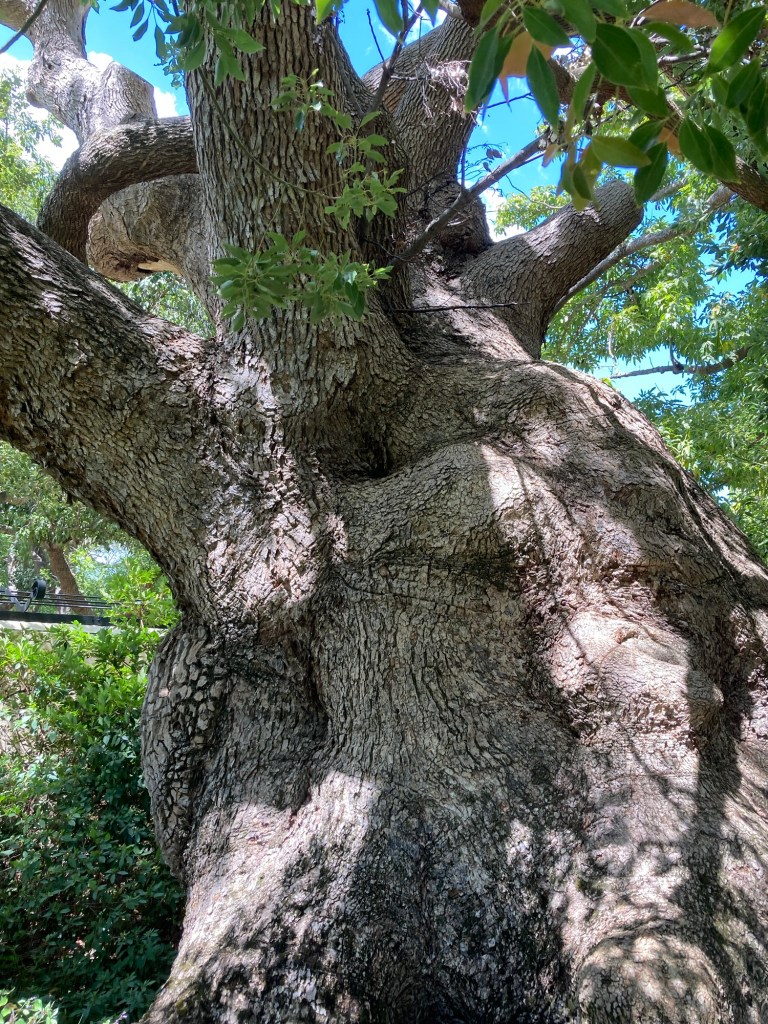
These trees are over two hundred years old, and every twist and turn developed from their daily encounters…..and that’s what makes them so amazing, so unique and so beautiful.

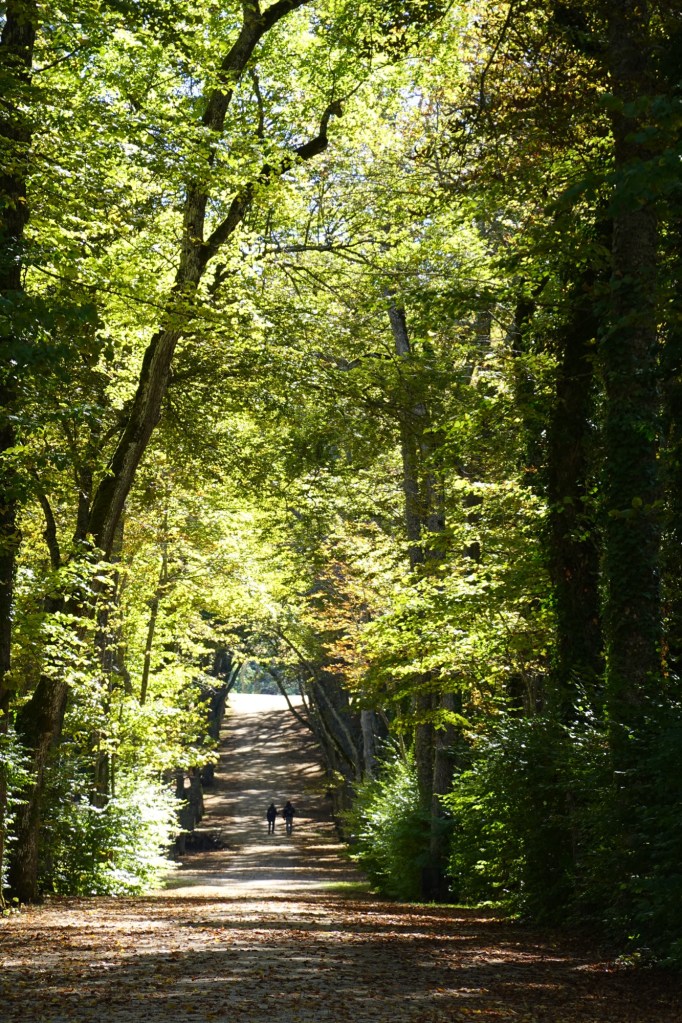
I love to walk amongst trees. It’s good for my body and my mind. It changes my breathing, my heart rate and my day. It amazes me to be so close to creatures which have lived for hundreds of years.

Read Full Post »

Connections

We are not separate.

We didn’t just appear on this planet one day independent of all others.

We didn’t grow up all by ourselves.

We don’t survive separate from everyone and everything else.

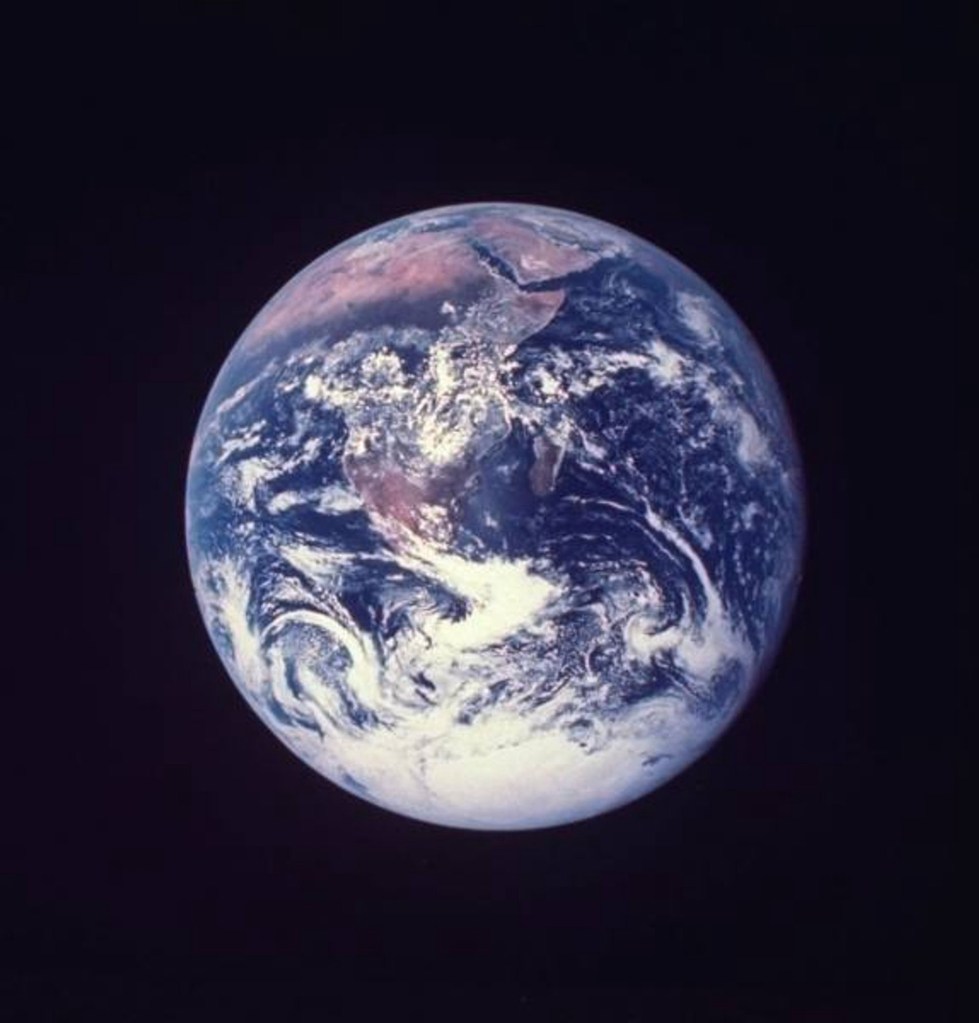
Within all the vast networks in which we live there are two absolutely essential ones. Nature – we are embedded within nature. There are no absolute boundaries between us and all of Life. And, other people. We are fundamentally social creatures. None of us would have made it past the first few days, first few hours, of life, without others. We need to be cared for, just as we need to care for others.

Our society privileges the idea of objects and individuals but maybe we should focus more on connections and relationships, seeing what we have in common, seeing the bonds of mutual benefit.

It’s my experience that it’s normal to be kind, to offer assistance, and to smile. It’s normal to want to share experiences with others. It’s normal to realise we have much in common with every other person and every other living being on this one, shared, small, finite planet.

Read Full Post »

« Newer Posts - Older Posts »