Feeds:
Posts
Comments

Archive for the ‘video’ Category

I’ve often thought about the question attributed to Albert Einstein (although I think he didn’t actually ever pose it!)

The most important decision we make is whether we believe we live in a friendly or hostile universe

Whether he said it or not, it’s still an interesting question which highlights how our beliefs inform our choices. If we believe the universe is hostile then we see ourselves in a constant battle for survival, if we see it as friendly then we call to it for support, and if we think it is neither then maybe we make choices based on the essential meaningless and randomness of life.

OK, I think that is too simplistic and in fact there are no clear answers to this question, but I do think the useful point is about influences. I do believe your choices are informed by your beliefs. Simple, everyday beliefs. Is it safe to walk down this street? Are strangers likely to attack you? Are your friends likely to act in your best interests? And so on…..

All this came to mind this morning having listened to Jim Carrey’s speech at the Maharishi University. Here’s the ONE minute edit…..

(you need to click the link to see the video for this one. Go on, do it now, then come back and read the rest)

So, here’s the key point to think about just now – are you making your choices based on love or fear?

Fear is the main weapon of persuasion in the world, but you don’t need to make it the basis of your life.

What choice will you make today if that choice is to be based on love?

What choice would you make instead if you are basing it on fear?

What are you going to choose?

Read Full Post »

Maya Angelou was wonderful with words. You’re probably coming across some of them just now as the internet spills over with memories and thoughts about her provoked by the news of her death.

Here is one of my favourites

My mission in life is not merely to survive, but to thrive; and to do so with some passion, some compassion, some humor, and some style.

I especially like this one because I just don’t accept the sole point of living is to make it to the end. Is a Life survived for a number of years something you’d aspire to? Isn’t the sole goal of survival ultimately 100% doomed? (Nobody makes it out of here alive!). You can spend a life like a robot, or, in terms of this blog, like a zombie, on some kind of autopilot, surviving, but there’s something else you can do. You can thrive. You can flourish. You can express the uniqueness you are in this universe, and become what only you could become. You can live with passion, fully engaged with the wonder of the everyday (l’émerveillement du quotidien), you can connect, feel, respond, use your imagination to put yourself in the shoes of others, you can laugh, live with a twinkle in your eye, and you can do it with beauty, grace and, yes, style.


Read Full Post »

I like Michael Pollan’s views on food. You might be aware of his “food rules”……summarised in the following seven words

Eat food. Not too much. Mostly plants

What he is great at doing is bringing together knowledge from a number of disciplines (nutrition, economics, agriculture, anthropology, politics and so on), and weaving them into a seamless, and convincing narrative. He does that wonderfully in this google talk where he discusses his latest book, “Cooked”. Settle yourself down and watch this. It’s just under an hour, but that includes the Q&A, and I recommend skipping the over two and half minute intro from the google staffer!

In “Cooked” he describes learning the four transformations of food – using fire, using pots (water), baking (air) and fermentation (earth). His argument is compelling and the area of fermentation (using microbes to produce cheeses, pickles etc) is a completely fascinating new subject to explore.

One of the gems from this talk is his telling of the answer he received from someone working in the food processing industry when he asked what we could do about the obesity epidemic. The answer was “Only eat what you have made yourself”. He thinks that one principle (probably hard to adhere to 100% but a good target to aim at) would result in a healthier and more nutritious diet.

This piece doesn’t just get you thinking about the place of food in your life, it gets you thinking about the food industry, about politics and about how we might create a more sustainable way of life just by considering this important (probably central) issue of what we eat, and how it is prepared.


Read Full Post »

Blue zones” are communities around the world where the life expectancy and quality of life is higher – in these communities more people live to be 100, and more people are still healthy when they are 80. (In fact, it turns out that most people who live to 100 were healthy when they were 80)

Researchers have found that there are common themes amongst these communities. David Buettner, who published these findings, identifies nine of them, which he calls the “Power 9

In summary, the first common theme is movement – and not vigorous exercise or actually using a gym membership! They mention “natural movement”….you know, the opposite of sitting all day.

(Oh, of you’ve got a minute, check out this video about how to move more…watch out for the brilliant suggestion about where to part at the supermarket)

Three are about food and drink – the 80% rule, which is about stopping eating before you are full ie when your stomach is 80% full; the “plant slant”, which is the same as Pollan’s “mainly plants”

(see Michael Pollan’s Food Rules)

….and drinking a glass or two of wine a day!

Then there is one about “time out” or “down time” – taking a pause in the day to relax or nap.

Two left……one is having a sense of purpose. Do you know that having a sense of purpose can be worth an extra seven years of life!? By sense of purpose they mean everything from having a reason to get up today, to still having important things to fulfil in your life.

And, finally….and last, but not least, I’d say….THREE that are about our relationships with others –

“Loved ones first” – having children, parents, partners, siblings who you really care for.

“Belong” – almost ALL the centenarians interviewed belonged to a faith-based group

“Right tribes” – this is an interesting one….it’s about being part of social circles where the others are also healthy and long living. I think that’s fascinating, because I remember reading that if your friend’s friend becomes obese, then you are more likely to become obese. So, there is a common phenomenon of social networks where people influence each other through apparently indirect ways – goes both ways apparently – healthy or unhealthy – I wonder what tips the scales from the one to the other given that most networks will have both…..careful who you hang around with!


Read Full Post »

clouds

clouds2

When you’re looking for something to photograph, just looking out of your window, or looking up to the sky, gives you enough inspiration.
I just love the multi-layered effects here….looks like range after range of mountains disappearing into the distance.
What you can’t see here is that the clouds were all moving very fast. This particular view changed before my very eyes…..as the Japanese culture emphasises – transience increases the beauty

Actually, when I look at clouds, I often hear Joni Mitchell singing in my head! If you’ve got a few minutes watch these two videos.

Firstly, this is Joni singing Both Sides Now in 1970

The, here she is singing the same song in 2000

What a difference! I know Heraclitus said you can’t step in the same river twice, so maybe it’s obvious that you can’t sing the same song twice

Read Full Post »

Sometimes you just come across something on the web which is SO good, SO creative, SO original, SO inspiring…..you’ve just got to share it.

Isn’t that amazing?

Read Full Post »

DSCN0001

As I walked past Kings Park at 7am this morning I could see the lights of Stirling Castle shining high up on the rock. The rain spotted my glasses, and the cold wind blew against my cheeks. On my iPod, Stevie Ray Vaughan played Voodoo Chile, and wave after wave of thoughts washed over my mind.

I thought, right now, 7am, February 4th, 2014, I am the only creature in the whole universe walking past Kings Park, feeling the rain and the wind on my face, hearing the guitar of Stevie Ray Vaughan in my ears, and thinking these exact thoughts.

soul nebula

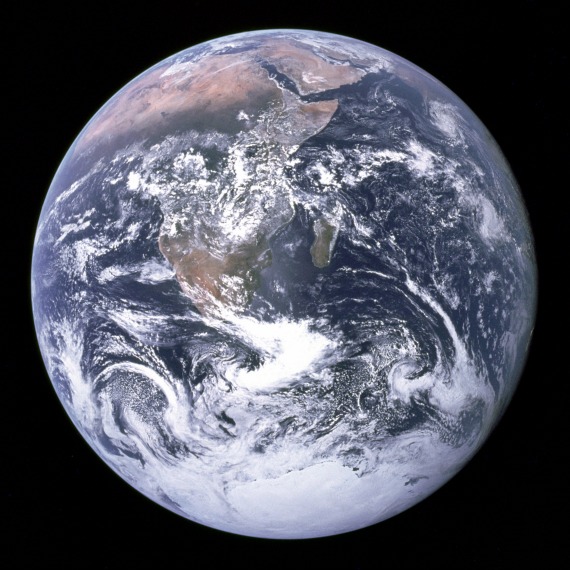
I was struck by the uniqueness of the moment. I was struck by the sense of the universe expanding over the billions of years, developing furnaces of fission and fusion, scattering the elements of the stars far and wide, only for them to collide in a place to become known as the Earth, and for Life to miraculously emerge, and spectacularly evolve from single cell creatures to generation after generation of complex beings we call humans, and here I am…..one, ever changing, distinctly unique manifestation of this amazing story……having this utterly distinct experience of living.

blue marble

Then, on the train, on my phone, I stumbled upon this……

Every man is more than just himself; he also represents the unique, the very special and always significant and remarkable point at which the world’s phenomena intersect, only once in this way, and never again. That is why every man’s story is important, eternal, sacred;

                                                                                                                                                                     Herman Hesse. Demian.

How does that all happen?

I really don’t know

Read Full Post »


So, here’s a study which makes you go…..duh!? Is anybody surprised?? The conclusion is this –

When physicians spend too much time looking at the computer screen in the exam room, nonverbal cues may get overlooked and affect doctors’ ability to pay attention and communicate with patients

Using video cameras to follow eye gaze the researchers found that physicians using electronic health records were likely to spend a third of their time in the consultation looking at the computer screen (I’m surprised it was only a third!) and, more surprisingly, that the patient too gazed at the screen, even if they couldn’t see, or read, the details on the screen.

When doctors spend that much time looking at the computer, it can be difficult for patients to get their attention,” said Enid Montague, first author of the study. “It’s likely that the ability to listen, problem-solve and think creatively is not optimal when physicians’ eyes are glued to the screen.”

Can’t disagree with that….it’d be surprising if a doctor could pick up the non-verbal clues when they are looking at a screen.

What do the researchers recommend?

Nope, not putting a bag over the screen the way people used to put a bag over bird cages to get noisy parrots to go to sleep. Instead they say their findings could contribute towards

more effective training guidelines and better-designed technology. Future systems, for example, could include more interactive screen sharing between physicians and patients

Pssst! Researchers! I’m over here! How about getting Humphrey Bogart to teach doctors? If the norm was “here’s looking at you, kid”…..well, what do you think??

Read Full Post »

Oh, this is fascinating! We tend to think of plants as pretty static creatures, despite the fact that every large plant was a tiny seedling once upon a time. They move. They move a lot…..but slowly.

Time lapse photography reveals just how much a plant moves. I’m sure you’ve seen many such videos, but click through the link below and watch this one because this one reveals the plant’s neurobiology, its intelligence, and its ability to interact with, and respond to, other plants.

Seriously, I don’t think you will ever have seen something quite like this. You won’t look at plants the same way again!

Read Full Post »

Take 20 minutes to watch this brilliant TED talk by Iain McGilchrist.


I agree with everything he says in this, but I was especially struck by his mention of the gene which codes for eyes. It’s the same gene which codes for a fly’s eye, a frog’s eye and a human eye. What makes the difference? The context of the other cells in the separate creatures. We are not just our genes, and our genes only express themselves in the contexts of the cells in which they exist.

I also really like what he says towards the end of the talk about protocols and the practice of medicine. How on earth can a protocol devised by a committee somewhere tell a doctor how to treat this particular, unique, individual patient today? It’s nonsense.

Read Full Post »

« Newer Posts - Older Posts »