Feeds:
Posts
Comments

Archive for the ‘writing’ Category

theWarofArt

On the plane from Edinburgh to Tokyo I read theWarofArt by Steven Pressfield (ISBN 9 780446 691437). It’s subtitled “Break through the blocks and win your inner creative battles” and has a brilliant little Foreword by Robert McKee which really captures the essence and the scope of the book. It’s one of those books about creativity in general and writing in particular. There are no breakthrough insights here but it is a highly readable and very inspirational little book which is structured around three sections. The first is all about what stops us from actually creating – Resistance. This is a brilliant section. He describes Resistance as a force. A pretty malevolent force and one that can feel highly personal, but which, in fact, is an impersonal natural phenomenon. It’s what stops us from starting, what stops us from carrying on and what stops us from finishing. As he says right at the beginning –

It’s not the writing part that’s hard. What’s hard is sitting down to write.

Now there’s something you’ve heard before – that to write you need to turn up at the writing table, you need to sit down, stop sharpening the pencils, tidying the notebooks and post-its, stop browsing the web, and WRITE. It’s the getting started that’s hard.

Most of us have two lives. The life we live, and the unlived life within us. Between the two stands Resistance.

Isn’t that so true? There’s the things we want to do, the things we feel we should do, the things we feel we were even born to do, and then there’s what we actually do. And as we all know……..it’s what we actually do that matters. The commonest form of Resistance, of course, is procrastination, and he nicely captures its power –

The most pernicious aspect of procrastination is that it can become a habit. We don’t just put off our lives today; we put them off till our deathbed.

He reminds of the common stories of people who have been told they have cancer or some other serious disease and who change their lives from that day on; change their priorities; channel their energies somewhere else. And he reminds us how often these very same people end up surprising the doctors and everyone else by seriously overshooting their death sentence. Why, he asks, do we need to wait till Resistance faces us with disease and death before we pay attention and start to live the life we were born to live?

He’s great about the passive aggressiveness of victimhood. By victimhood he means that use of exterior loci of control so clearly described by William Glasser.

Casting yourself as a victim is the antithesis of doing your work. Don’t do it. If you’re doing it, stop.

There’s really a lot of refined gold in this tight publication. Let me finish telling you about the first section with a reference to his comments about criticism. I often think there are two common attitudes amongst people – the commonest one is to criticise and complain. On any train, in any cafe, in every work place, every day you’ll hear people expressing righteous indignation. It never makes life feel richer and it never seems to solve anything either. The less common attitude is DO, to be creative, to solve or to heal.

Individuals who are realised in their own lives almost never criticise others. If they speak at all, it is to offer encouragement. Watch yourself. Of all the manifestations of Resistance, most only harm ourselves. Criticism and cruelty harm others as well.

The second section of the book is entitled “Combating Resistance. Turning pro”. This contains his advice for beating the phenomenon of Resistance and here’s the secret – it’s to “turn pro”. By this he means living your vocation.

The professional loves it so much he dedicates his life to it. He commits full-time.

He cleverly takes everyday jobs as a model for becoming creatively professional. Here are ten characteristics or principles we can take from doing and everyday job and apply to the work of being creative –

  1. Show up every day
  2. Show up no matter what
  3. Stay on the job all day
  4. Commit over the long haul
  5. The stakes are high and real (it’s about survival, feeding our families, educating our children)
  6. Accept remuneration for your labour
  7. Don’t overidentify with your job
  8. Master the technique of your job
  9. Have a sense of humour about your job
  10. Receive praise or blame in the real world.

You’ll need to get the book to read the detail on those! But I’m sure you’ll agree they make sense.

The third and final section of the book is the one Robert McKee takes some issue with in the Foreword. It’s entitled “Beyond Resistance. Higher Realm” and in it Steven writes about Muses – the spiritual forces which bring us inspiration and which work with our genius. He describes them as Angelic forces but is very clear that you don’t have to believe in Angels to benefit from the work of the Muses. He makes the point that just as we can think of Resistance as an impersonal force, so can we think of the Muse as an opposite impersonal force and he describes how he begins every writing session with a prayer to the Muses. I liked this section at least as much as the rest of the book. However you want to conceive of the Muses, I think he is completely right about them.

Let me finish this little review with one of Goethe’s couplets which he quotes –

Whatever you can do, or dream you can, begin it. Boldness has genius, magic, and power in it. Begin it now.

Read Full Post »

I think poets have not only the keenest powers of observation but their words illuminate. The world looks different after reading poetry. I’m not referring to particular passages which have changed my perception or understanding of particular places or experiences. I’m referring to, well, what would you call it? The poetic stance? The poetic viewpoint? The poetic way of living maybe……

When I was a teenager (a LONG time ago) I bought a little book by the poet Stephen Spender. It was called “Life And the Poet”. It was a small paperback with a darkly yellowed cover. It was published in 1942 apparently. I’m sure I must have it somewhere but I can’t lay my hands on it right now and it’s almost 40 years since I opened it and read any of it. But I seem to remember two things he said. One was that he said poets should be like visitors from another planet. It was his way of saying a poet should approach the world with wonder and amazement (a bit like those French philosophers I read recently). I liked that a lot. It stuck. And he also said, I think (bare with me, this memory is a long way off!), that poetry taught us how to “make life anew” and that was a reason to live. That stuck too. (or maybe I’ve invented that for myself after all these years……I’ll need to find my old copy, or another one, and read it again)

I paid a visit recently to the lovely Watermill Bookshop in Aberfeldy
Watermill Bookshop Aberfeldy

As I browsed the shelves my eye was caught by a book entitled “Findings” by Kathleen Jamie (ISBN 978-0-954-22174-4). Never heard of the book before, and I’d never heard of the author either, but the back cover described her as an “award winning poet” who has an “eye and an ease with the nature and landscapes of Scotland”. I opened the book and the paper under my fingers made me stop and wonder. It felt lovely. A soft roughness if you can imagine such a thing. Immediately it felt natural, and special, and thrillingly sensuous. This feels like a lovely book, I thought. Now that doesn’t happen often. I can enjoy the weight, the feel, the scent of a real book (no, computers will never replace the book), but I can’t remember when I ever before picked up an unknown book like this and felt transfixed. It caught me. Physically. So I sat down in one of the many comfy, leather armchairs and I started to read. Did I have any doubts? From the moment I held it in my hand, did I have any sense that I’d put it back on the shelf? I don’t think so. I think I knew I’d relish, yes, that’s the right word, relish this book. I bought it of course.

Findings

It’s not a book of poetry, but a book of essays – a poet’s living.

Some of the subjects she writes about are familiar to me. Orkney, salmon ladders, prehistoric stone markings, the Surgeons’ Hall in Edinburgh and the Edinburgh skyline. But even the familiar seemed brand new in her eyes, in her words. She’s a keen observer of nature, especially birds, and in the essay entitled, “Peregrines, Ospreys, Cranes” she writes this…..

This is what I want to learn: to notice, but not to analyse. To still the part of the brain that’s yammering, “My God, what’s that? A stork, a crane, an ibis? – don’t be silly, its just a weird heron”. Sometimes we have to hush the frantic inner voice that says “Don’t be stupid” and learn again to look, to listen. You can do the organising and redrafting, the diagnosing and identifying later, but right now, just be open to it, see how it’s tilting nervously into the wind, try to see the colour, the unchancy shape – hold it in your head, bring it home intact.

That’s what I want to learn too – to notice, to look, to listen, without processing it all, but taking the experiences home and turning them over later. My camera helps me do that, but Kathleen Jamie’s words inspire me to write more down, to write it down as soon as possible……not the analysis, the experience, the perception, the observation. To relish the “emerveillement” of living.

Read Full Post »

Look at this

200 generations illustrated

This is a little drawing to illustrate the fact that there have been only 200 generations (each of about 25 years) since the beginning of recorded history right up to the present time. Isn’t that amazing? This grabbed me for two reasons. First, it really captures just how little time has passed since we began to record human history. That’s quite mind boggling (and humbling) in itself. But, secondly, it was the simplicity of the image which really caught my attention. I came across this on the digital roam blog…..that’s Dan Roam’s blog.

Dan Roam has written a book about using visual thinking and I think it looks GREAT. The book is called “Back of the Napkin”. Every day I draw simple little pictures for patients to help explain quite complex ideas like health, disease, healing, how to tackle allergies, and so on. Dan’s set up a web site to accompany his book. Go and check it out. He’s made a great little series of flash videos which I highly recommend. There are four of them (drawn on the back of a napkin!). Watch them all. It’ll only take a few minutes and I bet you’ll find it thought provoking about how we see and how we communicate with pictures.

Read Full Post »

Station poem

My post about the blackbird spotted from the delayed train prompted my friend, the poet, Larry Butler, to send me a poem he had written some time back. You can see why it came to his mind on reading that post. I’ve asked him for his permission to publish it here and I’m delighted to say he’s given me the ok – so here it is –

        • Clarkston station missed the 6:30,
        • half an hour to wait on a red bench
        • in the sun with coffee and chocolate,
        • an apple but nothing to do. What
        • more could I want:  less busy traffic
        • on Busby Road, more twitter of blackbirds.
        • A girl with big silver circle earrings
        • turns revealing 3 white stripes on her blue

          track suit trousers.  That’s all I need.

Read Full Post »

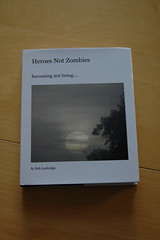
I’ve just taken delivery of my first attempt to use blurb.com to produce a book. It’s fabulous. It was so easy to do and the quality of the hardback book I’ve received is way beyond my expectations. And for any fellow bloggers, it’s a real treat to be able to page through a hard copy of your blog. I really do recommend it.

I am SO thrilled with the result. Click here to go and see for yourself.

What I wanted to do was produce a hardback copy of my first year of blogging. The blurb service has a program to download called “booksmart” and you use this to create your books. Included in the program is a great tool called “blogslurp” which downloads a complete copy of your blog into a template on your hard drive. You can then edit every single page, choosing different page layouts, upgrading low resolution photos for higher resolution copies from your photo library, and deleting or adding any text you choose. You then hit “upload” and that’s it. If you want you can preview the book as a pdf but I didn’t bother. I chose the largest format hardback book they do.

I am delighted with the quality of the printed copy and it got to Scotland in less than 10 days from the time I hit the upload button.

Here are some photos of the book to give you an idea what it looks like.
Heroes not Zombies The Book

Read Full Post »

Writing your self

Two of my best blog friends have posted interesting writing ideas yet. I’m going to point them out to you so you can go and check them out.

First of all, mrschili, across in her inner door blog, picked up an idea from a fellow blogger (wordlily), about writing a six word autobiography. The results are fascinating and enlightening. Try it for yourself. What would your six word autobiography be?

Secondly, Dr Tom Bibey, posted about writing a single paragraph entitled Where I Come From. His short paragraph about his origins and influences has gone on to inspire several others. Check them out. And, then……..yep, try it out for yourself. What would your write for “Where I Come From”?

Read Full Post »

Amy has nominated me for Best Health Blog – if you click on the badge top right it’ll take you to the Blogger’s Choice Awards to add your vote (if you’d like to!)

While you’re at it, Amy’s been nominated for three awards – photography, writing and parenting. Go visit her blog and see what you think.

Who’s Amy? She’s my amazing daughter of course! Am I biased ? You bet! But, seriously, don’t take my word for it, go and make up your own mind.

Read Full Post »

Here’s another study which shows the health benefits of writing about your experience. We all use narrative to make sense of our lives, so you’ll understand that writing about our experiences can help us to do just that – to makes sense of our experience. However, more than that, narrative is a creative, expressive act. It’s a way of affirming our existence, connecting to others and of growing. It helps us to develop.

In this study 71 patients with cancer were asked to write about “How has cancer changed you, and how do you feel about those changes?”

After the writing assignment, about half of the cancer patients said the exercise had changed their thinking about their illness, while 35 percent reported that writing changed the way they felt about their illness. Three weeks after the writing exercise, the effect had been maintained. Writing had the biggest impact on patients who were younger and recently diagnosed.

Changing how you think and how you feel changes your everyday experience so it’s no surprise these respondents reported improvements in the quality of their lives.

It’s interesting  to note how important it is to write about feelings to get the good effect –

“Thoughts and feelings, or the cognitive processing and emotions related to cancer, are key writing elements associated with health benefits,’’ said Nancy P. Morgan, director of the center’s Arts and Humanities Program. “Writing about only the facts has shown no benefit.”

One final point worth noting is that whilst, as you may have expected, many wrote that the experience of cancer had been life-changing, perhaps what is more surprising is that many made statements about the gains which they had obtained from the cancer experience.

One patient wrote: “Don’t get me wrong, cancer isn’t a gift, it just showed me what the gifts in my life are.”

Read Full Post »

Skellie asks if you are blogging consciously. She’s been thinking about it since reading the zen habits’ post “Wake up: A guide to living your life consciously.”

As she says

Living consciously is about analyzing and evaluating your actions, habits and behaviors, rather than simply doing. In other words, asking why rather than doing without really thinking.

And as both her post and the zen habits one points out, we can apply that principle to anything we do in life. In fact, it’s a key, distinguishing feature of living a hero life instead of a zombie one. The more we pay attention to what we are experiencing right now, the more chance we have of making conscious choices and becoming the authors of our own lives, the heroes of our own stories.

I particularly like Skellie’s last point where she asks if blogging is enjoyable for you or just a chore and says if it is a chore you should be thinking of re-focusing. I completely agree.

Read Full Post »

A mind like the sea

Atlantic

Imagine life is like a ship sailing over the ocean. Every experience you have makes a mark on the sea. As you travel through the world you leave a wake behind you, a white foam, a swell and a pattern of waves. These are your short term memories. If you look back behind you, you’ll see traces of what you’ve just done, of where you’ve just been, but the wake doesn’t last long. It soon dissipates and settles and becomes indistinguishable from the surface of the ocean again. But some experiences are heavier. They make a bigger impact and they leave objects floating on the water. The flotsam and jetsam of daily experience, lasting longer than a wake, but still floating away, scattered, unanchored. Memories like little fragments of material, boxes, or bottles, washed white in the sea and the sun. Possibly to be recovered some day when they come floating by again, or because you find them lying, unexpectedly, on a desert island somewhere, or someone else picks them up and brings them back to show you. Some sink deeper below the surface and turn into fish or sea creatures with a life of their own, coming up near the surface from time to time, flashing silver or rainbow colours in the water as they swim by. Some become sharks and scare you every time their fins break the surface of the conscious sea. Some become dolphins or whales and leap up joyfully and thrillingly. You can go looking for some of them if you know where they live. Some sink even deeper and become coral and wrecks on the deep sea bed, rusting, encrusting, growing and changing ever so slowly, imperceptibly. You only find them if you dive for them.

Read Full Post »

« Newer Posts - Older Posts »