Feeds:
Posts
Comments

Different

Ellen Langer says the way to live mindfully is to be on the lookout for novelty. See what’s new (new to you). Another way to think of this is to be aware of difference. Not just aware I suppose, but to seek and to delight in, difference.

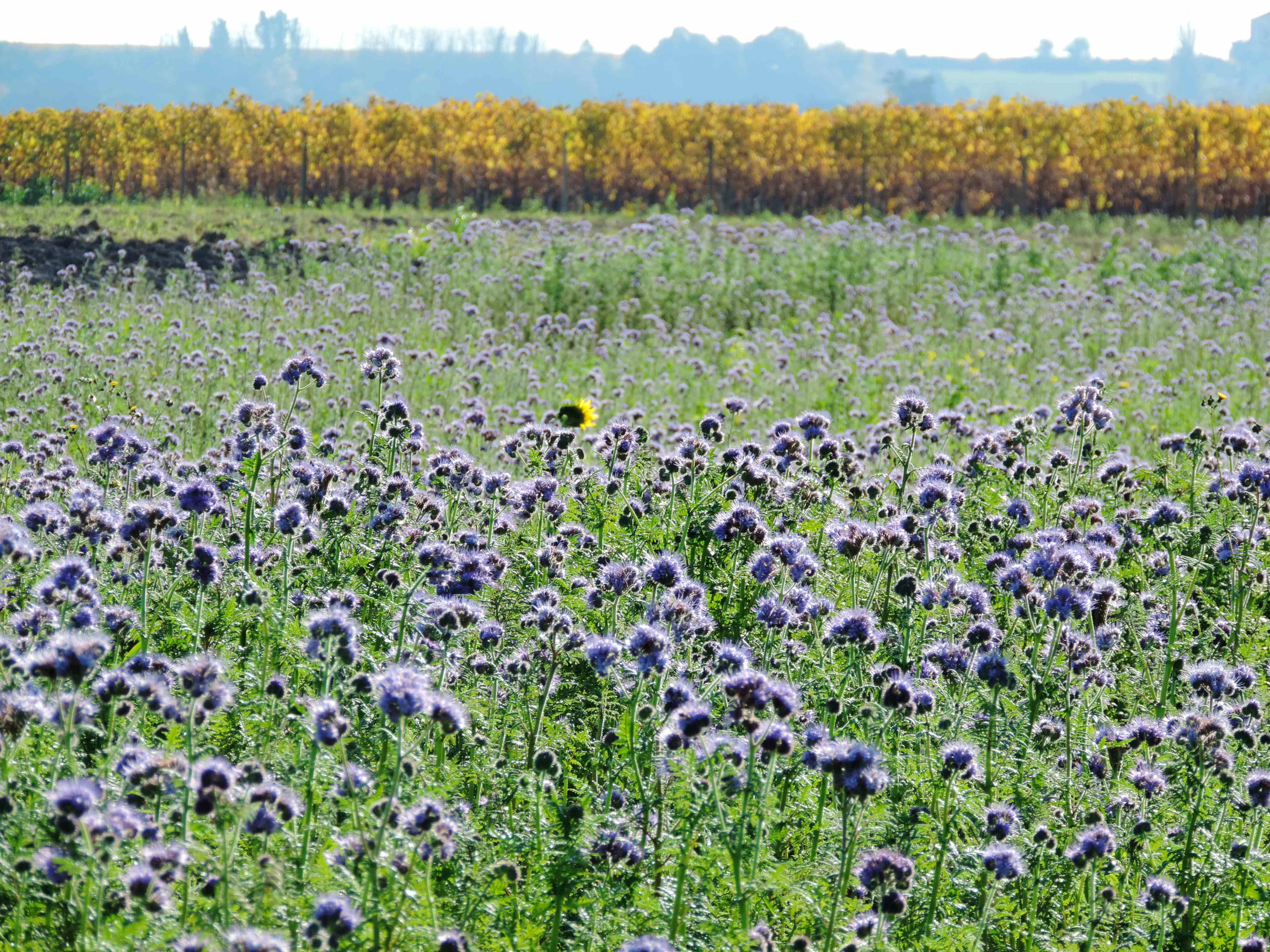
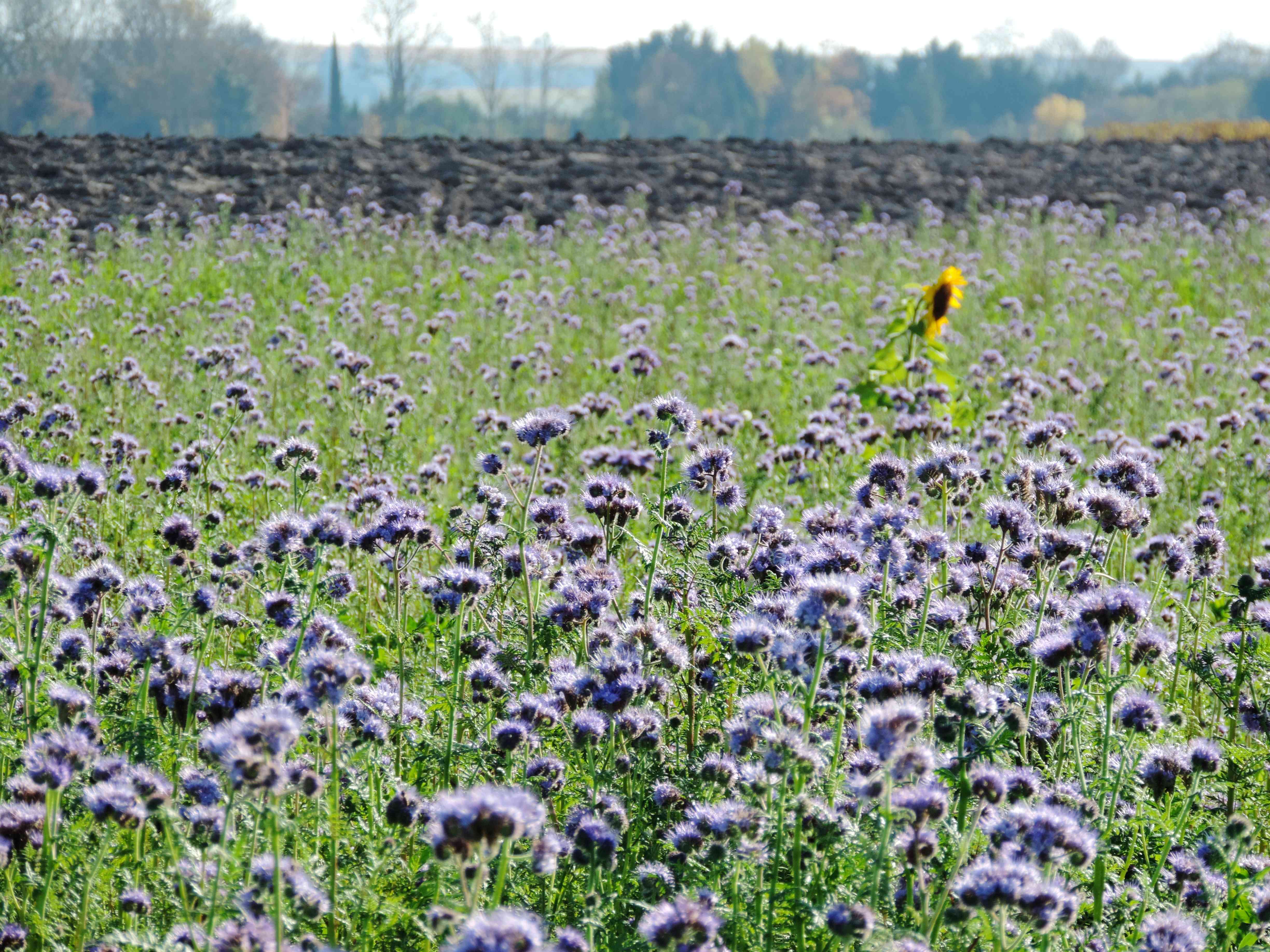
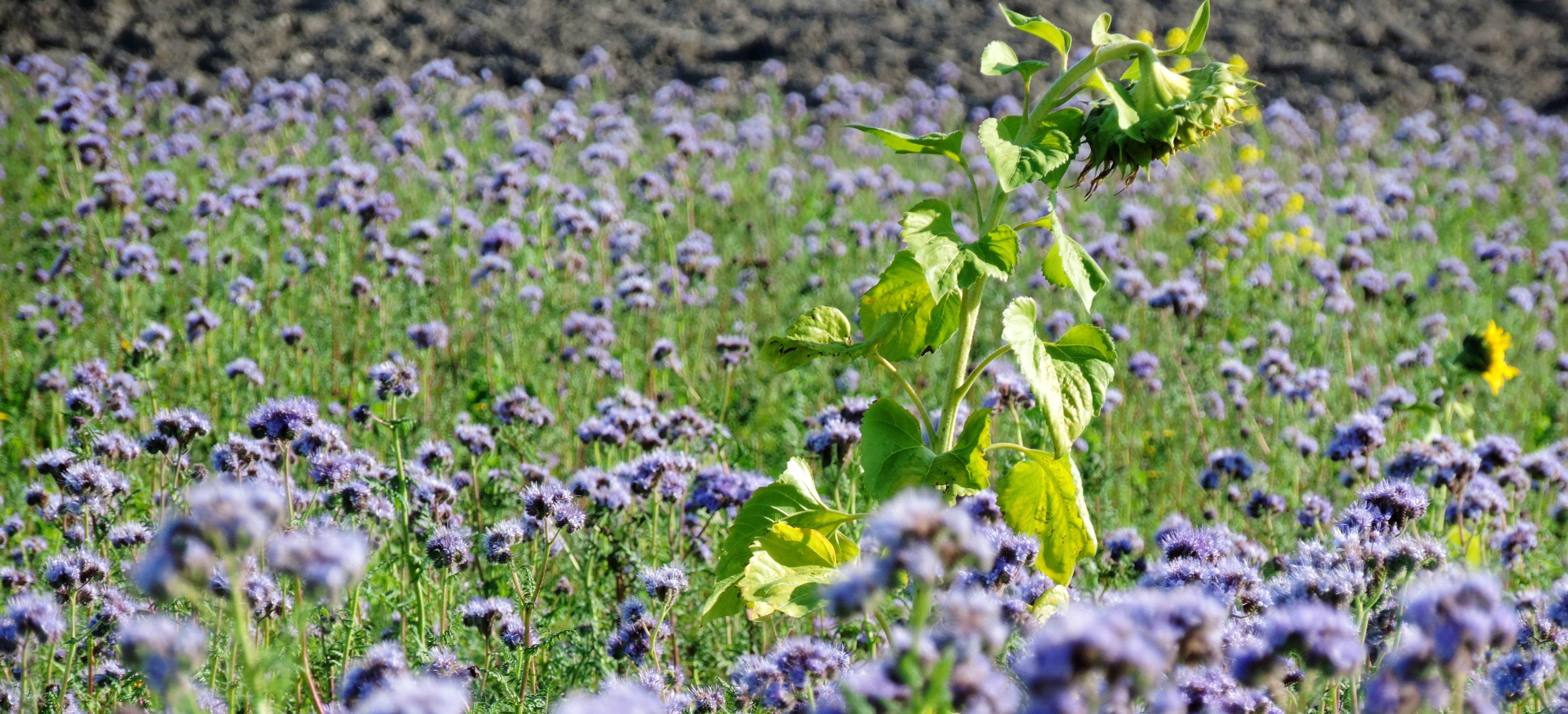
There is only one field of purple near me.

crop of purple

I don’t know what this purple flower is, but it was the field of colour bounded on one side by a vineyard,

purple and vine

and on the other by a ploughed field,

ploughed

which caught my eye, and you’ll notice that there are half a dozen, or less, sunflowers, standing up boldly and proudly, head and shoulders above the crop – that kind of difference appeals to me too.

If you know what these purple flowers are please say in the comments section, but whatever they are called its their difference which literally stopped me in my tracks. It’s their difference which prompted me to pull the car over on the side of the road, clamber over a ditch and take these photographs.


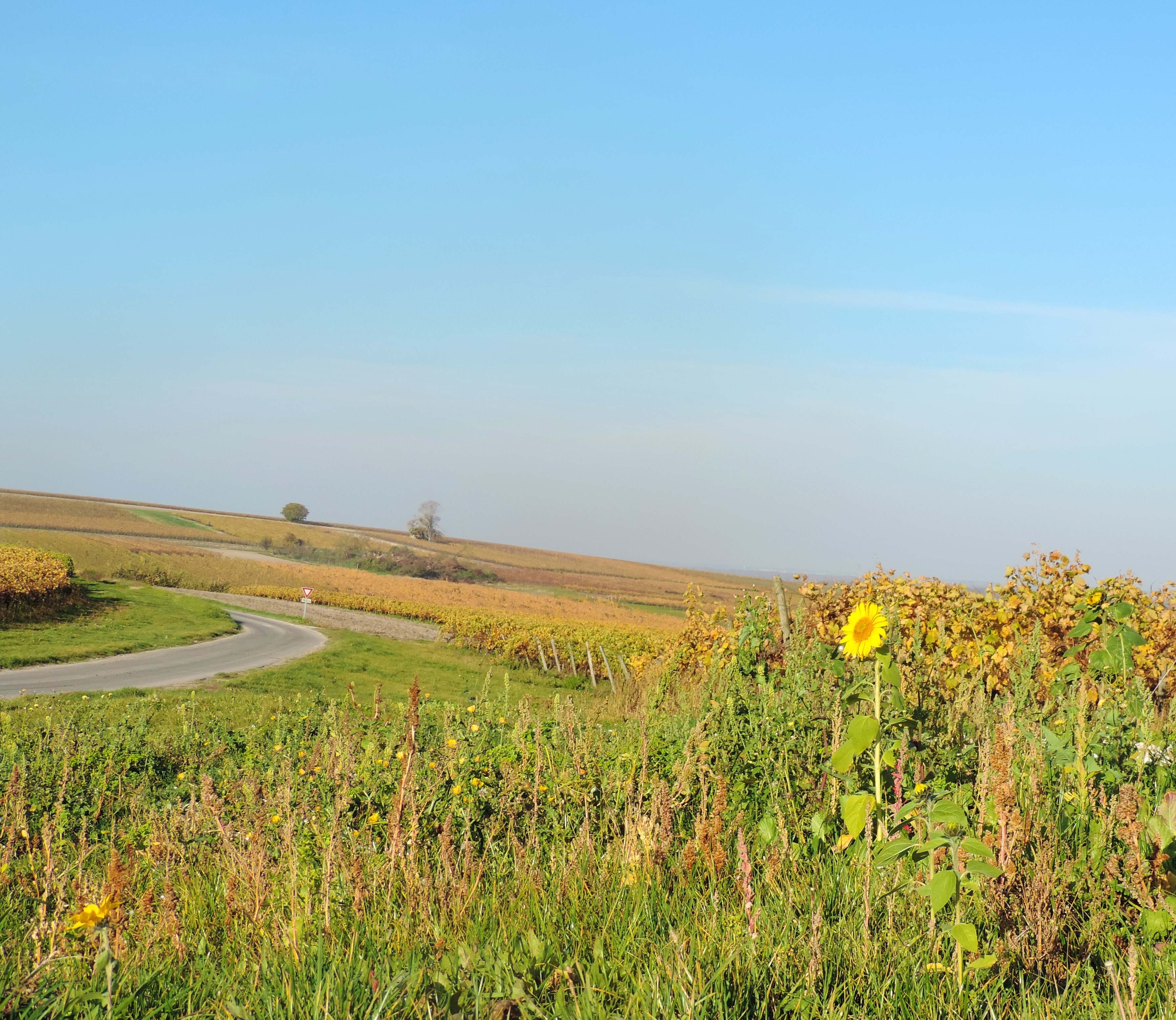
road to gente

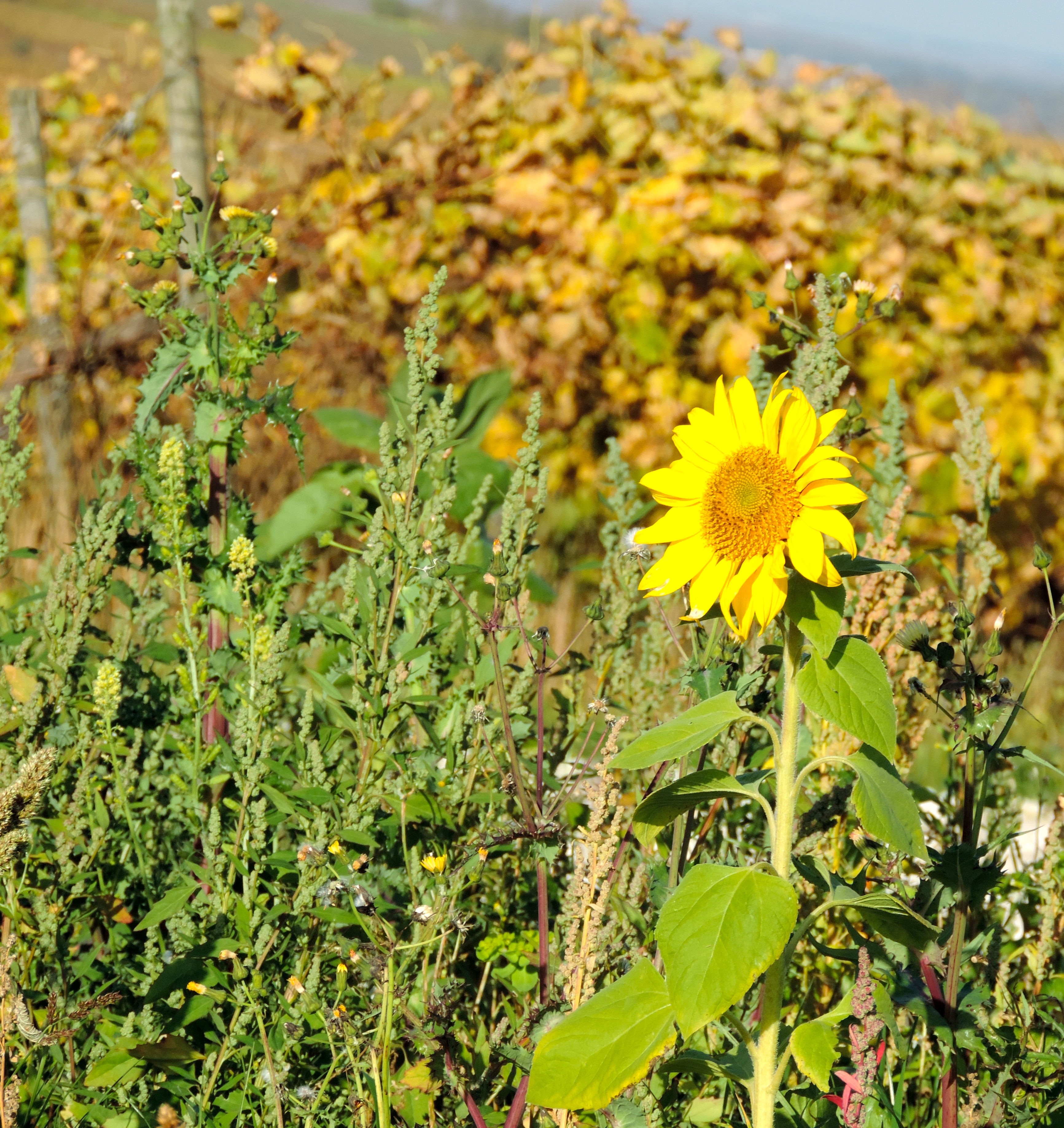
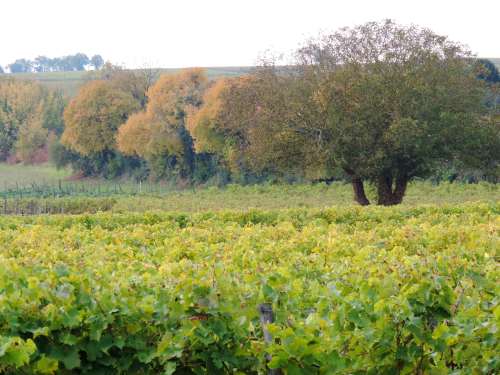
On my way out of the village a couple of days ago I was surprised to see this sunflower flourishing beside the autumnal vines. A sunflower? At this time of year? In the vineyard? And there it is standing tall, face turned to the south, basking in the november sunlight.

DSCN4558

The vines are all turning golden and I’m photographing them quite a lot just now, but it was the uniqueness of this sunflower that made me pull over, get out of the car, and take these photos.

I think that’s why we are all here.

Seems like the universe has taken almost fourteen billion years to go from the time before even only hydrogen atoms existed to the rich diverse complexity of life on planet Earth as we experience it today. In the course of that journey there’s been a constant trajectory towards ever greater uniqueness. No two living organisms are identical, and every living organism changes constantly throughout its life.

I think there is one thing we can all do – fully express our uniqueness.

Nobody else can do it for us.

Focus and frame

tele bird

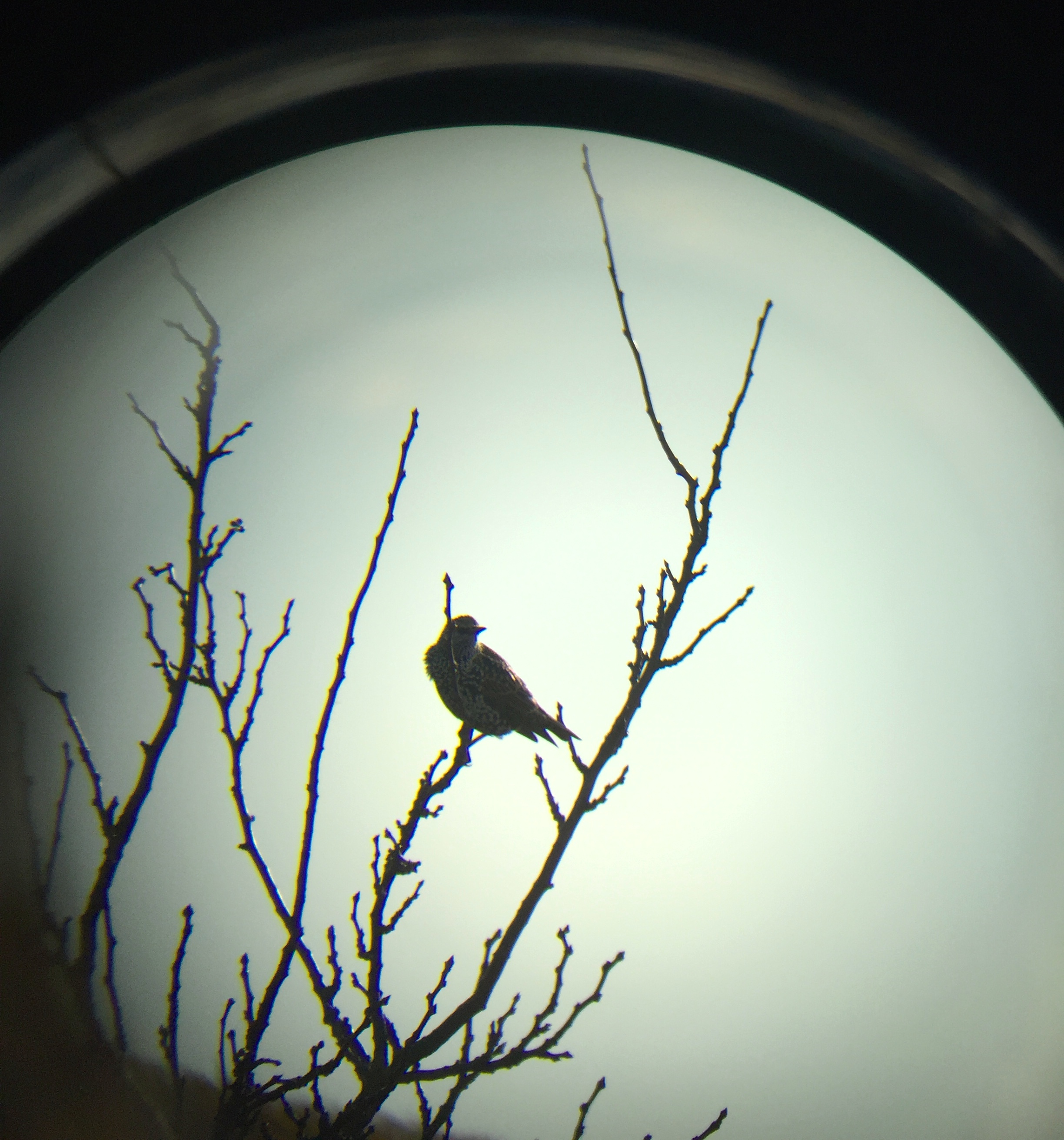
I looked out of my study window yesterday and could see a bird sitting on the tree in the corner of the nearest vineyard. I couldn’t make out much more than it was a bird so I pointed my telescope at it, zoomed in, and saw it clearly. Covered in speckles. A thrush I guess.

Just for fun I held my camera up to the eyepiece of the telescope and got this shot.

I quite like it! It’s got almost a vintage feel to it.

It got me thinking of the way we look at things.

We focus in on parts of reality to try to clarify what we are looking at. We do that all the time. We might focus on certain parts of what we see and hear because they catch our attention, spike our curiosity or whatever. If we weren’t able to do that how could we make sense of our world? Our brains are receiving information from the external world (and at the same time from our inner bodily world) through our senses of sight, hearing, taste, smell and touch. How could we make sense of this information tsunami if we didn’t sift, select, and focus? Our left hemisphere is especially good at doing this. It’s no coincidence that the left hemisphere controls the right hand and that’s the hand most of us use to “grasp” things. That’s what this focus-ability does for us. It helps us to grasp things.

But I think it does something else too. It frames and it excludes. It sets whatever it is we are paying attention to not just centre stage, but often fills the entire stage. I’m not sure it’s helpful to think of these skills are either “good” or “bad”. They just have advantages and disadvantages. The major disadvantage is that this framing removes the object of our attention from its context. So unless we take the results of our grasping and let go off them as we pass them back to the right hemisphere for re-contextualising, then we form incomplete and, actually, imprecise understandings of things.

Funny that, really. You’d think we could be more precise by being more focused. Turns out focus is only part of the process. We need the context too.

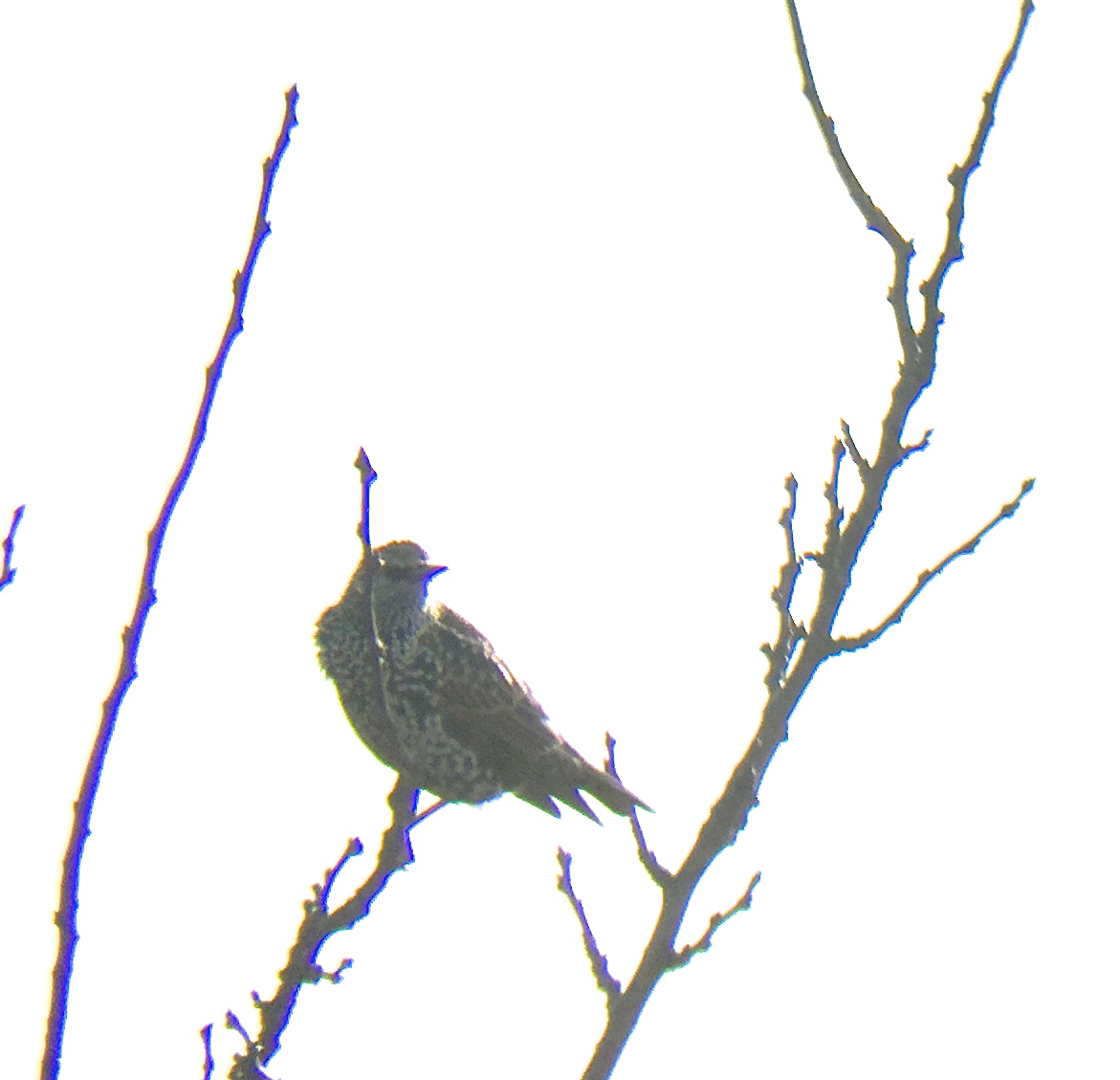
Here’s a crop of that photo above to let you see the thrush a bit more like it was when I put my eye to the telescope.

crop thrush


Bursting with life

crocus sativa

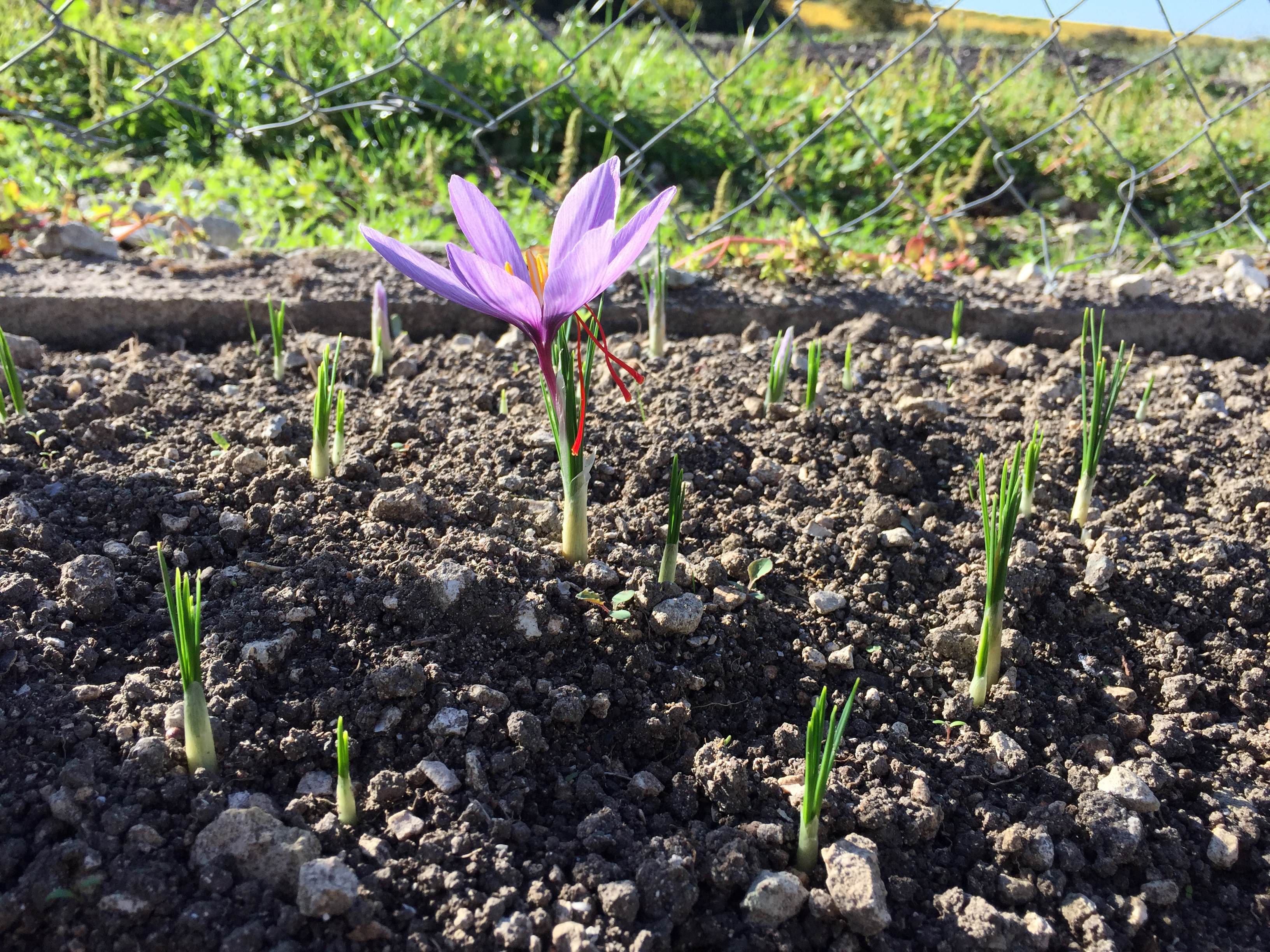
Three weeks ago Hilary planted some crocus sativa bulbs in the ground hoping they would grow and yield some saffron – next autumn – the books said bulbs planted now would bloom next autumn.

But look! Within only days they’ve not only broken through the ground but some have begun to blossom just like this one.

Isn’t that astonishing?

From a little bulb that you wouldn’t even know was alive, buried in the ground, and within three weeks it grows into this beautiful crocus with its three strands of saffron.

Bursting with life…..

Looking up

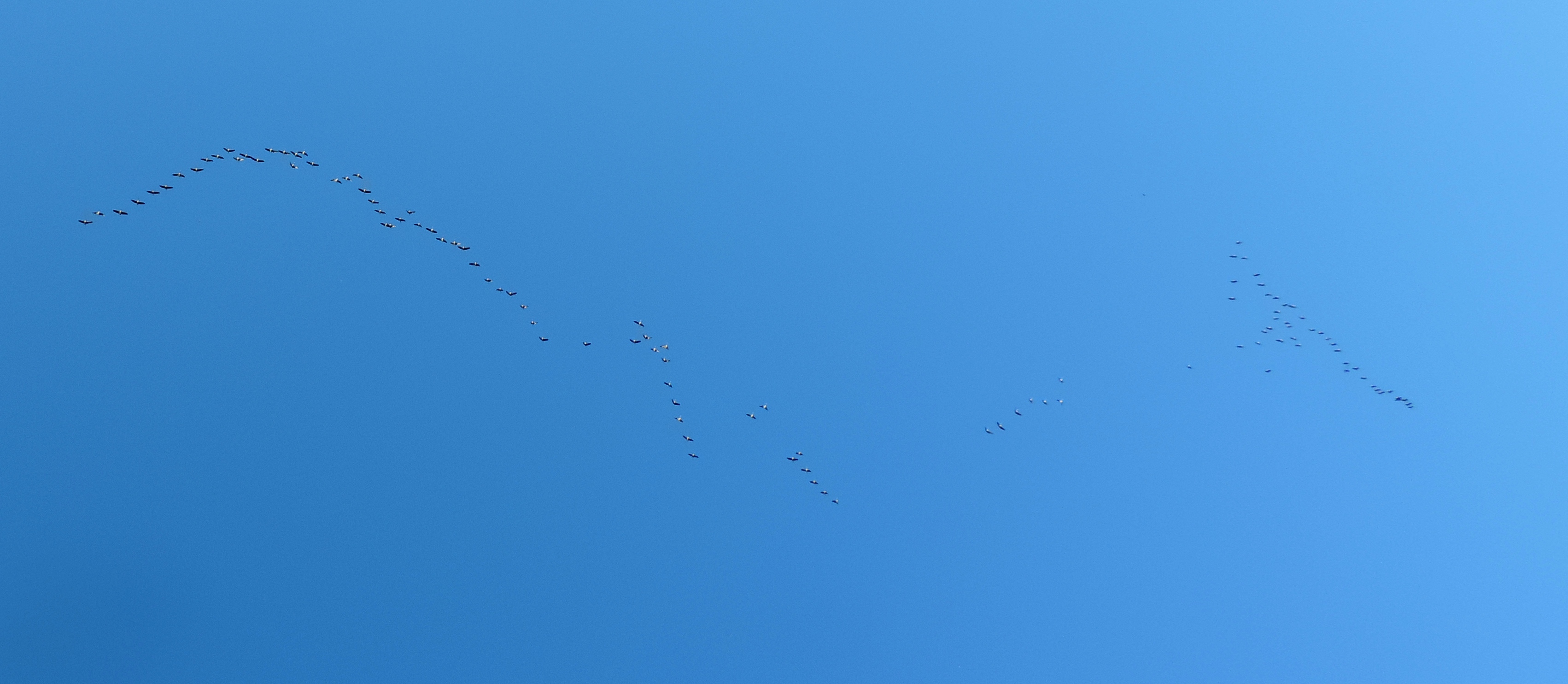
I was sitting having coffee in the garden yesterday (yes, how amazing is that? To be sitting outside in the warm sun on the last day of October! Life is good in the Charente!) when suddenly I heard a real commotion up above. A light aircraft had flown past quite low and had alarmed a flock of wild geese making their way south (to the Riveria, Spain or Africa, or wherever they go for winter sun). The noise was astonishing and quickly drowned out the noise of the plane. I rushed inside to grab my camera as the flock got itself re-organised and just caught them as they got back on track.

geese

As their clamour faded away over the vines how could I hear anything other than this in my head?


Meanwhile the wild geese, high in the clean blue air,

are heading home again.

Whoever your are, no matter how lonely,

the world offers itself to your imagination,

calls to you like the wild geese, harsh and exciting –

over and over announcing your place

in the family of things.

from Wild Geese, by Mary Oliver

Natural friendship

berries

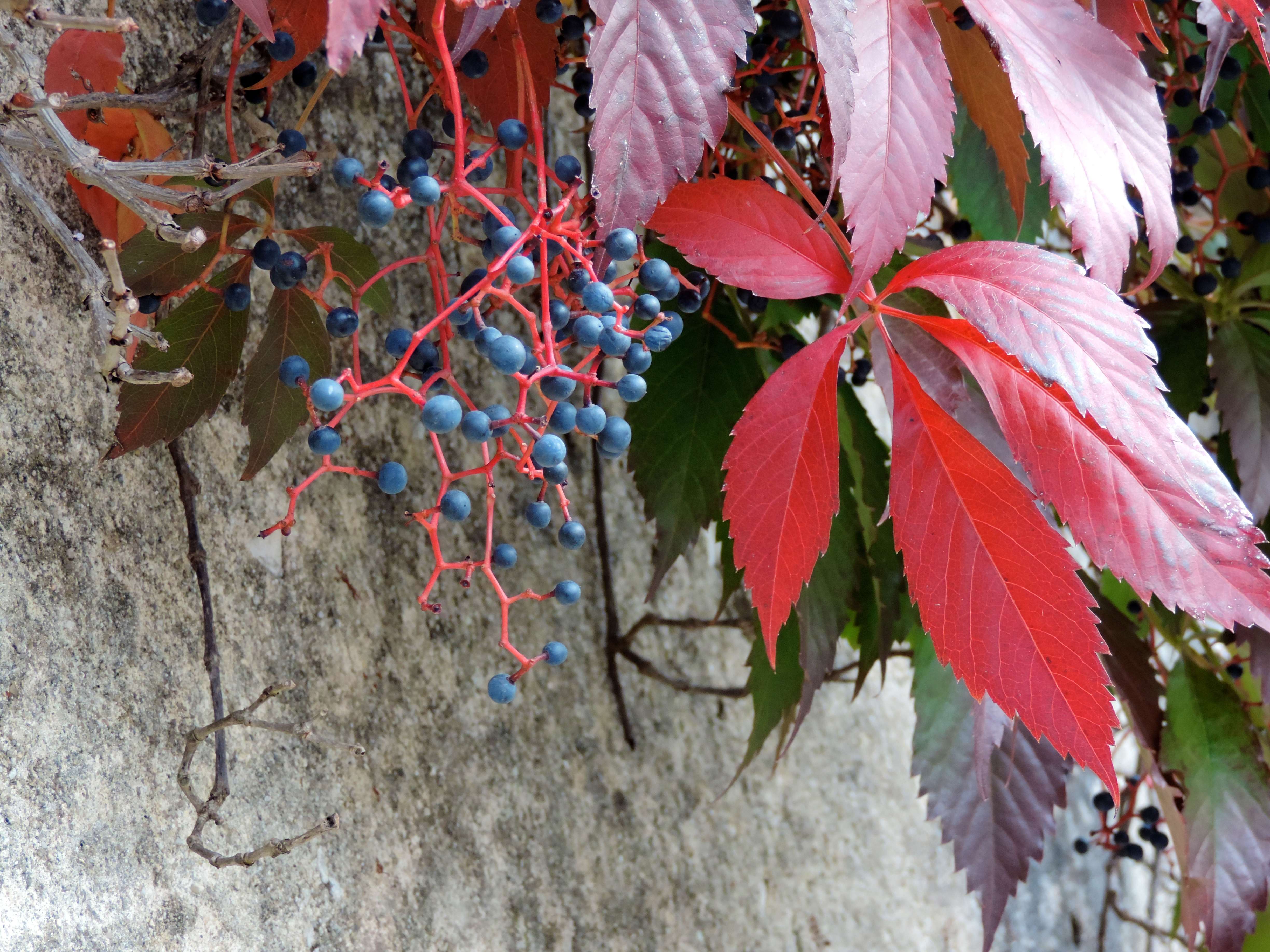
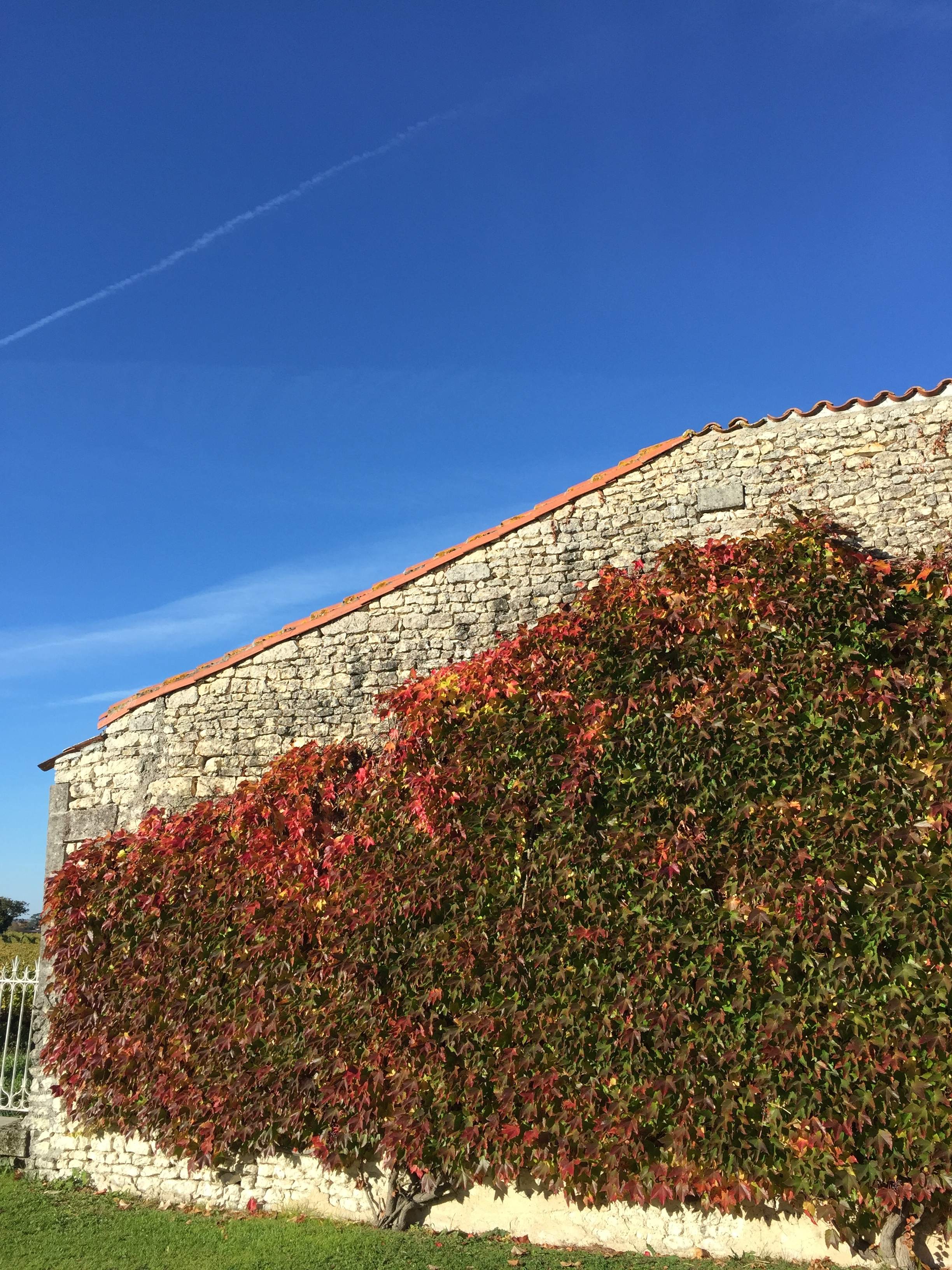
At this time of year the Vinge-viérge, (Boston Ivy, or, Japanese Ivy) that grows over the wall at the edge of my garden develops these incredible little blue-black berried on red stems as the leaves around them turn their own glorious shades of red.

wall

It’s a big plant and for most of the year it is full of the rustling sounds of birds. Just now there are warblers and finches and sparrows and redstarts all flying in and out of the dense foliage. That came to mind as I read the following passage from Robert Brady’s The Big Elsewhere. Here he is reflecting on the birds flying into the trees for shelter during a snowstorm.

Who knows what forms of natural “friendship” abide out there in the deeps of the real world, how far these homely allegiances go, and where they integrate like two hands clasping.

Don’t you love that? “Like two hands clasping”

Or how far back in time they reach, how they began to be – seems as much an interweaving of wild wisdom as a mosaic of chance that worked out well. Compromises were made, benefits were exchanged.

That reminded me of the biology teacher’s question about whether or not the students loved Nature and whether or not they thought that Nature loved them back.

Doesn’t it seem that we are surrounded with the evidence of “an interweaving of wild wisdom”?

…..and there at the hearts of the trees the birds can enjoy the quiet that abides in a plant, and in exchange for the gift of the motion that abides in a bird; plants seem to appreciate rhythms of all kinds – they dance with grace and beauty in the wind…

Oh I love that. The mutual appreciation of stillness and motion.

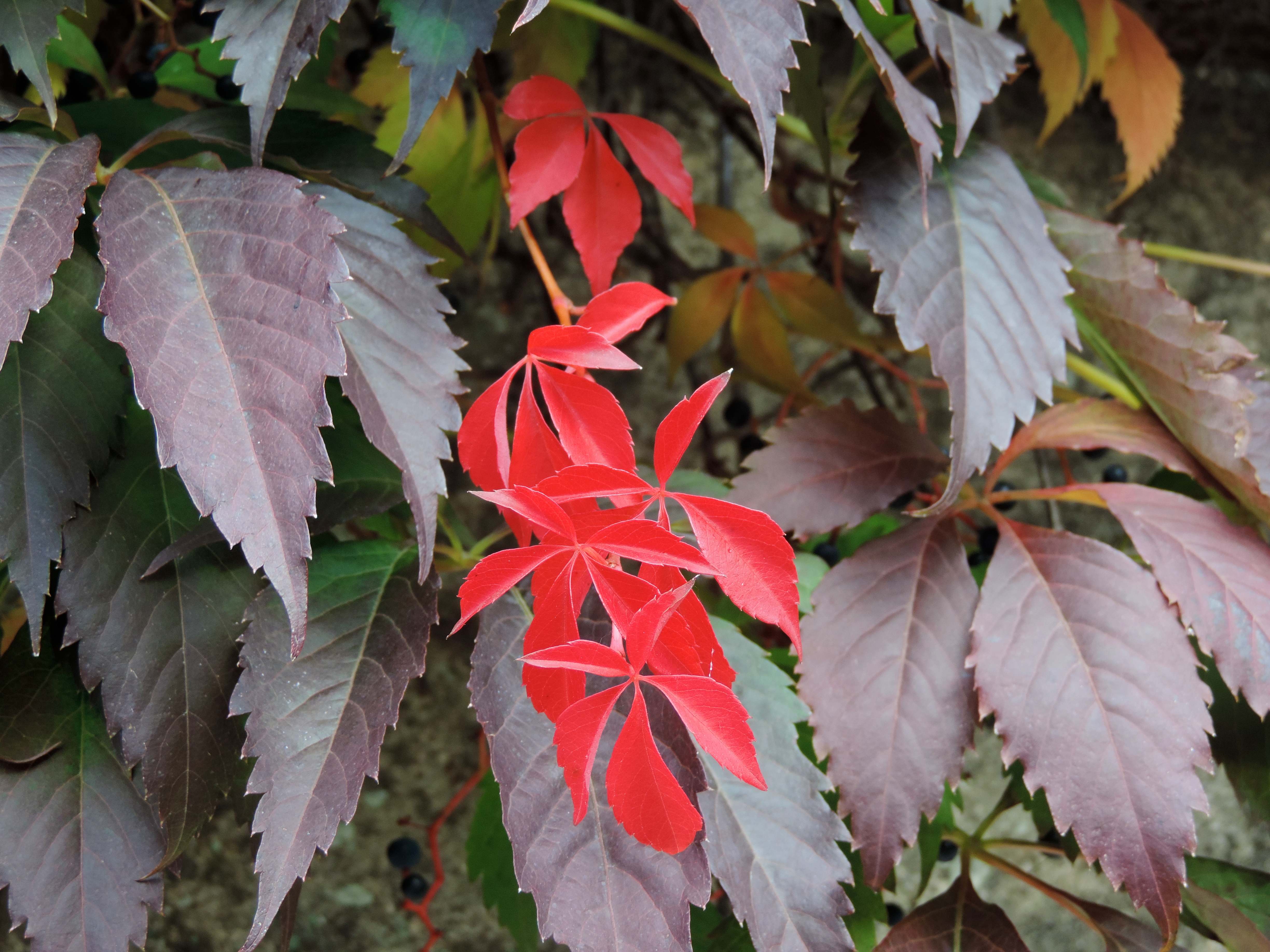
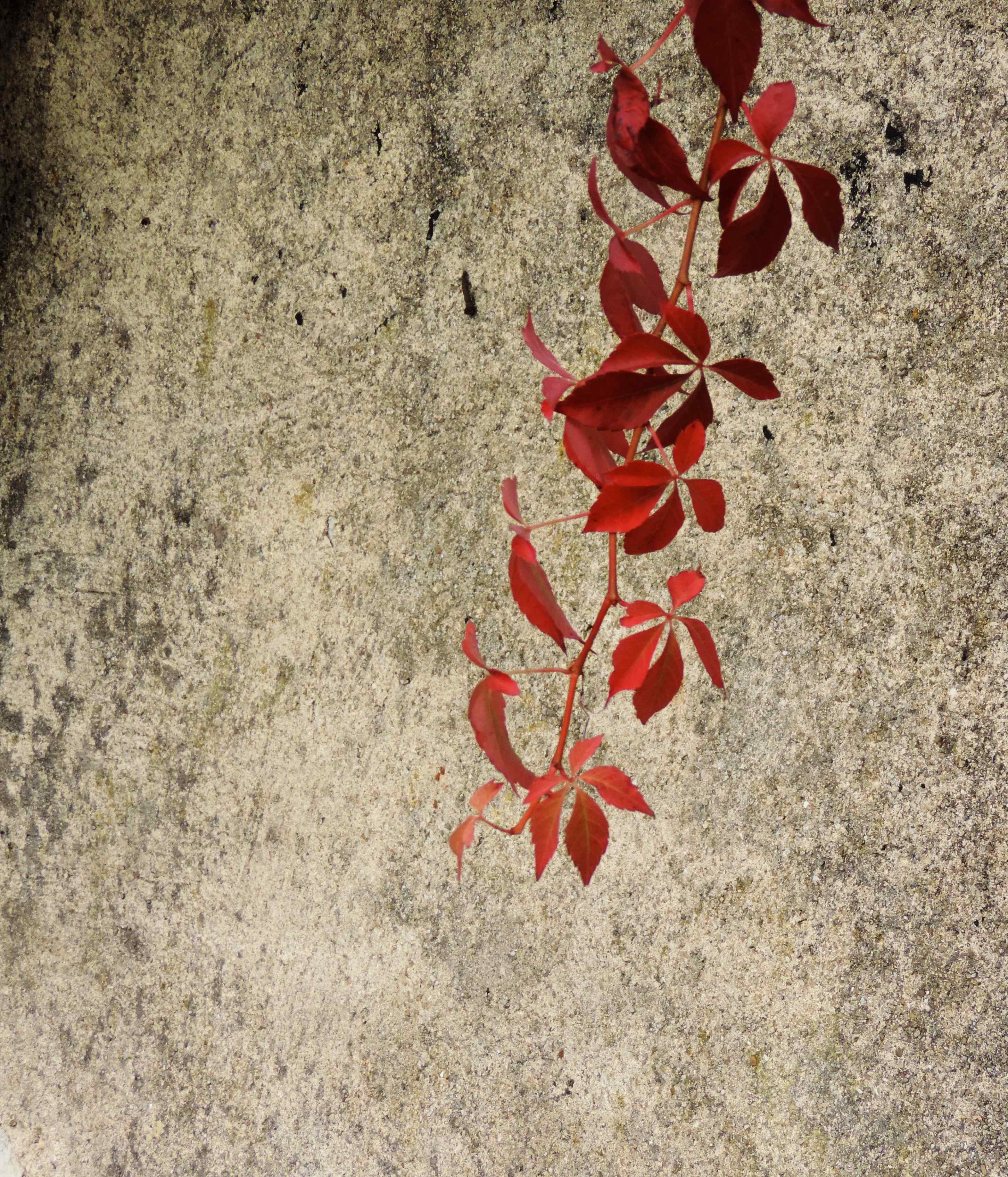
Talking about grace and beauty, here’s another couple of photos of the ivy –

splash of red

This one reminds me of how everything changes but each individual changes at his or her own speed and rhythm.

simple

And this image reminds me of the “Japanese Ivy” version of the name of this plant.


Naming

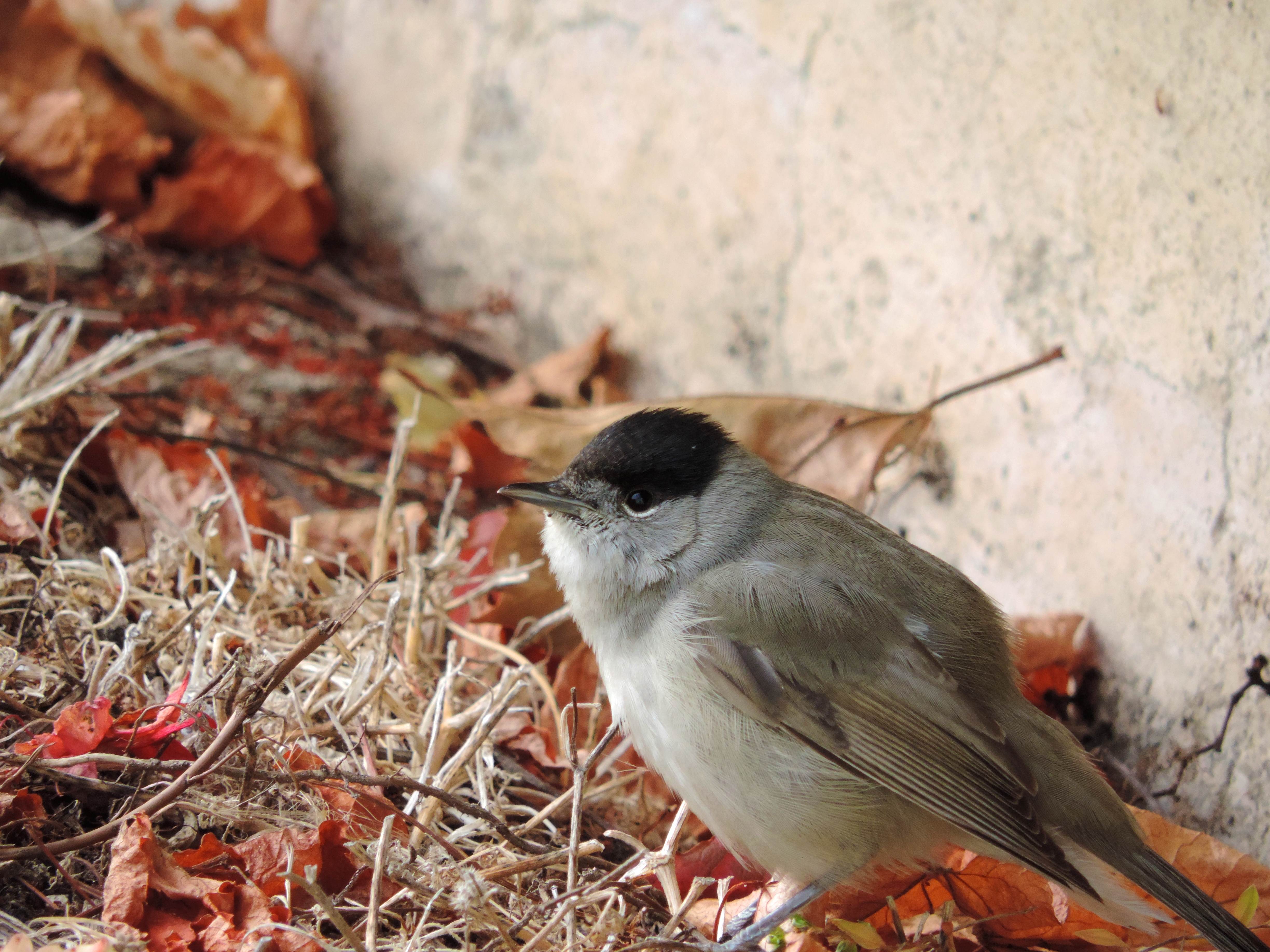
black headed warbler

I’m not an expert in names. I am curious about pretty much everything in the universe but I’m not good at looking at a tree, a flower, or a bird and saying “that’s a…..”

Not knowing the names doesn’t mean I can’t enjoy what I see, and I find it doesn’t reduce my curiosity any. Sometimes I wonder if not being able to name what I see allows me to see more clearly – to see the individual in its uniqueness, rather than reduced to a member of a particular category.

However, it doesn’t stop me wondering….so, does anyone know what kind of bird this little one is?

I spotted it a couple of days ago. I’m wondering if it’s a black-headed warbler. It was small, but I also think it was young – seemed quite fluffy!

Whatever its name, this is sure a lovely photo – especially with the autumn leaves on the ground.

Living wisdom

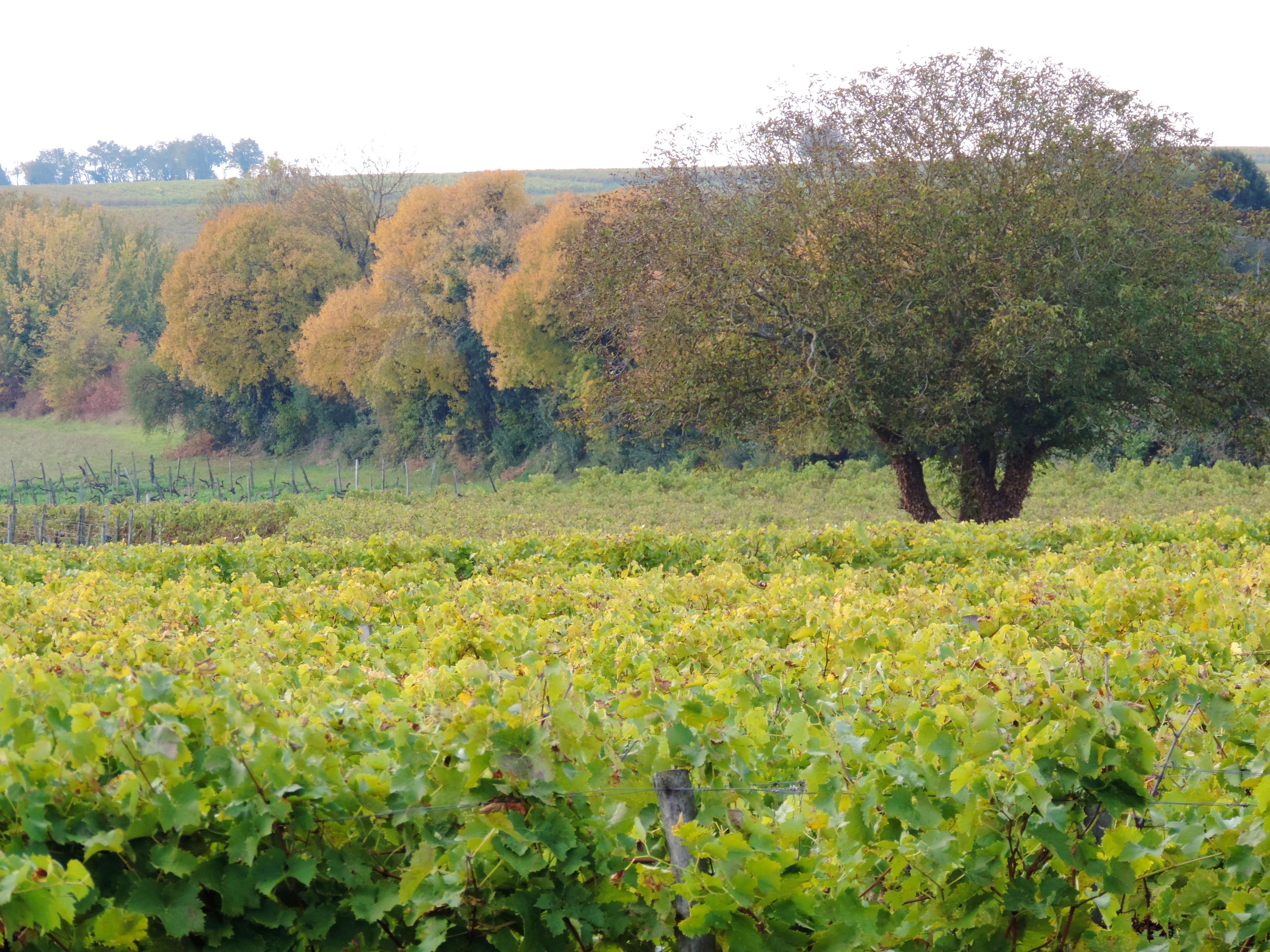
vineyard early autumn

In his “The Big Elsewhere”, Robert Brady after building a dry stone wall, says

…that any worthy effort is a dialog, that wisdom is a living thing, not frozen in time, not a doctrine or a dogma, not a monument, not a library, not a printed book or ether page, and that you are born with wisdom ready and waiting to be known to you.

So true….that we are never done learning, never complete in our knowledge. That should keep us humble, and teach us to live with uncertainty, and be a constant stimulus to our curiosity. When he says “…you are born with wisdom ready and waiting to be known to you”, then I recall Elizabeth Gilbert, from her “Big Magic” 

The universe buries strange jewels deep within us all, and then stands back to see if we can find them. The hunt to uncover those jewels – that’s creative living.

But it also sets me up to hear Bob Brady’s next point –

What does living wisdom tell us? Amongst other things, that the solution is where the problems are: in ourselves.

After the best part of forty years working as a doctor with each day filled with one to one consultations with patients I’m more convinced than ever that the only healing which ever occurs comes from within the individual. Each of us is unique and as “complex adaptive systems” we are self-healing. Good medicine is what supports the personal, unique wisdom of the organism.

Prolonged lack of contact with that wisdom lies at the heart of our problem, and if we continue in our current way we are ended: the real thing won’t stand for it. Existence must be a dialog with the present, as the living, thinking person is taught by any art, any worthy endeavour. You are instructed and guided by the very task, the very ongoing. You are taught the true way most truly only by traveling it, not by standing still and listening to others tell you the way, or by looking at an old map of where others have gone.

I think we gloss over the fact that we are adaptive creatures. We are constantly adapting. We are “open systems” continuously picking up energy, information and molecules from the environments in which we live and adapting our whole being to the changes. We are dynamic creatures, never fixed, never static, constantly learning, developing and growing. The only way to learn to live is to learn by living!

Bob Brady goes on to distinguish dead from living wisdom –

Dead wisdom obviates dialog by saying: “Do it this way because we have always done it this way.” Dead wisdom souls a dead society. Living wisdom, on the other hand, like all that is ongoing, is always and ever new. Living wisdom is green, the green of grass, the green of leaf, green of the living layer beneath the bark of a tree. It is the green youth and hope in hearts that are alive.

Tradition, dogma and “evidence” can all become “dead wisdom”, because they can all claim a certainty which will ultimately turn out to be at best incomplete, and at worse false.

Living wisdom is “always and ever new”.

You’ll learn it today.
Going out looking

Yesterday I wrote about the experience of following your curiosity when something catches your eye.

Today I want to share with you some photos I took deliberately.

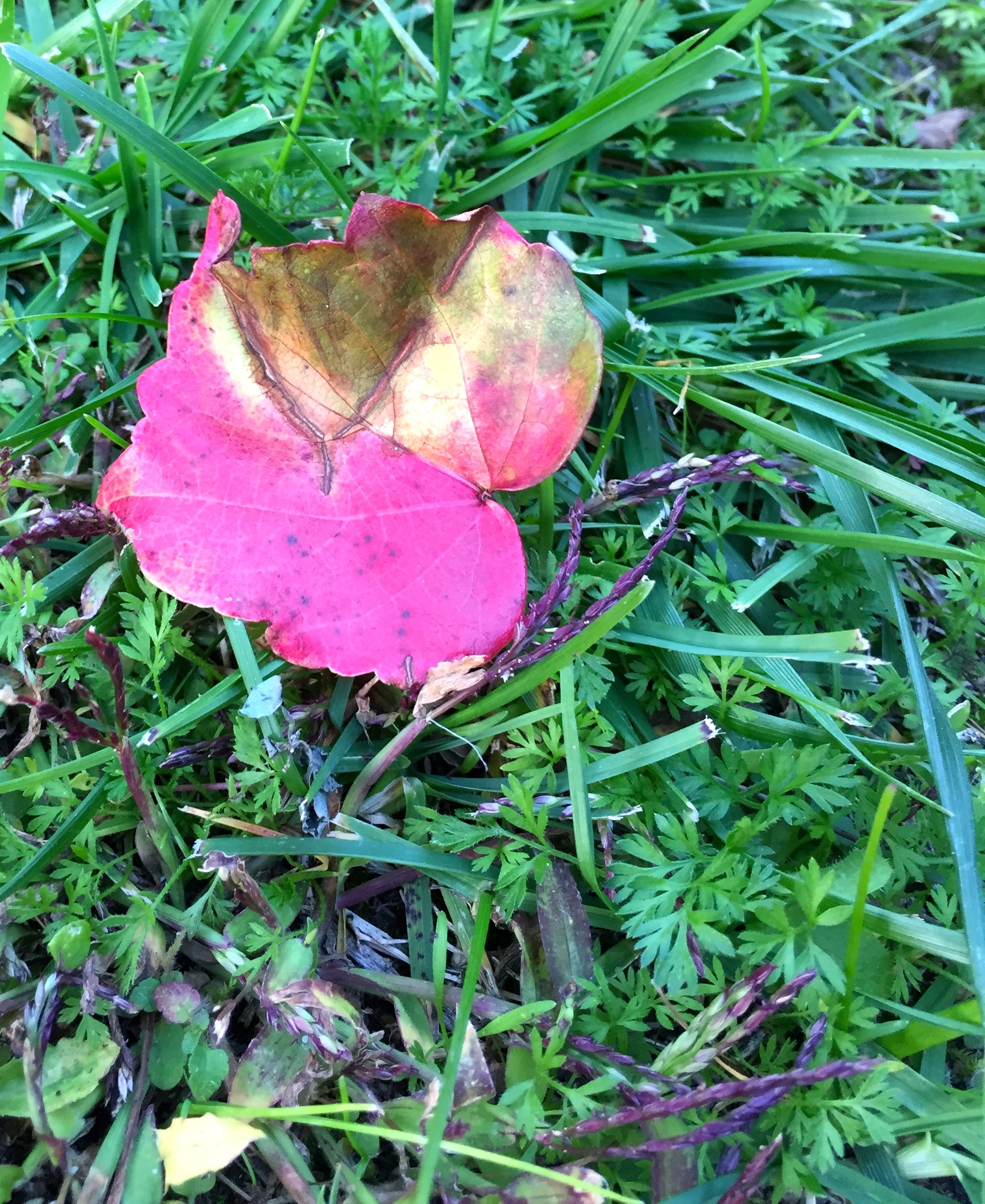
I love this time of year. I love when the leaves start to develop their rich and different colours then just begin to fall to the ground. I noticed a few lying on the grass so I went out to look for a red one first.

red leaf

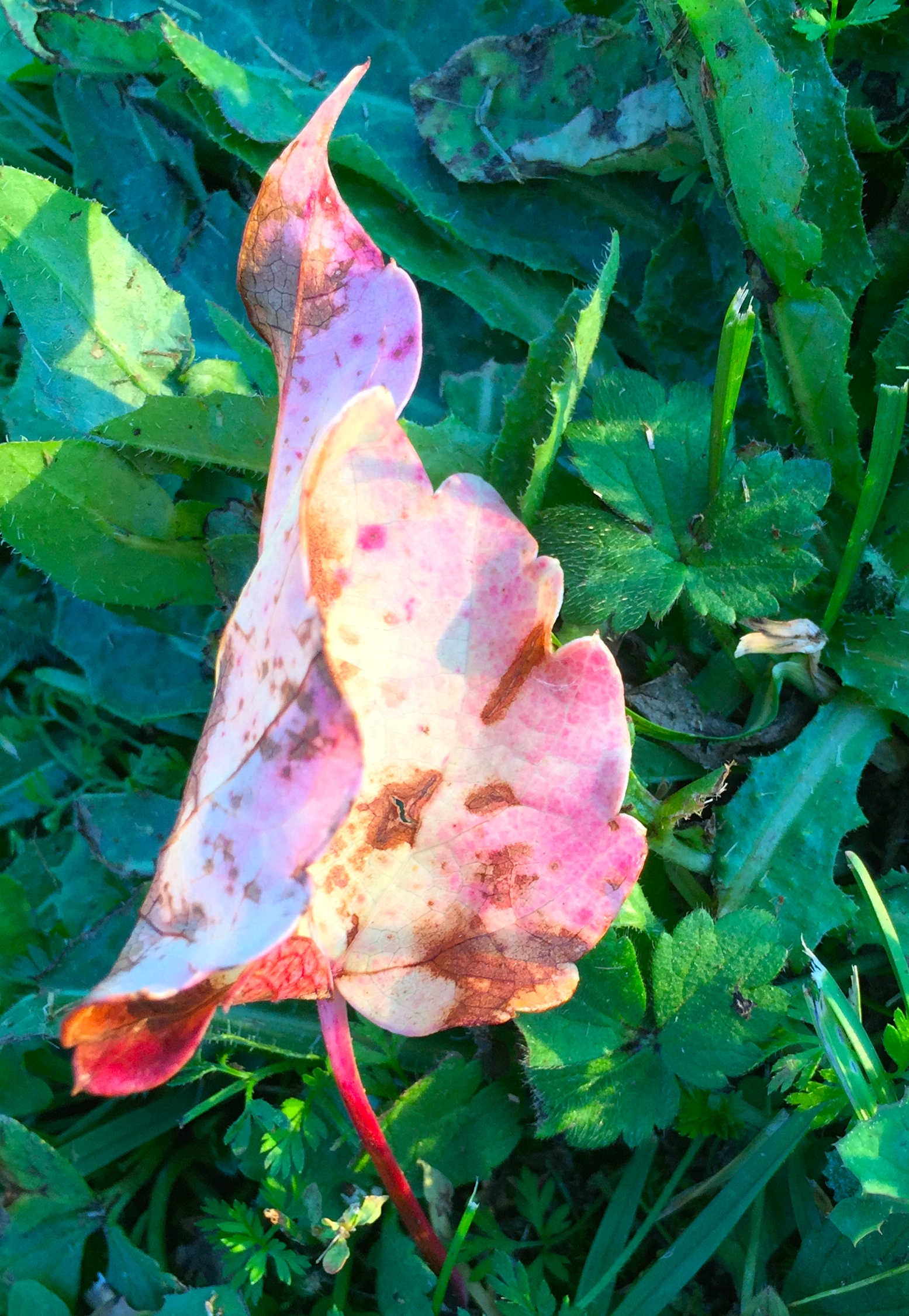
Already in its redness I could see hues of pink and decided to look for a pink one next.

pink

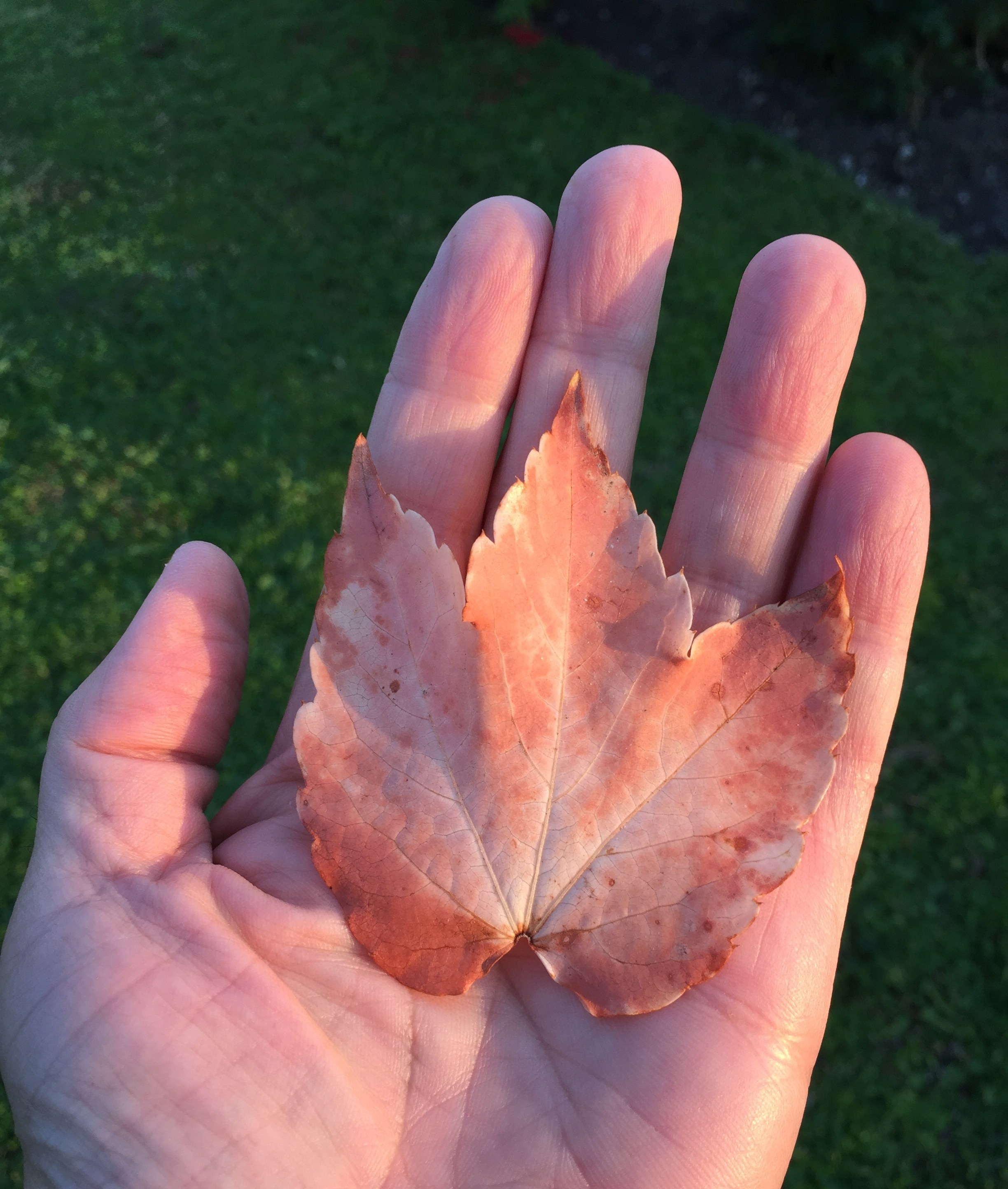
Within the pink leaf I thought there was a suggestion of something close to the colour of the palm of my hand.

flesh

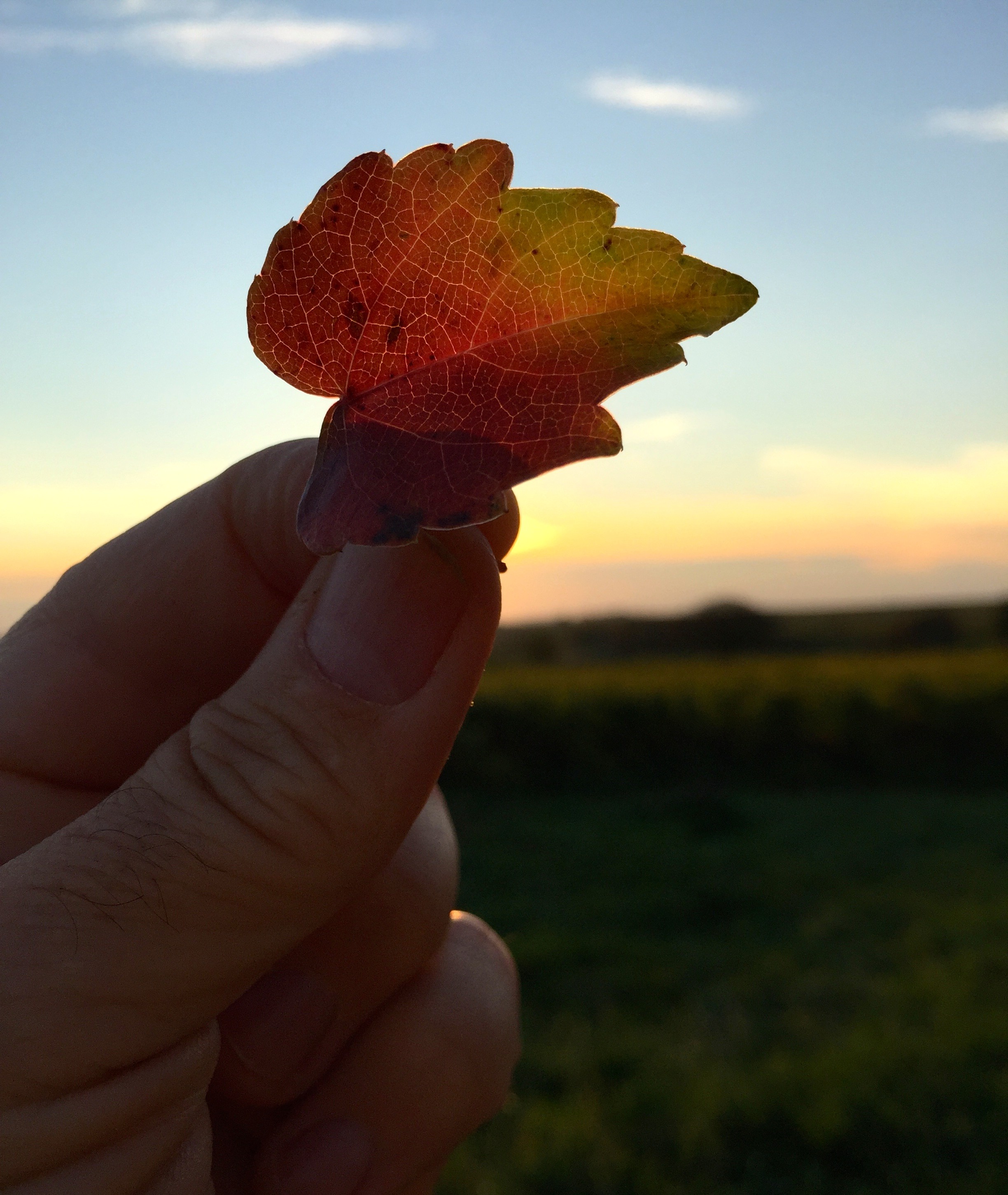
Then I found one which made me think of the world around me as the sun began to set. So I held it up in front of the sun, capturing its full glow.

sunset leaf

Wow! You can have a lot of fun looking for diversity at this time of year. So many different colours. So many different patterns. Every one of them unique.

Curiously eye catching

That’s a funny phrase don’t you think – “eye catching”?

How can something “catch” your eye?

But it does, doesn’t it? I do think you can observe with intent. I’ll write a post about that tomorrow, but today I’d like to share what happened yesterday evening.

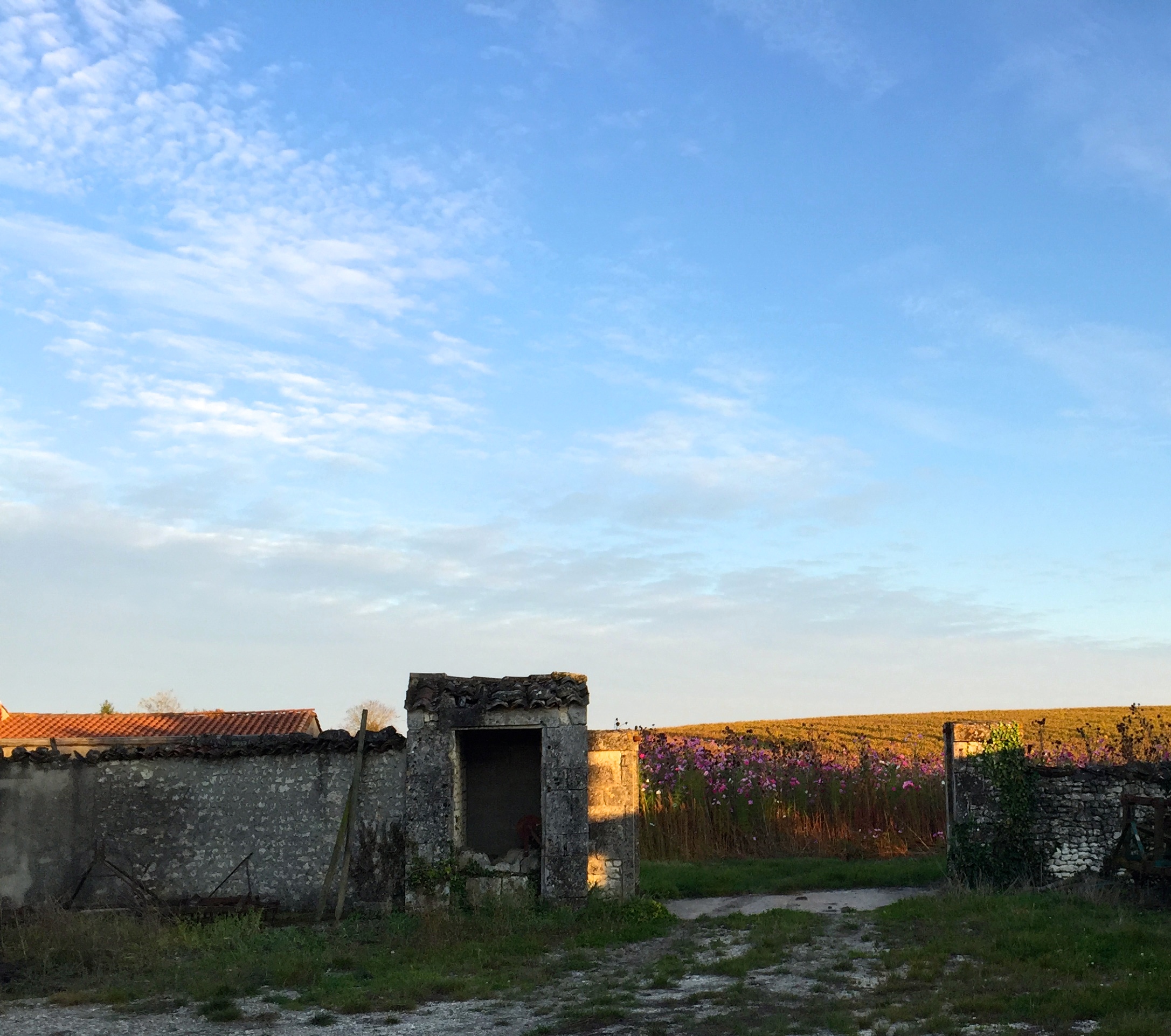
Every other monday evening I take a yellow bag of papers, tins, plastics and so on for recycling, along our little road a couple of hundred yards to the collection point for the pick up on the tuesday morning. I’ve done that every fortnight for this last year but as I turned to walk back home last night something caught my eye – something just in the corner of my eye –

the yard

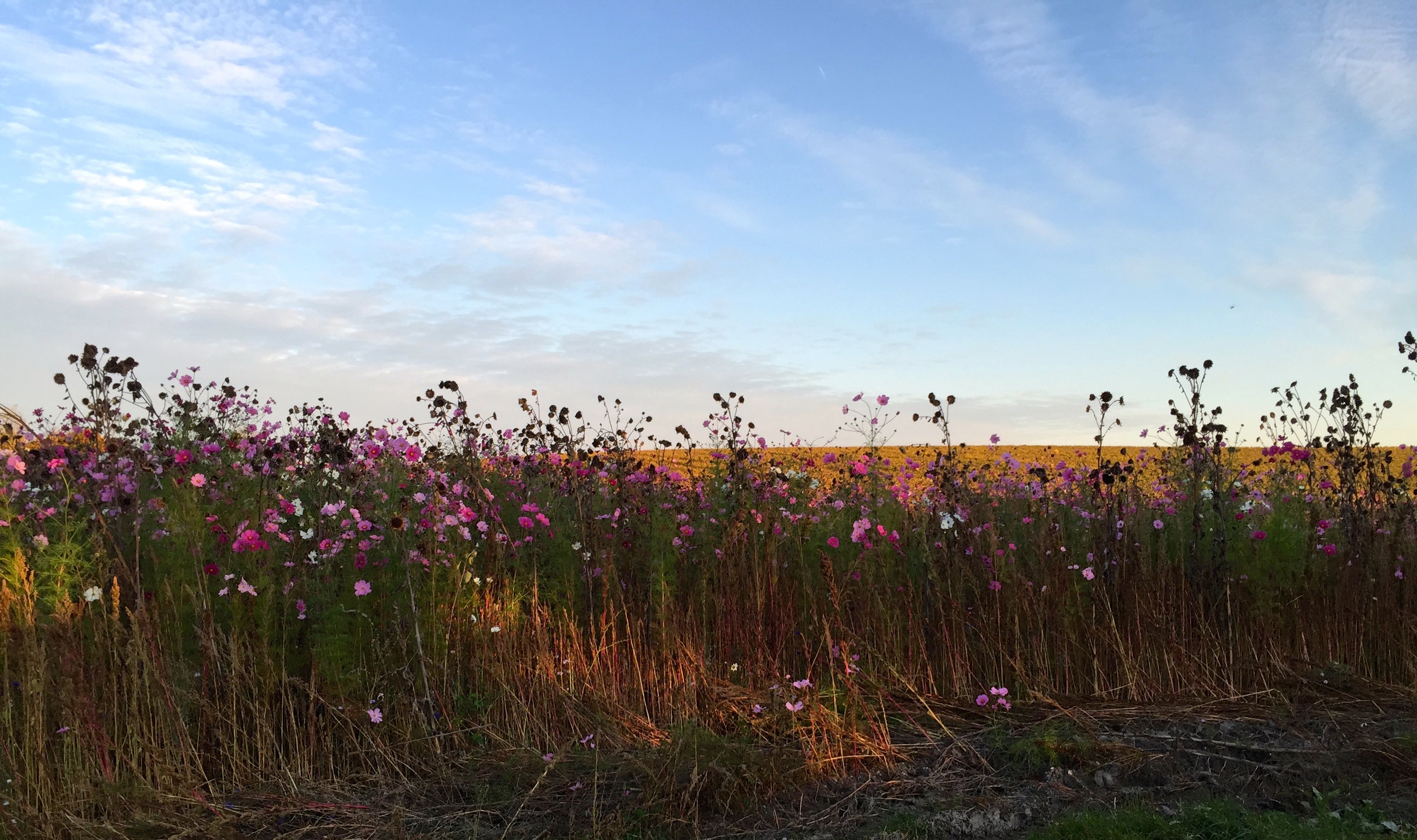
Can you see? Just to the right of the old well….something in the field. I went closer to have a look.

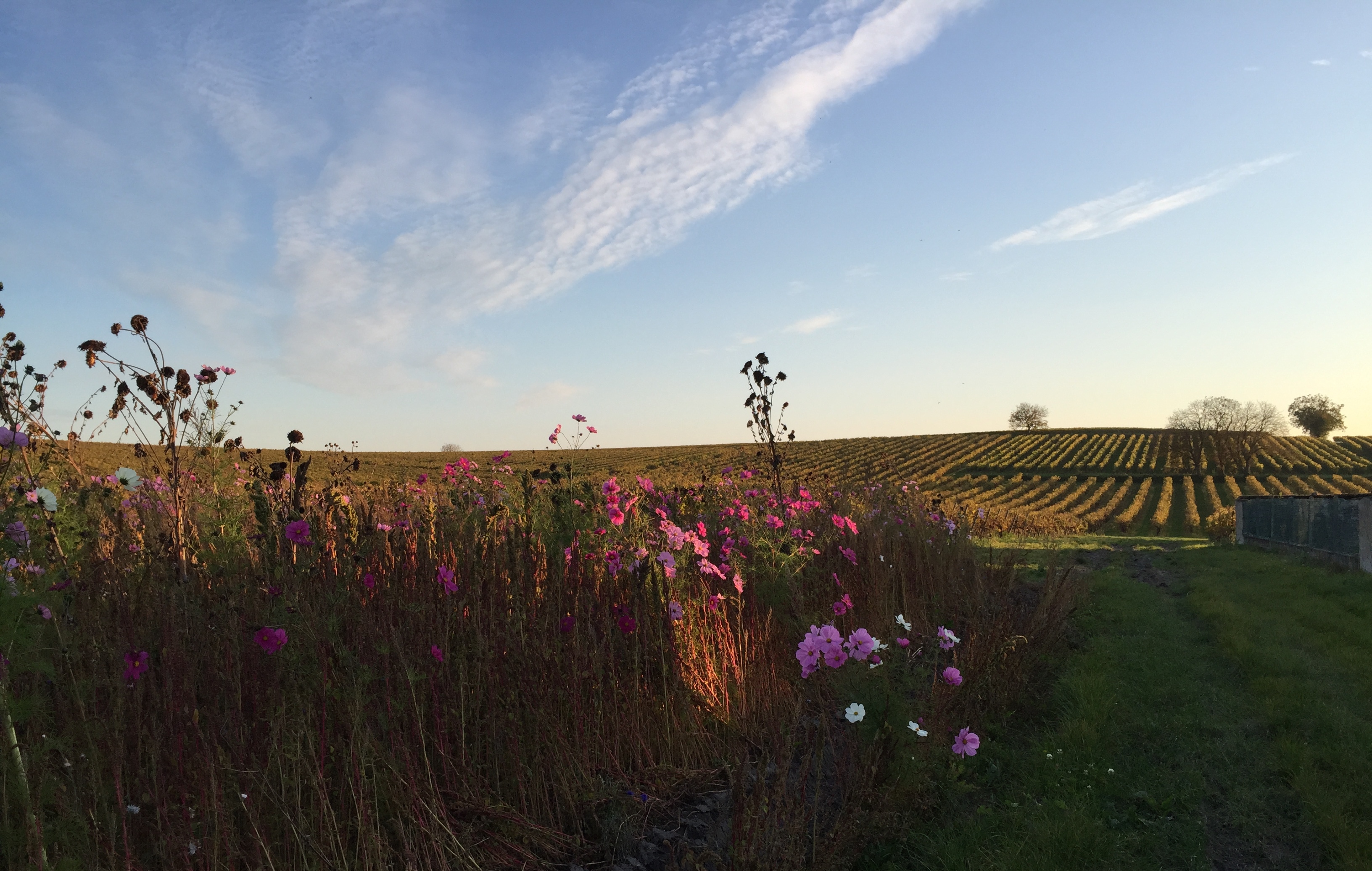
flower field

Wow! Look at these flowers! Spectacular!

The sun was about to set and as I looked to my right I saw the low rays sliding across the vineyard and lighting up some of the petals. I’m really pleased with this one – just look!

sunlit

If the colour hadn’t caught my eye, if I hadn’t been curious enough to walk into the field, if I hadn’t looked along behind the old wall…..I’d have missed this.

So there’s my tip for today – if something catches your eye, follow your curiosity!