Feeds:
Posts
Comments

What we do

What’s this flower doing?

No, it’s not a trick question. It’s pretty simple actually – it’s flowering. Because that’s what flowers do.

Isn’t it interesting that we have a verb for that?

What would be the equivalent verb to describe what YOU are doing?

Would you look for a “category” word – like human – and say you are humaning?

Would you look for a more specific category and say you are manning, or womanning?

Would you choose a role and say you are mothering, or fathering?

Or something related to your employment? Doctoring? Nursing? Teaching?

What if you went for something really specific? Something that only YOU in the whole universe is doing, has ever done, and ever will do? (That’s being the unique you that you are) What verb would you choose for that?

Would you turn your name into a verb? But that would only work if you don’t share your name with any other person, living or dead.

I don’t think there is a single verb to describe what you, uniquely, are doing – the closest I’d get would be to say I’m becoming me. (Because that’s a constant work in progress)

Let me return to the flower at the start of this post – it’s a “hollyhock”, or “rose trémière” as it’s called around here where I live. But it’s not just any rose, it’s the rose which lives here and which I see, and notice, every day. (A bit like the little prince’s rose)

“People where you live,” the little prince said, “grow five thousand roses in one garden… yet they don’t find what they’re looking for…

They don’t find it,” I answered.

And yet what they’re looking for could be found in a single rose, or a little water…”

Of course,” I answered.

And the little prince added, “But eyes are blind. You have to look with the heart.”

As above so below

Convolvulus

I took this photo this morning of a convolvulus which has just flowered – don’t you think this looks like one of the images which astronomers take using the Hubble telescope?

A Universe within……

Out of our depth


“The current practice model in primary care is unsustainable. We question why young people would devote 11 years preparing for a career during which they will spend a substantial portion of their work days, as well as much of their personal time at nights, on form-filling, box-ticking, and other clerical tasks that do not utilize their training. Likewise, we question whether patients benefit when their physicians spend most of their work effort on such tasks. Primary care physician burnout threatens the quality of patient care, access, and cost-containment within the US health care system.”

I came across that passage recently in an article entitled “In Search of Joy in Practice“, published in the Annals of Family Medicine. In a strange kind of synchronicity, I read it the same day I read the reports of new guidelines for GPs in England which are intended to reduce the number of deaths from cancer. NICE, the English healthcare guideline factory, claimed –

There are 10,000 more deaths from cancer in the UK every year than the average in Europe as a result of diagnosis that may come too late for effective treatment. Half of those lives could be saved, the National Institute for Health and Care Excellence (Nice) said, if patients and their doctors used the guidance, which has taken three years to develop, on symptoms that could warn of one of 37 cancers. GPs will also be able to order more tests than at present, which should speed up a diagnosis.

Let’s set aside the arguments about whether or not earlier diagnosis of cancer does actually lead to “saving lives” which remains a contentious claim. This 378 page guideline which took a team of “experts” three years to put together gives GPs guidelines based on the symptoms which their patients might present to them. It argues throughout that with a “positive predictive value” of 3% or more, the presence of a particular symptoms should lead to the GP sending the patient for specific tests to exclude particular cancers.

I’m not a statistician but as I understand it a “positive predictive value” is pretty much the likelihood that what you are predicting will come true – in other words, it’s extremely unlikely that anyone with these particular symptoms has cancer.

But it’s not the statistics which bother me most about this guideline – it’s the fact that they have chosen to assume that symptoms are the signposts of disease – they aren’t. It just isn’t that simple. Maybe NICE isn’t aware of Kurt Kroenke’s extensive research on symptoms over the years (google him if you want to explore more). Time and again he has shown that symptoms are no such thing with from 30 – 85% of patients presenting with particular common symptoms never going on to demonstrate any related pathology at all.

Symptoms, used in some tick box fashion, are no substitute for a proper clinical history and examination. Interestingly, Kroenke has also shown that

about 75 percent of information useful in making a diagnosis comes from the patient’s history – the story you tell your doctor about what’s been going on. Another 10 to 15 percent comes from the physical examination. Tests provide the least useful source of information.

…yet the basis for this NICE claim about saving lives from earlier diagnosis of cancer, is based on GPs referring for more tests.

But let me get back to where I started with this post – which is the impact such a numbers-based, algorithmic bureaucracy has on professionalism and job satisfaction.

Honestly, when I read the details of this particular guideline I began to wonder if it was guidance for doctors who had skipped medical school – are there really doctors out there who don’t get suspicious when a patient presents with bleeding from the bowel, unexplained weight loss, change of bowel habit and loss of appetite? Yet, NICE claims this guidance will be of “educational value”! Seriously, only if you skipped medical school first time around!

We are drowning our doctors in numbers.

We need to return to the values of good, caring doctor-patient relationships based on continuity of care and sufficient time to do a proper quality job with each and every patient. Human being based values, not numbers based ones. Let’s build an NHS on those principles and see what happens to doctors’ job satisfaction, patients’ experience of health care, and individual lifetime experiences of health.

As the author of the text I quoted at the beginning of this post said – “the current practice model in primary care is unsustainable”. We need to change direction.


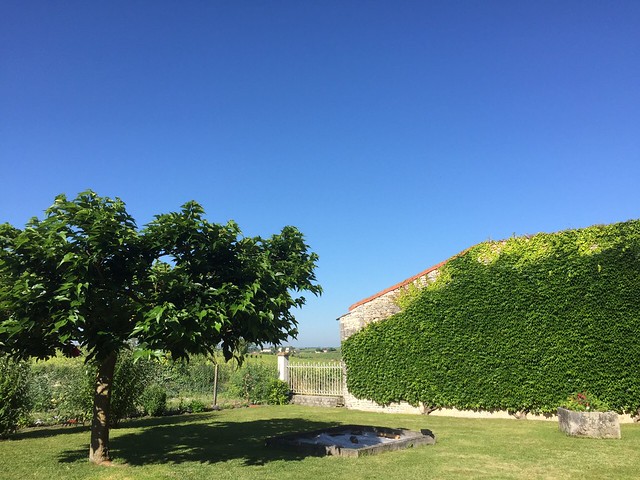
We have a huge vine which covers the wall of a building at the edge of our garden.
Untitled

The other day I was sitting under the mulberry tree and I heard a strange noise – like water droplets falling on the vine (but it wasn’t raining, and the vine wasn’t being watered!)

I took this little video – turn up the volume and listen very carefully

The noise is the vine, popping those little shells off it’s flowers – see –

Untitled

Have you ever heard anything like that?

It’s been happening every day since – just after the sun moves west over the wall so that after being in warm sunlight all day, the vine is now in the shade.

Oh, and at the same time, dozens of bees make their way to vine to find the nectar which has just been made available.

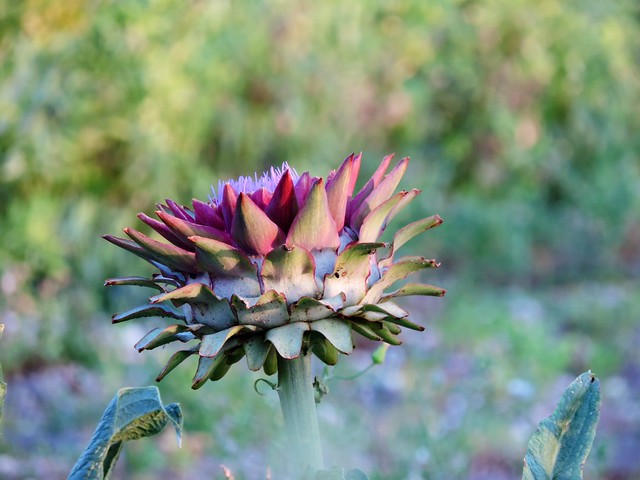
Artichoke bloom

Isn’t this just beautiful?

If you were going to invent a flower, do you think you’d ever come up with one which looks like this?

Aren’t the colours just gorgeous? And what a range of shape and form!

Maybe the main reason I keep this blog going is just to share the sheer pleasure, joy and amazement I experience pretty much every single day.

I hope you stumble across amazing things every day, and if there aren’t any in your neck of the woods today, feel free to browse through these posts and share some of mine.

(Just in case you’re wondering, by the way, this photo today is of an artichoke flower)

Entwined

Come together

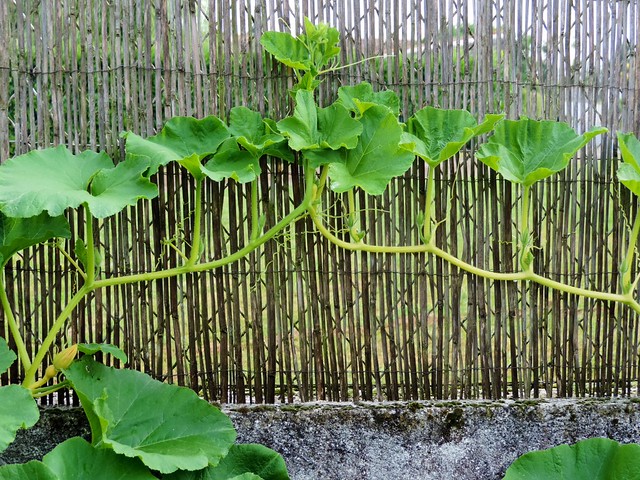
We’re growing some “potiron” plants in our “potager” and, wow, can they grow! (“potiron” is a kind of pumpkin and a “potager” is a vegetable patch)

Look what these two have done. They’ve sought each other out and now that they’ve found each other they’ve entwined themselves in each other. Just lovely!

I find all these plants which can send out tendrils and climb their way up walls and fences quite astonishing, but there’s an added bonus here with seeing these two particular plants get together!

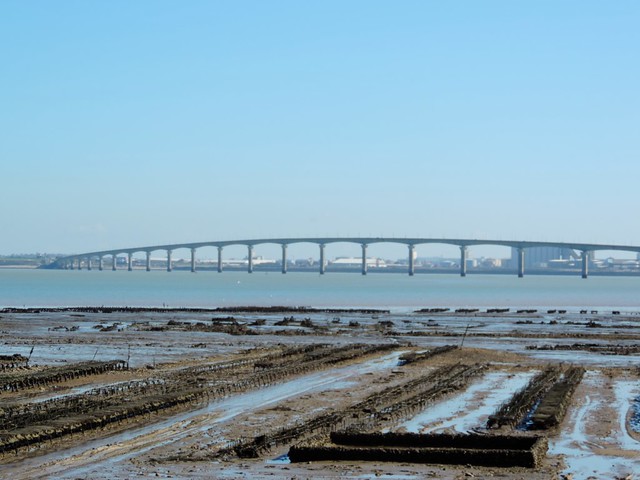
From the Ile-de-Re

In my A to Z of Becoming I’ve previously considered both “zoom” and “zigzag” for the letter Z, but this time I’m thinking about “zone”.

We don’t often use “zone” as a verb, but in France it’s used quite a lot to indicate a particular area – “ZA” can be a “Zone d’Activitiés” – for example, a “Zone Artisanales” is an area where there are a number of small businesses (artisan in France is used as a term for someone who has a trade, like a plumber, or electrician). It’s used to define an area which is designated for some particular purpose – shops, small businesses, factories, or even economic areas (like the “zone euro”).

The other kind of zone we think about in English is captured by the phrase “to be in the zone” – which is one of the key definitions of happiness.

If we zone in on something then we focus on it (a bit like that other z verb, zoom – we can zoom in on something) – but zone also has an element of a boundary to it.

If we declare a zone we set a perimeter. Or if we get into the zone, we set a perimeter of our attention.

Here’s one of the paradoxes of becoming – we need to be able to take in the whole, (the view from on high) and we need to be able to focus on parts (to zone in). Iain McGilchrist’s hypothesis is this is exactly why we have two cerebral hemispheres – the right to see the whole, and the left to analyse or focus in.

So, here’s the thought for this week. What zoning would you like to do? Is there something you really love doing which would let you “get into the zone”? If so, set aside some time this week and do it!

Or do you need to create a zone – a place, an area in place and/or time, for a particular activity? In other words, what do you need to make space for, and how are you going to protect that space? By declaring a zone? A meditation zone? A writing zone?

A …… (you fill in the blanks) zone

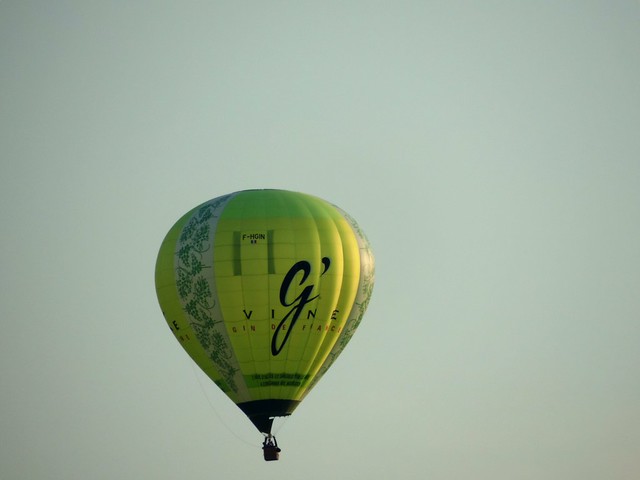
Montgolfière over Salles d'Angles

One of my favourite philosophical practices is the “view from on high” – or the French version of a “view from Sirius” (which isn’t just about seeing from above, but about encountering things as if for the first time).

Conceptually, its about taking an overview, seeing everything within its contexts. It’s about approaching something as a whole, rather than analysing its parts. (This latter is the distinct difference between the two sides of your brain, according to Iain McGilchrist – the right hemisphere allows an “analogical”, holistic approach to be taken, whilst the left facilitates a more “digital”, analytic and reductionist one)

We can do this literally, when we climb up to a vantage point, (or take a flight in a hot-air balloon or a plane), or we can do it cognitively, by reflecting at the end of a day, or by taking a pause, taking a few deep breaths, or slowing down to be able to actually perceive properly (instead of the world and our thoughts whooshing past at a hundred miles an hour!)
Hot air balloon

By the way, if you do get the chance to actually go up in a hot air balloon, I can recommend it. I’ve only done it once (for my 50th birthday) but it was one of the most amazing and special experiences of my life.

Silvers of light

Clouds over the moon

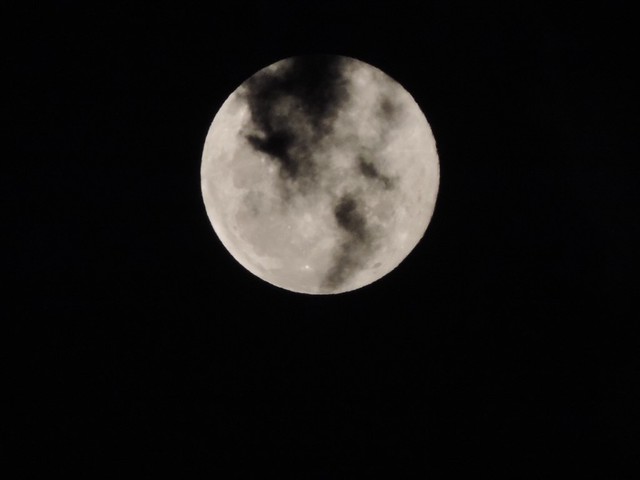
It was a full moon the other night, and there were storm clouds gathering.

You know how I say it’s good to do something different? Well, I decided to try and take some photos of the moonlight…….so, I had to wait till the moon was hidden –
Moon behind storm clouds

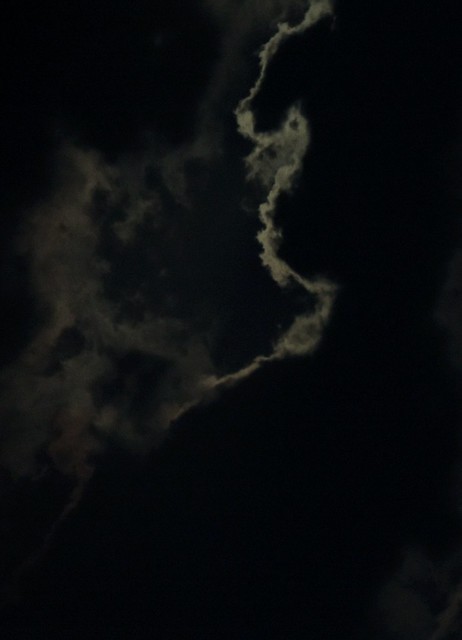
Completely hidden –

Moonlit silver linings

Ah….now, that’s nice! See, every cloud DOES have a silver lining!

Hoopoe

July, in my twelve monthly themes, is the month of rest.

One of the things I’ve noted about several of the birds which frequent my garden, is that they often find a place to perch.

Most of the time they are flying around, or running around, looking for food, carrying it back to the nest, and so on. But from time to time, they just sit.

Usually on a post, like this Hoopoe, but other times it’s on a favourite plant pot, a TV ariel, or a telephone wire.

So, I’m wondering…..where are your favourite perches?

Where do you like to pause, or take a “time out”?

Whether it’s to just sit still for a little, in order to be better able to see the world, or whether it’s to just settle your mind and your emotions so you can slip out of reactive mode and into responsive mode, I think it’s invaluable to have these pauses in life.

If you’re not in the habit of taking them, this would be a good month to start.