Feeds:
Posts
Comments

Archive for March, 2014

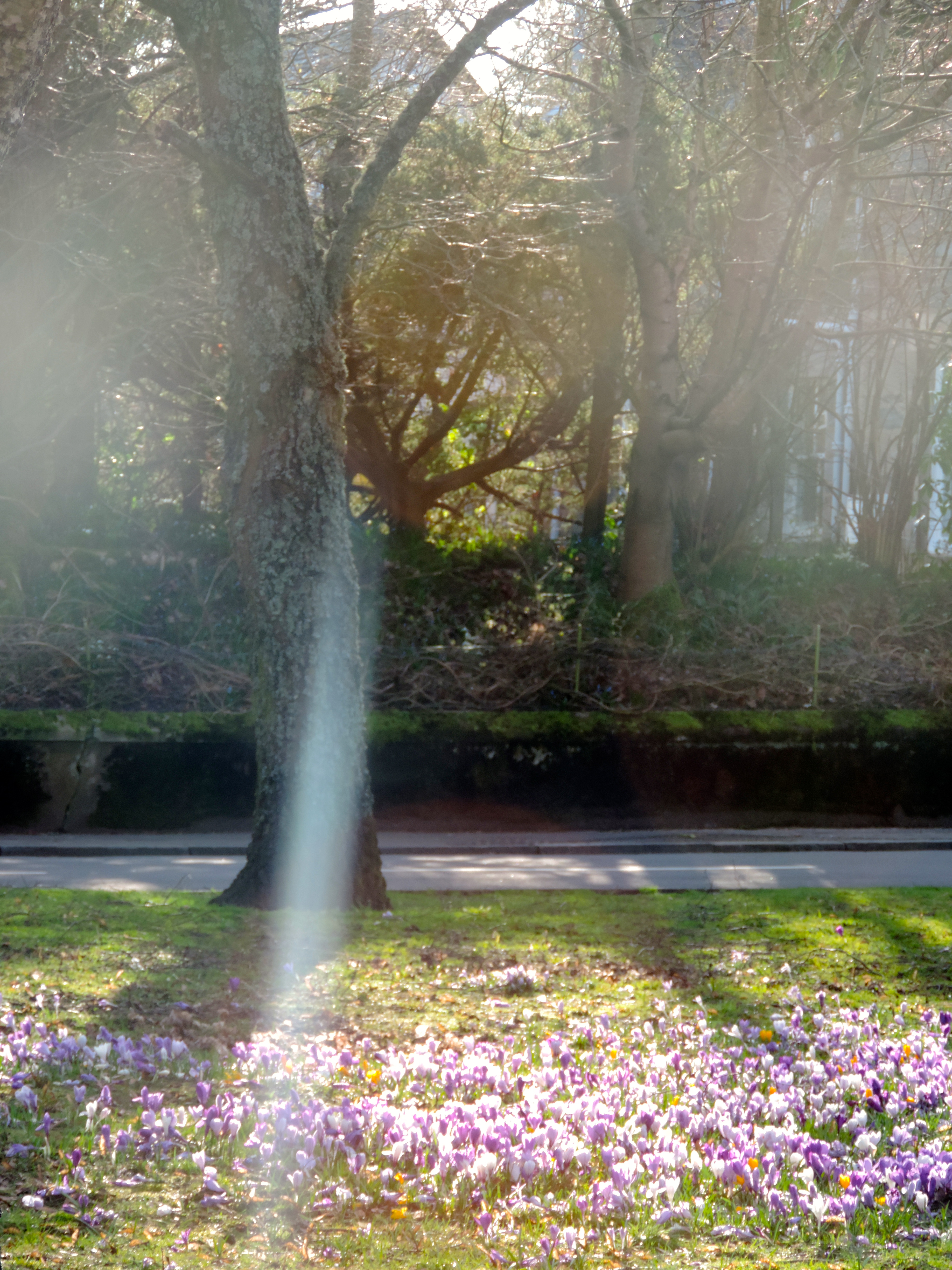
When I became interested in photography I’d read about how to take good photographs and time and again I’d come across the rule about making sure the sun (or the light source) was behind you. It didn’t take me long to see what happened if I did the opposite.

DSCN0916


See what happens when you turn towards the light?

Read Full Post »

Here’s an idea to think about.

What do you feel when you go into a health care facility? I mean by that a clinic, a GP’s Practice premises, a hospital, or anywhere else which comes under the label of “health service”?

news_1900

Fear?

Anxiety?

Trepidation?

Despair?

Irritation?

Lost and alone?

Confused?

Helpless?

You are probably going to that health care facility to seek better health. Do you think any of those feelings or experiences are conducive to creating better health?

What if when you went to a health care facility you felt –

Safe?

Welcome?

Cared for?

Happy?

Empowered?

Do you think that would be more conducive to health?

I do.

So, why don’t we build the new health services around what creates better health? Why don’t we create places where you feel a little lighter in your heart, a little happier, a little stronger, when you are there? Why don’t we create health care where you feel heard, seen, cared for? Where you feel loved even?

Is that too radically different from what we have?

Is there an argument for continuing to create health services which are associated with fear and helplessness?

Of course, I know a place is both the physical built environment, and the human one created by the people who work there. I’m not just thinking about building design, I’m thinking about the people who work there….are they happy? Are they feeling valued? Are they passionate about caring for you?

I think health care has become way too utilitarian. It’s build around a mechanical/factory model of processes and products. What if we designed it around human beings instead?

What would it look like?

So, here’s my idea for today – describe the kind of health care you’d like to see – in terms of buildings, people, values, behaviours, whatever you think is relevant – and ask yourself how what you describe might contribute towards better health. Or do you think these things should be left to other people to think about? And if so, who do you want to think about it for you?

DSCN6731


Read Full Post »

DSCN0917


I just love those brief and utterly beautiful moments of a shaft of light on flowing water.

This particular moment made all the more special by the presence of the broken branch of full of brown leaves.

Read Full Post »

3514853663_ecefab90ef_z

An area of drug development is being referred to as “stratified” or “personalised” medicine – it’s about testing for biological markers which help to predict who will get benefit, and who will get side effects. Sounds a good idea? Any maybe it is, but I wonder if that’s all there is to knowing who is going to benefit from a particular drug and who will get side effects. However that works out, what struck me was the comment from the Professor in Glasgow

We’ve seen spectacular advances in the treatment of rheumatoid arthritis in the last 10 years,” he said. “But one of the greatest frustrations our patients face is that they’re given medicines which could potentially give them benefit or potentially add to the risk. They don’t know which is going to be their fate. What an easing of the mind if they had some degree of certainty about what their medicine was going to do for them.”

We have a great desire to predict the future and to be certain about what it will be like.

Every other day it seems we hear another round of “economic forecasts” suggesting what’s going to happen in the economy for the months ahead. Some economists are even prepared to predict what interest rates will be, growth rates, unemployment rates etc etc – since the financial crash of 2008, does anyone believe anything economists say any more? What exactly are these “forecasts” other than guesses? Is it possible to accurately predict the future of any complex system?

Certainty is the greatest of all illusions…….The only certainty, it seems to me, is that those who believe they are certainly right are certainly wrong. Iain McGilchrist. The Master and his Emissary

Prediction is impossible. We are complex adaptive creatures, living in a complex universe which co-evolves with us. Continuously, complex systems change so radically that the next phase is termed “emergence” – a phenomenon which by definition couldn’t be predicted from an analysis of the pre-existing parts.

So what to do?

Focus on becoming not being…….

For me, noticing patterns, being fully present during experiences and hearing and creating stories beats the illusions of prediction and certainty every time.


Read Full Post »

3408569363_bdc595e4a6_z

Kindle.

Since Amazon brought out their increasingly popular e-reader and probably transformed reading (how many people do you see on the train or the bus sitting reading something on a kindle reader?), the word “kindle” has become associated with their device.

That’s got something to say for us as we think of the verbs of becoming…..if this little device kindles a little more learning, if it kindles an enthusiasm for reading…..then we are on the right track.

But the kind of kindling I’m thinking of is that early nurturing of something. We start a project, begin to write  or read, embark on a new interest, and at first we have to gently nurture it into viable existence. It’s easy to start something…..for a moment, or an hour, or a day or two…..but a little harder to start something and see it through, to get it established.

I’m sure you’ve encountered the 30 day idea – the idea that if you want to change a habit, or to start a new one, then do the new behaviour (whether that be a change in your diet, or the amount you exercise, or starting to meditate, or whatever). That’s a good way to kindle something. Start today, and then do it again tomorrow, and keep kindling it for 30 days, and see what’s changed.

When I learned TM, both of my teachers were excellent, and they both repeatedly gave the instruction to “gently return to the mantra”. That constant “gently” returning is what made it easy and permanent for me. I think it was a genius instruction. Kindling has the feel of gentleness for me and whatever it is you want to nurture or change, I’d say “gently kindle it”.


Read Full Post »

shadow of an empty seat

No straight lines are to be found in the natural world……..Leonard Shlain has pointed out that the only apparently straight line in the natural world is that of the horizon, but of course that too turns out to be a section of a curve……..Straight lines are prevalent wherever the left hemisphere predominates. Iain McGilchrist. The Master and his Emissary

playing under the moon

By contrast the shape that is suggested by the processing of the right hemisphere is that of the circle, and its movement is characteristically ‘in the round’, the phrase we use to describe something that is seen as a whole, and in depth. Iain McGilchrist. The Master and his Emissary

Circular rainbow


So, if the left hemisphere prefers straight lines, and straight lines don’t really occur in nature, and the right hemisphere prefers to see things in the round, then why not go out this weekend, and see how many round shapes you can see? Strengthen seeing with your right hemisphere!

lily pond

through the round window

Read Full Post »

What’s the connection between health and happiness?

Well, from what I can see from the studies I’ve read there is definitely a correlation – in other words, they often go together. But the exact nature of the connection is complex. For example, it’s pretty much common sense to think that when you’re sick you’re not happy, and when you’re feeling healthy, you are more likely to be feeling happy. But then there are thousands of people with long term ill health who experience happiness frequently, and there are plenty of happy people who get sick!

However, what I find really interesting when thinking about health and happiness, is that the activities and practices which are conducive to good health are also the ones which are most likely to make you happy.

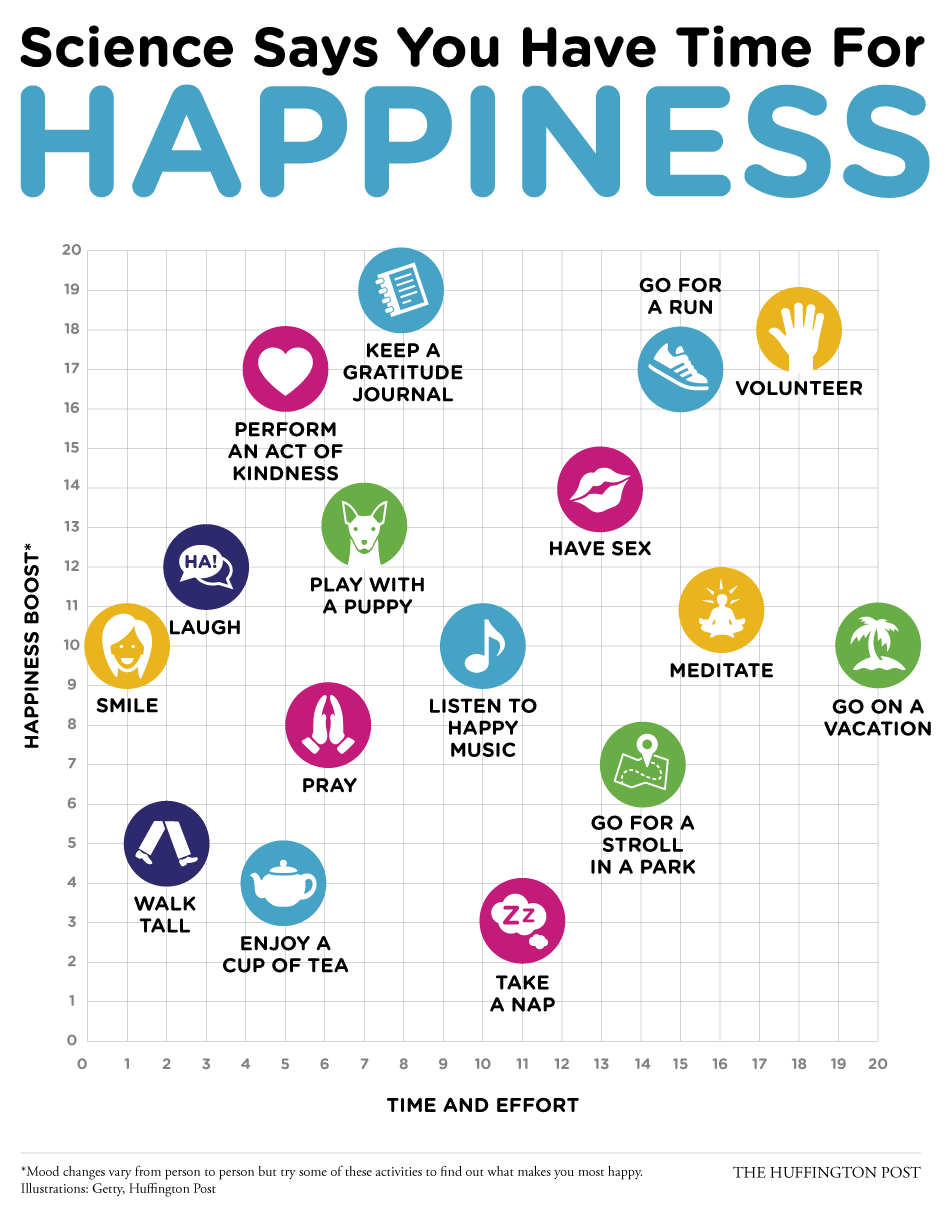
I referred to the graphic below in a previous post about happiness, but let’s take another look.

2013_HappinessMatrix


Think about the characteristics of those who live in the “blue zones“, those areas where a high percentage of people live to a 100 and beyond. Remember the “power 9”?

Well, look at that chart above and see the references to movement – walking, strolling in the park, going for a run; and the ones about “down time” – take a nap, enjoy a cup of tea, meditate. And those about connecting to others – acts of kindness, volunteering, praying and sex!

There’s a lot of evidence about the importance of a Mediterranean diet and good health, and who isn’t happy on vacation on the Med?? And there are the references above to gratitude, smiling, laughing, music and play (and in fact there is a lot of evidence about “positive emotions” like these, and both reduced levels of heart disease, and better recovery from heart attacks and strokes.

So, on a day to day basis, there is plenty you can do to increase your chances of health AND happiness!

Read Full Post »

mitsudomo

Dan Siegel defines the mind as “an embodied process of regulation of energy and information flow”.

Flow is such an attractive and useful concept. If you’d like to read more about it start here.

I like Dan’s definition of the mind because he refuses to turn it into a measurable, objective entity. He describes it as a process – which seems so much more accurate to me. It is a continuous, dynamic, ever changing phenomenon. Not only is it a process however, it’s a process of regulation. He says it regulates energy and information flow.

I think this concept of the mind can be extrapolated to cover the whole organism. Whatever it is that self-regulates, self-defends, self-repairs (in my opinion we can usefully call it “the vital force”) is a process of regulation of energy, information AND materials. Because that’s how all our cells communicate and co-operate – by exchanging energy, information and materials.

So, let’s just consider another of Dan’s concepts. He defines a healthy flow of regulation as having five qualities which he remembers with the acronym FACES.

  • Flexible
  • Adaptive
  • Coherent
  • Energised
  • Stable

A healthy organism has flexibility. Rigidity is one of the two main patterns of dis-order and dis-ease. It uses that flexibility to be adaptive. In other words, as the world changes around it, the healthy organism can change with it in an adaptive way, a way of helping the organism to not only survive, but to grow, to thrive. Healthy organisms are also coherent – all their parts and systems are working synergistically, in harmony with each other. In the absence of energy, organisms become, literally, lifeless. Energised is a key characteristic of all living organisms – you might also use the word vitality to describe the degree to which an organism is energised. Finally, there is stability. Not the stability of stasis, but the stability of coherence. You are you. You were you when you were 10 years old, and you are you now. Almost everything about you has changed between then and now but you still have a stable sense of self – you still know you are you and not someone else! Stability comes hand in hand with identity.

Read Full Post »

There are an increasing number of studies showing how plants have a much greater range of abilities than we realise. We tend to think that because they don’t have neurones and don’t seem to have even the most rudimentary brains, that they won’t be able to perceive, think, remember or imagine……ok, maybe I’m pushing this idea to its limit, but look at this recent study of how Berberis plants deal with infestations by parasites.

berberis


The Berberis berries can be infected by a species of fruit fly which injects its larvae into the plant’s fruit. Most of the berries have two seeds in them. To prevent the larvae from feasting on the second seed, the plant can “abort” that seed, resulting in the death of the parasite. A surprising strategy for a plant! But in fact, the plant is even more clever than this makes it seem. Not only has it “learned” how to prevent further parasitic infestation, but it can actually selectively “choose” to abort a seed depending on the chances of the parasite dying off….

If the Barberry aborts a fruit with only one infested seed, then the entire fruit would be lost. Instead it appears to ‘speculate’ that the larva could die naturally, which is a possibility. Slight chances are better than none at all. This anticipative behaviour, whereby anticipated losses and outer conditions are weighed up, very much surprised us. [say the researchers] The message of our study is therefore that plant intelligence is entering the realms of ecological possibility.” The Barberry, it would appear, has evolved a strategy where it’s able to adaptively and selectively abort its own seeds to prevent parasitic infestation. It’s considered the first ecological evidence of such complex behavior in plants, showing that they’re capable of structural memory, the ability to discern between inner and outer conditions, and anticipate future risks.

Read Full Post »

petanque


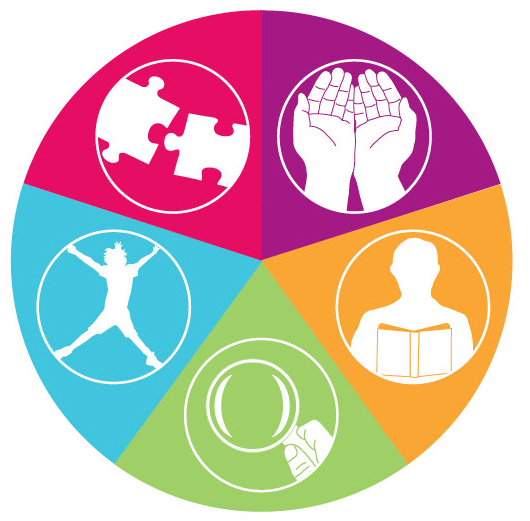
The Five Ways to Wellbeing…….as described in relation to mental health, are a good place to start if you want to increase your wellbeing.

..5 ways


  • Give
  • Keep learning
  • Take notice
  • Be active
  • Connect

This week, in the A to Z of Becoming, we’re at “J for Join”. Joining is one of the ways of connecting. We are not solitary creatures. We couldn’t survive the first few years of life without the care, support and attention of other people, and solitary confinement remains one of the worst forms of punishment which can be inflicted on a prisoner.

So, this week, ask yourself what have joined? Or what would you like to join?

My image at the top of this post was taken when I visited Cassis, in Southern France. Pretty much every town of any size in France has a “Boules” or “Pétanque” court where local people can meet and play together. I don’t know if towns have formal clubs for this activity like the bowling clubs you find in the UK, but even if they don’t, this is still an act of joining. This particular activity also lets you practice noticing and being active (and, maybe even learning!)

Maybe you would like to join with others in a shared activity such as a sport, a game, a pastime, or to celebrate shared beliefs?

Joining is SUCH an important quality of human life.

Read Full Post »

« Newer Posts - Older Posts »