I came across a discussion the other day where various scientists were asked to say which species would take over the Earth if human beings eliminated themselves. (I think the question was provoked by the movie “Planet of the Apes”)
The discussion raises interesting questions for us. What does it mean “take over the Earth”?
In what sense? As one of the respondents pointed out bacteria have already far exceeded human beings in numbers (also in sheer biomass) and in adaptability – there are bacteria everywhere – in the mouths of volcanoes, in ice flows, at depths of the ocean unreachable by human beings and living on, and in, human beings to the extent that about 90% of the DNA found in your body is bacterial.
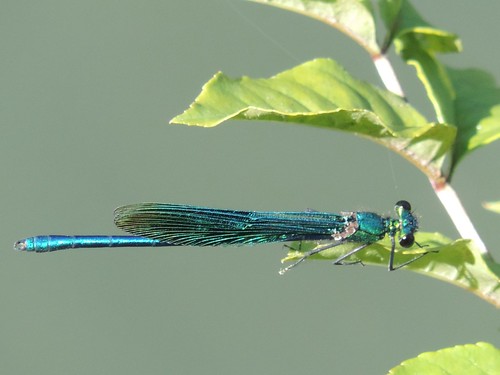
Insects such as ants also exceed humans in biomass and numbers and can co-ordinate activity amongst millions in ways which are just astonishing to human beings.
Many organisms already live many more years than human being do – some species of trees for example live hundreds of years.
So if the question is about colonising, adapting to, and surviving on, planet Earth, we’ve already been surpassed.
Which begs the question about simple evolutionary theory – if evolution is about survival of the fittest with random mutations being selected for, what’s the evolutionary advantage in producing such complex creatures as human beings?
Different species have adapted in extremely different ways. Isn’t it a bit naive to think of human beings as being in control of the Earth in any sense? And isn’t diversity beautiful? And astonishing!
Oh, and when it comes to evolution isn’t it the evolution of consciousness, not survival of the fittest that helps us to understand our place in the universe?

 Heroes Not Zombies
Leave a comment