“Finding your niche”……..what does that really mean?
All living creatures are constantly changed by their encounters. Every interaction is a transformation. Both parties in the relationship are changed in the encounter. We humans alter the ecosystems and landscapes we live in through our actions, and, even, simply through our presence.
We tend to forget that in our mechanised, industrialised, dis-integrated civilisations and societies. The reduction of Nature to an object to be “mastered”, plundered and polluted ignores this basic truth – there is no separateness and we are changed by our encounters with the “other”.
So we co-create our life worlds, or our life spaces. Every one of us lives in our own niche. But niche is not an isolated space. Each niche is embedded in a complex, multi-layered, nested web of relationships and other niches.
There’s a sense in which “finding your niche” is about “fitting in”, or finding an activity in which you can excel. But that’s just a bit too reductionist for my liking.
For me, finding my niche involves becoming aware of influences – of how I am changed by those around me, by my daily experiences and encounters, and by the environments in which I live. That, and the ways in which what I do, say and think, sets off ripples and waves of change around the niches and webs in which I live.
Finding you niche turns out to start with awareness, with noticing, with becoming conscious…….not so much about separateness as about connection.
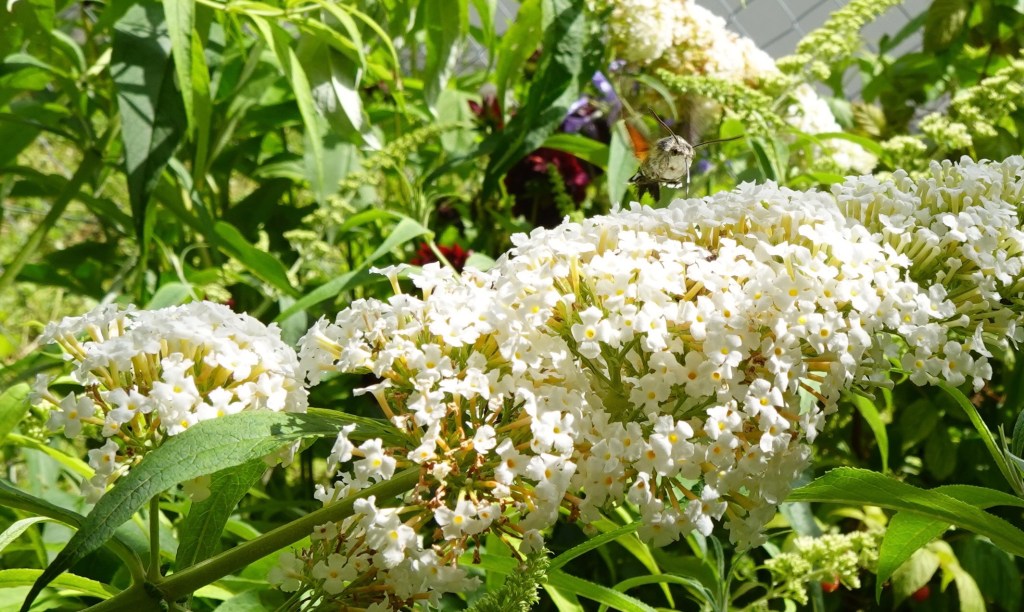
If you look carefully here you will see a hummingbird moth gathering nectar from these buddleia flowers. This little scene is an everyday one for me through the summer months, so it’s a good example of “l’émerveillement du quotidien” which I’ve written about many times on this blog. It’s that French phrase which I find hard to translate well into English, but it means something like “the marvel of the every day”. That’s my experience of life. There is something to be amazed by, something which stops me, and makes me wonder, something that delights me, every single day. In fact, usually, I have several such experiences, and every one of them makes my life richer.
These hummingbird moths are new to me since I emigrated from Scotland. I didn’t even know they existed till my first summer here. Now I recognise the deep thrum of their high speed wings before I see them. Like butterflies they seem to fly randomly, flitting from flower to flower, probing each one with a long thin proboscis. Can you see their incredible antennae? They are simply astonishing, beautiful creatures.
Isn’t it amazing how these bushes, commonly know as “butterfly bushes”, produce these long, tapering bunches of tiny flowers which give off a strong, delightful scent. I don’t know if it’s the scent or the colour which attracts all these pollinators but this mutually beneficial relationship between them makes it hard to imagine the one without the other.
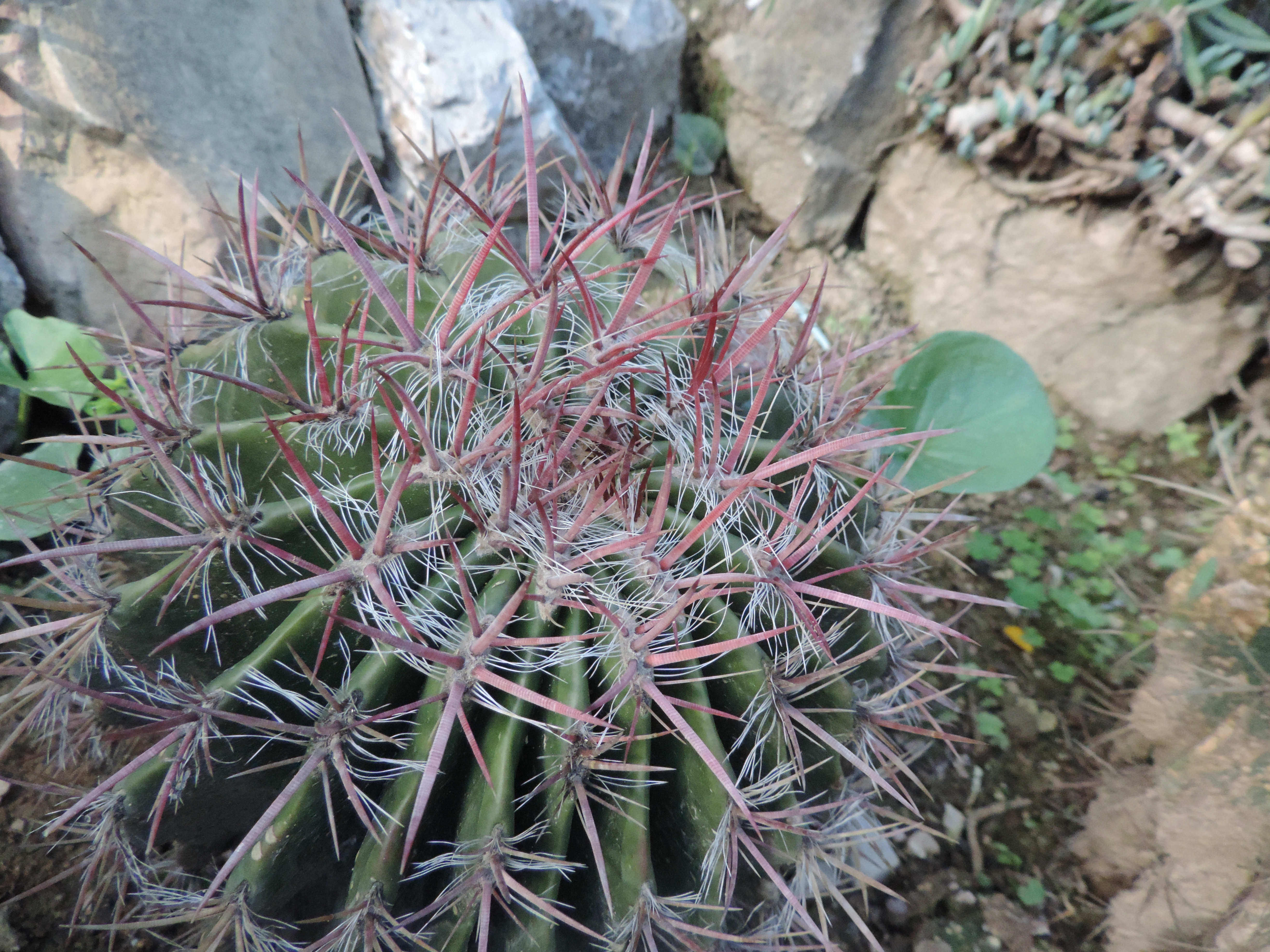
Look at these two photos. The first one is plant with a LOT of spikes on it. You wouldn’t want to reach out and touch it, would you? It’s not exactly inviting you to get up close and personal. The second image is one of Anthony Gormley’s sculptures. If you are familiar with his work you’ll know he often creates his pieces around moulds of either his own body, or the bodies of others. This particular piece was part of a work where he filled a room in a gallery with several items which look just like this. They were all placed pretty close to each other and you had to make your way between them. It was a really uncomfortable experience, and I think that was the point.
Ever since I saw this work of art I’d find it coming back to mind when I met certain people. I’m sure you’ll have met people like this. Prickly people. People who are hard to get close to, and who will send out vibes which let you know that if you don’t keep your distance you’re going to get hurt.
It’s hard to be around people like that. You have to be wary all the time and you never know when you’re going to get stung. Most people, most of the time, aren’t going to make the effort. We give them a wide berth.
I’ve had patients who are like this. They give the reception staff a hard time, and they are often judged by others, dismissed as « troublesome », or « difficult ». But I found that in every single case, in the privacy of the consulting room, in an atmosphere of care and compassion, with non-judgemental, attentive listening, that the spikes are withdrawn, and a soft, hurt, vulnerable soul is revealed.
Because these spikes, whether on a succulent plant, or on a « difficult » person, are there for defence.
There are countless ways living organisms defend themselves. Every one of us develops our own, unique, suite of strategies and deploys them, mostly unconsciously, whenever we feel the need. How often we feel the need will be determined by our stories so far, and fashioned by our experiences, traumas and hurts.
Adaptive strategies became my specialist subject. Once I understood that there are strong links between the ways we cope and the ways we become sick, I began to understand everything from illness, to pathology, to personality characteristics and behaviour patterns as manifestations of these strategies.
Emotions are adaptive strategies, but our patterns of defence function at a whole being level, involving not just our behaviours and thought patterns but the functions of our organs, our body systems, our tissues and our cells. That’s why I preferred to take a holistic approach to every patient. When you look at someone through this lens, you seek the connections which will help both you, and them, to understand just what’s going on, how it might have come about and what they can do to change what they are experiencing.
I don’t think this style of medical practice can be reduced to measurements and algorithms. It’s built on a relationship. A relationship between two people who gradually get to know, and to trust, each other. It’s built on the revelation of stories and the do-creation of the next chapter. It’s personal, takes time, effort and attention.
When I think of how I’d like health care to develop from here, I always think of the uniqueness of every person, the uniqueness of every relationship, and the importance of understanding, not judging, the adaptive strategies of every patient holistically. It seems to me that any system which ignores all that will be inadequate.
But, hey, before I go today, I realise that, as usual, I’ve written from the perspective of a doctor. It’s what I know best. But there are prickly people in all walks of life…..at work, in school, in families. They are difficult to be around and hard to get to know. I suspect we all use a range of ways to cope with them – maybe mostly avoidance! And sometimes “giving as good as you get”. But there is another way, which isn’t necessarily easy. It’s to use compassion, non-judgement and curiosity. Maybe the spikes won’t go away but you might come to know and understand that there’s a lot more to this person than spikiness!
True. But not true. Well, look at it this way, we lived in a richly varied, ever changing world, so be careful when you apply labels to what you see. Generalising can make you colour blind.
Take a few moments and allow yourself to appreciate the colours you see in this photo. Because, I mean, is « green » a good enough word to describe all the colours you see in this sea? I don’t think so.
I don’t really mean you to try and find more labels……to apply a larger list of colour words to the shades you see here. I don’t want you to try and find « more accurate labels ».
Instead I’d just like to share a few moments with you savouring the rich, deep and wide range of colours you can see. Don’t bother labelling them, just notice them. And linger at little.
My experience is, and I hope you have a similar one, that my mind has a tendency to close down once I apply a label. I find that if I stay curious and switch from classifying or « knowing », to savouring or « experiencing » that I see more, hear more, taste more, smell more, feel more…….
I find that staying curious, staying open, slowing down, allows me to experience a richness and a depth in daily life which just never runs out.
The general semanticists have a phrase « judgement stops thought ». Labelling, categorising, classifying, generalising are all forms of judgment. They aren’t bad things to do. In fact, they can be pretty useful. It’s just we have to remain wary of them. Wary of their capacity to blind us, to separate us from reality, and to keep us living in life’s shallows when we could swimming in the deeps.
Yesterday I wrote about resonances – the symmetries, echoes and synchronicities which enrich our lives. So, here’s my suggestion for you today.
Look for, and savour, some resonances.
We spend too much of our lives on autopilot (zombies, not heroes!) and the way to counter that is to become more aware of the present. When we are more aware, we can become more engaged, and can, more consciously, relish and savour the everyday wonders which enrich life.
When we resonate we build and/or experience connection. We connect to what is greater than ourselves. We connect to the rest of planet, we create opportunities to empathise and sympathise with others. We build up our capacity to care and to love.
I think we can find resonances in a multitude of ways – reflections, similarities, echoes, synchronicities, getting « in tune with » and « harmonising with » others.
Try it for yourself today. See what resonances you notice. Be on the lookout for them. Then allow yourself a few moments to savour them. At the end of the day do your own reflection, as you think back over the day and relive any of the resonances you encountered.
What’s your experience? Is your day enriched by resonances?
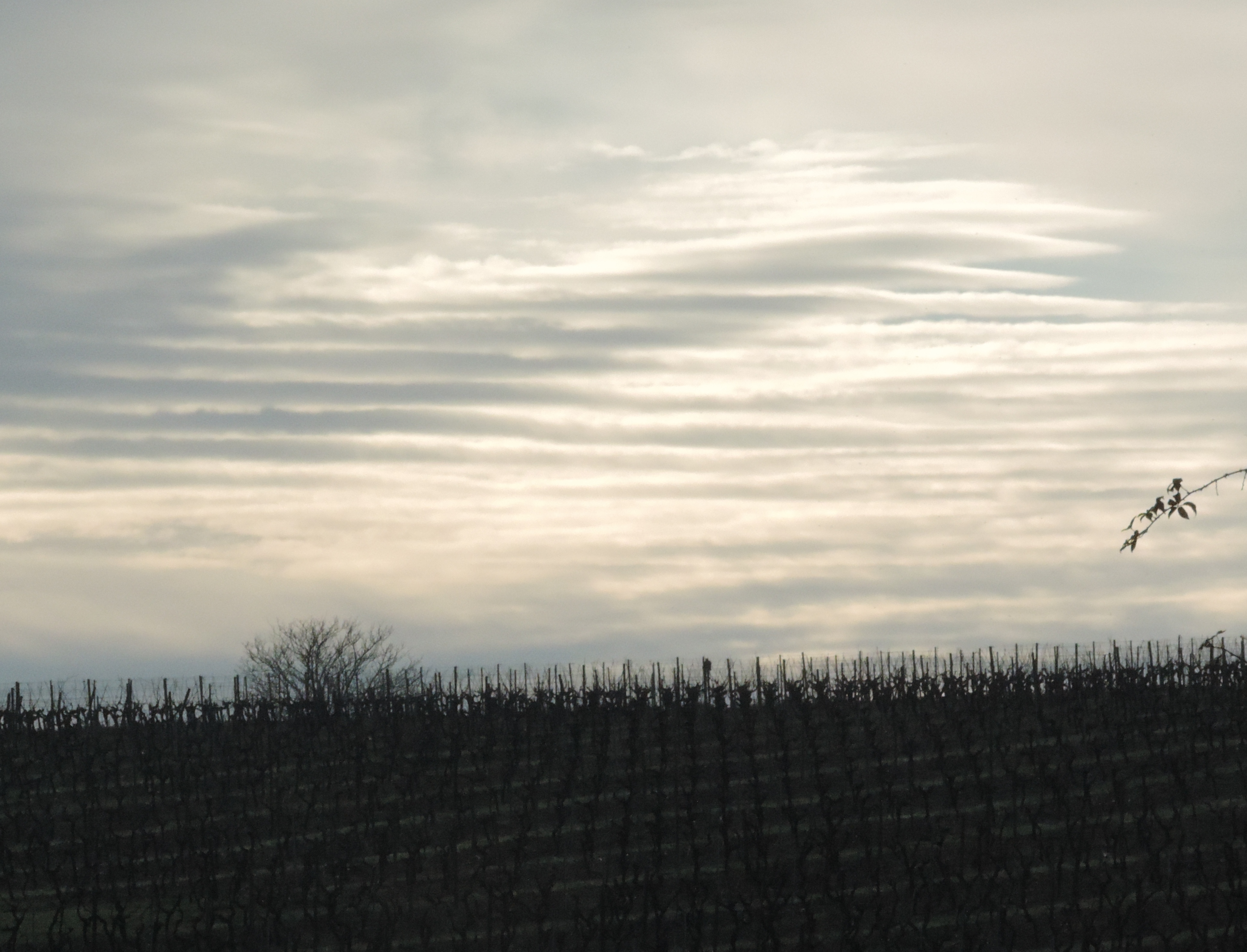
I love the resonances which I encounter in daily life. There are all kinds of resonances. There are similar patterns which occur at the same time, just like in this photo where the linear pattern of the clouds resonates with the linear pattern of the vines in the vineyard. I find that really delightful, particularly because the similar pattern is in two different media – the sky and the land, or the clouds and the vineyard. A common place to see this kind of resonance is at the beach where the patterns in the sand are often similar to those in the sea.
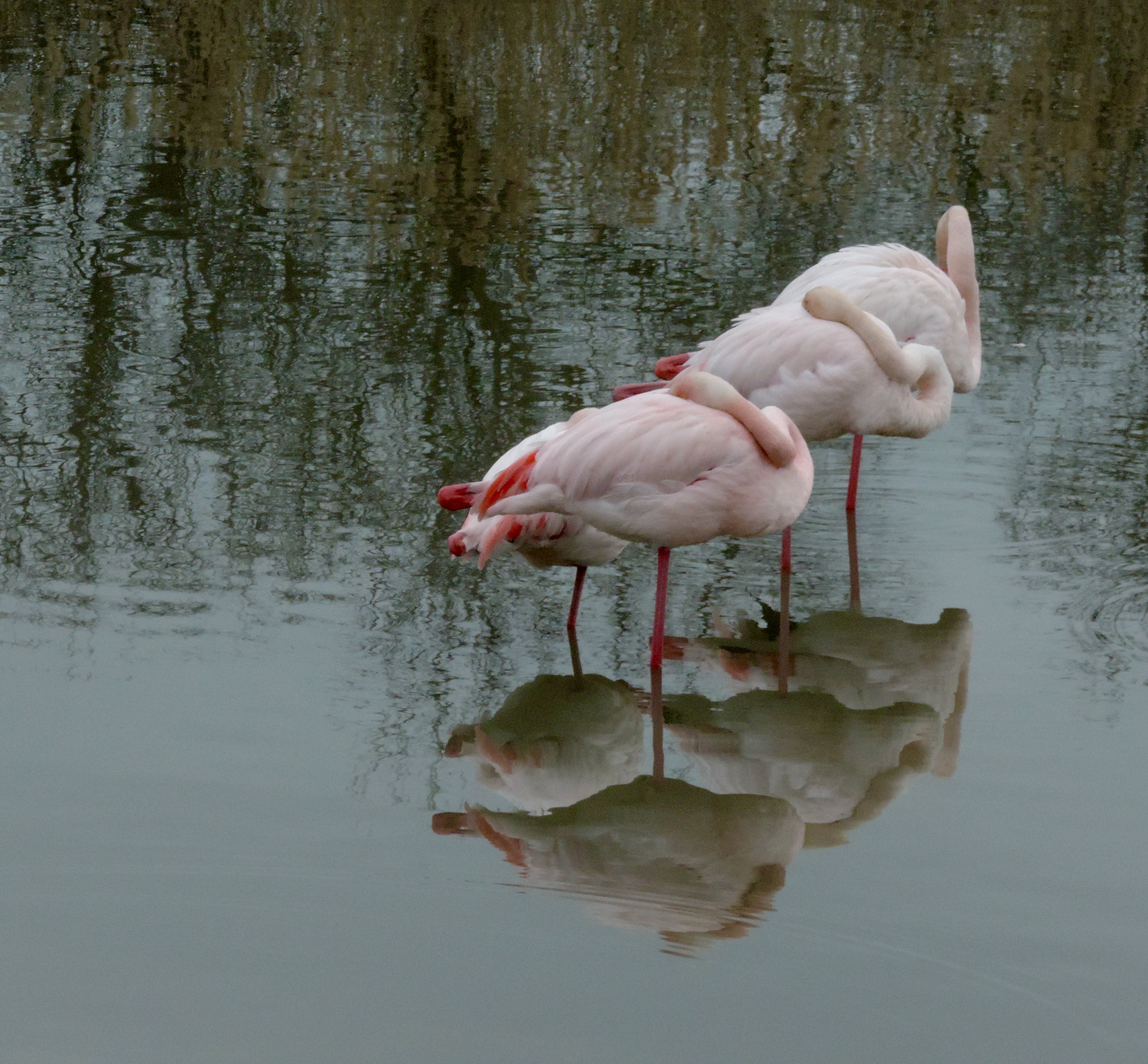
Another kind of attention grabbing resonance is that of reflection. Isn’t it just so beautiful when you see the still surface of a pond, a lake, or a loch, acting like a mirror, reflecting the surrounding flowers, trees and hills perfectly?
But there are also the resonances which are more like echoes or memories……where something we notice reminds us of something else, some other place or some other event.
Perhaps the kind of resonance which excites me most though are the synchronicities which we experience. Those times where something we read comes up in a totally different context, or totally different text. Or where something which is a recent focus of attention seems to find references in songs we hear, stories we read, or other experiences we have.
Still, at the end of the day, the resonances I love the most, are those experiences of connection with others, those moments when we feel « on the same wavelength » or are « in tune » with each other.
Resonances deepen the meanings in our life. They make life feel richer and more significant. They stir us in the depths of our being.
I’ve got a new camera, my first new camera in many years. My old Nikon had started playing up, switching itself off, becoming unresponsive and pretty much every photo I took needed editing afterwards. I’ve gone for a Sony RX100 (can’t for the life of me figure out why camera manufacturers have to give their products such bizarre names, strikes me as a failure of imagination!).
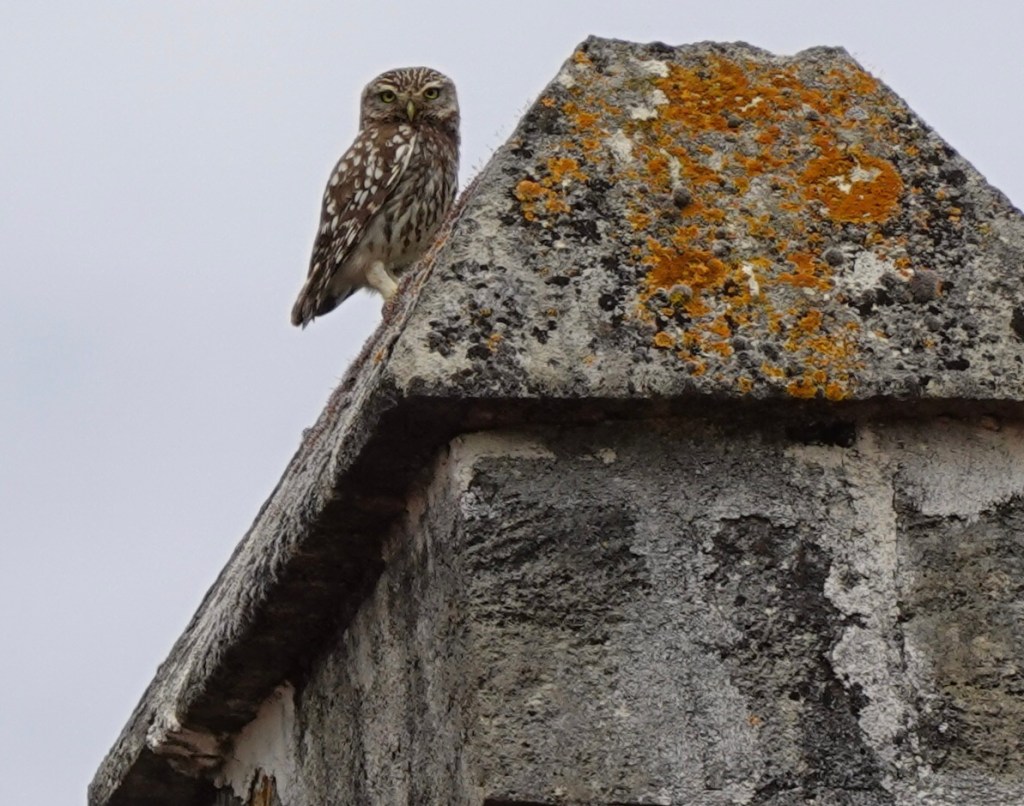
Here’s one of the first photos I’ve taken with it, (yesterday’s pic of Little Owl was taken the same day), and I’m really, really pleased with it. Look at the sharpness of the details.
This photo of a bee seeking nectar and gathering pollen in the process as it buzzes around the flowers of this lovely bramble plant is more than just a pleasing image. In fact, this is the kind of photo to delight me most. I like it for its beauty, but I also like the thought trains it inspires.
Let’s face it, this relationship between the bee and the plant is a superb example of an « integrative relationship ». Remember the definition? An integrative relationship is a mutually beneficial one between two well differentiated parts. This is the essence of health. In fact, it’s the essence of Life. Without these integrative relationships life just couldn’t exist. None of us can survive without others, and without healthy relationships spreading far and wide across a highly diverse web of non-human organisms.
The bee doesn’t have to become more bramble like, nor does the bramble have to become more bee like. It’s not uniformity and sameness which lies at the heart of this success. It’s difference AND the ability to create MUTUALLY BENEFICIAL bonds between them.
Isn’t this a great principle on which to base a society, or, indeed, a civilisation?
We humans haven’t quite managed that yet. We’re still pretty much in the thrall of competition, exploitation, consumption of resources and production of waste.
Mightn’t it be better to swing our attention and energies towards co-operation, mutual benefit, sustainable consumption and the minimisation, if not elimination of waste?
Maybe we need to be a little less arrogant and realise we have a lot to learn from the rest of the natural world.
Here’s Little Owl sitting on the chimney stack of my house. You know, I used to think owls were nocturnal but Little Owl seems to be out and about during the day as well. He’s looking right at me as I take his photo.
I remember reading somewhere that creatures with two eyes facing forward are predators, whilst those with eyes on the sides of their head are vegetarian. Is that true?
Like us, birds pay two different kinds of attention at the same time. One half of their brain allows them to have broad awareness of their whole surroundings, whilst the other gives them focused attention so they can spot prey, or seeds, or whatever food they seek. This combination of broad and focused attention is something we tend to take for granted but it has a huge evolutionary advantage.
Perhaps related to that birds, especially predators, are able to take the view from above, and to zoom in on specifics, as it suits them. Classical philosophers long ago pointed out the benefits of taking « the view from on high » as well as the ability to focus and concentrate. I remind myself of that frequently as I look at both details and contexts…..it’s what I had to do in order to diagnose diseases, and understand the uniqueness of every single patient.
There is, of course, a huge variety of behaviours between different types of birds, but I do think they inspire us to think about that constant paradox of the need to be separate and the need to belong. Individual birds, like this Little Owl, are usually seen alone, whilst others, like starlings, usually turn up in huge flocks. The robin, the redstart and the hoopoe usually appear in the garden alone, or with either a single partner, or a youngster. But the goldfinches, swallows, sparrows and starlings are rarely seen without a whole bunch of family and/or friends around the them! That always inspires me to reflect on those two human needs which we all share – the need to be an individual and the need to be embedded in complex networks of relationships with others…….of how we develop an identity from our individuality AND from the groups of which are a part.
Hey, isn’t it amazing the places the mind goes to when looking at a single owl?
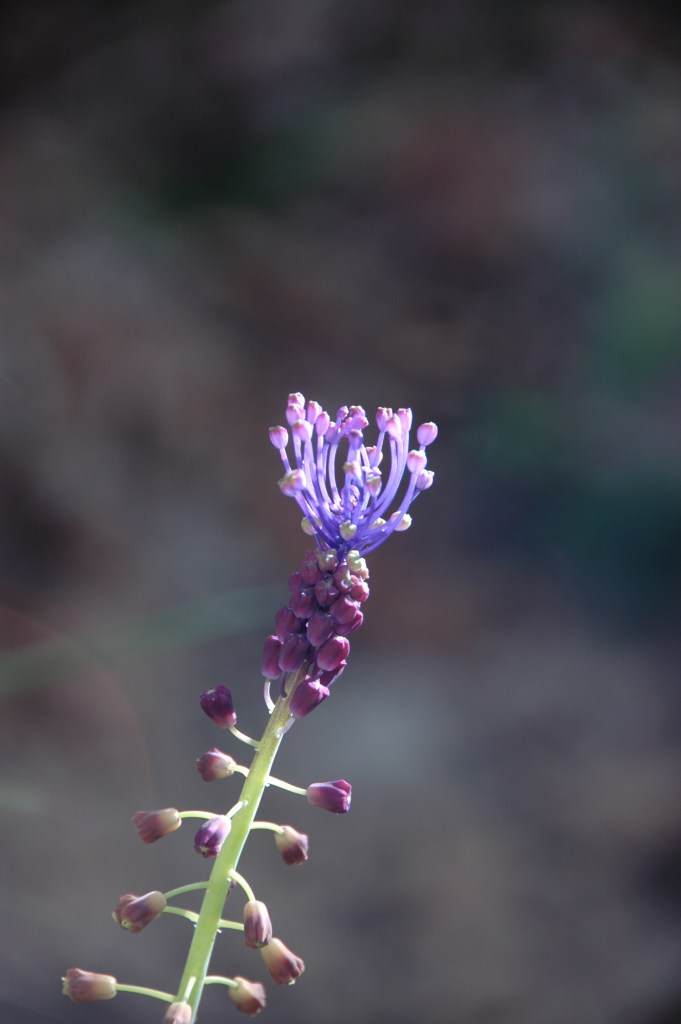
Sometimes a single plant just stops me in my tracks. This one did. Have you ever seen anything quite like it? The combination of colour and form is really something.
I was tempted to simply share this photo with you and tell you, briefly, about my astonishment, but, actually looking at it again just now sets off a train of thought which is never far from my mind. So I’m going to share that too.
I think the plant world is severely under-rated by we humans. Plants evolved before animals did and they’ve managed to establish themselves over the whole planet. In other words they’ve learned how to survive, adapt and thrive a long, long time before we humans did! Not only that but they’ve developed the ability to live sustainably. They don’t use up finite resources and they don’t pollute their environment.
But perhaps one of the most astonishing features of plants is how they can suck what they need directly out of the air and use the Sun’s energy to convert what they capture into stems, roots, leaves, flowers and seeds. Sure they gather some of what they need through their roots but photosynthesis is surely their super power.
We’ve learned fairly recently just how interconnected trees are in a forest, communicating directly but also through an incredible symbiotic relationship with micro-fungi…..to the extent that their networked way of living has been called the “wood wide web”.
But there’s more!
Think of the vast diversity of methods used by plants to have their seeds fertilised and disseminated. And how they use colour, shape and scent to attract pollinators and deter predators.
I’m not saying we need to turn into plants but surely the plant world is an abundant source of inspiration. There’s a whole movement now called biomimetics which looks to nature to learn how we might solve our problems.
Think of how all of our food is dependent on plants, and how a plant based diet has been shown time and again to be the healthiest one.
Finally, we’ve only scratched the surface of the healing power of plants.
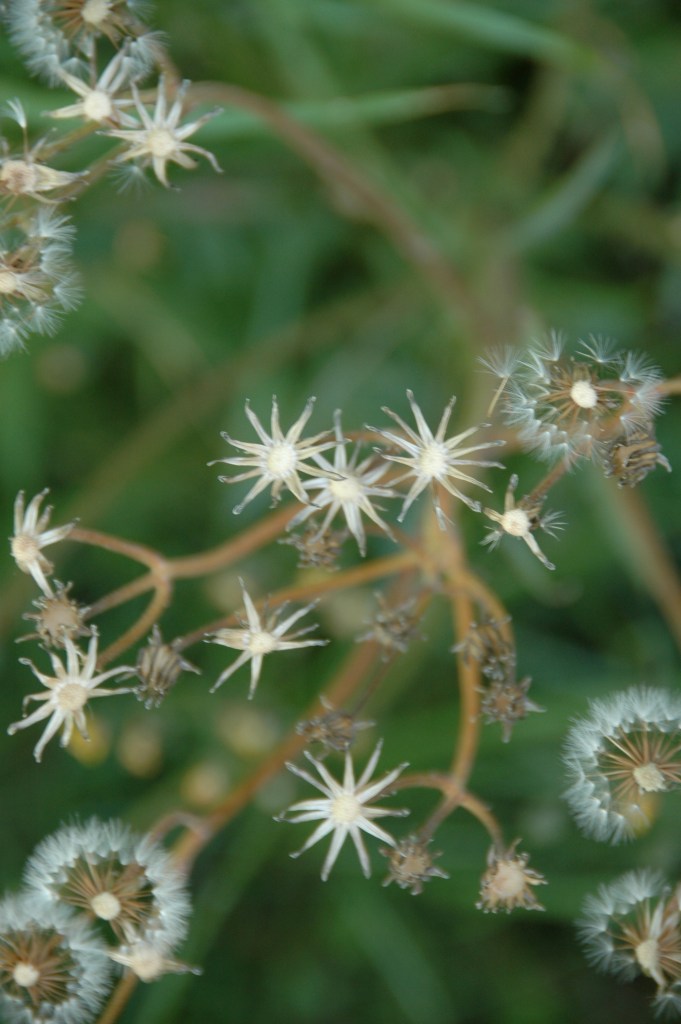
When I look at this photo I think of both seeds and stars. It looks like a constellation. I find myself gazing at it for ages seeing a pattern but not able to name it.
I’ve often wondered about that when I’ve learned the constellations in the night sky. How did a “W” shape come to be seen as a queen (Cassiopeia), and how did that other cluster of stars become “seven sisters”? It often seems that the imagined image is way more elaborate than the actual grouping of a handful of stars.
And yet, those patterns, once learned, can’t be unseen. Every winter I watch Orion rise in the East and make his way across the night sky to the western horizon, knowing that come late Spring I won’t see him again until next winter.
So when you look at these star-like seed-heads what do you see? Do any images form in your mind?
I also think there’s a nice symmetry between seeds and stars. Seeds, it seems to me, speak of the future. Every seed is full of potential. A potential which may or may not be realised at some future date. Stars, on the other hand, are so far away that their light takes many many years to reach us, so star gazing is a kind of witnessing of the past. As if right now, you are seeing what was happening on those stars many years ago.
But let me turn that around 180 degrees. Seeds contain the past, their genetic heritage is the result of millions of years of evolution and dozens of generations of ancestors. Stars, on the other hand, have been the source of imagining the future for many civilisations. Human beings have used the regular patterns of the movements of planets and constellations to know when to plant and when to harvest, to know how to navigate their way across the face of the Earth, and, also to make predictions about events in individual lives.
In both these views, seeds and stars stir both our memories and our imaginings.
I welcome constructive criticism and suggestions. I will not, however, tolerate abuse, rudeness or negativity, whether it is directed at me or other people. It has no place here. ANYONE making nasty comments will be banned.





 Heroes Not Zombies