Feeds:
Posts
Comments

Archive for June, 2022

Moderation. It’s an old teaching isn’t it? From “you can have too much of a good thing”, to common advice to moderate any kind and food, drink, or anything else in fact! But it’s not a very attractive quality, in that it lacks excitement; it’s the antithesis of passion.

“Follow your passion” might be a popular teaching, but who says “follow your moderation”?

Montaigne didn’t like extremes. It was popular in the sixteenth century for people to admire states of ecstasy, particular in poetry, fighting and falling in love. The idea was you should go “all in” in those pursuits but he didn’t go along with that.

The qualities he valued were curiosity, sociability, kindness, fellow-feeling, adaptability, intelligent reflection, the ability to see things from another’s point of view, and goodwill.

I’m with him on all of that!

He never aspired to be some kind of hero, and was suspicious of people who had high, lofty, ambitions. He said…

Living appropriately is our great and glorious masterpiece.

One of my favourite tarot cards is “Temperance”….it’s a lovely image of flow, of balance, and, hey, of moderation.

I suppose the great thing about moderation or temperance, as portrayed in this image, is balance…..balance and flow. The liquids pouring from one cup to another and back again, the character with one foot in water and one on dry land.

There’s a special kind of balance which I really like – integration. When things are integrated they achieve a creative, productive, healthy dynamic balance. That concept didn’t exist in Montaigne’s day but it’s the modern day equivalent of his “temperately”.
Read Full Post »

Habit makes everything look bland; it is sleep inducing. Jumping to a different perspective is a way of waking oneself up again.

Montaigne believed that habits of thought, habits of culture, and social habits all numbed him. He countered this tendency by seeking out new people to talk to, reading about customs and beliefs from other countries and keeping hold of the central principle of wonder – he loved to be amazed, to be astounded, to marvel!

The right hemisphere of the brain has a particular predilection for novelty and for uniqueness. It’s the active agent of our tendency to wonder and to marvel, which is a two way process…if we want to rebalance our cerebral hemispheres (which I think we should) then exercising the right hemisphere is a good way to do that, so we can set off a positive feedback loop. The more we actively wonder, be curious and amazed, the more we are using and developing our right hemisphere, and so, the more readily our whole brain slips into wonder, curiosity and amazement.

It’s hard to see what our own habits of thought and culture are, which is why it’s especially helpful to encounter different ones from our own….another reason to be aware of social media echo chambers.

I’ve been fortunate to have had opportunities to teach in many different countries and one of the greatest gifts of that has been a chance to encounter different cultures and habits. I’ll return to that when we discuss the benefits of travel, but what I found by teaching in different cultures was that I became much more aware of my own favourite habits – which gave me the chance to adopt new ones, drop some old ones, or reaffirm the ones I consciously chose to continue.

It’s another great example of “heroes not zombies”…..waking from the sleep of habit through conscious encounter with the other, with difference.

Read Full Post »

We humans are social creatures. We have evolved that way. We are born that way. Our brains are “wired” that way. Our brains grow that way.

I am all in the open and in full view, born for company and friendship.

Montaigne thought conversation was better than books. He loved to talk with people who were very different from himself, from different backgrounds and cultures, people who held very different views from himself. This last point is very important – and it is SO different to what floods social media where people withdraw into echo chambers of like minded others and when meeting people with contrary views can only insult and threaten them.

Why did Montaigne like to converse with people who thought differently from himself? Partly to discover other ways of thinking, other ways of living and partly to provoke his own self reflection – NOT to “win” arguments or convince others of his own opinions.

No propositions astonish me, no belief offends me, whatever contrast it offers with my own.

How different is that??!

Nietzsche picked up this perspective from Montaigne and in “Human all too human” wrote…..

Among the small but endlessly abundant and therefore very effective things that science ought to heed more than the great, rare things, is goodwill. I mean those expressions of a friendly disposition in interactions, that smile of the eye, those handclasps, the ease which usually envelops nearly all human actions.

This is my experience of life. I believe that because I approach others with goodwill and a smile it’s my repeated experience that others are friendly and kind. I find other people fascinating – which was the foundation of my work with patients – but which also colours my everyday encounters.

Montaigne lived in a dangerous time of civil war but kept his house open to others encouraging strangers to come in and meet him. He didn’t suffer the violence so many others did. He quoted Seneca –

Locked places invite the thief. The burglar passes what is open.

Of course, such openness is no guarantee of safety but this reminds me how we created a reception area in our GP Practice which had a wide but open counter as we thought putting ourselves behind screens was more likely to stoke aggression. In my four decades of work I encountered not a single episode of threat, abuse or violence. Maybe you think, but times have changed, and maybe they have. I do think health care has become de-personalised. Tasks, outcomes, protocols etc seem to have squeezed out continuity of care and personal, long term relationships in Medicine. Maybe that’s made a difference – a difference, but not a good one.

Montaigne’s goodwill extended to animals and plants as well.

All humans share an element of their being and so do all other living things. It is one and he same nature that rolls it’s course.

We owe justice to men, and mercy and kindness to other creatures that may be capable of receiving it. There is some relationship between them and us, and some mutual obligation.

As Sarah Bakewell says at the end of this chapter – “We live porously and sociably. We can glide out of our own minds, if only for a few moments, in order to occupy another being’s point of view.”

Beautifully put. What a great example – to be curious, to want to learn from others, to self reflect and to act, as much as possible, with goodwill to all other living beings.

Read Full Post »

Chapter 8 in Sarah Bakewell’s book takes its title directly from Montaigne.

We should have wife, children, goods and above all, health, if we can; but we must not bind ourselves to them so strongly that our happiness depends on them. We must reserve a back shop all our own, entirely free, in which to establish our real liberty and our principal retreat and solitude.

Montaigne meant this both literally and metaphorically. Let’s take literally first. If you visit Montaigne’s chateau today you can explore the tower at one end of the building. He created a chapel on the ground floor and his library on the floor above. This was his part of the house, where he had solitude and privacy. His mother lived in the main house, and his wife had a tower of her own at the opposite end of the building.

When I visited and read about this arrangement I was reminded of Virginia Woolf’s “A room of one’s own”. In my house I have a study where I have my library, where I can read, think and write. However, most people don’t have that luxury. Many people’s homes are too small to let anyone in the family have a room of their own – apart from a bedroom perhaps, which can, perhaps, also provide this “private space” function.

There’s another way to enjoy solitude and privacy, a way I frequently recommended to patients – the Artist’s Date. I read this idea in Julia Cameron’s “The Artist’s Way”. Here’s what you do.

Schedule an event in your diary, the same way you would for an appointment with a someone, or for a meeting. The event should last for at least an hour, but could be a morning, an evening, or even a whole day…..whatever works for you.

This is event is YOUR date. You protect it and respect it the same way you would any other appointment you’d made. If someone asks you to do something at that time, you say sorry, you have a prior engagement.

There are two rules about this date – you have to do it alone. If you want to spend time with someone else, then arrange that for another time. The Artist’s Date is YOUR time. Secondly, you must spend it doing something you enjoy. It can be a visit to a park, or a gallery, or a time to paint, to write, to play music….whatever it is that you enjoy. You can’t use the time to tick items off your To Do list, to catch up on housework or plan some work. It’s time to enjoy, time to play.

You can repeat this as often as you want and is viable for you….once a week, once every couple of weeks, or whatever.

Let’s consider the metaphorical now. The private space, or “back shop” he referred to was a kind of non-attachment. It was about not grasping too tightly onto anything or anyone. Montaigne could manage this to the point of seeming aloof or detached. But if you look at his life as a whole you would see a man deeply engaged with others, playing games with his family, as well as standing apart, in his own tower, at other times.

There’s a healthy balance to be found between private time and non-attachment and communal time and engagement. And the “right balance” is different for different people. But we all need some space, and some head space, to ourselves.

Read Full Post »

By “use little tricks”, Sarah Bakewell means mental exercises. She’s describing Montaigne’s philosophical practices in this chapter, and most of them come from Epicureans, Stoics and Sceptics. All three of these traditions from Hellenistic philosophers concerned with how human beings could live a good life. A good life involved finding eudomania, which is often translated as happiness or joy, although I prefer the term “human flourishing”.

The Epicureans and Stoics often recommended very similar ways to achieve this. They both promoted a combination of controlling the emotions and living, with awareness, in the present moment. Each school had its own recommendations on how to achieve this, and Montaigne did what many people today do – he mixed and matched, choosing practical “exercises” or “tricks”, such as the ones about visualising your own death in order to prepare for it which I mentioned in the post on death.

I’ve come across several of these exercises since coming to live in France, for example, in Pierre Hadot’s “Spiritual Exercises”. Like Montaigne I’m not a fan of the visualising my own death, but I have often used others you might be familiar with.

One of my favourites is “The view from on High”, where you imagine climbing a hill and looking back down on yourself so you can see your life in a larger context. In fact I had a spontaneous experience of that shortly after starting university. I grew up in Stirling and left home at 18 to study Medicine at the University of Edinburgh. After leaving my childhood home to return to Edinburgh on the first weekend visit back to see my parents I had a sensation of leaving my body as I walked along the road to the railway station. It was as if I was flying high above myself and I could see the physical me below. I looked tiny! Really tiny! And had an emotional surge of recognition that I was one small person heading out into a much larger world.

There’s a variation of “The view from on High”, called “The view from Sirius” where you imagine you come from another planet and you’re visiting Earth for the first time. In fact I remember that exercise, although not by that name, being recommended by Stephen Spender in his “Life of a Poet”. He was, of course, encouraging poets to see everything as if for the first time.

That leads me to two of my other favourite exercises – one to approach today in the knowledge that every experience will be for the first time. You’ll never have had the exact same conversation with the exact same person before today (although with some people it can feel that you keep having the same conversation again and again!). Couple this with approaching today in the knowledge that this will be last time you experience whatever you encounter today.

Taken together, “First and Last” get you to pay attention and live with greater awareness, and in so doing increase your opportunities to “savour the day”.

“anyone who clears their vision and lives in full awareness of the world as it is, Seneca says, can never be bored with life”

I’m never bored. Never. “Heroes not zombies!”

There’s really a lot to explore in these old teachings. I’ll finish this post with another of Montaigne’s favourites….

Nature has its own rhythms. Distraction works well precisely because it accords with how humans are made: Our thoughts are always elsewhere. It is only natural for us to lose focus, to slip away from both from pains and pleasures, ‘barely brushing the crust’ of them. All we need to do is let ourselves be as we are.

That reminds me of the teaching I received when learning TM meditation – when you realise your mind has drifted away from the mantra, just gently return to the mantra. A lesson with wider application than just meditation practice.

Read Full Post »

The third of Montaigne’s preferred ancient philosophies was Scepticism. There have been a number of flavours of scepticism through the ages but all are based on doubt – knowing you can never know everything so you can never be certain.

Actually there’s a modern version of scepticism which seems to consist of being absolutely sure that what someone else believes is nonsense. I’ve had a few run ins with that brand of scepticism over the years, as they seem utterly convinced it’s impossible that my patients could ever improve when treated with homeopathy. Such conviction has always seemed to me to be the opposite of scepticism.

I’m a sceptic in the way Montaigne was a sceptic. I like to question things because I know none of us can ever have complete and final knowledge of anything.

“he [Montaigne] filled his pages with words such as ‘perhaps’, ‘to some extent’, ‘I think’, ‘It seems to me’, and so on”

I completely resonate with this!

Sarah Bakewell writes….Montaigne had a deep need to be surprised by what is unique, what cannot be categorised, what is mysterious.

Again….this is me! I loved my Monday mornings at work because I knew I’d be meeting some new patients, each one of whom would tell me a story I’d never heard before. People never cease to astonish me and I’d be repeatedly amazed by how individuals had coped, and how they found ways to heal and/or to flourish. I hated the way some doctors would reduce patients to their diseases, seeing them as mere examples of this diagnosis or another. I loved how human diversity constantly eluded categorisation.

Combined with this is my deep understanding that we can never escape our own subjectivity. I will always experience and interpret my life through my personal lenses. And you will, yours. Yet, in the core of that we find much in common with each other and are able to establish strong bonds. Montaigne put it this way…

There is no use our mounting on stilts, for on stilts we must walk on our own legs. And on the loftiest throne in the world we are still sitting only on our own rump.

Another aspect of Montaigne’s take on scepticism with which I agree, was his understanding that the only constant in the universe is change so no knowledge is ever fixed or complete.

We, and our judgement, and all mortal things go on flowing and rolling unceasingly. Thus nothing certain can be established about one thing by another, both the judging and the judged being in continual change and motion.

Becoming not being, folks!

Read Full Post »

Oops!

I seem to have got a little out of sequence somehow publishing todays post along with yesterdays, yesterday!

So, just to be clear, yesterday was How to Live: 4, and todays is supposed to be How to Live: 5.

Look forward to part 6 in this sequence tomorrow! See you again then, if I’ve got the WordPress publishing sequence back on track!

Read Full Post »

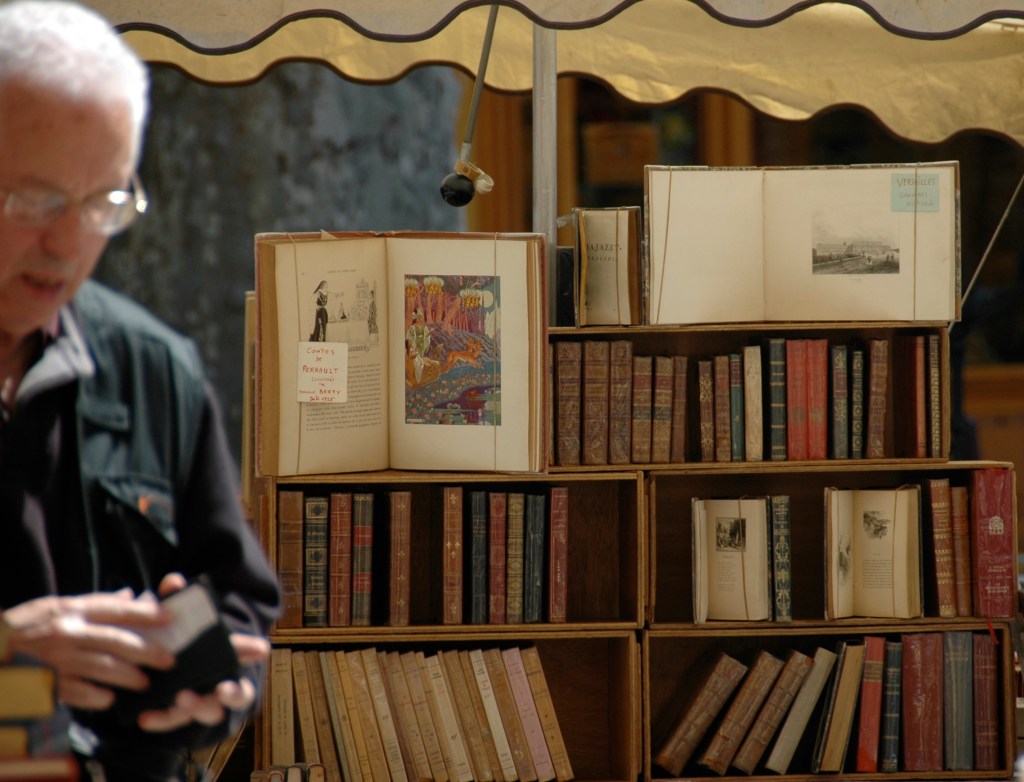
Montaigne had a library of over 1000 books. His preferred reading included history, biographies and ancient Hellenistic philosophers. He always claimed a relaxed an easy approach to reading. His father taught him that “everything should be approached in gentleness and freedom, without rigour and constraint”. He would browse books casually, only reading what really interested him or brought him pleasure.

He claimed “Forget much of what you learn” and “Be slow witted” were his core principles, which, at first glance, seems somewhat odd. However, what he actually did with these principles was to apply what Buddhists would call “Beginners Mind”, an approach which is humble, open minded and doesn’t cling to whatever we encounter.

Combine this with his paying attention to the present moment and you can see why people who adhere to the modern “Slow Movement” find a soul mate in Montaigne.

This approach to reading is very right hemisphere. Our left hemisphere grasps and clings to whatever it encounters. It is, what Iain McGilchrist terms as “sticky”. It doesn’t want to let go. The right, on the other hand, is open to what’s new, what’s particular and what’s personal.

I don’t think Montaigne really forgot as much as he claimed he did. After all he was brilliant at weaving the teachings of the ancients into his essays, and he managed to recall details of past experiences with great clarity. Still, it’s an important principle. You could say it’s another Buddhist principle – non-attachment. Honestly, I can’t tell you just how many notebooks I have filled with passages I’ve read. I’m also a bit of a highlighter or underliner of certain texts, which is another way of finding the phrases I really liked.

I’m not slow witted but I do like to take my time to reflect and I have always realised how limited my knowledge is. There is always, but always, more to learn about everything.

Read Full Post »

With his reading and writing Montaigne often adopted the habit of dialogue, not least with his best friend of all time, La Boetie, the author of “On Voluntary Servitude”, who died in his 30s.

La Boetie and Montaigne were the best of friends. John O’Donohue would call them “anam cara”, soul mates. They intensely identified with each other and in sixteenth century France it was common for young men to form such intense bonds with each other, maybe echoing their heroes, the ancient Greeks. They wrote passionate love letters to each other and had no hesitation describing their relationship as one based on love.

I’m not sure we use the word “love” enough these days, although I could also argue we’ve devalued it by using it too much! My own belief is that there isn’t enough love in this world, and the strongest relationships I’ve formed throughout my life are all based on love.

It’s therefore no surprise that when La Boetie got sick, deteriorated over a few days, then died with Montaigne at his bedside, that both the impact of his love for La Boetie and the depth of his grief at his death, remained with him for the rest of his life.

Seneca said we should identify “some admirable man” and “visualise him as an ever present audience”. Montaigne applied this teaching to his own life, and La Boetie was his chosen admirable man.

I read this chapter the same day I listened to an episode of the Emergence magazine podcast, “Navigating the Mysteries”, with Martin Shaw, where he recommends using our imagination to dialogue with individuals we admire and respect, whether they are alive today, or long since gone, or even fictional characters.

I think that’s a fascinating idea….to pick a favourite character, fictional or real, and dialogue with them. I think I might give it a go. Who would you choose for such an exercise?

Read Full Post »

Possible answer number 3 in Sarah Blackwell’s book about Montaigne, “How to Live”, is entitled “be born”.

At first, I thought this was a joke, like the one that goes “Q. What’s the first thing you have to do before getting off a train? A. Get on it”

However it turns out to be a very thoughtful piece on the circumstances of our births. By circumstances I mean the parents we are born to, as well as the social and cultural situation into which we are born.

How much of your mum or dad do you recognise in yourself? Whether it’s due to genetics or family socialisation, there will be aspects of your personality and behaviour which you may recognise in your ancestors (from parents, through grandparents and so on). That’s a common thread in the BBC’s excellent “Who do you think you are?” series. Time and again the person tracing their family tree discovers ancestors who had strikingly similar occupations or traits to their own.

Of course, it’s not all about having similar characteristics to our parents, or grandparents. Sometimes the next generation goes the opposite way….perhaps in reaction to their experience of how they were parented.

One of my grandfathers was an avid reader and read me stories frequently (including Walter Scott’s Tales of a Grandfather). Did he pass on that love of reading, storytelling and history, to me (traits not shared with his daughter, my mum)? It seems he did. I even learned he used to give talks with a “magic lantern”, something I used to recall as I’d head for a venue with my laptop and projector in hand.

It’s an important point. How we live is enormously influenced by the contexts of our existence. By our roots. That isn’t to say they are set in stone and I don’t accept it in a fatalistic way, but I reckon if I want to understand myself, or someone else, then I need to take into account the circumstances of early life, the “family history”, the social and cultural influences.

In that sense, how we live, is better understood by learning about our origins, and our early years.

This also makes me think of what I’ve learned about attachment theory and neural development…..how a healthy attachment style with the primary carer in the first few months of life can influence the development of the brain, including the number of interconnections formed between the neurones. Those early months and years can also set up inflammatory patterns if there is poverty, poor nutrition and a lack of safety at that time. (Something known as the “allostatic load”). So the patterns of chronic illness which can appear in adult life can often be traced back to those early years.

Read Full Post »

« Newer Posts - Older Posts »