Feeds:
Posts
Comments

Archive for 2022

Art and feeling

I see a chance of giving a felt impression of what I see.
Not always literally exactly – rather never exactly – for one sees nature through one’s own temperament.

Vincent Van Gogh

Isn’t this what art does? Each work of art is the creation of a person who was seeing and feeling something. It’s the result of an individual, unique experience which conveys something perceived and something felt.

As Van Gogh writes, we see nature through our own temperament. I’m sure you’ll have had experiences like that. An upset, a grieving, a sadness, a hurt which colours every waking moment and permeates every dream. In that “temperament”, nothing pleases, nothing seems beautiful or wonderful. Or, the reverse, where we are in a state of joy and security and delight, where we find beauty everywhere and even the mundane seems enchanted.

So this is what art does – the great artist (painter, sculptor, musician, writer, poet) turns their experience into a work of, what Deleuze referred to as, sensation. A sensation so filled with precepts and affects that many years later the viewer, listener, reader, can be touched by that very sensation and, perhaps see the world in some way like the artist did, but most importantly will feel something of what the artist felt.

I think it was the psychiatrist, Dan Siegel, who wrote about a patient who didn’t say, “thank you, I was listened to”, but “I felt, felt”. We want to be understood, to be seen and heard, but at a deeper level, what really counts, is feeling….when we have that experience of sharing a feeling we know we have touched something deep, something deep. We know we’ve made a soul connection.

Read Full Post »

Astonishment

The philosopher, Mary Midgley, wrote “Ralph Waldo Emerson once asked what would we do if the stars came out only once every thousand years. No one would sleep that night, of course. The world would create new religions overnight. We would be ecstatic, delirious, made rapturous by the glory of God. Instead, the stars come out every night and we watch television.”

Have you ever been out in the countryside on a clear night? Far from city lights. The sky looks amazing. It is astonishing. To see the Milky Way, our home galaxy, spread across the black sky above our heads, to identify “the plough”, “Cassiopeia”, the “seven sisters”, a planet or two…..it is ALWAYS a thrill. It’s one of the best ways I know to be amazed, to slip into wonder, to feel your boundaries dissolve as you experience the reality that All is One, and One is All.

Patrick Curry writes, “Wonder, enchantment, astonishment, delight, joy – these are experiences that are not, and cannot be, simply willed into existence or manufactured on demand. They are not under control, not something we do but something that happens to us…..It cannot be tested, evaluated, improved, rolled out or developed, and there can be no system or method to achieve it.”

Wonder, love, joy…..all delivered to us by the universe when we live with open hearts, ready to receive.

Read Full Post »

Spirals

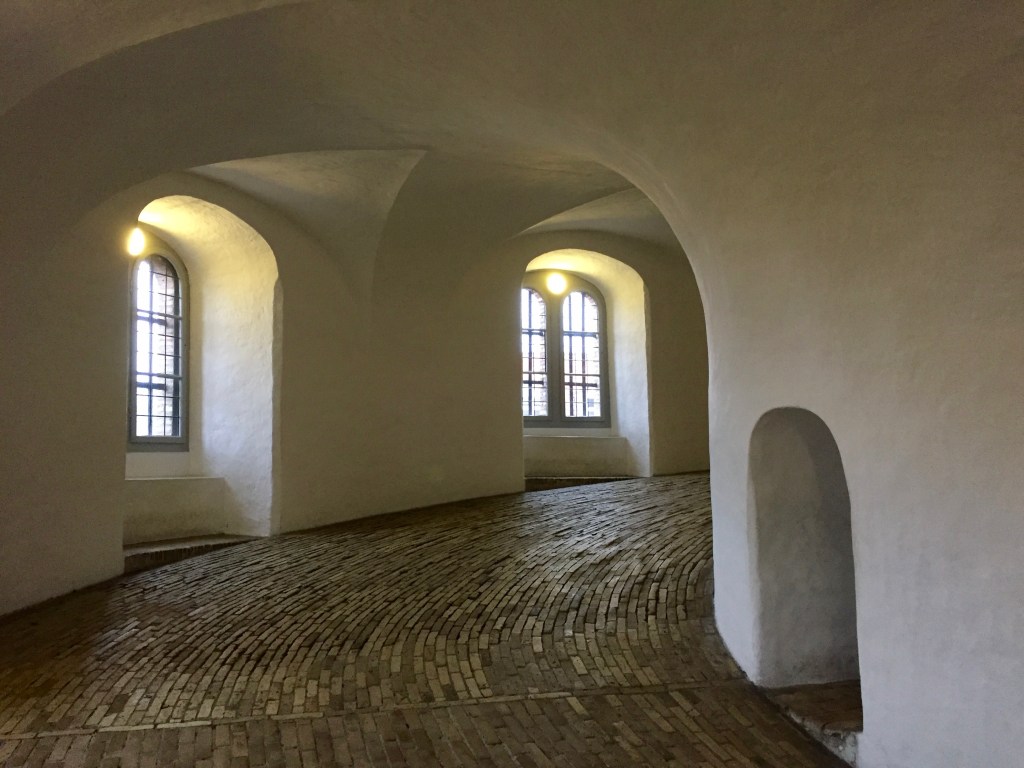
The tower in the middle of Copenhagen has this incredible roadway spiralling upwards. It allowed horses and carriages to ascend to the rooms above. I think it’s the only tower I ever climbed which had a road inside it!

As you ascend you see all around the city through the windows, passing 360 degrees again and again, each time at a different level, so at each window, even if it affords you a view in a direction you’ve already looked, what you see will be different.

I think this is a great physical, active metaphor for Life. We often seem to revisit the same issues or to experience the same problem again. It can feel like we are making no progress, that we are going round in circles. But, in fact, we don’t go round in circles and we never have the exact same experience twice. Rather we follow spirals, each time coming round again to a similar issue or problem, but because both we and the world we live in continuously change, every encounter is actually very different – even when, at first, it seems the same.

The cycles of life are less like circles, more like spirals. And we should be careful not to snooze too deeply into familiarity, because nothing truly repeats itself exactly.

Zombies might walk in circles, but we humans ascend in spirals.

Read Full Post »

Facets or factors

This beautiful multi faceted sphere always inspires me. It reminds me how wonderfully complex we humans are. When a patient would come to me with a problem I was always aware there would be many sides to the story. To focus solely on one aspect of their illness would always be a mistake. I had to take the time to help them tell their whole story and to unravel the many different influences and factors involved in bringing about their current illness.

I recently read about “The Invisible Kingdom. Reimagining chronic illness”, by Meghan O’Rourke. The haven’t read it yet but I’ve listened to a couple of interviews with her and she describes the real epidemic of chronic illness affecting society and how our current health model doesn’t enable us to address it effectively. Everything I’ve heard her say resonates with me.

I’ll pick up a couple of points here. She stresses the importance to patients of being heard and seen, of being believed and not dismissed as mentally ill if there are no abnormalities found in their physical tests. I would say every single week without fail, I and my colleagues were told by patients “You are the first doctor to have really listened to me”, or “I’ve never told anyone what I’ve just told you”. The patients we saw all had chronic illnesses and the vast majority had exhausted all the other services before coming to us to try the homeopathic or integrative approach. Our emphasis on non judgemental listening over the course of a one hour consultation was surely the key to facilitating this kind of experience. Meghan O’Rourke points out that clinics based on ten minutes appointments are never going to manage to achieve this kind of outcome, and, although some would say it’s not possible to change that I believe we should push for it, just as we should keep demonstrating the benefit of continuity of care. The problem is there are not nearly enough doctors. The solution is to train and retain far, far more doctors.

Another important point she makes is that we live in hyper individualised societies and consequently we pay far too little attention to the individual’s connections – their relationships and environments. If we know poverty predisposes to ill health we should tackle poverty. If we know poor housing contributes, precarious poorly paid jobs, discrimination and poor education contribute we need to address all of those. Surely Covid has made that even more obvious than ever. If inadequate ventilation of workplaces and public enclosed spaces promotes the spread of viruses, let’s invest in clean air technologies and practices. If a cocktail of endocrine inhibitors saturate our water and our air, let’s address that. If the agrochemical industries produce and market obesogenic, poor quality food, let’s tackle that.

We are seeing huge increases in chronic disease in our so called developed societies. Surely we need to consider a lot more facets/factors than we’ve been doing if we want to create better, healthier lives for more people.

Read Full Post »

The maps we make

We humans are sense making creatures. We don’t just see, we notice and we observe. We are primed to see patterns, to create associations between the different elements in a scene, to create narratives out of our experiences, weaving together the threads of events into rich unique tapestries of meaning.

We use certain patterns again and again, calling them up to see how well they fit the latest experience or scene. Maps are a particular class of such patterns. We use maps to see where we are, where we’ve come from, where we might go, and how we might get there.

Dan Siegel, the author of Mindsight, describes how, amongst many other things, we use our frontal lobes (the parts of the brain just behind the forehead) to create three kinds of map – a “me” map, a “you” map and a “we” map as we create a sense of self, recognise others and know what to expect in any particular relationship.

There are often times in a life history when we feel lost. Not lost geographically perhaps, but not knowing who we are, where we are in our singular story, or where that story is heading. It’s at times like that we might need both a map and a guide….someone who can help us see more clearly the answers to those questions.

I think there are two important things to remember about all this – “the map is not the territory” ie our maps are abstractions, created from only some of the possible elements of reality. Our life story, for example, can look very different depending on how much weight we give to certain events, something which allows us the possibility of creating a more satisfying story if we want to. And, the map is never complete. We can never see THE destination because the road ahead is being created as we live it.

Maps are really helpful but we should never see them as fixed, absolute “truths”.

Read Full Post »

In harmony

Harmony and resonance are at the heart of most healthy relationships in the universe. We all experience the feeling of “being in tune” with someone else, of “being on the same wavelength”. It’s a complex phenomenon but it seems to involve our bodies as well as our minds. In fact, it especially involves heart to heart connections.

There’s a phenomenon described in Physics called “entrainment” where “oscillating” systems, systems which have a rhythm, harmonise with each other. There’s a well known story of a clockmaker going to bed after noticing all the pendulum based clocks were swinging in their own diverse ways, but when he came down to the workshop in the morning he found that all the pendulums (pendulae?) were swinging in complete harmony with each other. That’s entrainment!

Of course we find harmony deeply pleasing in music, but maybe we don’t pay enough attention to the rhythms, cycles and seasons of the world. Our societies seem to be built on a drive to control. We seek to dominate Nature and bend her to our will. But that road looks like its taking us towards disaster.

So, here’s something to try. Decide today to be aware of when you feel in harmony with others, with your surroundings, with your day. And just note when that is. The more we seek and choose harmony, the healthier our lives will be.

Read Full Post »

Hope and expectation

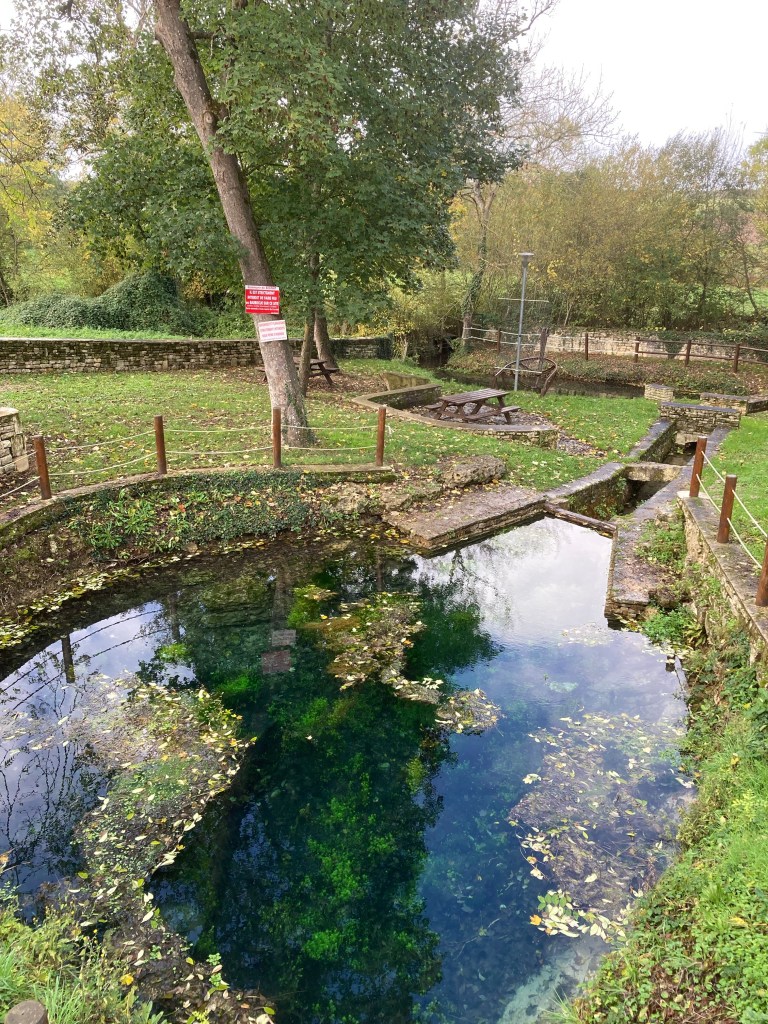
After weeks and weeks of record breaking drought, November has brought its usual rains. Months ago the weather experts predicted it might take till now for the rainy days to return. In the midst of months of drought it can be hard to believe they’d ever return, and the Roman “source” has still not refilled to the level where the water pours over the edge to run down the ancient aqueduct.

In the midst of the rainy days the sun came out, the skies cleared and we had a bright, dry couple of days, so seized the opportunity to plant dozens of Spring bulbs – mainly tulips and daffodils.

I think planting bulbs is a real exercise in hope and expectation. Who knows what kind of winter lies ahead? But with the bulbs bedded into the soil I know we can look forward to some glorious red, yellow and orange blossoms when the Spring, inevitability, wakes up the plants after a Winter not yet begun.

There’s something deeply reassuring about the seasons and cycles of Life. I suppose with climate change the weather events seem to be becoming more extreme, but that cycle of seasons keeps on turning.

Read Full Post »

Attention economy

We live in what has been termed “an attention economy”, which strikes me as in no small way paradoxical. I know what they mean. Sensationalism, shock, revulsion, fear and anger seem to be the most prominent tools used by all forms of mass and social media, and as so many business models are based on selling advertising space on the basis of “number of views” and “engagement”, I understand exactly what is meant by an “attention economy”.

Except, it seems to me, inattention is driven with even greater force than attention. It’s the short tweets, short videos, all competing with each other for a moment’s attention that pushes the viewer, the reader, the listener, ever quicker onwards to the next sound bite, the next breathtakingly brief “news” or “information”.

It all feels horribly shallow, frustrating, and, frankly, depressing!

What’s the answer to this? How do we move from bland to satisfying, from sensationalism to knowledge and understanding?

I use two habits. Slow down. And Wonder.

I can’t spend any time in my garden, at the Roman Spring across the road, or in a park or forest, without slowing right down. I’m stopped in my tracks every time. Yes, something “catches my attention”, but in these natural environments, it’s not something shocking or sensational, it’s beauty and fascination.

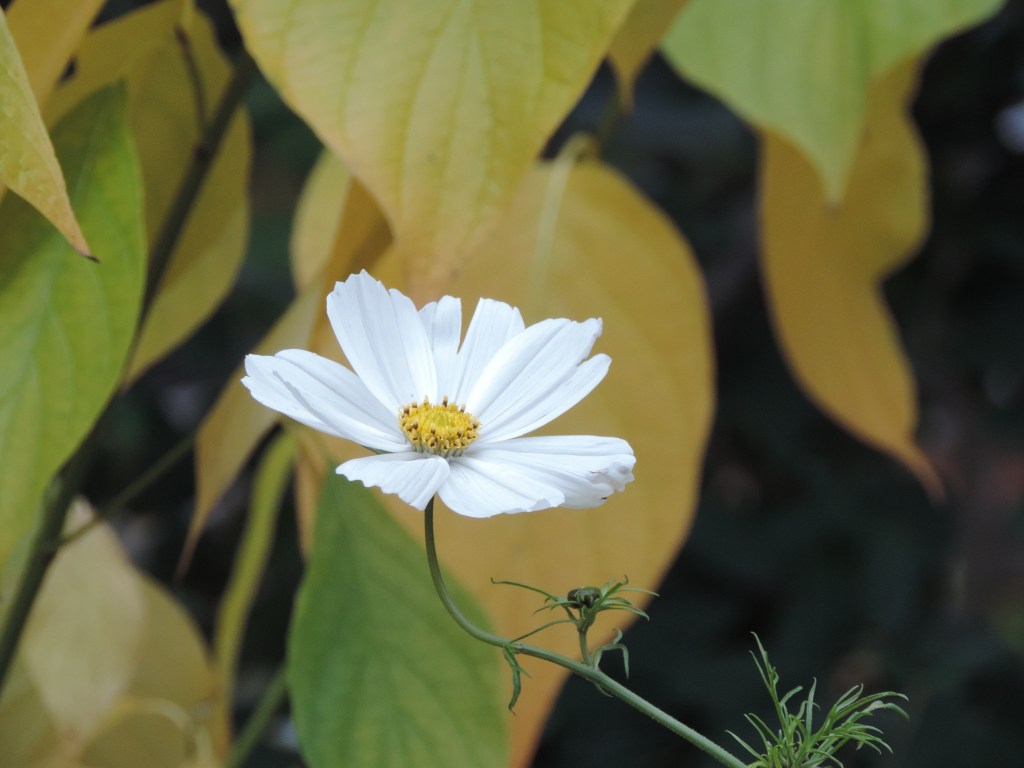
I see “an ordinary” flower, some berries, the shape of a tree, and I stop. More often than not, I take a photograph, or two or three. But I also take time to wonder….to be amazed, to be enthralled by, to contemplate and consider, the beauty, the intricacy of design, the delicacy, fragility, strength and power of what I see.

Here’s a passage from Wordsworth which resonates with my way of thinking.

Thanks to the human heart by which we live,
Thanks to its tenderness, its joys, and fears,
To me the meanest flower that blows can give
Thoughts that do often lie too deep for tears.

I find that those experiences build upon each other. They flex my muscles of attention differently. And I take these habits into the other areas of my life…..slowing down and wondering….habits which nurture a heart centred approach to this world and all the living beings I encounter.

And there’s another paradox of the attention economy – what strikes me as superficial and/or manipulative comes across as simply uninteresting. I’m not compelled to look below the headline, or to click the bait, because again and again, I find no satisfaction there.

Let me spend my attention on beauty and wonder instead, and I’ll live a more enchanted life.

Read Full Post »

We do not “come into” this world; we come out of it, as leaves from a tree. As the ocean “waves,” the universe “peoples.” Every individual is an expression of the whole realm of nature, a unique action of the total universe.

Alan Watts

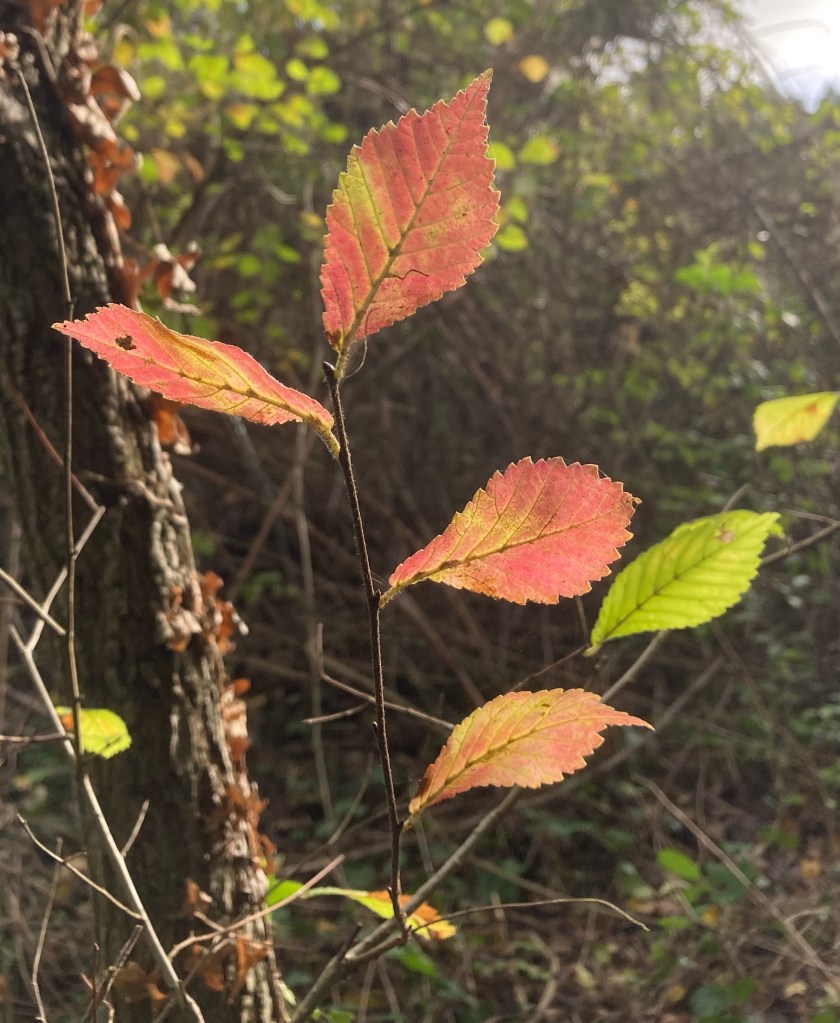
We come out of this world as leaves from a tree, or waves from the ocean.

What does the universe do? It “peoples”.

Perhaps you are familiar with “the new story of the universe”, which describes the appearance of the first elements and follows their progress through the creation of stars, galaxies, planets, and onwards to the emergence of Life on Earth.

What this story shows is that over billions of years the universe has become more complex, more diversified and more connected, producing, eventually human beings, the most complex phenomena known.

The universe does indeed “people”, the way a tree produces leaves and oceans wave.

Read Full Post »

Growth

I’m not an economist but I do think we can learn a lot from the natural world, and if economic theories and practices don’t fit with the natural world, they aren’t realistic. This is the one planet we all live on. This planet has one vastly interconnected ecosystem involving the gases in the atmosphere, the sunlight which bathes the world, the water cycle of oceans, rains, rivers and lakes, and the elements embedded in, and below the surface of the soil.

We are part of a living world, a biosphere, of bacteria, viruses, fungi, plants and animals, all processing elements of the Earth, changing the micro-biospheres in which they live, and in turn changing the entire planet.

This week, apparently, the human race grew past 8 billion people for the first time ever. The growth of the human species has been exponential, most obviously over the last one to two hundred years.

The thing about any exponential growth in the natural world is – it stops. It reaches a peak. Have we reached peak human yet? Who knows? But the reality is, one day, we will…..and the likelihood is that we’re entering peak zone right now.

So when we plan ahead to make a healthy vibrant world for our grandchildren and their grandchildren to live in, we should recognise we are in the peak zone, and the growth rate of the next hundred years isn’t going to be the same as the last hundred.

In our current economic system growth of a population is assumed to lead to growth of demand, and growth of demand will drive growth of supply. That’s what we hear all the time from our politicians – growth, growth, growth. Only a growing economy is a healthy one.

But the resources we consume to produce the goods and services to feed the growing demand and supply are limited. Nobody is making more Earth. Nobody is creating more inanimate matter – gold, silver, copper, lithium, cadmium, phosphorus….none of those things you find on a Periodic Table, or in and below the surface of the Earth. And when it comes to animate matter, we are destroying species, forests, marine communities, faster than at any time in history.

Resources, as we call the natural world, are limited, and consumption of them can’t keep on growing and growing. They too are entering, or have entered, the peak zone.

Nothing natural just keeps growing and growing forever. Nature behaves in cycles and seasons, developing through maturity, not simply getting bigger and bigger.

Don’t we need to create an economics which is more natural? One which recognises reality? One which addresses the longer timescales if we want our descendants to not just survive, but thrive?

Fortunately there are economists doing exactly this. If you’d like to explore this subject, I reckon a great place to start is Kate Raworth’s Doughnut Economics. Here’s a great introductory summary on Wikipedia

There’s a pretty large body of work exploring these issues. My first encounter with it would be Schumacher’s Small is Beautiful, and the Club of Rome’s Limits to Growth. Maybe you’ve come across some good authors or economists who are equally sceptical of the current economic model. If you have, please share them in the comments section.

Read Full Post »

« Newer Posts - Older Posts »