Feeds:
Posts
Comments

Archive for the ‘art’ Category

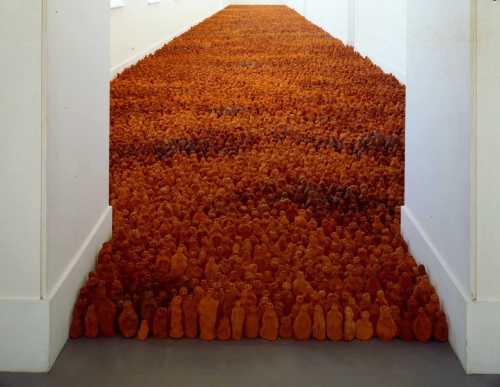
Anthony Gormley’s “The Field” is an installation which made a lasting impression on me. I saw it many, many years ago in Inverleith house in the Royal Botanic Gardens, Edinburgh.

When I first looked into the room and saw all these terracotta creatures I thought, how amazing, look at all these wee guys, all the same! Then I started to look more carefully and realised that they were not all the same. In fact, Gormley hadn’t made all these models himself. He’d invited hundreds of people to each make their own one. So every one of them was unique.

That image stayed with me because I thought this was an essence of the work of a doctor. Every patient would present me with features which they had in common with other patients who had the same diagnosis, but every one them was unique. I had to juggle with the opposites of sameness and difference every day.

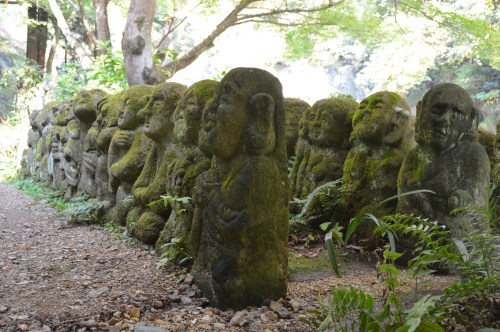
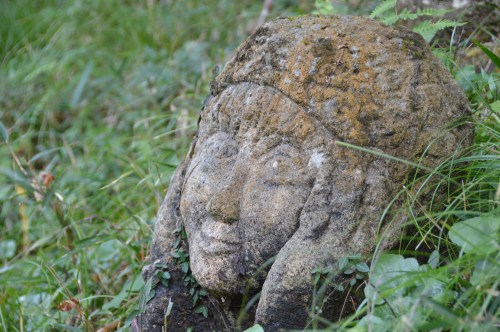
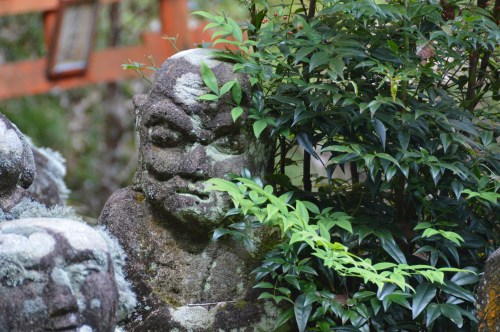
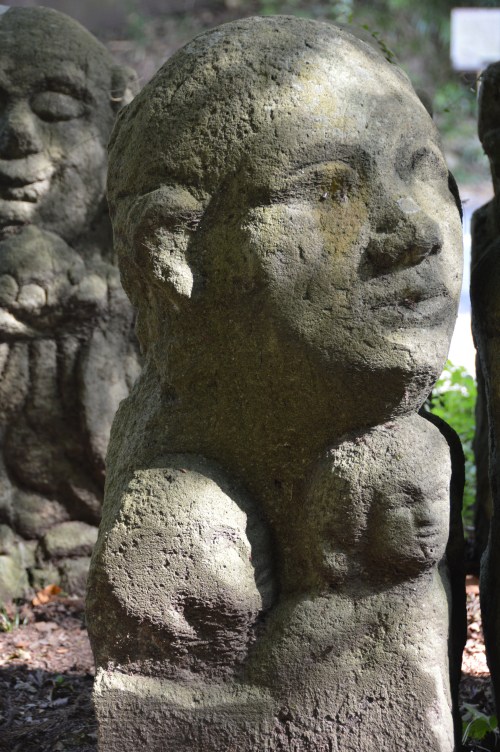
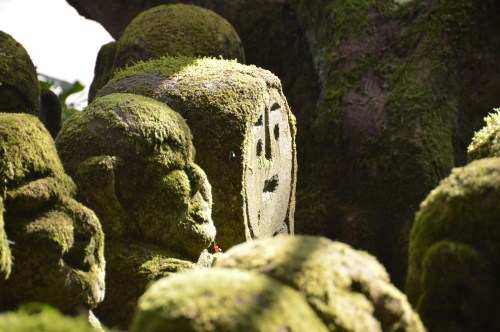
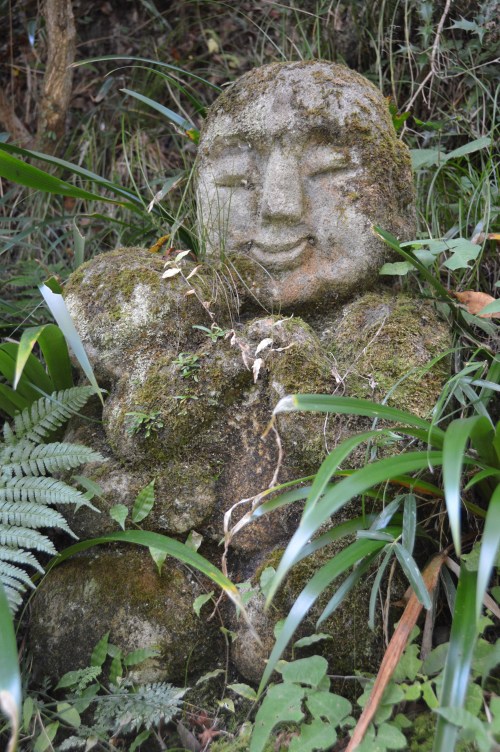
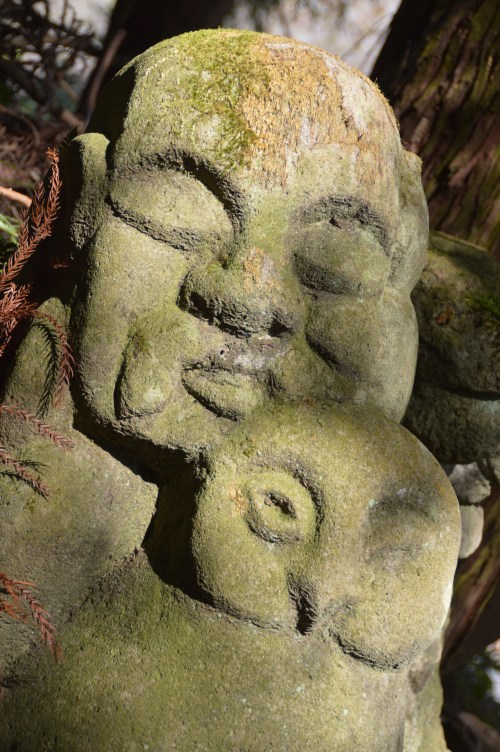
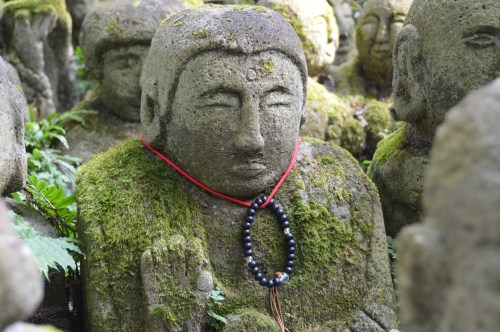
Years later I visited Otagi Nenbutsu-ji Temple on the edge of Kyoto. In the grounds there I found something similar to Anthony Gormley’s “The Field”. Under the direction of an artist dozens of people had created their own stone sculptures. Again, at first glance, they looked the same, but, quickly you can see that every single one of them is unique.


Look at some of them….I bet you find a favourite or two

Read Full Post »

I was so very fortunate to travel to Japan several times over the last decade or so of my working life. Every time I was inspired by the people I met and the places I saw. There’s an aesthetic which seems characteristically Japanese and I find it SO appealing.

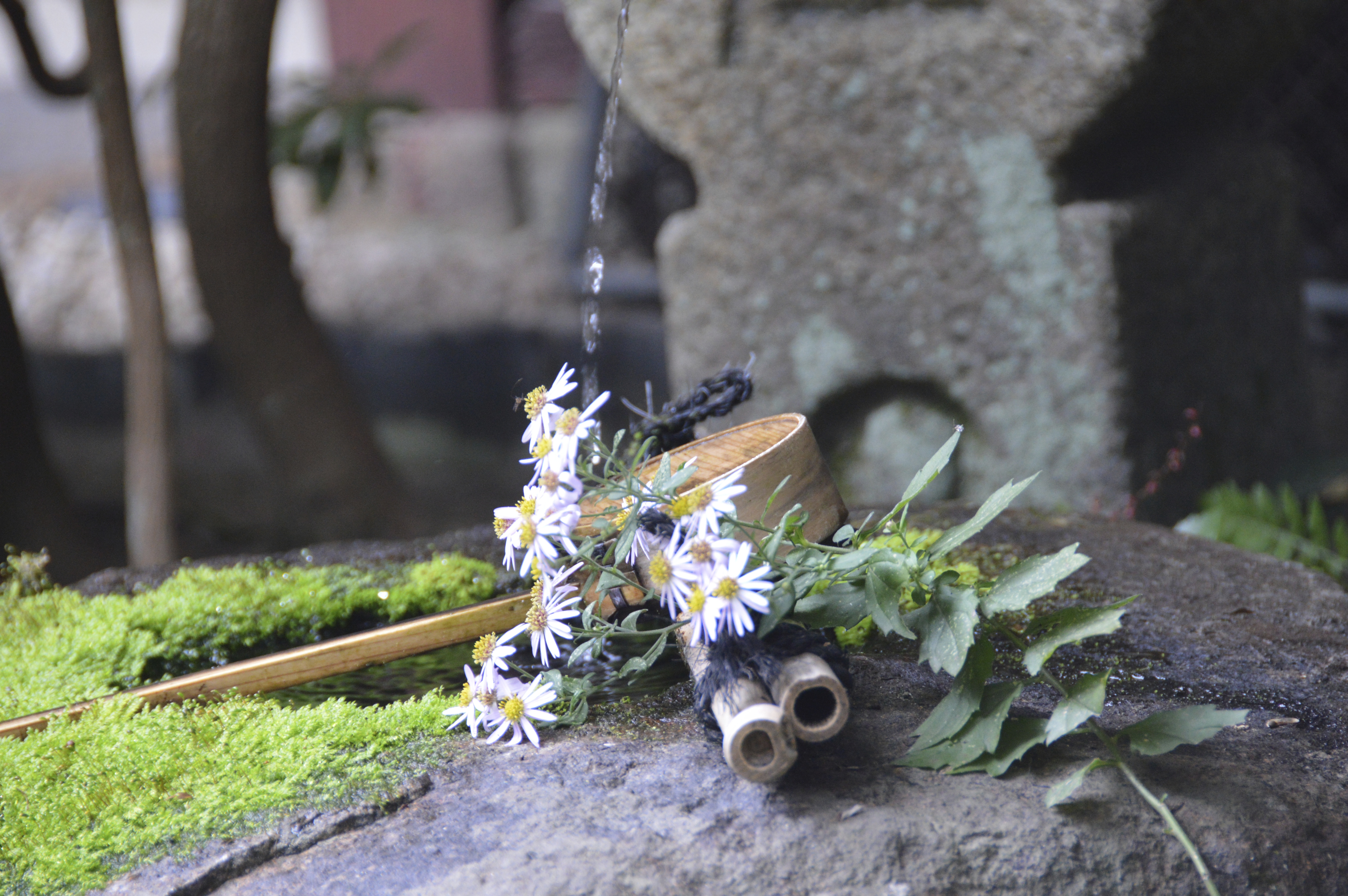
This photo is a good example, I think.

I don’t quite know how I’d capture what makes this so beautiful but I think its a simple, small combination of natural and hand-crafted elements.

Here you can see a rock, with some moss growing over part of it, a stone carving in the background and a simple stream of water pouring down into a stone basin (which you can’t see in this image). Laid on the stone is a bamboo ladle of the type you can find at any temple or shrine. It’s resting on two stalks of bamboo tied together with rough, black rope, over which lies a stem of flowers.

Everything looks as if it might have just fallen there accidentally, but you know everything has been carefully placed. I love that combination of natural elements, living and flowing elements, and hand crafted items fashioned from natural materials.

I have a notion that the principles of this aesthetic might become more widespread in other parts of the world if this current crisis inspires people to enjoy and savour the simple everyday pleasures, and maybe also begin to desire a better relationship to the natural world.

Some of the key principles of this Japanese aesthetic are described in wabi sabi – if you want to explore this further!

Read Full Post »

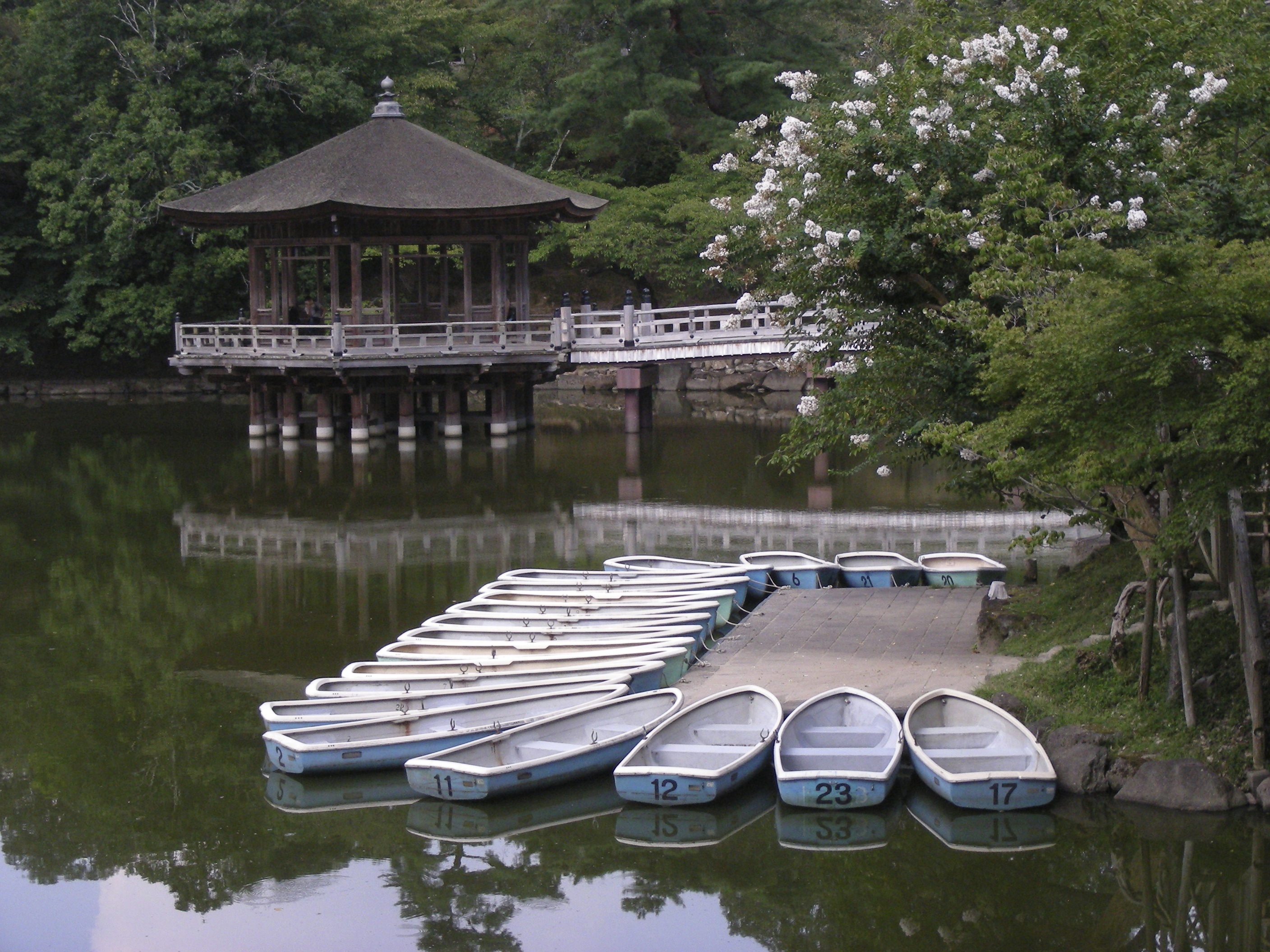
It strikes me that this is a pretty good image for this present moment.

All our boats are tied up at the dock. Empty. Nobody there.

Actually, when you look really carefully there is somebody in the pagoda. It’s hard to see them. I have the impression they might be a ghost!

Moored is the word we would use to describe the situation these boats find themselves in. They’ve been carefully set aside, brought home, tied up to the dock to keep them safe. I guess we’re all a bit moored just now, aren’t we? Although, frankly, an increasing number of people are feeling quite the opposite – un-moored!

But let’s stick with this image for a wee bit longer.

I see nineteen boats arranged around this platform, and, yes, it bugs me that they aren’t aligned by number – what does that say about me? – but, worse than that, one of them is number 23 – and I can only count 19 of them! Are there are at least four missing? Where are they? Are they OK? So, already, what at first glance looks like a completely peaceful scene, with the reflections of trees, clouds and blue sky on the surface of the still, still water, starts to become a little…..unmoored?

Then I see the blossom of the tree above the boats, and instantly, I’m back to enjoying the beauty of the scene. My gaze follows the hidden path to bridge, and across to that gorgeous pagoda, itself perfectly reflected in the calm lake. Then I notice that indistinct person, that ghostly presence, and I start to unravel again.

Now, here’s the thing, until today, every time I’ve looked at this image I’ve seen and experienced nothing but calm, and I’ve delighted in its beauty. This “un-mooring” is new. It doesn’t come from the photo itself. It comes from where I am, here and now.

Well, this is a great truth…..whatever we perceive, whatever we see, notice, appreciate and experience, is always, but always, an interaction between our “self” and what is around us. This is the way I understand the teaching that there is no real world “out there”. This is how I understand relativity. It’s not that there is nothing objective, or that nothing exists unless I see it, hear it, or otherwise sense it. It’s that my lived experience of reality always, but always involves my memories and my imagination.

We co-create our world.

Read Full Post »

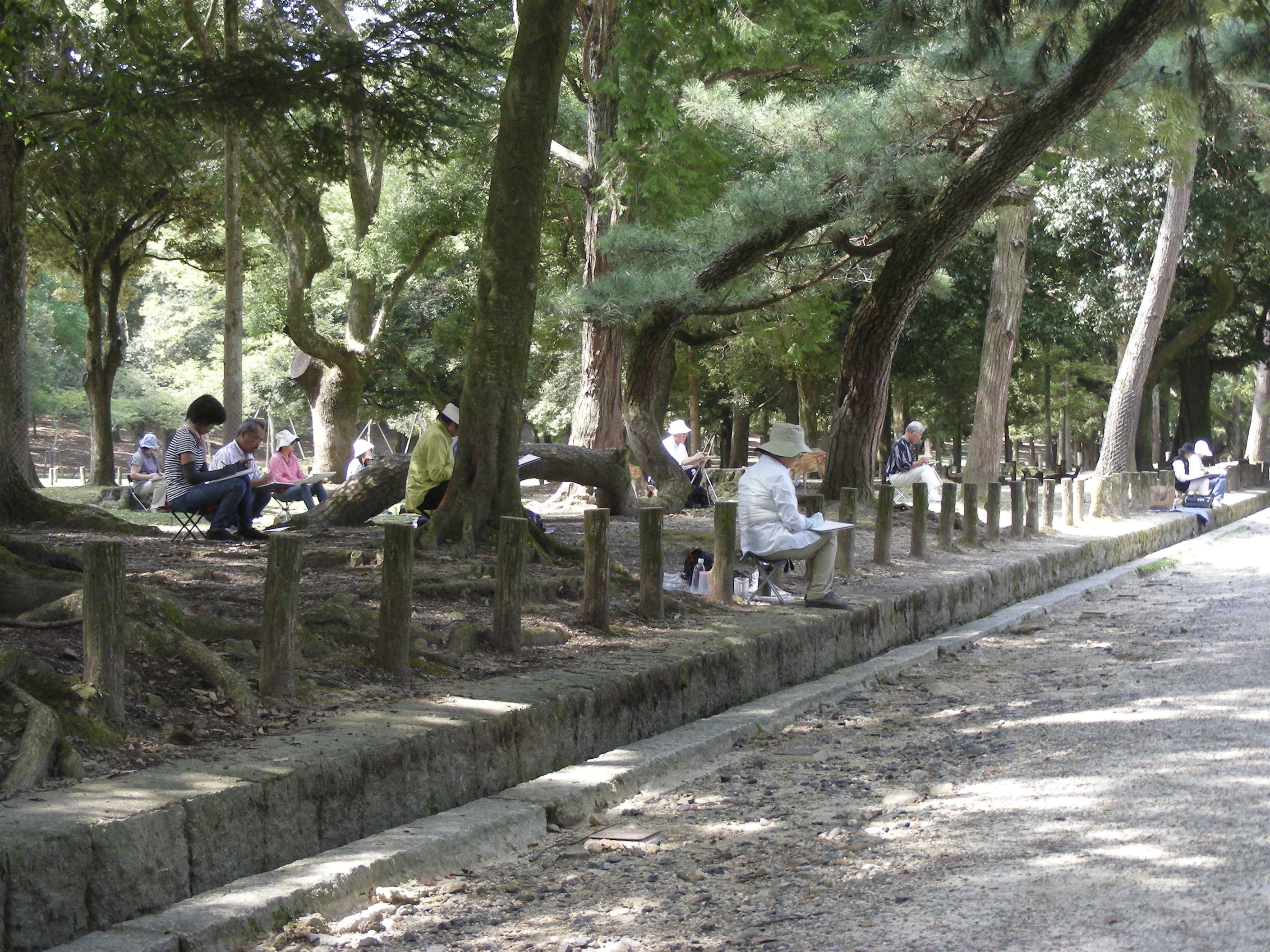
Several years ago I visited the town of Nara, in Japan, and as I wandered through this park I came across all these people sitting drawing and painting. As I look at this again today I’m struck by how it would meet the requirements of social distancing that we are all being urged to follow (except, here in France, as in some other countries, parks and forests are currently out of bounds to everyone!).

But what really strikes me about this image is how it captures a fundamental human characteristic – creativity.

We are creative creatures.

We invent. We solve problems. We compose and perform music. We draw. We paint. We carve. We write and we share stories, poems, ideas and observations. We are brilliant at creating and manipulating symbols and signs. We make maps and plans. We build. We weave, sew, and knit. We create pots, cups and mugs from clay. We create jewellery from precious metals and stones. We make gardens, parks and forests, sewing seeds, nurturing seedlings, fashioning the landscape to our pleasing. We transform nutrient laden plants into nutritious food. We heal and develop new ways to heal.

I could go on……[add some of more of you own liking].

Yes, I know, some of you will be thinking, human beings are pretty damn destructive too. Aren’t we spoiling, ravaging and polluting too?

Yes, we are. And if we are to survive as individuals and as a species, we are going to have to tackle that. But what will we tackle it with? Creativity.

Has there every been a better time to foster, practice and share our creativity?

I don’t think so.

In this time of pause, when everyday life has been put on hold, we are going to need all our creativity to get out of this situation and wouldn’t it be wonderful if we used our creative powers to make a better world “after-the-pandemic”, to resist those who will want a return to the old ways which got us into this situation?

How might you change the way you live #after-the-pandemic?

What new habits are you going to create?

What new behaviours are you going to develop?

How do you think you can maximise your creativity today, and in the days and years to come?

What are you going to write, or draw, or paint, or build, or weave or……….?

Are you going to start today?

Read Full Post »

Last night as I was sleeping,

I dreamt – marvellous error! –

that a spring was breaking

out in my heart.

I said: Along which secret aqueduct,

Oh water, are you coming to me,

water of a new life

that I have never drunk?

Last night as I was sleeping,

I dreamt – marvellous error! –

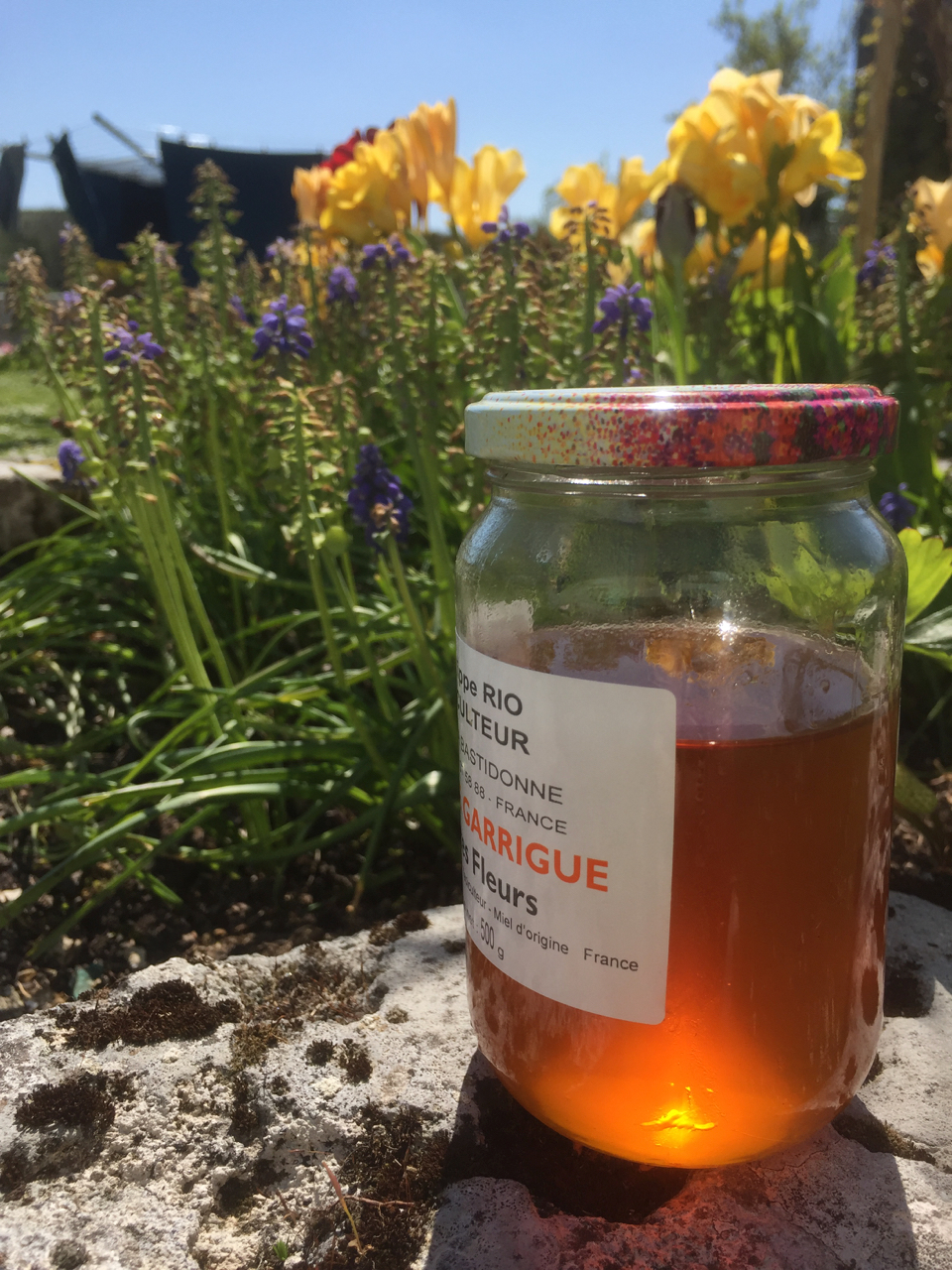
that I had a beehive

here inside my heart.

And the golden bees

were making white combs

and sweet honey

from my old failures.

Last night as I was sleeping,

I dreamt – marvellous error! –

that a fiery sun was giving

light inside my heart.

It was fiery because I felt

warmth as from a hearth,

and sun because it gave light

and brought tears to my eyes.

Last night as I slept,

I dreamt – marvellous error! –

that is was God I had

here inside my heart.


Last Night As I Was Sleeping, is a poem by Antonio Machado (this translation from the original Spanish is by the poet, Robert Bly). I’ve decided to return to an exploration of poetry during this strange time in our world, and have started by reading “Ten poems to change your life”, by Roger Housden. The first poem in the book is The Journey, by Mary Oliver, and the second one is this one by Antonio Machado.

Roger Housden, who says, of Antonio Machado, “He lived a plain and simple existence, much of it as a country schoolteacher. What mattered to him was the deep current that joins the human soul to the world. What mattered above all to him was to be awake to that deeper life.”

I love the images in this poem, starting with the spring of fresh water breaking out in the heart. “The origin of the spring is not in your own heart; its waters are carried there by some secret aqueduct from a source beyond all your knowing”.

Then in the next verse he talks of making sweet honey from our old failures. What a nice variation on the “when life gives you lemons make lemonade”!

The next image is of the sun shining in his heart. Roger Housden says “Machado becomes the source of his own warmth and light”.

In the final stanza where Machado dreams of God in his heart, Housden says “He dares to leap over metaphor altogether and say directly what he has been inferring all along: you are own source, drink from your own well, live by your own undying light……..the light of the world that streams through your life….”

I found that as I read it various of my own photos came to my mind so I thought I’d collect them together here with the poem. What I really love about this poem is that idea of the flow of Life pouring through the depths of our being and found by looking at what we have in our heart.

Read Full Post »

One day you finally knew

what you had to do, and began


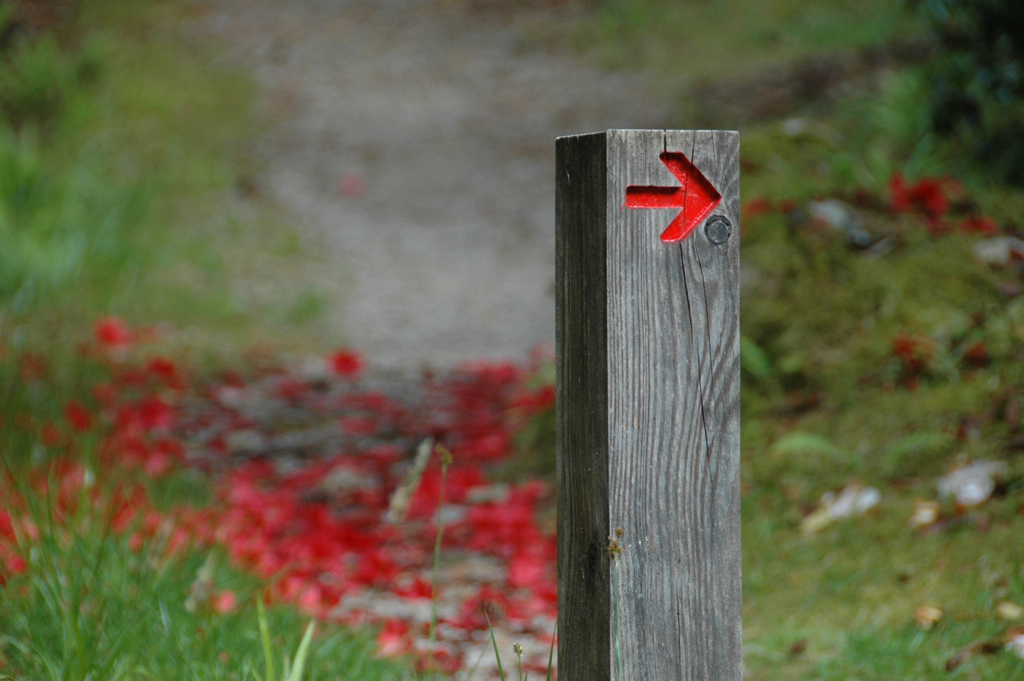
One day I was walking in a forest and I came across this signpost. Clearly, this was the way to go….

I followed the path strewn with blood red petals, but I didn’t know where it would take me.

Mary Oliver, in The Journey, the beginning of which I quoted above, continued her journey…

It was already late

enough, and a wild night,

and the road full of fallen

branches and stones.

I turned a corner, and there before me I saw…..

…red petals cascading down a slope, and rising high up into the canopy of the trees. Maybe this is what I came to see? But I carried on….

as you strode deeper and deeper

into the world,

determined to do

the only thing you could do –

determined to save

the only life that you could save.


Eventually, I found this….

…the heart of the wood.

So, this is how it is, isn’t it?

We don’t need a “goal”, or an “outcome”. We don’t need to “get” or “consume” anything in particular.

What we need to do, is find our heart.

This is as good a time as any to listen, and find out if you can hear what your heart is telling you.

We have access to more than one kind of intelligence. Not just the rational intelligence of the analytic left cerebral hemisphere in the brain, but the emotional intelligence of the heart.

You think that’s fanciful? Or just a nice metaphor?

I don’t think so.

It turns out we have a network of neurones, yes, neurones, the specialist kind of cell you find in a human brain, around the heart. There is a neural network around the heart. Apparently, the nerve connections between the brain and the heart are not just about the brain regulating the heart, they are two way. Our heart informs our brain.

And emotions? Those deep, intense embodied rivers of information and activity which course through the depths of our very being…..are they something supplementary? Are they something inferior in some way to our thoughts?

I don’t think so.

Our emotions are the organising, adaptive strategies which have evolved to enable us to survive and to thrive.

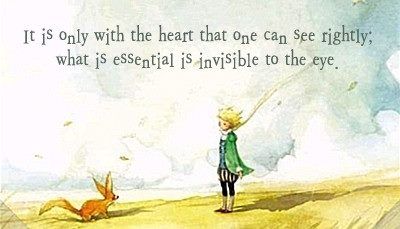
As the fox said to the Little Prince – “what is essential is invisible to the eye”.

Here’s Mary Oliver’s poem, The Journey, in full –

One day you finally knew
what you had to do, and began,
though the voices around you
kept shouting
their bad advice–
though the whole house
began to tremble
and you felt the old tug
at your ankles.
“Mend my life!”
each voice cried.
But you didn’t stop.
You knew what you had to do,
though the wind pried
with its stiff fingers
at the very foundations,
though their melancholy
was terrible.
It was already late
enough, and a wild night,
and the road full of fallen
branches and stones.
But little by little,
as you left their voices behind,
the stars began to burn
through the sheets of clouds,
and there was a new voice
which you slowly
recognized as your own,
that kept you company
as you strode deeper and deeper
into the world,
determined to do
the only thing you could do–
determined to save
the only life you could save.

Read Full Post »

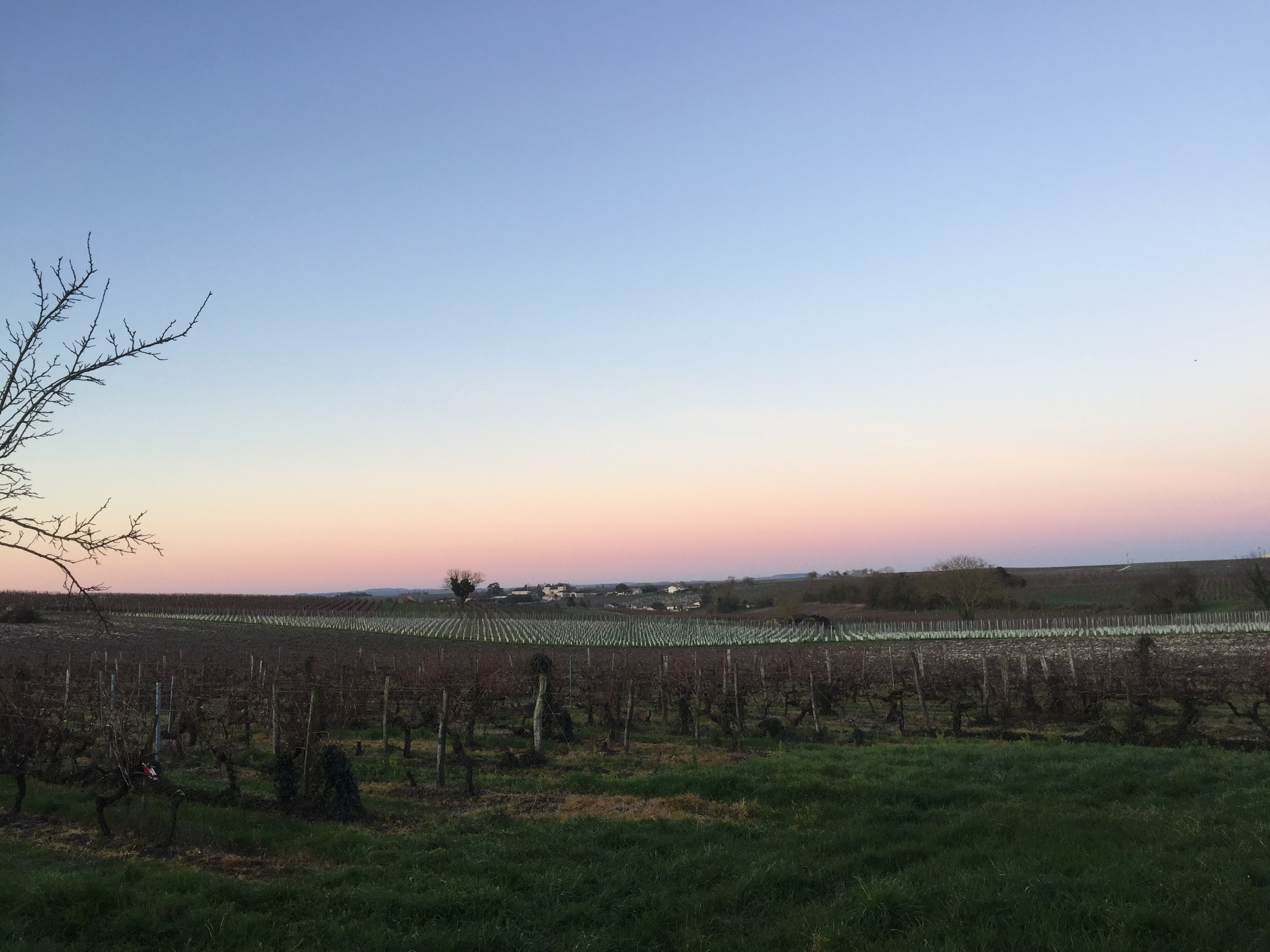
Yesterday I wrote about sunsets. This morning when I opened the shutters I saw the most gorgeous example of “The Belt of Venus”.

It was every bit as compelling as the sunset I had just described…..and it was in the exact same direction…..looking West.

If the Sun was the greatest magnet we’d be drawn to watch it rise at dawn (if only we were awake and up early enough!), and it’s true that the rising of the Sun can be every bit as impressive as its setting. In fact, that phenomenon often makes me think of the scenes from “City of Angels” where the angels stand on the beach to watch the dawn. But the dawns are not usually as colourful as the sunsets, are they? When they are, when they fill the sky with rosy pink clouds, then what pops into my head is “Red sky at night, shepherds delight. Red sky in the morning, shepherds warning.” I know there are other variations of that saying in different parts of the world, but it does somewhat detract from the delight and attraction of the dawn sky versus the one at dusk, doesn’t it?

Most mornings, however, the sky isn’t pink and I’m not that aware of the Sun rising above the Eastern horizon. After moving here to the Charente I began to notice that the Western horizon was definitely pink some mornings and that spiked my curiosity. It turns out to be a phenomenon called “The Belt of Venus” and it comes about just as the Sun rises in the East but casts a shadow of the Earth just above the Western horizon. Well, both the phenomenon itself, and it’s rather romantic and glorious name, really engaged me, and now I’m much more likely to spot it. (That makes me wonder just what else we miss every day because we don’t recognise it. How much is invisible to us, passes us by, because we don’t pay sufficient attention, and we don’t know what we are looking at?)

Well, this is February now, and according to my monthly themes, February is the month of Love. So, how appropriate that Venus should make herself known so clearly this morning. Actually, we’ve had really clear skies these last few nights and one of the brightest objects in the night sky here is currently the planet Venus, so she’s around at night, as well as leaving her mark on the dawn.

So, I’m just reminding myself of all this today…..that February is a month to practice love, and loving kindness. That fits in with one of my two words of the year as well…..”bienveillance” – which is about “meaning well”, or acting with good intentions.

I like it when things come together like this….a phenomenon, how we name that phenomenon, and all that we attach to that name, the stories which spin off in all directions along a common theme, and the influence all that has on our daily behaviour.

Read Full Post »

I remember how surprised I was to discover how the days of the week share a naming tradition across many languages. The key to understanding the links is to see how each language attributes the same planets to the same days.
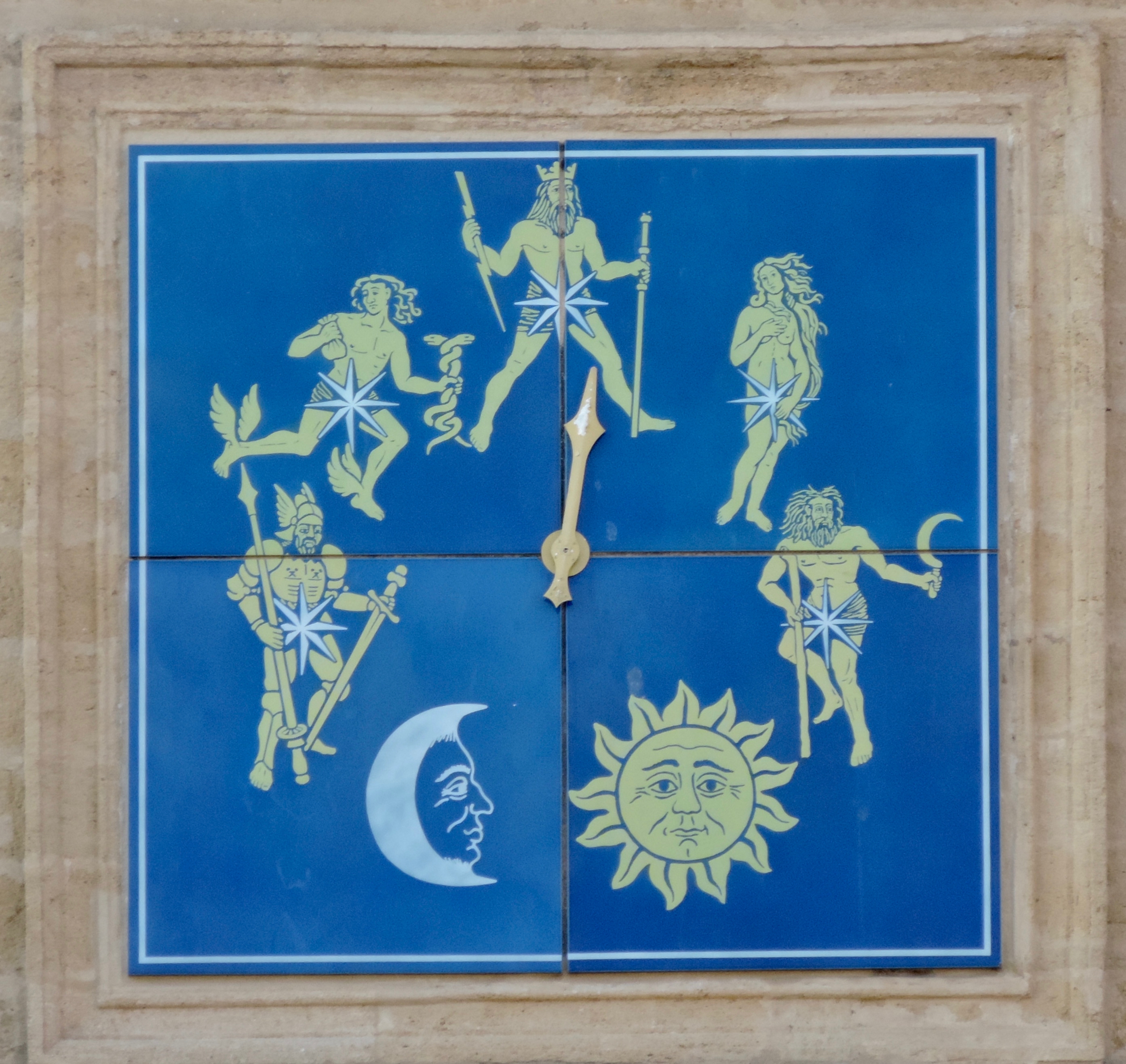
Starting with Sunday, the sequence is the Sun, the Moon, Mars, Mercury, Jupiter, Venus, and Saturn. It’s consistent across many, many languages. Learning a little about the symbolism and mythology of each of the planets allows us to create a rich daily experience with a different theme, or focus, for each day of the week. Try it for yourself. Get yourself a notebook or diary and pick a theme related to each planet and note the themes for each day, then return to that theme throughout that day and see how it colours your experience.

I have since felt quite frustrated that the same principle can’t be applied to the months of the year. Not only are the names of the months not shared through the various languages of the world, but the European model isn’t even based on a consistent naming system. Some of the months are named after Gods, like March, named after Mars, some are named after Roman Caesars, like July and August, and others just get a number, as we see in October through to December. I don’t like it! It feels clumsy and inconsistent. Especially in the light of the names of the days.

I’ve looked around but haven’t found any alternative naming system. What was I looking for? Well, a set of names which had symbolic or mythical meanings, as we have with the days of the week, so that I could play with the themes each month which related to those symbols.

So I came up with my own set of themes, one for each month of the year. Here they are, each one with a sentence or two to explain why I came up the particular theme for the specific month.
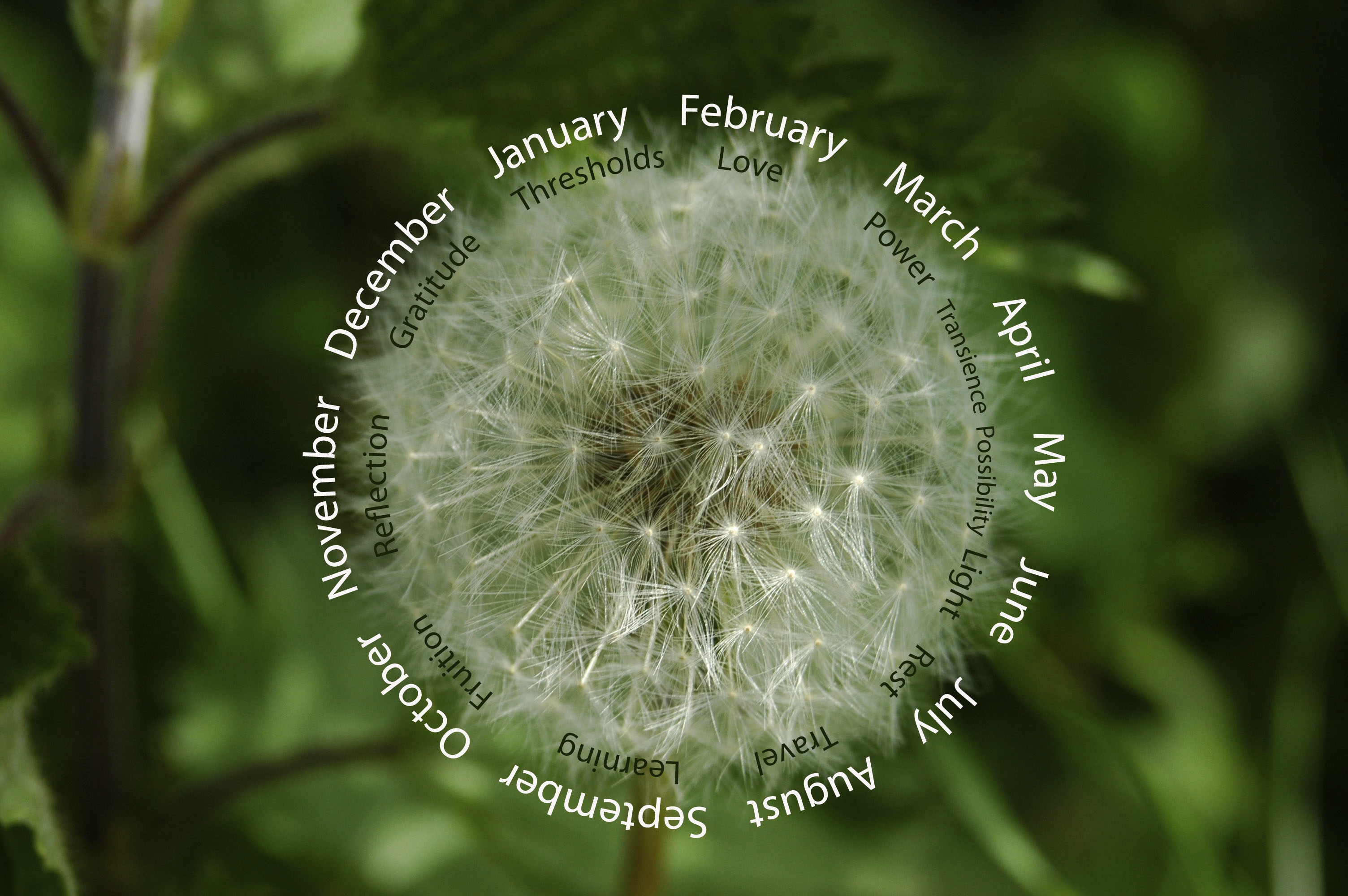
January is the start of the new calendar year. It’s named after Janus who faced both forwards and backwards, and can be symbolically represented by a gate. At a gate, we stand on a threshold, about to step from one place to another. January is like this. It’s the time of taking an overview of the year, of starting a new calendar, a new diary, a new journal. It’s a time of reflections and resolutions, looking back at the year just finished and forward to the one beginning.

February has Valentine’s Day right in the middle, but why restrict this loving theme to only one day? How about making February the month of acts of loving kindness?

March is named after Mars, the God of War, or, perhaps more positively, of strength and power. This would be a good month to pay attention to your personal autonomy and your strengths. Maybe a good time to explore the “Signature Strengths” of the Positive Psychologists.

April is the month of the tree blossoms. In Japan, it’s the month of the annual appearance of the Cherry Blossom. This month is a month to celebrate transience. As we celebrate the beauty and uniqueness of transient blossoms, we become aware of the transience of everything in life, not something to fear, but something which enhances our appreciation of every moment. It’s a time to celebrate and enjoy what we have for just a short time.

May is the month of the flowering buds. It’s a time when Nature reveals some of her potential. Make this the month you do that too. Make May the time to wonder about what may come to pass, to imagine how things in your life can flourish.

June is the month of midsummer. The month with the longest day. This can be the month to celebrate the light.

July is the beginning of the second half of the year and for many, is the beginning of the holiday season. This is a month to consider rest. A time to take a break, to pause, relax, and take it easy for a while.

August is “Le Grand Depart” in France, the month when everyone sets off to have a holiday somewhere. To get there, they have to travel. It’s good to enjoy your home, but it’s also good to broaden your outlook by travelling and discovering other places.

September tends to be the start of the academic year. Schools, colleges, universities begin their year here. But you don’t need to be a student to learn. We can all learn throughout our whole lives. What would you like to learn this year? Are there any courses you’d like to take? This is the month to plan and begin new skills and new knowledge.

October is a month of berries. It’s a time of fruition. Maybe this is a good month to celebrate that aspect of life? A time to enjoy what’s come to fruition. A time of congratulation.

November can be a time to reflect as the year draws towards its end. This reflection can be on any, or all, aspects of your life. How is your year going? How are you?

December is the month for gratitude and giving. What are you grateful for, and how could you give to others?

Read Full Post »
“And not Or” is one of my favourite principles. It’s the basis of integration, synthesis and creative evolution. “And not Or” deals with paradoxes and opposites, not by eliminating one of them, but by relating the one to the other.

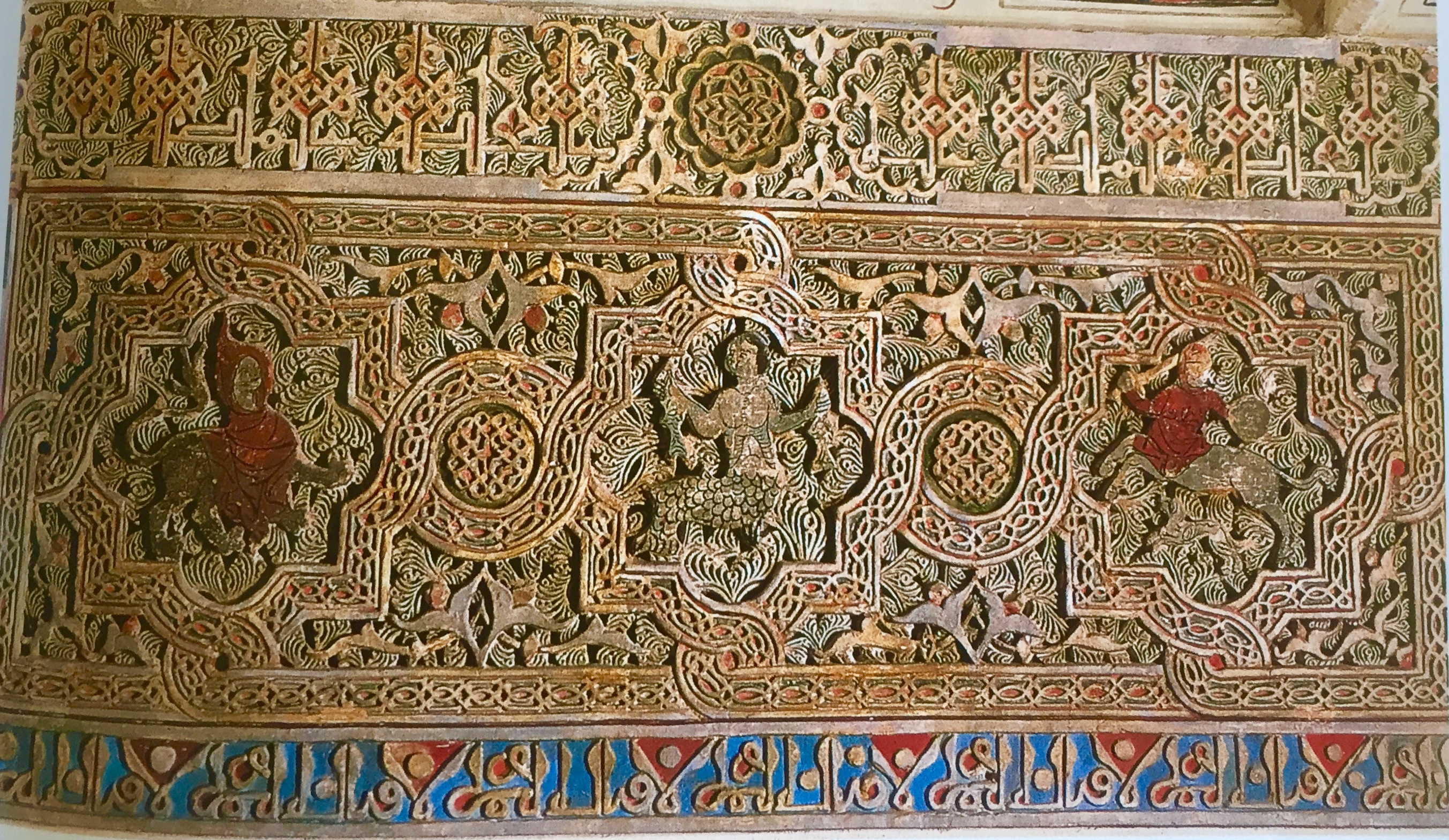
I took the photo above in the Santa Clara convent in Tordesillas. The building is one of those many examples you can find in Spain where a sacred space created by one religious group is taken over by another one, but instead of destroying the previous architectural and artistic features, the new group adds their own.

What you see today is the result of centuries of art and belief, creating something quite unique, something which has a narrative quality. You can read the story of the place and the cultures into the what we can see now.

There are obvious Islamic art motifs and designs in this panel (although, as a Scot, I’m always reminded of Celtic designs when I see these looping, intertwining designs in Islamic art). I’ve seen that kind of art a lot. But in this particular panel there are three creatures in the central strip. That’s very, very unusual for Islamic art, and the guide book tells me they are “medieval” or “gothic”. They are a really odd group of creatures, each one a “chimera”, an imaginary creature which has body of parts of completely different creatures. In the middle is a mermaid, on the right a centaur, and on the left, well, I don’t know what you call this sort of chimera, but it’s a human-lion hybrid. Chimera are particularly strange examples of “And not OR”!

Throughout the Santa Clara convent there are very strong elements of Islamic, Catholic and Gothic imagery and design. It can be jarring in place, and it can be quite sublime in others. I’m not sure what makes the difference. The main chapel has an astonishing gold ceiling of elaborate “mocarabes” design, with an enormous altarpiece of Mary, several saints and other biblical figures facing you as you enter. There are ceiling to floor drapes of deep red cloth covering the rest of the walls. I must say, on seeing the red cloth hangings I was instantly reminded of the scene towards the end of David Lynch’s “Twin Peaks” where Agent Cooper has a very disturbing dream!

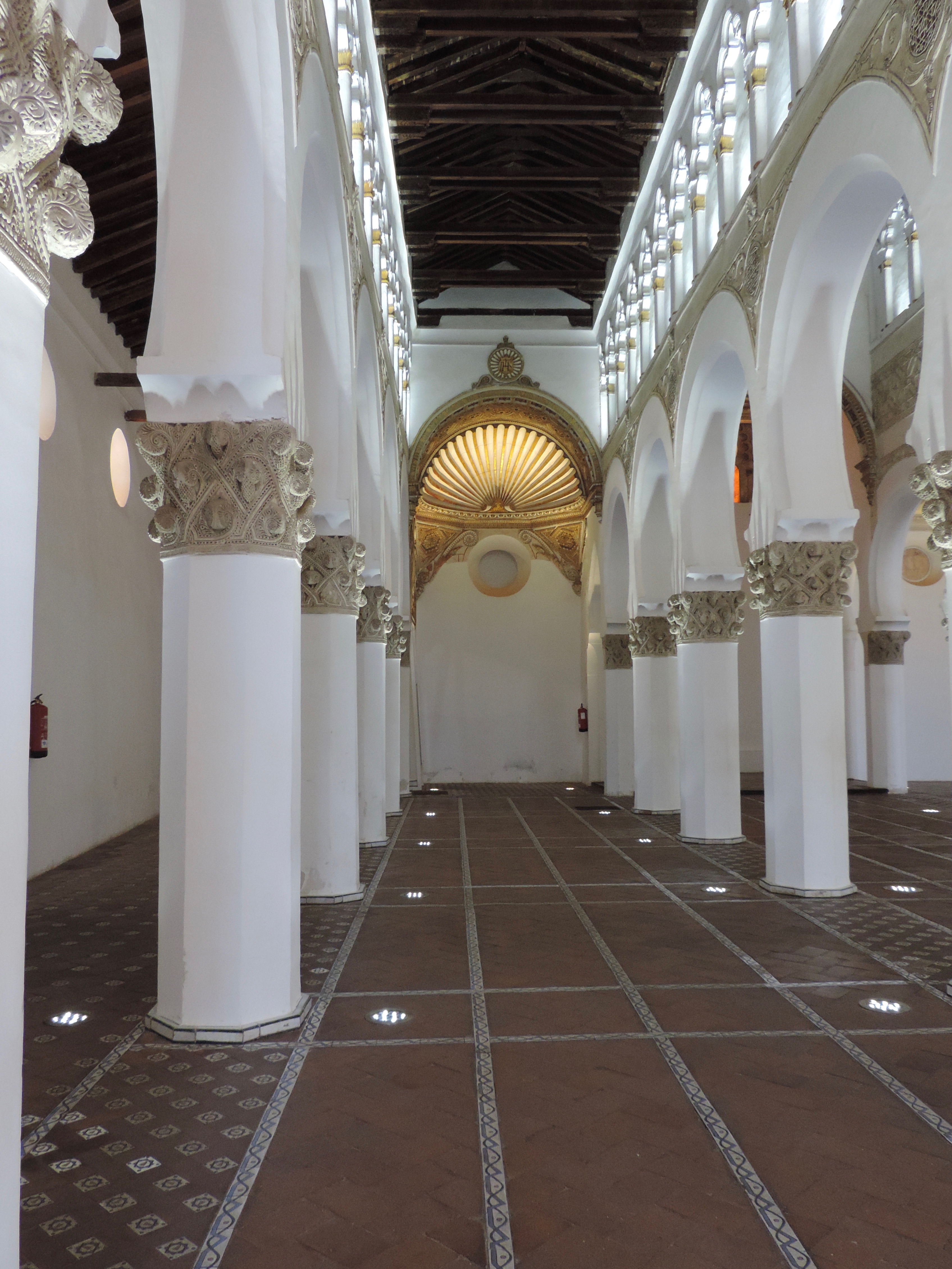
The synthesis, or evolution of the building through different cultures and religions also reminded me of the Santa Maria La Blanca church in Toledo. Here’s a photo of took there a few years ago…

This synagogue was built with muslim architects and was later turned into a church. Now, that must be pretty unusual. It’s a remarkable space, produced, surely, according to the same principle of “And not Or”.

The main reason I’m attracted to “And not Or” is that it is creative. It builds, develops and evolves through the relationships between the past, the present and the future.

“Or” divides. It sets apart and, all too frequently, opposes. It seems to me we have way too much of that in the world nowadays – “us or them”, “immigrants or nationals”, “Leavers or Remainers” (Brexit), “Pro-Trump or Anti-Trump” – fill in your own pairs of divided groups here!

I don’t think these divisions are healthy. We all share this one small planet, all emerge from the same astonishing Universe Story. Cooperation is at the heart of evolution. Yes, competition exists too, but it’s rather over-emphasised in human history. Without the cooperation of atoms, molecules, cells, organs, systems, organisms and environments, none of us would exist.

So maybe it’s time to tip the scales a bit, and give more energy to cooperation than competition.

“And not Or”

Read Full Post »

We humans are pretty good at making maps. We do it all the time. Dr Dan Siegel, a psychiatrist and neuroscientist, describes the three commonest maps we make in the frontal cortex of the brain – a “me” map, a “you” map, and a “we” map. You might wonder about the use of the term “map” there, arguing that we create “images” rather than maps, but let’s not get bogged down on that one. I like both terms (one of my favourite principles in life is “and not or” – 🙂 )

The thing about a map is that it shows contexts and connections. It shows us where we are, where we might want to go, and helps us to imagine how to get there.

I was in Tordesillas, in Northern Spain, recently and visited the “Treaty House” which displays a number of ancient maps. Here’s one set which particularly grabbed my attention.

It’s a set of panels describing the known world at the time – the world of the “Occident” followed by a set describing the unknown world – the world of the “Orient”. Take a look –

In this first section you can clearly make out Britain (although Scotland hasn’t really become known yet!) and you can see the areas we now call Portugal, Spain, France, Scandinavia and so on.

The next one extends the first one to show Italy, Greece, Turkey, “The Middle East” and also more of the North African coastal countries.

For a medieval map it’s surprisingly accurate. It might even have helped people to find their way from one place to another.

But then check out these two panels of the “unknown”, “Orient” –

At first there are elements we recognise – The Nile, The Caspian Sea, but the further East we go, the more the map becomes an expression of a creative imagination.

Isn’t that fascinating?

I’ve never thought of mapping out what I don’t know before. After all, where would I stop? The older I get, the more I realise how much I don’t know – how much WE (we humans) don’t know. But it might be a fun idea, don’t you think? To sketch out some maps of the unknown…..

The personal maps of “me”, “you” and “we” are constantly being updated, constantly evolving, and we create them from both what we know, and what we don’t know…..from our memories, our present day experiences, and our imaginations.

Map making turns out to be a dynamic and fundamental ability. I wonder how aware we are, on a day to day basis, of the maps we have made, the maps we are making, and the influence they have on our lives.

Read Full Post »

« Newer Posts - Older Posts »