
Sometimes its contrasts which catch my eye, but other times it’s the luxuriant shades within one area of the colour spectrum, whether that’s blue (like above), or green (like below)

…or even the shades within one flower

Posted in creativity, from the dark room, from the living room, life, perception, personal growth, photography on June 10, 2015| Leave a Comment »
Sometimes its contrasts which catch my eye, but other times it’s the luxuriant shades within one area of the colour spectrum, whether that’s blue (like above), or green (like below)
…or even the shades within one flower
Posted in creativity, from the dark room, from the living room, life, personal growth, photography on June 6, 2015| Leave a Comment »
Posted in creativity, from the dark room, from the living room, life, perception, photography on June 2, 2015| 1 Comment »

Some years ago I realised that the names of the days of the week relate to the same planets in many languages and that got me wondering about the names of the months – which aren’t!
It struck me that relating the name of a day to a planet opened up a whole rich level of symbolism and meaning and I thought it was a shame we couldn’t do the same for months. So, I decided to come up with a keyword/theme/symbol for each month that made sense to me. I’ve been following that since, and in that scheme, June is the month of light. I chose that because, in the northern hemisphere, where I live, its the month with the most light (including the longest day). I know for some of you it’s the month with the least light, so I encourage you to come up with your own themes, which make most sense to you, or that you stick with June being the month of light and see what you can discover about winter light.
It’s hard to actually see light, but the way light plays with us, and with the rest of the world, is beautiful to explore.
I’m aware that, in choosing this particular image, which I only took yesterday, it immediately speaks to me of “light at the end of the tunnel” – so if you’re looking for some light at the end of a tunnel, here’s an image just for you!
Posted in art, creativity, from the dark room, from the living room, life, personal growth, photography on May 30, 2015| Leave a Comment »

I look at this photo, and I wonder what country I was in when I took it.
Well, I don’t have to wonder for long because I only took it a day ago and I remember well that when I did I was only about an hour from where I live (in France) – but, seriously, couldn’t this have been taken in Japan?
What gives an image a strong sense of place or of culture? Is it the colour? Is it the juxtaposition of flowers and something particular a human being has made?
I don’t find it hard to see beauty in Nature, and now that I live surrounded by vineyards I feel more connected to that beauty than ever, but what takes the whole experience to a different level for me, is to see, in the same moment, so much creation – the creation of Nature, and what a person created.
You see, there is a spiral of creativity here.
There’s the creativity of the Universe which has produced this flower and the person who constructed and painted the shed behind it.
Then there’s the creativity of the person themselves, and where their imagination took them, and then their choices, their decisions and their actions to make this shed, pick this paint, paint that wood, choose that flower, plant it, nurture it and train it.
And there’s me.
To stand there and look up and see this, and to focus in on part of what I could see as I compose this image, and to capture it, and now, to post it for you to see.
And there’s you.
What might this image stimulate for you?
What might this post provoke your imagination to create now?
Posted in creativity, from the dark room, from the living room, from the viewing room, life, personal growth, philosophy, photography, video on May 16, 2015| Leave a Comment »
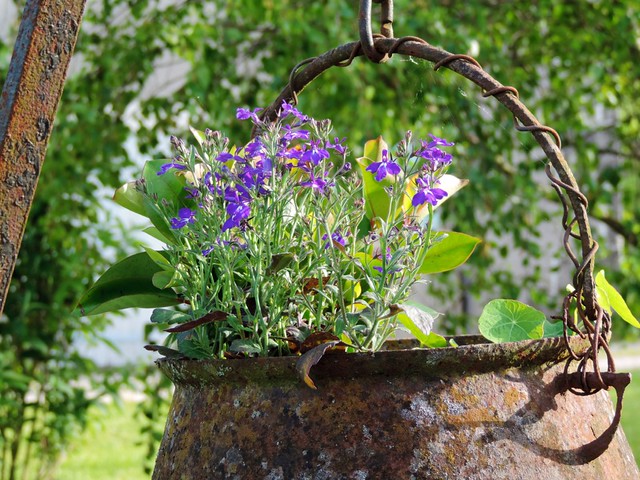
When you look at this photo you’ll see something living, the plants, and something “inanimate”, the cauldron. Some of you will also say you notice the sunlight and the shadows.
Every day these plants look different as they grow, flower, and, ultimately wither.
Every day the cauldron doesn’t look that different, but if we could see what it looked like on that first day when it was carried from the foundry to the shop, we’d see that it has changed a lot.
Everything changes. Just at different rates. Living organisms change rapidly, whilst inanimate objects change much more slowly, except for moments of catastrophic change where, for example, an object is broken.
We forget that, don’t we? That change isn’t optional, but the speed of change can be.
We are creators, we humans, and when we create we embrace change, we engage with it, we bring our imaginations to bear upon it, and so we make the world we live in.
“All power to the imagination”
Posted in creativity, from the dark room, from the living room, life, personal growth, philosophy, photography on May 15, 2015| Leave a Comment »

The world is different with you in it. It wouldn’t have been this way without you.
Each of is alive in this world, and living is a process of change.
Your breathing changes the air in the room where you are now. You breathe in oxygen, and breathe out carbon dioxide.
The heat of your body changes the temperature of the room and the temperature of the room changes your circulation, your consumption of energy and your expenditure of it.
Every action you take, every thought you have, changes the world you live in.
Sometimes we change the world quite consciously – as I did when I took the rake to the sand pit the other day.
But all the time, we are changing the world with our choices, our behaviours and just by living.
Each of us in unique. Every one of us lives in a different place and different time. Every one us thinks our own thoughts, has our ideas, tells our own unique story.
The world is different with you in it.
Posted in creativity, from the dark room, from the reading room, from the viewing room, life, neuroscience, philosophy, photography, psychology on May 13, 2015| Leave a Comment »
I was watching an episode of Vikings the other day, and was startled when one of the character, King Ecbert recited a few lines of poetry which were completely familiar.
Time present and time past
Are both perhaps present in time future,
And time future contained in time past.
If all time is eternally present
All time is unredeemable.
What might have been is an abstraction
Remaining a perpetual possibility
Only in a world of speculation.
What might have been and what has been
Point to one end, which is always present.
Footfalls echo in the memory
Down the passage which we did not take
Towards the door we never opened
T S Eliot! From the Four Quartets! Dramatically it worked, even if you couldn’t help thinking, whoa there, T S Eliot in the Vikings??!
I studied Eliot at school and he is still one of my most favourite poets. I remember reading this passage and feeling enthralled by it, but I had no idea what he was talking about. Now, as I encounter it again, I’m surprised how well it fits with what I have since discovered about time and memory.
In fact, by one of those strange quirks of synchronicity, this month’s “Philosophie” magazine has a central section on Bergson’s concept of memory. Bergson was way ahead of his time and many of his philosophical ideas about the mind have since been backed up by research findings in the field of neuroscience.
Much as I can be thrilled by reading the work of a philosopher, or research work in neuroscience, neither of these comes close to the power and beauty of Eliot’s poetry.
Draw all three of these strands together, and we have a vision of experience which is not of the past filed away in some cabinet or pigeon hole in the brain, nor of the future lying like the landscape just over the next hill, waiting for us to discover it. No, instead we have a vision of the present which contains the past and the future. This is where we encounter time and reality, in a never ceasing interplay of the ripples of the past, the imagined possibilities of what might be, and the phenomena of the present moment.
So it isn’t just what happened which influences us now, but those passageways we didn’t take, and doors we didn’t open, are also still influencing what we see, hear, feel and think about today.
Posted in creativity, from the dark room, from the living room, health, life, narrative, perception, personal growth, philosophy, photography, science on May 4, 2015| 2 Comments »

With the current dominant world view, there is an enormous tendency to focus on “mass” – mass production, mass consumption – and to focus on quantities – GDP, profit, numbers “in work” etc. This all seems to drive core values of conformity and uniformity. We have ever more protocols and algorithms which are supposed to deliver “evidence based outcomes”. We find one-size-fits-all policies in health care, education, economics and politics. Difference is described as “variation” to be eliminated and “integration” is about forcing people with different values and beliefs to conform.
What values and what kind of world view might develop from a positive prioritisation of difference?
A shift from the general to the particular.
Human beings are brilliant at spotting patterns, classifying them and naming them. We categorise by moving quickly from specific instances to general characteristics. We do that by stripping away the context and homing in on one or a few characteristics. By doing so we quickly lose sight of the individual, of the reality of the uniqueness of every person, every experience, every organism. And we quickly lose sight of the whole.
If we keep our eyes and ears open for the differences, then we take these generalised patterns which we spot and then consider how this particular instance fits, or doesn’t fit into those generalities. In other words we do what Iain McGilchrist describes in his “Divided Brain” – we perceive with the right cerebral hemisphere, analyse and classify a part of that with the left, then hand that analysis back to the right for further integration.
A shift from quantities to qualities.
“Lies, damned lies, and statistics”? Does the total number of people with jobs mean very much? Or is the nature and content of those jobs important? Does it matter if the jobs are zero-hour contracts, or full-time, more than minimum wage contracts? Does it matter if the jobs are to manufacture chemical weapons, or chemotherapy?
In health care, in education, in politics or society, because these are human institutions, its the quality which matters, not just the numbers.
A shift from seeing the world as composed of fixed objects, to seeing the world as a complex system which is continuously growing and evolving.
A shift from conformity to diversity.
Should we all have the same beliefs, the same values and make the same choices? If I choose one modality of health care when I am ill, and you choose another, is that a good thing? Or is it better that we both receive the authorised treatment which the protocol demands? Nature thrives on diversity. Monocultures are not natural.
A shift from a focus on parts to a focus on connections.
When we focus on parts, we tend to reduce what we are considering to objects. But no object exists in isolation. Everybody, every creature and every “thing” on our planet has a history. We all emerge out of what already exists. In the here and now we are inextricably linked to who and what is around us. Our left cerebral hemisphere is great at focusing on the parts. Our right is fabulous at focusing on the connections – the “between-ness” (to use Iain McGilchrist’s term)
A shift to integration.
Integration is the creation of mutually beneficial relationships between well-differentiated parts.
Think of the human body. A heart is distinctly different from a liver. To be healthy we need both, and we need both to be working in ways which maximise the health of the other. Our heart and liver are not in competition. They are not fighting it out to see who survives – only the strongest? Instead, they function best by integrating. I think we can see the same principle at work everywhere – or at least in all complex systems, from living organisms, to families, societies, cultures and environments.
A shift to seeing the flow of change
Nothing stays the same. We have cycles of growth and cycles of destruction. We see change which describe as growth and maturation, from (in the case of human beings) single cells, a spermatozoon and an ovum, to a fertilised egg, which grows into a foetus, a child, and then a fully grown adult. to And from the first moments of the Universe until now we see not just change in terms of growth and maturation, but a direction of change which we call evolution – we see an increase in complexity from the first hydrogen based stars to human beings with consciousness.
Whether in terms of maturation, or evolution, what we see is flourishing – the coming to fullness of all a being can be.
So, here’s my starting list of values
What might the world become if we prioritised these values?
Posted in creativity, from the living room, life, narrative, photography on April 23, 2015| Leave a Comment »

We create stories by weaving together the past, the present and the future. Stories have a direction. They develop from “once upon a time” and lead up to “The End”. Although we can always find a “prequel” and a “sequel” which layer this story into another one.
No story stands alone.
No life exists in isolation.
The story of the Universe is a story of change…..from a time about 14 billion years ago of the emergence of stars which became great creators of, ultimately, all the elements of the Periodic Table, to the creation of the Earth, Life on Earth, and the evolution of consciousness. We haven’t reached “The End”. The Universe story is still being unfolded.
The story of Life is a story of change……every single organism is born, matures, and dies.
The story of any individual is a story of change. We develop from a single, fertilised egg, to this incredible complex, adaptive organism with astonishing powers of adaptation, resilience, self-healing and growth.
Your story is a story of change.
Your story is embedded in multiple layered stories of others.
And here is the most exciting thing – YOU are the author, and the hero, of your unique personal story. Every day you write the next few pages as you live them. You write today’s passages from the memories of all the ones which went before, woven into the events and experiences of today, set within the framework of your hopes and expectations which you create with your imagination.
You write today’s passages, and indeed your entire story in the context of the multiple stories you hear from others – family stories, friends’ stories, colleagues’ stories, and the stories told by the Establishment, the Media and others.
Finally, your story becomes a stimulus and an influence on others. Others will write their stories, live their lives in particular ways, partly because of the stories you create and send out into the Universe through the way you live your daily life.
Posted in creativity, from the dark room, from the living room, life, personal growth, philosophy, photography, science on April 21, 2015| Leave a Comment »
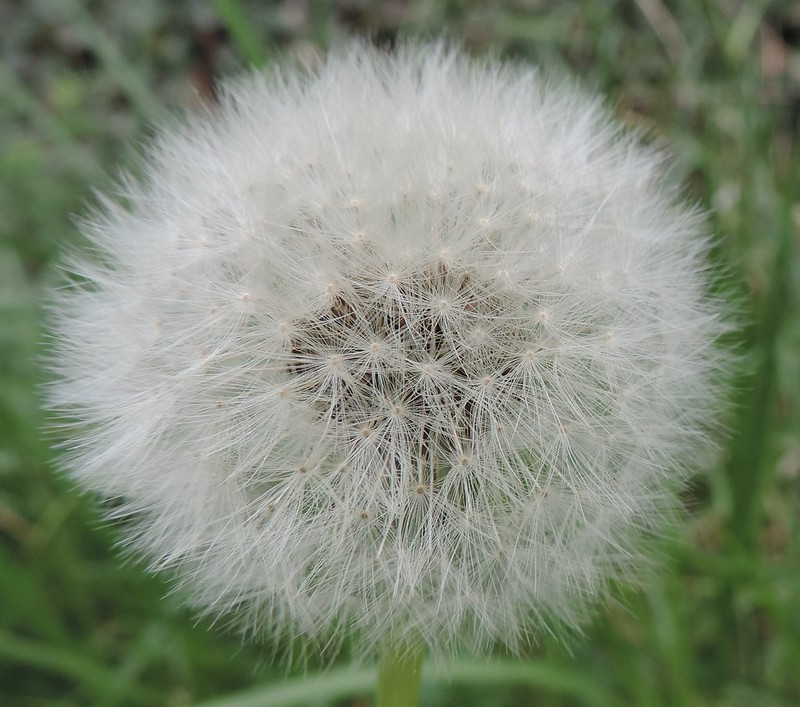
A dandelion seed head – did you ever play with one, blowing the seeds off and counting the number of blows it took to scatter them all, saying that the number equalled the time of day? We even called the dandelion seeds like this a “dandelion clock”.
Strange game when you think about it. Was there ever a relationship between the number of puffs and the hours of the day?
Yet, this image remains a powerful symbol of the passage of time, and hence of change.
It’s one of my favourite images.
i don’t know if you have ever stopped to think about what the inevitability of change really means. You might be surprised to know that it’s only in fairly recent times that scientists have begun to describe the universe in a historical and evolutionary way. Before this understanding there has been a way of thinking based on the idea of permanent laws – laws of physics, laws of the universe, laws of Nature – laws which don’t change. But this idea is undermined by the discovery that the universe is constantly changing. As it changes, it changes itself, because we have also discovered that everything is connected, that there are no “essential fixed, unchanging elements” which are the raw materials or building blocks on which these so-called laws act.
This new understanding shifts the focus from being to becoming, and gives becoming primacy.
All is in a constant process of becoming.
There are no fixed states. There are no permanent entities. There are no unchanging laws.
Yes, there is what endures. Yes, through our lifetimes there is plenty which seems to last. But ultimately, if you take a longer term perspective, nothing endures. Nothing is fixed.
Some people might find this scary. Some people might find the uncertainty this brings hard to handle. But I find it stimulating. Understanding the inescapable nature of change helps you to become aware of emergence – life is in a continual process of emergence – constantly producing the new, constantly creating.
It’s this connection between impermanence, change, emergence and creativity which excites me.
Shifting the emphasis from being to becoming, shifts your focus to the processes of creation. It also moves the attention away from objects and onto connections/relationships and actions. (See my series on this blog under the A to Z of becoming title, for practical ways to explore this)
This “dandelion clock” becomes a symbol of change, and so one of creation – after all it is a SEED head, literally bursting with potential new lives.


 Heroes Not Zombies