Feeds:
Posts
Comments

Archive for the ‘creativity’ Category

DSCN0001

As I walked past Kings Park at 7am this morning I could see the lights of Stirling Castle shining high up on the rock. The rain spotted my glasses, and the cold wind blew against my cheeks. On my iPod, Stevie Ray Vaughan played Voodoo Chile, and wave after wave of thoughts washed over my mind.

I thought, right now, 7am, February 4th, 2014, I am the only creature in the whole universe walking past Kings Park, feeling the rain and the wind on my face, hearing the guitar of Stevie Ray Vaughan in my ears, and thinking these exact thoughts.
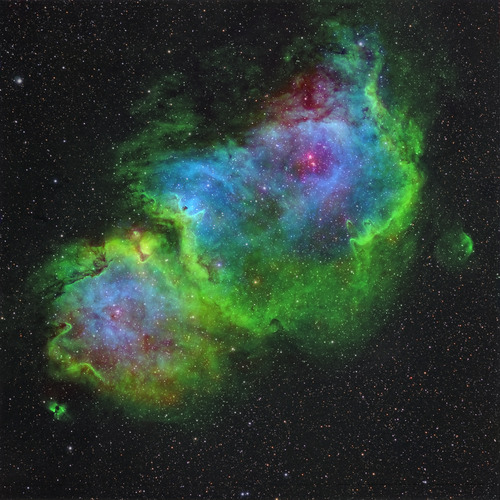
soul nebula

I was struck by the uniqueness of the moment. I was struck by the sense of the universe expanding over the billions of years, developing furnaces of fission and fusion, scattering the elements of the stars far and wide, only for them to collide in a place to become known as the Earth, and for Life to miraculously emerge, and spectacularly evolve from single cell creatures to generation after generation of complex beings we call humans, and here I am…..one, ever changing, distinctly unique manifestation of this amazing story……having this utterly distinct experience of living.
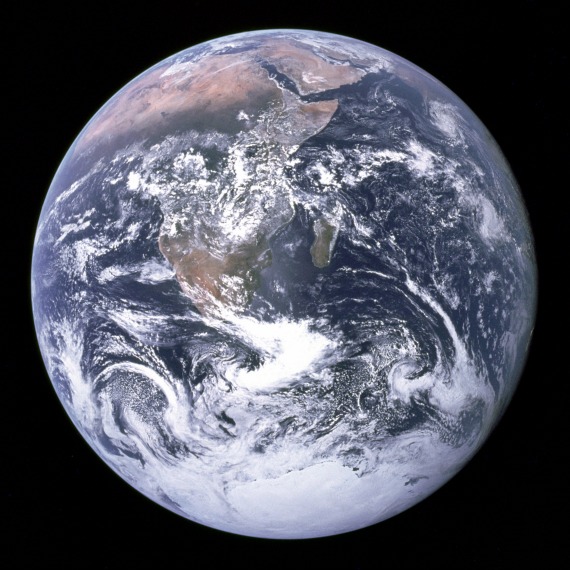
blue marble

Then, on the train, on my phone, I stumbled upon this……

Every man is more than just himself; he also represents the unique, the very special and always significant and remarkable point at which the world’s phenomena intersect, only once in this way, and never again. That is why every man’s story is important, eternal, sacred;

                                                                                                                                                                     Herman Hesse. Demian.

How does that all happen?

I really don’t know

Read Full Post »

fractal cloud


Ursula Le Guin, in the introduction to her selected short stories, “Where on Earth”, says

I had been writing realistic stories (bourgeois-USA-1948) because realism was what a serious writer was supposed to write under the rule of modernism, which had decreed that non-realistic fiction, if not mere kiddilit, was trash. I was a very serious young writer. I never had anything against realistic novels, and loved many of them. I am not theory-minded, and did not yet try to question or argue with this arbitrary impoverishment of literature. But I was soon aware that the ground it offered my particular talent was small and stony. I had to find my own way elsewhere. Orsinia was the way, lying between actuality, which was supposed to be the sole subject of fiction, and the limitless realms of the imagination.

How liberating! How inspiring! Of course, all fiction is a work of the imagination, whether you call it “realism” or not, and, actually, isn’t Life, which can only be lived from the perspective of the subject, also a work of imagination? Or at least, it’s a work of finding that path between “actuality” (the objective Real), and the “limitless realms of the imagination” (how we subjectively interpret and experience that Real)?

I also love her phrase “arbitrary impoverishment of literature”. Why indeed should we limit ourselves to “realism”, especially if that same realism ignores, or worse, denies, the inclusion of the imagination?

Finally, I like that phrase “the ground if offered my particular talent was small and stony”. Isn’t it true that for each of us, our particular talents flourish in quite different environments, or on quite different paths?

Read Full Post »

Atlantic

Kenneth Steven, in his poem of imagined fragments, “A Song Among The Stones”, describes what the journey might have been like for the Celtic Christian monks who are believed to have travelled from Iona to Iceland.
On the first page, these two lines grabbed me

yet this is the place they came to find
an island thin to the divine

That’s a wonderful phrase, “thin to the divine”. I can think of many places where it feels as if the land is thin to the divine, those special places which move and stir your spirit. Off the West coast of Scotland is definitely one of those places for me.

Where are yours?

Read Full Post »

One of the greatest emotions to you can experience. When I teach Heartmath, I ask people to think of a moment of AWE as one of the possible “heart feelings”

If you’re not quite sure what constitutes AWE try this – it is (no, I’m not going to say “awesome” – yuk!) FANTASTIC!


Read Full Post »

entangled

Mary Ruefle quotes Ernest Fenollosa saying

we each only really speak one sentence in our lifetime. That sentence begins with your first words, toddling around the kitchen, and ends with your last words . . . in a nursing home, the night-duty attendant vaguely on hand. Or, if you are blessed, they are heard by someone who knows you and loves you and will be sorry to hear the sentence end.

Well, that’s quite a thought…..the one sentence which meanders around, entwining itself amongst the events and moments of your life (just like this tree growing year by year amongst the temple lanterns).

Read Full Post »

fern eclipse

David Suzuki, in ‘The Sacred Balance’, says

Many have believed in an animated, inhabited, sacred world surrounding them, the natural world that constitutes reality. These beliefs restore our sense of belonging, of being-with, which is threatened by our dividing, conquering brain;

Oh, this connects with so many other things I’ve read these last few months. That last phrase taking me back to ‘The Master and His Emissary‘ – “our dividing, conquering brain” – what a brilliant description of what our left hemisphere does! But it’s this sense of Life everywhere which really captures my imagination. Marc Halévy in ‘Ni hasard, ni nécessité’ writes about the concept of hylozoism….a term I had never encountered before. Look it up. I thought Halévy had invented it as a neologism – but he hadn’t. It’s a very, very old idea which, suddenly becomes very, very new and relevant now. It’s the idea that everything has life in it. He juxtaposes hylozoism to materialism and says

It reveals to us that all matter is alive, that all matter is an expression of life, that all matter is living. (my translation)

Without looking it up right now, I seem to recall Howard Bloom argues something similar in ‘The God Problem‘ too, where he makes the case that even neutrons demonstrate free will.

It seems that Life is everywhere, and that the Cosmos is where we belong, what we are part of, not apart from. Does it make you feel differently about our planet once you realise it isn’t a resource but a manifestation of a living universe

Read Full Post »

Robert Burns statue

David Suzuki writes (in “The Sacred Balance”)

Definition identifies, specifies and limits a thing, describes what it is and what it is not; it is the tool of our great classifying brain. Poetry, in contrast, is the tool of synthesis, of narrative. It struggles with boundaries in an effort to mean more, include more, to find the universal in the particular. It is the dance of words, creating more-than-meaning, reattaching the name, the thing, to everything around it.

Iain McGilchrist, in his astonishing, “The Master and His Emissary“, describes the brain’s left hemisphere approach to the world as analytical, naming, classifying, analysing. And he cites poetry as one of the great functions of the right hemisphere’s way of engaging with the world. The right hemisphere “struggles with boundaries”, sees the connections, synthesises, holistically discovers “the universal in the particular”.

Read Full Post »

DSCN0646


Two important characteristics of nature are uniqueness and change.

Every leaf is unique. The lifetime of every creature, every person on this planet is unique.

And that uniqueness cannot be captured, cannot be measured, cannot be fully described at any one particular point in a lifetime.

No story is complete.

Nothing is fully understood, and, as change never ceases, there is always more to unfold, always more to develop.

I love the wonder and awe which spring up from my heart in the face of uniqueness and change.

I love the humility that demands of me.

To know that I will never fully know means I always have more to discover. To know that nothing is ever “finished” means that every day is a new creation.

Read Full Post »

Facing the Med

There’s a lot of talk around just now about “patient centred care”. It’s one of those concepts that nobody argues against. In fact, pretty much everyone claims to be doing it. If that’s true, then it must mean different things to different people. Or it must have so many aspects, that different people resonate with the concept because they understand and value one of those aspects.

There’s a vast and growing literature on “patient centred care” but I’d like to make a contribution to the debate. I’m writing here from the perspective of a generalist, holistic, integrative doctor. I work at the “NHS Centre for Integrative Care” which, we claim, is a patient centred service within the NHS.

Some health care services are disease centred. There are Diabetic Clinics, Asthma Clinics, Hypertension Clinics and so on. These are specialist services where only people with particular diseases are seen, and where progress is measured primarily by measuring changes in the disease activity.

Some services are therapy centred. When you attend one of those services, only particular therapies will be used, no matter what your diagnosis, or who you are. The two biggies are surgery and drugs. Most services are designed to support the delivery of one of those two therapies. “CAM” (“complementary and alternative medicine”) clinics are often therapy centred too. Acupuncture Clinics, Osteopathic Clinics, Homeopathic Clinics etc. When you go to one of those you will see someone who has specialised in that particular therapy, and they will try to help you using that therapy.

Integrative Care is a patient centred therapy. It delivers individualised, multidisciplinary care using a range of different therapies, based on a holistic, personalised understanding of the individual patient. It is generalist, in that it is not limited to patients with specific diseases, and it is integrated in that it is not limited to the use of one particular therapy.

Now, I’m sure, there are many who will explain why their disease-centred, or therapy-centred service is also patient-centred, but I hope it’s helpful to clarify why an “integrative care” service cannot be defined by either the therapies used, or the disease diagnoses of the patients attending.

Read Full Post »

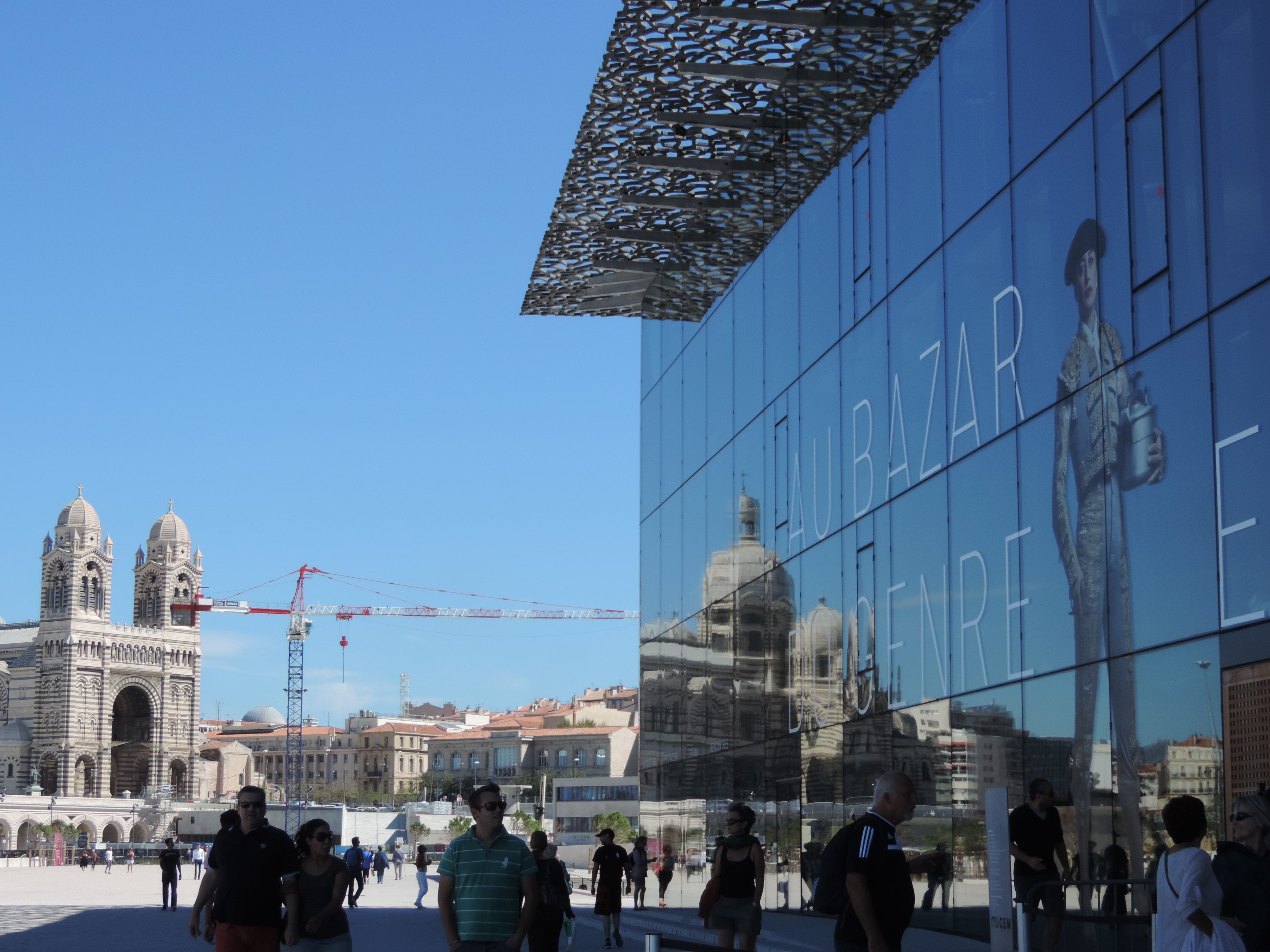
mucemreflect

When I was a little boy I thought that vision was like a kind of projector, casting images from the outside world up into my brain.

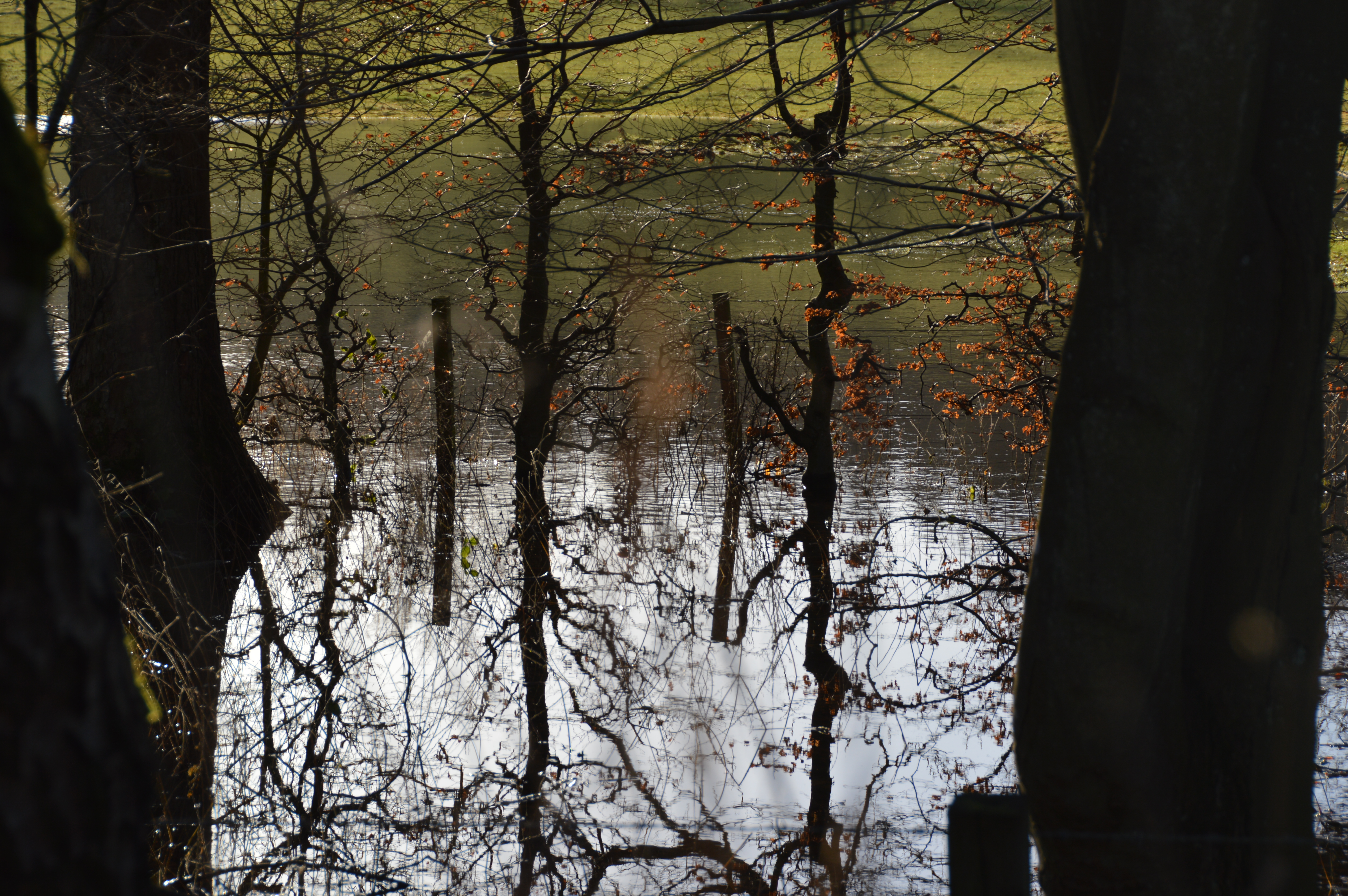
puddletrees

As I got a little older I thought the eye was like a prism, which would capture the outside view  and transmit it upside down onto the back of my brain, then my brain would flip the image back the right way up somehow.

Once I learned more about it I discovered that neither of those explanations are even remotely correct. In fact, (of course), light doesn’t pass through our eyes at all so they are not in the slightest like camera lenses, or prisms. What happens is that light stimulates special cells which line the insides of our eyeballs, and those signals are converted into electric/chemical signals which are sent through nerve cells to the “visual cortex” at the back of the brain – yes the back of the brain! Isn’t it odd that the back of the brain is the bit we use to see with?!

For a while I pretty much left it at that. But then as I learned more I discovered that vision is a MUCH more creative process than I’d considered so far. Not only is there a patch inside the eye which has no specialised cells for responding to light at all – in other words there is a “blind spot” in each eyeball which is incapable of seeing anything, but the visual cortex isn’t even a single part of the brain.

goldman

In fact, nobody has managed to completely map out just how our brains created the experience of seeing. The visual cortex is now considered in six separate areas of the each hemisphere (named V1 – V6) – that is 6 areas for each hemisphere, or 12 separate areas altogether to create our experience of a seamless image with no blind spots or missing bits. Some of those parts respond to movement, some to colour, some to shapes, some are wired to perception and some to actions……really, it’s too complex so far for us to fully grasp.

So, here’s what surprises me – each eyeball has a bit in it that doesn’t create the images we see – we call that bit the “blind spot” and it’s where the nerve cells which lead into the brain gather together at the back of the eye. Then each eye sends its signals to a complex of six different areas of the brain.

woman

And somehow, we weave together all those stimuli, and all those signals and computations to instantaneously create whole, seamless images. Amazing! Really, it’s astonishing.

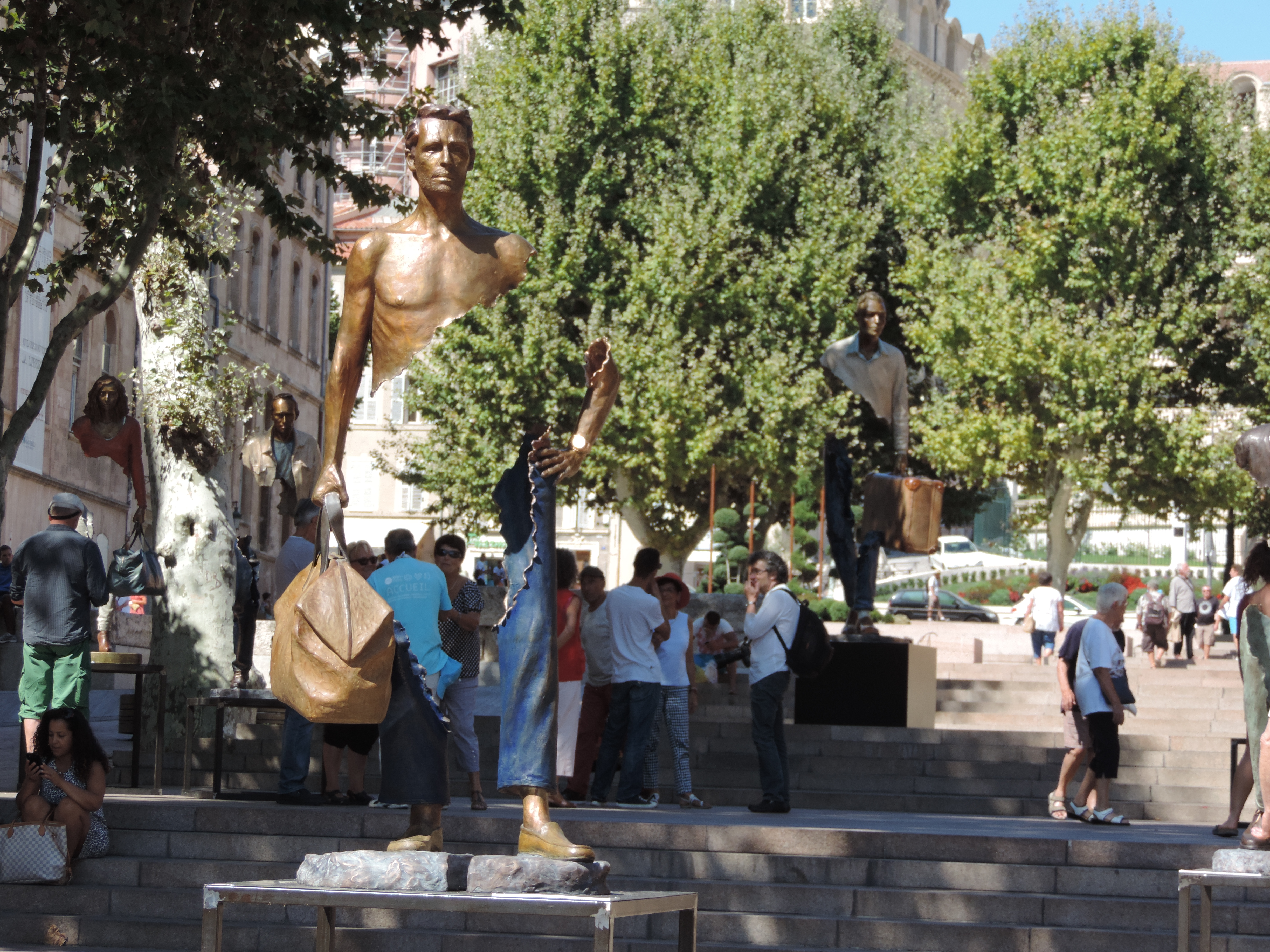
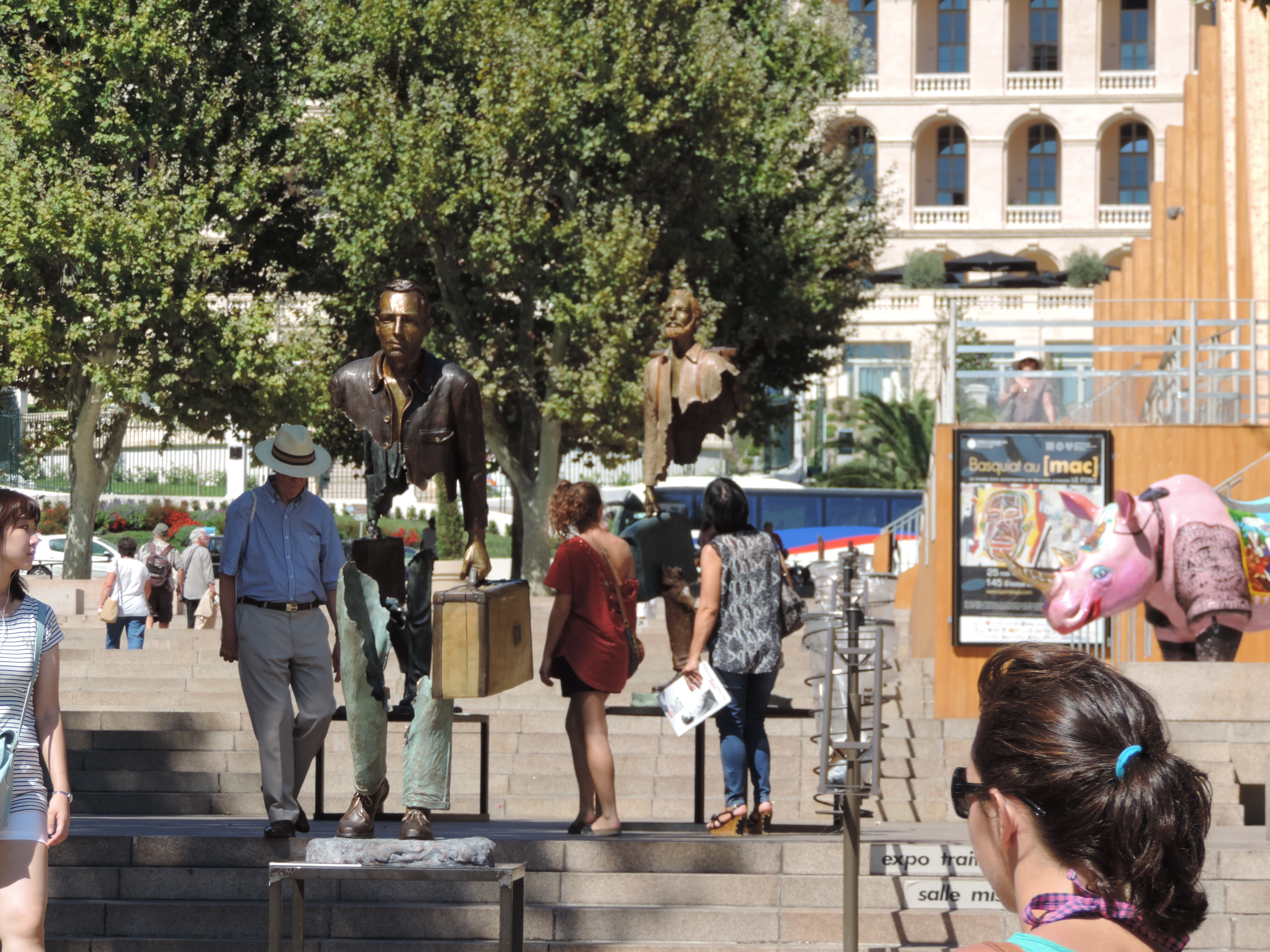
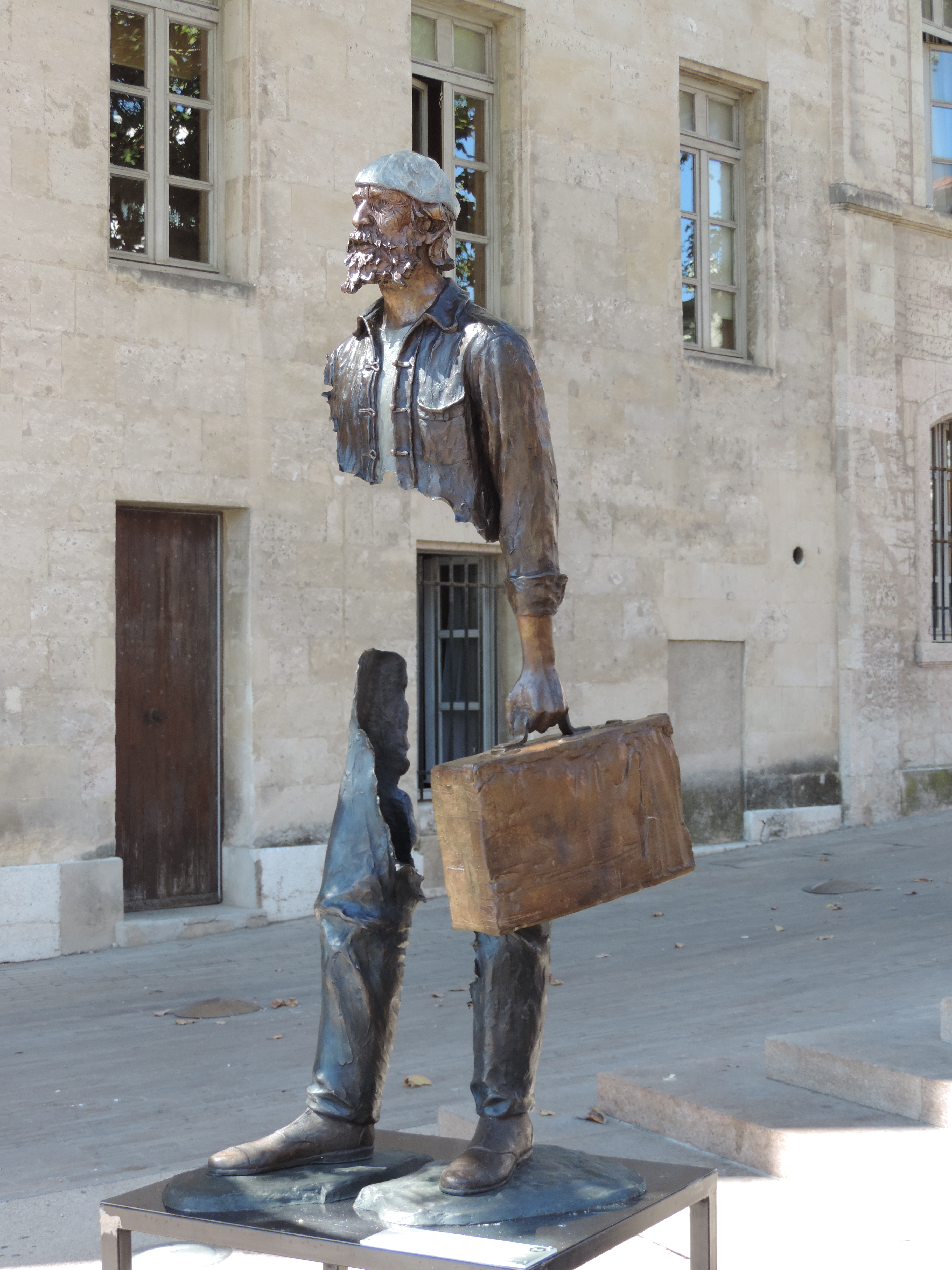
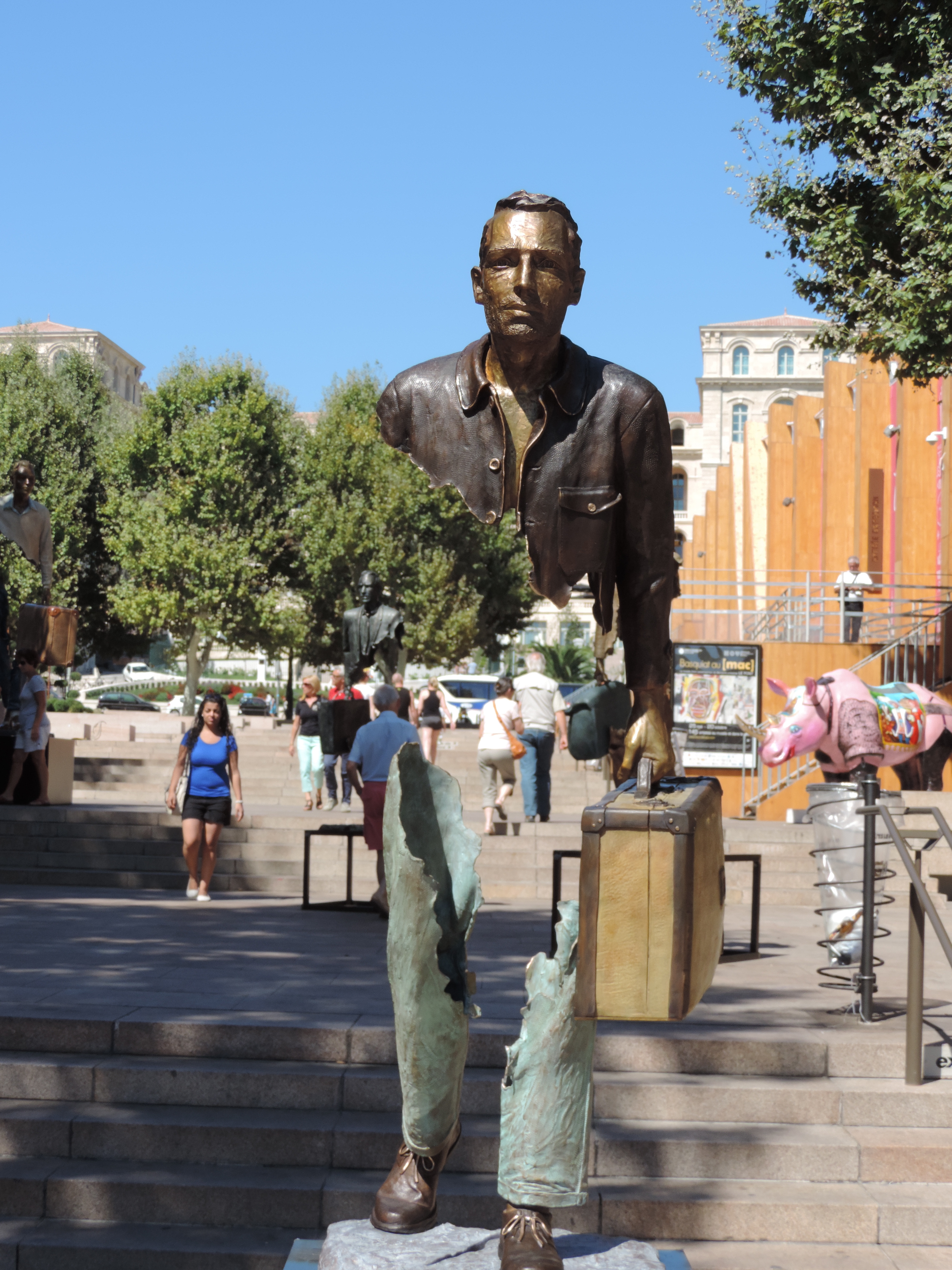
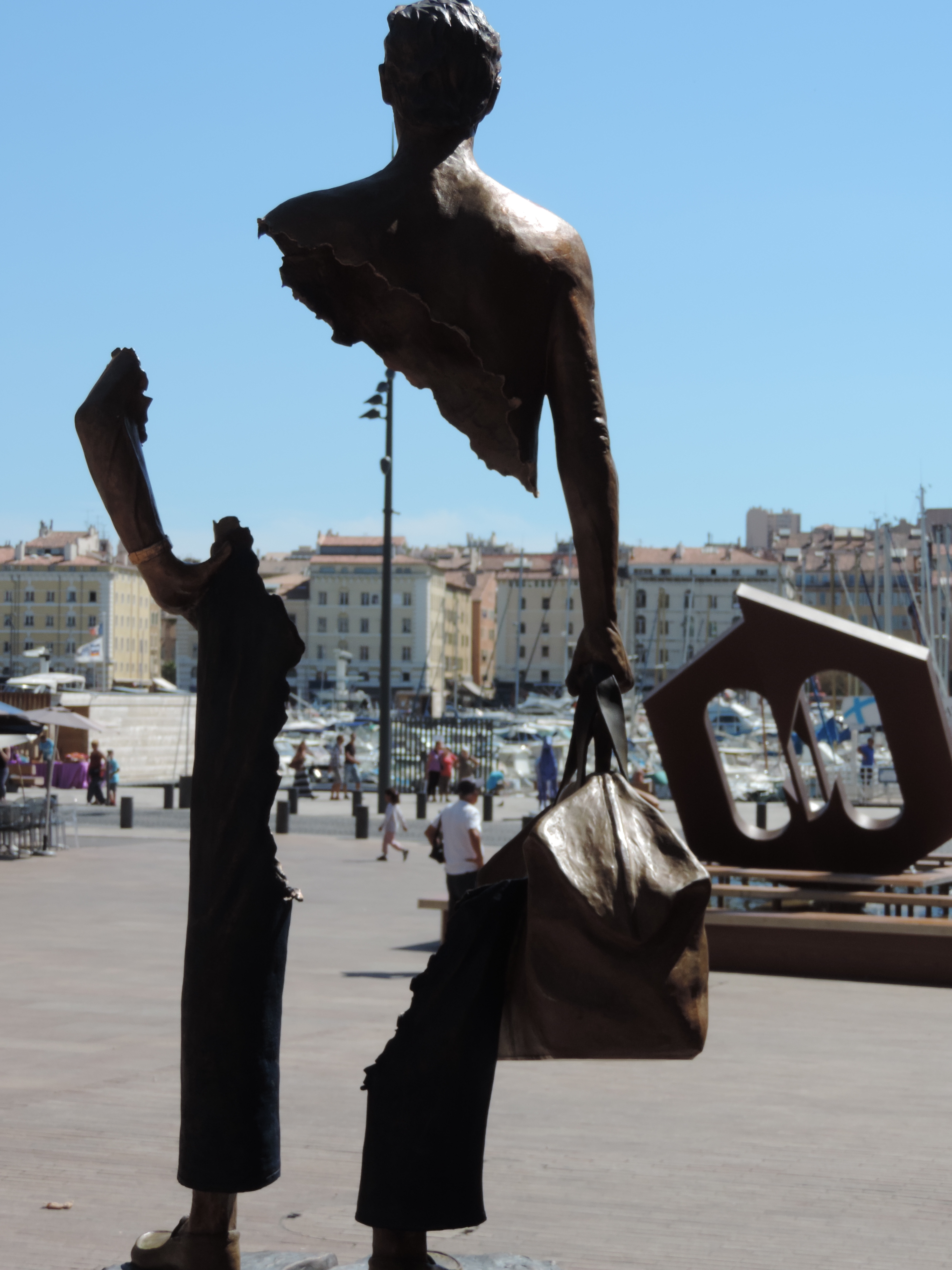
So what do you think of these sculptures which were placed near to the town hall in Marseille?

bandana

travelcase

docker

Read Full Post »

« Newer Posts - Older Posts »