Feeds:
Posts
Comments

Archive for the ‘from the consulting room’ Category

Untitled

Mirror, mirror


In the A to Z of Becoming, R is for reflect.

What does it mean to reflect? I think reflecting has a number of elements. There’s a pace to it. When we reflect, we slow down. Instead of reacting, or “pressing on” with busy-ness, we temporarily stop, pause, take a breath. So taking a moment to reflect acts a natural break, creates that “necessary distance” the neuropsychologists talk about.

There’s an element of checking yourself out too isn’t there? The way we do when we look in a mirror. We see how we seem. We look at how others might see us. Or even without mirrors, but in conversation, or with the help of a journal, we can consider how we are living, what choices we are making, what habits we have acquired. We can think about our direction, our goals, hopes and fears. We can take a moment to reflect on how decisions we’ve taken are working out.

I think reflecting is something I do every day as a doctor too. In psychotherapy and counselling students are taught to reflect someone’s words back to them. This might even be called “mirroring” and when it’s done mechanically, or clumsily, it can feel a bit annoying (“What I hear you say is……..[insert clients own words here]”) but when it becomes a natural conversation, it lets the person reflect on the words they are using, the phrases they are repeating, and the beliefs which are underpinning their current state of mind or body.

When you can spend some time with someone who cares about you and will listen to you without judging you, you can gain some very fruitful insights as you reflect together.

So, here’s your verb for this week – reflect. Try it out and see what happens…….

Read Full Post »

Here’s an interesting article which makes 20 points suggesting that we have a serious problem with drug based Medicine.

Just to keep this nice and simple and direct, let me just pick ONE –

The CDC says that spending on prescription drugs more than doubled between 1999 and 2008

Just take a moment to ponder that one….in NINE years, yes, just less than a single decade, the amount the US spent on prescription drugs more that DOUBLED! What on earth does that mean? Have twice as many problems been cured? Are twice as many people healthier? Has this spending peaked? Is it on the way down now?

What kind of way is this to practice Medicine?


Read Full Post »

Seedling


I woke up up the morning with this phrase in my head “witnessing not measuring”, which was quickly followed by “witnessing not controlling”.

I’ve been wondering about that since.

That’s the essence of my work. I sit with people, engage with them, enable them to tell their stories and be heard without judgement which leads to understanding and recognition. Everything I do therapeutically is intended to support and stimulate the individual’s self-healing. I think this is something we often forget in health care – there really is only one way to heal, and that’s by the person’s own ability to self heal. Stop and think for a moment. If you have a cut, how does it heal up? If you break a bone how does it knit back together? If you have a viral infection how does your throat return to normal? Ultimately it’s done to your amazing capacity to self heal and self repair. Any therapy should assist that process if it is to be effective. It’s not ME who produces healing. It’s not my therapies which produce healing. It’s the patient’s own healing system which does the work.

And I can’t control that. Nobody can accurately predict the outcome of any particular treatment given to any particular individual on any particular day.

We like to pretend that by making measurements we can predict and so control. It’s an illusion.

I amazed every single working day by human beings and their amazing healing powers. Witnessing this is powerful. Understanding and caring come with the witnessing, and therapies are then tried within that context. It’s humbling.

Today I read in Gary Lachman’s excellent “Caretakers of the Cosmos”

Love, for Scheler, was the sine qua non of phenomenology, which in its essential form, is a way of allowing the world to be what it is, without interference by human concepts or aims. It is, in a sense, a way of listening to what the world has to say to us, from which follows the recognition that it has something to communicate, and is not simply a vast inanimate machine.

I think, by the way, there is a lot to be gained from witnessing yourself……whether through mindful meditation, reflective writing, or however you might do that for yourself.

Maybe that’s the third variation of the phrase I woke with – witnessing not judging.

Read Full Post »

Lewis Hyde, in the excellent, “The Gift” writes about the origins of the word “dose”

The French etymologist Benveniste writes: ‘There is a … medical usage in which [the Greek word] dósis denotes the act of giving, whence develops the sense of the amount of medicine given, a “dose” … This sense passed by loan translation into German, where Gift, like Gr.-Lat. dósis, was used as a substitute for venēnum, “poison.”

How fascinating that it began as a gift, and how sad that it turned into poison!

Read Full Post »

tobacco

We are well aware of how tobacco is  major cause of cancer, so when people look at fields of Nicotiana plants they will think they are looking at a plant which is the source of so much disease in the world.

But wait!

Here’s a new study showing that the very same Nicotiana plants produce a protein called NaD1 (snappy name, huh?). The plants produce this as part of their defence against fungi, but it now appears the very same NaD1 can bind with the cell membranes of cancer cells and puncture them, leading to their death.

As one of the reporters who wrote about this said

I am beginning to feel kindly towards the genus Nicotiana (the tobacco plants), which seems to contain a molecule that bursts cancer cells. It just goes to show you that life is full of surprises

The plant which can cause cancer can also be a cancer cure? Well, well, well………..

Read Full Post »

DSCN0872

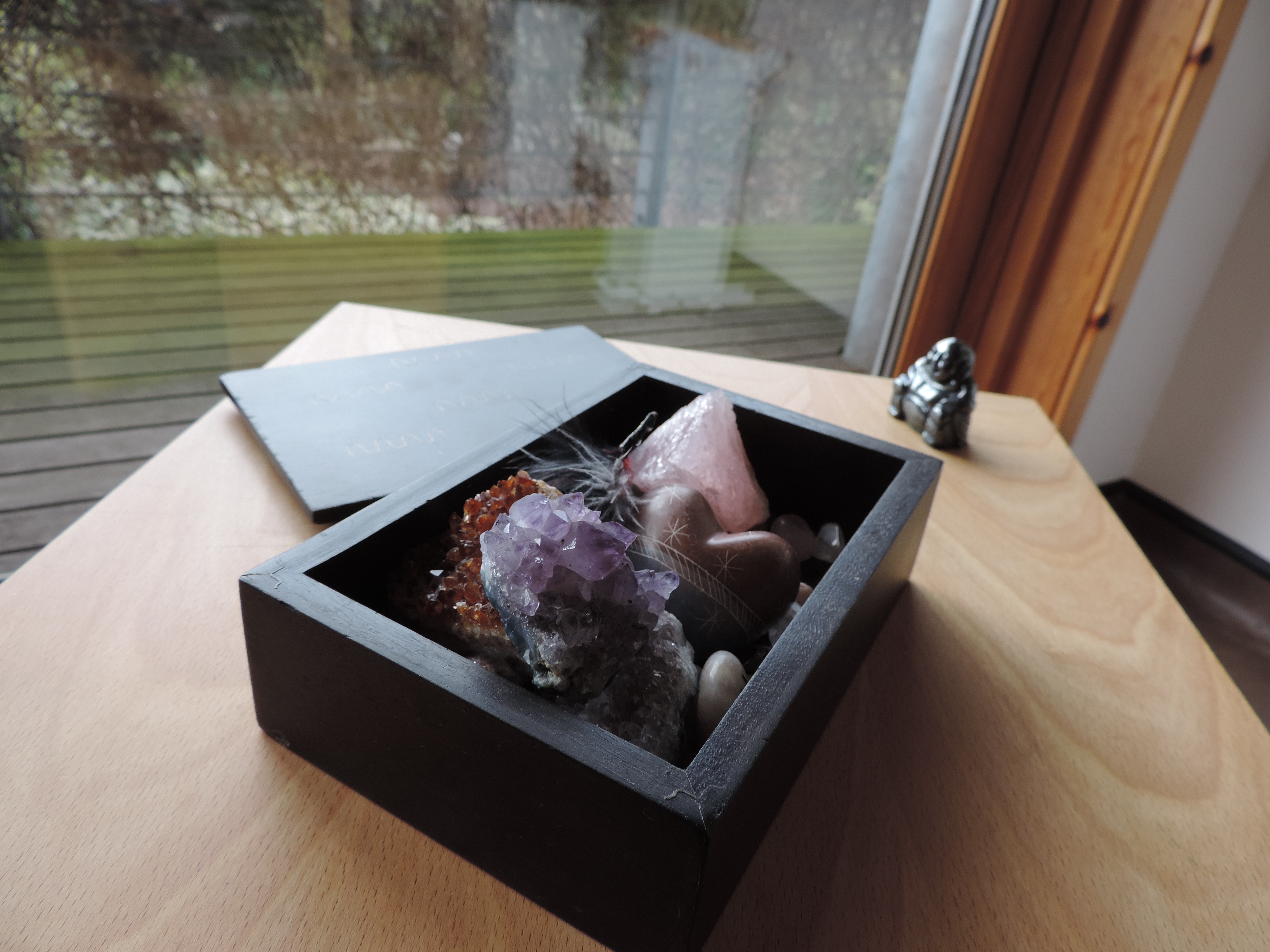
Over the years patients and colleagues have given me little gifts which I’ve collected in this box which sits next to my chair in my consulting room. In some ways I’ve thought of it as my little “cabinet of curiosities“.

It’s often a talking point, but the recently one five year old girl came into my room, made a bee line for the box and squealed “Ooh! Treasure!”

I hadn’t thought of it as a treasure box until then, but that’s what it is.

Have you a treasure box? If not, why not start one? What would you put in it?

Read Full Post »

I was struck by a recent study looking at how much psychosis patients with schizophrenia (SZ) experience on anti-psychotics.

At each follow-up assessment over the 20 years, a surprisingly high percentage of SZ treated with antipsychotics longitudinally had psychotic activity. More than 70% of SZ continuously prescribed antipsychotics experienced psychotic activity at four or more of six follow-up assessments over 20 years. Longitudinally, SZ not prescribed antipsychotics showed significantly less psychotic activity than those prescribed antipsychotics . . . the condition of the majority of SZ prescribed antipsychotics for multiple years would raise questions as to how many of them are truly in remission.

In other words, not only do most patients with schizophrenia who are prescribed anti-psychotics continue to experience psychosis, but those who aren’t prescribed them experienced “significantly less psychotic activity”. What makes this study particularly unusual is that it was conducted over 20 years. This is highly unusual but more real life than the vast majority of studies which are quoted to give a drug “evidence based” status. Maybe it’s just not a good idea to keep somebody on the same drugs for decades?

That got me thinking about a related issue of prescribing drugs to healthy people to try and prevent disease. Think about statins for example. I found a good summary here.

Experts calculate that to save one life, or avoid a non fatal heart attack or stroke, you would need to treat 11 high-risk patients for 10 years.To save a life or avoid cardiovascular morbidity among low-risk patients the number you need to treat increases to 23. But different studies have looked at different types of patients and have yielded different results, so it is difficult to know if this pans out.US researchers estimate that for every 100 people without known heart disease who take statins for five years, 98 would see no benefit, and only one or two would avoid a heart attack that they might not have otherwise

Just read that last phrase again “for every 100 people without known heart disease who take statins for five years, 98 would see no benefit, and only one or two would avoid a heart attack that they might not have otherwise”. Seriously? Is this a great way to a healthier life, if you don’t already have heart disease? Well, for 98 out of 100 people, the answer is “no”. And what about the one or two who might avoid a heart attack? Nobody wants a heart attack, but time and time again, a “non-fatal heart attack” is a turning point for people. They make serious decisions about life style and change direction. They re-assess what is important to them, and if they stop smoking, cut back on their alcohol consumption and/or start exercising for 30 minutes a day, then the health benefits they will experience go way, way beyond the reduction in heart disease risk which a statin would bring.

We just can’t go taking one drug after another to avoid one disease after another, can we?

Doesn’t it make more sense to only take medication for short periods when it is really necessary, and to start to lead fuller, healthier lives right now, no matter what our current state of health?


Read Full Post »

Here’s an idea to think about.

What do you feel when you go into a health care facility? I mean by that a clinic, a GP’s Practice premises, a hospital, or anywhere else which comes under the label of “health service”?

news_1900

Fear?

Anxiety?

Trepidation?

Despair?

Irritation?

Lost and alone?

Confused?

Helpless?

You are probably going to that health care facility to seek better health. Do you think any of those feelings or experiences are conducive to creating better health?

What if when you went to a health care facility you felt –

Safe?

Welcome?

Cared for?

Happy?

Empowered?

Do you think that would be more conducive to health?

I do.

So, why don’t we build the new health services around what creates better health? Why don’t we create places where you feel a little lighter in your heart, a little happier, a little stronger, when you are there? Why don’t we create health care where you feel heard, seen, cared for? Where you feel loved even?

Is that too radically different from what we have?

Is there an argument for continuing to create health services which are associated with fear and helplessness?

Of course, I know a place is both the physical built environment, and the human one created by the people who work there. I’m not just thinking about building design, I’m thinking about the people who work there….are they happy? Are they feeling valued? Are they passionate about caring for you?

I think health care has become way too utilitarian. It’s build around a mechanical/factory model of processes and products. What if we designed it around human beings instead?

What would it look like?

So, here’s my idea for today – describe the kind of health care you’d like to see – in terms of buildings, people, values, behaviours, whatever you think is relevant – and ask yourself how what you describe might contribute towards better health. Or do you think these things should be left to other people to think about? And if so, who do you want to think about it for you?

DSCN6731


Read Full Post »

What’s the connection between health and happiness?

Well, from what I can see from the studies I’ve read there is definitely a correlation – in other words, they often go together. But the exact nature of the connection is complex. For example, it’s pretty much common sense to think that when you’re sick you’re not happy, and when you’re feeling healthy, you are more likely to be feeling happy. But then there are thousands of people with long term ill health who experience happiness frequently, and there are plenty of happy people who get sick!

However, what I find really interesting when thinking about health and happiness, is that the activities and practices which are conducive to good health are also the ones which are most likely to make you happy.

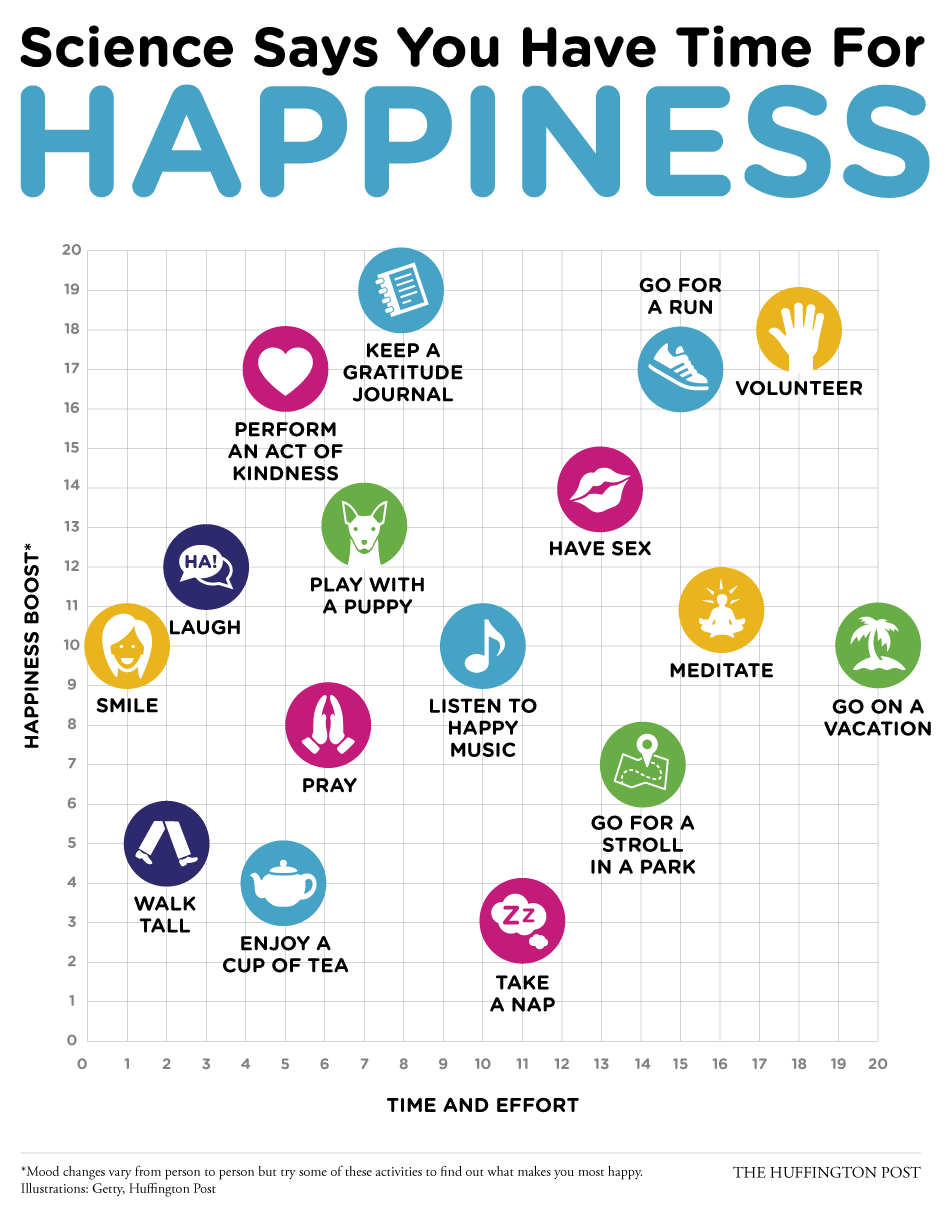
I referred to the graphic below in a previous post about happiness, but let’s take another look.

2013_HappinessMatrix


Think about the characteristics of those who live in the “blue zones“, those areas where a high percentage of people live to a 100 and beyond. Remember the “power 9”?

Well, look at that chart above and see the references to movement – walking, strolling in the park, going for a run; and the ones about “down time” – take a nap, enjoy a cup of tea, meditate. And those about connecting to others – acts of kindness, volunteering, praying and sex!

There’s a lot of evidence about the importance of a Mediterranean diet and good health, and who isn’t happy on vacation on the Med?? And there are the references above to gratitude, smiling, laughing, music and play (and in fact there is a lot of evidence about “positive emotions” like these, and both reduced levels of heart disease, and better recovery from heart attacks and strokes.

So, on a day to day basis, there is plenty you can do to increase your chances of health AND happiness!

Read Full Post »

mitsudomo

Dan Siegel defines the mind as “an embodied process of regulation of energy and information flow”.

Flow is such an attractive and useful concept. If you’d like to read more about it start here.

I like Dan’s definition of the mind because he refuses to turn it into a measurable, objective entity. He describes it as a process – which seems so much more accurate to me. It is a continuous, dynamic, ever changing phenomenon. Not only is it a process however, it’s a process of regulation. He says it regulates energy and information flow.

I think this concept of the mind can be extrapolated to cover the whole organism. Whatever it is that self-regulates, self-defends, self-repairs (in my opinion we can usefully call it “the vital force”) is a process of regulation of energy, information AND materials. Because that’s how all our cells communicate and co-operate – by exchanging energy, information and materials.

So, let’s just consider another of Dan’s concepts. He defines a healthy flow of regulation as having five qualities which he remembers with the acronym FACES.

  • Flexible
  • Adaptive
  • Coherent
  • Energised
  • Stable

A healthy organism has flexibility. Rigidity is one of the two main patterns of dis-order and dis-ease. It uses that flexibility to be adaptive. In other words, as the world changes around it, the healthy organism can change with it in an adaptive way, a way of helping the organism to not only survive, but to grow, to thrive. Healthy organisms are also coherent – all their parts and systems are working synergistically, in harmony with each other. In the absence of energy, organisms become, literally, lifeless. Energised is a key characteristic of all living organisms – you might also use the word vitality to describe the degree to which an organism is energised. Finally, there is stability. Not the stability of stasis, but the stability of coherence. You are you. You were you when you were 10 years old, and you are you now. Almost everything about you has changed between then and now but you still have a stable sense of self – you still know you are you and not someone else! Stability comes hand in hand with identity.

Read Full Post »

« Newer Posts - Older Posts »