Feeds:
Posts
Comments

Archive for the ‘from the consulting room’ Category

I was struck yesterday by a report from the London School of Hygiene and Tropical Medicine which found that almost 12,000 people “die needlessly” in NHS hospitals each year due to basic errors by medical staff.

There was one point in the report which really leapt out for me –

They [medical staff] were not assessing patients holistically early enough in their admission so they didn’t miss any underlying condition. And they were not checking side-effects….before prescribing drugs.

Learning from the events where things don’t work out as well as we’d hoped is a key way for all human beings to develop and improve. Whilst it’s terrible to read about people dying from basic errors in the health care system, there’s a real light of hope in the identification of the kinds of problems to be addressed.

If we could treat people holistically, seeing them as whole people, not as episodes of disease, then we’d have a better understanding of their problems and be better placed to address them. If we paused before prescribing, and consciously considered the potential side-effects and interactions (the harms) rather than prescribing by protocol drug X for condition Y, then maybe we’d reduce over all prescribing as well as prescribing errors.

Read Full Post »

My working definition of health involves

  • Adaptability
  • Creativity
  • Engagement

The third of these is about connections – our connections with Nature, and with each other.

Loneliness is something which not only impairs the day to day quality of life, but, in fact is a factor in bringing about early death which is as strong, or stronger, than other well recognised factors such as smoking and obesity.

This digital toolkit from The Campaign to End Loneliness…looks interesting. Check it out.

Read Full Post »

How come if we know this from economics..

One of the few things that we do know – for certain – about the future is that actions have consequences. In the world studied by the physical sciences of inanimate matter, it is possible to predict the future with certainty. That is because the entities being studied ARE inanimate. They have no power to initiate an action so they have no power to vary their reaction to a force which is applied to them. In the field of the study of HUMAN action, the situation is fundamentally different. No “stimulus” will ever produce the same response on entities which have the power of thought and the power of choice

………..we still practice Medicine as if one drug will produce the same outcome in every person (it won’t).

Read Full Post »

If we take a whole of life view, instead of a short term next few days view, things can look very different. David Healy tells the fascinating story of the patterns of Syphilis across on his blog.

There’s an advanced stage of syphilis known as “tertiary” syphilis, or GPI (“General Paralysis of the Insane”). It presents with psychiatric and neurological symptoms – dementia and paralyses.

Interestingly, this form of syphilis was not described in the Americas where the disease was found. But it became a significant problem back in Europe. Why was that? Even more curious was the fact that prostitutes in Europe rarely seemed to develop this advanced stage of the disease despite having a high incidence of syphilis itself. Yet their clients, the men who paid them, did tend to develop GPI. Only one group of prostitutes in Europe developed GPI – those in Vienna.

There’s a hidden element in this story, isn’t there?

It turns out that the hidden element was Mercury.

Mercury was the standard treatment for syphilis in Europe (“a night with Venus, a lifetime with Mercury”). It wasn’t used in the “New World”. It wasn’t used by prostitutes, but it was by their wealthier clients. Only the prostitutes in Vienna were forced to take Mercury prophylactically by the authorities.

What a great cure, huh? I wonder how many other short term, apparently obvious “cures” or treatments lead to worse disease further down the line? How about this research into inflammatory diseases (which are increasing rapidly)

Increasing evidence suggests that the alarming rise in allergic and autoimmune disorders during the past few decades is at least partly attributable to our lack of exposure to microorganisms that once covered our food and us. As nature’s blanket, the potentially pathogenic and benign microorganisms associated with the dirt that once covered every aspect of our preindustrial day guaranteed a time-honored co-evolutionary process that established “normal” background levels and kept our bodies from overreacting to foreign bodies. This research suggests that reintroducing some of the organisms from the mud and water of our natural world would help avoid an overreaction of an otherwise healthy immune response that results in such chronic diseases as Type 1 diabetes, inflammatory bowel disease, multiple sclerosis and a host of allergic disorders.

Read Full Post »

I remember a few years back there was a Public Health campaign directed at young people who were offered illegal drugs – “Just say no” – was the campaign slogan. Turns out the bigger problem is prescription drugs….

photo

According to the UN report referred to in this sensationalist heading women are more likely to be “abusing” prescription drugs than illegal ones. And the problem is getting worse and worse….

photo

The rate of increase in prescribing is colossal. It simply isn’t sustainable.

The excellent David Healy, author of “Pharmageddon”, points out that in the 1960s it was unusual for a doctor to prescribe more than two drugs to the same patient. Now, 50 years on, ten to fifteen drugs for a patient is not uncommon. That’s truly astonishing.
David Healy has an interesting take on this today. He points out that there was a shift in focus and law in the 19th Century which resulted in doctors, rather than patients, becoming the prime “consumers” of drugs.

Doctors who for centuries had being trying to push quacks and hucksters out of the medical marketplace were being offered the means to conclusively do so. You would only be able to get the drugs that really worked from your doctor. But the bargain was Faustian. Few if any doctors seemed to spot that patients would no longer be the consumers of drugs. If by consumers we mean those who are the targets of pharmaceutical company marketing, then doctors were the new consumers. These new consumers moreover would consume by putting drugs into their patients’ mouths and so would consume without side effects. This was a win-win of which Mephistopheles would have been proud.

As he rightly says

Left to their own devices few of a doctor’s patients would ever take 10-15 over the counter drugs at the same time for indefinite periods no matter what the supposed benefits.

He quotes Pinel as saying about the Art of Medicine –

“It is an art of no little importance to administer medicines properly: but it is an art of much greater and more difficult acquisition to know when to suspend or altogether to omit them”.

That’s what I was taught, but it seems this principle has lost ground rapidly. Nowadays doctors don’t only prescribe to suppress almost every symptom a patient presents, they prescribe for the healthy to stop them becoming sick!

This is not sustainable. It has to stop.

…..doctors are going to have to come up with something extraordinary. They may even need to become a revolutionary class, partisans, who create a space that markets do not readily understand – a space where No is the operative word.

I don’t want to be completely negative here. Understand I’m not arguing for doctors to refuse to help patients. I’m arguing for doctors to rediscover the Art of Medicine, to become patients’ partners in health, helping them to flourish in their lives, during health, and during sickness. I’m arguing for a reality check, instead of reflex prescribing of substances that only dope, and dull, and mask.

Let’s learn how to be discerning and only prescribe as a contribution to the work of assisting a person’s natural self-healing.

The Life Force – the only known way to health.

Read Full Post »

Kat Duff, in “The Alchemy of Illness”, says

There is a curious paradox that surrounds pain. Nothing is more certain to those afflicted, while nothing is more open to question and doubt by others.

It’s strange, isn’t it? How often is pain intensified by the refusal of others to believe it exists? How helpful is it for someone with pain to be told “Don’t worry, the tests are all normal”, with the implication being the pain “is in your head” ie it’s imaginary?

It’s not only pain which cannot be seen, and so, cannot be known by another person. Nausea is the same, as is fatigue, blurred vision, dizziness, itch. Patients present to doctors with symptoms which are descriptions of subjective experience. Why should those experiences be dismissed because any physical changes in the body cannot be detected using our current technologies and tests?

The failure to take pain seriously is part of our ranking “objective” as more important than the “subjective”, but, in my view, it’s the invisible which is the most important…..

Read Full Post »

lightning strike

The long marks on this tree were caused by a lightning strike.

Although struck by lightning, this tree didn’t die, it survived. But it survives changed. The marks of the strike become part of the beauty and uniqueness of its bark.

Illness is like that.

Stuff happens. Bacteria are inhaled or swallowed, bones are broken, hearts are broken. Often we blame these external events or stimuli for our illnesses. We say we have an infection when our bodies develop a fever, pain, inflammation in response to bacteria or viruses. In fact we give the infection the name of the bacteria or virus – we say the patient has “E Coli”, or “TB”, or “measles”, despite the fact that most people who inhale or swallow that particular “bug” might not actually develop any fever, pain or inflammation. Thinking this way externalises the illness. It’s something that happens to us and we are the victims.

But it’s more complicated than that. The particulars of our illnesses are the results of our responses, our adaptive responses, to these events, or, more commonly in chronic illnesses, to multiple, often long distant factors/events. Not everyone with the same diagnosis will have the same symptoms, and certainly no two people with the same diagnose will narrate an identical story of their experience of this illness.

Understanding that illness emerges from within our lives changes the power balance. We reject the victim mindset and open up the possibility that this experience of illness presents us with an opportunity to learn something about who we are, what’s important to us, and how we adapt to the changes in our lives.

We are changed as a result of these responses. Kat Duff, in “The Alchemy of Illness”, puts it beautifully –

Our bodies remember it all: our births, the delights and terrors of a lifetime, the journeys of our ancestors, the very evolution of life on earth………in fact, every experience, from the sight of a field of daisies to the sudden shock of cold water, leaves a chemical footprint in the body, shimmering across the folds of the cortex like a wave across water, altering our attitudes, expectations, memories, and moods ever so slightly in a continual process of biological learning.


lightning in the forest

Read Full Post »

Every day at work I’m focused on trying to understand another person. Every patient who comes to our hospital is seeking, amongst other things, an explanation.

If someone has been given a diagnosis of, say, Multiple Sclerosis, amongst the many questions they are likely to have, are “What does this mean?”, “What does it mean to me, and to my life?”, “How has it come about?”, “Why me?”, “What is this illness and what things are going to make it better, or worse?”

We all have many other questions too, but these questions are amongst the ones to do with explanation.

It’s perhaps even worse when a clear diagnostic label hasn’t been given. When someone suffers chronic pain, chronic fatigue or chronic low mood but “all the tests are normal”. What then? What’s going on?

Explanation involves getting to know someone. If we limit the explanation to a tissue level e.g. “arthritis”, or to an organ level e.g. “angina”, then we stop before we explain this illness in this particular person’s life. And if we want to help the person, not just the “arthritis” or the “angina”, then we’re going to have to take into account the uniqueness of this person’s experience of this particular illness.

A major way we can do that is through story.

It’s through the telling of a story that we gain our insights, and our explanations. For me, two of the questions I want to answer with every patient are “what kind of world does this person live in?” and “what are their coping strategies?”

The kind of world we live in is fashioned by our beliefs, our values and our circumstances (our contexts or environments, physical, relational, cultural), and the way we try to adapt to the changes in our lives are manifest in our default and learned strategies.

In an article entitled, “What do we know when we know a Person?”, Dan McAdams points out that the explainer, or the observer is also important  –

One must be able to describe the phenomenon before one can explain it. Astute social scientists know, however, that what one chooses to describe and how one describes it are infiuenced by the kinds of explanations one is presuming one will make. Thus, describing persons is never objective, is driven by theory which shapes both the observations that are made and the categories that are used to describe the observations, and therefore is, like explanation itself, essentially an interpretation.

In other words, my world view and my coping strategies will influence what I see, what I hear and what sense I make of the patients who consult me. I’ll return to that issue in another post, but Dan McAdams article starts with an interesting conceptual framework for what we know about another person.

Individual differences in personality may be described at three different levels. Level I consists of those broad, decontextualized, and relatively nonconditional constructs called “traits,”…….At Level II (called “personal concerns”), personality descriptions invoke personal strivings, life tasks, defense mechanisms, coping strategies, domain-specific skills and values, and a wide assortment of other motivational, developmental, or strategic constructs that are contextualized in time, place, or role……..Level III presents frameworks and constructs that may be uniquely relevant to adulthood only, and perhaps only within modern societies that put a premium on the individuation of the self…..Thus, in contemporary Western societies, a full description of personality commonly requires a consideration of the extent to which a human life ex- presses unity and purpose, which are the hallmarks of identity. Identity in adulthood is an inner story of the self that integrates the reconstructed past, perceived present, and anticipated future to provide a life with unity, purpose, and meaning.

You can read the full article by Dan McAdams here.

So, how do we get to know someone? Partly it involves knowing ourselves, being aware of our own way of seeing and experiencing the world, knowing what we pay attention to, what we are fascinated by, disinterested in, what we believe and what we value.

And, partly, it involves a focus on the telling of a story – one which “integrates the reconstructed past, perceived present, and anticipated future to provide a life with unity, purpose, and meaning”.

That’s a good start, I reckon.

Read Full Post »

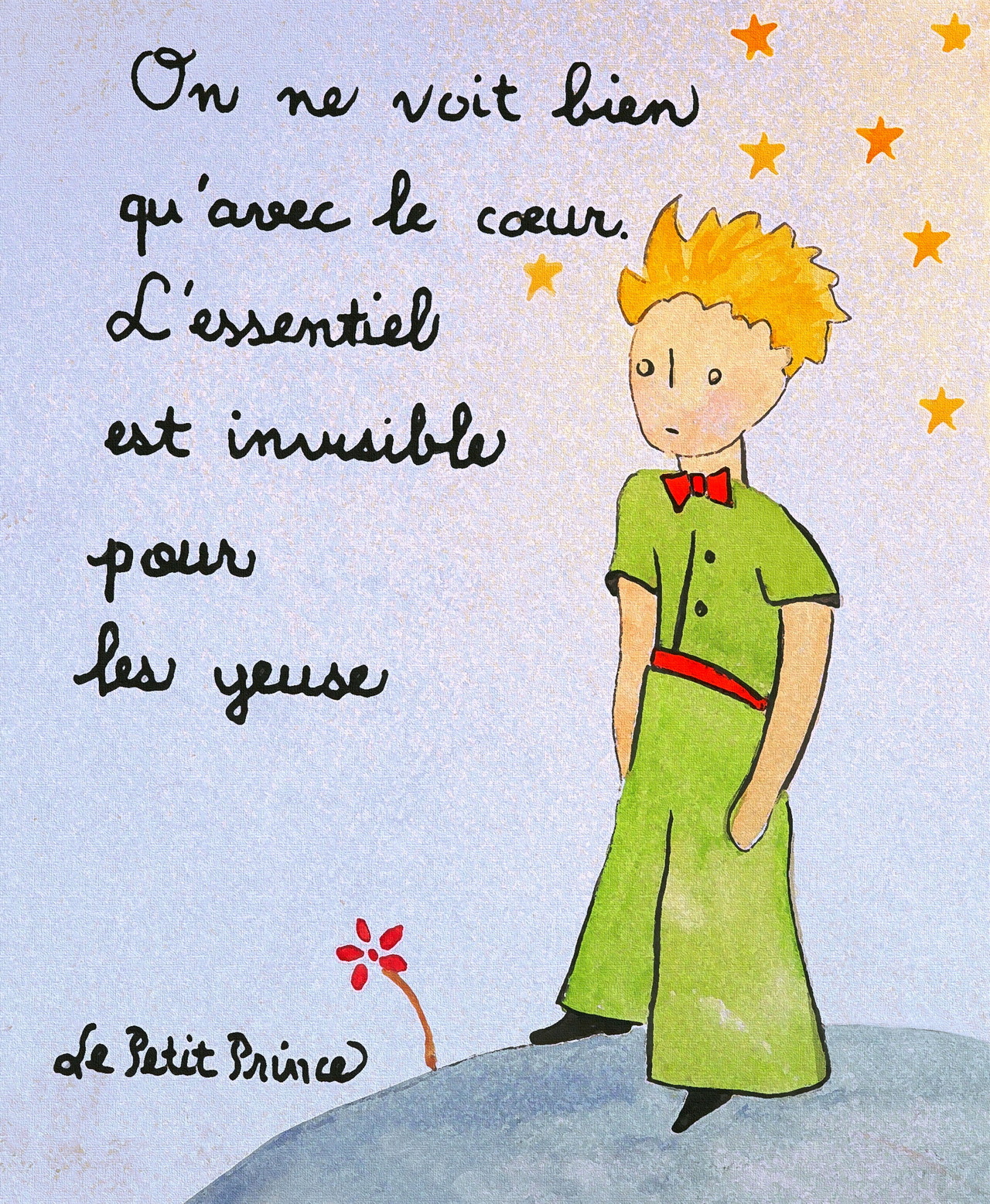
I’ve been thinking recently (again!) about two inter-related dimensions of being human – a creatureliness and a symbolic self, as Becker describes it, or as a visible and in invisible self, a body and a soul….an so on. Then yesterday I read in the superb “The Alchemy of Illness” by Kat Duff –

The Nahuatl peoples believed that we are born with a physical heart, but have to create a deified heart by finding a firm and enduring centre within ourselves from which to lead our lives, so that our hearts will shine through our faces, and our features will become reliable reflections of ourselves. Otherwise, they explained, we wander aimlessly through life, giving our hearts to everything and nothing, and so destroy them.

That set off my thought patterns down several roads…Heartmath and the intelligence of the heart – learning the ways to use our heart-thinking (yes, there is a neural network around the heart which we use to do a kind of thinking). Then I got to thinking, reflecting on a conversation my wife and I had on waking this morning, “imagine what it would be like if what was in your soul actually shaped your face so everyone could see it” – how would you appear to others if what was in your heart shaped your appearance?

Then that last line, “Otherwise, they explained, we wander aimlessly through life, giving our hearts to everything and nothing, and so destroy them.” brought me right back to heroes not zombies, and to Kierkegaard’s line about tranquillizing ourselves with the trivial.

Two hearts……..

two hearts


So, what’s in your heart right now?

Are you in touch with your soul’s purpose?

How are you responding to what your heart has to tell you?

Read Full Post »

There are interesting discussions taking place on financial and economics blogs mainly in relation to questions of control, complexity and the impossibility of certainty. Here’s an example from an article discussing computerised financial trading technologies.

Here is the conclusion of a US study of computer-generated trading recently concluded: “Financial markets are alive, but a model, however beautiful, is an artifice. …To confuse the model with the world is to embrace future disaster driven by the belief that humans obey mathematical rules.” The powers that be have been embracing future disaster on this belief in a manner which goes far beyond financial markets. But in that shrunken context, individuals everywhere have already abandoned that belief. Wall Street and its global counterparts have been trying to do that too, but their problem is that they have nothing to replace it with. The “belief” that humans can be managed by obeying arbitrary rules of any kind is the last bastion of our rulers. It is waning on the financial markets, just as it is everywhere else, with results that no computer program can predict. That’s why the “market model” no longer “works”.

Think of health care from this perspective. The tendency to confuse models with real life is everywhere in contemporary medical practice. Human beings just don’t follow mathematical rules at an individual level. So why treat statistics as if they are not only TRUTH but the only TRUTH?

It’s not only the “market model” which no longer works……

Read Full Post »

« Newer Posts - Older Posts »