I love this photo of a tree in winter. Without its leaves you can see how the tree has a classic structural pattern – a pattern which we call “branching” – no doubt in reference to where we see this most – in trees!
This is a pattern we see in many, many places. You can see how water runs down the mountainsides in small streams which gather together into larger streams, then rivers, until one big river makes its way down to the sea. You can also see it at the coast where rivers form an estuary. You see it in root structures under the ground, as well as in bushes and trees above ground. And, perhaps more for me because of my lifetime work as a doctor, you see this pattern throughout the human body – in our circulatory system, in our lymphatic system, in our urinary system, nervous system, our liver, and especially in our lungs.
So when I see an image like this I see something “universal” – something fundamental. It gives me a glimpse of some of the underlying structure of the world. And I find it beautiful. I love how seeing this in the tree brings to mind all those other locations – out in the countryside and within the human body – so that the single tree elicits a broader and deeper reality.
Mind you, we mustn’t get carried away and think that this is the only kind of structure we find in the universe. Of course it isn’t. It’s just one of THE main ones. Equally, or maybe even to a greater extent, we uncover the patterns of networks and webs.
And in those places where we find a beautiful merging of both of these core forms.
Deleuze and Guattari clarified this best for me when they described these two structures as “arboreal” and “rhizomal”.
Take a look around you and see where you can spot them. It’ll help you to become more aware of how often you use these structures when you think, and when you try to make sense of your world.
“Don’t draw attention to yourself!” “Keep your head down!” “Don’t stick out like a sore thumb!”
Social pressure to conform.
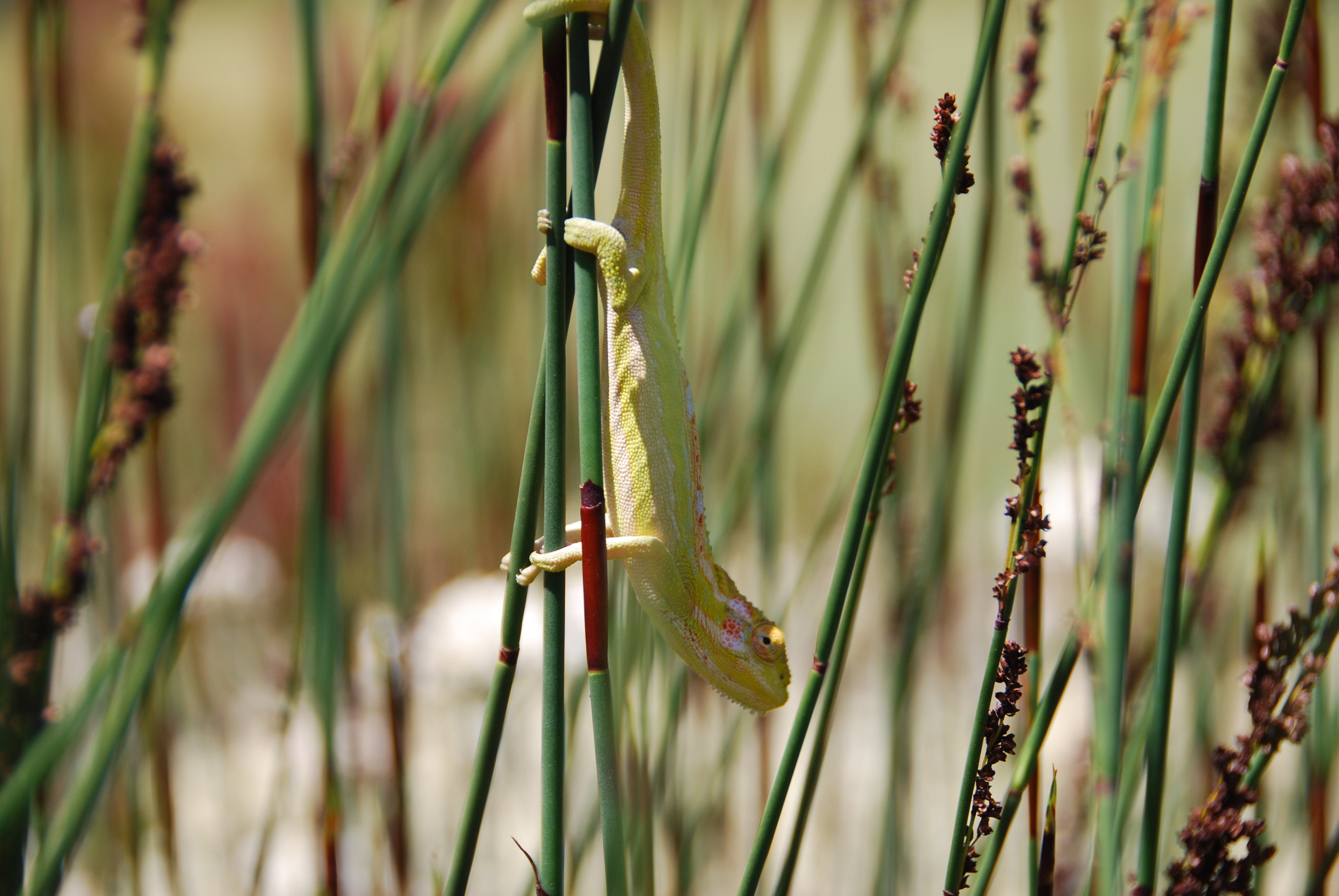
I bet you’ve heard a few of those instructions before. Or others which say pretty much the same thing. The basic idea is that to be safe you need to hide yourself away. Isn’t it a common experience at school that the kid who is really different gets picked on? You can see where all this advice comes from…..as this chameleon demonstrates, disappearing into your environment is a good way to avoid predators, and so stay alive!
But we aren’t chameleons. While there are real advantages to “fitting in” and conforming, every single one of us has a strong sense of Self, and deep feelings of uniqueness. There is, after all, nobody who is “just like you”. The truth is we need to do both – we need to function well socially, which means building healthy mutually beneficial relationships with others, and we also need to develop our autonomy and our self-expression.
The social powers of human beings are incredible, and, as a species, they are responsible for a lot of our survival and development….our success, if you like. But, equally, is there any greater diversity possible between members of the same species as their is between two humans? I’m not sure there is. We’ve evolved such complex nervous systems, such sophisticated bodies and brains. We have consciousness, imagination, language. We just can’t stop ourselves from co-creating and from expressing our uniqueness.
I wrote a book based on “and not or” because I think this is perhaps the most important characteristic we have – the ability to handle paradoxes. It’s built in. The cortex of the human brain is divided into two almost equal parts, with each part (hemisphere) engaging with the world in its own distinct way……the right seeking connections, the new, relationships and an understanding of the raw whole, whilst the left focuses, analyses, labels and categorises. One half giving priority to living relationships, the other most at home with objects and machines which can be measured and controlled.
It’s the same then with conformity and uniqueness. We do actually need both, because we need to be aware of our uniqueness and self-fulfillment involves fully expressing that uniqueness, and we equally need to form mutually beneficial relationships with others, which involves finding points of connection, shared values and desires, tolerance and respect.
When I look at this photo I think “This is what life feels like, and this is what life really is”.
What I mean is this – look at those bubbles (I’m going to guess that when you looked at this photo the first thing you noticed were the bubbles). Each one looks perfect, and perfectly separate from the rest. Each bubble is distinct, different in size, different in location, different in the exact way it reflects the light, and also, although you can’t see this in a still photo, each moving along its own distinct, and different path (there are hints of that in the flows of water currents which you can see creating that marbling effect between the bubbles).
We feel like this. Separate, distinct, different. We feel, and we are, unique. There are no two of us with identical characteristics, identical stories, living in exactly the same time and place having exactly the same experiences. We have a membrane which seems to separate us from the rest of the world. On the outside, that membrane is our skin. On the inside it’s mucous membranes lining our lungs, our digestive system and our urinogenital system. Inside, and within, that, is our immune system, a distributed network of cells and chemicals which recognise “foreign” substances and protect us from their potential harm.
But actually, we are not separate. Those membranes are porous. They are not impermeable. And that’s for a very important reason. They enable us to connect. They enable us to interact with others and with the rest of the planet. They enable us to ingest nutrients, inhale oxygen, expel waste materials and exhale carbon dioxide, amongst many other exchange processes. So, to see them as simple barriers or borders is wrong. They do distinguish what is “me” from what is “not me”, but they enable my life by enabling these, and multiple other connections and flows.
Look again at these bubbles. Where do they come from and where do they go? They emerge from the water itself, and they dissolve back into the water they emerged from. So do we. We emerge within the rest of this “natural” world, come into existence for a brief period of time, then we dissolve back into the great web of being from which we came. In the part between birth and death, that part we call life, we don’t disconnect from that great web. We live in communion with it. We live as part of it, not apart from it.
Life is flow – flow of molecules and chemicals, flow of energy, flow of information. Our existence is a delicate but distinct dynamic interplay of those flows, creating the appearance of separateness and difference, but never disconnecting from, or existing apart from, the whole.
Our lives are distinct and beautiful, but they are not separate.
Why do we open up? Why do we “unfurl”? As I wrote the other day, my word of the year is “épanouissement” – which means to flourish, to blossom, to fulfil – we follow that path by uncurling, unfolding, unfurling, just like these ferns. And why do we do that? Because, just like these ferns suggest – it enables us to connect.
Opening up, vastly increases our chances of making meaningful, healthy, nourishing connections. Closing down does the opposite.
There are times we need to enfold ourselves, to close down, curl up like a hedgehog for defence, but actually, much, much more, we need to do the opposite. Because without making connections we die.
We do not exist in isolation. Even if it feels like we are being asked to do exactly that during this pandemic, what we’ve discovered is that it isn’t possible. None of us can live without the vast world wide web of others…..without whom we wouldn’t have shelter, food, water, comfort or care. It’s the natural state of affairs – connectedness. And connections aren’t worth much unless they act as channels of exchange – of materials, energies and information.
When I look at this photo, I don’t just see two ferns unfurling, opening up, but I see two ferns touching gently, almost as if they are having their first kiss.
Isn’t this what we need to grow in our world? Not grow our consumption of “stuff”, nor grow our production of waste. We don’t need to grow our destruction of ecosystems. We’ve been doing that all too well. It’s time to change course, isn’t it? To grow our connections, our “integrated” connections – the ones which enable mutually beneficial relationships to thrive. We need to grow our capacity for care and creativity. We need to grow our passion for love, tolerance and acceptance. And to do all that we need to open both our minds and our hearts.
This pandemic with its lockdowns (or “confinement” as we call it in France) has been, and continues to be, tough for a lot of people for many reasons. It’s the biggest global disruption of our way of life that most of us have ever experienced. So many “normal”, “everyday” and “routine” activities and experiences disappeared over an incredibly short period of time. Apart from the disruptions of work, family and social life, we’ve seen an end to “mass” everything – no crowds of spectators at sporting events, no theatre or cinema audiences, no music concerts, no festivals…..well, I’m sure you can add to that list.
However, there have been two positive developments which I’ve read that many people have experienced – one inner, and one outer which enhances the inner. Pardon? Let me explain.
With the shrinking of our horizons, physical and social, many of us have been spending more time in contemplation – yes, maybe deliberate meditation or other such exercise, but, also a more general reflection. A kind of reassessment and revaluing. It’s given us the time and space to become more aware of our habits and routines and ask if we want to re-establish them when the time comes (when the pandemic is over).
What patterns of behaviour, what modes of living, what activities have been disrupted that I don’t want to re-establish? That I want to let go off.
What new patterns, rituals, activities do I want to create instead? What new ways of living do I want to begin?
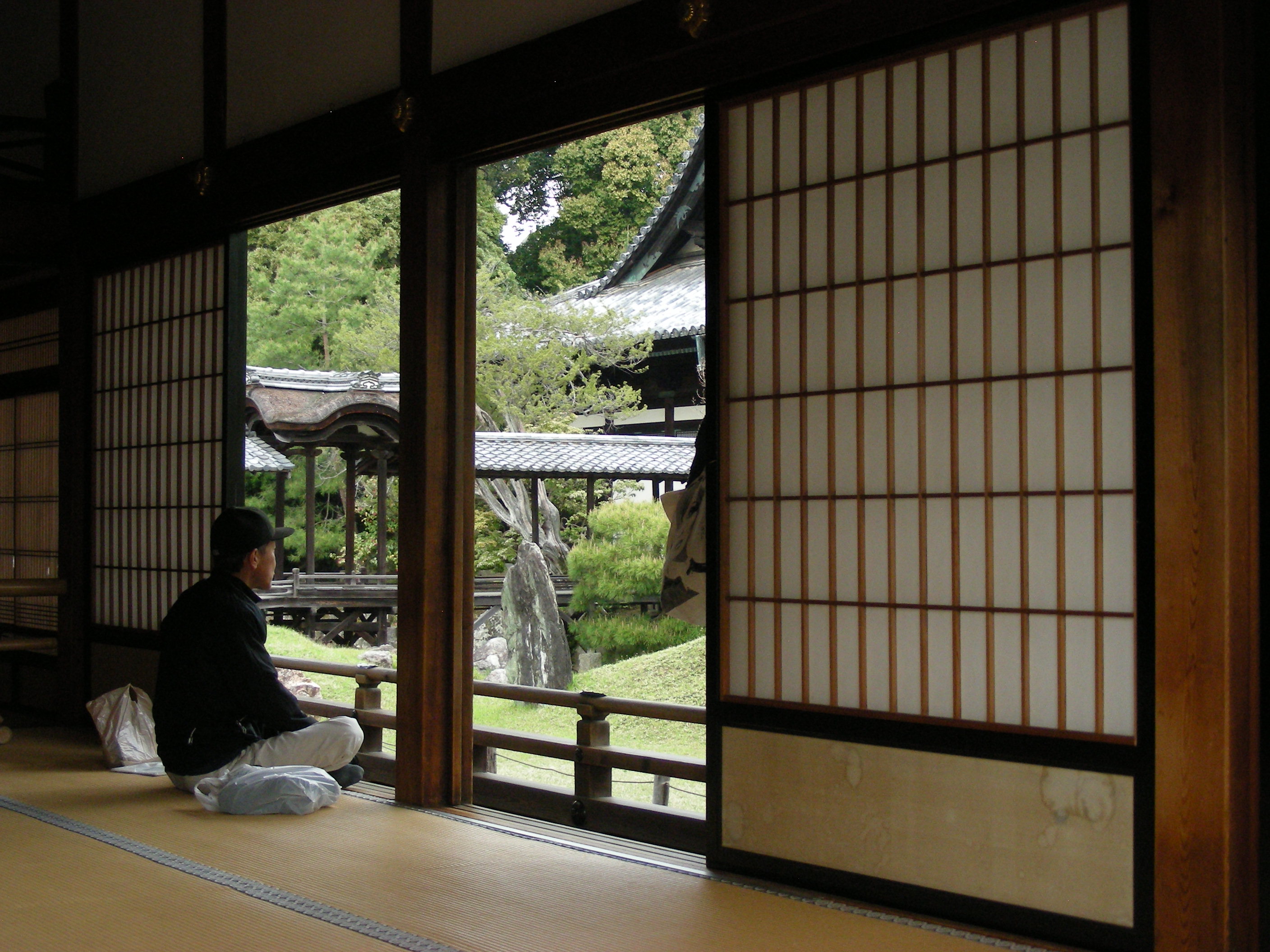
This un-asked for, and, frankly, pretty unwelcome, pause, is a real opportunity for both awareness and change. You don’t need to have a meditation space, like the man in this photo, to do that, but maybe there’s something inspiring in this image anyway? Maybe it would be good to create, if possible, a place, a space, which we find is conducive to contemplation and reflection? Or maybe we can do that wherever we are?
That’s the inner – this is an opportunity to develop our inner selves – to pay some more attention to our physical and mental health and our lifestyles. To become aware of our habits of thought and feeling and ask ourselves if we want to develop along different paths now.
The second is about what we call “Nature”. You know, I’m a bit uncomfortable about talking about “Nature” as if Nature is a thing, and more than that, as if “it” is a “thing” “out there”. We are part of Nature, not apart from Nature. But then, we’ve sort of forgotten that, as a species, and maybe that’s one of the problems which has brought us to this pandemic. So, maybe this is a great time to reconnect, to re-engage, to re-orientate ourselves with regard to the “natural world”.
I’ve found that noticing the cycles of the flowers, the vegetables, and the trees, has become something I am much more aware of now. I’ve found that I’ve noticed many more species of birds in the garden. I’ve noticed that when I’ve had the chance a walk in vineyards, in amongst some trees, or along a sandy beach on the Atlantic coast, then I feel a huge boost. That shouldn’t be a surprise. I’ve written before about the recognised benefits of spending time in the natural world – to the extent that some people now talk about “Nature Therapy“.
There is something truly life enhancing about becoming more aware and more engaged with “the natural world” and from “forest bathing” to spending time in open spaces we know that such activities boost the chemicals in our bodies and minds which influence our immune system, our moods and our thought patterns.
So, connecting better to the “outer” enhances the “inner”.
Again, you don’t need a beautiful Japanese garden like the one in this photo, (although, isn’t that gorgeous?) – but I recommend taking advantage of this time and space to develop your inner self, and your connected self, by grabbing or creating every opportunity you can get to do so.
Contemplation and Engagement with the Natural World.
In many ways this is a very simple photograph. What do you see?
Having ignored the “rule of thirds” in my composition, I’ve put the cherry blossom bang, smack in the centre of the image. It’s literally right in front of your eyes. It’d be pretty hard to respond to the question “what do you see?” without referring to the cherry blossom, don’t you think.
But I’ve long since had a fascination for appreciating the whole over the parts, and in this photo, I think it’s equally difficult to ignore the presence of the “background” – the bamboo – even though I’ve blurred that background for the purposes of contrast.
When I look at this I definitely see “cherry blossom in front of a bamboo forest” – well, I was there at the time, and I remember that. You might not be aware that the bamboo is part of a whole bamboo forest, but you can certainly see bamboo stretching in all four directions to every edge of the image.
This insistence on seeing both the foreground AND the background to have full appreciation of the scene, is consistent with my desire to always take into consideration contexts and environment when I encounter anything. For example, in my work as a doctor, a patient would “present” to me their symptoms, and with my knowledge, plus any relevant physical examination, and, if necessary imaging or tests, then I would make a diagnosis – probably the diagnosis of a “disease”. A “pathology”. But that was never enough. I had to see the presence of this foregrounded disease in the context of the backgrounded personal life story. I had to “situate” the disease into the time, place and meaning of this individual’s life. If I wanted to understand, not just the “illness” as the whole experience of the patient, but how it came about, what impact it is having, and how it might change this person’s perception of themselves and their life, then I had to see them “whole”, not limit my focus to the the “presenting” parts.
I think this same principle applies throughout the whole of life. If I want to understand anything about my life, about others, about this planet we all live on, then I need to see the “whole”. It’s not good enough to reduce reality to a data set, a package of characteristics and elements. I always need to consider the connections, the relationships, the contexts and the multiple layers of environment and meaning. I know that doesn’t sound as quick and easy as focusing just on a part or two, but, hey, who said reality could ever be reduced to what was quick and simple without losing all understanding? Not me.
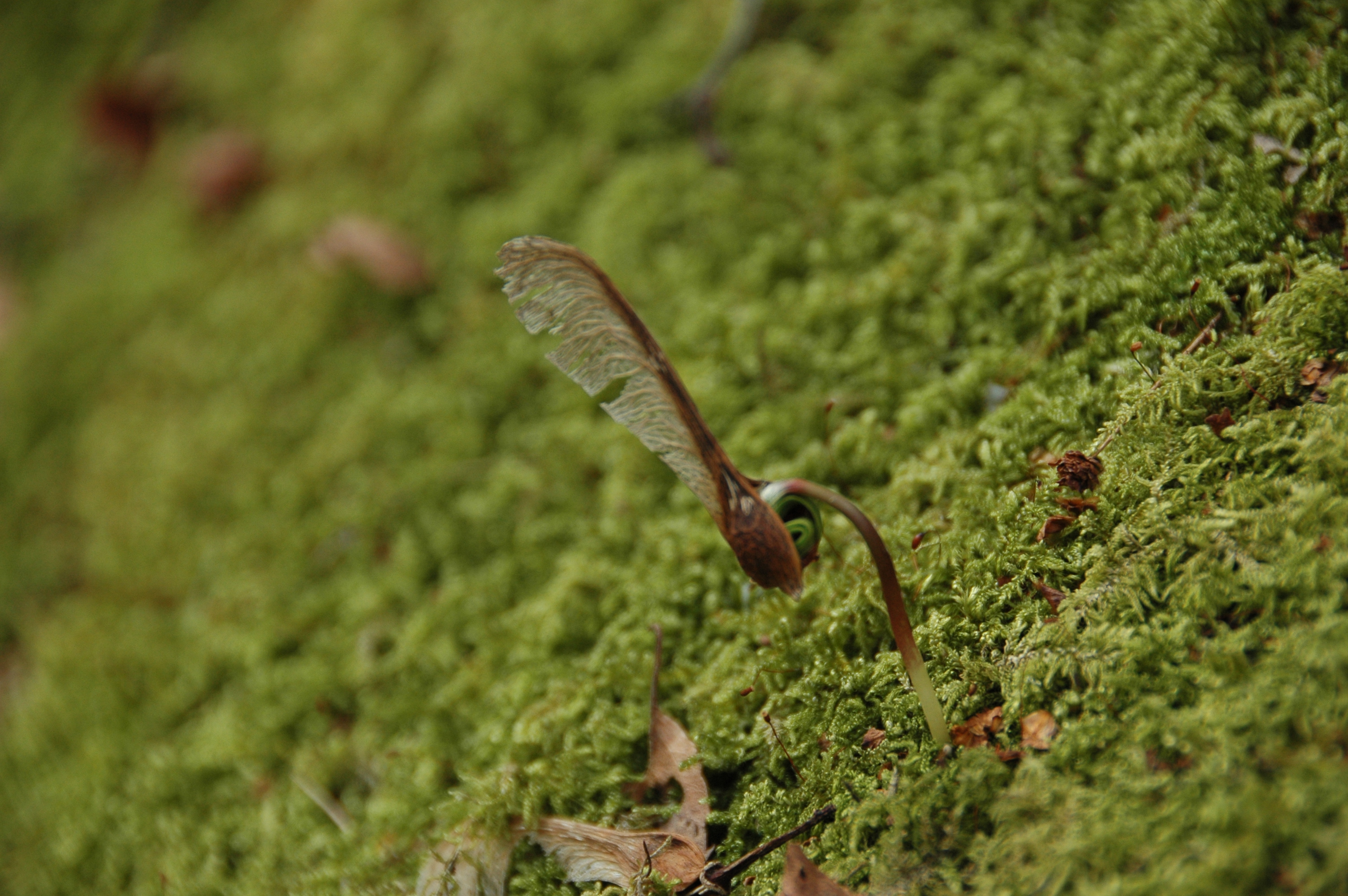
This beautiful little seedling is captivating. I spotted it growing from the moss covered forest floor, the seed casing with its wind driven system of flight and dispersal still intact, but the bright green of new growth clearly visible, and the beginnings of the spiral of unfolding showing us that this little seed has taken root, and is beginning the long journey to become a tree.
It makes me think about the relationship between the tree and the forest, between the particular and the general, between the individual and the group. A relationship I think we tend to get badly wrong. With the rise of statistically driven data collection and analysis, along with the development of algorithms, we reduce the unique person to a point in a set far too often. We pick one, or a handful, of observable, measurable characteristics, categorise them and use them as the be all and end all.
We define people according the group we’ve put them into. In so doing, we fail to see them as unique, individual, human beings. You just can’t know and understand a person from a data set. It’s not enough, and it’s often a fast track down the wrong cul-de-sac.
We make people invisible by reducing them to examples of a group.
All my working life I saw one person at a time…..whether that was in the GP surgery, with a rhythm of one patient every ten minutes or so, or in the specialist referral centre for people with long term intractable conditions, where we’d spend an hour to an hour and half for the first visit, then about twenty minutes for each follow up. In both these settings the rhythm of my day was determined by the scheduled appointments allowing me to give full attention focus to every single individual who came to consult me. I found that a great meditation practice, a great way of continuously coming back to the present moment…..not thinking ahead to who might come next, and not hanging on to the story of the person who has just left the room….but, rather, encountering the crowds, the queues, the “lists”, one person a time.
Of course I learned a lot from all these individuals which informed me about others. But the point is, it was a practice of focusing on the individual, and gleaning the general knowledge from there……not learning the general knowledge and trying to force each person into the right pigeon hole.
I learned from the work of Iain McGilchrist that this was the result of how we use the two hemispheres of our brain. The left hemisphere focuses in, abstracts information from its contexts, labels it and categorises it. It works with sets, groups, and generalities, continuously trying to fit new information into what we’ve learned already. The right hemisphere, on the other hand, focuses on the whole, seeking what is unique and particular in every context, every relationship, every circumstance, endlessly fascinated with what’s novel and what’s particular. As he says in his “Master and His Emissary”, we’ve let the left hemisphere become the dominant one, but evolution never intended that.
It’s time to re-balance, to prioritise the approach to life driven by the right hemisphere and to reap all the potential benefits of the analytic, labelling and classifying left hemisphere by handing those insights back to the right – in other words, by putting whatever we encounter, whatever we understand, back into the contexts and environments in which we found it.
We need to re-learn how to experience life, one seedling at a time. That’s how we’ll grow a healthy forest.
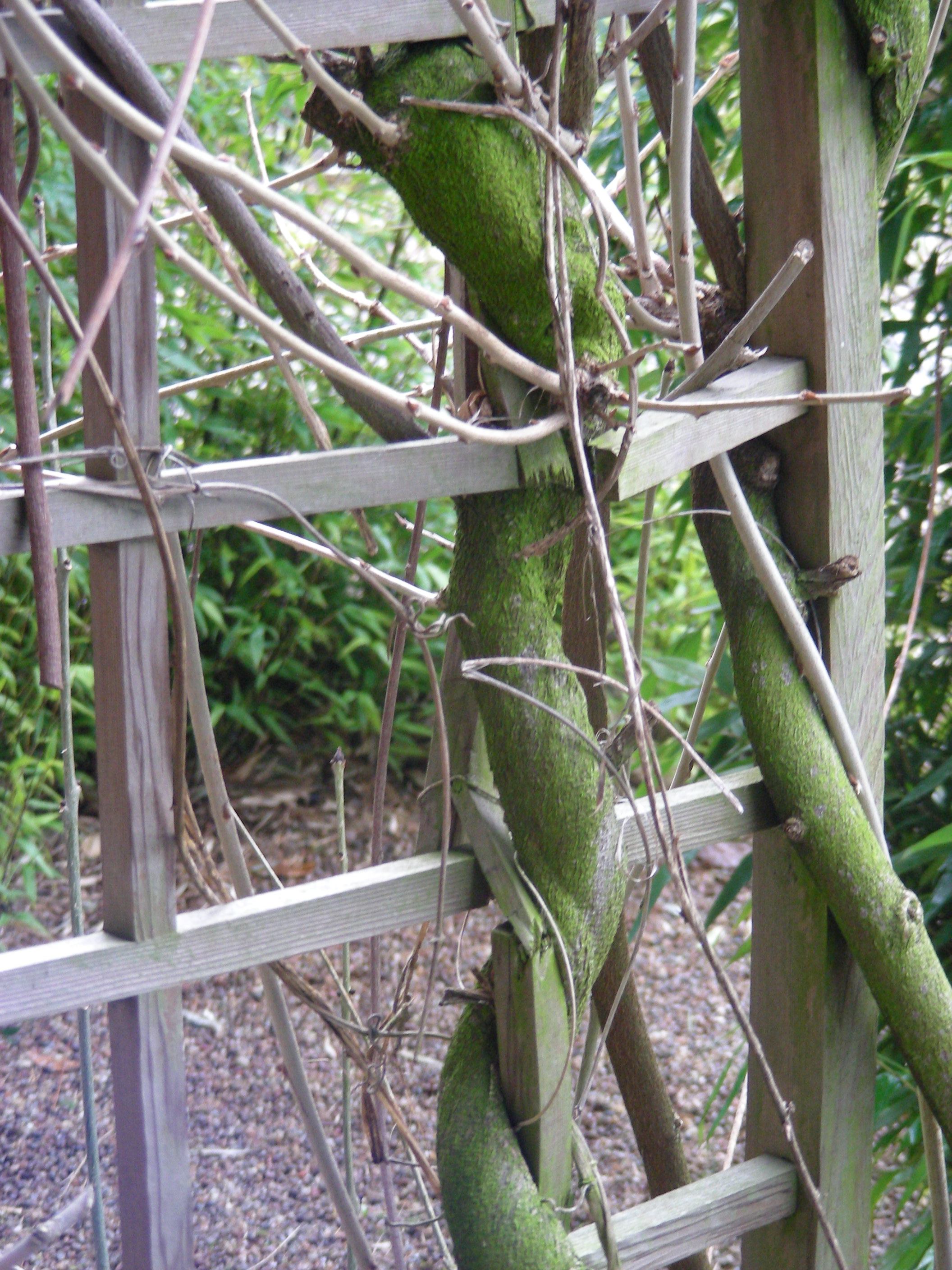
My consulting room at the Glasgow Homeopathic Hospital had a glass wall, half of which could slide open to let you step out onto wooden decking and from there into the garden. Each of the five consulting rooms in a row had that same design, and each of them were separated outside by a wooden trellis with clematis and wisteria growing up towards the upper level of the building.
A few years after the hospital opened and the gardens were laid, I noticed what this climber had done to the woodwork of the trellis as it wound its way upwards. I was astonished. I knew that climbers had great powers to reach out, connect, hang on even, but I hadn’t imagined that these plant stalks could become both so thick and so powerful. You can see this one has actually broken the wooden straps in several places.
Of course, I didn’t notice it happening. We’re not that great at noticing the reality of the present moment, are we? But I sure noticed it this day…..still don’t know why….don’t why it was this particular day and not one of surely many others which preceded it where I might have noticed. Oh well, you can see why I use “heroes not zombies” as my blog title, can’t you? We really do pass through life on autopilot, reacting to overt and covert stimuli which move us this way and that, allowing our attention to be grabbed by the loud, the dramatic, and the shocking. Living, but not fully.
It doesn’t have to be like that, does it. We can wake up, become more aware of the here and now, more mindful, more conscious of life and being alive. We can notice when our attention is caught, when our passions are stirred, and we can choose what we want to do with that knowledge. We can write a new story, our own, unique story, with ourselves as the main character……moving from a zombie existence to a hero one.
When I do that I find that the so called “ordinary” day is filled with what seems to me to be quite “extraordinary”. I mean, just look again at this photo. Think of the Life Force, of the drive to exist, to survive, to grow and to thrive which runs through every living being. And look how it overcomes every flimsy structure, every material object, which we humans fashion and build.
I’m sure you’ve noticed something similar in the surprising appearance of a wild flower, or “weed”, pushing its way up through a pavement, cracking apart the tarmac, or concrete.
This little ice crystal mesmerises me. It’s beautiful. Look at the intricate branching structure of each little bristle of ice. It’s almost like a tiny tree, or, at least a snowy leaf. Look at the way it catches the sunlight and sparkles like a jewel. But maybe the most astonishing thing about it is how it is attached to the iron bar from which it is hanging. Can you see? There is a single icy spike holding the entire structure onto the metal. In an instant you can see that this little piece of frozen water is not only incredibly strong, but that the entire crystal has grown from that single point. Isn’t that amazing?
What I love about something like this is that no matter how much you describe water and its behaviour in cold temperatures, the singular, the actual, the specific, particular ice crystal you encounter takes you beyond the limits of your expectations.
I find that everywhere in life, but, especially so in the practice of Medicine. No matter how much general knowledge I had of diseases, their origins, their life histories, and their likely consequences, I never had enough to know precisely what this individual patient today was experiencing, nor how this disease had arisen in their particular life, nor how their illness would progress. On top of that, no matter how much general knowledge I had of therapeutics, I could not predict, with 100% accuracy, what this individual patient would experience as a result of what I was going to prescribe today.
You might say that sounds like a lot of uncertainty, and I guess it is. A GP’s job, after all, has been described as dependent on his or her ability to cope with, and manage, uncertainty. But there was nothing to despair in there. It was a simple recognition that we have to be humble, because there is always more we don’t know, than there is that we know.
More than that…..it meant, and continues to mean, that the individual can never be encountered, understood and helped as a mere example of the recorded experience of groups. That’s another way of saying that statistics are never sufficient to replace stories. Only this unique, singular human being can tell you what they experiencing, what has happened in their life, what sense they have made of it, and only this unique, singular human being can tell you what effect your treatment has had.
The singular can never be replaced by the averages or “norms”.
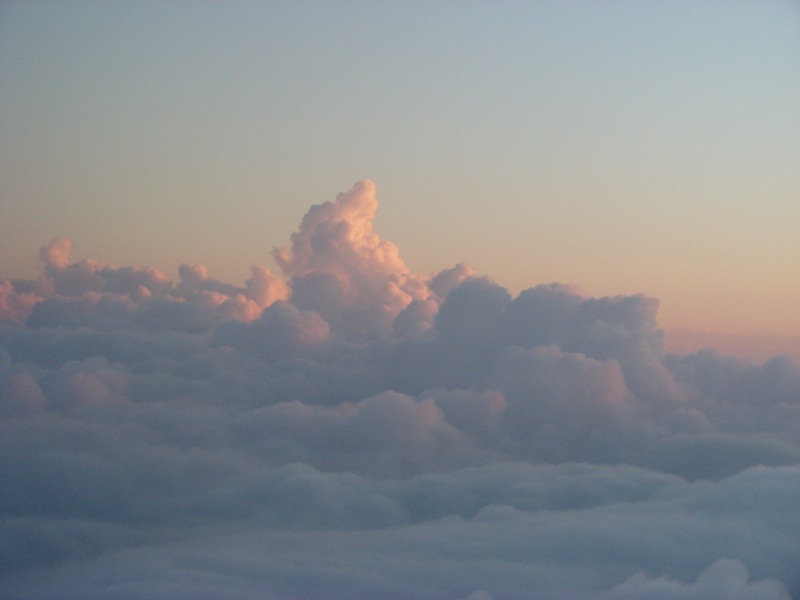
Whether you think of waves appearing and disappearing on the surface of the sea, or of the emergence and disappearance of beautiful forms within a cloud, you know that both the wave and the cloud formation are inextricably connected to either the sea, or the rest of the cloud. Neither exists apart from the environment in which they appear.
We humans are like that too, even if we’ve been pretending to ourselves for hundreds of years that we aren’t. Whether we take on board a religious or a scientific concept that we humans are apart from Nature, we are wrong. Nature isn’t a thing, and doesn’t exist outside of us. We cannot relate to Nature by “dominating it”, or “controlling it”. Partly because Nature is not an “it”, but more so because we are as much Nature as the cloud form is the cloud, as the wave is the sea.
We emerge within Nature, never leaving Nature, never living outside Nature or separate from Nature. Nature isn’t a part of the country to go and visit. But we can definitely understand that the “natural environment” is different from the “built environment” or the “urban environment” – not separate from, or detached from, but different.
There is an enormous amount of evidence that spending time in “natural environments” is good for us. A recent study of 20,000 people showed that two hours a week could be a threshold. Researchers found significant differences in mental and physical health of those who spent more than two hours a week in natural environments, from those who spent less than that. They also found that people who lived in streets with more trees in them seemed to need less prescriptions for antidepressants. Of course, that doesn’t mean we can just replace antidepressants with trees! There are many other factors affecting the environments which people live in. Still, the finding of the benefit of trees, persisted even when the researchers controlled for other social factors.
Of course, we are never really outside of “natural environments”, any more than we can ever be outside of Nature. It’s a matter of degree, isn’t it? We know when there is a lot of life around us – trees, flowers, shrubs, birds and other creatures. What these studies confirm are that we need to be aware of that connection with the rest of Life on this planet. That when we feel cut off from the living world, our health declines.
As we move forward through this pandemic we’re going to have to reconsider how we live, both as individuals and collectively. Some of that change might be best informed by a change of mindset – one which considers that we are “a part” of Nature, not “apart” from Nature.
I welcome constructive criticism and suggestions. I will not, however, tolerate abuse, rudeness or negativity, whether it is directed at me or other people. It has no place here. ANYONE making nasty comments will be banned.







 Heroes Not Zombies