Feeds:
Posts
Comments

Archive for the ‘from the dark room’ Category

DSCN1908


DSCN1865


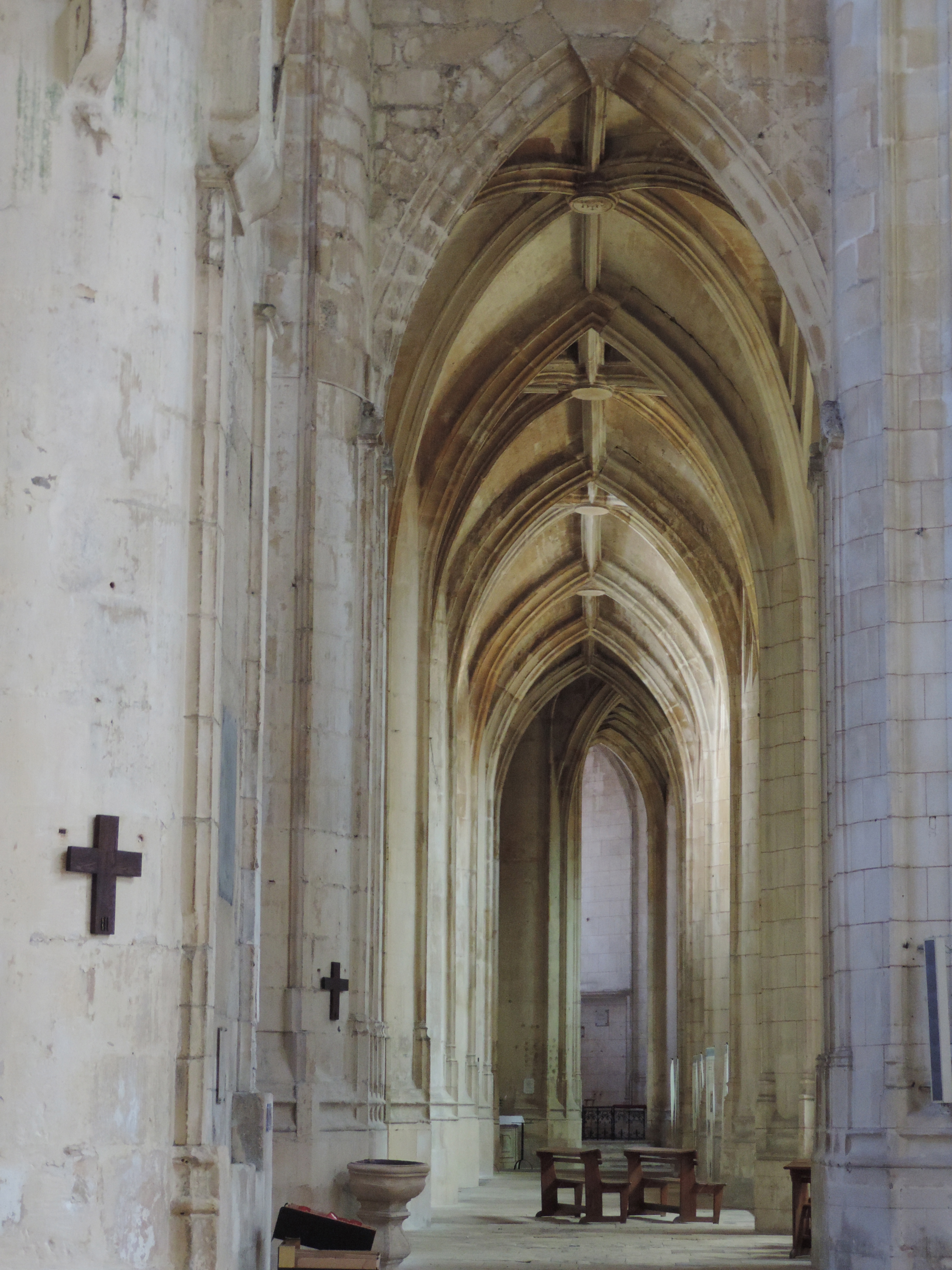
Here are two buildings I visited recently in France. The first is a church and the second is a castle.

In both cases I was struck by the beauty of the arched ceilings and looking at them both together I here I see how different they are and remember how different it felt to be inside each of these buildings.

How do you think the physical space created by the building you are in affects what you feel?

Read Full Post »

OK, I’m going to take a guess….you love books, huh? I’m not going to ask you if you prefer e-books to physical books, or vice versa, but two things recently got me thinking about book buying.

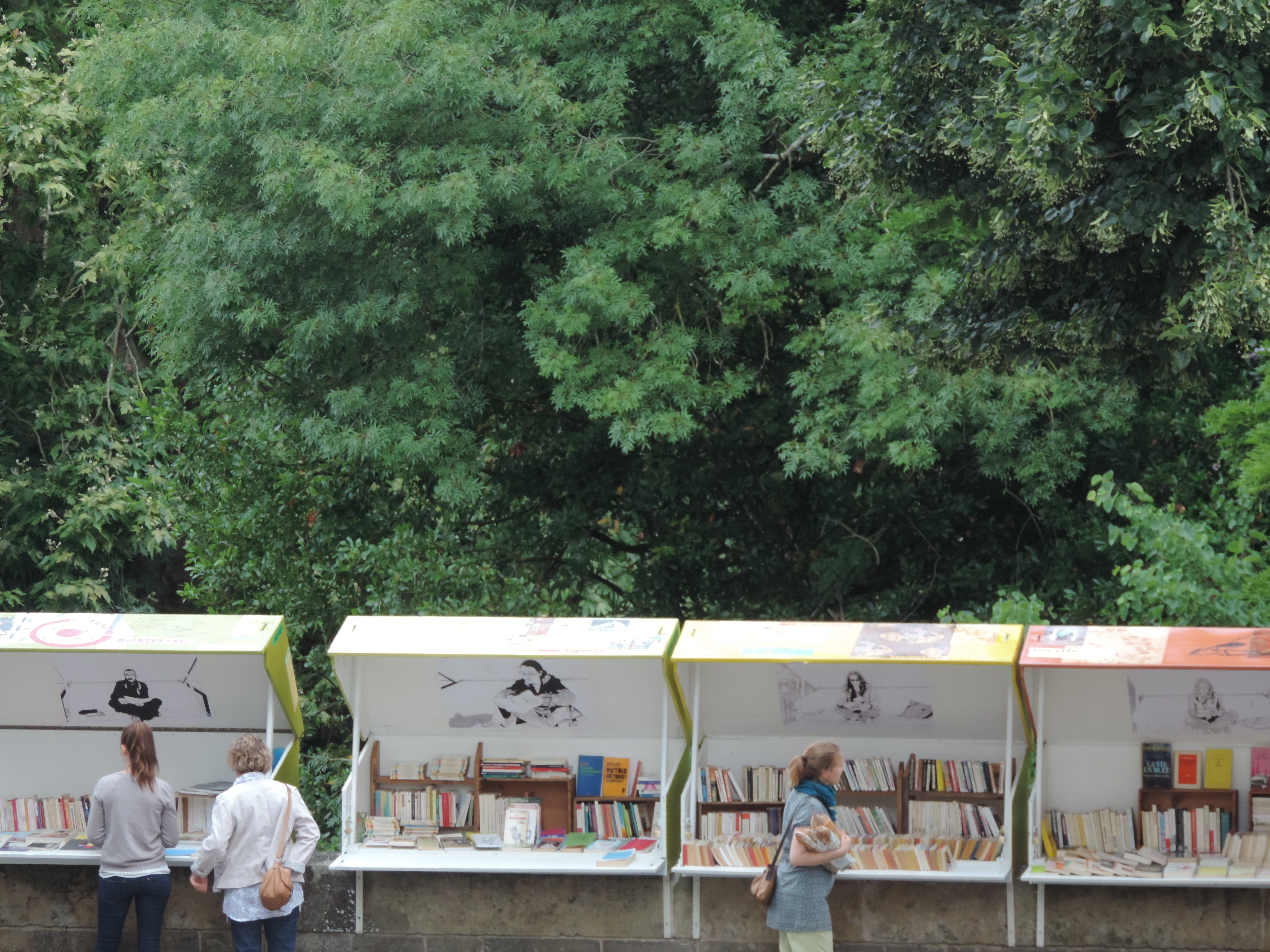
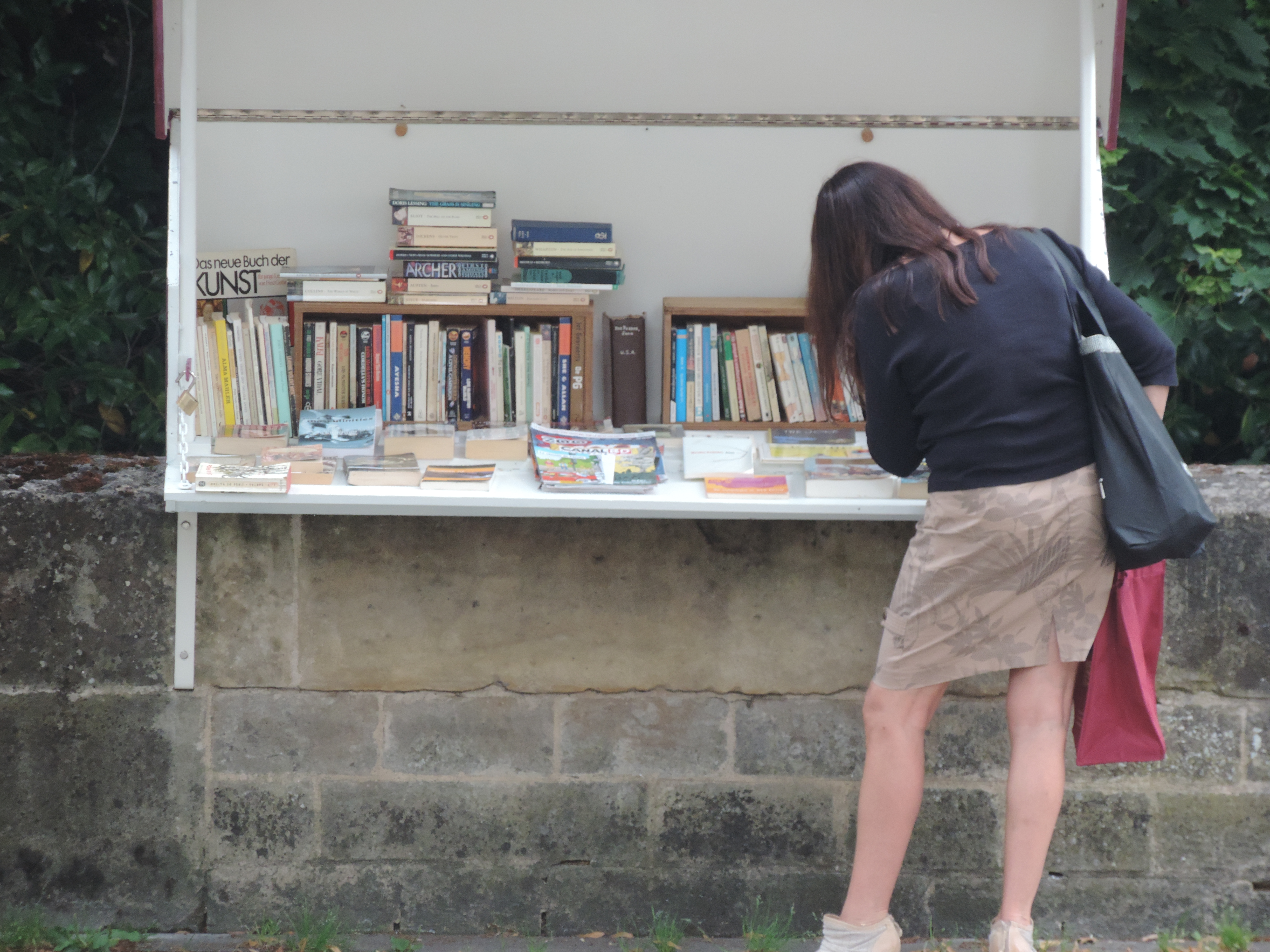
First up was the unexpected discovery of “bouquinistes” in Niort (I’ve only ever encountered this selling books from wooden boxes fastened to the wall at a the side of a river in Paris….didn’t know it happened anywhere else)

DSCN1741


DSCN1742


And the second was reading a fabulous essay by Gustavo Faverón Patriau about reading Borges and buying books. (Click through that link there, and read it, it is a treat)

He talks in that essay of buying books from a street of second hand booksellers in Lima and here’s the point he makes about buying the same books later in the US –

During these years, in Ithaca, New York and Brunswick, Maine, where I live now, I have bought once again many of the books I bought in those remote years, in different versions and editions, books that arrive by mail from unknown bookstores that I suspect do not exist, in parts of the country I have never been to, with yellow “used” stickers, impersonal, books that no human hand puts in mine, books without a context, that seem to materialize at my door. I read them and remember the first time I read them, how they impressed me, and I think of how, in my new copies, they seem to be different books, with different meanings. Now they tell me other things, or they do not tell me anything at all, certainly not what they told me then. The words seem weaker, immaterial, vague, powerless. What a contrast compared with the thrill they provoked in me when I saw those words in the yellow pages of the volumes I bought on Grau Avenue, in the second-hand copies I used to start reading while walking down the street or climbing on the bus, books that, later, when I placed them in my bookshelves at home, used to retain the smell of the street.

Have you ever had an experience like that?

Do you think that where you actually bought a book influences your reading experience of that book?

Read Full Post »

Big rock beach

I noticed this huge rock on a beach recently (OK, I agree, how could you NOT notice it!?)

I suppose I was a little surprised that some people had chosen to sit right in front of it……were they hoping to shelter from the wind? Or were they seeking some shade from the sun? Or, maybe, just maybe, they were working up to having a go at shoving it out of the way?

I’m guessing a LOT of people have wondered about moving that rock. I mean, there it is, sitting RIGHT in the middle of beach! So, why hasn’t anybody done it yet?

Then I got the answer – it’s down to “structured procrastination” –  as John Perry describes it –

All procrastinators put off things they have to do. Structured procrastination is the art of making this bad trait work for you. The key idea is that procrastinating does not mean doing absolutely nothing. Procrastinators seldom do absolutely nothing; they do marginally useful things, like gardening or sharpening pencils or making a diagram of how they will reorganize their files when they get around to it.

So maybe the people sitting on the beach there are doing some marginally useful things instead – like increasing their vitamin D levels by sitting in the sunshine, or measuring the temperature to check for global warming, or counting seagulls to for an RSPB environmental monitoring project, or……..

Or maybe this is not about procrastination at all, maybe it’s about being fully paid up members of the slow movement, like Christopher Richards, the founder of the International Institute for Not Doing Much (Christopher, thanks for sending me an email a few years back, I think my reply might be heading your way soon).

What an inspiration for slowness……..watching a rock change!

Hope you’re able to enjoy a nice slow holiday this summer (and if you haven’t figured out how to use structured procrastination to actually book that holiday up yet, check out John Perry’s book, “The Art of Procrastination” – just make sure you’ve got “Buy with 1-click” switched on)


Read Full Post »
Twilight over the estuary

In the A to Z of Becoming a “D” verb is “de-clutter”.

What does it mean to “de-clutter”? It’s going to mean something different to each of us. I’m not making the case here for a physical environment which is minimalist (although my personal preference tends towards minimalism).

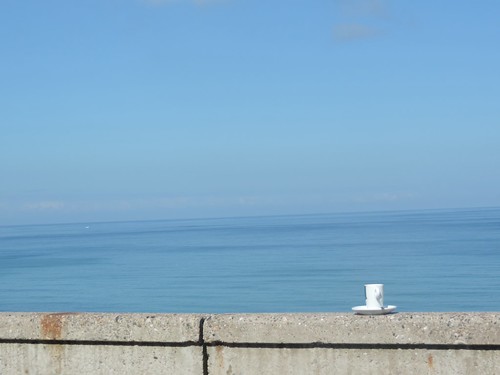
This photo of the sea at twilight looks calm and open to me. That’s the feeling I want to get when I de-clutter.

It’s amazing how much “stuff” we accumulate unconsciously – both physical stuff in our rooms, our cupboards, shelves, drawers (and floors!) – and mental stuff in our heads which we carry around with us everywhere.

De-cluttering for me is just a process of making conscious choices. Do I really want to keep that (whatever “it” is) and if I do, do I want to keep it just there where it is at the moment. I find when I de-clutter I do throw a lot of things away – de-cluttering the bookshelf consists of putting into bags books I have read which I know I’ll never want to read again and then taking those books to a charity shop, or giving them away to friends and relatives. De-cluttering a room is often more a process of tidying rather than throwing, or giving, anything away. De-cluttering a wardrobe involves trying clothes on to see if they fit (and realistically am I EVER going to be that size again??) and if they don’t, out they go.

De-cluttering might take effort but once you start the liberation and freedom and space which starts to emerge can be quite thrilling.

De-cluttering your mind is something else again. Meditation practices definitely help to de-clutter the mind. Just taking the time to watch the stuff (the thoughts) which are looping through your mind and watching them go is a de-cluttering all to itself.

Go on, make some space – in your room, in your house, in your head!

Read Full Post »

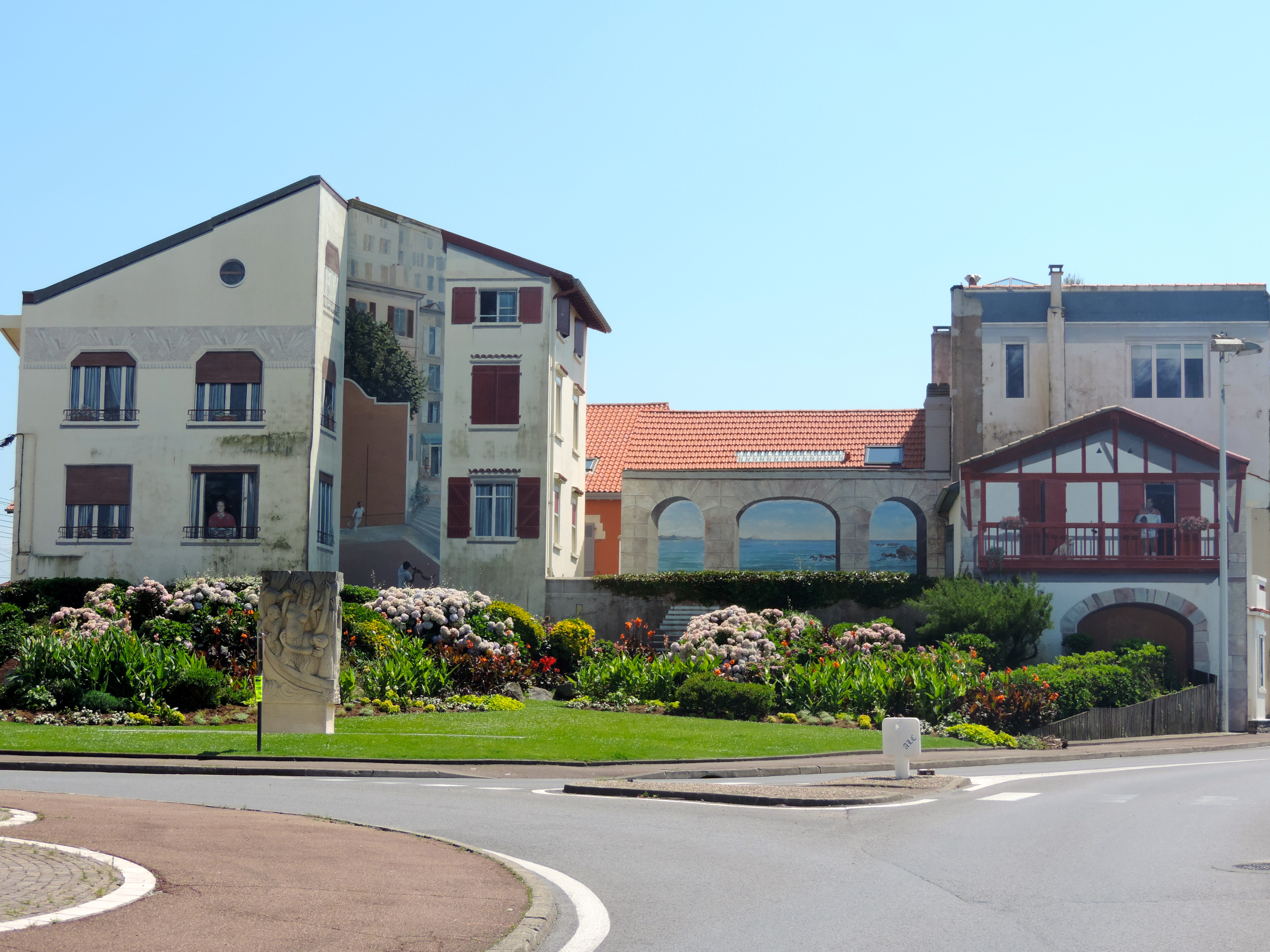
What do you see?

trompe

I saw the gable ends of a couple of blocks of flats.

I saw a woman looking out of her window and a man with a rugby ball in his hand standing on his balcony.

I saw the see through the arches.

Then I looked again……..

I saw a mural.

This provokes two thoughts for me –

Firstly, how often do we take the time to really see what we can see? What’s familiar is often worth a brand new look.

Secondly, how much attention do we pay to the creation of our lived, physical environments?

Read Full Post »

There’s a classical teaching about living life to the full which says to embrace each experience as if it is the very first time you are having this experience (which is true…..every experience you have today is for the first time). This is quite like the mindfulness or awareness teachings which tell us to be fully present, as fully aware as possible, as much as we can. This, in fact, is the essence of “heroes not zombies” – it’s about waking up, living consciously and not on autopilot all the time.

There’s another teaching which says to embrace each experience as if it is the very last time you will be having this experience (which is also true……you will never have exactly the experiences you have today ever again).

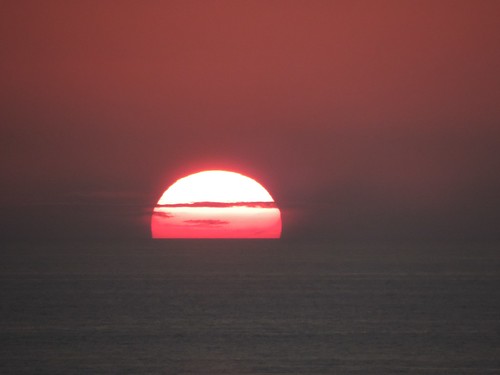
I find both these teachings come to mind as the sun rises and the sun sets (or Earth Falls and Earth Risings?). Have you ever seen the movie, “City of Angels”? (an American re-make of Wim Wenders, “Wings of Desire”) There are beautiful scenes there where the angels all gather on the beach each morning to experience the sunrise. To be quite honest, I’m not out and about experiencing sunrises all that often, but the other end of the day, sunset, is an equally entrancing event.

If you are ever somewhere where you have an unobstructed view of the sun setting, you’ll likely see that you aren’t experiencing the sunset alone. I was lucky the other day to watch some spectacular sunsets from Biarritz, watching the sun sinking below the horizon of the Atlantic Ocean (and, no, I didn’t see any green rays)

The play of the light on the waves and the wet sand were amazing…..


Sun set light on surf

Low sun on sand

Sunset Biarritz

Setting sun up close


Live life fully today – living every single experience for the first time and the last time.

Read Full Post »

Breakfast

I’m sure we all fall into routines or habits quite easily. As I was having breakfast yesterday here in Biarritz (on holiday!) I got to thinking about how our start to the day influences our experience of the whole day.

I imagine that starting the day with an expresso and a croissant taking in a view like this might set up a good experience for quite a long time!

But I wonder what our routine morning starts set up?

Do you start the day in a rush?

Do you start slowly?

Do you have breakfast or grab something on the run? Or do you meet up with friends or colleagues in the same cafe each day?

Do you watch, listen to, or read the news, and fill your mind with stories of deaths, disasters and crimes?

Do you start with meditation, or exercise, or reading (and if so, what do like to read first thing?)

However you start your day, why not try changing something…..and see how that feels?

Read Full Post »

La libellule

I came across a discussion the other day where various scientists were asked to say which species would take over the Earth if human beings eliminated themselves. (I think the question was provoked by the movie “Planet of the Apes”)

The discussion raises interesting questions for us. What does it mean “take over the Earth”?
In what sense? As one of the respondents pointed out bacteria have already far exceeded human beings in numbers (also in sheer biomass) and in adaptability – there are bacteria everywhere – in the mouths of volcanoes, in ice flows, at depths of the ocean unreachable by human beings and living on, and in, human beings to the extent that about 90% of the DNA found in your body is bacterial.
Insects such as ants also exceed humans in biomass and numbers and can co-ordinate activity amongst millions in ways which are just astonishing to human beings.
Many organisms already live many more years than human being do – some species of trees for example live hundreds of years.

So if the question is about colonising, adapting to, and surviving on, planet Earth, we’ve already been surpassed.

Which begs the question about simple evolutionary theory – if evolution is about survival of the fittest with random mutations being selected for, what’s the evolutionary advantage in producing such complex creatures as human beings?

Different species have adapted in extremely different ways. Isn’t it a bit naive to think of human beings as being in control of the Earth in any sense? And isn’t diversity beautiful? And astonishing!

Oh, and when it comes to evolution isn’t it the evolution of consciousness, not survival of the fittest that helps us to understand our place in the universe?

Read Full Post »

Far away

Some scenes seem to brim over with narrative potential.

I think this is one of them.

Read Full Post »

A prisoner's labyrinth

In the A to Z of Becoming, the second “C” is CONNECT.

We connect all the time. This week, think of two ways in which we connect – connecting to others – we are highly social creatures; who could you connect with the week, and what kind of connection would you like to make with them?

Secondly, we connect up our experiences and our perceptions. This is one of the ways we make sense of our lives – by creating narratives of connections which help us to make sense of life.

This photo is of a labyrinth carved into the prison wall in a chateau in the eighteenth century. As we connect this labyrinth to others we know, as we think of other castles we have visited and we think of the person who might have created this particular labyrinth we create many stories.

Have you a story to tell from the connections in your own life to this labyrinth?

Read Full Post »

« Newer Posts - Older Posts »