Feeds:
Posts
Comments

Archive for the ‘from the dark room’ Category

Find the bird (s?)


bird

How do we notice what we notice?

Of course, it’s not the same looking at a photo as it is standing in a forest looking at a river, but I think what catches our attention is often what moves, or what is different. Either that, or we are looking for something, so we scan the scene to try and find it (that’s what you did with this photo)

What are you looking for today?

What might you notice if you have your eyes open for difference?

Read Full Post »

One of Henri Bergson’s concepts is that evolution is a creative process.

Bergson saw life as an immense current of consciousness, a spiritual force, brimming with potentialities, penetrating matter and organizing it, “colonizing” it, as it were, in the service of increasing its own freedom. Matter, resistant to life’s impulses, impedes its advance and scatters its energies. Yet, as he argues in Creative Evolution, this current of consciousness seems to have been successful in at least three attempts to gain a foothold on matter: in the plant world; in the world of the insects; and in the vertebrates, who have so far culminated in ourselves.

He says

The vegetable world has fallen asleep in immobility…..In the world of the insects, specifically in the ants, what life gained in social organization and cooperation, it lost in initiative and independence; here instinct rules supreme…..the ant shows little in the way of intelligence, being completely dominated by instinct

Hermitage

beetle

flycatcher

If in plants and insects life has “stalled,” in the vertebrates there still remains the possibility of setting free “something which in the animal still remains imprisoned and is only finally released when we reach man.”8 For Bergson, humankind is the front line of evolution, the tip of the élan vital’s advance, the being in which the life force has most successfully organized matter to its own end of increasing its knowledge of itself and its freedom

Read Full Post »

As Gabriel García Márquez once observed,

“It is not true that people stop pursuing dreams because they grow old, they grow old because they stop pursuing dreams.


gone fishin

Read Full Post »

Come a long way, haven’t we?

Plague doctor


image

Read Full Post »

In the A to Z of Becoming, V is for value.

So, this week, as you think about this verb, I suggest two actions to take.

First of all, how about some reflective writing? Take a blank sheet of paper, or a new page in your journal and at the top write “I value……” then list whatever comes into your head.

Maybe you value having certain relationships, or even that value certain qualities in your relationships.

Maybe you value your house, your job, or certain important possessions.

Maybe you value particular books, particular songs, movies, works of art, handmade objects.

Really anything which you think of when you think “I value…..” How you determine value is up to you. Sometimes what we mean by valuing something is  that it is important to us, that it would be a big deal to lose it, that it really adds to our quality of life……interpret this the way you want. (I’m not really thinking of monetary values, but you can if you want).

Secondly, review your list and ask what, if anything, you could do this week to nurture that value. If a particular relationship is important to you, how could you show that? If a particular possession is important to you, how can you care for it this week. Basically, whatever is on your list, ask yourself how you can demonstrate its value to you this week. More than that, what can you do to increase its value to you?

If you want to take the reflective review a stage further, why not write a little about each of the items on your list, describing what value they have for you, and maybe why you value them so much.

At very least, raise a glass to whatever you value!

 
Water into wine

Read Full Post »

Ben Ledi Summer Sunset

From my home I look out to Ben Ledi and in the summer months in particular the sunsets are frequently stunning. I probably have hundreds of photos of Ben Ledi taken over the last few years.

It just never ceases to amaze me. Changes ALL the time.

Read Full Post »

DSCN0338

There is an astonishing amount of information from the environment flooding into your brain every single second. Think just about the information picked up by your sensory organs. All the sounds your ears can hear, all the light, colours and shapes your eyes can see, all the scents your nose can smell, all the textures your body can feel, all the flavours your tongue can taste. All of these, plus all the information being sent to the brain from within your body, plus all the information generated by your brain itself (your thoughts, memories, imaginings), are continuously flooding through the billions of neurones in your brain.

Why doesn’t that overwhelm us?

I’m nor sure anyone can fully answer that question, but at least we do know we have two ways of dealing with all these continuously changing information flows.

One way handle it is to use our brains as filters or valves.

William James, the psychologist said

one function of consciousness is to carve out of the vast sensory environment—what he called the “blooming, buzzing confusion”—a manageable, edited-down version. Only a limited amount of information reaches our conscious awareness, and for the very good reason that the majority of it is irrelevant.

The “blooming, buzzing confusion”….nice phrase!

He thought that

consciousness selects from the world at large elements that are of particular value and interest to it

In other words, consciousness enables us to “edit” the information flows, to focus on what is of “value and interest” – that, of course, opens up a whole other can of worms about how we decide what is of “value and interest”, but let’s leave that for another day.

Henri Bergson, the philosopher, argued that the brain’s function

was to act as a kind of “reducing valve,” limiting the amount of “reality” entering consciousness.

He said

“The brain is the organ of attention to life,” and the part it plays is that of “shutting out from consciousness all that is of no practical interest to us

Same idea as James…..the brain, or consciousness at least, as an editor, or a valve. In both cases the idea is that we reduce the full flow of information and pay attention to only part of it.

Iain McGilchrist argues that this is primarily the function of the left hemisphere – which “re-presents” the information flows to the brain.

There are great benefits to be had from being able to abstract information from the vast rivers washing through our brains, to be able to focus, and to concentrate on, just a subset, or a part of the world. We use this ability to both “grasp” and manipulate the world…..to exert our will on it, to exert control.

The downside is that we can begin to forget that we’re doing the editing in the first place. We lose sight of the filters and valves and think that what we “see” is all there is.
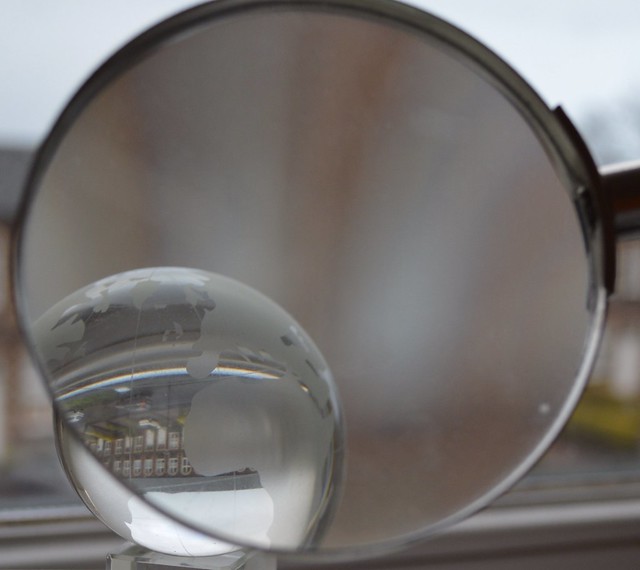
Attend

As Gary Lachman says in his “Secret History of Consciousness”

Yet one drawback to the brain’s highly efficient ability to focus on necessities is that it “falsifies” reality, which, as Bergson earlier argued, is in truth a continuous flow of experience…….The mind constantly takes snapshots, as it were, of reality, which enables it to orient itself amidst the flux. The problem is that science, which takes the most comprehensive snapshots, makes the mistake of confusing the photographs with reality itself.
This is exactly the problem Iain McGilchrist describes in “The Master and His Emissary”.
We have another way of knowing which is different from this editing, filtering, re-presenting way. We know by seeing connections, by experiencing the whole. Bergson describes that as intuition. A good example of that is how you answer the question “How are you?” You can ask yourself, “How is my energy today?” and you will come up with an answer instantly. You don’t have to edit, filter, or quantify anything, you know it holistically, or “intuitively”.
I’ve seen the same function again and again when visiting patients. Instantly, even before anyone speaks or before any “findings” are discovered, an experienced doctor knows he or she has to act quickly. The consultant who taught me Paediatrics, said on my first day at work with him that his aim was to teach me “how to recognise an ill child”. I thought that a strange comment at the time, but that’s exactly what he did. That recognising is a holistic, intuitive function which comes with experience.
Here’s Lachman again, in reference to Bergson
Just as we have an immediate, irreducible awareness of our own inner states, through intuition we have access to the “inside” of the world. And that inside, Bergson argued, was the élan vital
The neuroscientist Wolf Singer who looks at the problem of “binding” – of how the brain puts all this information together, says
there is a process in the brain that is itself antireductionist and is concerned with creating wholes out of parts, and hence with giving meaning to our experience.
I suspect this is exactly what McGilchrist highlights as the main function of the right hemisphere.
Isn’t it amazing that our brain can enable us to know in these two amazing ways? To edit, and to bind together; to filter, and to see patterns which enable us to discern meaning?

a strange turn

Inchmahome Priory

Read Full Post »

In the A to Z of Becoming, U is for “understand”.

morning sun

This is a verb which is close to my heart. At times I think of myself as insatiably curious, but in fact, it’s not mere knowledge I seek, it’s understanding. I don’t want to collect facts, statistics or data, I want to understand. I think that’s why I’m not impressed with the current version of “evidence based” whatever (the kind which applies the term “evidence based” as a kind of quality marker with a claim that if it has this label, then this action, or opinion, or choice, has some kind of superior status).

I often wonder what is a doctor’s job, and, at least one conclusion I reach is that it is to understand. Every patient I meet presents a story to me which I do my best to understand, and in my pursuit of understanding, I think I don’t only make a “diagnosis” or a “formulation” but I enable the person to understand themselves better. It’s a shared venture, the doctor-patient relationship, and it’s founded on the pursuit of understanding.

There is such a difference between understanding and judging. To judge, is to conclude. And that conclusion often involves approval or disapproval. The General Semanticists say “Judgement stops thought“. Also, in making these judgements there is some assumption that the one doing the judging has some superiority. To understand, on the other hand, requires a certain humility. In my opinion anyway, it does not involve leaping to conclusions. Understanding is more a never finished process. It is always possible to understand more, to understand more deeply, more fully, to understand better.

I think that to understand requires an attitude based on love. If you love and care for someone you open up the potential to understand them. If you love Nature, you are more likely to try to understand her. If you love a plant, you are more likely to understand what it needs to thrive, so you become more able to nurture it.

Understanding can create healthy bonds.

february love

Read Full Post »

trees

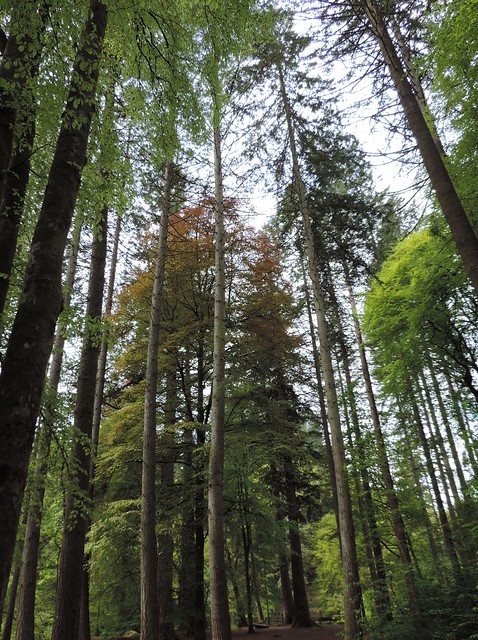
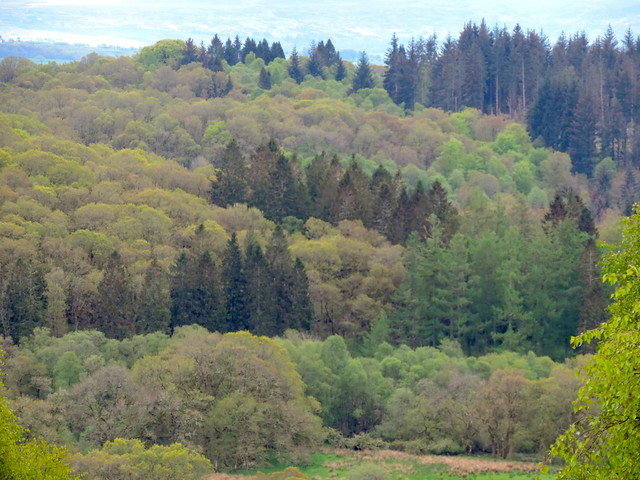
Nature LOVES diversity. Monocultures just don’t occur naturally.
But do you know what I like so much about this kind of image?
It’s not only that every single tree is different and unique.
It’s that together they create the fullness of the beauty.

We are like that. We are all unique. But aren’t we so much more when we live in harmony with all the other unique lives around us?

Read Full Post »


amv

amv2

amv1

rockforest

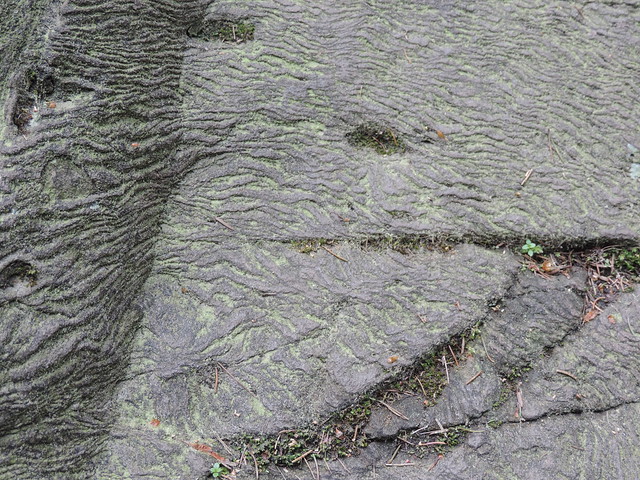
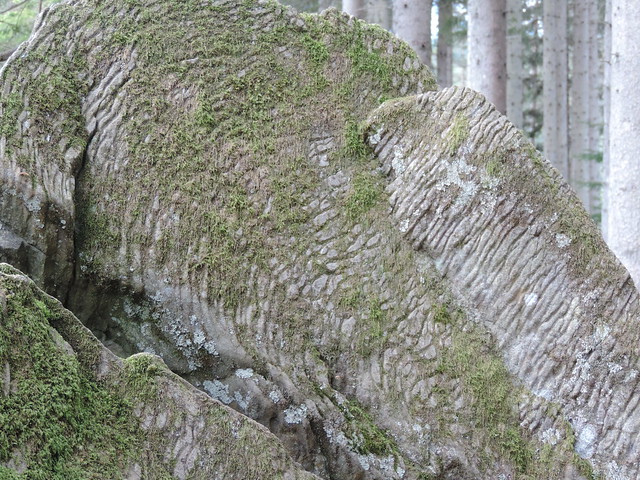
These rocks in the forest bring up two thoughts for me. One is just how much they challenge our preconceptions of form. From the distance they seem to be large boulders, but close up they look like trees. Maybe they are fossil trees? I don’t really know what fossil trees look like, but I’d imagine they look like this. So are they trees becoming rocks? And now I look at that them again in these photos they look like elephants, or some prehistoric dinosaur-like creatures!

The other is about boundaries…..where one object stops and another begins, how every “object” exists in its context and how much the environment, the place where the boulder sits, creates its reality, and then that other boundary of time…..how everything changes, how everything is in a constant state of becoming.

Read Full Post »

« Newer Posts - Older Posts »