Feeds:
Posts
Comments

Archive for the ‘from the living room’ Category

“Don’t draw attention to yourself!” “Keep your head down!” “Don’t stick out like a sore thumb!”

Social pressure to conform.

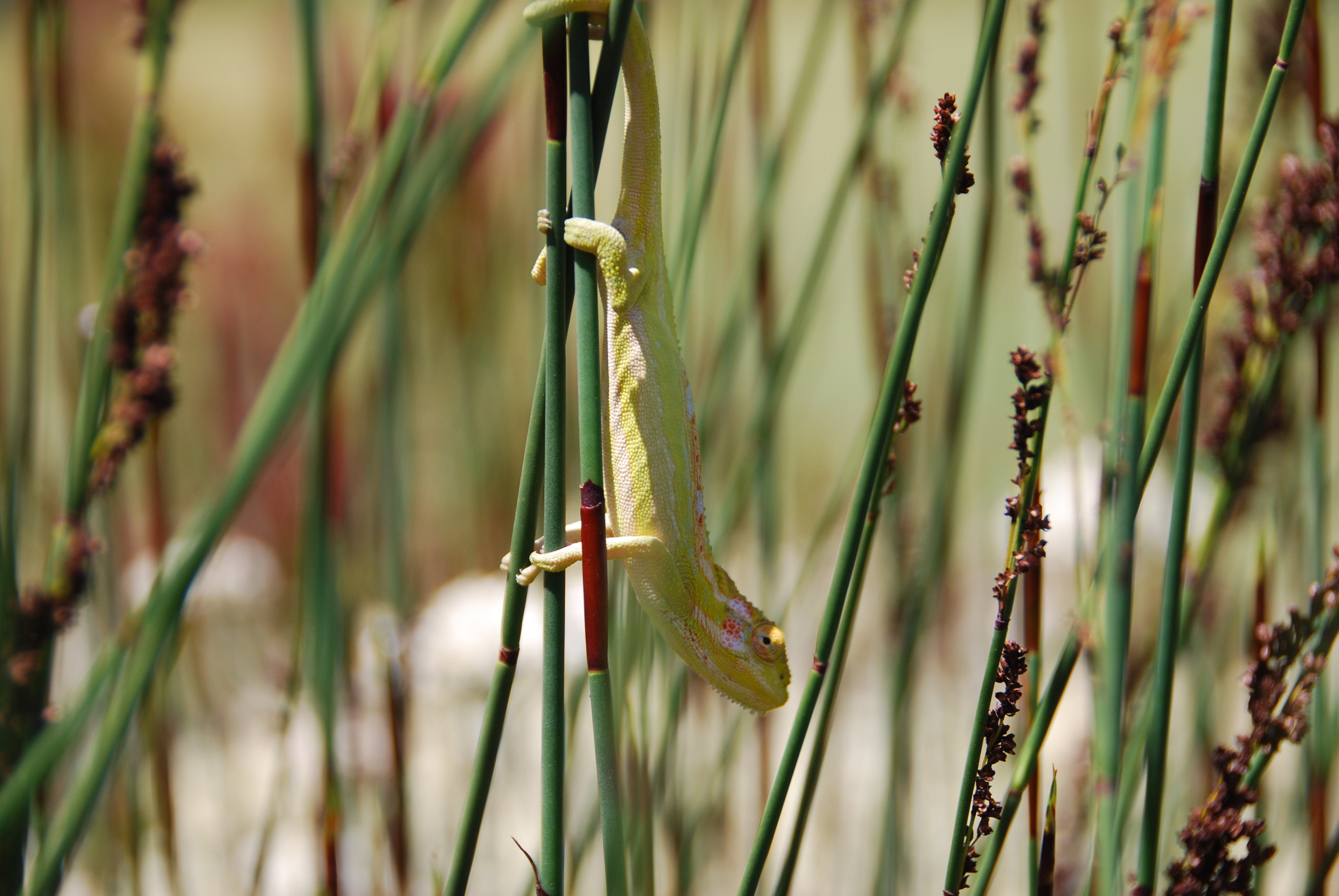
I bet you’ve heard a few of those instructions before. Or others which say pretty much the same thing. The basic idea is that to be safe you need to hide yourself away. Isn’t it a common experience at school that the kid who is really different gets picked on? You can see where all this advice comes from…..as this chameleon demonstrates, disappearing into your environment is a good way to avoid predators, and so stay alive!

But we aren’t chameleons. While there are real advantages to “fitting in” and conforming, every single one of us has a strong sense of Self, and deep feelings of uniqueness. There is, after all, nobody who is “just like you”. The truth is we need to do both – we need to function well socially, which means building healthy mutually beneficial relationships with others, and we also need to develop our autonomy and our self-expression.

The social powers of human beings are incredible, and, as a species, they are responsible for a lot of our survival and development….our success, if you like. But, equally, is there any greater diversity possible between members of the same species as their is between two humans? I’m not sure there is. We’ve evolved such complex nervous systems, such sophisticated bodies and brains. We have consciousness, imagination, language. We just can’t stop ourselves from co-creating and from expressing our uniqueness.

I wrote a book based on “and not or” because I think this is perhaps the most important characteristic we have – the ability to handle paradoxes. It’s built in. The cortex of the human brain is divided into two almost equal parts, with each part (hemisphere) engaging with the world in its own distinct way……the right seeking connections, the new, relationships and an understanding of the raw whole, whilst the left focuses, analyses, labels and categorises. One half giving priority to living relationships, the other most at home with objects and machines which can be measured and controlled.

It’s the same then with conformity and uniqueness. We do actually need both, because we need to be aware of our uniqueness and self-fulfillment involves fully expressing that uniqueness, and we equally need to form mutually beneficial relationships with others, which involves finding points of connection, shared values and desires, tolerance and respect.

Read Full Post »

When I look at this photo I think “This is what life feels like, and this is what life really is”.

What I mean is this – look at those bubbles (I’m going to guess that when you looked at this photo the first thing you noticed were the bubbles). Each one looks perfect, and perfectly separate from the rest. Each bubble is distinct, different in size, different in location, different in the exact way it reflects the light, and also, although you can’t see this in a still photo, each moving along its own distinct, and different path (there are hints of that in the flows of water currents which you can see creating that marbling effect between the bubbles).

We feel like this. Separate, distinct, different. We feel, and we are, unique. There are no two of us with identical characteristics, identical stories, living in exactly the same time and place having exactly the same experiences. We have a membrane which seems to separate us from the rest of the world. On the outside, that membrane is our skin. On the inside it’s mucous membranes lining our lungs, our digestive system and our urinogenital system. Inside, and within, that, is our immune system, a distributed network of cells and chemicals which recognise “foreign” substances and protect us from their potential harm.

But actually, we are not separate. Those membranes are porous. They are not impermeable. And that’s for a very important reason. They enable us to connect. They enable us to interact with others and with the rest of the planet. They enable us to ingest nutrients, inhale oxygen, expel waste materials and exhale carbon dioxide, amongst many other exchange processes. So, to see them as simple barriers or borders is wrong. They do distinguish what is “me” from what is “not me”, but they enable my life by enabling these, and multiple other connections and flows.

Look again at these bubbles. Where do they come from and where do they go? They emerge from the water itself, and they dissolve back into the water they emerged from. So do we. We emerge within the rest of this “natural” world, come into existence for a brief period of time, then we dissolve back into the great web of being from which we came. In the part between birth and death, that part we call life, we don’t disconnect from that great web. We live in communion with it. We live as part of it, not apart from it.

Life is flow – flow of molecules and chemicals, flow of energy, flow of information. Our existence is a delicate but distinct dynamic interplay of those flows, creating the appearance of separateness and difference, but never disconnecting from, or existing apart from, the whole.

Our lives are distinct and beautiful, but they are not separate.

Read Full Post »

Why do we open up? Why do we “unfurl”? As I wrote the other day, my word of the year is “épanouissement” – which means to flourish, to blossom, to fulfil – we follow that path by uncurling, unfolding, unfurling, just like these ferns. And why do we do that? Because, just like these ferns suggest – it enables us to connect.

Opening up, vastly increases our chances of making meaningful, healthy, nourishing connections. Closing down does the opposite.

There are times we need to enfold ourselves, to close down, curl up like a hedgehog for defence, but actually, much, much more, we need to do the opposite. Because without making connections we die.

We do not exist in isolation. Even if it feels like we are being asked to do exactly that during this pandemic, what we’ve discovered is that it isn’t possible. None of us can live without the vast world wide web of others…..without whom we wouldn’t have shelter, food, water, comfort or care. It’s the natural state of affairs – connectedness. And connections aren’t worth much unless they act as channels of exchange – of materials, energies and information.

When I look at this photo, I don’t just see two ferns unfurling, opening up, but I see two ferns touching gently, almost as if they are having their first kiss.

Isn’t this what we need to grow in our world? Not grow our consumption of “stuff”, nor grow our production of waste. We don’t need to grow our destruction of ecosystems. We’ve been doing that all too well. It’s time to change course, isn’t it? To grow our connections, our “integrated” connections – the ones which enable mutually beneficial relationships to thrive. We need to grow our capacity for care and creativity. We need to grow our passion for love, tolerance and acceptance. And to do all that we need to open both our minds and our hearts.

Read Full Post »

At one point in my career I flew to Tokyo to teach a number if times over a ten year period. I loved it. Japan was THE most different culture and society I had ever experienced at that point, and when you are somewhere so different from what you are used to, then you notice things which might otherwise have passed you by.

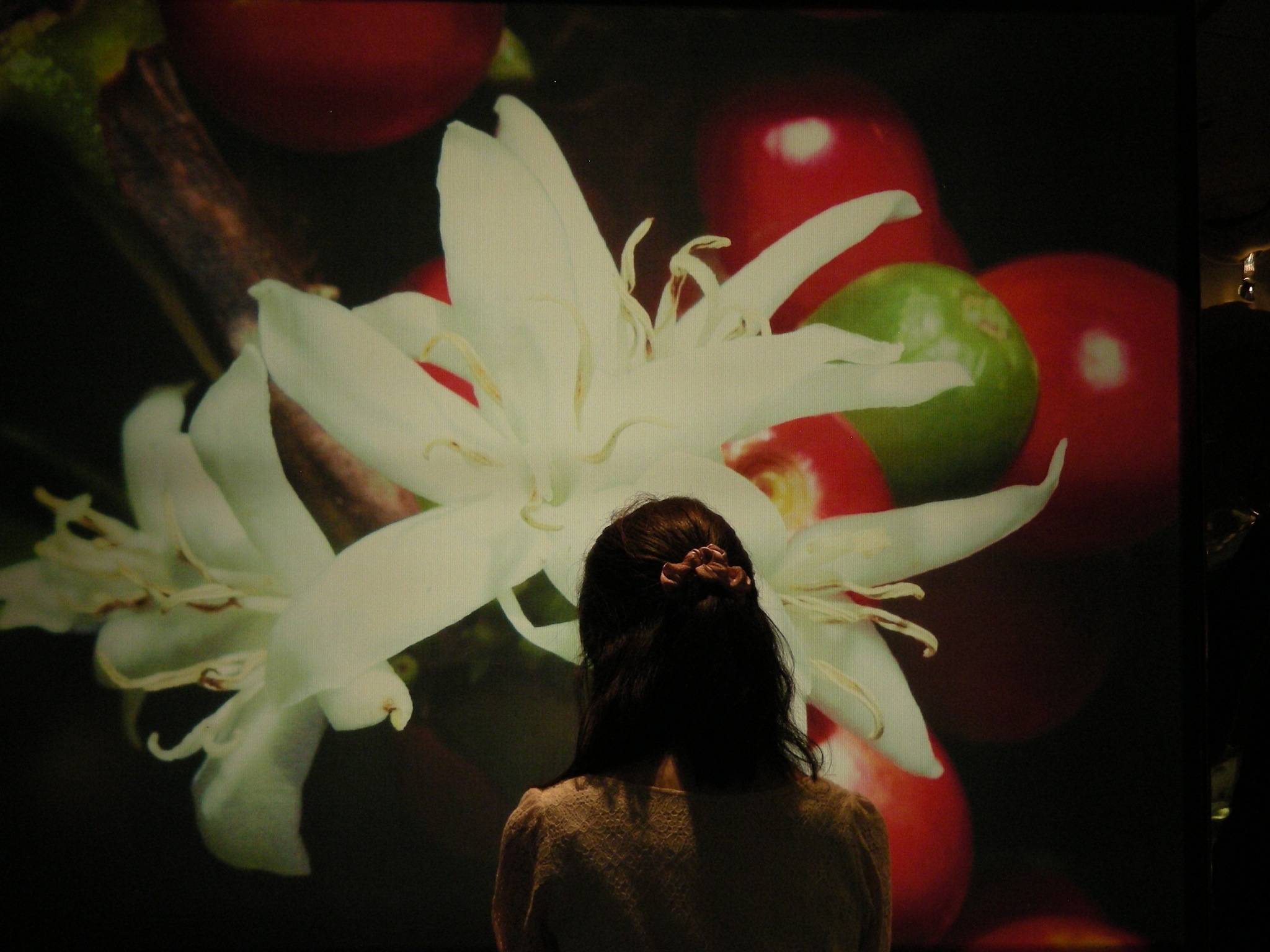
One morning I was in a coffee shop for breakfast and it struck me as strange that I, like pretty much everyone else in the shop, was sitting drinking my coffee alone. In fact I took this photo of a woman who was sitting on a bar stool facing a wall – I guessed that they had decorated the wall with such a lovey photo of a flower to make it more pleasing to sit there with your back to the rest of the room. I tended to seek out a seat next to a window, but it was a tiny coffee shop so there wasn’t much choice.

Now, as I look at this photo again, in the midst of this pandemic with coffee shops in France having been closed since October, it doesn’t seem so strange any more. I can imagine a new norm emerging where people choose to sit more separately than they used to. Maybe not, but it just seems that “normal” isn’t “normal” any more!

What will “normal” be like later this year, and into next year? I guess none of us know. But I do remember how odd it seemed to me that so many people went about their ordinary business in Tokyo wearing masks all the time, and I sure don’t see that as odd any more. Will that become part of our new norm? Here in France people have always had a degree of physical intimacy which was significantly beyond what I’d experienced in Scotland. The normal greeting would be to “faire la bise” – to kiss on both cheeks (for someone you knew anyway!) Well, that’s all gone. Will it return? Or will keeping a social distance become the “new normal”?

I genuinely don’t know. Part of me thinks this pandemic is changing us forever, and, after all, there is never any “going back” in life. But part of me also thinks that people will “revert to form” at the very first opportunity, and rapidly re-establish their pre-Covid habits and behaviours.

All that raises the question of what we are going to do collectively……how we are going to live together having gone through this experience. After all, a lot has become more obvious, not least how interconnected we are on this planet. The massive inequalities have become clearer. Is there political and Public will to tackle that? People who were pretty much disregarded have now been shown to be “essential workers” (which does get me wondering who the non-essential workers are……I’ll leave you to think about that one for yourself!). Will we change our priorities about Public Health and Social Care? Will we change the way we look after our elderly and vulnerable? Perhaps even more importantly will be turn against mass consumption and so called “growth” to put our efforts into tackling the big problems of climate change and loss of biodiversity which are probably at the root of the pandemic anyway?

There are plenty of reasons to hope that “normal” has changed, will change, and that we will not even attempt to hang on to the ways of living which got us into this mess in the first place.

Thank goodness “normal is not fixed”.

Read Full Post »

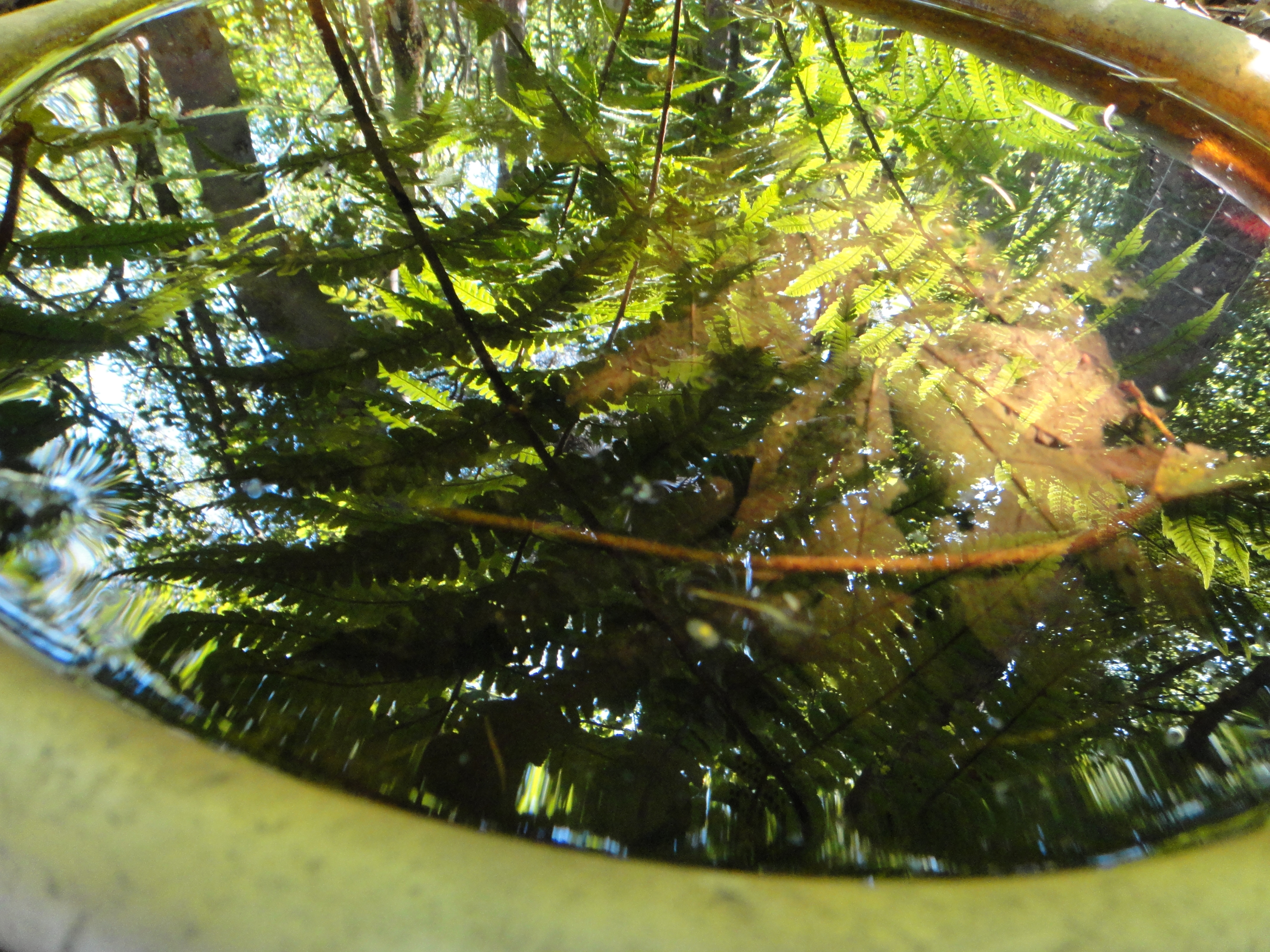
I have a fascination for reflections. I love to gaze into pools, ponds and fountains where the water is fairly still and you can see the world around you reflected on the surface. So, this is one of my favourite photos. I found this old stone basin full of water just sitting abandoned in a forest. I don’t know if the forest makes the image more magical for you, but it does for me.

As I gaze at this simple bowl of water I see the reflections of the trees and ferns which surround it, but I also immediately see fallen leaves lying below the surface….in other words I can both the living leaves and the dead leaves at the same time. That superposition strikes me as both interesting and beautiful. It’s as if I can see a snapshot of the past and the present in exactly the same moment, as if time itself collapses. Then I also notice the ripples on the surface of the water…..the water’s surface has its own shape. It’s not the same as a sheet of mirror glass. It’s moving, changing, dynamic. I’m sure if I had a microscope and sampled some of the water I’d find whole families of creatures in here, but with the naked eye, I see only the plant life and the water itself.

An image of Galadriel in Lord of the Rings gazing into her magical pool comes to my mind, and that layer of fantasy, of fiction, of story, just enriches the experience of the encounter.

I see green life everywhere and stand amazed at the abundance and diversity. I see the water itself as filled with life, filled with history and filled with potential……a memory bank, a lens and a crystal ball all rolled into one.

You know, I think one of the best ways to enrich our daily experiences is to see the connections, the threads, the traces, the reflections, echos, and to follow them for a bit. That way I don’t see a simple “object” but I encounter another aspect of manifest reality, a changing, particular, and unique aspect which involves me, the “subject” who is having the encounter. But that old “object”/”subject” split doesn’t satisfy me any more. It now seems that there really isn’t a clear division between objects and subjects in this universe. Rather that there are an infinite number of layers of connection, some of which appear as “objects” and others of which appear as “subjects”.

There really is nothing which exists in isolation.

Prove it to yourself by exploring some connections for yourself. Notice the threads, the roots, the knots, the intersections, the reflections……..I bet you find it an enriching, enchanting experience.

Read Full Post »

My word for 2021 is a French word – épanouissement. Translated into English it has various connotations but basically it means “blossoming” or “opening up”. It’s also used in psychology to refer to the development of the personality, or the self – it means “fulfilment”, or, more specifically, “self-fulfilment”. It can also be used in the description of someone’s face, as when their face “lightens up”. You get the idea?

This peony which I saw in Ueno gardens in Tokyo many years ago captures this notion for me by somehow conveying motion within a still image. Because the beautiful petals are unfolding and opening up in a spiral manner, this looks a bit like one of those little windmills you might have played with as a child. As a physical pattern this spiralling, whether in an opening up, or a closing up, speaks to us of movement. It’s not as static as some other geometric patterns appear.

That element of motion conveyed by this flower’s petals is, I think, an essential part of the whole concept of “épanouissement” – in other words, it’s always a work in progress. It’s not a goal, at least not as an end point, or an “outcome”. It’s a ongoing, growing, developing, evolving, ever-changing phenomenon. And that’s exactly what I think the development of the Self is like.

We are not fixed entities with identities held in aspic. We are not separate, not unconnected, not static. Rather we emerge from within the vast web of Life, never leaving that web, but developing a coherent sense of Self within it, a sense of Self which never stands still, and which, ultimately ebbs back into the great web itself.

Here’s the exciting extra part that you and I can access – consciousness. We have Will and we can make choices. We are “agents”. We are the “co-creators” of reality. We can do that consciously, and deliberately, or we can drift, reacting rather than responding to every change and signal which comes our way. When we wake up, become more aware, then we can choose how to respond, moment by moment, day by day, year by year.

So, here we are, still in the throws of this pandemic, but we have not stopped changing. The thing is – we are now more aware of our inter-connectedness, our inter-dependence, not just with other human beings across the entire planet with all of Life, all of Nature, all of The Earth, as active, living members of Gaia.

So what does that mean for our “épanouissement”? For our “unfolding”, our “self-fulfilment”, our “flourishing”? How are we going to blossom now?

Those are some of the questions that float around in my head these days. These feel to me to be some of the most important questions for me to answer now. This pandemic has challenged our values, our aspirations and our modes of living. How do we want to evolve all three of those? Our values; our aspirations; our modes of living.

Read Full Post »

Taking pictures is one of my favourite ways of improving the quality of my life.

I’ve taken photographs, on and off, at different stages of my life, and I’ve used several cameras over the years. Nowadays, most of us have a perfectly decent camera on our mobile phones. What do I mean by a perfectly decent camera? One that we have easy access to, are likely to use, and which can create images of a quality which we find pleasing. I know that “serious photographers” and professionals have different standards and needs and will have much more expensive, technologically developed equipment which will meet those needs for them. However, I’ve never had a really expensive camera and as well as several albums of prints, I’ve got a library of tens of thousands of digital images I’ve taken over the years.

Here’s why I like to “think take a picture” on an ordinary day –

  • First of all, having the intention to take a photograph today heightens my awareness of the here and now. It improves my ability to notice what is around me. Whether I am carrying a camera, or my smartphone, in my pocket, having the thought “take a picture”, puts me “on the lookout”. It just helps me to notice what might otherwise pass me by.
  • Second, taking a photo requires me to frame a shot. It involves paying attention to composition – to the elements, colours, shapes, and their inter-relationships. That “framing the shot” adds to my simple “noticing”. It engages me with my surroundings. I look this way and that, focusing in on this then that, re-framing, re-focusing, until I find an image which pleases me. Then I might look at the photo I’ve just taken, and revise it by picking out, selecting, or re-framing to make another image.
  • Third, as you can probably tell, from the second point, taking photos slows me down. It’s too easy to whiz through life on auto-pilot, never stopping to actually be present. Taking photos helps me to counter that. It literally slows me down and draws me into the immediate here and now. There’s an enormous benefit from slowing down and many ways to do it, but taking photos is one of the ways for me.
  • Fourth, when I review photos on my computer later, I see things I never saw at the time. I notice elements, juxtapositions, aspects of the scene, that I just didn’t see as I took the photo. This enhances my pleasure further – it’s a second bite of the cherry. It doubles, or more, the delight, the wonder, the awe, or whatever comes up for me as I look at the image.
  • Fifth, my images are my main source of inspiration and reflection. You’ll have noticed that my posts here all have one of my photos in them. More than that, every single post starts with one of my photos. I do that for two reasons – because I like to share the joy my photos bring, and because I don’t know what I’m going to write until I select the photo. It’s the photo which is the creative spark. It’s the image which sets off my memories, thoughts and imaginings. It’s the picture which is my creative muse. My inspiration.

Read Full Post »

This pandemic with its lockdowns (or “confinement” as we call it in France) has been, and continues to be, tough for a lot of people for many reasons. It’s the biggest global disruption of our way of life that most of us have ever experienced. So many “normal”, “everyday” and “routine” activities and experiences disappeared over an incredibly short period of time. Apart from the disruptions of work, family and social life, we’ve seen an end to “mass” everything – no crowds of spectators at sporting events, no theatre or cinema audiences, no music concerts, no festivals…..well, I’m sure you can add to that list.

However, there have been two positive developments which I’ve read that many people have experienced – one inner, and one outer which enhances the inner. Pardon? Let me explain.

With the shrinking of our horizons, physical and social, many of us have been spending more time in contemplation – yes, maybe deliberate meditation or other such exercise, but, also a more general reflection. A kind of reassessment and revaluing. It’s given us the time and space to become more aware of our habits and routines and ask if we want to re-establish them when the time comes (when the pandemic is over).

What patterns of behaviour, what modes of living, what activities have been disrupted that I don’t want to re-establish? That I want to let go off.

What new patterns, rituals, activities do I want to create instead? What new ways of living do I want to begin?

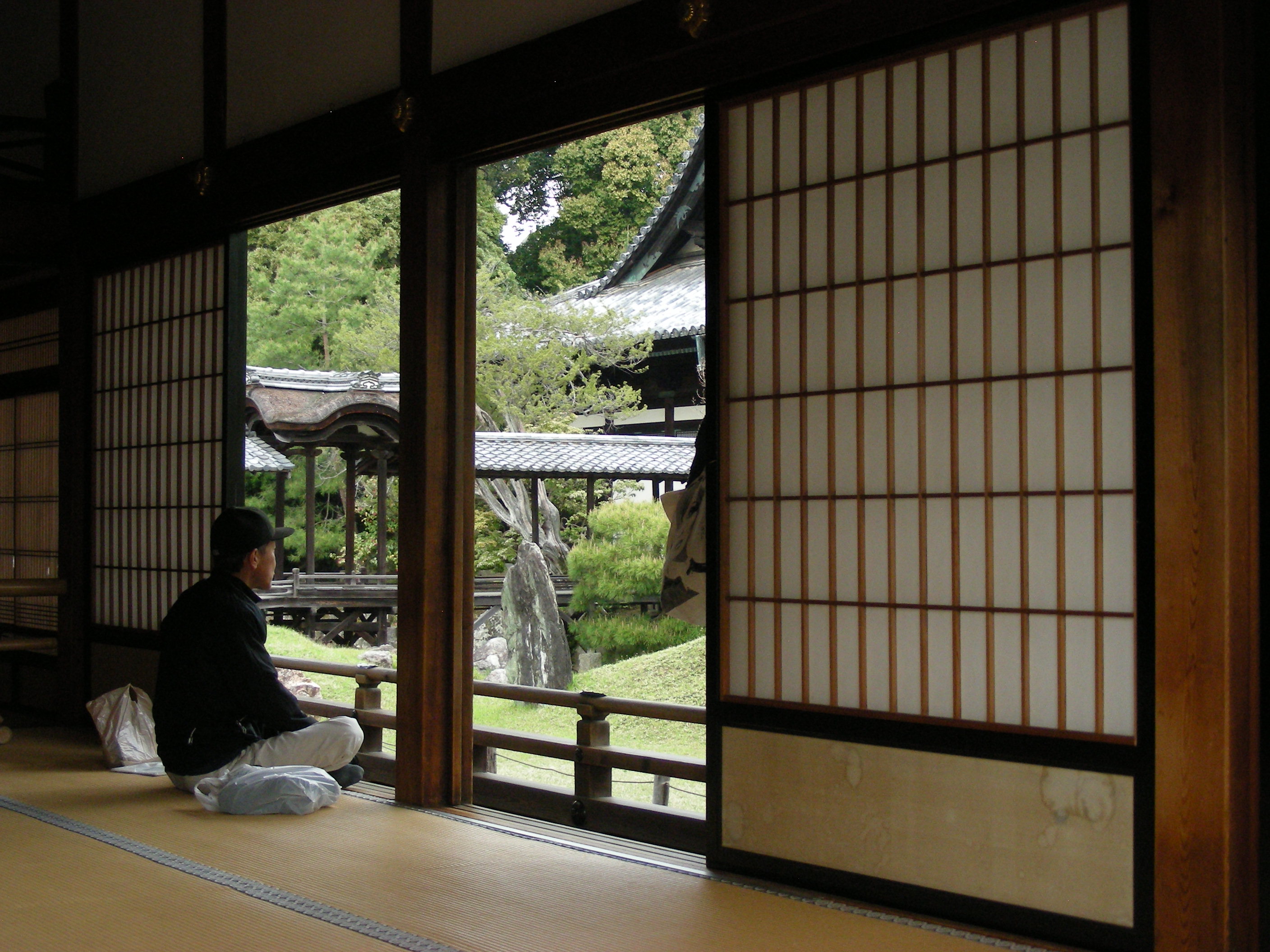
This un-asked for, and, frankly, pretty unwelcome, pause, is a real opportunity for both awareness and change. You don’t need to have a meditation space, like the man in this photo, to do that, but maybe there’s something inspiring in this image anyway? Maybe it would be good to create, if possible, a place, a space, which we find is conducive to contemplation and reflection? Or maybe we can do that wherever we are?

That’s the inner – this is an opportunity to develop our inner selves – to pay some more attention to our physical and mental health and our lifestyles. To become aware of our habits of thought and feeling and ask ourselves if we want to develop along different paths now.

The second is about what we call “Nature”. You know, I’m a bit uncomfortable about talking about “Nature” as if Nature is a thing, and more than that, as if “it” is a “thing” “out there”. We are part of Nature, not apart from Nature. But then, we’ve sort of forgotten that, as a species, and maybe that’s one of the problems which has brought us to this pandemic. So, maybe this is a great time to reconnect, to re-engage, to re-orientate ourselves with regard to the “natural world”.

I’ve found that noticing the cycles of the flowers, the vegetables, and the trees, has become something I am much more aware of now. I’ve found that I’ve noticed many more species of birds in the garden. I’ve noticed that when I’ve had the chance a walk in vineyards, in amongst some trees, or along a sandy beach on the Atlantic coast, then I feel a huge boost. That shouldn’t be a surprise. I’ve written before about the recognised benefits of spending time in the natural world – to the extent that some people now talk about “Nature Therapy“.

There is something truly life enhancing about becoming more aware and more engaged with “the natural world” and from “forest bathing” to spending time in open spaces we know that such activities boost the chemicals in our bodies and minds which influence our immune system, our moods and our thought patterns.

So, connecting better to the “outer” enhances the “inner”.

Again, you don’t need a beautiful Japanese garden like the one in this photo, (although, isn’t that gorgeous?) – but I recommend taking advantage of this time and space to develop your inner self, and your connected self, by grabbing or creating every opportunity you can get to do so.

Contemplation and Engagement with the Natural World.

Read Full Post »

I took this photo of a path in a Japanese garden because I’d never seen wavy tiles like this before. In fact, having seen this one, I then came across several more. Although, many years on, I’ve never seen paving tiles, or stones, like this, for sale anywhere in Europe.

Maybe some of you will look at this and feel a bit unsteady, or dizzy, because they give the impression of flowing water, and you know how it is when you stand at the edge of the ocean and after crashing onto the sand, the water runs back between your feet, back to where it came from. It can feel quite destabilising. So, I think these wave forms have the power to communicate the sensation of movement, of flow, of change, and, yes, even of direction.

But I didn’t find them at all destabilising when I walked on them, rather I felt like I was walking/surfing/skiing/sailing over the surface of the Earth…..or maybe, rather, over the surface of the oceans. I love how this simple shape laid out in this repeating pattern captures the sense of life and movement. It felt completely different from walking over a pretty featureless tarmac, or over square, right angled, hard edged, separate slabs.

The other thing I thought of as I walked along this path was the story that Susan Jeffers tells in her famous “Feel the Fear” book, where she describes how a plane traveling from A to B spends only a tiny percentage of its time actually heading in the exact direction which would be a straight line between the two points. Rather the pilot is constantly adjusting the direction of the flight of the plane, a little bit to the right, then a “correction”, to the left, then back again, and so on. It’s a lovely metaphor for the need to be flexible and adaptable. It shows us how we need to proceed by going a little bit this way, then a little bit that way, all the time. It’s a counsel against so called “perfection” – as if there is “only one right way”. There never is.

Read Full Post »

In many ways this is a very simple photograph. What do you see?

Having ignored the “rule of thirds” in my composition, I’ve put the cherry blossom bang, smack in the centre of the image. It’s literally right in front of your eyes. It’d be pretty hard to respond to the question “what do you see?” without referring to the cherry blossom, don’t you think.

But I’ve long since had a fascination for appreciating the whole over the parts, and in this photo, I think it’s equally difficult to ignore the presence of the “background” – the bamboo – even though I’ve blurred that background for the purposes of contrast.

When I look at this I definitely see “cherry blossom in front of a bamboo forest” – well, I was there at the time, and I remember that. You might not be aware that the bamboo is part of a whole bamboo forest, but you can certainly see bamboo stretching in all four directions to every edge of the image.

This insistence on seeing both the foreground AND the background to have full appreciation of the scene, is consistent with my desire to always take into consideration contexts and environment when I encounter anything. For example, in my work as a doctor, a patient would “present” to me their symptoms, and with my knowledge, plus any relevant physical examination, and, if necessary imaging or tests, then I would make a diagnosis – probably the diagnosis of a “disease”. A “pathology”. But that was never enough. I had to see the presence of this foregrounded disease in the context of the backgrounded personal life story. I had to “situate” the disease into the time, place and meaning of this individual’s life. If I wanted to understand, not just the “illness” as the whole experience of the patient, but how it came about, what impact it is having, and how it might change this person’s perception of themselves and their life, then I had to see them “whole”, not limit my focus to the the “presenting” parts.

I think this same principle applies throughout the whole of life. If I want to understand anything about my life, about others, about this planet we all live on, then I need to see the “whole”. It’s not good enough to reduce reality to a data set, a package of characteristics and elements. I always need to consider the connections, the relationships, the contexts and the multiple layers of environment and meaning. I know that doesn’t sound as quick and easy as focusing just on a part or two, but, hey, who said reality could ever be reduced to what was quick and simple without losing all understanding? Not me.

Read Full Post »

« Newer Posts - Older Posts »