Feeds:
Posts
Comments

Archive for the ‘from the living room’ Category

big-door-little-door

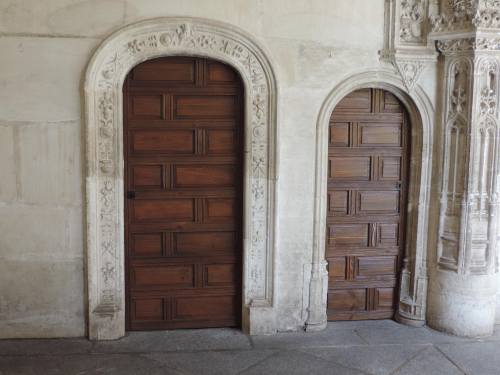
In the cathedral in Segovia I recently spotted these two doors right next to each other. They immediately struck me as curious.

Firstly, one is so much bigger than the other, and secondly, the little one seems to have been squeezed in as some kind of after-thought. Look how it almost disappears behind the pillar, and how the stone work overlaps the arch around it.

Why have two doors so close to each other but such different sizes? Are there two rooms behind them? Is the room on the left a bigger room than the one of the right? Or do they both lead into the same room – that would be even more strange.

But maybe there is another reason. Maybe each door is for different people. Maybe the bigger door is for more “important” people, and the smaller one for servants, or those of lower standing. That would be odd, wouldn’t it? I know lots of old mansions had a main door at the front and a servants, or “merchants” door at the back, but this is different. Here they are right next to each other.

Then this morning as I looked at this photo again I thought well just as each of us engage with the world from our own perspective, our own unique subjective viewpoint, I wonder if we enter into each day through an individually shaped door?

And if we do, then are you starting today by going in through the big door, or the smaller one? What will that be like?
Read Full Post »

dragons-and-crystals

Everywhere you look you can see the effects of the interplay between the universe’s two forces.

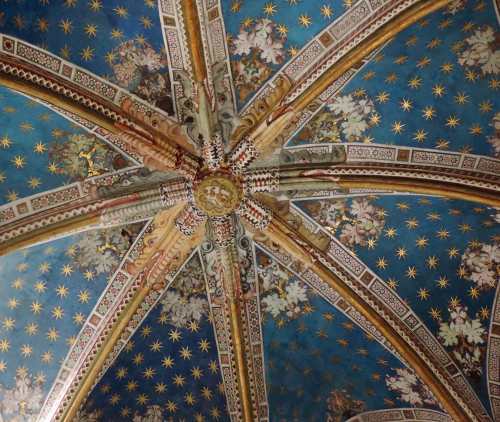
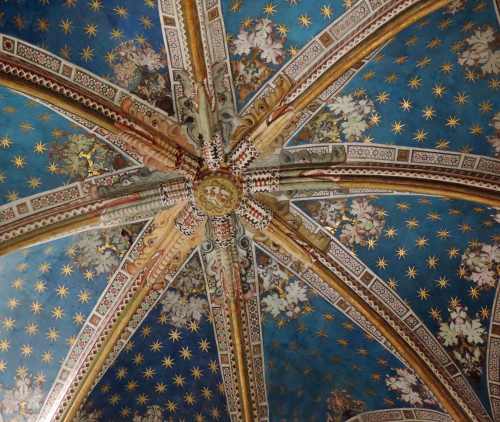
When I looked up at the ceiling of the Chapel of Saint Blaise in Toledo I was entranced by the colour, the gold and the eight pointed stars. It was only later when I was back home that I realised that the centre piece contained eight dragons, out of whose mouths poured not fire but crystals…..at least that’s how it looks to me.

Dragons for wildness, crystals for discipline, to bring together David Ward and Thomas Berry, for this is how they each describe the two forces.

Without the integration of these two polar opposites our planet would not exist, and nor would we. Astonishing. Awe inspiring. Wondrous.

Look around and I’m sure it won’t take long for you to spot these forces at work.


Read Full Post »

img_5491

I recently came across Rebecca Solnit’s contemplation of the colour blue through the Brainpickings site.

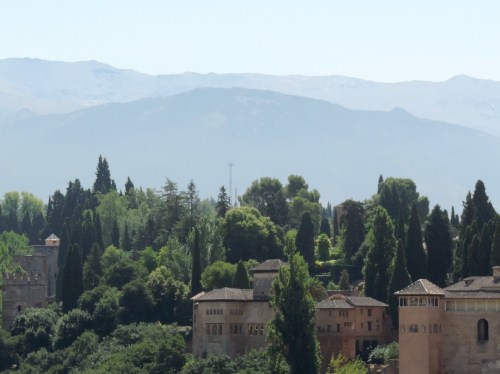
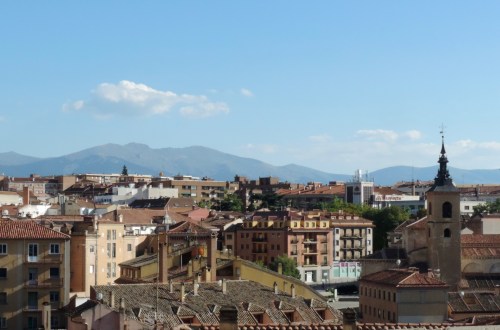
The world is blue at its edges and in its depths. This blue is the light that got lost. Light at the blue end of the spectrum does not travel the whole distance from the sun to us. It disperses among the molecules of the air, it scatters in water. Water is colorless, shallow water appears to be the color of whatever lies underneath it, but deep water is full of this scattered light, the purer the water the deeper the blue. The sky is blue for the same reason, but the blue at the horizon, the blue of land that seems to be dissolving into the sky, is a deeper, dreamier, melancholy blue, the blue at the farthest reaches of the places where you see for miles, the blue of distance. This light that does not touch us, does not travel the whole distance, the light that gets lost, gives us the beauty of the world, so much of which is in the color blue. For many years, I have been moved by the blue at the far edge of what can be seen, that color of horizons, of remote mountain ranges, of anything far away. The color of that distance is the color of an emotion, the color of solitude and of desire, the color of there seen from here, the color of where you are not. And the color of where you can never go. For the blue is not in the place those miles away at the horizon, but in the atmospheric distance between you and the mountains.

and

img_5450

If you can look across the distance without wanting to close it up, if you can own your longing in the same way that you own the beauty of that blue that can never be possessed? For something of this longing will, like the blue of distance, only be relocated, not assuaged, by acquisition and arrival, just as the mountains cease to be blue when you arrive among them and the blue instead tints the next beyond. Somewhere in this is the mystery of why tragedies are more beautiful than comedies and why we take a huge pleasure in the sadness of certain songs and stories. Something is always far away.

I got to thinking about a couple of photos I took recently in Spain, one in Grenada and one in Segovia.

dscn7483

dscn7509

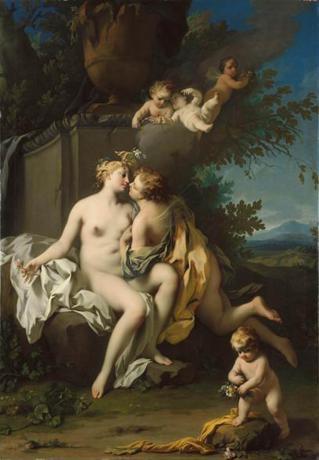
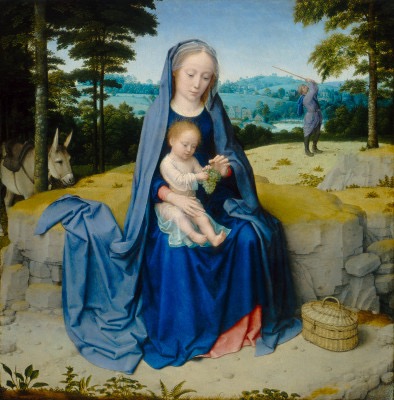
She talks about how artists used the colour blue, and cites the following classical paintings amongst her examples –

img_5534

img_5531

img_5533

img_0100

Isn’t the blue of distance in these paintings really beautiful?

Here are another few examples from an old French book which we have at home –

img_5512

img_5515

img_5510

Read Full Post »

pink

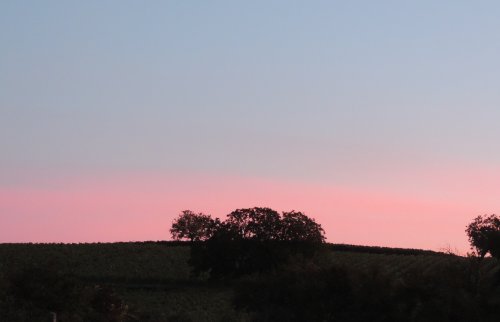
I looked out of my window yesterday evening and saw the most beautiful and subtle shades of pink lying between the top of the vineyard and the blue sky high above.

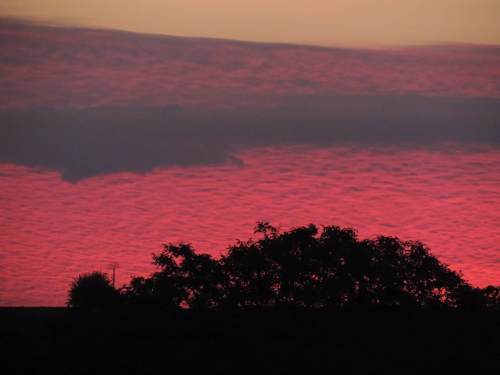
When I went outside to look to the West I saw this –

deep-red

How a small change in perspective, a shift in the direction of the gaze, can reveal such astonishingly different views…..

I think if I was asked to give one single piece of advice about photography I’d say move. Don’t just stand and point your camera straight ahead at eye level, but move around. Climb up on something, or crouch down, lie on the ground even, look in different directions, move in different directions and turn and shoot your photos from different places, even if those places are just a few steps apart.

Small changes in your position can reveal to you astonishingly different potential photos.

Read Full Post »

webdrops

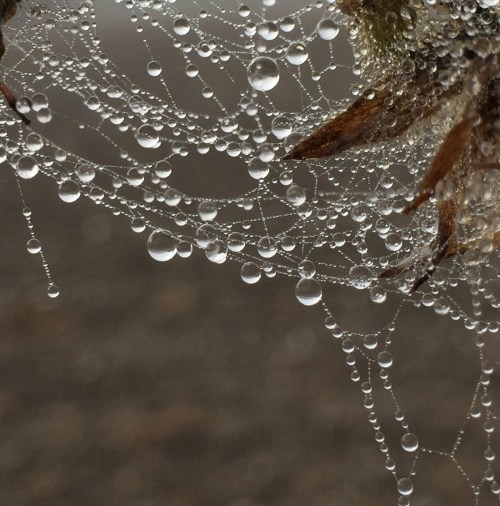
Autumn can be such a beautiful season. In the early morning everywhere I look I see spiders webs turned into chandeliers and sparkling jewels.

The water reveals what is already there. I don’t think spiders spin their webs only in the autumn. The webs are there, but they are invisible to us as we hurry by. The water does more than decorate the webs. It turns them into the most eye-catching feature of the landscape.

I love the variety of drops you can see on a web like this one. There is a huge range of droplet size, from the tiniest beads to impossibly large spheres. A close look reveals that each drop contains a view of the world around it. Every one of them is like a lens, gathering all the surrounding light and colour, turning it upside down, and showing us a completely different perspective on the world.

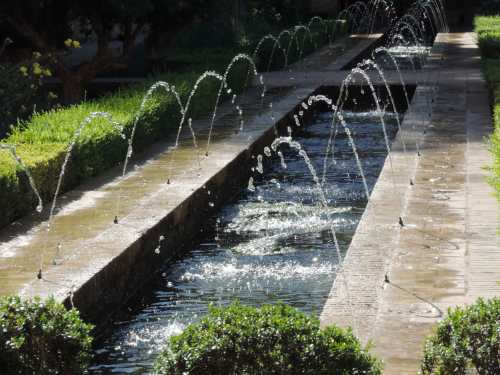
This one reminded me of a fountain I recently photographed where the water droplets seem to be strung along invisible threads as the curve up into the air, and back down towards the pool.

fountain-alhambra

What strikes me about both of these images is how the water droplets are individually beautiful, but the greater beauty is revealed in their relationship to each other. Those invisible lines and threads create something quite magical.

People are like that too, aren’t they? Each one unique, and each one connected to the others by invisible threads of relationship.

Read Full Post »

multiple-stars

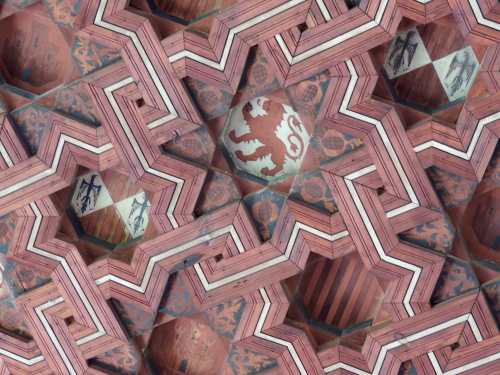
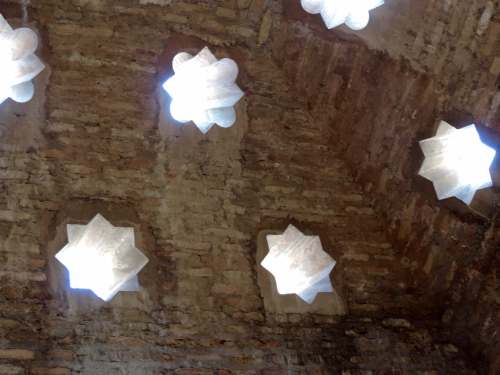
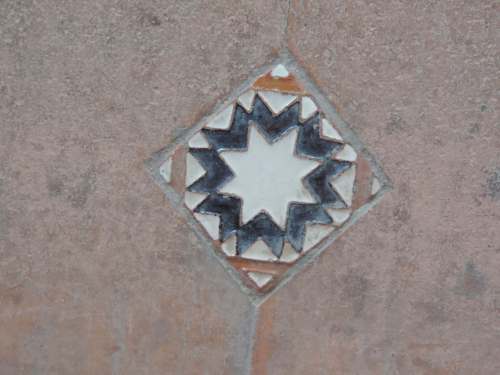
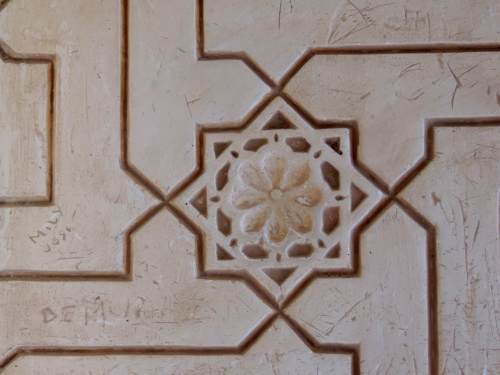
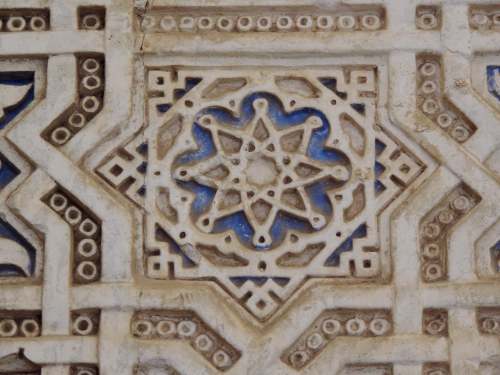
I seem to have developed a fascination for eight pointed stars. I’m seeing them everywhere.

Up on the ceiling like a kind of night sky.

lion-star

Or constructed from pieces of wood with emblems in the middle.

window-stars

Cut into the roof to create star shaped sources of sunlight.

tile-star

On the floor.

wall-star-lines star-on-blue

or on the walls.

Aren’t they beautiful? In their variation, in their detail, and in their design.

Read Full Post »

window-view

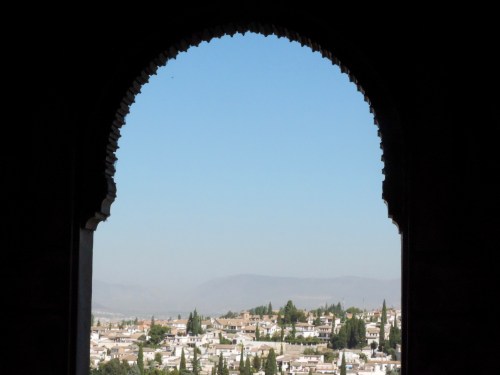
This summer I did one of those things I’d really, really recommend anyone to do at some point – put it on your bucket list. I went to see the Alhambra in Grenada.

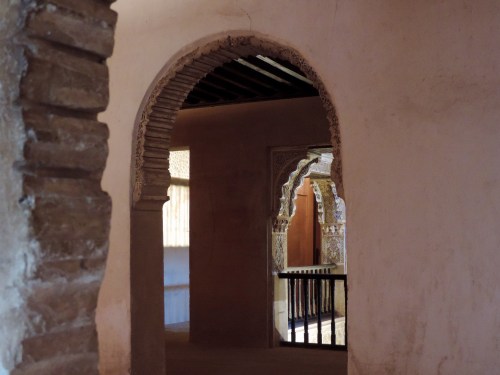
Many of the windows and doors in the Alhambra are beautifully arched. What struck me was that I took a lot of photos, not just of what I could see, but what I could see either through a window or a door.

arches-to-rooms

Looking at them again now it seems to me that they are enticing….they spark your curiosity and invite you to go and explore more.

That got me wondering about how we frame our views of the world. Not just physically, although it does make me think about the architecture and built environments in which we all live, but emotionally. Because I think we enter each day in a certain frame of mind. Maybe we change that frame (or maybe it feels like somebody changes it for us) during the day, but I wonder just how aware we are of those frames and how much they influence what we see.

Is it possible to just pause now and again and think about what frame is active?

Is it a frame of fear, or one of curiosity for example? Because each of those frames make the world look VERY different.


Read Full Post »

nightfall-san-seb


evening-beach-san-seb

We are drawn towards the edges….

Sunsets attract us. How many of us gather at the viewpoints to watch the setting sun? There’s something deeply appealing about both the disappearance of that fiery sphere as it mutates from a full circle, to a semi-circle, to a rapidly diminishing crescent. Then when it drops below the horizon there’s a period of time when the sky can glow with shades of red, orange and pink, or some tobacco tints until gradually night has fallen. When did you last stand and watch this happen?

It’s a great meditation practice. Just to focus your attention on the changing light and try to become aware of the point where day turns into night. That’s a trick, of course, because there is no such point. The transition of day into night is far more nuanced, way more gradual than that. But keeping your attention on it is calming, delightful and connects you to one of the deepest rhythms of life.

In the second photo here (both taken one evening in San Sebastian, Spain), as day turns into night, the street lights glow in the calm sea as the tide recedes revealing the wet sand below the water. You can see a few people wandering at the edge of this transition. There’s another edge that attracts us. The edge between the land and the sea.

And that’s another edge which is not exact and is certainly not fixed.

Strolling along the ebb or the flow of the sea is deeply pleasing. As is gazing down at it from a promenade, or a viewpoint.

We are drawn towards the edges….you could say that’s how life proceeds, moving towards difference, exploring the boundaries and connections, discovering the new, playing in that “far from equilibrium” zone where growth occurs.

Read Full Post »

DSCN7534.jpg

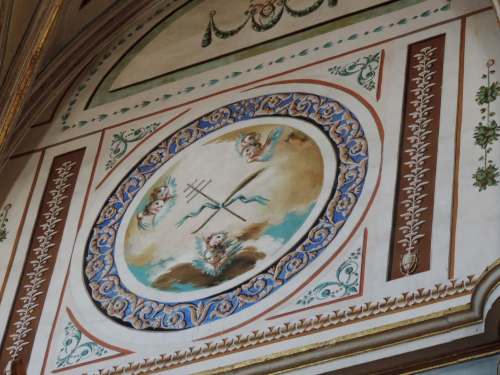
I noticed this painting high up on a wall inside the cathedral in Segovia, but I don’t know what it means.

In the centre is this interesting cross of what looks like a plume and a cross with three cross bars tied together with a blue ribbon. It’s painted as if it is flying high in the clouds and surrounded by three pairs of cherub-like angels.

Have you ever seen a symbol like this before?

Can you interpret it for me, please?

Read Full Post »

storm

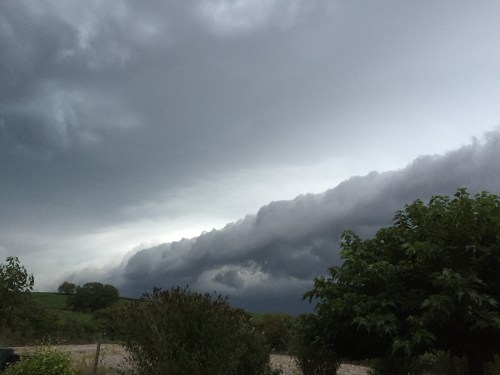
It’s not so often you can see the edge of the weather so clearly, but there it was, the storm was on its way.

Wow! Was it a big one! Thunder rattling the windows, lightning covering the entire sky, rain hammering down on the earth, and the trees and bushes blown this way and that.

Clouds are fascinating in many ways, not least because you can’t usually really see their edges. You can at first glance, but you only have to watch for a few moments and the edges change, building or dissolving before your very eyes. A big, heavy, thick cloud like this one though holds its edge for longer. I think that’s one of the things that makes it so impressive.


Read Full Post »

« Newer Posts - Older Posts »