Feeds:
Posts
Comments

Archive for the ‘from the living room’ Category

Leaf veins

If it’s true that we are in the beginnings of major change, then I’d like to hope that we are moving towards more “natural”, more “realistic” ways of living.

This industrial, capitalist age, has not been based on either natural or realistic premises. Nature doesn’t produce anything like the machines and organisations we have created in the world. Why not? Because nature is not mechanical, it isn’t a closed system where everything can be controlled and outcomes can be reliably predicted in all circumstances. It’s just not true that if only we have enough data we can figure out the future in detail and then the way to get there.

What alternative is there?

For me, the alternative is found in reality. It’s found in Nature – including in our own bodies.

How do our bodies work?

They work by developing a diversity of elements which then create mutually beneficial bonds between them – think of the organs of the body for example. A human being has a liver, a heart, a pair of kidneys, a brain….and so on. Each of these organs grows from the same original seed cell, but each develops as a tight network of specialised cells which, when they work together, perform incredible feats. But when the different organs work together (NB NOT in competition with each other) in mutually supportive ways, then they become something else entirely – they become part of the workings of the body in which we find them.

So diversity is a key feature of Nature. Mutually beneficial bonds are a key feature. Networks of connections between the elements are a key feature. As we extrapolate this model up we find more and more elements and more and more complexity – the best model I know to represent this is the “complex adaptive system“.

Here’s an important feature of complex adaptive systems (exactly the kind of phenomena we find in living organisms everywhere in Nature) – they don’t have a central controller who is in charge of a hierarchy, setting the goals, laying out the strategy, tasks and jobs and the ensuring they are delivered to it’s own particular levels and standards.

Might sound attractive if it was like that, but it isn’t.

Instead we have networks of nodes, systems, feedback loops, influences, clusters, organs and so on, which TOGETHER ensure the integrity of the organism – self-defence, self-repair, reproduction, growth and maturity are functions of the entire system – not the prerogative of one particular part.

Take this model and scale it up to groups of organisms, to societies, to ecosystems, to an entire planet even – the principles remain the same – diversity and the creation of mutually beneficial relationships.

So, the industrial, capitalist, dare I say it, inhuman, system based on machines and hierarchies is probably coming to an end because, well it just ain’t natural!

Here’s a piece about control which I read a few years back –

The industrial age and the work of Frederick Winslow Taylor made control popular as we used humans to mechanize our factories.  Control permeated society down to the education systems that eliminated variability, encourage conformity, and produce the mechanized humans for the industrial machine.  But the control mentality does not have utility in a world that is co-creative and cognitive.  We must replace control with the creation of shared value, a fondness for contribution, appreciation for human uniqueness, and the embrace of uncertainty.  We need to create an atmosphere of humility where co-creative energies are released instead of subdued.  Our future depends on the cultivation of new ideas and shared knowledge — a future easily smothered by control.

Mike Rollings.

As I think about Paul Mason’s piece which I posted about yesterday, I think the important thing for us to do now, is look around and look within – the answers are here already – and they don’t include the creation of more controls.

Read Full Post »

The world is changing.

Fact is, it’s never stopped changing since it came into existence. But what I mean is it seems as if we are in one of those phases of major and multiple interconnected change.

You can think of it in terms of economics, of social structures, of ways of living and thinking – wherever you look, there’s major change underway.

As the eras change the transitions can be hard to pin down. But when you are living it, you can feel it and you can see the signs.

One of the clearest signs for me is the unsustainability of many of our current paths – whether it’s the world economic order driving faster and faster towards ever greater inequality and unfairness, or “growth” which consumes ever more of our limited resources and heats up our planet. Or whether it’s our system of health care which costs more every single year as it struggles to keep up with increasing demand from patients with more and more chronic, incurable diseases. Or, well, you fill in the blanks.

The second clearest sign for me is the increase in command and control systems as societies, governments and enterprises struggle to keep human beings acting as obedient cogs in the machines.

Paul Mason writes about this in today’s Guardian (and he has a book on the subject coming out soon). He takes the perspective of economics and politics and by standing back and seeing the trends over a long period of time he describes the changes from feudal societies to capitalism to our current era of – well, what to call it? – he calls it “post-capitalism”.

What does he mean by that? –

Postcapitalism is possible because of three major changes information technology has brought about in the past 25 years. First, it has reduced the need for work, blurred the edges between work and free time and loosened the relationship between work and wages. The coming wave of automation, currently stalled because our social infrastructure cannot bear the consequences, will hugely diminish the amount of work needed – not just to subsist but to provide a decent life for all. Second, information is corroding the market’s ability to form prices correctly. That is because markets are based on scarcity while information is abundant. The system’s defence mechanism is to form monopolies – the giant tech companies – on a scale not seen in the past 200 years, yet they cannot last. By building business models and share valuations based on the capture and privatisation of all socially produced information, such firms are constructing a fragile corporate edifice at odds with the most basic need of humanity, which is to use ideas freely.Third, we’re seeing the spontaneous rise of collaborative production: goods, services and organisations are appearing that no longer respond to the dictates of the market and the managerial hierarchy. The biggest information product in the world – wikipedia – is made by volunteers for free, abolishing the encyclopedia business and depriving the advertising industry of an estimated $3bn a year in revenue.

So the new information technologies are the game changer. I think this is true, but underlying those technologies is the greater discovery, which he talks a lot about in his article – networks.

The main contradiction today is between the possibility of free, abundant goods and information; and a system of monopolies, banks and governments trying to keep things private, scarce and commercial. Everything comes down to the struggle between the network and the hierarchy: between old forms of society moulded around capitalism and new forms of society that prefigure what comes next.

Let me highlight that phrase again – “Everything comes down to the struggle between the network and the hierarchy” – that’s it in a nutshell.

I think the change which is underway is a different kind of freedom from the one espoused by neoliberals – not the so called freedom of the individual to exist as if nobody else exists and to pursue their own selfish interests at all costs. Instead, it’s the freedom to collaborate and co-operate – to build effective informal networks to solve problems or to bring aobut change.

This is what is really exciting, because it’s the almost untold story of evolution – the most succesful species of life are those which develop the strongest collaborations. That was the message in “The Bond”, by Lynne McTaggart, and it was the message in “Global Brain” by Howard Bloom.

I think once you understand networks and the particular type of network found in all forms of life – the “complex adaptive system” – you realise that “command and control” management systems, “one size fits all” institutions, monopolies and the delusion of separateness are all about to hit the buffers.

Paul Mason does point out that things can go badly, just as he calls for a new utopian thinking, and as we look around it can seem the potential for disaster outweighs the potential for utopia – but, hey, I, for one, am up for making a contribution to the utopia scenario.

Only time will tell which way it’s going to go, but the key is – the world is changing and we, at this stage in history, can contribute positively to the direction it takes next.

The power of imagination will become critical. In an information society, no thought, debate or dream is wasted – whether conceived in a tent camp, prison cell or the table football space of a startup company.


Read Full Post »

What’s this flower doing?

No, it’s not a trick question. It’s pretty simple actually – it’s flowering. Because that’s what flowers do.

Isn’t it interesting that we have a verb for that?

What would be the equivalent verb to describe what YOU are doing?

Would you look for a “category” word – like human – and say you are humaning?

Would you look for a more specific category and say you are manning, or womanning?

Would you choose a role and say you are mothering, or fathering?

Or something related to your employment? Doctoring? Nursing? Teaching?

What if you went for something really specific? Something that only YOU in the whole universe is doing, has ever done, and ever will do? (That’s being the unique you that you are) What verb would you choose for that?

Would you turn your name into a verb? But that would only work if you don’t share your name with any other person, living or dead.

I don’t think there is a single verb to describe what you, uniquely, are doing – the closest I’d get would be to say I’m becoming me. (Because that’s a constant work in progress)

Let me return to the flower at the start of this post – it’s a “hollyhock”, or “rose trémière” as it’s called around here where I live. But it’s not just any rose, it’s the rose which lives here and which I see, and notice, every day. (A bit like the little prince’s rose)

“People where you live,” the little prince said, “grow five thousand roses in one garden… yet they don’t find what they’re looking for…

They don’t find it,” I answered.

And yet what they’re looking for could be found in a single rose, or a little water…”

Of course,” I answered.

And the little prince added, “But eyes are blind. You have to look with the heart.”

Read Full Post »

Out of our depth


“The current practice model in primary care is unsustainable. We question why young people would devote 11 years preparing for a career during which they will spend a substantial portion of their work days, as well as much of their personal time at nights, on form-filling, box-ticking, and other clerical tasks that do not utilize their training. Likewise, we question whether patients benefit when their physicians spend most of their work effort on such tasks. Primary care physician burnout threatens the quality of patient care, access, and cost-containment within the US health care system.”

I came across that passage recently in an article entitled “In Search of Joy in Practice“, published in the Annals of Family Medicine. In a strange kind of synchronicity, I read it the same day I read the reports of new guidelines for GPs in England which are intended to reduce the number of deaths from cancer. NICE, the English healthcare guideline factory, claimed –

There are 10,000 more deaths from cancer in the UK every year than the average in Europe as a result of diagnosis that may come too late for effective treatment. Half of those lives could be saved, the National Institute for Health and Care Excellence (Nice) said, if patients and their doctors used the guidance, which has taken three years to develop, on symptoms that could warn of one of 37 cancers. GPs will also be able to order more tests than at present, which should speed up a diagnosis.

Let’s set aside the arguments about whether or not earlier diagnosis of cancer does actually lead to “saving lives” which remains a contentious claim. This 378 page guideline which took a team of “experts” three years to put together gives GPs guidelines based on the symptoms which their patients might present to them. It argues throughout that with a “positive predictive value” of 3% or more, the presence of a particular symptoms should lead to the GP sending the patient for specific tests to exclude particular cancers.

I’m not a statistician but as I understand it a “positive predictive value” is pretty much the likelihood that what you are predicting will come true – in other words, it’s extremely unlikely that anyone with these particular symptoms has cancer.

But it’s not the statistics which bother me most about this guideline – it’s the fact that they have chosen to assume that symptoms are the signposts of disease – they aren’t. It just isn’t that simple. Maybe NICE isn’t aware of Kurt Kroenke’s extensive research on symptoms over the years (google him if you want to explore more). Time and again he has shown that symptoms are no such thing with from 30 – 85% of patients presenting with particular common symptoms never going on to demonstrate any related pathology at all.

Symptoms, used in some tick box fashion, are no substitute for a proper clinical history and examination. Interestingly, Kroenke has also shown that

about 75 percent of information useful in making a diagnosis comes from the patient’s history – the story you tell your doctor about what’s been going on. Another 10 to 15 percent comes from the physical examination. Tests provide the least useful source of information.

…yet the basis for this NICE claim about saving lives from earlier diagnosis of cancer, is based on GPs referring for more tests.

But let me get back to where I started with this post – which is the impact such a numbers-based, algorithmic bureaucracy has on professionalism and job satisfaction.

Honestly, when I read the details of this particular guideline I began to wonder if it was guidance for doctors who had skipped medical school – are there really doctors out there who don’t get suspicious when a patient presents with bleeding from the bowel, unexplained weight loss, change of bowel habit and loss of appetite? Yet, NICE claims this guidance will be of “educational value”! Seriously, only if you skipped medical school first time around!

We are drowning our doctors in numbers.

We need to return to the values of good, caring doctor-patient relationships based on continuity of care and sufficient time to do a proper quality job with each and every patient. Human being based values, not numbers based ones. Let’s build an NHS on those principles and see what happens to doctors’ job satisfaction, patients’ experience of health care, and individual lifetime experiences of health.

As the author of the text I quoted at the beginning of this post said – “the current practice model in primary care is unsustainable”. We need to change direction.


Read Full Post »

Come together

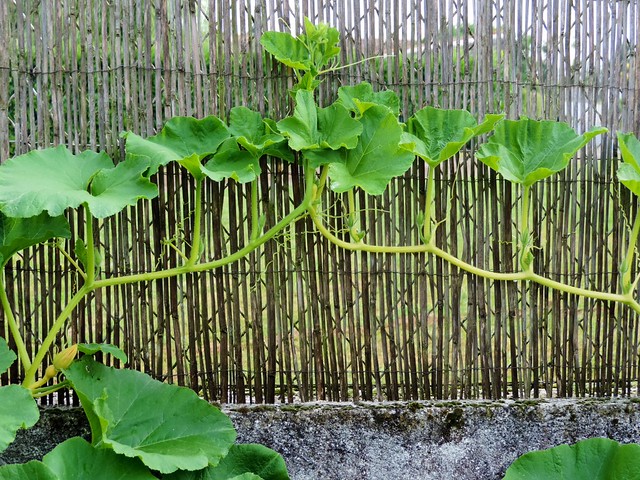
We’re growing some “potiron” plants in our “potager” and, wow, can they grow! (“potiron” is a kind of pumpkin and a “potager” is a vegetable patch)

Look what these two have done. They’ve sought each other out and now that they’ve found each other they’ve entwined themselves in each other. Just lovely!

I find all these plants which can send out tendrils and climb their way up walls and fences quite astonishing, but there’s an added bonus here with seeing these two particular plants get together!

Read Full Post »

From the Ile-de-Re

In my A to Z of Becoming I’ve previously considered both “zoom” and “zigzag” for the letter Z, but this time I’m thinking about “zone”.

We don’t often use “zone” as a verb, but in France it’s used quite a lot to indicate a particular area – “ZA” can be a “Zone d’Activitiés” – for example, a “Zone Artisanales” is an area where there are a number of small businesses (artisan in France is used as a term for someone who has a trade, like a plumber, or electrician). It’s used to define an area which is designated for some particular purpose – shops, small businesses, factories, or even economic areas (like the “zone euro”).

The other kind of zone we think about in English is captured by the phrase “to be in the zone” – which is one of the key definitions of happiness.

If we zone in on something then we focus on it (a bit like that other z verb, zoom – we can zoom in on something) – but zone also has an element of a boundary to it.

If we declare a zone we set a perimeter. Or if we get into the zone, we set a perimeter of our attention.

Here’s one of the paradoxes of becoming – we need to be able to take in the whole, (the view from on high) and we need to be able to focus on parts (to zone in). Iain McGilchrist’s hypothesis is this is exactly why we have two cerebral hemispheres – the right to see the whole, and the left to analyse or focus in.

So, here’s the thought for this week. What zoning would you like to do? Is there something you really love doing which would let you “get into the zone”? If so, set aside some time this week and do it!

Or do you need to create a zone – a place, an area in place and/or time, for a particular activity? In other words, what do you need to make space for, and how are you going to protect that space? By declaring a zone? A meditation zone? A writing zone?

A …… (you fill in the blanks) zone

Read Full Post »

Montgolfière over Salles d'Angles

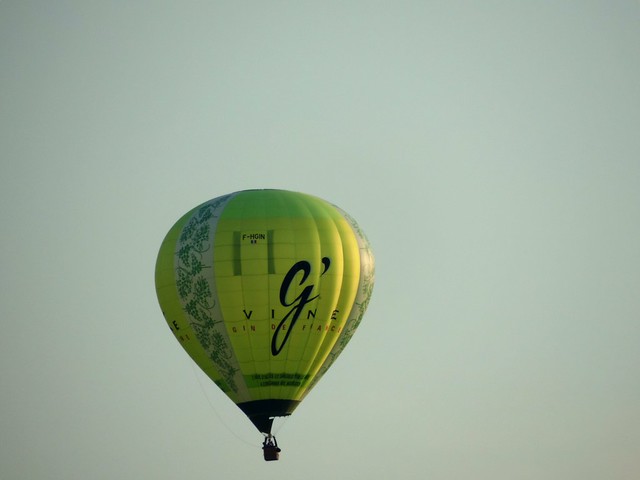
One of my favourite philosophical practices is the “view from on high” – or the French version of a “view from Sirius” (which isn’t just about seeing from above, but about encountering things as if for the first time).

Conceptually, its about taking an overview, seeing everything within its contexts. It’s about approaching something as a whole, rather than analysing its parts. (This latter is the distinct difference between the two sides of your brain, according to Iain McGilchrist – the right hemisphere allows an “analogical”, holistic approach to be taken, whilst the left facilitates a more “digital”, analytic and reductionist one)

We can do this literally, when we climb up to a vantage point, (or take a flight in a hot-air balloon or a plane), or we can do it cognitively, by reflecting at the end of a day, or by taking a pause, taking a few deep breaths, or slowing down to be able to actually perceive properly (instead of the world and our thoughts whooshing past at a hundred miles an hour!)
Hot air balloon

By the way, if you do get the chance to actually go up in a hot air balloon, I can recommend it. I’ve only done it once (for my 50th birthday) but it was one of the most amazing and special experiences of my life.

Read Full Post »

Clouds over the moon

It was a full moon the other night, and there were storm clouds gathering.

You know how I say it’s good to do something different? Well, I decided to try and take some photos of the moonlight…….so, I had to wait till the moon was hidden –
Moon behind storm clouds

Completely hidden –

Moonlit silver linings

Ah….now, that’s nice! See, every cloud DOES have a silver lining!

Read Full Post »

Hoopoe

July, in my twelve monthly themes, is the month of rest.

One of the things I’ve noted about several of the birds which frequent my garden, is that they often find a place to perch.

Most of the time they are flying around, or running around, looking for food, carrying it back to the nest, and so on. But from time to time, they just sit.

Usually on a post, like this Hoopoe, but other times it’s on a favourite plant pot, a TV ariel, or a telephone wire.

So, I’m wondering…..where are your favourite perches?

Where do you like to pause, or take a “time out”?

Whether it’s to just sit still for a little, in order to be better able to see the world, or whether it’s to just settle your mind and your emotions so you can slip out of reactive mode and into responsive mode, I think it’s invaluable to have these pauses in life.

If you’re not in the habit of taking them, this would be a good month to start.

Read Full Post »

bridge

When medicine is practised in a fully human way, employing all parts of the doctor’s brain, not just the thinking/analytical knowledge-based functions, then something deeper and more powerful than mere symptom-relief can occur.

As far as I know there are no “artificial healing agents” in the world. Drug companies may claim their products can cure, but it’s only the individual human organism which can cure. As a complex adaptive system, like all other life forms, we have the ability to defend ourselves, to repair damage, to recover from illness and even to adapt and grow. All of those abilities are natural and innate. If a drug, an operation, or any other medical procedure helps it does so by supporting, or better, stimulating these natural mechanisms of self-healing.

But how does that happen?

One element is what Lewis and colleagues, in “A General Theory of Love”, describe as the limbic connections between two human beings. In their book they explore three aspects of this – limbic resonance, limbic regulation and limbic revision.

Every person broadcasts information about his inner world…..If a listener quiets his neocortical chatter and allows limbic sensing to range free, melodies begin to penetrate the static of anonymity. Individual tales of reactions, hopes, expectations, and dreams resolve into themes. Stories about lovers, teachers, friends, and pets echo back and forth and coalesce into a handful of motifs. As the listener’s resonance grows, he will catch sight of what the other sees inside that personal world, start to sense what it feels like to live there.

That’s a beautiful description of what I think is necessary in any good doctor-patient consultation. It’s not so much a matter of the doctor “getting out of the way”, but of “tuning in”. Quite literally. “Getting on the same wavelength”. Why? Not just to communicate effectively but to understand more fully. In an older fashioned way of expressing it, it’s about “putting yourself in the patient’s shoes”. And from a perspective of “heart rate variability” it’s about achieving not just limbic resonance, but heart and brain resonance too.

The first part of emotional healing is being limbically known – having someone with a keen ear catch your melodic essence.

I don’t know if there has to be emotional healing for their to be bodily healing too, but I suspect that to be true. Sure, suturing a laceration may be all that is required for the skin to be restored, but why do some apparently simple lesions heal quickly, and others fester and scar? Might that have something to do with the depth or breadth of the healing?

After resonance, comes regulation.

Our neural architecture places relationships at the crux of our lives, where, blazing and warm, they have the power to stabilise…..But people do not learn emotional modulation as they do geometry or the names of state capitals. They absorb the skill from living in the presence of an external modulator, and they learn it implicitly.

There’s something about a really good consultation which involves safety, confidence and hope. However, I do think all of those qualities are more likely to emerge from a place of love, care and compassion. Maybe those are the key “regulators” which calm, soothe and stabilise the patient’s limbic system.

People who need regulation often leave therapy sessions feeling calmer, stronger, safer, more able to handle the world.

How often have I had that feedback? Very often. Perhaps because that was a conscious aim of holistic, “integrative” practice.

The third element Lewis describes is “limbic revision” –

Knowing someone is the first goal of therapy. Modulating emotionality is the second. Therapy’s last and most ambitious aim is revising the neural code that directs an emotional life.

I think what he is referring to making lasting structural changes – in his, psychotherapeutic, context that’s about changing the patterns of neural connections in the brain to change the person’s emotional life. I didn’t work as a psychotherapist, but as a general practitioner with homeopathic and integrative skills. As such I didn’t separate problems into “mental” or “physical” categories, so while I see exactly what this “limbic revision” is and agree that it is important, I think a holistic doctor, whose patients are often seeking help with problems in different parts of their bodies, it was a broader “neurobiological revision” which was required.

Understanding the “limbic” aspect of medicine, is, however, an excellent place to start.

Read Full Post »

« Newer Posts - Older Posts »