Feeds:
Posts
Comments

Archive for the ‘from the reading room’ Category

The movie version of “Le Petit Prince” has just been released in France and, perhaps because of that, I stumbled on what turned out to be a French translation of an English language article in “The American Interest” last year – in it the author compares the two princes – Machiavelli’s and Saint-Exupéry’s.

The key difference lies in how the two books present the social urge that drives human political interactions. Machiavelli penned the incipient modern view that puts fear at the center of political order, turning politics into the craft of fear management. And it is a craft, properly speaking, not a science; yet the flavor of early modern times helped give rise to what we optimistically call today political science. The French aviator’s short book, on the other hand, describes the deep human desire to be social out of love toward others, not from fear of them. For the former, fear of others is the source of social cohesion; for the latter, the source is the need for others. The former would repel others, the latter attract them.

What the author is highlighting is the acute difference between these two authors in their view of their fellow human beings.

The modern approach to politics—one given to us in distilled form in The Prince and more elaborately in the Discourses, and is then expanded by later authors such as Thomas Hobbes—starts from the assumption that we humans do not enjoy each other’s company. Rather, we relentlessly compete with each other for things and for thoughts, for safety, and for status. It is a dim view of men, “ungrateful, fickle, pretenders, evaders of danger, greedy for gain” (The Prince, XVII). The outcome is a constant clash that often degenerates into the war of all against all. As Jean-Paul Sartre wrote in Huis Clos (“No Exit”) in the same year that Antoine de Saint-Exupéry plunged into the sea: “L’enfer, c’est les Autres.”

Well, this certainly rings a bell. We are force fed a daily diet of fear – fear of terrorism, crime, disease, immigrants…..you name it!

Le Petit Prince presents a very different picture. The Little Prince from a distant asteroid is also a keen observer of human affairs, but less jaded than the retired Florentine diplomat and his modern followers. He is a gentle soul in search of others whom he can befriend and love. In one of the many moving moments in this quirky little book, the lonely and somewhat sad Little Prince who had just landed on earth screams from a mountaintop: “Soyez mes amis, je suis seul.” Deriving apparently little pleasure from his loneliness, the Little Prince seeks others, not to dominate them but simply to be with them and engage them in conversations. As he says to a fox, “Come and play with me. . . . I am so sad.” (Ch. XXI).No Principe, no man in Machiavelli’s world, can fathom the idea of seeking others simply to enjoy their company. La tristezza of the Prince leads him to fear others; la tristesse of the Little Prince leads him to seek others.

If one of the key differences is the creation of a society based on fear vs one based on friendship, then the other key difference this author notes is between the quantitative and the qualitative.

Another crucial and related difference between the two Princes revolves around a question that is apparently limited to epistemology, but that has significant political consequences. The Little Prince observes that human interactions are not, and cannot be, based exclusively on visible, calculable features. As Saint-Exupéry famously puts it, “L’essentiel est invisible pour les yeux.” For Machiavelli instead, “Men in general judge more by their eyes than by their hands, because seeing is given to everyone, touching to few. Everyone sees how you appear, few touch what you are” (The Prince, XXVIII). Measurable appearances are more important in the life of the Prince than what is invisible to the eyes, but they are useless for the Little Prince. In anthropologist James Scott’s words, in order to function the modern state requires its citizens to be “legible”: to have a clutch of numbers citing address, age, and income, coded and used to place individuals in various categories. The Little Prince would find the very idea of legibility puzzling and inhuman, and Saint-Exupéry himself would not have been the least surprised to learn, had he lived long enough, that the Nazis tattooed numbers on the arms of their victims. The Little Prince’s criticism of the grown-ups, or us moderns, is that we approach others by focusing on calculable appearances. To know something or somebody, we measure it. When we introduce a friend to an adult, he asks: “How old is he? How many brothers does he have? How much does he weigh? How much money does his father make?” Similarly, when we try to describe a house, its price is one of the first features that we use to convey its beauty. “You have to tell them [grown-ups], ‘I saw a house worth a hundred thousand francs’. Then they exclaim: ‘What a pretty house!’” This is our scientific approach, another essence of our modernity: By counting and measuring, we think we assess the other side as rival or friend, we think we grasp his potential behavior, and, above all, we think we can manufacture benign social arrangements on this basis.This is not real knowledge, and consequently it cannot generate real order. The questions one ought to ask are different. Knowing the price of a house pales before a description of it as a “beautiful red brick house with geraniums at the windows and doves on the roof.” Similarly, if you want to get to know somebody, ask: “What does his voice sound like? What games does he like best? Does he collect butterflies?” Only by asking such questions can one start the long process of “taming.” The development of true social bonds is possible only when based on this deeper, yet far more elusive kind of knowledge. Knowing how much money one makes may be helpful to manage the Prince’s mechanism of fear, but it does little to develop true friendship and lasting order.

I’ve quoted pretty extensively from Jakub Grygiel’s article but I do think it really merits a full read – you can find it here.

Maybe this will whet your appetite to either go out and buy a copy of “The Little Prince” by Saint-Exupéry, or to go see the movie. Delight, pleasure and food for thought if you do!
Read Full Post »

I read an article yesterday about the spread of sharing technologies and how they were beginning to challenge what we think about work.

It’s a hot topic here in France with authorities acting against the company, Uber, which was letting anyone with a car and the Uber app get paid for giving lifts to strangers. French taxi drivers protested vehemently (and sometimes violently) against this service which they saw as undermining their way of making a living. Taxi driving is a highly regulated job and the drivers have to pay a lot of money to get and keep their licences. It’s no wonder that technologies which underpin the likes of Uber are called “disruptive technologies”!

Whatever you think about the struggle between Uber, the taxi drivers and the State authorities, the service is a good example of how the nature of work might change.

The article I read (in a French magazine) pointed out that someone might earn some money driving their car using “Uber” in the morning, trade some antiques online using “leboncoin” in the afternoon, and welcome guests to sleep in a spare room using “AirBnB” in the evening. None of this makes the person a taxi driver, an antiquarian trader, or a hotelier.

So, maybe in such an example, this person would not define themselves by their work. They would also be experiencing a lot more freedom than any employee of a company, choosing not just their working hours each week, but the nature of their work, almost task by task.

Will this kind of working spread? Is this the new kind of “portfolio” work? What does that mean for regulators, tax inspectors and the State? And what does it mean for established tradesmen and professionals who are currently subject to the bureaucracy of employment and licenses etc?

In some ways this is a very libertarian version of utopia – each individual working for themselves without huge barriers in the form of regulations and the powerful interventions of the state. But this article referred to quite another interesting version of utopia – that of communism described by Karl Marx in “German Ideology” –

In communist society, where nobody has one exclusive sphere of activity … society regulates production and thus makes it possible for me to do one thing today and another tomorrow, to hunt in the morning, fish in the afternoon, rear cattle in the evening, criticise after dinner, just as I have a mind, without ever becoming hunter, fisherman, shepherd or critic.

I don’t think there are apps for hunting, fishing, or looking after sheep yet, but there are certainly lots of opportunities for critics!

So, what do you think? Are these new technologies the vanguard of change in the nature of work? Are they the place where libertarians and communists find something to agree about? In fact, are they challenging not only the nature of work, but the role of the State and the old labels we applied to political groupings?

Read Full Post »

Sunlit raindrops on hollyhock
Ever since I was a child I’ve had a fascination with science. For me, science was, and still is, a form of exploration. It’s about learning and knowledge. Finding out how something works, how a creature lives, or learning the names of clouds, constellations, trees and birds. I’d say science is about wonder and curiosity.

Many, many years later I came across the writings of the French philosopher, Gilles Deleuze, who wrote that there were three ways to think – science, philosophy and art. I was a bit surprised when I first read that, but the more I came to understand it, not only the more it made sense, but it became, for me, a basic tool.

Briefly, he said that science was thinking about function – how something worked; philosophy was thinking about concepts – our frameworks and our world views; and art was thinking about percepts and affects – what we perceive and what we feel. I took all of that into my daily medical practice, figuring out what wasn’t working in somebody’s body, mind or life; developing my concepts of health, illness and disease; and working with both what I perceived and what I felt in a consultation.

A couple of years ago I had an experience on my daily commuter train which really woke me up – you can read about it here – but, let me just rehearse it for those of you who don’t want to diverge off down a link – I was sitting next to a student who seemed to be revising notes (I presume for an exam. Her subject was “clinical research” and what struck me was her key points about the “scientific method” – they were – Observation, Description, Explanation, Prediction and Control.

Well, I am very, very keen on observation and I like to describe what I observe. I’m also very keen on finding explanations for things (I think one of the definitions of a doctor’s job is “a person who tries to understand” – but that’s another story!). I also know that I was taught how to diagnose (which I see as a level of understanding) and to prognose (predict).

To be honest, neither diagnosis nor prognosis are nearly as simple as they are often taught. The older and more experienced I became the more I came to realise that diagnosis is never complete (you can always understand more deeply and/or more widely), and that prognosis is about possibilities and probabilities not about certainty.

So I was particularly surprised to find the student’s notes on “clinical” research describing the final step of the “scientific method” as “control”.

Since then, I’ve come to see that for many science is exactly about this – control. Scientism, the belief that everything can be explained using science, seems to be about power. This way of understanding and approaching science seems to be what has been adopted, not only by the industrial-commercial-military complexes, but by all those who seek control over others and over the world. It seems to be based on an understanding that if we take enough measurements, collect enough data, analyse it with statistical and computing tools, then we will be able to make accurate predictions which allow us a high degree of power to control.

Well, for some reason, I woke up this morning with this phrase in my mind – “The Power OR the Glory – two approaches to science” – and so, this post!

I’d like to re-state the case for a science based on wonder and curiosity instead of one based on power and control. For me, the joy of that scientific method is the revelation of, and the revelling in, the GLORY of this Universe and of our lives.

I was looking for some paper to start to jot down some thoughts about this and stumbled across an old notebook where I’d made some notes about the book “Planet Narnia” by Michael Ward (haven’t even thought about that book for a long, long time) – and here’s what I read –

The glory of science is to progress as new facts are discovered to be true, and such progress meanest that ‘factual truth’ is a provisional human construct. Which is why the wise man does not think only in the category of truth; the category of beauty is also worth thinking in.

Wow! How does that happen? How do I stumble across exactly the phrase “the glory of science” in a notebook stuffed away in a drawer full of scrap paper on exactly the morning I wake up with the phrase “The Power OR the Glory – two approaches to science”? In fact, who on earth wakes up with a phrase like that in their heads anyway? OK, I do!

Seriously, there’s way too much to explore there than I can write a post about this morning, so let me just finish with what I wanted to say in the first place –

There are two approaches to science – power (what I’d say is our current dominant model) OR glory – based on a humble curiosity and a joy in the awe and wonder of this life.

My hunch is, we could do with cultivating more of the latter, and less of the former!


Read Full Post »

The Mission

I recently received my first “Discover Weekly Playlist” from Spotify and so far, I’ve really enjoyed every single track. So, does Spotify “know” me?

We have more and more services like this around us – Amazon telling us what other people who bought “this” also bought (or even looked at!), Apple telling us what other apps other people bought who bought this particular one….and so on. This is something which Maria Popova has written about in her excellent Brain Pickings

I recently found myself in an intense conversation with a friend about privacy — why it matters; how much of it we’re relinquishing and what for; whether it is even possible to maintain even a modicum of control over our own privacy at this point…….It suddenly struck me that our cultural narrative about privacy is completely backward: What we really fear is not that the internet — or a prospective employer, or a nosy lover, or Big Brother — knows too much about us, but that it knows too little; that it fails to encompass Whitman’s multitudes which each of contains; that it reduces the larger, complex truth of who we are to a few fragmented facts about what we do; that it hijacks our rich, ever-evolving personal stories and replaces them with disjointed anecdotal data.

I hadn’t thought of it that way around when it comes to the internet, but she is definitely onto something. The underlying truth of what she is referring to is similar to what I read years ago in Mary Midgley’s “Wisdom, Information and Wonder” where she wrote –

One cannot claim to know somebody merely because one has collected a pile of printed information about them

That observation seemed absolutely true to me in the domain of health care where sadly, far, far too often, “data” or “information” is ALL that is known about a particular patient as individual narratives are dismissed as “anecdotes” or “unscientific subjectivity”. That dominant way of practising Medicine always seemed to me to be just the opposite of how it should be done. Information, or data, can tell you something about some aspect of a person’s disease but it’s a long way from the person’s own narrative.

One of the dangers of substituting data for narrative is the presumption of knowing – I used to say to patients that each of us spends a lifetime trying to really know ourselves (and I’m not sure any of ever complete that task!) so how can I presume to know them from hearing just a little of their story over the course of an hour or so? Frankly, reducing their stories to a few data points just takes doctors and nurses even further away from knowing their patients.

Maria Popova’s recommendation to counter this is to “master the art of personal narrative” –

Perhaps the most potent antidote to this increasingly disempowering cultural shift is to grow ever more thoughtful and deliberate about how we tell our own stories

Thought provoking, huh?

Even when someone uses the personal data we’ve shared to offer us more music, books, restaurants etc, that we may like, I think its best to keep these things as hints. That’s why “discover weekly” works for me – it doesn’t assume the impossible – they don’t know me – but I’m happy to have them help me discover new music. And I’ll use some of their suggestions to continue to make my own playlists.

Where are you with this issue of information, privacy and how we make ourselves known to the world?


Read Full Post »

Leaf veins

If it’s true that we are in the beginnings of major change, then I’d like to hope that we are moving towards more “natural”, more “realistic” ways of living.

This industrial, capitalist age, has not been based on either natural or realistic premises. Nature doesn’t produce anything like the machines and organisations we have created in the world. Why not? Because nature is not mechanical, it isn’t a closed system where everything can be controlled and outcomes can be reliably predicted in all circumstances. It’s just not true that if only we have enough data we can figure out the future in detail and then the way to get there.

What alternative is there?

For me, the alternative is found in reality. It’s found in Nature – including in our own bodies.

How do our bodies work?

They work by developing a diversity of elements which then create mutually beneficial bonds between them – think of the organs of the body for example. A human being has a liver, a heart, a pair of kidneys, a brain….and so on. Each of these organs grows from the same original seed cell, but each develops as a tight network of specialised cells which, when they work together, perform incredible feats. But when the different organs work together (NB NOT in competition with each other) in mutually supportive ways, then they become something else entirely – they become part of the workings of the body in which we find them.

So diversity is a key feature of Nature. Mutually beneficial bonds are a key feature. Networks of connections between the elements are a key feature. As we extrapolate this model up we find more and more elements and more and more complexity – the best model I know to represent this is the “complex adaptive system“.

Here’s an important feature of complex adaptive systems (exactly the kind of phenomena we find in living organisms everywhere in Nature) – they don’t have a central controller who is in charge of a hierarchy, setting the goals, laying out the strategy, tasks and jobs and the ensuring they are delivered to it’s own particular levels and standards.

Might sound attractive if it was like that, but it isn’t.

Instead we have networks of nodes, systems, feedback loops, influences, clusters, organs and so on, which TOGETHER ensure the integrity of the organism – self-defence, self-repair, reproduction, growth and maturity are functions of the entire system – not the prerogative of one particular part.

Take this model and scale it up to groups of organisms, to societies, to ecosystems, to an entire planet even – the principles remain the same – diversity and the creation of mutually beneficial relationships.

So, the industrial, capitalist, dare I say it, inhuman, system based on machines and hierarchies is probably coming to an end because, well it just ain’t natural!

Here’s a piece about control which I read a few years back –

The industrial age and the work of Frederick Winslow Taylor made control popular as we used humans to mechanize our factories.  Control permeated society down to the education systems that eliminated variability, encourage conformity, and produce the mechanized humans for the industrial machine.  But the control mentality does not have utility in a world that is co-creative and cognitive.  We must replace control with the creation of shared value, a fondness for contribution, appreciation for human uniqueness, and the embrace of uncertainty.  We need to create an atmosphere of humility where co-creative energies are released instead of subdued.  Our future depends on the cultivation of new ideas and shared knowledge — a future easily smothered by control.

Mike Rollings.

As I think about Paul Mason’s piece which I posted about yesterday, I think the important thing for us to do now, is look around and look within – the answers are here already – and they don’t include the creation of more controls.

Read Full Post »

The world is changing.

Fact is, it’s never stopped changing since it came into existence. But what I mean is it seems as if we are in one of those phases of major and multiple interconnected change.

You can think of it in terms of economics, of social structures, of ways of living and thinking – wherever you look, there’s major change underway.

As the eras change the transitions can be hard to pin down. But when you are living it, you can feel it and you can see the signs.

One of the clearest signs for me is the unsustainability of many of our current paths – whether it’s the world economic order driving faster and faster towards ever greater inequality and unfairness, or “growth” which consumes ever more of our limited resources and heats up our planet. Or whether it’s our system of health care which costs more every single year as it struggles to keep up with increasing demand from patients with more and more chronic, incurable diseases. Or, well, you fill in the blanks.

The second clearest sign for me is the increase in command and control systems as societies, governments and enterprises struggle to keep human beings acting as obedient cogs in the machines.

Paul Mason writes about this in today’s Guardian (and he has a book on the subject coming out soon). He takes the perspective of economics and politics and by standing back and seeing the trends over a long period of time he describes the changes from feudal societies to capitalism to our current era of – well, what to call it? – he calls it “post-capitalism”.

What does he mean by that? –

Postcapitalism is possible because of three major changes information technology has brought about in the past 25 years. First, it has reduced the need for work, blurred the edges between work and free time and loosened the relationship between work and wages. The coming wave of automation, currently stalled because our social infrastructure cannot bear the consequences, will hugely diminish the amount of work needed – not just to subsist but to provide a decent life for all. Second, information is corroding the market’s ability to form prices correctly. That is because markets are based on scarcity while information is abundant. The system’s defence mechanism is to form monopolies – the giant tech companies – on a scale not seen in the past 200 years, yet they cannot last. By building business models and share valuations based on the capture and privatisation of all socially produced information, such firms are constructing a fragile corporate edifice at odds with the most basic need of humanity, which is to use ideas freely.Third, we’re seeing the spontaneous rise of collaborative production: goods, services and organisations are appearing that no longer respond to the dictates of the market and the managerial hierarchy. The biggest information product in the world – wikipedia – is made by volunteers for free, abolishing the encyclopedia business and depriving the advertising industry of an estimated $3bn a year in revenue.

So the new information technologies are the game changer. I think this is true, but underlying those technologies is the greater discovery, which he talks a lot about in his article – networks.

The main contradiction today is between the possibility of free, abundant goods and information; and a system of monopolies, banks and governments trying to keep things private, scarce and commercial. Everything comes down to the struggle between the network and the hierarchy: between old forms of society moulded around capitalism and new forms of society that prefigure what comes next.

Let me highlight that phrase again – “Everything comes down to the struggle between the network and the hierarchy” – that’s it in a nutshell.

I think the change which is underway is a different kind of freedom from the one espoused by neoliberals – not the so called freedom of the individual to exist as if nobody else exists and to pursue their own selfish interests at all costs. Instead, it’s the freedom to collaborate and co-operate – to build effective informal networks to solve problems or to bring aobut change.

This is what is really exciting, because it’s the almost untold story of evolution – the most succesful species of life are those which develop the strongest collaborations. That was the message in “The Bond”, by Lynne McTaggart, and it was the message in “Global Brain” by Howard Bloom.

I think once you understand networks and the particular type of network found in all forms of life – the “complex adaptive system” – you realise that “command and control” management systems, “one size fits all” institutions, monopolies and the delusion of separateness are all about to hit the buffers.

Paul Mason does point out that things can go badly, just as he calls for a new utopian thinking, and as we look around it can seem the potential for disaster outweighs the potential for utopia – but, hey, I, for one, am up for making a contribution to the utopia scenario.

Only time will tell which way it’s going to go, but the key is – the world is changing and we, at this stage in history, can contribute positively to the direction it takes next.

The power of imagination will become critical. In an information society, no thought, debate or dream is wasted – whether conceived in a tent camp, prison cell or the table football space of a startup company.


Read Full Post »

It strikes me that the practice of Medicine (I’m specifically referring to the world of Medicine for humans here), begins and ends with a relationship between human beings.

I’ll just focus on the doctor-patient relationship here, because that’s how I spent my working life. But I suspect that much of what is relevant to this relationship is also true for other health care workers, and perhaps even in other areas of human life.

When I say the practice of Medicine begins and ends with a relationship between human beings, I mean that the whole, unique person who is the patient has to be understood, cared about and attended to, by the whole unique person who is the doctor. Both individuals are important. I think this is partly why there are no doctors who are the best doctors for everyone, and I think it explains how in a group General Practice, each of the doctors in the partnership will have a specific loyal cohort of patients who always seek a consultation with that one particular doctor.

I also think this means that the whole person must always be considered. Anything less is reduced, and anything reduced is less than human.

In this context, I recently read “A General Theory of Love”, by Drs Thomas Lewis, Fari Amini and Richard Lannon. [ISBN 978-0-375-70922-7]. This book describes the model of the triune brain, which you might have come across elsewhere. (My introduction to that model was Dan Seigel, and later, Rick Hanson). It’s the observation that we have three brain regions – the brain stem, which is responsible for survival, and is found even in reptiles (henceforth to be known as the “reptilian brain”), the limbic system, which is responsible for memory processing and emotions (called the “mammalian brain”, because all mammals have this part), and the neocortex, which is massively developed in humans and seems to give us the capacities for abstract thought, conscious decision making and rational analysis.

In “A General Theory of Love”, Thomas Lewis and his colleagues focus on the limbic system – they describe in detail how this part of the brain helps us to “feel” other people’s feelings. It’s the kind of phenomenon that others call “heart feelings”. Without this part we’d have the reptilian survival strategies or the cold, analytic distancing of the neocortex. Let me be really clear here – this is a simplification and human beings are a lot more complicated than that. But this is a useful simplification which clarifies certain truths about what it is to be a human being.

In this post, I want to just bring to your attention some of the points the authors make when taking this perspective on the practice of Medicine, because I think health care is in a dire and degenerating situation in the world.

The last century saw a two-part transformation in the practice of medicine. First, an illness beset the relationship between doctor and patient, then radical restructuring attached the residual integrity of that attenuated tie.

I think the illness and the radical restructuring they refer to developed from a general reductive de-humanising of health care. Iain McGilchrist has shown how a “left hemisphere approach” has come to dominate society and I find that explanation helpful. Lewis says

American medicine has come to rely on intellect as the agency of cure. The neocortical brain has enjoyed a meteoric ascendancy within medicine even as the limbic star has fallen into disfavour.

Whilst this focus is a little different, the basic point is actually the same. By coming to rely on data, figures, statistics and techniques, we have reduced the human-ness of medicine. We’ve increasingly denigrated the patient’s narrative, the individual’s subjective experience, and the place of heart felt caring.

The limbic brain has a crucial role to play in attachment, and Lewis describes attachment theory along with the physical and social consequences of disordered attachment incredibly clearly. And here’s one of the most important points in this book – the physical reality and hence importance of relationships, emotions and attachment –

Medicine has lost sight of this truth: attachment is physiology

The radical restructuring they refer to is seen throughout Western Medicine – its the rise of bureaucracy. We see it in the proliferation of protocols and guidelines, of the prioritisation of measurement – what others have referred to as “Taylorism 2.0” (the modern equivalent of Taylor’s “scientific management”) – at the expense of what cannot be measured – the lived experiences of the patients and the health care workers.

Good physicians have always known that the relationship heals. Indeed good doctors existed before any modern therapeutic instruments did…

For many years, the medical community hasn’t believed that anything substantive travels between doctor and patient unless it goes down a tube or through a syringe.

They neatly sum up their thesis with

medicine was once mammalian and is now reptilian

Corporations and organisations have taken the high ground imposing their limits, their rules and regulations on those who try to care.

A corporation has customers, not patients; it has fiscal relationships not limbic ones.

The use of terms “customers”, “clients” and “consumers” in the area of health care has always disturbed me. Now I think I understand more clearly why!

I concur with this conclusion –

Before it is safe to go back to the doctor, a mammal will have to be in charge. And before that can happen, our physicians will have to recapture their belief in the substantive nature of emotional life and the determination to fight for it.

I’m not sure I’ve heard any politician, manager or profession leader say this so clearly – the problems facing health care are not ones of efficiency, targets and “better” guidelines. The problem is we need to make health care more human.

We need Medicine based on love, care and attention….where the heart is the keystone.


Read Full Post »

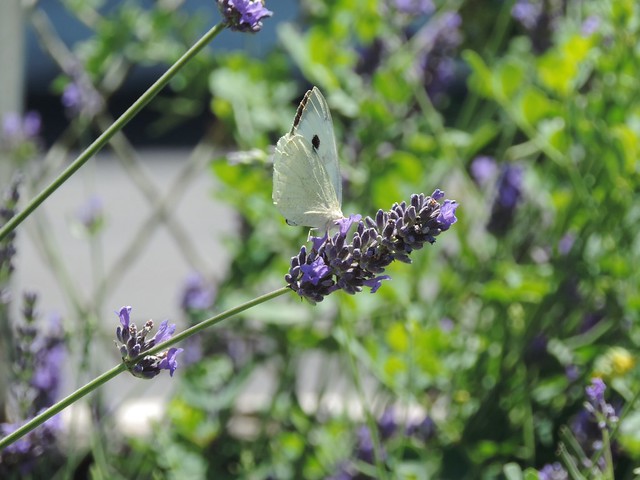
Butterfly on lavender

I recently read an interview with Anne Dufourmantelle, a psychotherapist and philosopher in Paris, who talks about the concept captured by the French word “douceur” (In fact, she has a book entitled “Puissance de la douceur”)

“Douceur” is one of those words which is difficult to translate into English but it has elements of softness, gentleness, goodness, mildness, and sweetness. “Allez-y en douceur!” means “Gently does it!” or “Easy goes it!”. And in the plural, “les douceurs de la vie” translates as “the pleasures of life”

In the interview (and in the book, which I’ve since purchased and read), she talks of the “absolute necessity of ‘la douceur'” in modern life, and I agree with her wholeheartedly.

She says she was looking for a word which would capture the connection between “the body, the spirit, sensation and intention”, and it was the word “douceur” which seemed to best fit the bill.

Let me try to translate a couple of her phrases for you –

“Douceur au sens de force de vie, de puissance, car notre première expérience sensorielle et émotionnelle est d’avoir été enveloppé dans la chaleur et la douceur d’un autre corps…La douceur donne naissance à la vie, elle est, pour l’humain, une nécessité absolue.”

[my translation – Douceur as a life force, a power, because our first sensory and emotional experience is to be enveloped in the warmth and the softness of another body…..La douceur gives birth to life, it is, for the human being, an absolute necessity.]

To make this concept clearer she says that if douceur was a gesture it would be a caress. Isn’t that lovely?

And somewhere (I can’t find it now) I’m sure she says that a flower could be a symbol of “douceur”.

I think she is right that kindness, gentleness, goodness, softness disarms and has great power – it comes from our own sense of vulnerability and that of others. It’s a humble stance – but powerful in the way, as we saw when it was used by Gandhi and others who advocated non-violent resistance. One image which comes to my mind when I think of this is the anti-vietnam war protesters in the 60s giving flowers to the police and the security forces. (OK, I know, the flower power thing went off from “peace and love” to “sex and drugs” but, well, there was a good hearted idea in there!)

Anne Dufourmantelle’s recommendations for how to increase the “douceur” in your life seem completely consistent with those which I find myself writing about again and again in this blog –

She recommends paying attention to details – gestures, facial expressions, the play of the light, all the little, fleeting, amazing things (“toutes ces minuscules chose fugues, merveilleuses…”) which surround us. And she recommends seeking out and, I’d use the word “relishing”, sensations – smells, tastes, sights, sounds, what touches our skin.

I love how she has taken this single concept and used it to link together bodily experiences, a way of engaging with everyday life, and a power of change which can be used to create more goodness in this world.

Read Full Post »

There’s an excellent collection of articles about health in this month’s “Philosophie” magazine in France.

The cover instantly reminded me of the great quote by the American physician, Oliver Wendell Holmes –

Throw out opium, which the Creator himself seems to prescribe, for we often see the scarlet poppy growing in the cornfields, as if it were foreseen that wherever there is hunger to be fed there must also be a pain to be soothed; throw out a few specifics which our art did not discover, and it is hardly needed to apply; throw out wine, which is a food, and the vapors which produce the miracle of anaesthesia, and I firmly believe that if the whole materia medica [medical drugs], as now used, could be sunk to the bottom of the sea, it would be all the better for mankind,—and all the worse for the fishes

Health is a much more complex and nuanced phenomenon than the simplistic ideas we are offered by the current dominant model of health care – that of Big Pharma and statistical medicine (drugs for every problem, protocols for every health care professional).

One of the central themes explored in this issue is summarised by the lead title of “Health, is it in your head?” There are those who promote the idea that all illness begins in the psyche and expresses itself in the body (Freud?), and others who promote the idea that all illness is physical, material change in the body whilst the psyche remains separate (Descartes?). There is a third option discussed, whose roots are traced to the philosophy of Spinoza – that the psyche and the body just express the same underlying disturbance, but each in their own language.

I like that third idea – it seems totally congruent with the core value of my lifetime of medical practice. I refused to divide a person into two parts – a mind and a body, and I used the philosophy that there is a system or a force within all life forms which produces growth, maintains health and repairs the organism when it is damaged. It’s interesting to see how the more recent discoveries of neurobiology are showing us more and more interconnectedness within a person – with amazing multitudes of connections and pathways between the different organs and tissues. It’s becoming increasingly untenable to hold one of the divided views.

One of the articles mentions an old essay by Kant, written in 1798 “Du pouvoir du mental d’être maître de ses sentimentsmaladifs par sa seule résolution”. In that essay he distinguishes between “la sensation” and “le savoir” of health – in English, perhaps, something like the difference between what health feels like and the knowledge of health. This strikes me as close to the nub of the issue.

We experience health. It’s something we can all assess and comment on. We can say when we feel well and when we feel ill. But we have also developed ways of knowing about organ or cellular functions, so we can discover what our blood pressure is, or what level of haemoglobin exists in our red blood cells (two things we could not know by “sensation”). The point is, both of these perspectives are real. We do not have the kind of nervous system which can make us aware of the moment to moment functions of the organs of our bodies at a conscious level. Indeed, how could any of us live that way? But the connections exist. A certain level of heart cell dysfunction may be experienced as palpitations, pain or breathlessness. However, the heart can malfunction without us being aware of it at all – the investigation known as an “ECG” (a cardiogram) can reveal a “silent infarct” – damage which occurred to the heart from a clot without the person having experienced any pain or breathlessness.

The connections which exist between “sensation” and “consciousness” are complex but clearly non-linear – in other words, a small change in one area can have either a large, or a negligible, effect on another.

Isn’t this why we can encounter a person who feels very ill, but whose investigations are all “normal”, and why we find people who have “abnormal” results in investigations, but who feel completely well?

Where modern medical practice goes wrong, I believe, is by attributing truth to “knowledge” whilst dismissing “experience” as unreliable and so, not useful. This has come about from our obsession with measurement. We can measure physical changes, but we can’t measure pain, breathless, dizziness, nausea, or any of the other “sensations” of illness.

But to attribute symptoms (sensations) to mental disorders when physical test results are all within the normal range is neither rational, nor clever.

I think we need, in every case, a person-specific synthesis of what the tests tell us and what the person is experiencing. A person’s experience can be communicated to us by their telling of their story – which has the additional benefit of allowing us, together, to make sense of what is happening – by which I mean to explore the meaning of the illness.

Keeping focused on the narrative which includes this synthesis also enables us to explore the individual’s values, hopes and fears, allowing us to make more relevant, more holistic, diagnoses and so, hopefully, to offer more appropriate choices for each patient.

Read Full Post »

the geometry of flowers

Isn’t this beautiful?

How could you fail to be seduced by the astonishing geometry of this flower?

We see this everywhere in the world – how patterns seem to display an remarkable mathematical order.

Interestingly, the same day I took this photograph (which I immediately titled “the geometry of flowers”) I read a fascinating article about mathematics teaching, entitled “The limits of a rational mind in an irrational world – the language of mathematics as a potentially destructive discourse in sustainable ecology.” by Steve Arnold of Auckland University of Technology. Here are a couple of paragraphs which caught my eye –

Galileo famously said, “The laws of Nature are written in the language of mathematics.” However we realise that this profound statement was while very true, it is not strictly true. There are times when the mathematical understanding of the world breaks down. Now in a time of ecological distress, we need technologies and tools that can match more perfectly our world. In reality, Mathematics is a highly nuanced poetry that describes the human condition, it mirrors the workings of the human brain (as mathematics is exclusively a product of human thought). Mathematics tells us our own story, it tells us how the human brain works, and as we strive to make meaning of the world, we do so using the tools available to us; number is one of the ways that we language our experience.

Within mathematics there continues to this day an expectation that the simple relationships described in mathematics should be able to neatly describe our complex world. However the real world is not simple, tidy and neat. The real world is full of messiness, unpredictability, human emotion and error. Mathematics describes a predictable world, where error can be eliminated, and it is desirable to simplify and exterminate unwanted complications. Where the two differ, surprisingly it is the human experience in the real world that defers to the all-powerful notions of mathematics.

And, in conclusion, he makes the excellent point that mathematics is just one way to make sense of the world, and it’s a way that we ourselves have made up.

We put so much faith in numbers, that sometimes we place the power of the digit over the judgement of our experience. This idea of positivism has found a secure home in the teaching of mathematics in schools. We are controlled by numbers, from the early stages of test results, to class position and IQ, to more recently BMI scores, glasses prescriptions, salaries and postcodes. We sometimes forget that numbers are a way to tell the human story. We forget we make them up, not the other way round.

So, yes, this is a beautiful geometric flower and how often can we use mathematics to model the beauty of the natural world? But, surely, we need to always remember that the mathematical story of the world is not a perfect explanation. And that we should not allow anyone to reduce Life to numbers.

Read Full Post »

« Newer Posts - Older Posts »