Feeds:
Posts
Comments

Archive for the ‘from the reading room’ Category

When I was reflecting (for my annual appraisal) the other day, I got to wondering again about just how we understand what a doctor does.

Then I stumbled upon the Greek origin of the word therapy – therapeuein……which means to pay attention or to listen to.

That’s it!

That’s what I do – I pay attention.

That’s what I hear is most appreciated – patients tell me they appreciate having the chance to express themselves, to tell their story, and for that story to be listened to, attentively and without judgement. But paying attention isn’t just about listening, it’s looking out for patterns, seeking out connections, creating meaning and sense by weaving it all together.

Paying attention is therapeutic.

And that got me thinking…..isn’t that how I try to go through life…..paying attention? So is that therapeutic? For Life? For Nature? For the world? For me?

Read Full Post »

river flows


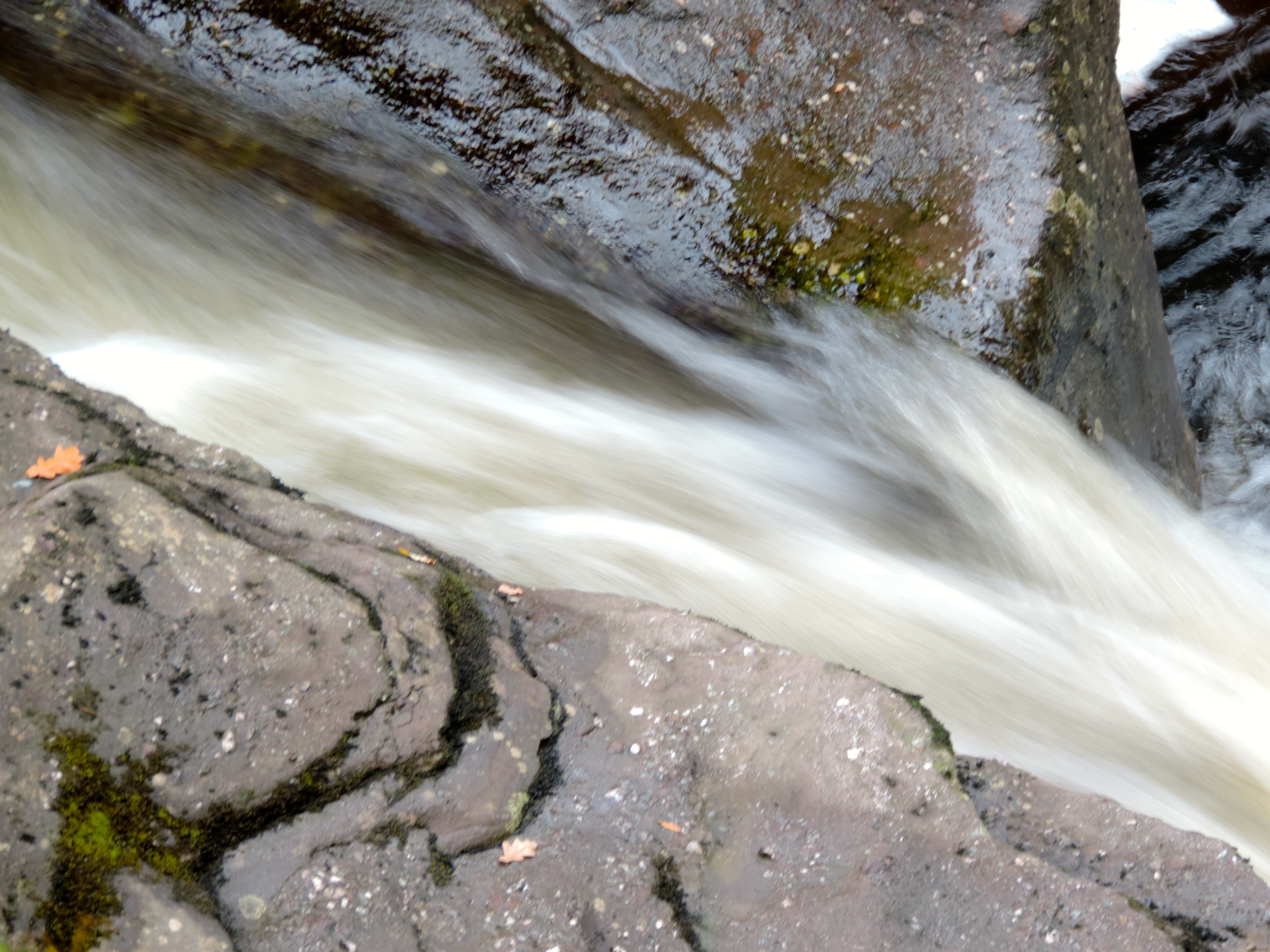
As the river flows over the rocks in the forest around the Bracklinn Falls I stand and wonder about the relationship between the rocks and the water.

I can see the rocks set the boundaries of the river and channel the direction of flow for the water, but I can also see how the water sculpts its own path leaving the rocks far from untouched as it pours down the hillside.

bracklinn


This got me thinking again about that continuous interplay of two essential forces in the universe – the diversity generators and conformity enforcers of Howard Bloom’s “Global Brain”.

That same idea is captured with a different set of metaphors in Thomas Berry’s fabulous “The Great Work”, where he talks of “wildness and discipline”.

I recently came across yet another set of metaphors for this process in David Wade’s “Crystal and Dragon“. In this latter book, David Wade describes the patterns of Nature (actually you could say of the Universe) and Culture which emerge from these two, apparently opposite, forces. Think of how a crystal forms, with a set of rules, which are strictly enforced in a disciplined way to produce the structure required to allow the growth of the crystal. Then think of the patterns of flow which emerge in the creation of clouds, waves and waterfalls. The former containing a certain predictability, and the latter retaining an apparently chaotic randomness. In one section of his book he compares Islamic art to Taoist art, the former known for its beautiful geometric patterns, and the latter for its freehand ink drawings of clouds, waves and water. Interesting then to think of the strict and detailed rules of Islam, and the Taoist focus on constant change, flow and uncontrollable nature of Life. In Chinese culture this force is represented by the Dragon.

So, the crystals of conformity enforcement and discipline, and the flowing Dragon of diversity generation and wildness……and what an astonishing Universe is produced in the process.


Read Full Post »

I read a fabulous book whilst on holiday in France recently – “Ni hasard, ni nécessité” by Marc Halévy. I’ll probably write a few posts inspired by it. Here’s the first –

Marc Halévy refers to the three meanings of the word “sens” in the French language.

The first is sensation, or senses – what we experience subjectively. This is such a great way to be present – to pay attention to, to become aware of, or mindful of, the sensations you are experiencing in the here and now. What colours, what light and patterns can you see? What sounds do you hear? What scents can you smell? What tastes linger on your tongue? What does your body sense?

The second is meaning – “what sense do you make of……..?” We are meaning seeking creatures. We are always wondering why, and what does this mean? Why me? Why this happening now in my life?

The third is direction – “where am I going?” “where will this lead?” “what’s the point, or purpose or direction of my life?” We like to be able to see an overarching narrative in our lives. We like to see how we’ve got to where we’ve got to and where that might lead if we carry on down this road.

I love this unpacking of that one word “sens” – the sensations, the meaning and the direction of my life.

In fact, sticking with French for a moment, it’s not far from “le sens” to “l’essentiel” – as Saint Exupéry said “l’essentiel est invisible pour les yeux”

What is most important to us, what is essential in fact, is what is invisible – and the sensations, the meaning and the direction in our lives are all invisible. They aren’t material. They can’t be measured. But they create “le sens de la vie”.

Read Full Post »

There are many ways in which writing can help us to understand ourselves better, heal wounds and gain a deeper insight into our lives. Here are three ways you might like to explore.

A. Regular continuous writing

Julia Cameron, in The Artists Way, describes an exercise she calls “Morning pages”. Essentially it involves writing every morning until you’ve filled three pages of an A4 notebook. With one additional, and crucial, rule – you can’t stop. Not for a moment. Your pen or pencil shouldn’t leave the paper, and your hand should never pause. This is not a thinking exercise. You aren’t to work out what you are going to write, and if you find yourself writing “I don’t know what I’m writing and I can’t stop moving the pencil so I’d better keep going and…..” – well, that’s OK. It’s a stream of consciousness thing.

People do different things with this kind of exercise. Some swear it only works if you do it as the very first thing you do on waking, others just in the mornings, some at other times of day. See what works best for you. What I have found is that the greatest benefit comes from it if you don’t read what you’ve written. At least not for a pre-fixed period of time – a week, 30 days, a month, three months. Again, see what works best for you.

Try it. I’m pretty sure it’ll surprise you

B. Gratitude journal

There are many traditions which recommend creating and regularly using a gratitude journal. Quite simply, it involves having a special notebook and every night, before you go to bed, taking a few moments to reflect on the day and recall something, just one thing, for which you are grateful. It might relate to something you saw or heard, something you ate, a conversation you had, a moment of being held…..it’s up to you. Then just note it down. You can write it in as much detail as you like. I find this has at least two benefits. It gives you an opportunity to re-experience a positive emotion (and that’s good for your heart, and good for your health). And it means you head off to bed with your most recent experience being a positive one.

C. The story you live by

In the inspiring “the stories we live by”, by Dan P McAdams, he describes a template to help you write out the story of your life, in a way which will enable you to clarify your own main themes and influences. I like this approach. I like the idea of the story of the self, especially as stories take us from the past, into the present and forward to the possible futures. Here’s a very brief synopsis of Dan’s template. It starts with writing down your chapter headings for the story of your life, then moves down through the seven further points of focus and reflection. You might want to try the whole thing, or you might like to pick and mix. As ever, see what works for you……

1. Chapters – titles and brief contents

2. Eight key events –

  1. Peak experience
  2. Nadir experience
  3. Turning point – significant change in understanding of yourself
  4. Earliest memory
  5. An important childhood memory
  6. An important adolescent memory
  7. An important adult memory
  8. Other important memory

3. Four significant people

4. Any heroes

5. Future script

6. Two areas of life where you are experiencing stress, conflict or challenge

7. Personal ideology

8. Life theme

Read Full Post »

I came across this the other day –

The Atheist Credo

I believe in one method

of data, hypothesis, and experiment

which was conceived by ancient Greek thinkers,

born in the Age of Enlightenment,

suffered under superstition

is struggling under religion

is bound to make people’s lives better

and will one day bring about a perfect world.

I found it on the blog of a neuroscientist called Kathleen Taylor, having read about her in a French magazine article.

My first reaction was what?!

“data, hypothesis, and experiment” ………. “will one day bring about a perfect world”

Really?

It’s niggled away at me since. Here’s my problem. Well, two problems actually. I’ll start with the last one first. What’s a perfect world? I wonder what the author imagines a “perfect world” would look like?

Do you have an idea what a perfect world would be like?

Do you have an idea of how to bring that about?

But before we get to that closing sentence, its the earlier statement that really worries me. Right from the outset.

“I believe in one method”

OK this “one” anything always worries me. It worried me when Mrs Thatcher said “there is no alternative” (“TINA”). It worried me because it made me think of totalitarian regimes, from Stalin to who knows who else? It made me think of fundamentalists – theists, as well as atheists. Nature loves diversity. The “one method” stance strikes me as being about power over others.

It brought back to mind Deleuze and his “three ways of thinking” – science is thinking about function, philosophy is thinking about concepts and art is thinking about percepts and affects. (I know I’m way over-simplifying what he said here, but that’s the gist of it as far as I’m aware). And that quickly led me onto to that second line  – “data, hypothesis and experiment” – she means, of course, “the scientific method” – as interpreted by modern day materialists. And again, I find myself thinking “Really? Is she having a laugh? Is this tongue in cheek?” …… maybe it is. But I suspect there are people who would resonate with this all the same.

So what about music, and painting, and poetry, and novels, and the theatre, and love, and laughter, and passion, and relationships? We can make those perfect through this one method too? This one method is enough to create a perfect world full of love, laughter and flourishing?

What do you think?


Read Full Post »
There’s an old Scottish phrase, “A hae ma doots”, which roughly translates as “I have my doubts”. We use it when we don’t agree with another person’s view, but we think there might be something in what they say. Fundamentally, it’s the essential Scottish expression of skepticism.

I haven’t been very impressed with the modern version of skepticism which seems to have evolved from something people refer to as “scientific scepticism”. There are a number of “skeptics” societies around in the UK, and one of their main activities has been to organise attacks on homeopathy and “alternative medicines”. What’s always struck me about the pronouncements and activities of these groups is their utter conviction, their complete, unflinching sense of the rightness of their own opinions, and their often contemptuous dismissal of the opinions or beliefs of others. In fact, it seems that the only thing they are really skeptical about is any view they don’t agree with. When it comes to doubting their own conclusions, their skepticism flies out the window.

Scientific scepticism (you’ll see I use the two spellings interchangeably), has a distinct characteristic. In some ways, its the attitude of “doubting Thomas”…..”I’ll only believe what I can see with my own eyes”. There seems to be some core to scientific scepticism which is materialistic. Objective, measurable data is what counts for the scientific sceptic, and they are likely to dismiss, or at least to be sceptical of, any perspective, view or opinion which isn’t based on a physical reality.

Not all scientific scepticism can be reduced to materialism of course. There’s a scepticism which is intertwined with humility and curiosity. Humble, curious scepticism is based on believing that we can never know everything about anything. There will always be something new to discover, some further research, or exploration which will deepen or even radically change our understanding. Modern physics, it seems to me, is even sceptical about the physical basis of the universe (at least in the sense that the universe can be understood to be made of “things” which exist independently of each other)

It’s this latter kind of skepticism which we find in the writings of Montaigne. His essays are peppered with phrases like “peut-être”, “je crois”, “ce me semble”, and even “encore ne sais-je” (“perhaps”, “I believe”, “it seems to me” and “again I don’t know”).

I am very attracted to this kind of healthy skepticism. It’s about keeping an open mind; remaining curious; desiring to hear, and being respectful of, the views of others.

So when modern day “skeptics” campaign on the basis of their convictions, I have to say that “A hae ma doots” about their claim to be skeptics! But then, what do I know?


Read Full Post »

Howard Bloom, in his excellent, “The God Problem” [ISBN 161614551X] starts by highlighting what he calls “five heresies”, or “five tools” which we can use to try and understand how our universe of everything was created, apparently, from nothing. I think they are all useful. Here they are –

1. A does not equal A

This is a challenge to dominant Aristotlean logic. Aristotle couldn’t accept Heraclitus’ view that you can’t step in the same river twice. He wanted to nail reality down by reducing it to a simple logic of A = A. Trouble is, the universe is a dynamic, evolving universe, so nothing stays the same. Even once you’ve named something, that something has already changed since you named it. This is what I was referring to when I wrote “waves not things“.

2. One plus one does not equal two. Here, he is referring to the fact that complex systems cannot be explained by simply adding up their parts. When a vast number of components join together, they begin to exhibit behaviours which could never have been predicted by any of the parts themselves. This is the main reason I refuse reductionism. To reduce a human, is to deal with something subhuman. A whole human being cannot be understood by adding together his or her bits!

3. “The second law of thermodynamics, that all things tend toward disorder, that all things tend toward entropy, is wrong” Just consider how a human being grows from a single cell, and continues to develop ever greater order and complexity as it matures. Or consider what’s happened from the perspective of the universe story – where the universe hasn’t demonstrated a path towards ever greater disorder, but rather to ever greater complexity and order.

4. “The concept of randomness is a mistake”. The popular view that we live in a totally random universe is not supported by what we know about the universe. The Big Bang did not create a billion DIFFERENT elements. Our entire physical universe is made of the elements we’ve laid out on our Periodic Table – a surprisingly small number of elements for a totally random process! It’s not totally random, of course, chaos has been seriously misunderstood. There are underlying patterns influencing the creation of the details – from galaxies, to worlds, to human beings. The underlying pattern is not total randomness.

5. “Information theory is not really about information”….instead “meaning….which believe it or not is not covered by information theory….is central to the cosmos. Central to quarks, protons, photons, galaxies, stars, lizards, lobsters, puppies, bees and human beings”

Bloom concludes

The bottom line? Sociality. This is a profoundly social cosmos. A profoundly conversational cosmos. In a social cosmos, a talking cosmos, a muttering, whispering, singing, wooing, and order-shouting cosmos, relationships count. Things can’t exist without each other.

Read Full Post »

Isn’t it amazing how being human involves unrelenting, constant change? My body feels like my body. It’s always felt like my body. But there isn’t a single cell in this body today which was here when I was a child. In fact all of the cells which make up this body are continuously being renewed. Some die off, others are born. So what is this “me”? And, at this point, I just mean my physical being. Goodness knows how you pin down the subjective “self” that is me! I create that every moment of every day.

With all this constant change, how come I retain a consistent identity?

I certainly don’t feel I am a “thing”……I’m not even sure what a “thing” is! What I mean is I am not an object. I cannot be reduced to my “substance”, my cells, my molecules, my DNA even. The totality of me is more than that, and the totality of me, right here, right now, had never existed before, and won’t exist exactly like this by the time you read this.

I think I’m a wave.

What I mean is I am more like a wave, than an object.

Have you ever stopped to think about what a wave is? You can spot a wave far out from the shore and follow it as it heads towards the rocks or the sand, but that wave is not an “it”. The water particles which make up the wave stay pretty much where they are. As the wave passes through the water, the particles just move up and down in a circular motion. They don’t actually head together towards the shore.

As you follow a wave, you are watching an energy complex consistently recruit particles into a distinctive pattern or forwards but it doesn’t bind those particles into an entity. It picks them up and drops them, moving its shape through the water……

Here’s a couple of quotes from other authors about waves.

The truth is that life is not material and that the life stream is not a substance.

Luther Burbank

You are a wave. Every minute you say goodbye to more than a billion combinations of post synaptic receptors in your brain and replace them with new ones. You do the same with the cells that line your digestive tract and make up your skin. And you constantly shift your mind from one obsession to another. Yet you retain an identity. Something more puzzling than mere substance continues to impose the shifting flicker of a you…..Your identity is a pattern holding sway over a hundred trillion cells that change constantly…….Your self is a dance that uses matter to whisk from the invisible and the impossible into the gasses, dusts, and jellies of reality.

Howard Bloom


Wave

Read Full Post »

An article in the BMJ recently repeated the statement made several years ago by a researcher who works in the area of pharmacogenomics for GlaxoSKF, the drug company. He said

“The vast majority of drugs – more than 90 per cent – only work in 30 or 50 per cent of the people,” Dr Roses said. “I wouldn’t say that most drugs don’t work. I would say that most drugs work in 30 to 50 per cent of people. Drugs out there on the market work, but they don’t work in everybody.”

Whilst that observation caused a stir at the time, and is causing a stir again, now it’s been repeated, at the time it didn’t really surprise me. You don’t have to work as a GP for long to discover that there are no drugs which do what the manufacturers and researchers say they do for every single patient who you prescribe for. How many different BP pills does the doctor have to try sometimes to get hypertension under control? How many different painkillers? Different antidepressants, anticonvulsants, treatments for constipation, diarrhoea…..you name it. I really don’t know of any drug on the market which does what it claims to do for EVERY single patient who takes it. What did surprise me were the figures quoted – 90% of the drugs only work in 30 – 50% of the people!

And yet, there are still those who claim there are only two kinds of treatments available – those which work, and those which don’t.

Life just isn’t like that.

But here’s another comment in that BMJ article which really grabbed me, and I don’t know why I didn’t see this so clearly before!

Pain relief is not normally distributed but usually bimodal,being either very good (above 50%) or poor (below 15%). Using averages is unhelpful and misleading, because “average” pain relief is actually experienced by few(if any)patients, and it tells us nothing about how many patients will experience clinically useful pain relief [BMJ 2013;346:f2690 doi: 10.1136/bmj.f2690]

What does this mean? “Bimodal”? Well, here’s another article, referred to in this BMJ article, pointing out the same problem –

Systematic reviews of regulatory trials often pool average data. In acute and chronic pain, however, underlying distributions are commonly not normal, tending to be U-shaped rather than bell-shaped, where the average describes few individuals [PAIN 149 (2010) 173–176]

When you look at the effect of a drug on a research population you don’t get drugs which work, and those which don’t. What you get is two distinct groups of patients – those who get a “good” result, and those who don’t.

By averaging out the results of the entire group, this reality is obscured.

Whilst these articles refer to painkillers, I believe this finding is likely to be found with pretty much any therapy you can think of. There will be a group who really get no benefit, AND a group which get significant benefit.

This is a common problem in health care – there are no average people. Every single person needs to be considered and treated as an individual. After all even the results from the group trials have been obscured by this averaging out.


Read Full Post »

I read Montaigne’s essay yesterday about “Liars” and it made me laugh out loud. I really enjoy Montaigne’s humility. It seems to me that he frequently wrote with a twinkle in his eye. In this essay he refers to his claim that he as a terrible memory. He says that others consider that an affliction of sorts, but he thinks it has advantages.

Firstly, he says that having a poor memory has saved him from being an ambitious person – “the defect being intolerable in those who take upon them public affairs”.

Secondly, he says it has saved him from deafening all his friends with his “babble”

I have observed in several of my intimate friends, who as their memories supply them with an entire and full view of things, begin their narrative so far back, and crowd it with so many impertinent circumstances, that though the story be good in itself, they make a shift to spoil it…for whilst they are seeking out a handsome period to conclude with, they go on at random, struggling about upon impertinent trivialities, as men staggering on weak legs.

…..old men who retain the memory of things past, and forget how often they have told them, are dangerous company; and I have known stories from the mouth of a man of very great quality, otherwise very pleasant in themselves, become very wearisome by being repeated a hundred times over and over again to the same people.

Thirdly, he says he is less likely to remember the injuries he has received (and therefore doesn’t hold grudges)

Fourthly….

the places which I revisit, and the books I read over again, still smile upon me with fresh novelty.

And, finally, (getting to the title of the essay) he says that it has saved him from being a liar, because liars always forget the details of their lies and trip themselves up. Knowing he has a bad memory means he doesn’t trust himself to lie!


Read Full Post »

« Newer Posts - Older Posts »