Feeds:
Posts
Comments

Archive for the ‘health’ Category

Untitled


The arts that promise to keep our body in health and our soul in health promise us much: but at the same time those who profess these arts among us show the results of them less than any other men. The most you can say for them is that they sell medicinal drugs; but that they are doctors you cannot say.

Montaigne is frequently pretty harsh about doctors and the practice of medicine in his “Essais”. The last sentence in that passage above did really strike me however. “The most you can say for them is that they sell medicinal drugs; but that they are doctors you cannot say.”

A number of thoughts sprang up from there.

First up was Professor Peter C Gøtzsche, a researcher who published “Deadly Medicines and Organised Crime”. Read this from the introduction to that book –

The main reason we take so many drugs is that drug companies don’t sell drugs, they sell lies about drugs. This is what makes drugs so different from anything else in life … Virtually everything we know about drugs is what the companies have chosen to tell us and our doctors … the reason patients trust their medicine is that they extrapolate the trust they have in their doctors into the medicines they prescribe. The patients don’t realise that, although their doctors may know a lot about diseases and human physiology and psychology, they know very, very little about drugs that hasn’t been carefully concocted and dressed up by the drug industry … If you don’t think the system is out of control, then please email me and explain why drugs are the third leading cause of death … If such a hugely lethal epidemic had been caused by a new bacterium or a virus, or even one hundredth of it, we would have done everything we could to get it under control.​

This is an “evidence based” book from an “evidence based” expert. It’s not a conspiracy theory – and that, actually, makes it all the more shocking. Montaigne might have said that doctors only sell drugs, but Gøtzsche says pharmaceutical companies sell “lies about drugs”.

Then I thought about a doctor friend of mine who was told by their Clinical Director to spend less time talking to patients because that wasn’t a doctor’s job. A doctor’s job, according to this senior doctor, was “to write prescriptions”. (The astonishing thinking behind this was that only doctors have the legal right to write the full range of prescriptions so that was what they should focus on)

And finally this week I read in the Huffington Post, a piece by John Weeks about Integrative Medicine and CAM in the USA.

Regular medicine’s dominant influence when “CAM” integration by medical delivery organizations began in the mid-1990s was the industrial value of service production. Mayo Clinic’s director of innovation captures this concisely when he recently spoke of medicine’s historic focus on “producing” services rather than on “creating health.”

What he is writing about is a report from the RAND corporation about Complementary and Alternative Medicine which focuses on the issue of practitioners being reduced to providers of “products” – e.g. a chiropractor does a manipulation, an acupuncturist puts in needles. In fact, although this is not where that article goes, doctors are being reduced to prescribers.

So, full circle, back to Montaigne again – what does he mean when he says “The most you can say for them is that they sell medicinal drugs; but that they are doctors you cannot say”? Personally, I think he is saying if you reduce a doctor to someone who just supplies you with medications, then you don’t have a doctor any more. I agree. A doctor undergoes an immense, broad, arduous training. I think a doctor should always keep the focus on the whole patient, seeking to understand them in their uniqueness. The doctor should be an expert in diagnosis, able to figure out what’s happening by great listening skills, great observational skills and the knowledge and experience of dealing with patients with a wide range of diseases. When it comes to doing something therapeutic (apart from understanding and supporting their patients, which is therapeutic in itself) then, surely, we want to be able to offer more than just a prescription for a drug?

A few days back I wrote a post about biomimetics. Wouldn’t it be great if doctors became experts in health? In how a human being stays healthy? And in how a human being recovers from injuries and illnesses (we used to call that “healing”). I reckon there’s mileage in the biomimetics idea. We could be learning how living organisms stay healthy, repair and recover when injured or ill, then developing techniques which support, or mimic, those strategies and processes.


Read Full Post »

fig

What is good or bad for me?

Let me ask “what is good or bad for you?”

Are the answers to those questions going to be identical?

I don’t think so. We could get into a big discussion about what “good” and “bad” even mean, but without disappearing down that rabbit hole I’d just like to express the opinion that no-one can know you better than you can. No-one is better placed to know how you should live than you are.

We forget that in our increasingly controlling autocratic societies.

Here’s Montaigne

Tiberius used to say that whoever had lived twenty years should be responsible to himself for the things that were harmful or beneficial to him, and know how to take care of himself without medical aid. And he might have learned this from Socrates who, advising his disciples, carefully and as a principal study, the study of their health, used to add that it was difficult for an intelligent man who was careful about his exercise, his drinking, and his eating not to know better than any doctor what was good or bad for him.

Socrates who lived almost 2500 years ago……his teaching on health?

Take care about exercise, your drinking and your eating.

Wow! Public Health advice has come such a long way! (hmm….)

But the main point Montaigne is making is one I agree with.

I’d be astonished if anyone claimed they knew better than I did what was good for me, or bad for me. Take the relatively common place circumstance of pain. Can anyone tell me better than I can whether or not a treatment I take for pain reduces my pain? No, they can’t. Only my personal experience will tell.

What better advice than to be aware, to be reflective and to learn about yourself?

Without that you end up swallowing the advice of someone who isn’t living your life.

(Oh, and what about today’s photo? It’s a fig. It’s a fig which grew and ripened on the tree we planted in our garden and it tasted….mmmmm….words fail me…delicious! Like no fig I’ve ever tasted before. Are figs good for me? Well that one certainly contributed towards my pleasure in being alive that day, and I’m looking forward to more figs growing next season. Are figs good for you? You’re the better judge of that one!)

Read Full Post »

lines of vines

Habits.

We all have habits – LOTS of them! People often talk about habits as if they are bad things, and they can be, but we have them for a reason and don’t we all classify habits into two types anyway – “good” and “bad”?

Before I go any further let me just reiterate that I’m really not a fan of what is referred to as “two value thinking” – categorising whatever we are thinking about into boxes – “good” or “bad”, “black” or “white”, “right” or “wrong”. So often what we put into one category doesn’t look like it fits there very well after a while. However, for the purposes of this reflection let’s think about what’s “good” about habits and what’s “bad” about them.

Habits are good in at least a couple of ways I can think of – they bring us comfort, and so, ease, security and familiarity. We all want those feelings. And they allow us to turn our attention to other things. For example, if I have a routine way of making a cup of coffee, I don’t have to start from scratch every time and figure out how to make a cup of coffee. If I have a habitual path I take to get from home to work (whether walking, driving or taking public transport) I can just set off each day and not have to figure out how to get to my destination.

Why do we think of habits as bad then? Either because they are behaviours which we’d rather not have – for health reasons, or because they are particular patterns which always make us sad or fearful. Or because they restrict us. Because, let’s face it, habits can be very hard to break.

I think there are two ways to change habits –

First, become aware. If I become conscious of my habit then I can choose to repeat it. For example, if there is a particular route I like to take I can consciously choose to go that way, instead of just finding myself following it unthinkingly – that’s the heroes not zombies thing – it’s moving from autopilot to conscious living. Becoming aware and actively choosing doesn’t mean we have to do everything differently. Choosing changes how we experience a routine or a habit.

The second is to create new habits. When discussing how to get out of the same old ruts and loops, I used to talk to patients about “making better dents” – read about that here if you like. The idea though stems from the fact that it is much easier to create a new habit, which can then replace an old one, than it is to try to wrestle an existing one into submission! People talk about the 30 day rule for new habits – start doing something differently, and do it each day for 30 days – that seems to make it more likely to stick!

So instead of beating yourself about the head about bad habits, or struggling to “break” them, why not try first becoming aware of what they are, then either consciously choosing to continue them, to using your imagination to create a new, potential replacement?

Read Full Post »

Good old “Cles” magazine! This magazine probably opens up more avenues for me to explore than any single other publication. There is currently a fifth anniversary special out with “5 reasons to be hopeful” forming a major section of the issue. The fourth reason is ecology taking root, and it’s here that I read about “biomimicry”.

It’s one of those concepts that when you read about it you think, why didn’t I know about this already?

From the home page at biomimicry.org here’s a short definition

Humans are clever, but without intending to, we have created massive sustainability problems for future generations. Fortunately, solutions to these global challenges are all around us.

Biomimicry is an approach to innovation that seeks sustainable solutions to human challenges by emulating nature’s time-tested patterns and strategies. The goal is to create products, processes, and policies—new ways of living—that are well-adapted to life on earth over the long haul.

The core idea is that nature has already solved many of the problems we are grappling with. Animals, plants, and microbes are the consummate engineers. After billions of years of research and development, failures are fossils, and what surrounds us is the secret to survival.

Here’s the founder, Janine Benyus, explaining it all eloquently and with fabulous imagery in a short (20 min) film.


I find this totally inspiring. What a fabulous way to look at life! To think that the solutions to all of our problems might just be there in the Natural world, just waiting for us to learn! What a different approach to technology – to develop technological solutions based on natural methods instead of much poorer, less efficient artificial ones. What a different approach to science – to apprentice ourselves to Nature in order to learn what has already been learned through adaptive processes over millions of years, instead of trying to find ways to control and battle against Nature.

And, potentially, what a fabulous research agenda, to learn how living organisms grow, defend and repair themselves – all without the use of any artificial or toxic “aids”. Now there’s the foundation of a new approach to health care.

Go on, take 20 minutes out of your busy day and watch that video. I hope you’ll be as inspired as I am!


Read Full Post »

IMG_3724

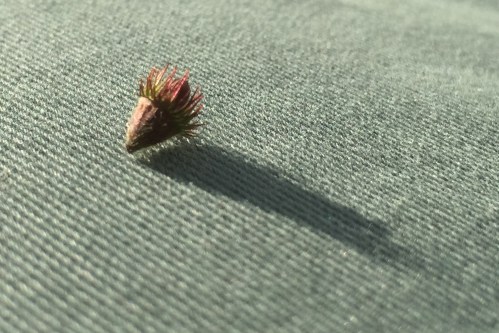
When we came back from a walk through the vineyards yesterday we found little seeds like this one sticking to our clothes.

Look how elaborate a structure it has – wonderfully designed for hitching a lift! Its tenacious little hooks beautifully created to spread the species.

I was just thinking about seeds the other day when I read about the massive explosion of flowers across the Atacama Desert. Did you read about that? Here’s some of the coverage. The Atacama Desert in Chile is one of the driest places on Earth but about every five to seven years the flowers flourish. This March there was the equivalent of fourteen years rainfall in a day and now there is the greatest flourishing of the flowers for decades.

Imagine. Those seeds all surviving in the desert heat without any significant water for years and years, then suddenly, with enough rain, they spring to life.

Remarkable as that thought is, here’s another one – how do we know if a seed is alive or dead? I mean if we collected some of the seeds from the soil during the dry years, could we tell which had the potential to spring to life and which were, well, dead?

I went on an internet hunt, and you know what? Nobody really knows. There’s a phenomenon in the lifecycle of seeds called “dormancy” where the seed seems inactive but its really just sort of sleeping. Funny thing is we have no way of telling whether a seed is dormant or dead. There are techniques, including a chemical staining technique, which cleverly detect some signs of respiration or metabolic activity, but interpreting the results isn’t easy and only allows a statistical probability of life to obtained for whole batches of seeds, not individual ones.

Can you imagine that? Not being able to tell if an organism is dead or alive? Is that true? Are there any botanists reading this who know differently? Can you tell if an individual, particular seed is dead or alive?


Read Full Post »

IMG_3721

I took a walk yesterday up to the viewpoint and used my iPhone to take this panorama shot.

The viewpoint is at the top of the hill just above the village where I’ve lived for exactly a year now.

In my monthly themes I think of November as being a month for reflection. And one of the ways I like to reflect is to take what’s referred to by French philosophers as the “view from on high” or “view from above“.

It’s a way of reflecting which involves pausing, standing back, and taking an overview. It’s not about analysing or considering the details.

So I took a little pause, standing there at the viewpoint, and gazed slowly in all directions, drinking in the fields of gold, and then I took a deep, slow breath or two and asked myself “how does this feel?”

It feels good.

What I feel is contentment.

I’ve been in touch with that pretty frequently recently, and when I first had that word, contentment, pop into my head I wanted to reject it. I mean it feels such a weak word, doesn’t it? A mediocre word. Couldn’t I come up with something a bit stronger than that?

So, I looked it up on my blog and found this from five years ago

Positive affect is defined as the experience of pleasurable emotions such as joy, happiness, excitement, enthusiasm and contentment. These feelings can be transient, but they are usually stable and trait-like, particularly in adulthood. Positive affect is largely independent of negative affect, so that someone who is generally a happy, contented person can also be occasionally anxious, angry or depressed.

Here’s what they found [I’m referring to a study here]

After taking account of age, sex, cardiovascular risk factors and negative emotions, the researchers found that, over the ten-year period, increased positive affect predicted less risk of heart disease by 22% per point on a five-point scale measuring levels of positive affect expression (ranging from “none” to “extreme”).

So, weak or strong, turns out contentment might well turn out to have a health benefit.

But there’s more – I’ve just finished reading Robert Brady’s “The Big Elsewhere”, which I highly recommend, and in there this week I found a passage he’d written “on contentment”. He refers to the Tao Te Ching where Lao Tzu says “There is no disaster greater than not being content” –

What does contentment have to do with disaster? Lao Tzu knew, and cryptically passes along the intimation, that contentment is the beginning of all that is worthy, that contentment is the seed and germ of every happiness, its absence accordingly the tiny breach that ruptures into every disaster, the pinhole in the dam, the lost horseshoe nail. Contentment is all the rest: pride in the way of one’s life and the fruit of it, whether one is a shepherd or chieftain, a fact that hasn’t changed since back in the tribal days when miracles were everywhere and museums were not yet needed to remind us of what is gone.

Contentment is the core of all that truly matters, it is the root of passion, the height of honesty, the beating heart of every joy, the embrace of a family; for there is no self in contentment; it is other-centred. The self-centred, in contrast, is perturbed, discordant, writhes with discontent and seeks release (insert the ‘seven cardinal sins’ here for starters).

What do you think? Is contentment something you recognise? Is it something you feel? Today?

It seems to me it’s not such a weak or mediocre feeling after all!


Read Full Post »

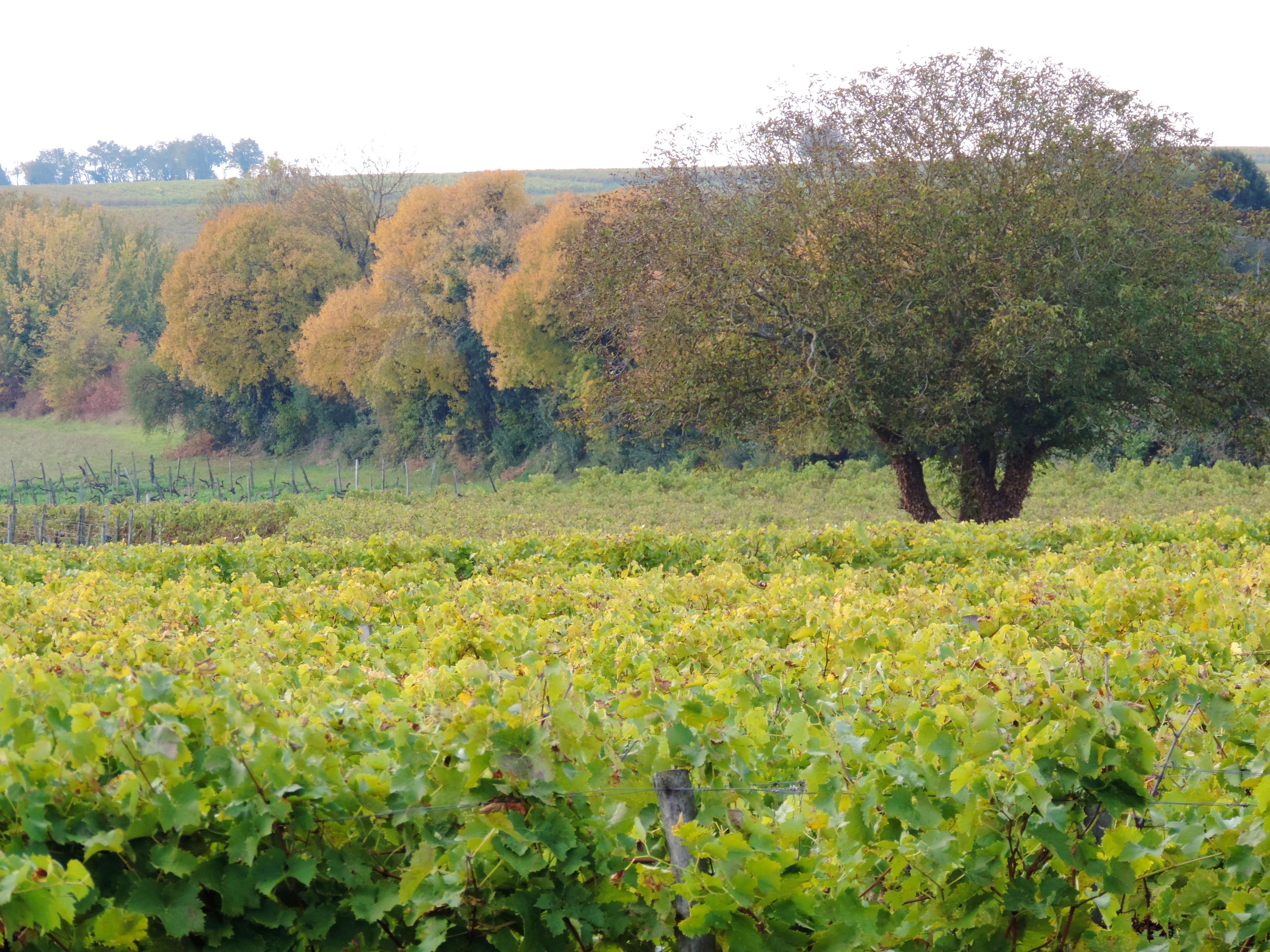
vineyard early autumn

In his “The Big Elsewhere”, Robert Brady after building a dry stone wall, says

…that any worthy effort is a dialog, that wisdom is a living thing, not frozen in time, not a doctrine or a dogma, not a monument, not a library, not a printed book or ether page, and that you are born with wisdom ready and waiting to be known to you.

So true….that we are never done learning, never complete in our knowledge. That should keep us humble, and teach us to live with uncertainty, and be a constant stimulus to our curiosity. When he says “…you are born with wisdom ready and waiting to be known to you”, then I recall Elizabeth Gilbert, from her “Big Magic” 

The universe buries strange jewels deep within us all, and then stands back to see if we can find them. The hunt to uncover those jewels – that’s creative living.

But it also sets me up to hear Bob Brady’s next point –

What does living wisdom tell us? Amongst other things, that the solution is where the problems are: in ourselves.

After the best part of forty years working as a doctor with each day filled with one to one consultations with patients I’m more convinced than ever that the only healing which ever occurs comes from within the individual. Each of us is unique and as “complex adaptive systems” we are self-healing. Good medicine is what supports the personal, unique wisdom of the organism.

Prolonged lack of contact with that wisdom lies at the heart of our problem, and if we continue in our current way we are ended: the real thing won’t stand for it. Existence must be a dialog with the present, as the living, thinking person is taught by any art, any worthy endeavour. You are instructed and guided by the very task, the very ongoing. You are taught the true way most truly only by traveling it, not by standing still and listening to others tell you the way, or by looking at an old map of where others have gone.

I think we gloss over the fact that we are adaptive creatures. We are constantly adapting. We are “open systems” continuously picking up energy, information and molecules from the environments in which we live and adapting our whole being to the changes. We are dynamic creatures, never fixed, never static, constantly learning, developing and growing. The only way to learn to live is to learn by living!

Bob Brady goes on to distinguish dead from living wisdom –

Dead wisdom obviates dialog by saying: “Do it this way because we have always done it this way.” Dead wisdom souls a dead society. Living wisdom, on the other hand, like all that is ongoing, is always and ever new. Living wisdom is green, the green of grass, the green of leaf, green of the living layer beneath the bark of a tree. It is the green youth and hope in hearts that are alive.

Tradition, dogma and “evidence” can all become “dead wisdom”, because they can all claim a certainty which will ultimately turn out to be at best incomplete, and at worse false.

Living wisdom is “always and ever new”.

You’ll learn it today.

Read Full Post »

DSCN4508

Over the last few weeks I’ve noticed a number of articles about “hormone disruptors” in the French language newspapers. I’ve not noticed this issue getting much coverage in English language media so I thought I’d share some of it here with you today.

“Hormone disruptors” are chemicals which have the power to affect the “endocrine system” in human beings. The endocrine system is the network of glands and communication channels in the body which produce natural chemicals called “hormones”. Hormones are the key to the regulation of a lot that goes on in the human body. As well as having specific effects on certain tissues, the whole endocrine system is intricately connected to both the nervous system and the immune system. There are even fields of study known as “psychoneuroendocrinology” and “psychoneuroimmunology” to research the connections between these whole body systems.

The first article which caught my eye was the report of a study published in Nature where the researchers had shown that two chemicals in the environment, neither of which had much of a biological effect on human cells, could combine to have a dramatic effect. Figaro described this as the situation where one plus one didn’t equal two, but maybe fifty.

Humans are chronically exposed to multiple exogenous substances, including environmental pollutants, drugs and dietary components. Many of these compounds are suspected to impact human health, and their combination in complex mixtures could exacerbate their harmful effects. Here we demonstrate that a pharmaceutical oestrogen and a persistent organochlorine pesticide, both exhibiting low efficacy when studied separately, cooperatively bind to the pregnane X receptor, leading to synergistic activation. Biophysical analysis shows that each ligand enhances the binding affinity of the other, so the binary mixture induces a substantial biological response at doses at which each chemical individually is inactive.

There are an estimated 150,000 chemicals in the world which are all licensed as safe but have been tested only singly, and not in combination with the others which are found in our environment, and indeed, in our bodies.

At the beginning of October, the International Federation of Obstetrics and Gynaecology (FIGO) published a warning about the effects of all these chemicals which are now routinely found in mothers’ bodies during pregnancy. They said –

Exposure to toxic environmental chemicals during pregnancy and breastfeeding is ubiquitous and is a threat to healthy human reproduction.’’ It cites research showing that virtually all pregnant women bear a chemical burden and that babies are born “pre-polluted”

What problems were these doctors concerned about?

« Miscarriage and fetal loss, impaired fetal growth, congenital malformations, impaired or reduced neurodevelopment and cognitive function, and an increase in cancer, attention problems, ADHD behaviors, and hyperactivity ».

In addition, they referred to other problems which have a hormonal element – obesity, diabetes, infertility, endometriosis and polycystitic ovarian disorder.

Where are all these chemicals coming from?

Hormone (or endocrine) disrupting chemicals (EDCs) are found in food packaging, pesticides, cosmetics and chemical coatings on household products.

Then, this week, in Le Monde, I read an article about the hormone disrupting potential of the chemicals used as fire retardants. A group of researchers at “L’Anses” concluded that

il est plausible que les retardateurs de flamme n’aient eu, en près de quarante ans d’utilisation, qu’une utilité marginale, voire nulle. Les risques, eux, sont bien réels : certains de ces composés sont cancérogènes, perturbateurs endocriniens, toxiques pour la reproduction, persistants ou neurotoxiques. Ou tout cela à la fois.

….in other words there is little evidence that they’ve done much to prevent serious problems from fires, but plenty of evidence to show that the health risks are significant – cancerogenic, hormone disruptors, fertility suppressing and neurotoxic.

Hormones are a key component in the maintenance of human health. As the obstetricians and gynaecologists pointed out disruption of the endocrine system may well be playing a significant role in our modern epidemics. If that’s true then we won’t achieve population health by just trying to persuade individuals to eat less carbohydrates!

Read Full Post »

DSCN3445

Here’s an interesting piece of news about the placebo effect – it’s getting stronger!

In an article on the BBC’s website, William Kremer explores the discovery that in RCTs (Randomised Controlled Trials) of drugs where drugs are compared to placebos, the size of the response to the placebos seems to be getting larger, making it harder for drug companies to demonstrate significant benefits of their drugs to the licensing authorities.

The article has a bit of a limited view of placebo, in my opinion, because the writer seems to focus exclusively on the idea that a placebo makes someone “feel better” – which implies that they aren’t “really better”. In fact, others have described the placebo effect as the “self-healing effect” because it involves the biological mechanisms of healing. In relation to pain studies, imaging has shown that the parts of the brain which are active in response to pain are stimulated both by pain killing drugs and placebos. I think we lose something by dismissing the placebo effect as a trick, or as something unreal.

As best I can see it does involve the imagination, and that is referred to in the article towards the end where they mention some of Ted Kaptchuk’s work.

But the part which really struck me in this article came in the discussion about how to minimise the placebo effect in drug trials –

There is also a drive to lower, through discussions with patients, their expectations of taking part in a trial. What is the best way to do that? “We tell them the truth,” says Dr Nathaniel Katz, the president of Analgesic Solutions, a consultancy that helps drug companies avoid trial failures.

“Telling the truth” means reminding patients that they are part of a trial for a drug that may not work, and which they may not even be given. “Even if it works,” Katz says, “it only works for about a third to a half of patients – that’s as good as it gets these days.”

Did you notice that sentence? –

“Even if it works,” Katz says, “it only works for about a third to a half of patients – that’s as good as it gets these days.”

How often does that fact slip right past patients and doctors? The way some people talk about “proven” or “evidence based” drugs, you’d think they “just work” – as in work every time for every person – wouldn’t you?

But we all know that isn’t true.


Read Full Post »

IMG_3419

Elizabeth Gilbert’s book, “Big Magic”, is about “creative living”. What is that?

…when I refer to “creative living”….I’m talking about a life that is driven more strongly by curiosity than by fear.

Well, I think that really is a key – we are so driven by fear, and fear is used as such a tool to control whole populations these days. To be driven by curiosity rather than fear strikes me as likely to completely alter our view of the world.

Take health care for example. So much health care is generated by fear – fear of dying, fear of getting cancer, fear of getting this disease, or that disease. It creates a whole ethos and it’s sure not a positive one. What if we underpinned our healthcare with curiosity instead? What if we consciously sought out experiences which were nourishing, nurturing, stimulating, life enhancing? Would that lead to healthier lives instead of lives of avoidance?

I do believe a creative life is a richer life. Here’s what Elizabeth Gilbert says –

A creative life is an amplified life. It’s a bigger life, a happier life, an expanded life, and a hell of a lot more interesting life.

That reminded me of a book I read a long time ago – Robert Solomon’s “Joy of Philosophy” – where he juxtaposes a “thin” life with a “passionate” one. His use of the metaphors of thin vs thick throughout that book struck me as original and clear. Who wants a “thin life”?

Elizabeth goes on to explain in a little more depth what she means by “creative living” –

The universe buries strange jewels deep within us all, and then stands back to see if we can find them. The hunt to uncover those jewels – that’s creative living.

Ooh, I love that. What a lovely metaphor! We really do all have unique and wonderful treasures buried within us. In fact, I don’t think it is possible to fully mine the depths of any individual human being, but what jewels lie there waiting to be discovered when we take the time to explore!

The courage to go on that hunt in the first place – that’s what separates a mundane existence from a more enchanted one.

Yep, it might take courage, but what else are you going to do with all that fear that is thrown at you in this world?

And who wants a “mundane existence”?

Read Full Post »

« Newer Posts - Older Posts »