Feeds:
Posts
Comments

Archive for the ‘health’ Category

It’s interesting how we use the verb to light in English. This photo is of a full moon, but what it shows best is the foliage of the tree through which I took the photo. I like the effect very much.

The Moon has no light of its own. It’s not like the Sun. It doesn’t generate any physical light, but, rather reflects the light of the Sun. That makes the light of the moon a completely different kind of light than that from the Sun. For a start we can gaze directly at the Moon for as long as we want, but we daren’t even stare directly at the Sun for a second without running the risk of damaging our eyes. I suppose that makes it easier to contemplate the Moon than it does the Sun.

The Moon’s light is a softer, gentler light, but on a clear night with a Full Moon you can still find your way around in the dark. It’s enough to give us a hint about what is around us in the world. But the colours aren’t there, and neither is the clarity which daylight brings. So, it almost demands that we use our powers of imagination and creativity more. After all, vision is a creative process. You know that, right? Our brain doesn’t contain something like a movie screen for us to watch the moving images. In fact, light itself doesn’t even get into our heads. Instead our eyes convert the light to electrical signals which are passed along a vast network of nerve cells in the brain and the brain does the job of analysing all the signals, and somehow creating clear images for us to perceive – images without any gaps in them, despite the fact that the back of the eye has a “blind spot” where no light can be detected. We literally create the images we see moment by moment.

Creativity involves an interplay of memory and imagination with the current information being received by the sensory system. It’s a true, continuous blending of the present, the past and the possible futures.

I think that by moonlight, without the clarity of colour and forms, we demand more of the imagination and our creative powers to enable us to see our way in the world.

Moonlight also works through symbolism and story – is it possible to contemplate the Moon without thinking of Venus, of Love, of Romance, of the Divine Feminine? It is, but it’s not nearly as rich an experience when we ignore all that. We associate the Moon with the unconscious, with feelings and with rhythms of tides and hormones. We associate the Moon with a certain wildness of thought – the word “lunacy” meaning madness has the word for “moon” right in there – “luna”. I’m not going to get into a detailed description of the history of madness and psychiatry here, but let’s just say our understanding of the psyche and of “mental illness” is ever changing and we still don’t really understand the more severe forms of disturbance, the “psychoses” which come with “hallucinations” and “delusions”.

So, when I see a Full Moon, or even one of the phases of the Moon, I don’t just see the physical, reflected light of the Sun, but I see a whole world of imagination and enchantment.

Read Full Post »

Ok, so I’ve called this post “The hidden connectors”, but as you can see, there’s nothing hidden about this one! This is an astonishingly beautiful specimen from that Kingdom of Nature that we mostly don’t talk about and mostly aren’t even aware of – fungi.

Fungi are fascinating lifeforms. They aren’t animals, they aren’t plants and they aren’t minerals…..although this particular one looks awfully like a piece of agate. You can see examples of parts of them when they appear on the surfaces of trees, and the soil. The kind you will be most familiar with are the little toadstools and mushrooms which appear on the ground, especially in forests. But you also see them a lot growing on fallen logs in the forests.

Fungi play an important role in decomposition…..they are the essential, often invisible, link between what has lived and what is about to live. They are the recyclers, the processors, which break down the dead and dying cells of animals and plants and release nutrients to nourish emerging plants. They are the connection between the generations past and the generations to come. I’m sure you’ll have read that Nature doesn’t produce waste. There are no “land fill sites”, “incinerators” and “toxic dumps” in Nature – they are all human inventions. Nature transforms everything which has existed into everything which is about to exist. Fungi are one the key elements in those cycles of birth, death and re-birth.

But fungi are also the secret connectors which make the forests living, intercommunicating, interactive communities of individual trees. Every tree has vast root systems hidden underground, and fungi form astonishingly large and complex networks amongst and between the tree roots, carrying and exchanging nutrients, substances and information between the trees. It wouldn’t be unreasonable to compare them to the neural networks in our brains – totally different in structure and form of course – but vast threads of interconnection which create what some biologists have fairly recently termed “the Wood Wide Web” – which transforms a forest from a grouping of individual trees into a much larger, living being.

Isn’t it amazing how these creatures, these forms of life, fill that liminal space between – between trees, between life and death, between generations?

We live in a completely interconnected world. Maybe this pandemic has shown us that more clearly than ever before. But all our artificial boundaries and separations, all our arbitrary states, borders, our constant dividing of reality into “us and them”……it’s just not real. It fails to show us how inseparable we are from each other, how intertwined we are with each other and with all the other species and biosystems of Planet Earth.

Isn’t it time to insist on the importance of what we share? Isn’t it time to insist on our inter-dependence and inter-connectedness, instead of these false divisions and separations? Isn’t it time we understood that we ALL live on the same planet, with the same air, the same water, the same resources? Isn’t it time to remind ourselves how whatever we do, as individuals or as societies, has ramifications and impacts which spread way, way beyond what we can control?

I think we can all choose to become conscious connectors, building positive relationships, integrating our unique differences to create mutually beneficial bonds. I think that’s how we will change our world.

Read Full Post »

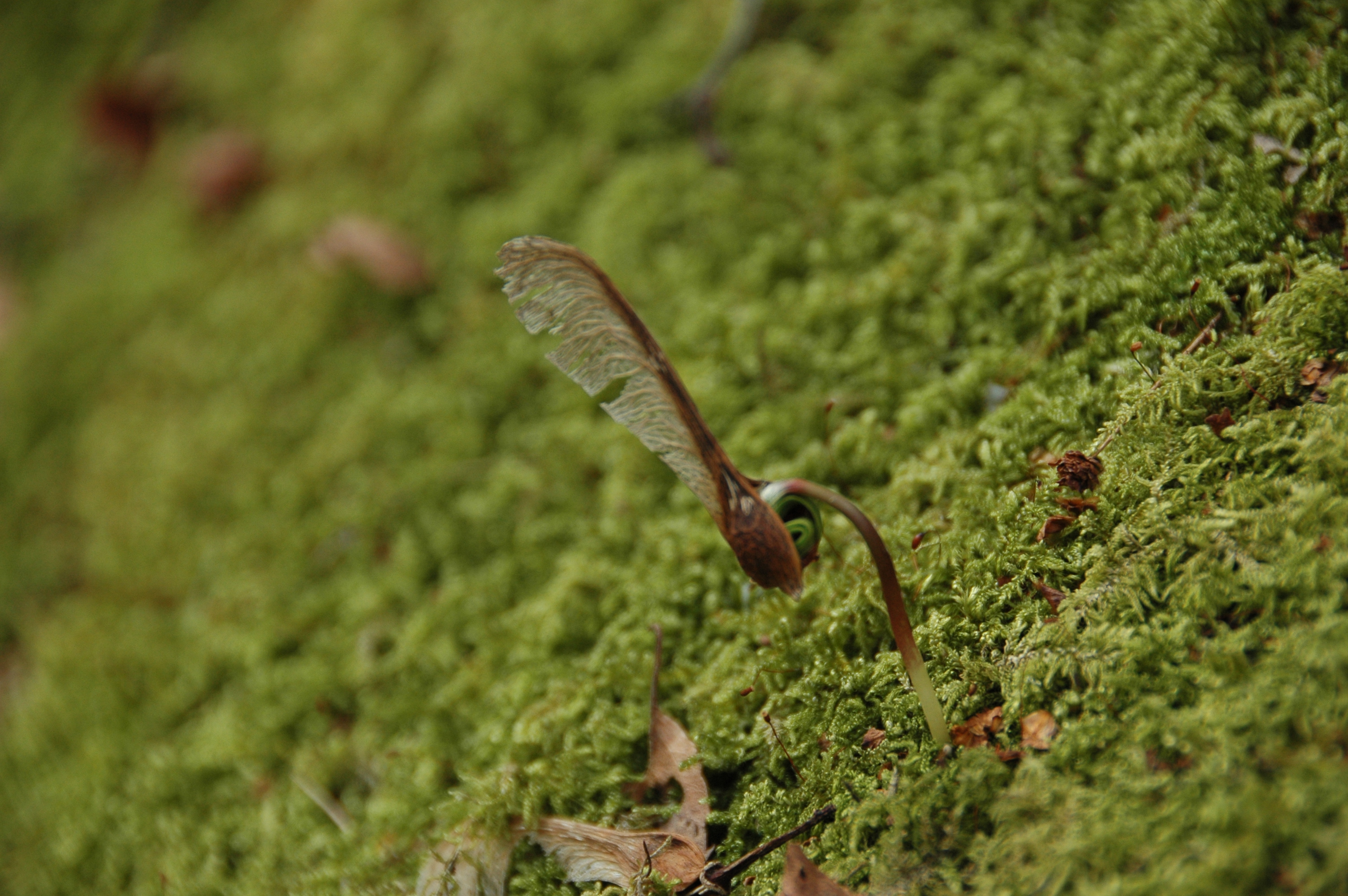
How do you grow a forest?

One seedling at time.

This beautiful little seedling is captivating. I spotted it growing from the moss covered forest floor, the seed casing with its wind driven system of flight and dispersal still intact, but the bright green of new growth clearly visible, and the beginnings of the spiral of unfolding showing us that this little seed has taken root, and is beginning the long journey to become a tree.

It makes me think about the relationship between the tree and the forest, between the particular and the general, between the individual and the group. A relationship I think we tend to get badly wrong. With the rise of statistically driven data collection and analysis, along with the development of algorithms, we reduce the unique person to a point in a set far too often. We pick one, or a handful, of observable, measurable characteristics, categorise them and use them as the be all and end all.

We define people according the group we’ve put them into. In so doing, we fail to see them as unique, individual, human beings. You just can’t know and understand a person from a data set. It’s not enough, and it’s often a fast track down the wrong cul-de-sac.

We make people invisible by reducing them to examples of a group.

All my working life I saw one person at a time…..whether that was in the GP surgery, with a rhythm of one patient every ten minutes or so, or in the specialist referral centre for people with long term intractable conditions, where we’d spend an hour to an hour and half for the first visit, then about twenty minutes for each follow up. In both these settings the rhythm of my day was determined by the scheduled appointments allowing me to give full attention focus to every single individual who came to consult me. I found that a great meditation practice, a great way of continuously coming back to the present moment…..not thinking ahead to who might come next, and not hanging on to the story of the person who has just left the room….but, rather, encountering the crowds, the queues, the “lists”, one person a time.

Of course I learned a lot from all these individuals which informed me about others. But the point is, it was a practice of focusing on the individual, and gleaning the general knowledge from there……not learning the general knowledge and trying to force each person into the right pigeon hole.

I learned from the work of Iain McGilchrist that this was the result of how we use the two hemispheres of our brain. The left hemisphere focuses in, abstracts information from its contexts, labels it and categorises it. It works with sets, groups, and generalities, continuously trying to fit new information into what we’ve learned already. The right hemisphere, on the other hand, focuses on the whole, seeking what is unique and particular in every context, every relationship, every circumstance, endlessly fascinated with what’s novel and what’s particular. As he says in his “Master and His Emissary”, we’ve let the left hemisphere become the dominant one, but evolution never intended that.

It’s time to re-balance, to prioritise the approach to life driven by the right hemisphere and to reap all the potential benefits of the analytic, labelling and classifying left hemisphere by handing those insights back to the right – in other words, by putting whatever we encounter, whatever we understand, back into the contexts and environments in which we found it.

We need to re-learn how to experience life, one seedling at a time. That’s how we’ll grow a healthy forest.

Read Full Post »

This little ice crystal mesmerises me. It’s beautiful. Look at the intricate branching structure of each little bristle of ice. It’s almost like a tiny tree, or, at least a snowy leaf. Look at the way it catches the sunlight and sparkles like a jewel. But maybe the most astonishing thing about it is how it is attached to the iron bar from which it is hanging. Can you see? There is a single icy spike holding the entire structure onto the metal. In an instant you can see that this little piece of frozen water is not only incredibly strong, but that the entire crystal has grown from that single point. Isn’t that amazing?

What I love about something like this is that no matter how much you describe water and its behaviour in cold temperatures, the singular, the actual, the specific, particular ice crystal you encounter takes you beyond the limits of your expectations.

I find that everywhere in life, but, especially so in the practice of Medicine. No matter how much general knowledge I had of diseases, their origins, their life histories, and their likely consequences, I never had enough to know precisely what this individual patient today was experiencing, nor how this disease had arisen in their particular life, nor how their illness would progress. On top of that, no matter how much general knowledge I had of therapeutics, I could not predict, with 100% accuracy, what this individual patient would experience as a result of what I was going to prescribe today.

You might say that sounds like a lot of uncertainty, and I guess it is. A GP’s job, after all, has been described as dependent on his or her ability to cope with, and manage, uncertainty. But there was nothing to despair in there. It was a simple recognition that we have to be humble, because there is always more we don’t know, than there is that we know.

More than that…..it meant, and continues to mean, that the individual can never be encountered, understood and helped as a mere example of the recorded experience of groups. That’s another way of saying that statistics are never sufficient to replace stories. Only this unique, singular human being can tell you what they experiencing, what has happened in their life, what sense they have made of it, and only this unique, singular human being can tell you what effect your treatment has had.

The singular can never be replaced by the averages or “norms”.

Read Full Post »

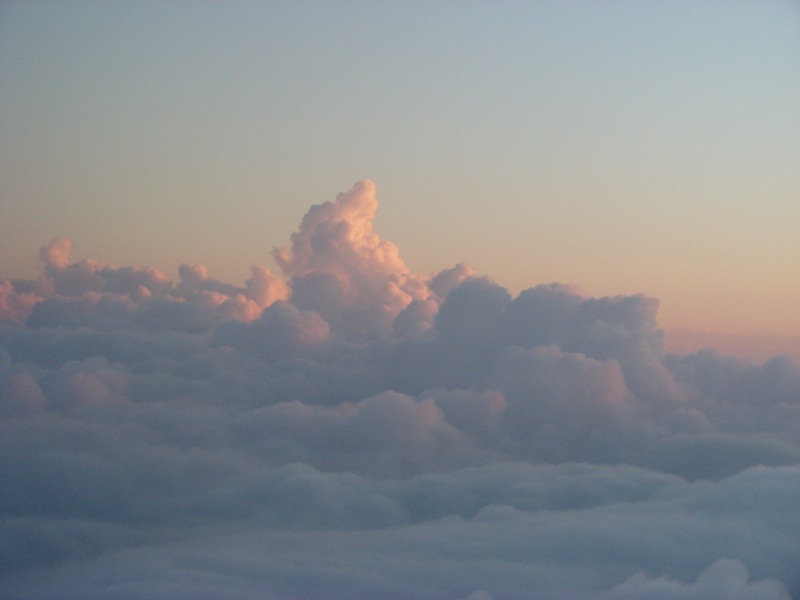
Whether you think of waves appearing and disappearing on the surface of the sea, or of the emergence and disappearance of beautiful forms within a cloud, you know that both the wave and the cloud formation are inextricably connected to either the sea, or the rest of the cloud. Neither exists apart from the environment in which they appear.

We humans are like that too, even if we’ve been pretending to ourselves for hundreds of years that we aren’t. Whether we take on board a religious or a scientific concept that we humans are apart from Nature, we are wrong. Nature isn’t a thing, and doesn’t exist outside of us. We cannot relate to Nature by “dominating it”, or “controlling it”. Partly because Nature is not an “it”, but more so because we are as much Nature as the cloud form is the cloud, as the wave is the sea.

We emerge within Nature, never leaving Nature, never living outside Nature or separate from Nature. Nature isn’t a part of the country to go and visit. But we can definitely understand that the “natural environment” is different from the “built environment” or the “urban environment” – not separate from, or detached from, but different.

There is an enormous amount of evidence that spending time in “natural environments” is good for us. A recent study of 20,000 people showed that two hours a week could be a threshold. Researchers found significant differences in mental and physical health of those who spent more than two hours a week in natural environments, from those who spent less than that. They also found that people who lived in streets with more trees in them seemed to need less prescriptions for antidepressants. Of course, that doesn’t mean we can just replace antidepressants with trees! There are many other factors affecting the environments which people live in. Still, the finding of the benefit of trees, persisted even when the researchers controlled for other social factors.

Of course, we are never really outside of “natural environments”, any more than we can ever be outside of Nature. It’s a matter of degree, isn’t it? We know when there is a lot of life around us – trees, flowers, shrubs, birds and other creatures. What these studies confirm are that we need to be aware of that connection with the rest of Life on this planet. That when we feel cut off from the living world, our health declines.

As we move forward through this pandemic we’re going to have to reconsider how we live, both as individuals and collectively. Some of that change might be best informed by a change of mindset – one which considers that we are “a part” of Nature, not “apart” from Nature.

Read Full Post »

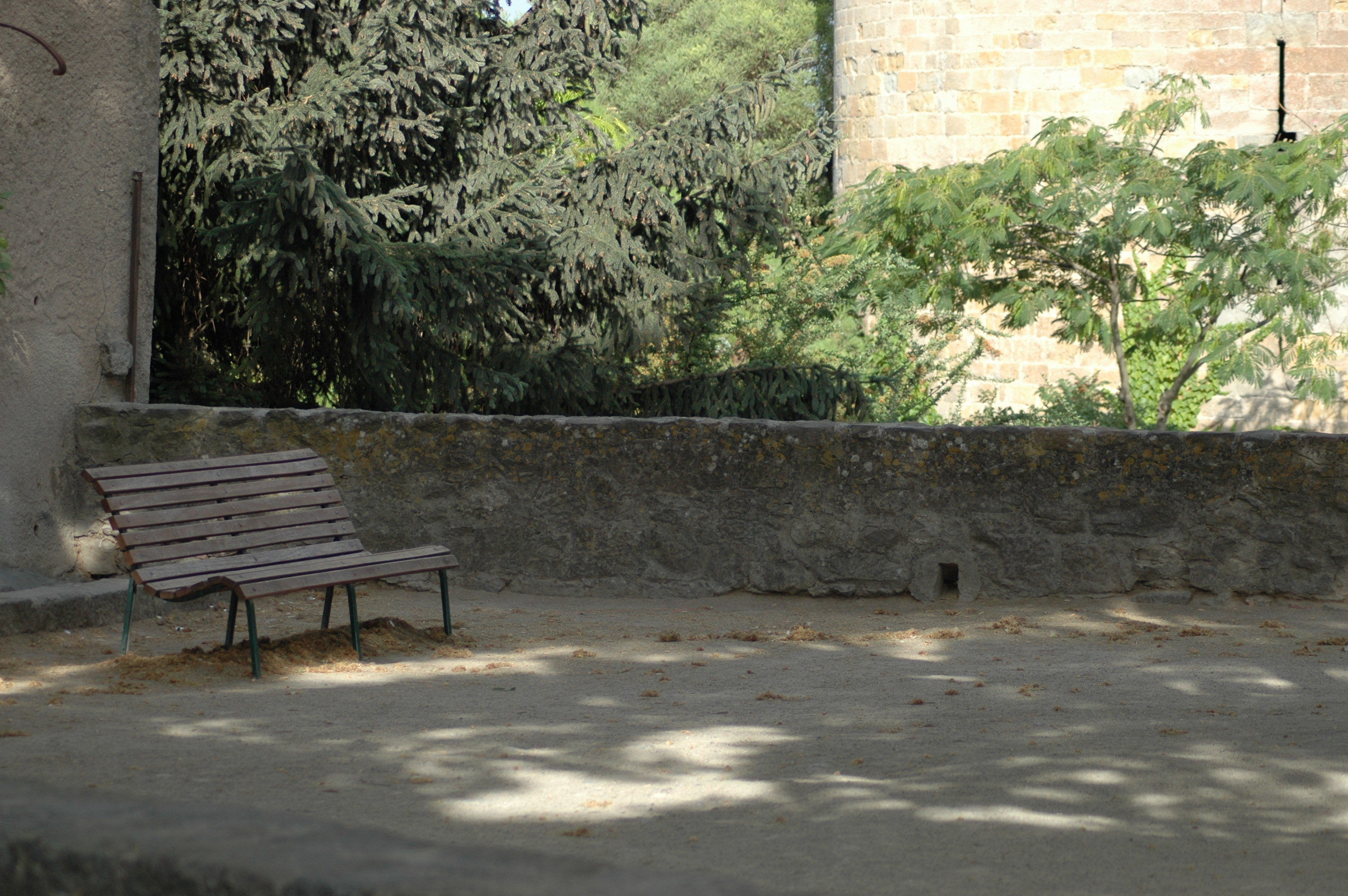
When I worked as a GP in Edinburgh, my partner and I had two Practice premises (“surgeries” as we called them in Scotland), one up near the university, and the other down at the river front in Portobello. A typical day involved doing some work in both places, as well as visiting half a dozen to a dozen patients in their own homes (something which seems to have all but disappeared from the work of a GP). The working days were, as you imagine, busy days. There were many ways to travel between the two surgeries but one of my most favourite ways was to drive through Holyrood Park following the narrow road which snaked around the base of Arthur’s Seat. In the grass, at the roadside, I’d often spot someone sitting on a park bench, maybe reading, maybe drinking from a flask, maybe just looking around, and I’d think “Oh how I would LOVE to be sitting on that park bench!” But there was never time to do just that.

I’ve often wondered how much my work, and the busy-ness of the ordinary day, contributed to my love of park benches! Whatever the reasons, I know I’ve always had an eye out for them, and have several photos of seats in different parts of the world. The one in this photo was taken over 15 years ago in the Southern French town of Carcassonne. I still find it utterly beautiful. It pulls me towards it. I have a longing to be sitting there. Clearly it’s not about the super-comfortable shape or form of the seat, it’s what it represents – a pause, a moment of stillness, a quiet time to “do nothing”, or to contemplate, breathe, become aware of the here and now.

What this sets off for me today is reflection on the importance of slowing down from time to time, and the importance of deliberately breaking up the endless cycles of habits. We need to stop, take a breath (or several, conscious, slow deep breaths would be better), and allow ourselves to experience some moments of stillness. We need that even now in the midst of this pandemic and the total disruption of our “normal” lives (will “normal” need to be redefined after this? Probably)

So, take a moment today and ask yourself – where are your favourite seats? Best to consider a seat you can actually sit on today! Where can you take a moment, still your breathing and your mind, and return your clammer of anxieties, worries and fears to the here and now, and just notice. Just become aware. Just for a few minutes at least.

If that sets off a recollection of favourite memories of seats where you have experienced the greatest moments of calm, tranquillity and peace, then, go with that. Allow yourself to recreate those experiences as vividly as you can. What did you see there in that moment? What did you hear? What did you feel with your body? What did you taste and/or smell? Allow yourself to re-create the feelings which that moment engendered. Allow yourself to live it again for a couple of minutes.

You know what that will do? Well, what it might do anyway? It will produce a distinct harmony of the rhythms of your heart and your brain. It will set off a chain of reactions in your body which enhance your immunity, reduce harmful inflammation, and increase your resilience. It’s called “coherence“. And it’s good for you!

Read Full Post »

Can you think of any works of art which changed you? Any which changed your worldview? Changed how you understand yourself, your life, your world?

I was reading about Stendhal Syndrome the other day, which is the phenomenon of overwhelming emotions and physical symptoms experienced by some people in front of particular forms of art. Stendhal described it in relation to his visit to the Basilica of Santa Croce –

I was in a sort of ecstasy, from the idea of being in Florence, close to the great men whose tombs I had seen. Absorbed in the contemplation of sublime beauty … I reached the point where one encounters celestial sensations … Everything spoke so vividly to my soul. Ah, if I could only forget. I had palpitations of the heart, what in Berlin they call ‘nerves’. Life was drained from me. I walked with the fear of falling.

What grabbed me about this concept is how art can have a profound impact on us – not just on the way we think, the emotions we feel, but in changing our inner physical reality…..speeding up the heart, releasing a whole cascade of different hormones, causing us to feel a little breathless, a little light headed, to give us butterflies in the stomach, to make us weak at the knees…….but it actually does something else too….

Every experience we have sets off patterns of activity in the neurones in the brain. In neuroscience there is a phrase used which is “what fires together, wires together”. That’s a description of how these patterns of activity, when repeated, actually change the shape of the microstructures of the brain. Art, literally, can sculpt our brains. No wonder it can change us!

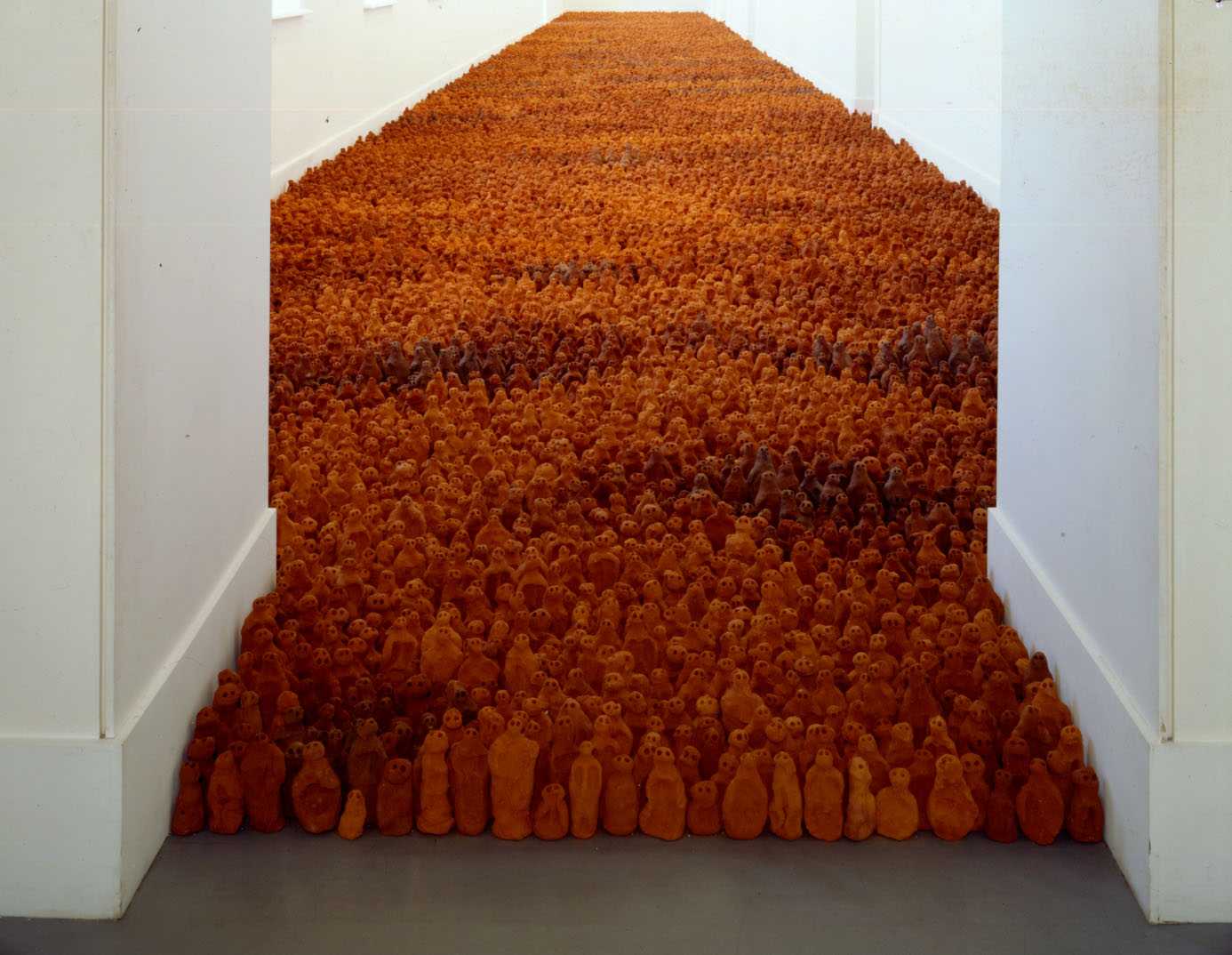
Well, this image here is of Anthony Gormley’s work entitled “The Field”. I saw this for the first time in Inverleith House, in the middle of the Royal Botanic Gardens in Edinburgh. I stood in the doorway and looked at these thousands of little creatures, all looking up at me, all the same. Then, as I looked a little more closely I realised that each and every model was different. Not only were they not all the same, but every one of them was unique.

That’s it, I thought! This is the paradox at the heart of my work as a doctor. Every single patient who I meet has some characteristics, some symptoms, some signs of change in their body, in common with other patients I’ve met before. That’s why I needed to learn anatomy, physiology, pathology, the natural history of disease. That’s why I had to learn how to make a diagnosis. But, at the very same time, every single patient who I meet is unique. Every single patient has a story to tell me which I’ve never heard before because nobody has lived an identical life to them. The diagnosis of the “pathology” or “disease” isn’t enough. I need to understand it in the context of a life story, and a present life. What exactly is this person, today, experiencing? How has this present experience and change come about? What sense do they make of this “illness”? What does this “illness” mean to them, mean in their life, mean to the others in their life?

Well, that became the core of my understanding of the Practice of Medicine.

But it went further than that, because I realised, just as quickly, that this insight wasn’t relevant only to my work as a doctor. This is the essence of what it is to be a human being. We share a lot, you and I. But we are also unique, you and I. We can’t be reduced to a single characteristic, demographic, or “data set”, but we can be gathered into those groups…..we can find some common values, beliefs, desires in those features and factors. But we can never, ever, stop there. We can never rest in our understanding of a person by summing up their data, by figuring out what group we want to put them into. We have to discover the individual. What makes this particular person different? What is distinct and different about this person’s life story?

Even as I write this today, I find this excites me. It delights me. It moves me. It activates my thinking, my feelings, even my body.

Art really can be that powerful.

Read Full Post »

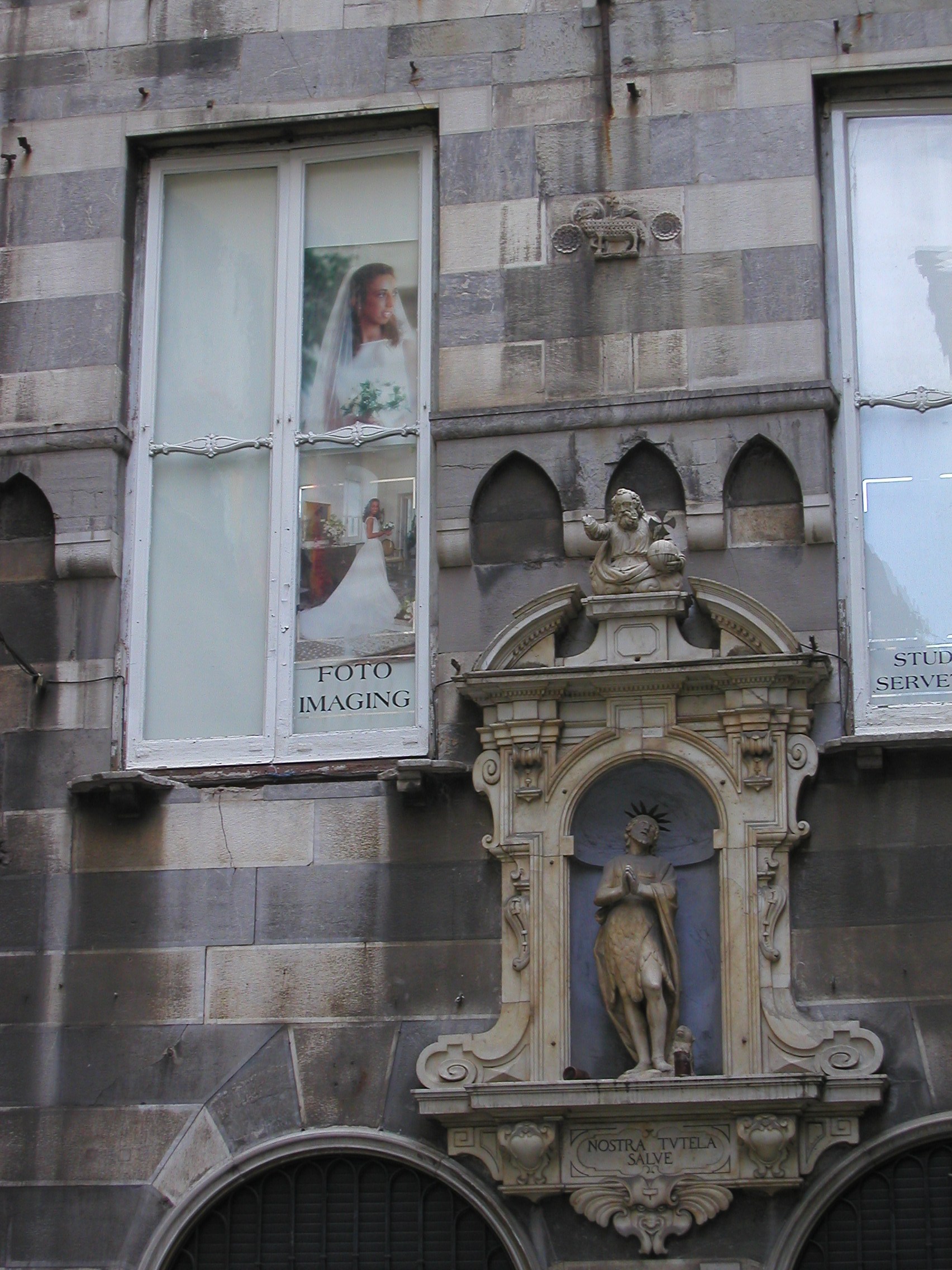
What caught my eye here was the juxtaposition of the advert for the photographer and the statue in the alcove.

The older work is the statue. It’s a representation of prayer. France, Italy and Spain are three of the countries I know best on the continent, and all three share a rich religious tradition. To be more exact, they share a Catholic tradition. Representations of the crucified Christ, of the Virgin Mary, and of various saints can be found everywhere…..not just in churches and cathedrals, but on street corners, city centres and in small villages. What struck me about this particular statue was the act it portrays – prayer.

I know there are many different kinds of prayer, not least prayers of intercession (asking for help), and prayers of gratitude, but the image of the wedding photos in the windows just next to it led me quickly onto thinking of dreams, of hopes and desires. So, that context drew me into the consideration of prayers of that type – prayers of hope.

I don’t think we can underestimate the importance and the power of hope. I don’t think people can live without it. I’ve seen that many times in my medical career. People with no hope slip into despair and decline. I once I had a patient I knew say to me that her husband had just been diagnosed with cancer and that the doctors had given him six months to live. I asked her how she felt about that and her response surprised me. “Angry”. I asked why, and then came the bigger surprise. “How come he gets to know how long he’s got and I don’t know how long I’ve got?” Well, I didn’t see that one coming. However, it did lead to an interesting discussion about prognosis and what we can, and can’t, predict. Too often predictions like that turned into self-fulfilling death sentences. Because the reality is that, in any individual, we cannot make such accurate predictions. I learned that the hard way as a young doctor.

But let me return to prayers and dreams. I’m sure you’ll have come across the idea of visualisation? Of creating “mood boards” or “vision boards”? Of creating “goals” and “targets” even? Well, those are psychological methods we can use to create the life we want to lead. And isn’t that one of the things which prayers and dreams can do?

Have you noticed how many athletes seem to say a short prayer before the start of their race? Have you noticed how many perform an act of gratitude to the heavens, or to their god, when they win? I’m sure in our more materialistic, so-called rational, times, that prayer, belief, faith and dreams are dismissed more than ever before, but I always wonder if that’s really a rational response?

Because without hope, without dreams, without prayers, without vision, then what kind of life can we co-create?

My answer would be – the kind of life other people create for us! “Heroes not zombies” folks! We human beings really are the co-creators of our own lives. A person cannot be reduced to molecules and random events if we want to understand them. More than that, I suspect that fear and resentment are powerful factors in creating the kind of world we live in, and that there are plenty of players out there who know exactly how to stoke up both.

So, I’m a fan of prayers and dreams. I’m a fan of dreams and visions. I think that what we imagine, what we put our energy into, what we pay attention to, all contribute to both our personal experiences of daily life and to the reality of the world that we share with every other living creature on this little planet.

What kind of life do you want to lead? What kind of world do you want to live in? One focused on fear and despair, or one focused on love and hope? I do think we have a choice. Not in an “either/or” way, but in what we give emphasis to, what influences our world view, what lenses we use to understand the world, and as an act of co-creation.

Read Full Post »

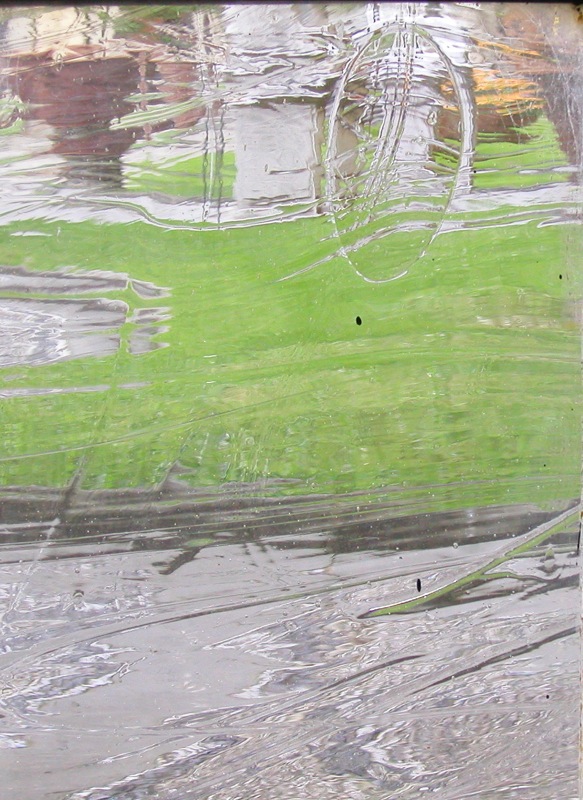
I don’t believe the past was a better place or a better time than the present. I just know it was different. But as I look at this image of the old glass in a window, I see how the patterns in that old glass act as a kind of lens on the present, and that makes me think about how it seems to me, that in many ways, we are too focussed now on the immediate, the instant gratifications, and always on what might come next.

But don’t we learn from the past? Isn’t how things were before, or what actions we took before, a useful lens through which to view the present?

Let me be clear, I am very, very keen on living with awareness of this present moment. I think that too often many of us are living on autopilot. That’s one of the big themes of this blog – “heroes not zombies” – encouraging us to wake up, become aware, and become the authors/heroes of our own stories, rather than living a life of semi-conscious manipulation by others. I’m also keen on looking forwards, though, to be frank, I’m not a big fan of predictions! But I also think that unless we pause, reflect, consider, and look back, then it is pretty difficult to learn. It seems true that if we keep doing what we are doing then we are going to keep on the same track. So, if we want to learn, want to grow, to improve, to develop, then we are going to have to learn something from how things were before.

I don’t think that means a romantic longing for an imaginary idyllic past when everything was wonderful. That’s not real. I mean learning what led up to this present moment, learning what it is we’ve been doing which might have contributed, at least, to our finding ourselves here, in this specific present, today.

I think about that as I watch this pandemic unfolding. I can’t help wondering about the countries of the world, like Australia, New Zealand, Taiwan, Vietnam, and others, where the case numbers and deaths are, frankly, tiny compared to those in Europe, America and Brazil. And, whilst there is no doubt something to be learned from each other, from comparing how each country tackled this pandemic, I think there is also something to be learned from how we humans have managed infectious disease, and epidemics in the past.

Time and again we see that there is a basic principle – separate the sick from the well. In times gone by that was done in what now seem pretty cruel and crude ways, expelling the sick, putting them in colonies outside of the towns. I don’t think we’d want to repeat that particular strategy, but the basic principle remains a key one. To control an infection you have to identify who has the infection and limit their contact with the rest of the community. We can do that now in much more humane ways. We can treat the sick in hospitals. Actually, there was a time when there were quite a number of specifically infectious disease hospitals (and “asylums”) but most of those seem to have been closed down. Maybe it would be a good idea to create new centres for the treatment of those who are suffering from infectious disease, and staffing them with doctors and nurses who can work in the community when there are no epidemics raging. That might be better than diverting the resources for treating cancer, heart disease, etc towards infectious disease, leaving those non-covid patients to suffer (which is what is increasingly the case).

Maybe it would a good idea to have a really effective, community based, human-centred system of testing, contact tracing and genuinely supported isolation – in isolation hotels, and in peoples own homes with daily visits from health care staff?

One of the things we are seeing with Covid is how many people get very, very slow recovery, relapses and lingering, debilitating symptoms. In the past we used to have convalescent hospitals, spas and rehabilitation centres. A lot of them got closed down too. Maybe it would a good idea to open those up again, to make new ones, to support and treat those who are in for the long haul.

Finally, in epidemics in the past, people controlled their borders. The countries which have the lowest case rates now did that too. The countries which didn’t bother, have the worst rates. Isn’t it time to do that? And not just to insist on a negative test and advise someone to quarantine for 10 or 14 days. But to insist upon supported isolation during mandatory, supervised quarantine periods for all those who cross borders? OK, I know, there will be those who need to keep traveling and who can’t keep doing those quarantines, but let’s vaccinate them, and monitor them more carefully.

Just some ideas I’ve been having about how we could better manage this pandemic, by looking at the present through the lens of the past.

Read Full Post »

Yesterday I wrote about “unfurling” and this morning I came across this photo in my library.

It’s another example of this process we see everywhere in Nature – the opening up of a bud as the flower expands itself at the end of a stalk. It’s an “unfolding”, a “revealing”, or even, a “revelation”.

Really at this stage of a flower you get a strong sense of what is to come…a strong sense of potential. But it’s not quite there yet. It’s in the process of getting there. I like images which capture that concept because I have long been taken by the primacy of “becoming” over “being” – see the phrase at the top of the blog “becoming not being”!

I first encountered the importance of the concept of becoming in the works of Giles Deleuze, but having seen it there I went on to see it everywhere. Really, as I understand it, it involves a significant, and important shift of focus from looking at objects with fixed dimensions to looking at experiences and events which literally unfold before your very eyes. When you shift away from seeing, or trying to see, reality as composed of discrete, separate, bounded parts…..like marbles in a sac……to seeing reality as composed of flows and connections, then you stop wanting to pin things down and fix them. You delight, instead, in the dynamic, living, changing, nature of the universe.

This thinking helped me understand my patients and their illnesses, because instead of looking for discrete pathologies, I became more interested in how those pathologies arose, how they were affecting the person in their everyday life, and trying to understand how to influence the direction and nature of their development into the future. I became less interested in “outcomes” because every “outcome” is an arbitrary point, and more interested in a “life” and a “life story”, and therefore far more interested in following that patient over many years, rather than seeing Medicine as a tool applied to a thing at a particular time – not “getting it done” but “understanding, supporting, encouraging and teaching” instead.

I don’t know if that brief summary is enough to help you see what a radically different way this is to live and to make sense of the every day, but I suggest you try it…….try to notice the processes of becoming, the unfolding, the revelations, the unfurling today, and then let your curiosity follow the threads back to the past and origins, as well as forwards, to potentials and maturity.

Read Full Post »

« Newer Posts - Older Posts »