Feeds:
Posts
Comments

Archive for the ‘life’ Category

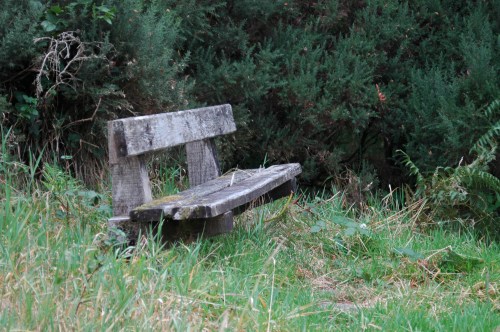
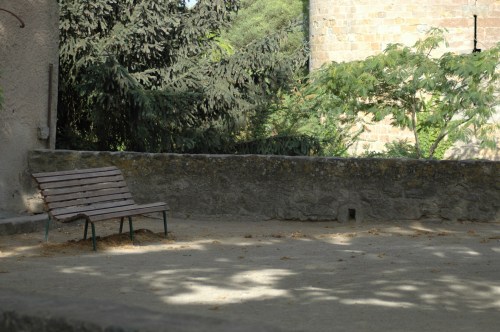
One of my favourite walks is to the Bracklinn Falls just outside of Callendar in Scotland. At the top of the hill there is this old, rather neglected bench with a view stretching miles across the countryside. There’s something wild about this bench isn’t there? It isn’t neat, polished or even painted but I find it all the more appealing for that. Actually, I took this photo many years ago so I wouldn’t be surprised if the bench wasn’t even there any more. After all, nothing lasts forever, does it?

To get to this bench you have to walk through a forest. Well, the path runs along the edge of a forest, but it’s such an appealing forest that I can never resist stepping off the path and making my way through the trees instead.
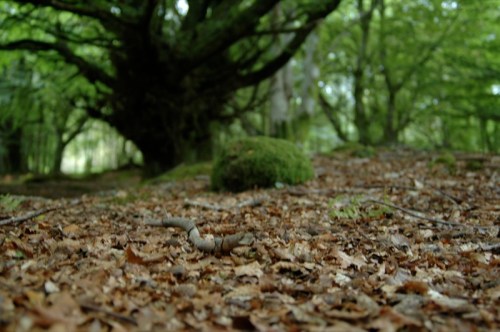
The forest floor here is amazing. I laid down on my stomach and took a few photos, partly to get the view from the ground, but also to feel that whole body connection to the organism of the forest. Forests aren’t just a bunch of trees after all. Recent discoveries about tree communication has completely changed what we know about them. The term “Wood Wide Web” has been coined to capture this idea of a highly networked community of living organisms, constantly exchanging materials, energy and information between them. It’s really wonderful to immerse yourself in an environment like this.

Once you leave the forest behind, the path crosses a patch of open land and suddenly the horizons are the far ones, not the ones just in front of your nose. That feels almost like breathing to me. Inhaling and exhaling. Turning my attention from what is close to what is far. Feeling the closeness and connectedness of the forest, then feeling the expanse and openness of the distant hills and the countryside laid out at your feet.

Once you pass the bench, the path enters another forest which immediately feels different from the previous one. The path begins to snake downhill amongst the trees and I am surrounded by something else – the roaring of the waterfall. You can’t see it from the start of the path. In fact, you can’t see it until you are all the way down through the forest, but with each step the noise gets louder and louder. You know it’s coming, but, somehow, it’s still a surprise when you see it.
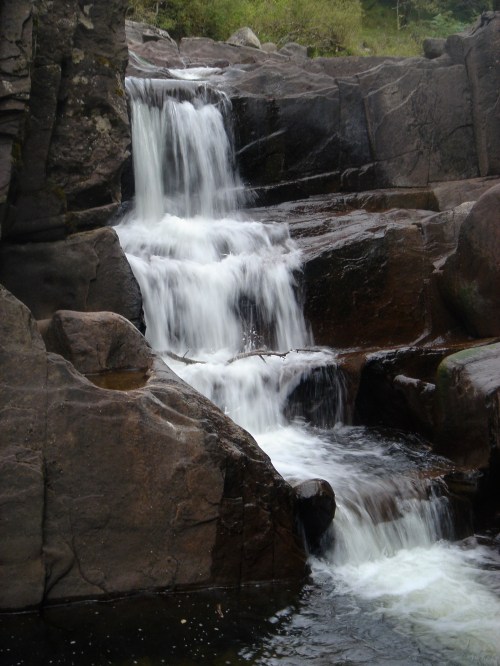
I can spend ages there.

Everywhere you look you can see how the water has smoothed the surfaces of the rocks and shaped them into exquisite forms. The rocks wouldn’t be the way they are without the water, and the water wouldn’t be like this without the rocks. It’s an intense, lively, creative relationship. Like most waterfalls, this one is best when it’s been raining. The noise is louder, the speed of the water is greater, the volumes are turned up to max, and you can just feel the power.

It feels like a Life Force. It feels like the energy is throbbing through the whole forest, coursing through your body. It makes you feel intensely ALIVE.

I’ve read many times about the importance of being present, of paying attention to the here and now. It’s a good teaching. In the forest, in the gaps, at the side of a waterfall, it all falls into place. Nature creates an attentiveness and repays your attention with LIFE.

There’s a word for this kind of attention and I think it’s IMMERSION.

It’s good to be immersed in Life.
Read Full Post »

When I left rural General Practice in Southwest Scotland to join my friend Sandy in the big city of Edinburgh I swapped villages, farms and fields, for busy streets, blocks of flats and the noise of a city life. Sandy and I had a small Practice initially which was split between two different parts of Edinburgh – Portobello and Mayfield Road. In those early years there were two distinct communities of patients, one in each area, and the ordinary everyday involved a fair bit of doing house visits in both parts of the Practice, as well as driving from the one area to the other to deliver clinics in each of our Practice premises.

There was a link between the two. Well, I know there are always many different roads to choose between any two destinations, but one of my favourite ways to travel between them was a small road looping round the base of Arthur’s Seat in Holyrood Park. It was like a small voyage through the countryside between two webs of city streets.

Arthur’s Seat is a such a presence in Edinburgh. It’s an ancient volcano and dominates the entire city. Holyrood Park, in which it sits, has several small lochs which invite you to sit by the water for a while. General Practice work is, however, busy, busy work, with plenty of demand, lots of patients to see, homes to visit, every single day. Sometimes, often in fact, I’d feel on the edge of being overwhelmed by the long list of visits to make and tasks to perform, all with an ever present pressure of time. I’d drive between the two premises via Holyrood Park and sometimes I’d see an empty park bench.

An empty park bench.

Can you imagine the feelings of longing, the huge surge of desire, the unattainable wish to stop and sit on that bench?

It could become like a life goal. “One day I’ll stop and sit on that bench and just do nothing. Just for a bit. Not forever, of course, but without a deadline, without a need to be somewhere else in a few minutes time.”

I never sat on that bench.

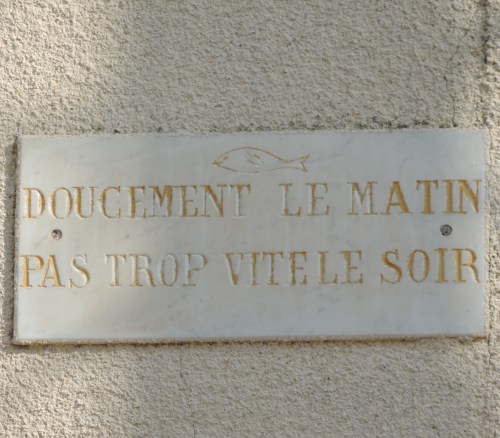
Years later, on holiday in France, I saw this old sign on the wall of a small village house –

“Gently in the morning, not too quickly in the evening”

I thought of that park bench when I saw that and I thought…..”one day!”

Much later an Italian friend of my mine told me about “Dolce far niente” – doing sweet nothing – and I realised it was the same thing.

How life can be so utterly full of busy-ness that there just never feels like there is time to stop, time to pause, and just be. (Ha! Ha! What sprang into my mind there was Bart Simpson saying “I’m a human being, not a human doing!”)

This is such a deep human need. I think we find it in all cultures. Although often we have to justify it to ourselves as a “time of contemplation”, “a few moments of mindfulness meditation”, or “a time to reflect”. Now, I think all those things are great too. I think they all have the power to bring quality to our lives, but they aren’t the same as slowing down to the point of taking a pause, and just….being.

We need to “Mind the Gap” – need to find those spaces between one task and another, the spaces between one breath and another, the spaces which exist between the end of one thought and the beginning of another.

I wish I’d paid more attention to that. I think it would have been good for me. But, hey, it clicked eventually, and even now when in retirement a day can fly by filled with “things to do” and “things which need done”, I remember to stop sometimes, and……

……pause.

When I stop to enjoy a pause now, I don’t try to “empty my mind”, or “still my thoughts”, or “focus on my breath”, or anything like that. I just start to notice. I hear bird song, like the bird which sounds like a squeaky gate (I’ve never seen that bird but I hear it often!), or the flapping wings of a pigeon flying overhead. I hear the sound of the wind in the vines. I feel the temperature of the air on my skin. I smell the newly cut grass. I see the ever changing shapes of the clouds in the sky.

Then I carry on and do what I was intending to do next. But I’m back.

Back into the present instead of lost in the memories and imaginary futures where I was before the pause.

Back here in the real world from the world of thoughts and concerns which was filling my life before the pause.

I feel re-connected.

Who’d have thought stepping out of the flow for a spell was the best way of being in the flow?

Read Full Post »

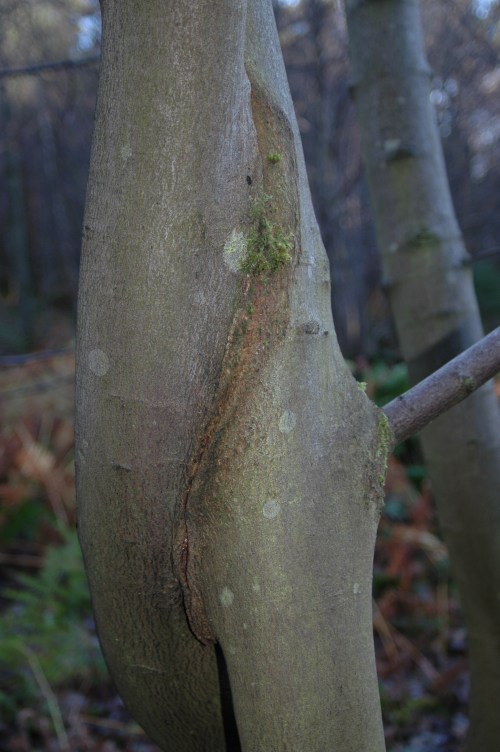
It’s many years since I stumbled across these two trees in a forest, but it’s an image which still captures me every time I see it.

I mean, just look at this….as best I could tell these are two trees growing close to each other in a wild forest. So close that one day they joined together. What began as closeness grew into entanglement. In my photo library I’ve labelled this photo “loving trees”. Of course, I don’t know if trees do love each other or not, but I do know there is a growing body of evidence revealing that trees communicate and co-operate much, much more than we ever thought they did.

I don’t mean to anthropomorphise the trees but I do think this kind of phenomenon reveals something about the underlying life forces which shape our universe. It’s natural for living organisms to connect, to get close to each other, to share and to collaborate. I know the dominant narrative of Nature and Society for many years now has been one of competition with every single plant, insect, animal or whatever fighting for its life and competing with every other creature for the common resources. But competition is just one phenomenon we see in Nature, and it may turn out not even to be the most important one.

I think we haven’t paid enough attention to co-operation and collaboration in our world. Look at human beings for example. Our extraordinarily developed brains absolutely excel at making connections and creating relationships. Human babies wouldn’t survive for long with out these innate skills. We understand the importance of infant-parent attachment much better now. We even know that without healthy, loving attachment in the earliest years a baby’s brain will grow less neurones, and make less connections between them. These early experiences of love, care, attention and belonging set us up for life. Conversely, their lack limits us and makes life a whole lot tougher.

I’m always struck by how you can see in any emergency, whether it be a road accident, someone falling ill in the street, or something even more dramatic like a natural disaster or a terrorist attack, there are always many people rushing to help. It’s a human instinct. Actually I don’t think this is reserved to humans. We can see all kinds of co-operation and collaboration in the other kingdoms of life – other primates, other mammals, birds, insects, flowers and trees. The word “ecosystem” refers to the complex, inter-twined, co-dependent, elaborately connected webs of inter-being, connecting all sorts of living creatures and creating the conditions for life and growth.

I often think we get more of what we pay attention to, so I often think it’s a good idea to pay attention to relationships, to love and to care.

I’d like to see a world where we recognise that co-operation, collaboration and sharing is the natural counter to competition, grabbing and hoarding.


Read Full Post »

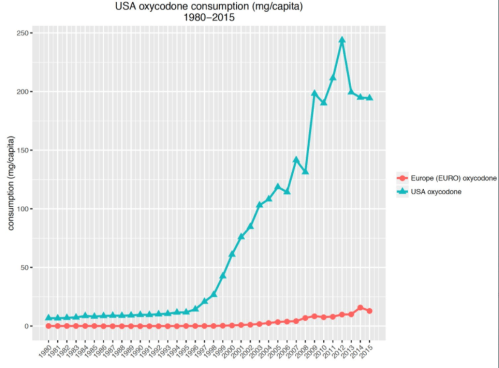
This strikes me as a shocking graph. Oxycodone is an opiate painkiller, and this graph charts its annual consumption from 1980 to 2015.

The first thing is astonishing explosion of consumption in the USA since around 1996, and the second is the contrast between the USA and Europe.

What are we to make of this? Did Americans suddenly develop many more painful conditions than Europeans? Why did their consumption remain pretty steady from 1980 to 1995, then rapidly go through the roof?

The answers, of course, are complicated. They relate to the marketing of products by drug companies in different countries, the differences between cultures and changes in economic and social conditions….amongst a host of other things.

It’s true that whilst the great health success story of the last century has been the decline of infectious disease, the not so great story is of ever increasing rates of chronic, non-communicable diseases. In 2014 60% of American adults reported having at least one chronic disease, and 12% actually had at least five at the same time. A report from the NHS in England and Wales today states that men are being diagnosed with their first “significant long-term condition” at the age of 56, and women at 55. In the poorest areas, these figures drop down to the ages of 49 and 47. It found that women in the UK are living “in poor health” for 29 years, and men for 23 years.

Not all of these conditions cause pain, but what does?

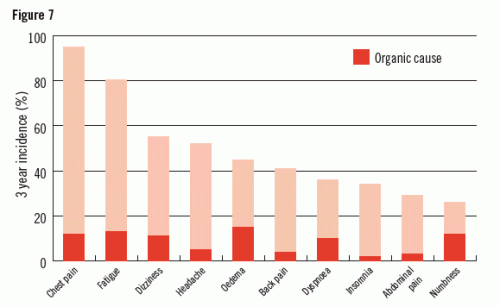
Kurt Kroenke has published many research studies showing that symptoms, including pain, are not good indicators of underlying disease. In fact, he has shown that the top ten commonest symptoms patients present to doctors are all highly unlikely to be associated with clear underlying diseases –

Notice that four of these top ten symptoms are pain.

One question then is what is the cause of this patient’s pain? If there is a modifiable cause, then the best treatment is to deal with that. For example, if someone’s pain is due to a severely arthritic hip, then a replacement hip joint will most likely solve the problem. Sadly, most underlying causes are not that straightforward to deal with. Painful chronic inflammatory conditions and incurable cancers are not so easily dealt with. But it gets more complicated, because we also know there is no direct, reliable relationship between the amount of pain a person experiences and the size, severity or extent of any pathology in their body.

So what do we do?

I suspect that what we mainly do is treat pain as if it is an entity in its own right.

The answer to pain, we think, is a painkiller. It’s just a matter of finding the one which kills the most pain for this particular patient. The trouble is this approach has two particularly unhelpful downsides. Firstly, painkiller after painkiller has been shown to be ineffective in the longer term. The longer someone uses a particular painkiller, the less benefit they get from it. Worse than that, the longer they use it, the more likely they are to suffer harm from it. Secondly, by treating pain as if it is an entity in its own right, we lose sight of the causes of the pain. We lose sight of its origins and its variable, daily contexts.

At a population level we have to address the causes of chronic ill health, including poverty, inequality, poor housing, environmental and food chain pollutants, and increasing levels of insecurity and fear.

At a personal level, people need understanding, support, and reassurance. They need to have underlying diseases treated as effectively as possible, and they need to be helped to develop both their coping strategies and the life skills which enhance the daily quality of life. None of this is possible without adequate consultation times, good quality relationships between doctors and patients, continuity of care, and the treatment of every patient as a unique human being.

There will always be a place for good painkillers, but they are never going to be THE answer.


Read Full Post »


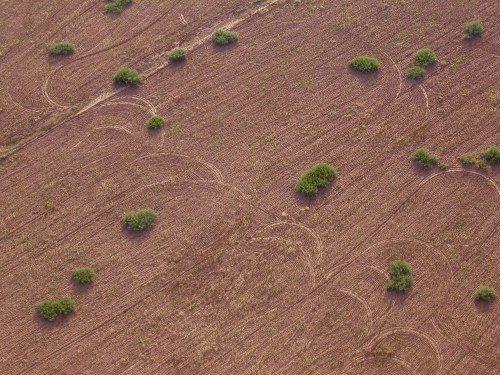
I am sorting through old photographs just now and came across this one which I took fifteen years ago from a hot air balloon near the Atlas Mountains in Morocco.

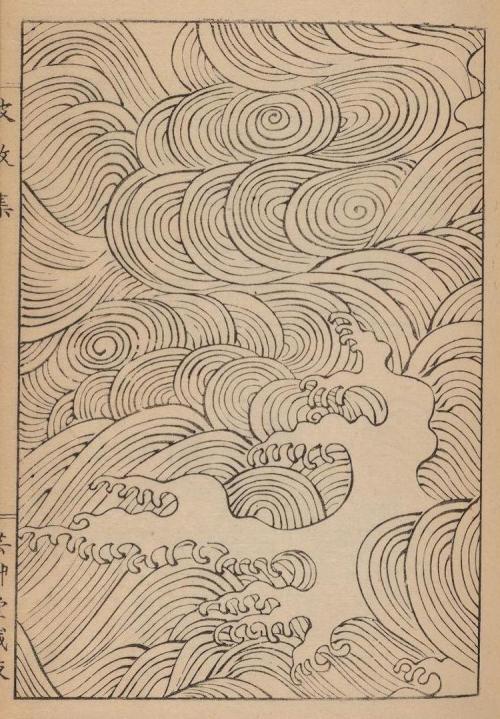
I suspect I took the photo because I spotted this strange patterning of the ground but I don’t really remember. Looking at it again now I am really struck by a combination of beauty and strangeness. There is undoubtedly something pleasing about these multiple semicircles on the red soil. They are almost like one of those wave paintings you see in traditional Japanese art.

Sure, it provokes my curiosity. I can’t help wondering who made these marks, how they made them, and why? But I only visited Morocco for a few days and I was never closer to these markings than I was in this photo. I’ll never know. But that takes nothing away from them, because I find I’m content to enjoy them. In fact, I find they draw me to them and I time can stand still for a little while as I contemplate them.

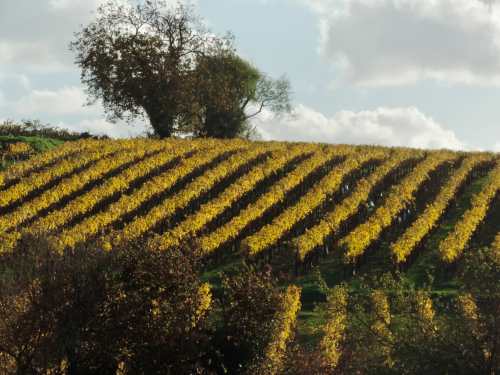
There is evidence of human mark making all around us of course. I look out onto this –

Of course, I do know how these patterns are produced and why. But they certainly create a distinctive landscape don’t they?

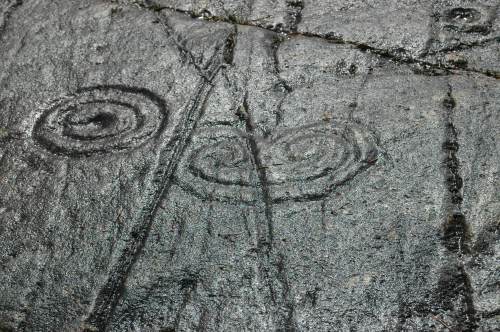
Another place where I came across strangely beautiful marks is the Kilmartin Valley in Scotland. There are several large stones covered with markings from pre-history in that valley.

Who made these marks? How did they make these marks, and why?

More questions we don’t have answers to, but, again, aren’t they just beautiful in themselves?

But more than that, I realise as I look at these images again, their beauty is enhanced by mystery.

I like to explain things. I like to understand.

But I don’t deny that part of the enchantment of life is just how much mystery there is.

“And not or” – our lives are rich because explanation and mystery are so entwined.

Read Full Post »

I don’t know about you but I find that sunsets exert a strong magnetic pull on me. I just can’t resist them.

They capture my attention, draw me outside, inspire me to grab my camera and take a few shots. Or I just walk to the corner of the garden, look west, and bask in their beauty for a while.

I haven’t counted how many spectacular sunsets I’ve seen since moving to the Charente (and I was also SO lucky to be able to see an incredible number of fabulous sunsets around Ben Led in my years of living in a top floor flat near Stirling, Scotland). The number isn’t important. Quantity is irrelevant. It’s the quality of them – the colours, the spread, the depth, the way they change the colour of the entire landscape, and, yes, even the speed with which they change.

Have you ever tried to watch the minute hand on a clock move? It’s not easy! Sure, if there is a second hand, you are immediately aware of its constant motion, but the minute hand? Not so easy! Try watching it for five minutes. Chances are you’ll be well aware that the five minutes have passed but your mind probably went off on a wee jaunt somewhere while waiting for that time to pass, and it really won’t be easy to actually see the minute hand moving.

But stand outside as the sun just touches the western horizon and I bet you’ll find it hard to look away. I don’t find my mind drifting off anywhere as I watch these sunsets. I’m entranced by them. Of course, if its a cloudless sky I can’t (and shouldn’t) look directly at the sun. Even at that time of day it’s too bright. But when there is a little cloud there it’s easy to follow the changing patterns of light as the Sun sinks below the horizon. In fact, it’s often in those first few moments after the entire sun has disappeared below the horizon that the real beauty commences, painting the sky every shade from tobacco to crimson.

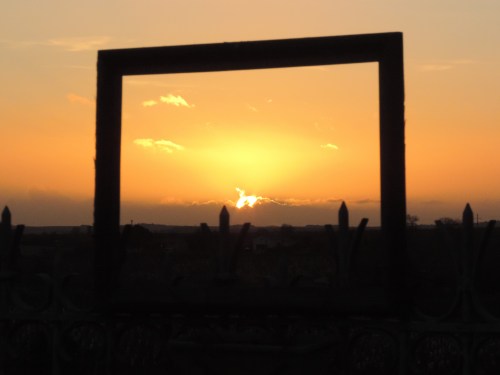
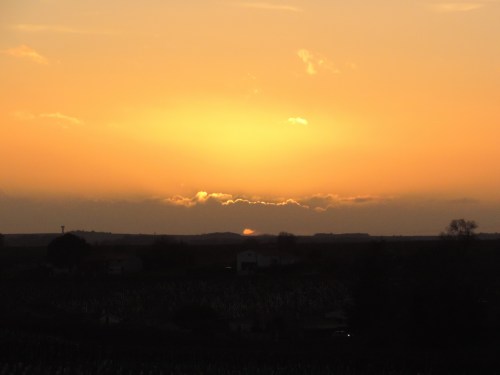
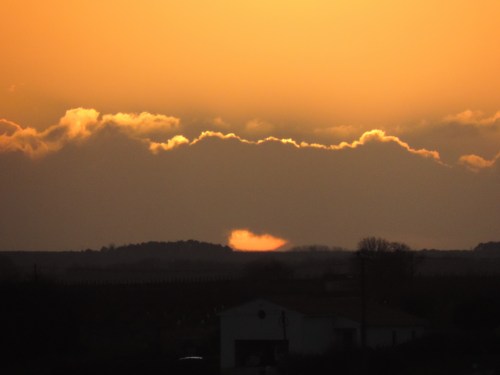
Sometimes it looks like it did last night. Just as the Sun is about to disappear it sends an astonishing flare of bright yellow light high up into the sky. It looks like the very air has caught fire! In this particular sunset that flare was concentrated so it looks for a few moments as if there is a secondary source of light in the sky. It looks as if there is a centre to the brightness which is completely detached from the actual Sun. Almost the visual equivalent of ventriloquy…..

In between the Sun itself and this secondary light cast, the edges of the clouds shone brightly. You couldn’t call this a silver lining. It’s a platinum lining.

It is just fabulous.

When I talk about “émerveillement” this is just the kind of thing I mean.

How great to end the day with wonder, delight and amazement.

How great to feel the effects of beauty and joy wash through my being.

How about you? Do sunsets have this effect on you as well? If not, what does?

Read Full Post »

TS Eliot wrote, in “The Rock”

What life have you if you have not life together?
…………
When the Stranger says: “What is the meaning of this City?
Do you huddle close together because you love each other?
What will you answer? ‘We all dwell together
To make money from each other?’ or ‘This is a community?’”
Take a look down your street. Down any street. Imagine all the people who live there. Some of them you might know, others, not so much. Or maybe you don’t know any of them at all. But, here’s my question.
Why shouldn’t all the people living in the same street have the same rights?
The same rights to live, love, learn, work, to garden, to shop, to go out for something to eat, out for a drink…..take part in the same concerts, enjoy the same museums and galleries, see the same movies…..same rights in law, same rights to health care, education, same freedoms to move, to speak, to write, to vote?
In other words, why separate people who live in the same street?
Why separate them according to the place of their birth, or the place of their parents’ birth?
Who benefits from doing that?
Is that any way to create a community? A town? A city? A country? A world?
What do you think? Is it better to set limits on some of the people who live in this street? To say some can stay but some can’t? To say some can vote but some can’t? Some can have access to health, education and social support, but some can’t? And if you think that’s better, how do you think we choose? Who should we include, and who should we exclude?
Because I really don’t see the point of all that separation, and categorisation, and exclusion.

Read Full Post »

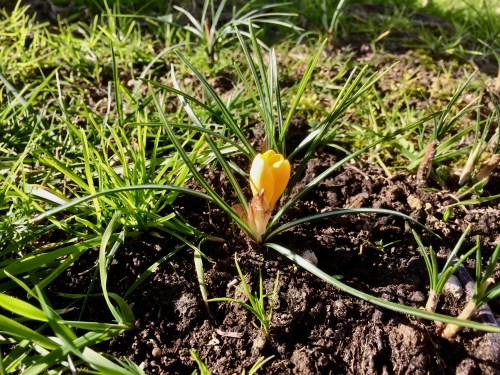
Here they come! The first little crocus flowers.

It’s the middle of January, and here in the Charente we have blue skies and a bitingly cold wind blowing from the North East (the literal opposite direction from the prevailing winds which come from the South West).

Every year in late autumn I poke some more holes in the grass around the mulberry tree and plant some crocus bulbs. Last time I planted about fifty of them. I’ve lost count of how many I’ve planted in the last five years. We have an image in mind of a carpet of yellow, purple and white crocus flowers covering the ground at the foot of the tree, but, so far, it’s never looked remotely like that, so I just keep adding a few more every year.

Did you know that there is no scientific way to tell if a seed is dead or alive? No way to know which have the potential to burst out of their shells and make their way through the soil towards the Sun. Any botanists out there can correct me, but I suspect the same applies to bulbs. There’s no way of knowing which will produce full-blown flowers, and there certainly is no way of knowing which of them will appear first.

That means that every single year the sight of the first crocus is a surprise and a delight. It’s like making a discovery. Even if I know it’s me who planted the bulbs there. That delight doesn’t go away with the appearance of the first flower either. Every single new plant brings an equal measure of delight. It’s the gift that goes on giving!

This is one of the occasions where I am struck by how we humans can welcome and embrace uncertainty. We’d like to think we can control things. We’d like to think we can predict things. And there are certainly cases where we can, but more often than not, we can’t. I worked as a General Practitioner for four decades of my life, and the core skill of a GP is to be able to handle uncertainty.

In the Primary Care setting, a GP (Family Doctor), tends to be one of the first to be consulted when a patient becomes unwell and can’t manage their illness by themselves. In my training I was taught this meant I’d see a lot of patients with “undifferentiated illness” – because in the earliest stages of illness things can be pretty vague. There might be a bit of a fever, or just a symptom or two….feeling tired, or achey, of slightly nauseous. In these early hours or days there might not be much to find amiss on a physical exam, or at least, not much to find which is distinctive of any specific disease. A few days, or even hours, later, it can be glaringly obvious! Which is why GPs learn to assess the severity of a patient’s symptoms, the over all level of their health, and the need for any urgency. We learn to review the situation as quickly and frequently as appropriate. We also learn that the future is not predictable at the level of the individual patient. We can have a good knowledge of the likely progress of certain pathologies, but we can’t predict the future path of an individual’s illness. Same thing goes for any treatment. Whether or not a certain treatment is so-called “evidence based”, only the unfolding story of this particular patient in the days and weeks ahead will reveal the course of the illness and the appropriateness of the treatment.

I can see that you might read that and despair, thinking, surely the doctor can do better than that? Surely they can predict the future with certainty. Well, nope, they can’t. What that means is that the uniqueness of the individual can never be set aside. The particularity of the person can never be replaced by the categorisation of their illness by diagnosis, or by the likely effectiveness of any treatment. At all the times, the GP has to make a judgement, based on knowledge and experience, use that judgement to decide what to do, then, crucially, follow up.

That’s why I don’t think it’s a good idea to chop the delivery of health care into little pieces. Dealing with the whole person has got a time dimension to it. We need to know how things are progressing, and make another judgement, another decision, in the light of the changes.

So, I might have started writing this thinking about a little yellow crocus popping up, by I find my train of thought exploring uncertainty, unpredictably and the Practice of Medicine, (who saw that coming?!)

Where that takes me to is – I think there are at least three crucial elements to good Medical Practice –

  1. Time – sufficient time for the patient and the doctor to get a good understanding of what’s going on
  2. Continuity of care – follow through of every event into an emerging story over hours, days or weeks
  3. Open minds – never closing down the thought processes by ticking a box, or issuing a prescription, knowing that the future, in all individual circumstances is uncertain.

I’ll leave you with one of the “new”, newly emergent, crocus flowers, by which I mean one of the new variety I planted last year which has just popped up to say hello!

Read Full Post »

Do you do that “word of the year” thing? Where you choose a word at the beginning of each year, a word which will be some kind of touchstone, theme or “north star” for you?

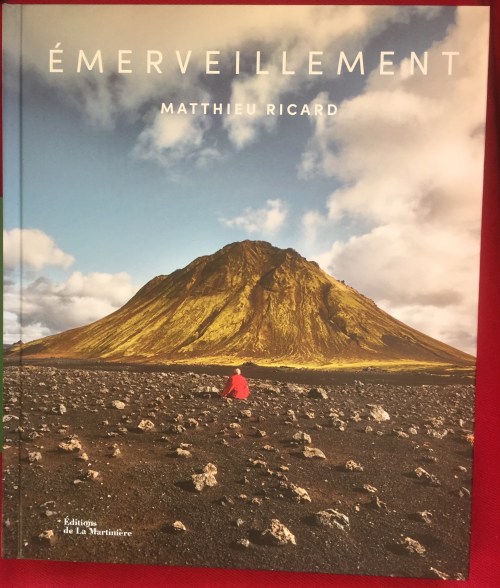
This year, I’ve decided to choose two…….because I received two books as presents for Christmas and it immediately struck me that between them they lay a foundation for a way of living I highly value.

These are French books, so here’s another innovation for me…..up until now my Word of the Year has been an English word, but, hey, I’ve been living in France for the last five years and I’ve read a LOT of French, so, I reckon it’s high time I choose a couple of French words.

Here’s where things start to get interesting, because I can’t find direct, single word translations of these two words into English. Perhaps, more accurately, I should say I can’t find any direct translations into English which I find satisfying. I think that’s a great example of how learning a second language can both widen and deepen your world.

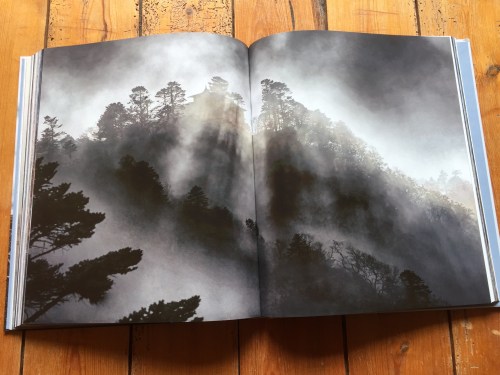
If you’ve read other posts on my site here you’ll have come across my use of the term “émerveillement” already. The first time I read the phrase “l’émerveillement du quotidien” I was entranced by it. It sort of means “the wonder of the every day”. The word “émerveillement” captures my core value of curiosity, of amazement, of awe and of wonder. I adore those moments when you notice something and it stops you in your tracks, where you pause, savour, and reflect. The more that happens in my life, the better my life seems to me. To really experience “émerveillement” you have to be open minded. You have to be curious, aware and non-judgemental. So the pursuit of “émerveillement” every day brings along with it a whole set of other attitudes and behaviours which I value.

Here are a couple of pages from the book which give you a flavour of why it entrances me –

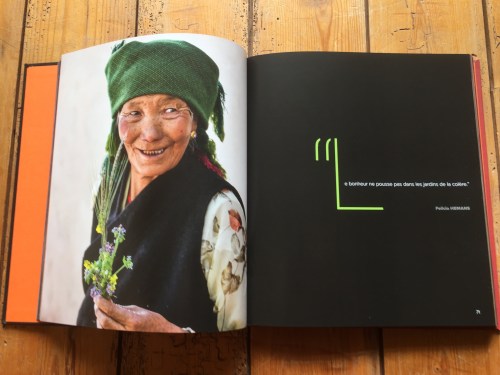
The second word is “bienveillance” which could be translated as “well-meaning” but again, that direct translation doesn’t quite cut it for me. It is used to cover well-meaning and well-wishing, but also kindness, gentleness and care. So, another set of values and behaviours I really rate and aspire to every day.

Here a couple of pages from that book which might stir the same feelings in you. If they do, then, yet again, a picture will have proven to be worth a thousand words.

That quote in the middle image is from the poet Felicia Herman and it translates as “Happiness doesn’t grow in the gardens of anger”, which is an interesting line to consider in these days of conflict and polarisation.

Read Full Post »

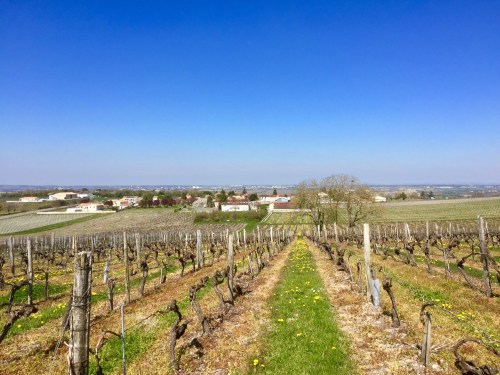
For the last five years I’ve lived just south of the town of Cognac (that’s Cognac in the distance in this photo).

I’m on the edge of a village surrounded by vineyards.

If you look closely at this photo you’ll see there are actually multiple vineyards covering the landscape. Here’s another view

Here you see at least three distinct vineyards in the foreground to the mid-ground, with several others stretching as far as the eye can see.

One of the things which struck me straight away when I went for my first stroll through the vineyards was that there are no fences, no walls, no hedges between them. Yet, from what I’ve learned, these different vineyards belong to different people. Another thing which struck me was that anyone can wander freely amongst them. There’s even a map of different trails posted up on a large panel outside the village church, and wayfarer wooden signposts with coloured markers to guide you along the different routes.

I’ve made a number of road trips to Spain and Italy since moving here, and every time I’m amazed how I can just drive over the border into, and back from, those countries without showing a single document, or even speaking to a border guard.

Last month I flew to Copenhagen, spent a few days there, then flew on to Edinburgh to visit family. Although I had my passport our of my bag and ready to join the queue for Passport Control when I got off the plane at Copenhagen airport from Bordeaux, I was struck by the fact there was no Passport Control. Instead I just picked up my bags from the conveyor belt and walked out of the airport to the taxi rank. Needless to say, it wasn’t the same flying to Scotland where I had to join a queue and use the automated passport check gate to be allowed in.

I am definitely no expert on the pros and cons of borders and border controls but these experiences get me wondering about both what such procedures and laws are supposed to do, and, whose life is made better and/or safer by imposing them?

Rutger Bregman, who wrote “Utopia for Realists” makes an argument for open borders throughout the world, but it’s hard to find much support for such an idea. Will Hutton’s broadly positive review of Bregman’s book writes –

I understand that open borders and being welcoming to strangers is a great statement of common humanity – and that immigration is an economic benefit. But no society on earth can welcome unlimited numbers of strangers, keen to enjoy the benefits of whatever civilisation, without having made a contribution to it. Human beings believe that dues should be paid. Far better to manage our borders and let in as many immigrants as we can rather than open them indiscriminately.

Caroline Lucas’s review in The Independent doesn’t even mention his promotion of the idea of open borders even though she seems to rate the book highly.

Britain is still in the midst of Brexit with a prevailing rhetoric of “control immigration”, “bringing back control of our borders”, and forcing EU citizens in the UK to apply for “settled status”, even if they’ve been “settled” in the UK for decades.

So, what do you think?

I’m not suggesting anything utopian or fantastical here, I’m just reflecting on what it feels like to move around a countryside without obstructions and boundaries, and to move back and forth between countries without border controls versus travel into and out of countries with strict controls. Is it better to have the queues and checks at the UK border for people arriving from Denmark, France or Spain? Or better to allow the free movement of people across each others borders as the 26 “Schengen” countries do?

What are the real life consequences of these policies and procedures?

As I travel around the “Schengen” countries without border controls I feel free, welcome and even that I belong in each of these different countries. It’s life enhancing!

Sadly, with the anti-immigration, pro-border control policies of the UK now a lot of EU citizens no longer feel welcome there and UK citizens are about lose the freedom to live, study and work in the other 26 countries. It’s not at all clear yet what bureaucracy will be introduced once the UK leaves the EU, but how will any extra application processes, fees and documents make life better for the British? Just asking……..

Read Full Post »

« Newer Posts - Older Posts »