Feeds:
Posts
Comments

Archive for the ‘life’ Category

Rainbow fountain

I’m using this photo of a rainbow appearing in a fountain because I think rainbows are a symbol of hope, as well as being a phenomenon which exists only in the presence of the subject (the observer), and a fountain which is symbolic for me, of the life force, that flowing healing energy which enlivens and heals us all.

Isaac Judaeus lived from 855 to 955. He was physician to the Fatimid rulers of Qairawan in Tunisia, and his works were amongst the first to be translated from Arabic into Latin at the time of the great translations which brought Arabic thought and science to the notice of the West. His books had a big influence on Western medieval medicine, still being read into the 17th century. There’s a small book of his, Guide for Physicians, which only exists in Hebrew translation, where he sets out his ethical conception of medical practice (remember this is writing from the 9th and 10th centuries). I’ve only read a few of his aphorisms, but this one, in particular, caught my eye.

Comfort the sufferer by the promise of healing, even when thou art not confident, for thus thou mayest assist his natural powers

What’s he saying here?

First of all that physicians should comfort the sufferer. Sadly, that’s an element of health care which patients don’t always experience. Shouldn’t physicians always offer care and comfort?

Secondly, they should do this “by the promise of healing”. He goes on to say “even when thou art not confident”. Wouldn’t this be deceit in some situations? One of my earliest experiences as a young doctor was admitting a very elderly, very ill lady to the ward where I worked. Her also very elderly daughters were hugging each other on the seat outside the ward, wringing their hands, crying and upset about what was happening to their mother. I thought I’d comfort them and said “Don’t worry. Your mother is in the right place now. I’m sure she will be fine” They smiled to me just as one of the nurses came out of the ward and called me aside. “That patient you just admitted doctor? She’s just died”. Well, that taught me a lesson. But it didn’t stop me practising with hope, practising with the expectation that there was a potential for things to go well. It just taught me never to assume I could accurately predict the future!

I still believe that. I believe none of us can predict the future….especially not in the case of the particular, the specific, individual circumstance. I was surprised many times throughout my career when patients did so much better than the textbooks would have predicted. So, I often thought, the truth is that as you look forward from this point in time, there are a whole range of potential paths leading from here into the future. In the situation of illness, some of those paths will be largely ones of decline, some of stumbling along, and some of steady, or sudden, improvement. And nobody, but nobody, can accurately predict which path this particular patient will take. Therefore, at each stage of the process, hope is not only possible, but is as reasonable an option as any other.

That’s what I understand about “the promise of healing” – it’s not really a promise, in the sense of a guarantee, but a potential (in the way we say something may be “full of promise”). And I think acting from that perspective contributed to the improvements patients experienced.

That’s the final part of Isaac Judaeus’s aphorism – “for thus thou mayest assist his natural powers”.

I can’t see there is any healing other than that brought about by the human being’s “natural powers”. I’d describe them now in terms of systems theory, or complexity theory. Those natural powers are the power shown in any “complex adaptive system” – the powers of self-regulation, self-defence, self-healing…..the “autopoietic” “self-making capacity” of a person.

Medical acts, medicinal substances, physicians’ interventions are only truly healing when they work with, not against, this capacity. That’s why doctors should always remain humble. It’s not what we do that heals. It’s what we stimulate and/or assist….the astonishing self-healing powers of the human being.

In contemporary thought, these “natural powers” Isaac Judaeus refers to are often wrapped up in the idea of the “placebo effect”, but, sadly, that’s a concept so entangled with ideas of trickery and deceit that the “self-healing” powers get lost in it.

So, here’s what I get from that old aphorism –

  • offer comfort and care
  • offer hope and the promise/potential of healing
  • and in so doing assist the natural or self-healing powers found in every human being

One of my hopes for the future of Medicine would be that we learn many other ways to assist those “natural powers”.
Read Full Post »

bell rope

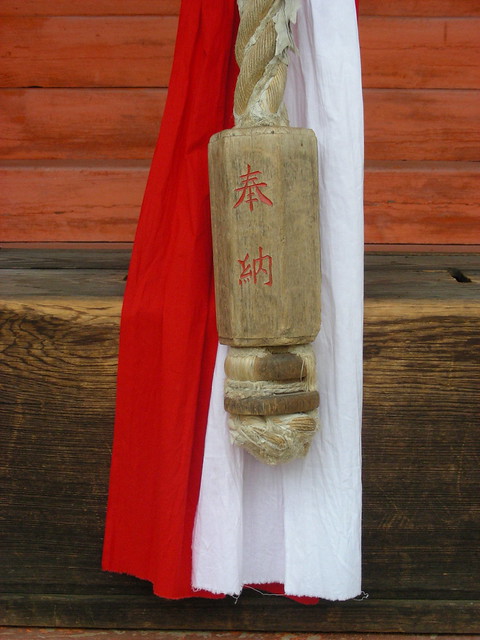
In my monthly themes, December is the month to focus on gratitude.

I know, for many, your thoughts will be turning to gifts….what to give and what you hope to receive. I just wonder how your choices might be affected by keeping your focus this month on gratitude. Maybe then ever gift you give will demonstrate, somehow, something of the gratitude you feel towards the recipients of your gifts.

Many studies have show benefits, in terms of mental and physical well-being, which emerge from the practice of gratitude.

Have you ever thought about starting a “gratitude journal“? This might be a really great month to try it out.

Even if you don’t want to start a gratitude journal, why not take the opportunity of December to focus on gratitude anyway? Who do you want to say thank you to? Go ahead, tell them. What do you feel grateful for? Take a moment to think about exactly what it is, and to allow yourself the full benefits of feeling that gratitude swell in your heart as you contemplate it.

Or maybe you’d like to create, or participate in, a ritual of gratitude?

There’s certainly no single, only way to focus on gratitude, so explore a few ideas, and see what works best for you.

Read Full Post »

The other day I watched Elizabeth Gilbert’s TED talk about genius.

She recounts how the ancient Greeks had the concept of a “daemon” which would communicate the great ideas and creative breakthroughs from the gods. The Romans adopted this concept but used the term “genius” instead.

The really interesting thing about this concept is that inspiration came from somewhere “out there” – whereas nowadays we tend to think that it is entirely up to us. She tells several stories of artists who experienced inspiration as coming from “out there” somehow and how the artist’s job is to turn up and do their work every day in order to give the “genius” a chance to deliver something.

I think this is a really interesting perspective. It doesn’t lessen the need to be disciplined and to do the work, but it also allows the artist to be a little kinder to themselves, and to know that not all “genius” resides in them. Potentially this could make an artist more humble….if they truly believed that their creations weren’t entirely their personal brilliance.

For me, this makes me think of two things.

First, we all live “on the shoulders of giants” – we all emerge from all that is and all that has existed before. I start at this point in human development, at this moment in the emergence of consciousness in the Universe. I don’t exist in a vacuum. I don’t exist in isolation. My relationships with other human beings now, and other human beings in the past, will, and do, influence what I write, what I compose, what I create. In that sense, at least, inspiration will often turn up from one of those sources.

Second, the idea reminds me of Rupert Sheldrake’s idea of memory. He suggests we think of memory not as a filing cabinet in some part of our brain cells (in fact no “place” in our neural structure has been discovered to be the repository of any specific memories), but instead, we should think that everything that happens, every thought we have, every word we express ripples out into the continuous web of the universe and remains there. To access a memory then is more like tuning in to a radio station than looking in a filing cabinet. He suggests the “store” as such is “out there” and we can tune in to it to access the specific memories. Now, I’m sure that is a very controversial idea and not one which has been even remotely proven, but there is an interesting one in the context of the old ideas of the sources of inspiration, don’t you think?

Here’s her talk in full


Read Full Post »

barometer

In the second part of the A to Z of Becoming, V stands for the verb “vary”.

I found this photo of an old barometer in my collection and it really captures something about the natural function of variation. A barometer is pretty constantly moving, responding continuously to the rising or falling of the atmospheric pressure. I’ve always thought it quite funny that one of the words on these old barometers is “variable” because I tend to think, when it comes to weather, when is anything other than “variable”?! But then, that’s probably down to my experience of living in Scotland for 60 years! I’ve never lived in a country where the weather is the same, day in, day out.

The truth is Nature is constantly varying because all of Nature is a dynamic phenomenon. And the Universe so loves diversity!

But there’s an interesting aspect of human experience, which is “tolerance”. All of our sensory systems have a tendency to tolerance. That is, when something new comes along we notice it, but once its been there for a bit, we stop noticing it. How often have you had the experience of suddenly becoming aware of a noise just when it stops?

Not quite the same as tolerance, but in some ways related, we also tend to move to the “back of our minds” the routines of our lives. This can lead to living on auto-pilot (or as I say in this blog, living like a zombie).

It’s good that a lot of things are dealt with on auto-pilot. What on earth would life be like if we had to think about every breath we take, if we had to initiate every beat of our hearts, if we had to actively, consciously digest all our food, and so on…..? What on earth would life be life if we had to be consciously aware all the time of every single sensory signal our body picks up, second by second?

But the problems come when we default our whole lives to auto-pilot. What happens then is that we tend to just keep repeating the same behaviours, having the same thoughts, feeling the same feelings, and, ultimately, neither making choices, nor creating any life anew.

So, it’s also good to disrupt the default, to break the routines, and raise our conscious level to higher state of awareness.

One way to do that is to vary something.

Walk a different way to work. Choose something different for breakfast. Read a different newspaper. Deliberately introduce a variation to your “normal” habits.

Go on, try it. Vary some things this week and see what that feels like.

Read Full Post »

Leaf

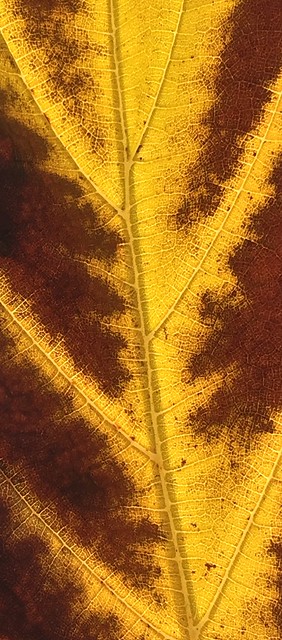
As I was raking up the leaves from the grass……this one caught my eye.

A moment of becoming

Read Full Post »

Morning grass

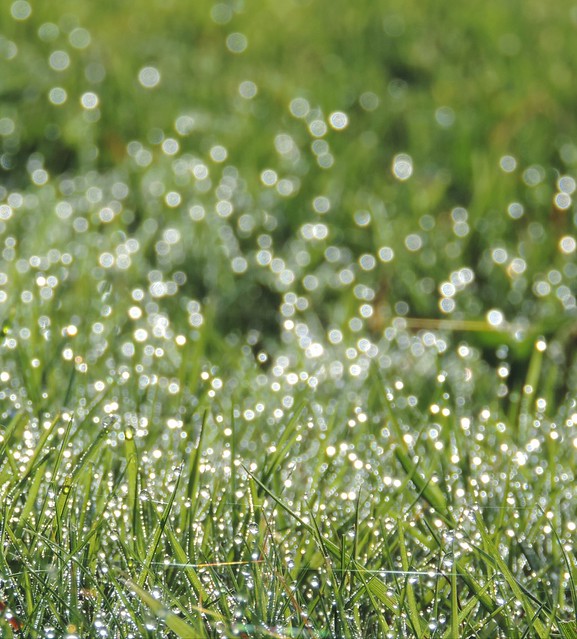
From yesterday’s fog, the rain in the evening and this morning’s dew, all these little water droplets gathered on the blades of grass and were just waiting for the sun to sparkle them.

Read Full Post »

window view

We engage with the world from our own, unique perspectives.

Whatever we see, hear, experience, is influenced by our personal past (memories, previous choices etc), our imaginations, our beliefs, and our values. Everything which has happened in our lives up till now has influenced the physical connections within our brains, and between our brains and the rest of our bodies.

Whatever we see, hear or experience is also influenced by our current state – our current physical, emotional and mental state.

All of this creates a kind of frame through which we experience the world.

We all have a unique, personal world view – have you considered what’s influencing yours?

Read Full Post »

creeper

One of the most striking characteristics of living organisms is change.

These little leaves I photographed in the garden at the weekend are gone now. (which reminds me of the importance of taking a camera everywhere and not hesitating to use it!)

I’m particularly conscious of change just now because I’ve just moved country. Maybe you’ve done that before, maybe even many times, but it’s a first for me. I don’t mean simply travel and holidays, I mean to actually relocate, to go and live in another country entirely, maybe especially in a country where the language is different.

But change has always fascinated me. The byline of this blog is “becoming not being”, not just because I have always resisted being pigeon-holed, or categorised, but because I really don’t think any human being can be understood as an object frozen in time.

That’s just not reality.

The more there is change within a system or organisation, the more we recognise it as “dynamic”, and is there any more dynamic phenomenon in the Universe than a conscious human being? Not only are all of our cells constantly changing, not only is our heart constantly beating, our lungs constantly filling and emptying, our complex immune systems and endocrine systems altering moment by moment, but our minds are never still.

It feels to me there is a constant flow of a life force through me. It never ceases. When it moves on, this physical me will have moved on, but the me of ideas, of thoughts, of creative expression, of ebb and flow between me and the others who share, or have shared, parts of this life with me, that will, in some ways, continue to flow.

Human beings live in both a constantly changing physical universe (some parts of which change very slowly indeed), and in a rapidly changing, shimmering, universe of consciousness. Really, is there anything in the Universe which changes as much (as constantly) as a human being?

As Heraclitus said so long ago, you really can’t step in the same river twice.

That’s why, as a doctor, it didn’t make sense to me to try to categorise patients. It didn’t make sense to me to reduce a person to a diagnosis. A person is a constantly changing, flowing, growing, developing phenomenon, not an object to fitted into a category, to be measured and classified.

Becoming not being………it’s about the reality of constant change.


Read Full Post »

In the second part of the A to Z of Becoming, U stands for the verb Unwind.

spiral

I’m sure you’ll be familiar with the idea of unwinding, but how do you actually do it?

What does it mean “to unwind”?

For me, it’s about addressing that tendency to become too tightly coiled – not just where you feel stressed, but that almost background, or default, state of a higher tension, where your muscles, your neurones, your whole system contains a build up of energy…..where everything gets tighter, stiffer, less flexible, less flowing.

I think we often don’t even notice it happening. Like with breathing. We can breathe using our diaphragm, taking big, slow, even, conscious breaths, of we can breathe using the muscles of our chest wall, the muscles between our ribs. This latter breathing is largely unconscious. It tends to be shallow and quite fast. The more tightly wound we are, the more likely we are to be breathing with our chest muscles, and the more we breathe with our chest muscles, the more tightly wound we become.

Unwind is a verb. It’s an action. It might happen unconsciously, but, probably, it requires a deliberate choice.

Choose to unwind.

Choose to let go of the tension.

Easier said than done? Try a simple focus on the breath. Deliberately breathing with your diaphragm for a few breaths can produce a quick unwind.

But I think unwinding should be for more than just a moment. One of the rhythms I’ve discovered since moving to the French countryside is that of Sundays. I’m sure there was that rhythm in my life when I was a child, and it’s a good feeling to rediscover it. Sunday becomes a different day. Not just another day.

The thought that provokes is that we can create the habits, the rituals, or even the environments which induce unwinding. So, here’s your challenge for this week…..how do you unwind? What helps you to unwind? What conditions or habits can you create which will encourage unwinding?

Try some different ideas, some different options, and find when and where is the best time for you to unwind. Then…………….unwind.

Read Full Post »

Pond life

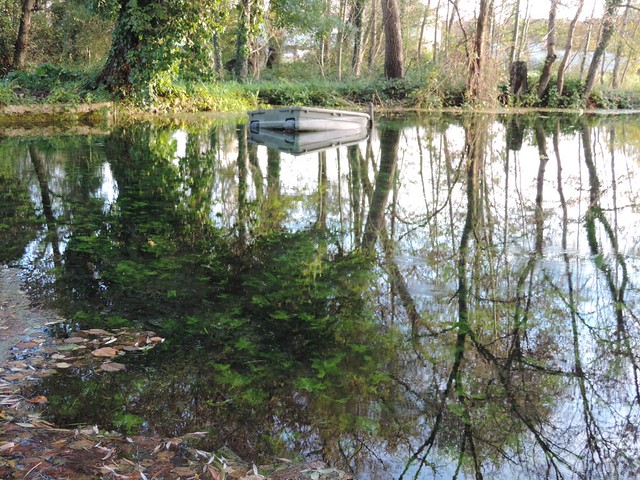
My monthly theme for November is reflection, so I thought I’d share a photo I took a couple of days ago.

Sometimes, you just turn a corner, and there in front of you, is a spectacular reflection.

Seen any striking ones this month?

Read Full Post »

« Newer Posts - Older Posts »