Feeds:
Posts
Comments

Archive for the ‘neuroscience’ Category

It strikes me that the practice of Medicine (I’m specifically referring to the world of Medicine for humans here), begins and ends with a relationship between human beings.

I’ll just focus on the doctor-patient relationship here, because that’s how I spent my working life. But I suspect that much of what is relevant to this relationship is also true for other health care workers, and perhaps even in other areas of human life.

When I say the practice of Medicine begins and ends with a relationship between human beings, I mean that the whole, unique person who is the patient has to be understood, cared about and attended to, by the whole unique person who is the doctor. Both individuals are important. I think this is partly why there are no doctors who are the best doctors for everyone, and I think it explains how in a group General Practice, each of the doctors in the partnership will have a specific loyal cohort of patients who always seek a consultation with that one particular doctor.

I also think this means that the whole person must always be considered. Anything less is reduced, and anything reduced is less than human.

In this context, I recently read “A General Theory of Love”, by Drs Thomas Lewis, Fari Amini and Richard Lannon. [ISBN 978-0-375-70922-7]. This book describes the model of the triune brain, which you might have come across elsewhere. (My introduction to that model was Dan Seigel, and later, Rick Hanson). It’s the observation that we have three brain regions – the brain stem, which is responsible for survival, and is found even in reptiles (henceforth to be known as the “reptilian brain”), the limbic system, which is responsible for memory processing and emotions (called the “mammalian brain”, because all mammals have this part), and the neocortex, which is massively developed in humans and seems to give us the capacities for abstract thought, conscious decision making and rational analysis.

In “A General Theory of Love”, Thomas Lewis and his colleagues focus on the limbic system – they describe in detail how this part of the brain helps us to “feel” other people’s feelings. It’s the kind of phenomenon that others call “heart feelings”. Without this part we’d have the reptilian survival strategies or the cold, analytic distancing of the neocortex. Let me be really clear here – this is a simplification and human beings are a lot more complicated than that. But this is a useful simplification which clarifies certain truths about what it is to be a human being.

In this post, I want to just bring to your attention some of the points the authors make when taking this perspective on the practice of Medicine, because I think health care is in a dire and degenerating situation in the world.

The last century saw a two-part transformation in the practice of medicine. First, an illness beset the relationship between doctor and patient, then radical restructuring attached the residual integrity of that attenuated tie.

I think the illness and the radical restructuring they refer to developed from a general reductive de-humanising of health care. Iain McGilchrist has shown how a “left hemisphere approach” has come to dominate society and I find that explanation helpful. Lewis says

American medicine has come to rely on intellect as the agency of cure. The neocortical brain has enjoyed a meteoric ascendancy within medicine even as the limbic star has fallen into disfavour.

Whilst this focus is a little different, the basic point is actually the same. By coming to rely on data, figures, statistics and techniques, we have reduced the human-ness of medicine. We’ve increasingly denigrated the patient’s narrative, the individual’s subjective experience, and the place of heart felt caring.

The limbic brain has a crucial role to play in attachment, and Lewis describes attachment theory along with the physical and social consequences of disordered attachment incredibly clearly. And here’s one of the most important points in this book – the physical reality and hence importance of relationships, emotions and attachment –

Medicine has lost sight of this truth: attachment is physiology

The radical restructuring they refer to is seen throughout Western Medicine – its the rise of bureaucracy. We see it in the proliferation of protocols and guidelines, of the prioritisation of measurement – what others have referred to as “Taylorism 2.0” (the modern equivalent of Taylor’s “scientific management”) – at the expense of what cannot be measured – the lived experiences of the patients and the health care workers.

Good physicians have always known that the relationship heals. Indeed good doctors existed before any modern therapeutic instruments did…

For many years, the medical community hasn’t believed that anything substantive travels between doctor and patient unless it goes down a tube or through a syringe.

They neatly sum up their thesis with

medicine was once mammalian and is now reptilian

Corporations and organisations have taken the high ground imposing their limits, their rules and regulations on those who try to care.

A corporation has customers, not patients; it has fiscal relationships not limbic ones.

The use of terms “customers”, “clients” and “consumers” in the area of health care has always disturbed me. Now I think I understand more clearly why!

I concur with this conclusion –

Before it is safe to go back to the doctor, a mammal will have to be in charge. And before that can happen, our physicians will have to recapture their belief in the substantive nature of emotional life and the determination to fight for it.

I’m not sure I’ve heard any politician, manager or profession leader say this so clearly – the problems facing health care are not ones of efficiency, targets and “better” guidelines. The problem is we need to make health care more human.

We need Medicine based on love, care and attention….where the heart is the keystone.


Read Full Post »

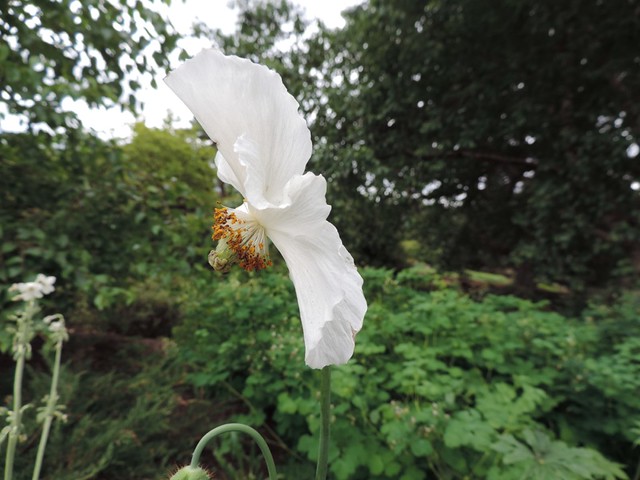
angel flower

Doesn’t this flower look a bit like an angel?

Or a butterfly if you can’t imagine what an angel might look like!

I read recently that our retinas only register colour in the central 30 degrees of visual field ….the fact that we see a full panorama in colour (even out the edges of our vision) is due to our ability to make up what we are seeing.

Really?

I know that seems a bit incredible, but when you stop to think about it, our eyes convert light energy into electro-chemical signals which are then processed by the neurones in our brains for us to “see” anything, so maybe it’s not such a surprise that we are responsible for “colouring in” most of what we see!

We are incredibly creative organisms with fabulous bodies and powerful imaginations.

Mark Twain said

a person cannot depend on the eyes when imagination is out of focus

Read Full Post »

There’s an excellent collection of articles about health in this month’s “Philosophie” magazine in France.

The cover instantly reminded me of the great quote by the American physician, Oliver Wendell Holmes –

Throw out opium, which the Creator himself seems to prescribe, for we often see the scarlet poppy growing in the cornfields, as if it were foreseen that wherever there is hunger to be fed there must also be a pain to be soothed; throw out a few specifics which our art did not discover, and it is hardly needed to apply; throw out wine, which is a food, and the vapors which produce the miracle of anaesthesia, and I firmly believe that if the whole materia medica [medical drugs], as now used, could be sunk to the bottom of the sea, it would be all the better for mankind,—and all the worse for the fishes

Health is a much more complex and nuanced phenomenon than the simplistic ideas we are offered by the current dominant model of health care – that of Big Pharma and statistical medicine (drugs for every problem, protocols for every health care professional).

One of the central themes explored in this issue is summarised by the lead title of “Health, is it in your head?” There are those who promote the idea that all illness begins in the psyche and expresses itself in the body (Freud?), and others who promote the idea that all illness is physical, material change in the body whilst the psyche remains separate (Descartes?). There is a third option discussed, whose roots are traced to the philosophy of Spinoza – that the psyche and the body just express the same underlying disturbance, but each in their own language.

I like that third idea – it seems totally congruent with the core value of my lifetime of medical practice. I refused to divide a person into two parts – a mind and a body, and I used the philosophy that there is a system or a force within all life forms which produces growth, maintains health and repairs the organism when it is damaged. It’s interesting to see how the more recent discoveries of neurobiology are showing us more and more interconnectedness within a person – with amazing multitudes of connections and pathways between the different organs and tissues. It’s becoming increasingly untenable to hold one of the divided views.

One of the articles mentions an old essay by Kant, written in 1798 “Du pouvoir du mental d’être maître de ses sentimentsmaladifs par sa seule résolution”. In that essay he distinguishes between “la sensation” and “le savoir” of health – in English, perhaps, something like the difference between what health feels like and the knowledge of health. This strikes me as close to the nub of the issue.

We experience health. It’s something we can all assess and comment on. We can say when we feel well and when we feel ill. But we have also developed ways of knowing about organ or cellular functions, so we can discover what our blood pressure is, or what level of haemoglobin exists in our red blood cells (two things we could not know by “sensation”). The point is, both of these perspectives are real. We do not have the kind of nervous system which can make us aware of the moment to moment functions of the organs of our bodies at a conscious level. Indeed, how could any of us live that way? But the connections exist. A certain level of heart cell dysfunction may be experienced as palpitations, pain or breathlessness. However, the heart can malfunction without us being aware of it at all – the investigation known as an “ECG” (a cardiogram) can reveal a “silent infarct” – damage which occurred to the heart from a clot without the person having experienced any pain or breathlessness.

The connections which exist between “sensation” and “consciousness” are complex but clearly non-linear – in other words, a small change in one area can have either a large, or a negligible, effect on another.

Isn’t this why we can encounter a person who feels very ill, but whose investigations are all “normal”, and why we find people who have “abnormal” results in investigations, but who feel completely well?

Where modern medical practice goes wrong, I believe, is by attributing truth to “knowledge” whilst dismissing “experience” as unreliable and so, not useful. This has come about from our obsession with measurement. We can measure physical changes, but we can’t measure pain, breathless, dizziness, nausea, or any of the other “sensations” of illness.

But to attribute symptoms (sensations) to mental disorders when physical test results are all within the normal range is neither rational, nor clever.

I think we need, in every case, a person-specific synthesis of what the tests tell us and what the person is experiencing. A person’s experience can be communicated to us by their telling of their story – which has the additional benefit of allowing us, together, to make sense of what is happening – by which I mean to explore the meaning of the illness.

Keeping focused on the narrative which includes this synthesis also enables us to explore the individual’s values, hopes and fears, allowing us to make more relevant, more holistic, diagnoses and so, hopefully, to offer more appropriate choices for each patient.

Read Full Post »

poppies south of cognac

poppy


According to Iain McGilchrist, who has explained the way we use the two different cerebral hemispheres, first of all the signals and sensations which we pick up are passed to the right hemisphere which we use to get an overall, holistic, “analogue” understanding of the world. Then we pass some of the information to the left hemisphere which is terrific at homing in on just some aspects of what we’ve picked up. We use the left hemisphere to “abstract”, analyse and categorise what we have received. If the right hemisphere view is analogue and holistic, then the left is digital and reductionist.

What should happen next is that the left passes back to the right what it has processed so the right can deepen its understanding – now understanding both the overall and the particular.

The overview, the “view from on high”, and the extracted, abstracted, reduced view, seem like opposites, and in many ways they are, but we have this incredible brain which lets us process in both of these opposite ways at one and the same time. We are capable of holding the general and the particular in our minds at the same time.

Iain says we have developed a tendency to think that the view from the left is the “correct” view, and “enough” and is so doing we failing to use our whole brains….we are failing to see the whole picture.

Interesting, huh?

Read Full Post »

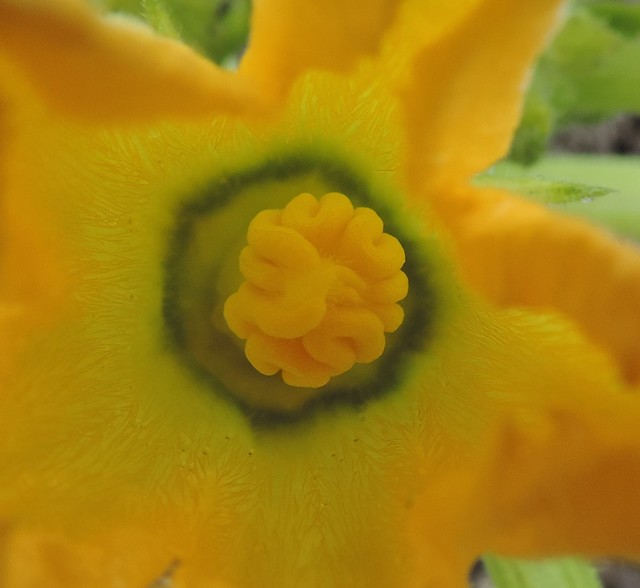
courgette stamen

This is a close up of the stamen of a courgette (zucchini) flower growing in my garden.

Doesn’t it remind you of the human brain…..just a little? Picking up on my last post, isn’t it amazing how many echoes there are between the three “kingdoms” of Nature?

And the other thing I thought was how the intelligence of a flower is certainly not found in its brain (it doesn’t have one!) but that doesn’t mean to say it can’t perceive, respond and communicate. Plants do all of those things all the time.

And how true is it that even though we do have brains you can’t find our minds or our intelligence solely in there.

Like all other life forms, we perceive, process and respond with our whole beings.

Read Full Post »

Cotard

I was watching an episode of Vikings the other day, and was startled when one of the character, King Ecbert recited a few lines of poetry which were completely familiar.

Time present and time past
Are both perhaps present in time future,
And time future contained in time past.
If all time is eternally present
All time is unredeemable.
What might have been is an abstraction
Remaining a perpetual possibility
Only in a world of speculation.
What might have been and what has been
Point to one end, which is always present.
Footfalls echo in the memory
Down the passage which we did not take
Towards the door we never opened

T S Eliot! From the Four Quartets! Dramatically it worked, even if you couldn’t help thinking, whoa there, T S Eliot in the Vikings??!

I studied Eliot at school and he is still one of my most favourite poets. I remember reading this passage and feeling enthralled by it, but I had no idea what he was talking about. Now, as I encounter it again, I’m surprised how well it fits with what I have since discovered about time and memory.

In fact, by one of those strange quirks of synchronicity, this month’s “Philosophie” magazine has a central section on Bergson’s concept of memory. Bergson was way ahead of his time and many of his philosophical ideas about the mind have since been backed up by research findings in the field of neuroscience.

Much as I can be thrilled by reading the work of a philosopher, or research work in neuroscience, neither of these comes close to the power and beauty of Eliot’s poetry.

Draw all three of these strands together, and we have a vision of experience which is not of the past filed away in some cabinet or pigeon hole in the brain, nor of the future lying like the landscape just over the next hill, waiting for us to discover it. No, instead we have a vision of the present which contains the past and the future. This is where we encounter time and reality, in a never ceasing interplay of the ripples of the past, the imagined possibilities of what might be, and the phenomena of the present moment.

So it isn’t just what happened which influences us now, but those passageways we didn’t take, and doors we didn’t open, are also still influencing what we see, hear, feel and think about today.

Read Full Post »

To be fully alive is to be engaged with the rhythms and patterns of the natural world, but to be fully human is to reflect upon and celebrate this relationship – David Fideler


There is a tendency to reduce thinking to rational thought. But thinking is not only about logic.

Thinking involves contemplation, reflection and the experience of sensations and emotions.

It does seem to me, however, that one way to move from zombie to hero mode, is to think – in the fullest meaning of thinking – to become aware and then to make conscious choices

Read Full Post »

The living world is a realm of dynamic processes. A flower is not a thing, but an event, like a butterfly emerging from a chrysalis. But with the word, we take a living event and freeze it forever into a useful but stable category. As Goethe wrote, “How difficult it is, though, to refrain from replacing the thing with its sign, to keep the object alive before us instead of killing it with a word.”

  • David Fideler, in “Restoring the Soul of the World”

When you see a tulip opening in the warmth and light of the sun, you know in your heart this is not a thing, but an event.

Iain McGilchrist says, in “The Master and His Emissary”, that we use our left hemisphere to label and categorise. In so doing, we take the actions, the verbs of the real world and re-present them to ourselves as nouns, or as objects. If we stop there, we mis-understand the world. But if we re-present them to our other hemisphere then we can see the links, the connections, the what he calls “the between-ness” of the re-contextualised representations.

How much more wonderful the world seems to me when I see dynamic processes and connections all around me, rather than a collection of separate and separated “objects”.

Read Full Post »

Lens

In my A to Z of Becoming, J can stand for the verb “join”.

When we think of “joins” we might think of connections, or of interfaces. We can think of bonds and relationships. We can think of the quality of a connection.

Iain McGilchrist, in his Master and His Emissary, shows clearly how the two halves of our brain are well designed to approach the world in two distinct ways – the left hemisphere tends to approach the world by drilling right down, by isolating parts and examining them. It’s great for focus and for labelling or categorising. It is largely responsible for how we see the world as full of “things” – objects which are separate from each other.

The right hemisphere, on the other hand is great at putting things together, seeing the patterns of connections, focusing on the relatedness rather than on the things. This approach to the world doesn’t see anything as isolated and unconnected. It’s great for seeing the contexts, for appreciating the whole without breaking it into parts.

He makes the point that our societies have developed in a strongly “left hemisphere way” and suggests it would be better if we got our right hemispheres working more effectively, and, especially it would be better if we used our whole brains instead of only half of them.

So, here’s something to explore this week. Instead of using the lens of objects and parts, how about looking for the joins? How about seeing the connections, reflecting on the relationships in your life? I don’t just mean the relationships you have with other people. I mean the relationships between you and the world….the world of objects, as well as the world of other subjects!

Whatever you turn your attention to next, see if you can put it in its context, see if you can see it as a transient, emergent part of the whole, see it as inextricably part of the flow.

Here’s a passage from the teaching of Thich Nhat Hahn where he uses a piece of paper to illustrate this idea beautifully –

If you are a poet, you will see clearly that there is a cloud floating in this sheet of paper. Without a cloud, there will be no rain; without rain, the trees cannot grow; and without trees, we cannot make paper. The cloud is essential for the paper to exist. If the cloud is not here, the sheet of paper cannot be here either. So we can say that the cloud and the paper inter-are. “Interbeing” is a word that is not in the dictionary yet, but if we combine the prefix “inter-” with the verb “to be,” we ha vea new verb, inter-be. Without a cloud and the sheet of paper inter-are.

If we look into this sheet of paper even more deeply, we can see the sunshine in it. If the sunshine is not there, the forest cannot grow. In fact, nothing can grow. Even we cannot grow without sunshine. And so, we know that the sunshine is also in this sheet of paper. The paper and the sunshine inter-are. And if we continue to look, we can see the logger who cut the tree and brought it to the mill to be transformed into paper. And wesee the wheat. We now the logger cannot exist without his daily bread, and therefore the wheat that became his bread is also in this sheet of paper. And the logger’s father and mother are in it too. When we look in this way, we see that without all of these things, this sheet of paper cannot exist.

Looking even more deeply, we can see we are in it too. This is not difficult to see, because when we look at a sheet of paper, the sheet of paper is part of our perception. Your mind is in here and mine is also. So we can say that everything is in here with this sheet of paper. You cannot point out one thing that is not here-time, space, the earth, the rain, the minerals in the soil, the sunshine, the cloud, the river, the heat. Everything co-exists with this sheet of paper. That is why I think the word inter-be should be in the dictionary. “To be” is to inter-be. You cannot just be by yourself alone. You have to inter-be with every other thing. This sheet of paper is, because everything else is.

Suppose we try to return one of the elements to its source. Suppose we return the sunshine to the sun. Do you think that this sheet of paper will be possible? No, without sunshine nothing can be. And if we return the logger to his mother, then we have no sheet of paper either. The fact is that this sheet of paper is made up only of “non-paper elements.” And if we return these non-paper elements to their sources, then there can be no paper at all. Without “non-paper elements,” like mind, logger, sunshine and so on, there will be no paper. As thin as this sheet of paper is, it contains everything in the universe in it.

Read Full Post »

In my A to Z of Becoming, one of the verbs beginning with “I” is “imagine”.

As it happens, I’ve chose “imagination” as my keyword for this year. Do you do that? Do you choose a “word for the year”? 

I think I have a very active, very well developed imagination. My feeling is that I used my ability to imagine every day at work as a doctor to help me understand my patients. For me, good medical practice is dependant on the ability to empathise. Without empathy there is a diminished level of understanding. In fact, the complete lack of empathy, resulting from a failure of imagination, as a cause of cruelty, was highlighted by the author Ian McEwan, and others, after 9/11.

Since retiring and moving to France, I’ve begun to experiment with writing fiction as another way to use my imagination. What startles me, and repeatedly surprises me, when I write fiction is how my imagination comes up with things I hadn’t expected. 

Maybe that shouldn’t surprise me because every night when we dream our imaginations are producing the unexpected, aren’t they?

That got me thinking…..is there an off switch for imagination?

Are we ever not using our imagination?

When we fear something, we are imagining whatever it is we fear. When we worry about something, we imagine whatever it is we are worrying about. When we experience something we bring our imaginations into the experience as we create the subjective experience for ourselves. When we remember something we re-create the memories using our imaginations. When we plan to make something happen, we use our imaginations to create the plan.

Actually, I think, there is no off switch for the imagination.

However, when we are on auto-pilot, when we are in zombie mode rather than in hero mode, we are not aware of the activity of our imagination, and we are not making conscious choices.

Those are the two key elements to moving from zombie to hero mode, I reckon –

First, become aware.

Second, choose what to do.

So, here’s two things about imagining to explore this week.

What are you currently using your imagination for? And, what are you going to choose to use your imagination for?

Read Full Post »

« Newer Posts - Older Posts »