Feeds:
Posts
Comments

Archive for the ‘perception’ Category

I came across a Royal College of General Practitioners document recently – “Fit for the Future” – It is a vision of General Practice in the UK for 2030. There is a lot in it that I’d support but one of the statements is this –

An overhaul of the GP-patient record into a personalised ‘data dashboard’, accessible by healthcare professionals across the NHS, and that will draw on data from the patient’s genomic profile and wearable monitoring devices.
Now, maybe you read this and it excites you, but it made me stop and think “Hang on a minute! A ‘data dashboard’?”
I remember a line from the English philosopher, Mary Midgely, in her book, ‘Wisdom, Information and Wonder’.
One cannot claim to know somebody merely because one has collected a pile of printed information about them.
She wrote that back in 1989, and it’s clear that, since then, we have, to some extent, replaced the piles of printed information with hard drives full of data. But the point remains the same – you won’t know somebody just by looking at data.
One of my roles when I worked at the ‘NHS Centre for Integrative Care’ in Glasgow was to train young doctors in holistic practice. They’d be allowed to spend as long a consultation as they wanted with a patient then they would come to “present the case” to me. In other words, they’d consult their notes (often several A4 pages of notes) and tell me what they’d learned about the patient. At times what they actually communicated to me were detailed descriptions of the patient’s symptoms. Sometimes so many symptoms in such detail that the amount of information was quite overwhelming. By the time they’d finished I would find myself saying “Well, you’ve told me a lot but I don’t know who this person is'” I had no picture of the patient, their life, how illness came into it, how they’d coped, or the effects the illness had had on them, their family and their friends. A holistic case history is not a “pile of printed information”.
Data, or information, as Midgley pointed out, makes “much better sense when [it has] a context”. The context is revealed by the story. I don’t see how you fully understand a person without hearing their story.
Yet, one junior doctor told me she was being taught elsewhere “Never believe patients. They lie all the time. You can only believe the data” (meaning the results of investigations). That appalled me. What kind of Medicine can we practise if we think “patients lie all the time”? What kind of Medicine can we practise if we distrust their personal, unique stories, but trust only in “data”?
Now, I’m not saying that data isn’t useful. It can be. It would be daft to ignore that. But putting data up front and centre to the point where it replaces the relationship and the story? That’s my fear. That someone will think, “all we need is good algorithms and they will deliver all the right answers once we feed the data in.”
I’m sceptical. It doesn’t seem rational to me. It doesn’t seem realistic to me. And it risks shoving aside human values and the crucial importance of relationships.
Then, just yesterday the UK Health Secretary, Matt Hancock, put forward an aspiration for every newborn child in the UK to have their genome sequenced.  Interestingly, a poll of doctors revealed – “>2000 responses. Only around 10% of doctors would find genetic data more useful than postcode in planning the care for a newborn baby.”
I think we have to claim the ground for the importance of the unique human story. If, as doctors, we fail to consider the environments and circumstances of an individual life, we will fail our patients.
Data without contexts has some use, but it is not a full understanding of, or even a “knowledge of”, a patient.
Read Full Post »

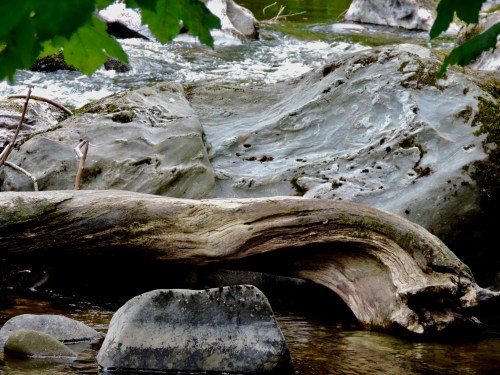
I took this photo over five years ago but it’s still one of my favourites. One of those photos I return to and spend some time with. It does more than please me. It brings back memories of that day. It activates connections I have deep inside. It inspires me.

What do I notice?

Well, the largest part of the image is taken up with rock, and just look at that rock! It flows and it folds as if it is pliable. But, take it from me, that rock feels as hard as ….. well, rock! It must take aeons to shape it like this. What shapes it? I’m not a geologist but it seems pretty obvious to me that the major creative force here is water. See the river rapids just beyond it? That lively, foamy, energy-charged flow of water? That’s the main sculptor here. Moment by moment, day by day, year by year, era by era, it persists, crashing against the rock, flowing over it, caressing it, smoothing it, shaping it.

There’s something else in that interaction of rock and water which is not so obvious from this image…..the water and the rock change each other. The content of the water is changed by the elements washed out of the rock. The direction, the speed and the force of the water is changed by their encounter.

The look directly in front of the rock at the log…..this log which is the remains of a tree which fell who knows how long ago and who knows where? It looks like it has been carried downstream to here. Is this where its journey ends? It too has been shaped by the river. It brings its own structure, its own patterns, but it now reflects the flow of the water and the markings on the rock it lies next to.

Each of these, the river, the rock, the tree, are interacting with each other, exchanging atoms and molecules, intermingling their energies, influencing and shaping each other.

In front of the tree is more water, this time less energetic, less white and foamy. This time pooling more peacefully, almost resting between the tree and some smaller rocks. And look at that rock in the front of the photo….a striped rock, a history of millennia running right through its middle, reminding us just how ancient this world is.

When I look at that striped rock I see a hint of a baby elephant. Now there’s one creature which has never been known to stroll through the forests of Scotland! But that’s how we function, we humans, isn’t it? We are continually being influenced by and interacting with everything we see, everything we hear, smell, taste and touch, and by all those invisible flows of microbes, molecules, and energies that continuously shape us, just as we shape them.

That’s what this image leads to, for me ……. a sense of the Life Force, the Creative Force of the Universe …… active, dynamic, flowing, shaping, influencing and interacting.

That delights me.

Read Full Post »

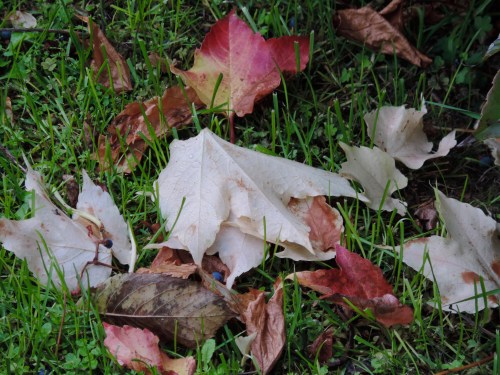
What do you see here?

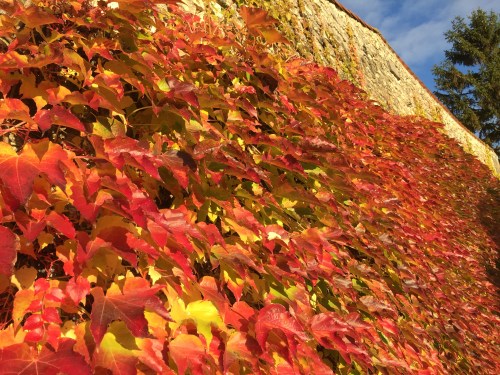
Autumn leaves? Some turned partially red, some now brown and dusky, others as white as bones…..

People talk about leaves falling at this time of year, but do they fall, or are they pushed? Or do they jump? I’m not a botanist and I don’t know the answer to that question but I do wonder about it….especially when I look at this wonderful “Boston Ivy”, or “Faux vigne”, which covers the huge wall along one side of the garden.

Isn’t it glorious when it’s at the peak of the transition?

Well, I’ve seen hundreds of photos of red, yellow, golden and brown leaves over the years but I never get tired of them. Like sunsets and rosy dawns they are magnets for me. They draw me outside to have a better look. But look what happens next with this particular plant…..

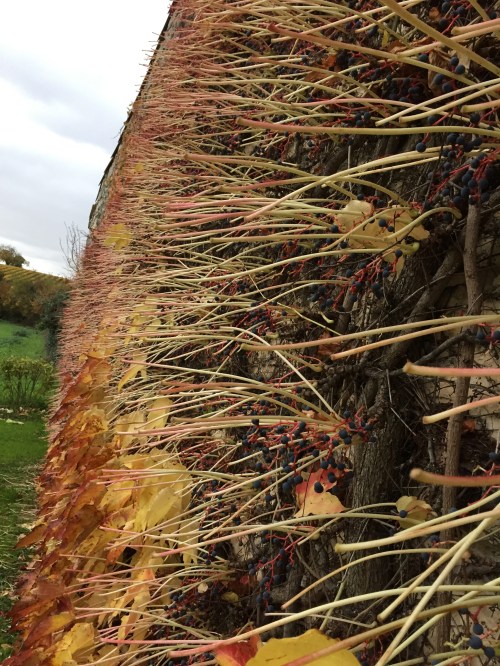
These are the stalks which connected each leaf to the rest of the plant. A few days on, and these stalks will be lying on the ground in heaps. How does that happen? How do the leaves leave the stalks, and then, the stalks leave the vine? I don’t know. It amazes me. I’ve lived here for five years now this month, and every year this unfolding sequence of leaves changing colour, leaves falling to reveal all the stalks, then stalks falling to reveal ……..

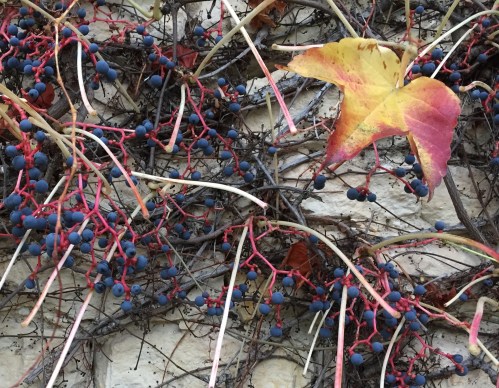
…purple berries on bright red stalks……well, I just love it.

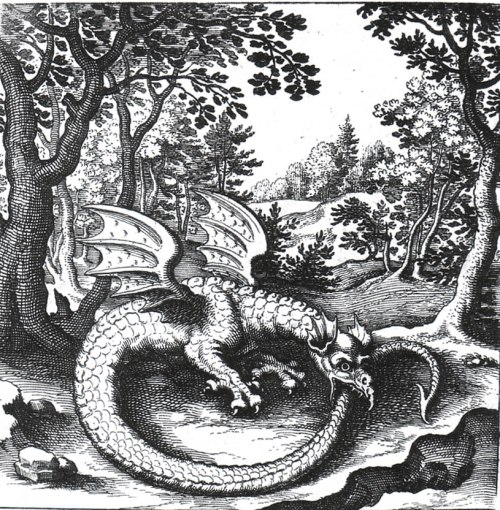
If you go back to the first photo in this post you’ll see a couple of purple berries lying there in amongst the leaves…and, remember, each of those berries contains the seed/s of new plants, so in that one image I see something like the alchemical image of the snake which swallows it’s own tail (the Ouroborus)

Nature, seen, this way, isn’t linear…..the past, the present and the future all there in the one moment, the one image…I feel the rhythms, see the cycles, experience the connectedness of everything.

As T S Eliot wrote, in The Four Quartets –


Time past and time future
What might have been and what has been
Point to one end, which is always present.


(read the poem here)

Read Full Post »

What does your perfect day look like?

“Perfect” – there’s the problem right there……just what is “perfect”? Hard to say, really, but I’m pretty sure it always means something better. Better than what? Better than what is?

There’s something unreal about perfectionism, isn’t there? Something unachievable. It’s always just out of reach (or sometimes it seems way out of reach!)

I like blue skies.

I like beautiful rosy pink dawns and tobacco or scarlet sunsets.

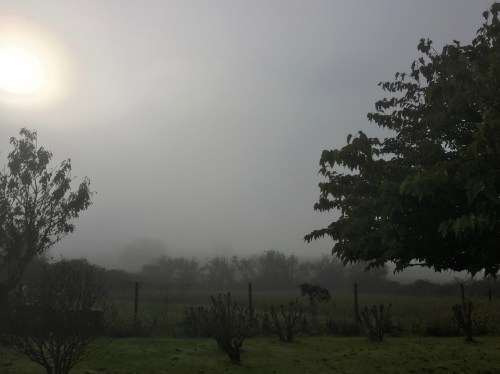
This photo is of none of those things – no blue, no pink, no sepia hues, no deep crimson reds. It’s grey. Grey and dark greens shading into black and that one bright, bright white circle in the sky…..the Sun, struggling to make itself known, veiled in mist and cloud.

But it’s beautiful, don’t you think?

When I stepped outside I could hear the mist. Well, what I mean by that is I could hear what the world sounds like around here when there is a thick morning mist hiding the vineyards and the neighbouring villages. Like snow, the mist is a muffler. It produces a particular kind of silence. I can’t quite put my finger on it and define just how the misty silence differs from the silence of a bright sunny Sunday morning here in the Charente. The Sunday morning silences are recognisable too. If I didn’t know what day of the week it was, I reckon I’d be able to tell from the particular quality of the silence around here on a Sunday morning. But this silence, this autumnal misty silence, is different from that. Maybe it’s because the mist disguises the sounds, whereas on Sunday mornings, there just aren’t the sounds to be disguised?

So I look up and I see where the Sun is. I can’t see the Sun. It’s not distinct, but I absolutely know where it is….strongly filtered through the watery veil lying thickly on the ground. And I think “How beautiful” “What a moment!” To stand here, looking in every direction and seeing only a shallow foreground of grass, trees and bushes, but knowing, from memory, what lies beyond them. To stand here, in silence, listening. To stand here, in silence, knowing that the Sun up there is probably going to make most of this water evaporate and reveal itself in all its fiery glory again, maybe in an hour or so, maybe a little longer.

Unexpectedly, I think “How perfect”.

I don’t know what makes a day a perfect day, but maybe it’s any day when I become fully aware, fully present in this moment and this place.

Maybe a perfect day isn’t an unachievable, unreachable, figment of the imagination, but a day with a moment, or several moments, where I feel it’s just so good to be alive, where I find myself saying “thank you”.

“Thank you, I feel blessed to be alive”.

Read Full Post »

Maps…..representing the world by making maps is one of the most characteristic skills we humans possess.

We don’t just draw maps on paper, but we make them inside our heads. Dan Seigel, who wrote “Mindsight” says we create three particular maps in the most forward part of our brains – the prefrontal cortex. He says we make a “me map”, a “you map” and a “we map”. He means we have an image, a pattern, or some other form of representation in our minds by which we recognise ourselves, the people we meet, and the relationships we have with them. These maps do more than allow us to recognise ourselves and others, they enable us to navigate our way around them. They help us predict, plan and choose which actions to take.

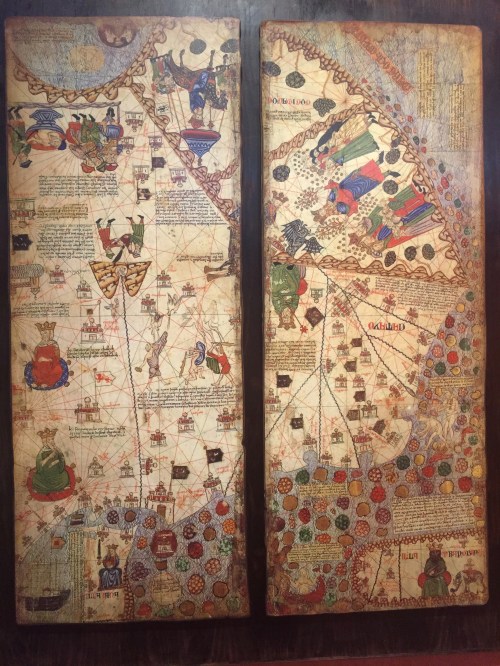
I don’t know about you but I LOVE maps. There’s something magical about them. I love to see maps over the ages which reveal how we have come to make sense of the world. So, when I was in Tordesillas, Spain, earlier this year I was delighted to find a whole host of astonishing maps in the Museo del Tratado de Tordesillas.

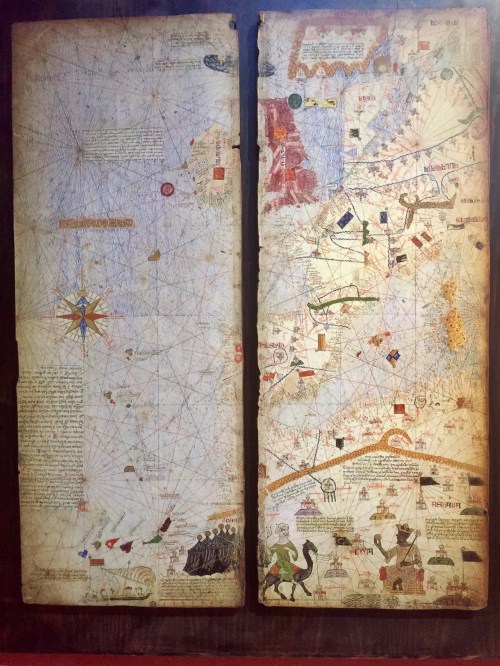
Look at this one, pictured above, it’s part of the Quesques Abraham map, otherwise known as the Catalan Atlas, from 1375. These first couple of sections depicts the world around the Mediterranean. You’ll probably recognise the British Isles, the Iberian Peninsula, the land we now call Italy, the North of Africa and so on. It’s pretty fascinating but it’s typical of the kind of geographical maps with which we are familiar. I think the Catalan Atlas gets even more interesting in the next set of panels –

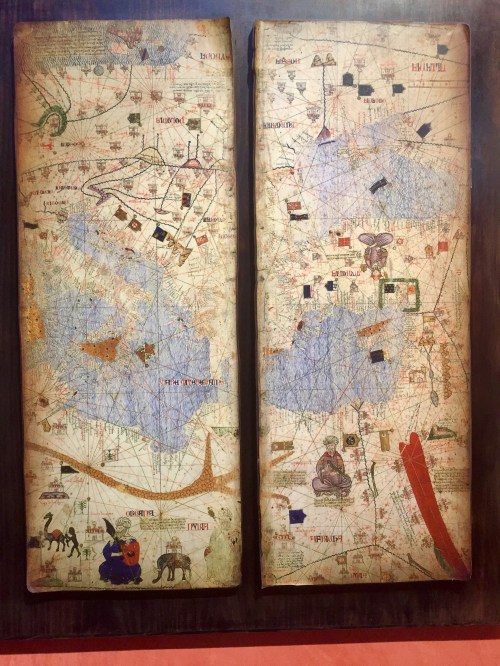
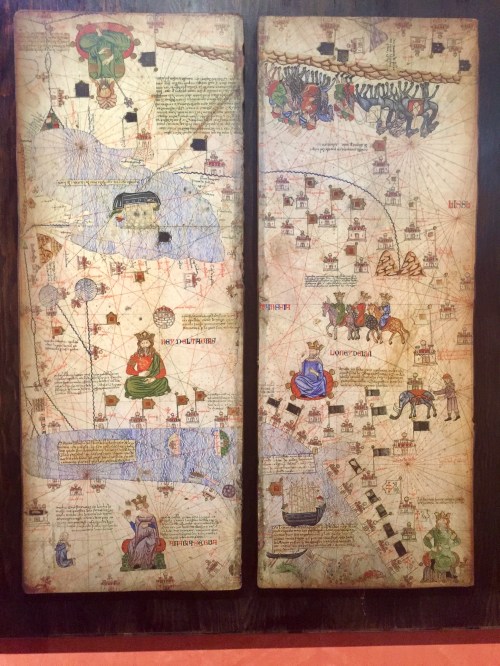
This is the world to the East of the Med. The physical structures are way less recognisable, and that’s largely due to the fact that the world to East of the Med wasn’t known very well in those days. In fact, this section of the map is drawn from stories. It’s drawn from the stories of Marco Polo and other explorer/adventurers who travelled in the East and then wrote their travel journals, and from stories told in religious texts and passed down in various oral traditions.

I don’t think I’ve seen a map created that way before.

A map made from stories!

But then, I thought, isn’t that exactly what we do when we create these “inner maps”? The “me map”, the “you map” and the “we map” that Dan talks about?

So, I wonder……what stories do I draw on to create my “me map”? What stories do I draw on to create the various “you maps” and “we maps”? The stories of our encounters? The stories of other peoples’ encounters? Wow! What an idea!

I think I’m off to explore that further…..I wonder what those maps look like, and what stories created them?

Read Full Post »

When I opened the shutters this morning I saw mist. OK, so I saw more than mist, but the mist was pretty dense. It was hiding all the surrounding vineyards, and, normally, I see vineyards straight ahead, to my left and to my right. I knew, of course, that the vineyards were still there. John O’Donohue came to mind, talking about the imagination and how we can’t see the mountains when they are hidden by the fog, but that we still feel their presence, still know they are there……

“You know it’s there, but you cannot see it with the eye. This is a wonderful living metaphor for the imagination. Around every life are these adjacencies–these huge, invisible presences that you can’t pick up with the human eye, but that you can connect to viscerally and affectively through the power of imagination. This is the threshold where polarities can enter into conversation with each other, and take us to new levels of complexity, differentiation, and integration.”

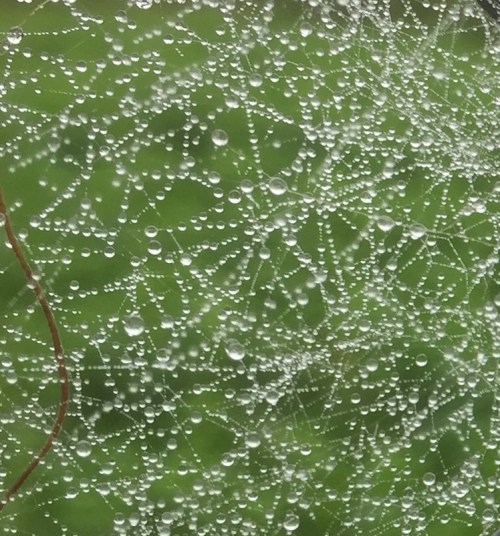
Then I noticed, directly opposite the front door, a sparkling jewel of a spider web adorned with water droplets. I find those serendipitous gifts of Nature irresistible.

Look at it! Just look at it! As far as I know (and correct me if you know better) spider webs are made by single spiders. These little creatures don’t work in teams. So ONE spider must have created this astonishing, complex web. Just look at the number of filaments, look at the junctions, the nodes, the points where the threads meet. Maybe this web was there the day before but because there were no water droplets on it, I didn’t notice it. Or maybe it’s the result of a single night’s work. Either way, I would have completely missed it, had it not been for two more phenomena – water and light.

Let’s start with the water. Where did this water come from? It wasn’t rain. It wasn’t a hose-pipe. It appeared, right out of thin air. We call it dew. Don’t you think dew is gorgeous? Whether its on a patch of grass, delicately outlining some petals or leaves, or adorning the work a spider. How incredible that it exists, invisibly, in the air, and that when the temperature and wind conditions are right, it precipitates out onto the surfaces, revealing itself.

Water reveals itself as thick mist, draping over the landscape like a heavy, dense, grey curtain. But it isn’t heavy, and it isn’t dense. When it reveals itself on the surface of flowers, leaves and spider webs, it reveals itself as droplets. Look at that image again.

How many different sizes of droplets are there? How many droplets are there? I guess that, theoretically, you could measure them, count them, add them up and tabulate them, but, well, hey, life’s too short. I just stand there, transfixed, in awe of them. Each one a tiny lens, showing me the world around it upside down.

I look at this and I think about the Milky Way which arched over my house last night, forming a dense, white carpet of stars stretching from one horizon to the other. You know what it’s like when you look at the Milky Way on a clear night. The longer you gaze at it, the more stars you see. The closer you look, the more the carpet dissolves into individual stars…..a bit like these individual droplets on the web.

It’s easy to get lost in the Milky Way.

It’s easy to lose yourself in a water adorned spider’s web, shining, sparkling, with the light which begins to penetrate the fog.

A couple of hours later, and this phenomenon has gone. The fog has receded into the invisibly watery air. The droplets have evaporated, leaving the thin threads of the webs harder to see.

You’d think that the sunlight would make the world clearer. But somehow, this morning, it was the fog, and brief appearance of the air’s water, which made the world much clearer, by reminding me, as the fox reminded the Little Prince , that

“What is essential is invisible to the eye”

And, oh, how wonderful it is, when what is invisible is revealed.

Read Full Post »

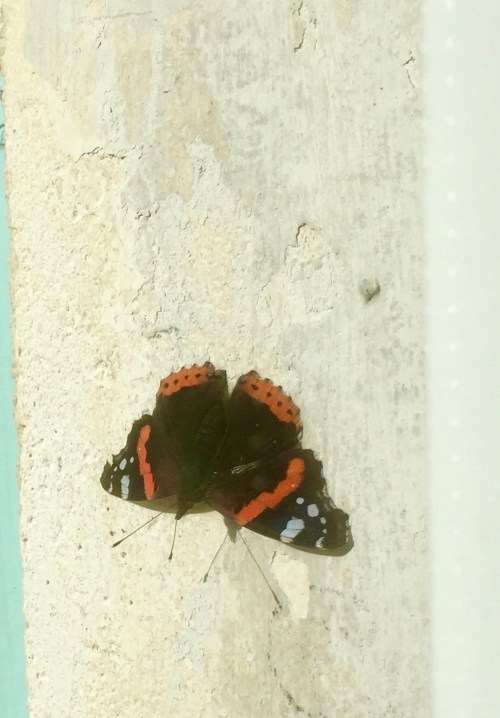
When I looked out of my window the other day I saw a butterfly sunning itself on the wall. I carefully took my phone out of my pocket and photographed it through the glass. Then I opened the window carefully to try for a better shot, and the butterfly flew off. Gone.

So, here’s the photo I took. It’s not going to win any wildlife photographer of the year awards but look carefully…..you can see the shadows of the butterfly’s antennae.

Isn’t that amazing?

Maybe I’ve seen this before but as far as I can remember this is the first time in my life that I’ve seen the shadows of a butterfly’s antennae.

I’m struck by the sense of delicacy and fragility in this image. A butterfly’s life is not a long one, but a butterfly’s shadow is even shorter! A cloud just has to pass over the sun and the shadow has gone. The butterfly just has to do what butterflies do….flit off somewhere else….and it’s gone.

This sense of impermanence coupled with the delicacy of the tiny slim antennae of the small fragile butterfly combine to make this a very special moment.

It’s one of those intense fleeting experiences of “first and last”. It’s the first time I’ve seen this, and could be the last – both in general terms, and, of course, this is the one and only opportunity to see this specific, this unique butterfly in this particular place at this particular time.

Life if full of these moments. If only we can be aware of them.

Here’s something else I think about this…..in the midst of all this impermanency,  all this transience, all this fragility, I see the vibrant, colourful, intense flow of LIFE – the LIFE that flows through every living creature, every moment of every day. The Life Force. The “green fuse that drives the flower”. Spinoza’s “conatus” – by which he meant the “striving to survive” which separates the living from the inanimate.

It never fails to astonish me. It never fails to stimulate my sense of wonder, of marvel, of “émerveillement du quotidien“.

Life is full of these moments. If only we can slow down and pay attention to them.

Read Full Post »

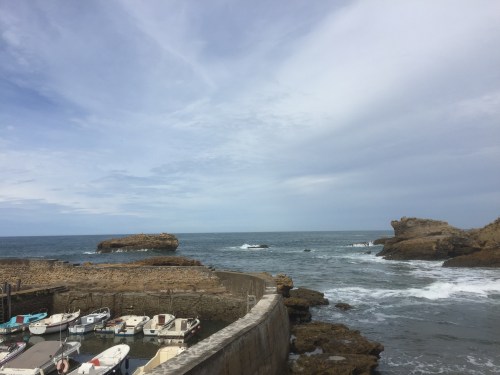
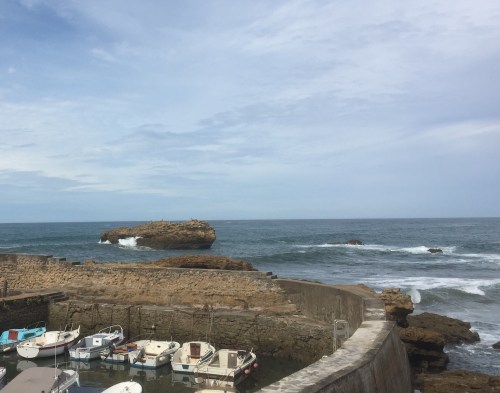
See this large rock just above the harbour in Biarritz? How does the sea make it to the shore when this rock is in the way?

The most obvious way is to go around it.

And that’s what most of the water does. It makes it way towards the shore, and back out to sea again by breaking against the rock and flowing around each side of it.

That’s one way to deal with an obstacle, with something standing in your way…..find a way around it.

But, wait, look at this…..

…the water has found another way as well.

It goes THROUGH the rock!

I suspect this has taken a very, very long time for wave after wave to make its way through a small crack in the rock, widening the gap slightly every time it passes through. But look at it now. Sometimes when a more substantial wave hits the far side of the rock it flows directly through the gap. Doesn’t happen every time. Just when the waves are big enough.

So, there’s the other solution. Keep going. Keep pushing up against the obstacle, looking for a gap, an opportunity, a way through, and once you find it, come back again and again. Each time, it’ll get easier. Each time the gap will get wider, the way will become broader.

Something else…..this is just beautiful to watch. Mesmerising even. Over the course of a few minutes you can see how the rock and the sea sculpt each other. It’s a delightful relationship.

Oh, and something else……Michel Serres, a French philosopher who died recently, used to describe human beings as “anticipation creatures”. I recently listened to an episode of one of my favourite podcasts, Onbeing, where the science journalist, Erik Vance, talked about “the drugs inside our head”. He was discussing the poorly understood but fundamentally important phenomenon known as the “placebo effect”, and one thing he said was that our brains are “prediction machines” (well, I hate the metaphor of “machine” applied to living organisms, but you get the point…).

Both Serres and Vance are talking about our incredible ability to spot patterns, so that we can predict the future. OK, not too far into the future, and not with 100% accuracy, but we don’t just notice the world, we anticipate it.

As I stood watching this phenomenon of the white surf gushing out of the mouth in the rock, I was quickly captured by the experience of anticipation, watching the swells on the surface of sea further out, trying to predict which would turn into waves big enough to pour through the rock.

It was hard to stop.

It was delightful.

Read Full Post »

We humans are pretty good at making maps. We do it all the time. Dr Dan Siegel, a psychiatrist and neuroscientist, describes the three commonest maps we make in the frontal cortex of the brain – a “me” map, a “you” map, and a “we” map. You might wonder about the use of the term “map” there, arguing that we create “images” rather than maps, but let’s not get bogged down on that one. I like both terms (one of my favourite principles in life is “and not or” – 🙂 )

The thing about a map is that it shows contexts and connections. It shows us where we are, where we might want to go, and helps us to imagine how to get there.

I was in Tordesillas, in Northern Spain, recently and visited the “Treaty House” which displays a number of ancient maps. Here’s one set which particularly grabbed my attention.

It’s a set of panels describing the known world at the time – the world of the “Occident” followed by a set describing the unknown world – the world of the “Orient”. Take a look –

In this first section you can clearly make out Britain (although Scotland hasn’t really become known yet!) and you can see the areas we now call Portugal, Spain, France, Scandinavia and so on.

The next one extends the first one to show Italy, Greece, Turkey, “The Middle East” and also more of the North African coastal countries.

For a medieval map it’s surprisingly accurate. It might even have helped people to find their way from one place to another.

But then check out these two panels of the “unknown”, “Orient” –

At first there are elements we recognise – The Nile, The Caspian Sea, but the further East we go, the more the map becomes an expression of a creative imagination.

Isn’t that fascinating?

I’ve never thought of mapping out what I don’t know before. After all, where would I stop? The older I get, the more I realise how much I don’t know – how much WE (we humans) don’t know. But it might be a fun idea, don’t you think? To sketch out some maps of the unknown…..

The personal maps of “me”, “you” and “we” are constantly being updated, constantly evolving, and we create them from both what we know, and what we don’t know…..from our memories, our present day experiences, and our imaginations.

Map making turns out to be a dynamic and fundamental ability. I wonder how aware we are, on a day to day basis, of the maps we have made, the maps we are making, and the influence they have on our lives.

Read Full Post »

Here’s a common experience I have.

I’ll be sitting in my garden reading and I hear a very high pitched, very distant bird call. I recognise it immediately now, even though I’d never heard it before moving here five years ago. It’s a buzzard. Although the call is quite faint, it catches my attention every time. I’m sure that’s helped by how often it’s silent here surrounded by the vineyards. (Although on other days the machines of viniculture create quite a racket, and a nearby airbase sends up training flights some days more than others)

When I hear the call of the buzzard I look up and peer into the sky to try and locate the bird. It’s not always easy because very frequently they fly so high they appear as just small black dots.

I saw this particular one and whilst often the buzzards circle and swoop on invisible highways in the air, this one appeared to be completely still. It was just hanging there, the way I often see the kestrels do, although they do that much closer to the Earth than the buzzards do.

So I took a photo with my phone.

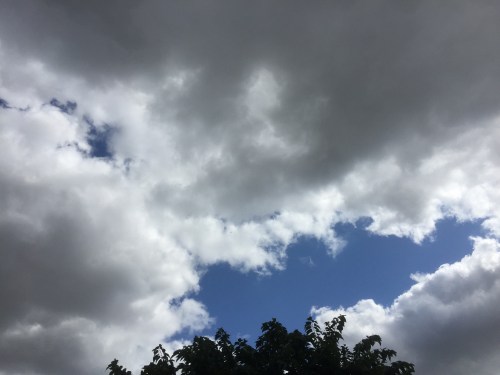
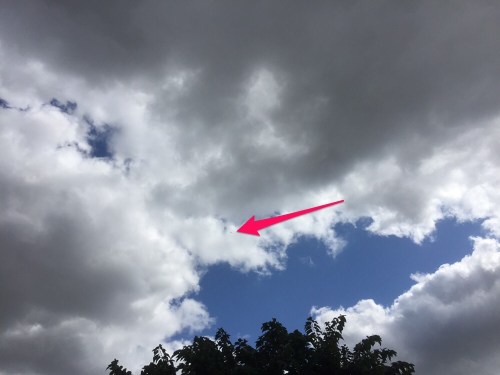
Can you spot the buzzard?

Hey, it’s a bit like a competition I used to do with my dad. One of the newspapers would print a photo from a recent football match but with the ball removed from the image. You had to place a cross right on the dead centre of where you thought the ball was. The person who got closest won the money. It was called “Spot the Ball”. Well, this is “spot the buzzard”.

Answer at the end of the post ………..

Once I found the buzzard I started to wonder how it could just hang like that in the air. I started to wonder how it could fly with such apparent little effort. I started to wonder why it cried that particular call. I started to wonder what the world looks like from up there. How much detail can the buzzard see? Why does it fly SO high in the sky?

Wonder.

Everyday wonder.

I’ve referred a number of times to the French phrase “émerveillement du quotidien” which I love so much. It pretty much means “the wonder of the every day”. I find that when I get one of those moments, those moments of wonder, that my day feels a better day.

I find that the wondering connects me to awe.

I feel awe….astonishment, delight in, admiration for, whatever it is I’m wondering about. Not least because the wondering doesn’t have any immediate answers for me. Well, obviously, sometimes, the wonder drives curiosity and I later go searching online or in books for more information about whatever it is I’ve been wondering about. But that’s something different, isn’t it? Curiosity and knowledge-seeking. There’s just something delightful, uplifting even, about the process of wondering which doesn’t immediately drive knowledge-seeking, but, instead, creates a feeling of awe.

And here’s what happens next. When the wonder blends with awe I feel myself “taken out of myself”. I have an experience of transcendence…..what Arthur Koestler described as an “oceanic” feeling. I feel an increased, and deepened, connection with whatever is “outside” me, whatever I’m paying attention to. I feel an expansion and a loosening of boundaries. I feel a diminishment of separateness and an enhancement of oneness.

So, I wasn’t surprised when I read yesterday about “spiritual emotions”, especially as they were listed as follows –

  • Wonder
  • Awe
  • Transcendence

What sets off the spiritual emotions for you?


Oh, and, yes, as promised, here’s how to find the buzzard………

Read Full Post »

« Newer Posts - Older Posts »