Feeds:
Posts
Comments

Archive for the ‘personal growth’ Category

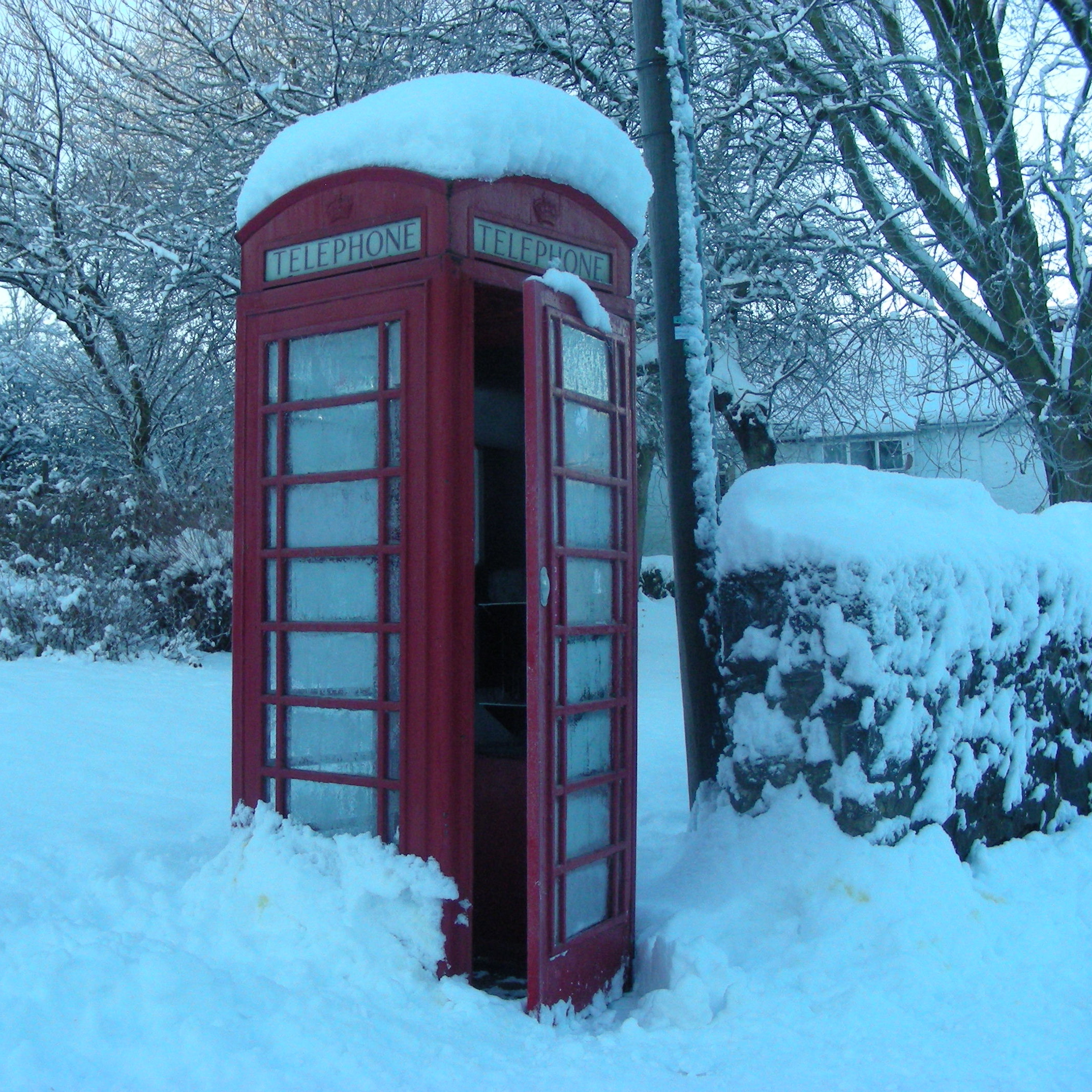
When was the last time you used one of these? Actually, if you don’t live in the UK and you’re half my age (I’m in my 60s), then chances are, you’ve never used one of these. I can’t remember the last time I saw a public phone in France, but there must have been some once upon a time. What were public, shared phones like in your country? Do they still exist?

This stimulates my thoughts on how we communicate. When I was a GP in Edinburgh, my partner, Sandy, and I were one of the first Practices to use mobile phones on call. We had a huge brick sized Motorola thing, and there was only one telecoms mast in Edinburgh so it only worked on one side of Arthurs Seat! How things changed…and how fast!

This pandemic has had an impact on how we communicate too….I don’t just mean what technologies we use, but who we communicate with and when. A lot of communication is now “asynchronous” – which you could have said was the case before the telephone was invented. But I don’t think that text-based or messenger-based asynchronous technologies have brought about a revival in letter writing skills! Of course, we aren’t just using asynchronous technologies, there has also been a huge growth in our use of Zoom, FaceTime, Skype and other video-calling platforms. Then there are social media platforms like Facebook and Instagram, which drive the growth of “one-to-many” communications, “public” communications over “one-to-one” and “private”. Obviously there are many many more, but what’s clear is that for most us, we don’t limit our communications to only one of these services. We are using combinations of them – messenger services, social media platforms, texts, email and video calls, and, hey, some of us still even use the telephone!

So, what do you think? With this vastly increased ease in our ability to communicate, are we communicating better?

Hmm…..I think I’ll take my time over that one.

The first thing that springs to mind is how many people I have reconnected with in the last twelve months. Without this expansion of services, combined with the extended, forced, physical distancing and isolation, then I don’t think that would have happened. But the second thing that springs to mind is the growth of “echo chambers” which feed conspiracy theories, fake news and social division. I suppose the answer to my question depends on how you define “better”. And isn’t that always the case? Isn’t life complex and interconnected? Nuanced and diverse?

Is anything ever reducible to a single label? Like “better” or “worse”? I don’t think so.

However, I still think it’s interesting to spend a little time reflecting on the following three questions –

  • Who do I communicate with?
  • How do I communicate with others? (I mean technologies)
  • and, finally, Does my communication build bridges?

I think that’s the important thing after all – how we use these technologies will always be determined by our intentions – and, hold me to account here, I want all my communications to be open, tolerant, kind, compassionate and understanding. When they aren’t, I want to address that, and improve.

Read Full Post »

This little flower caught my eye. She’s growing, and flourishing, in a small cavity on a rock face. I’ve zoomed right in to see the flower better, but, take it from me, this was a long way up! Frankly, I was astonished. I mean a seed must have blown in there, or been dropped by a bird, and, goodness knows there must have been precious little soil way up there on a rocky cliff face. And yet….not only did that seed germinate, but it grew right up to an adult stage of life, finding sufficient nutrients from who knows where, and has produced these beautiful yellow flowers at the top of the plant. Not only that, but it seems to have grown to a size which exactly fills the size of the cavity.

The first time I saw this, and every time I look at it, I get thinking about the incredible drive of the Life Force….how Life seeks to exist, express itself, and flourish, in a myriad of forms and in more than imaginable habitats across the surface of this planet. Then I marvel at the capacity of Life to be opportunistic….to make the most of whatever conditions it finds itself in and to thrive.

How often do we procrastinate? How often do we tell ourselves we’ll pursue our dreams, we’ll live the life we want to live, but just not until all the conditions are right? How many of us spend our lives waiting for those right conditions to appear?

I think this little flower teaches us a different lesson. Call it “seize the day” if you like. Call it “make the most of today”. It’s a teaching which says “you already live on this Earth with all the conditions you need to flourish”. It’s a teaching about abundance. A teaching about the underlying benevolent, supportive flow of the universe, which has enabled Life to exist, and continues to supply what it needs to grow and to flourish.

You don’t have to wait. Imagination truly has no limits, and loving attention nurtures growth…..starting with the loving attention of self-care, nurturing the desire to exist, to grow, to express your uniqueness, and to flourish.

Read Full Post »

When you look closely at a water droplet you can see that it acts as a kind of lens. You can see the world around the drop reflected in the water. But it’s upside down. Just like you’d see inside the old kind of camera which cast the image of whatever the lens was paying attention to, onto the film at the back, and/or, onto the viewfinder.

The first camera I ever had was a box camera. You held the camera at waist height, flipped up the lid and looked at the image lying on the horizontal glass plate underneath. I think it used a prism to flip the image around so that you could see it “the right way up” in the viewfinder. We don’t even think about that with our modern digital cameras which process the image before we even get to see it.

I think it makes you stop and think when you see an upside down image like this. It literally makes you look at the world differently. And we need to do that sometimes to actually see and understand what is around us. For most of our days we sail along not really noticing most of what our senses pick up. In some sense we only notice what we pay attention to, and we only pay attention to what we notice. This relationship between noticing and paying attention is curious, partly because we can make a choice and attach our attention to whatever we choose….we can choose to become more aware of a scent, a particular colour, a shape or a texture. In fact, it’s a pretty great way to live more in the present, isn’t it……to pay attention to what our senses are sensing?

But it can happen the other way around – our attention can be “caught”. Something which moves suddenly, something which changes, like a loud noise, or a change in temperature, a darkening or lightening of the room as clouds pass over the sun…… Or it can be caught by something “odd”, something “unfamiliar”, something “unexpected”.

I think these upside down images are a bit like that. We aren’t used to seeing the world upside down, so we notice it when it happens, and that noticing “grabs” our attention, and leads to a natural exploration.

There’s a Tarot card called “The Hanged Man”, which I think about when I see an upside down image in a lens like this. I’m no Tarot expert, but I think there’s something about that card which is about changing our perspective, about looking at the world differently, in order to understand it better.

We have to do that from time to time if we want to understand reality. We have to change our perspective, look from a different angle. Other people can be the trigger to doing that….but only if we encourage and are genuinely interested in other peoples’ views.

Getting stuck in social media echo chambers, or trapped in the manipulated information of advertisers and politicians happens all the time. That’s why it can be helpful, though not always comfortable, to try to understand the world view of people who don’t see things the same way we do. It’s not a question of who is right and who is wrong. It’s a question of reaching a fuller, deeper understanding of other people, and of the world.

Read Full Post »

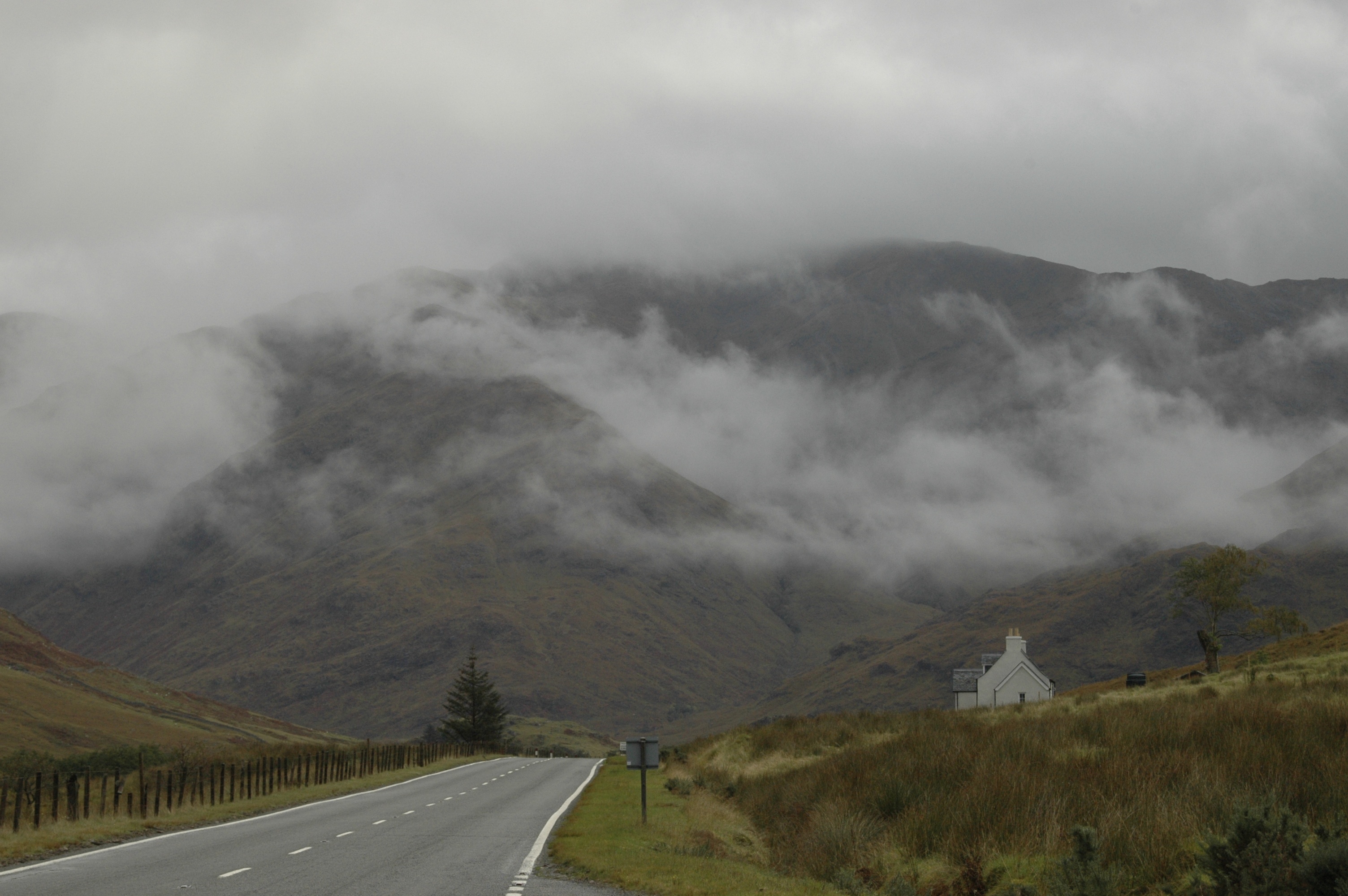
In my photo library I have this image entitled “The road north”, but when I looked at that title just now I thought, “Maybe it’s also the road south”? I know why I called it “the road north” – because I took it while driving north and I stopped to take some photos of the amazing mists travelling over the surface of the hills ahead. I was mesmerised with how they moved, how some grew bigger and how some disappeared into thin air. I was fascinated by the thought – are these mists or “low cloud” and realised I didn’t really know the difference – and did it matter anyway?

But when I took this particular photo of the mists, I included the road and the little house to make it an interesting composition. I had pulled up by the side of the road to take these photos and I know I was on my way north so the title seems appropriate.

However, without that experience and memory, this road can be seen from two different directions, can’t it?

You can look at it and see it as the road ahead. You can wonder where it is leading to. You can speculate about what lies over the crest of the hill, whether the road turns sharply to the left or the right, or carries straight on for a bit yet (there aren’t many straight roads in this part of Scotland!) In other words you can orientate your thought and your attention to the future.

On the other hand, you can see it as the road just travelled. You can see it as a moment’s pause on a journey, to look back, recall and reflect. If you weren’t the one travelling along this particular road, then it’s more likely you’ll be drawn to imagine the future, than to reflect on the memories from the past…..after all, if you didn’t actually travel along this road, then you don’t have any memories of it, do you? Interestingly, you can’t say the same thing, exactly, about the future. We can all imagine the future. In fact, we humans are doing that all the time. We are always imagining what lies ahead, or around the corner, or in some distant time later in our lives. We are always imagining, even fearing, what might happen next, falling down a rabbit hole of “what ifs”.

There’s a third option of course, which is mine. I can mix them together, the memories and imaginings. I can remember the day, but discover, as I have discovered, that I don’t remember what lies beyond the little white house. But I do remember stopping to take the photo, so memory definitely colours my imagining……

….now there’s a thought – the truth is we use memory and imagination at the same time all the time. We have no imaginings without memories to influence them, and we have no memories without re-imagining them (they don’t lie in some brain drawer or filing cabinet, waiting for us to pull them out and blow off the dust – we re-create them every single time)

Story telling. We humans are storytellers par excellence, aren’t we? We tell stories to make sense of our lives and our experiences. We tell stories to know who we are and to find out who other people are. We tell stories to express our uniqueness, to appreciate the uniqueness of others and to make empathic connections with each other.

This image begs us to tell a story, don’t you think?

So, why not activate a few memories and imaginings today and see what story might emerge for you when you look at this image…..does it produce a story of a journey you once took, or does it produce a story of a journey you hope to take one day?

The choice is yours.

Read Full Post »

Many years ago I did a road trip to Skye, and as I travelled up through the Highlands, around the island for a few days, then back down to the Central Belt again, I was stunned again and again by the beauty of the country. There’s no doubt that Scotland is a beautiful land. It isn’t best known for blue skies, sunshine and beaches, but, actually, on the right day, all of that is there. However, it’s always seemed to me it’s easier to find the darker, moodier, and I might even say, richer, atmosphere in Scotland. On that particular road trip I think it rained every day, and I got some of the most beautiful photographs I’ve ever taken.

This image captures so much that delights and inspires me. The first thing I notice is the bridge. It’s a traditional, old, stone, single arch bridge. There are dozens like it in the Highlands, and no two the same. I think it’s beautiful and I’m a big fan of bridges because I think they are the technology we humans invented to allow us to do two of the things closest to our natures – explore and connect.

We are insatiably curious creatures, we humans. Some of us more than other I’ll grant, but I still think the desire to explore and discover is as core to us as the Life Force. In fact, Jaak Paksepp, who is so important to an understanding the fairly new discipline of affective neuroscience – the neurological science of our emotions, identified seven core or “prototype” emotions, of which SEEKING is perhaps THE most basic and important. SEEKING is connected to the basic motivational arousal state of all forms of life, and we humans probably access it, and use it, more than any other other creatures on the planet.

Bridges speak to me of that SEEKING, that desire to discover what lies on the other bank of the river, what lies on the slopes of the opposite hillside.

They also inspire me to think of that equally strong drive which is central to our being – connecting. Iain McGilchrist, with his brilliant and detailed analysis of the human brain, shows us how the two halves of the cerebral hemisphere engage with the world in distinctly different ways. The right hemisphere is especially interested in making and exploring connections. Just stop to ponder for a moment – absolutely everything we encounter, everything we experience, everything we think, we connect to whatever else we know and imagine. It’s impossible for us to really consider anything at all as utterly and completely isolated from everything else. We are connection-driven creatures.

But there’s more than a bridge in this photo. There is a river too, which runs under the bridge, and this particular river has very stony banks. Stony banks with small shrubs and bushes growing in it. Rivers never stay the same. The water which flows down from the mountains doesn’t follow the exact same path every day. Some times the river will swell and all those stones will be hidden. Other times it will reduce to a trickling stream revealing vast stony banks. I love the river as a symbol of constant flow and constant change.

There are the mountains too. Tall peaks, so tall here, that the cloud base is hiding their higher regions. I love mountains. They inspire me to remember times I’ve climbed such hills in the past, struggling to get to the top, then finding myself utterly filled with delight at the views laid out before me once I get there (being careful not to go hill climbing on a day like that shown in this photo!) They inspire me too to think of the old philosophical practice of “the view from on high” – how helpful it is to stand back from the busy cluttered flow of the everyday, ascend to a height, and contemplate the bigger picture, change your perspective, and see how life changes as a result.

And then there are the clouds – clouds which hide tall mountains, clouds which dissolve into rain which then trickles down the hillsides to form the rivers which all run off to the sea again. Clouds which merge seemlessly with mists here – hiding trees, rocks and bushes, soaking them all as they pass on by. Mists which drift across the face of the glen like ghosts of clans from the distant past. Yes, I find that mists stimulate my imagination. They lead me to contemplate the invisible, and the traces of the past which still soak the present, the lives from the past which are still with us, carried by us in our genes, our memories and our stories.

Really, I can get a lot of enjoyment out of a scene like this. This is what I mean by “rich” experience, multi-layered, entangled, connected, inspiring……

Read Full Post »

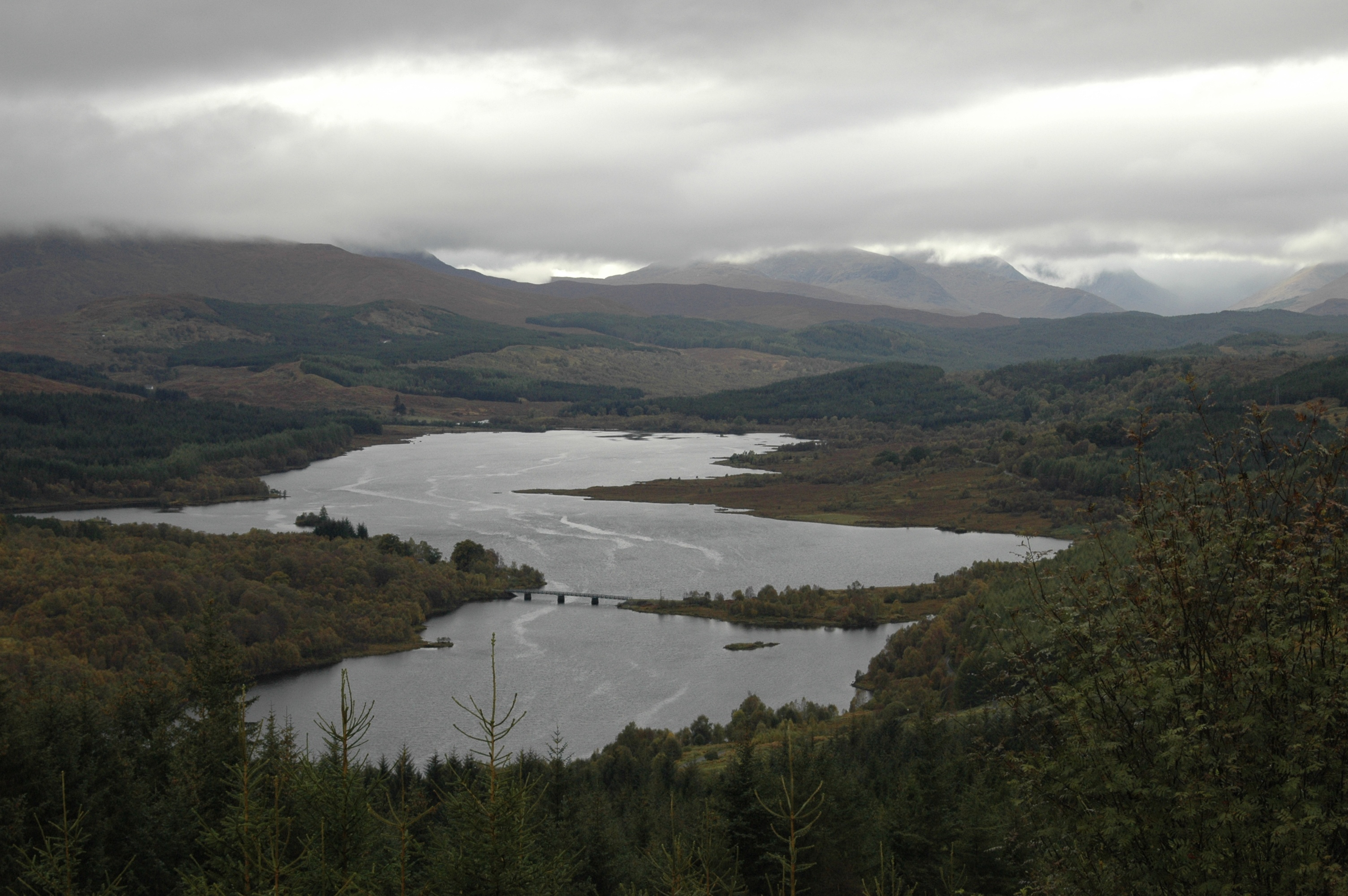
This is Loch Gary. When I stopped at the side of the road to take this photo many years ago, I was struck by how the shape of the loch so closely mimics the shape of the Scotland. It’s almost good enough to be a map!

If you do look at this as a map of Scotland, then one of the interesting little extra things is that the bridge you see could represent the connection between Edinburgh and Glasgow across the “Central Belt”.

I was born in Stirling, a town which is almost equidistant between Scotland’s two cities of Edinburgh and Glasgow. I studied Medicine in Edinburgh, worked there for most of the first two decades of my career then changed to work in Glasgow for the second two decades. There’s a long, long rivalry between these two cities. Each has a very distinct culture, and each is home to remarkably different accents. Maybe because I came from Stirling, people in Edinburgh often guessed that I’d come from Glasgow, and people in Glasgow often guessed I’d come from Edinburgh. I never subscribed to the rivalry between the two cities, liking them both for their very different cultures.

Maybe all of that has contributed to my love of connections, of seeing, accepting and even relishing difference, and my distaste for rivalry and competition.

I wonder how much the geography of our lives affects our values and our beliefs?

What do you think? What comes up for you if you reflect on that?

Read Full Post »

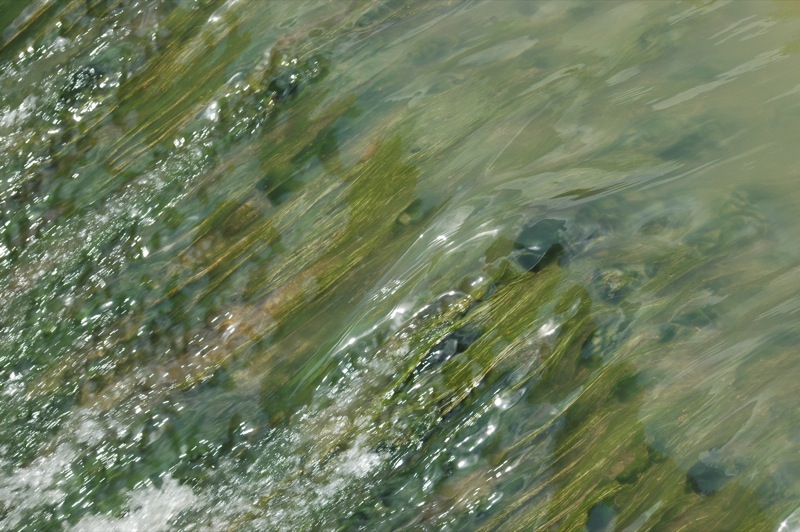
For me, this is a photo of flow. It’s a still image, and you might say if I wanted to illustrate flow I’d be better sharing a video but I like the juxtaposition of stillness and movement which this single frame shows us.

There’s a lot of advice to live in the present moment, to “be here now”, to draw your attention into the current time and space. I know, I’ve shared such advice many times. I get the value of it. But there’s a paradox at its heart which we often ignore.

Life, time, and reality, is not divided into neat frames. It doesn’t exist as a series of isolated, bounded, limited, even disconnected pieces. So when we stop to think about what we actually mean by “the present” or even “this moment”, it rapidly becomes hard to pin down. Does the present moment last for a minute? Does it last a few seconds? Does it last only for a fraction of a second? Isn’t it the case that the very act of reflecting on the present turns into a reflection on the past……ok, maybe the immediate, very close, past, but the past, all the same. And where does the future come from? If it isn’t sitting waiting for us like the next train station along the line (and I don’t think it is), if it is, rather, “emergent”, that is created out of the present moment, then, again, as we stop to reflect on this moment, we pretty quickly find it’s being changed by the future unfolding before our very eyes.

No, the truth is that life, time and reality are more like flow than frames.

I’ve wondered about that too when looking at a river. Exactly what is a river? If it’s the water in it then that water is constantly flowing right by. It doesn’t stay. If it stayed, it wouldn’t be a river, it’d be a stagnant pond. (actually even stagnant ponds don’t stay the same!) So is it the course of the flow of the water? In other words the actual path which the water traces out? The banks of the river? Not so sure about that either, because if you look at old maps, or even some aerial photographs, you can see that the so-called “same” river changes its shape and direction continuously, sometimes in small ways, and at other times in starkly dramatic ones!

The Italian physicist, Carlo Rovelli, says that

A stone is a prototypical “thing”: we can ask ourselves where it will be tomorrow. Conversely, a kiss is an “event.” It makes no sense to ask where the kiss will be tomorrow. The world is made up of networks of kisses, not of stones.

In other words, the way out of this dilemma is not by trying to pint down our experience, label it a and stuff it into separate boxes. Instead, we just need to think of the world being made up of “networks of kisses”. Life is “made” of “events”.

Events are happenings. The don’t have terribly easy start and finish points, and even those points which we can see turn out to be inextricably bound up in networks of other relationships and happenings. Nothing exists in isolation.

I like this view of life. I like the practice of becoming more aware in the present by becoming more aware of the flows of energy, information and forms around me. I like the focus on “becoming not being” – as you’ll see at the top of the blog.

Read Full Post »

When I worked as a GP in Edinburgh, my partner and I had two Practice premises (“surgeries” as we called them in Scotland), one up near the university, and the other down at the river front in Portobello. A typical day involved doing some work in both places, as well as visiting half a dozen to a dozen patients in their own homes (something which seems to have all but disappeared from the work of a GP). The working days were, as you imagine, busy days. There were many ways to travel between the two surgeries but one of my most favourite ways was to drive through Holyrood Park following the narrow road which snaked around the base of Arthur’s Seat. In the grass, at the roadside, I’d often spot someone sitting on a park bench, maybe reading, maybe drinking from a flask, maybe just looking around, and I’d think “Oh how I would LOVE to be sitting on that park bench!” But there was never time to do just that.

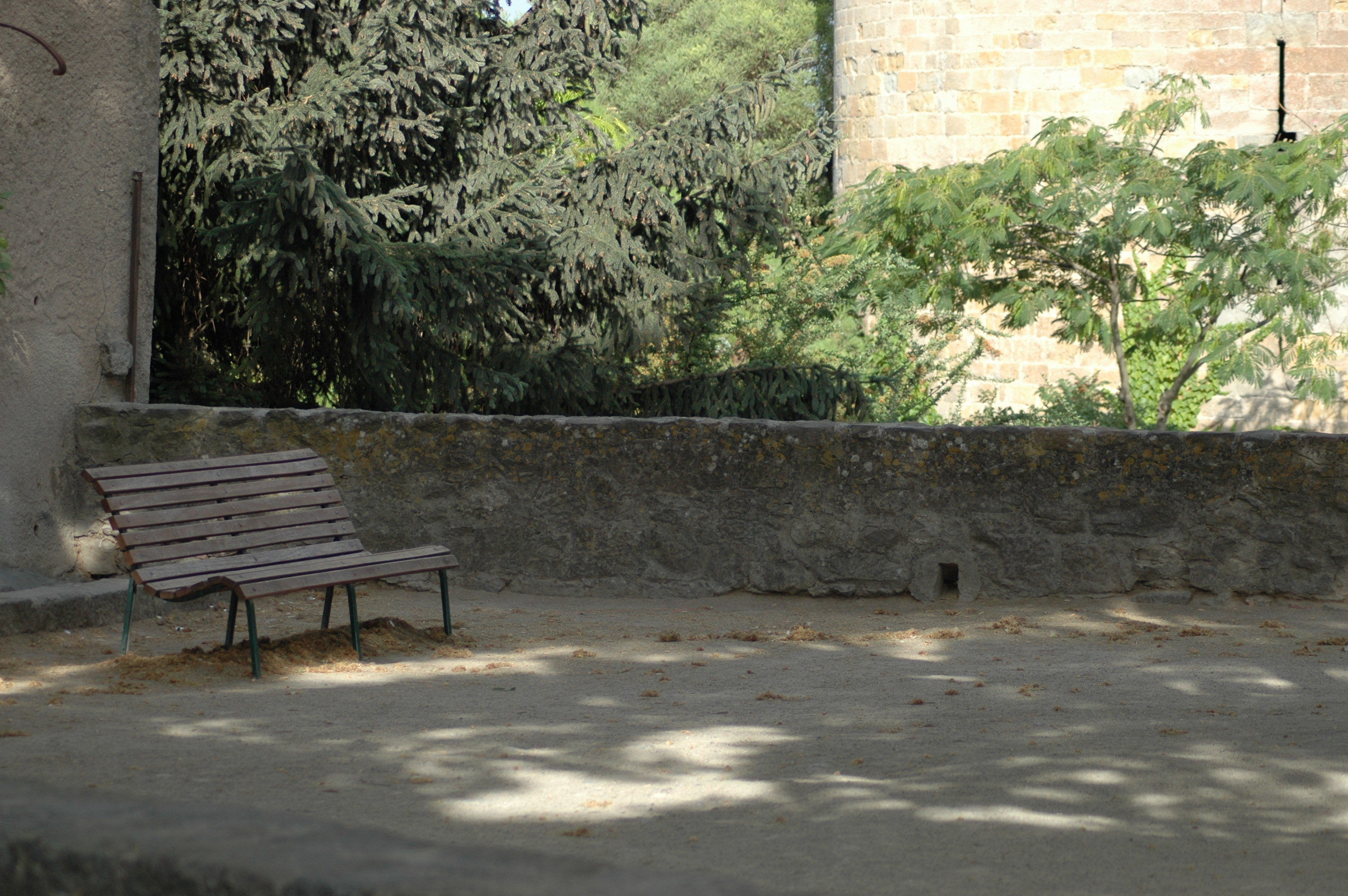
I’ve often wondered how much my work, and the busy-ness of the ordinary day, contributed to my love of park benches! Whatever the reasons, I know I’ve always had an eye out for them, and have several photos of seats in different parts of the world. The one in this photo was taken over 15 years ago in the Southern French town of Carcassonne. I still find it utterly beautiful. It pulls me towards it. I have a longing to be sitting there. Clearly it’s not about the super-comfortable shape or form of the seat, it’s what it represents – a pause, a moment of stillness, a quiet time to “do nothing”, or to contemplate, breathe, become aware of the here and now.

What this sets off for me today is reflection on the importance of slowing down from time to time, and the importance of deliberately breaking up the endless cycles of habits. We need to stop, take a breath (or several, conscious, slow deep breaths would be better), and allow ourselves to experience some moments of stillness. We need that even now in the midst of this pandemic and the total disruption of our “normal” lives (will “normal” need to be redefined after this? Probably)

So, take a moment today and ask yourself – where are your favourite seats? Best to consider a seat you can actually sit on today! Where can you take a moment, still your breathing and your mind, and return your clammer of anxieties, worries and fears to the here and now, and just notice. Just become aware. Just for a few minutes at least.

If that sets off a recollection of favourite memories of seats where you have experienced the greatest moments of calm, tranquillity and peace, then, go with that. Allow yourself to recreate those experiences as vividly as you can. What did you see there in that moment? What did you hear? What did you feel with your body? What did you taste and/or smell? Allow yourself to re-create the feelings which that moment engendered. Allow yourself to live it again for a couple of minutes.

You know what that will do? Well, what it might do anyway? It will produce a distinct harmony of the rhythms of your heart and your brain. It will set off a chain of reactions in your body which enhance your immunity, reduce harmful inflammation, and increase your resilience. It’s called “coherence“. And it’s good for you!

Read Full Post »

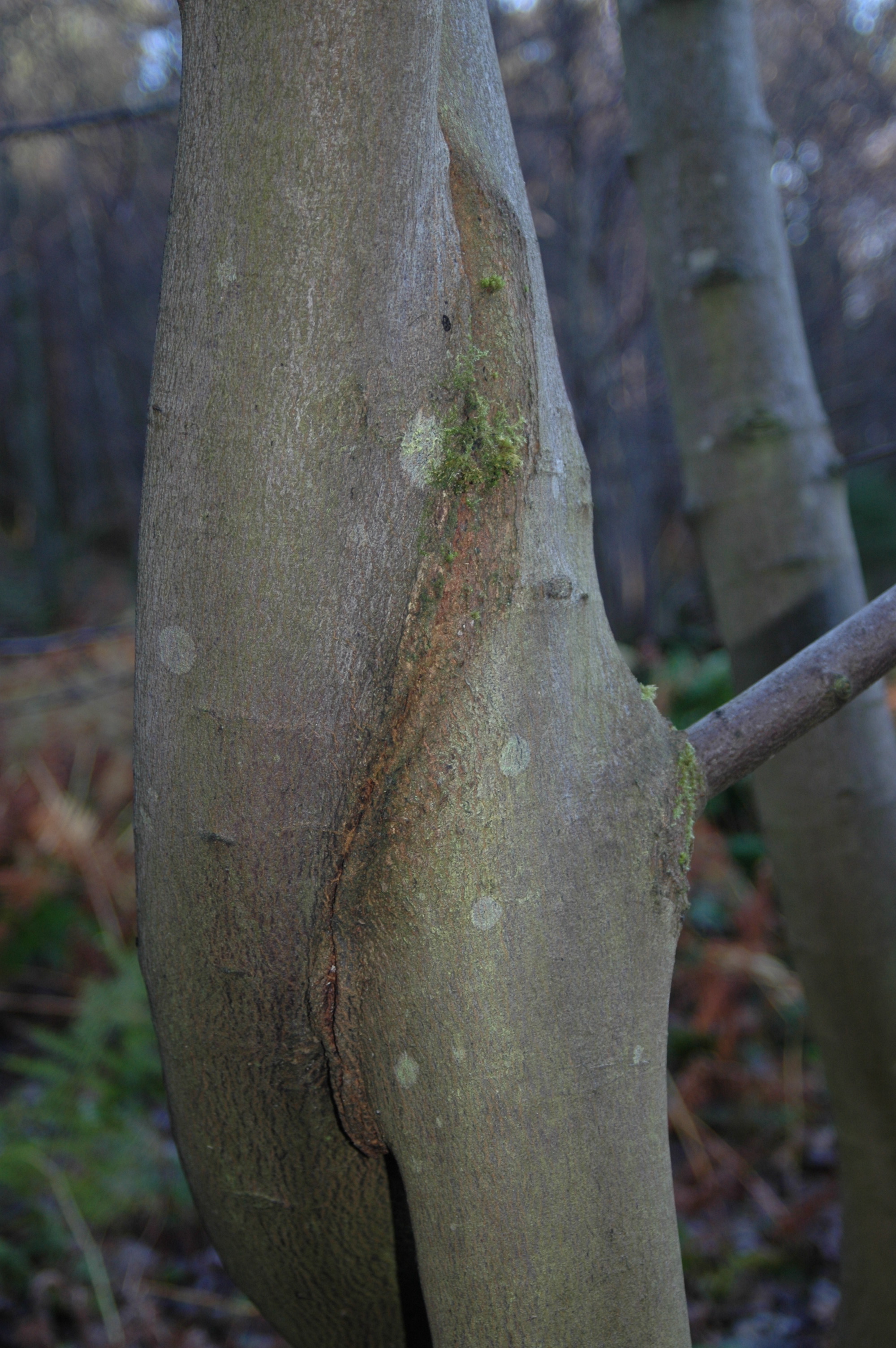
When I came across these trees in a forest I was stopped in my tracks. The forest was quite a wild one, and I don’t think these two trees were grafted together artificially. What I mean is I don’t think there was a human hand involved. Which makes it all the more remarkable, because it looks like these two trees got really close to each other, starting kissing and never stopped!

Whatever the mechanisms involved I just love this image. It speaks to me of that most essential natural drive – to connect…..not just connect, but connect lovingly.

There is a key phenomenon which underpins all of evolution. No, not competition, which is what you’d think from the dominant orthodox view. Competition plays a role, but without integration, there would be nothing….no growth, no development, no evolution. Integration is the creation of mutually beneficial bonds between well differentiated parts.

Let me say that again. Integration is the creation of mutually beneficial bonds between well differentiated parts.

How did Life progress from single celled existence to the vast, diverse, web of complex multicellular organisms? Only by the individual elements getting together to make bonds which would be beneficial to both.

This drive towards integration is a loving drive.

It’s a movement based on “bienveillance” – on meaning and/or wishing well. It’s a drive to support and be supported, to nurture and be nurtured, to love and be loved.

Without these loving connections, we simply wouldn’t exist. Maybe it’s time to put competition into its proper place…..and that’s not THE most important place. I think we have to learn to live by loving instead of dominating, by co-creating rather than trying to come first. If we are going to compete let’s put that competition into the context of improvement…..of supporting all of us to grow, to become stronger, more resilient, to improve. Not to destroy, dominate, control, and grab the most for ourselves at the expense of the wellbeing of others. That old way just isn’t working.

Read Full Post »

Can you think of any works of art which changed you? Any which changed your worldview? Changed how you understand yourself, your life, your world?

I was reading about Stendhal Syndrome the other day, which is the phenomenon of overwhelming emotions and physical symptoms experienced by some people in front of particular forms of art. Stendhal described it in relation to his visit to the Basilica of Santa Croce –

I was in a sort of ecstasy, from the idea of being in Florence, close to the great men whose tombs I had seen. Absorbed in the contemplation of sublime beauty … I reached the point where one encounters celestial sensations … Everything spoke so vividly to my soul. Ah, if I could only forget. I had palpitations of the heart, what in Berlin they call ‘nerves’. Life was drained from me. I walked with the fear of falling.

What grabbed me about this concept is how art can have a profound impact on us – not just on the way we think, the emotions we feel, but in changing our inner physical reality…..speeding up the heart, releasing a whole cascade of different hormones, causing us to feel a little breathless, a little light headed, to give us butterflies in the stomach, to make us weak at the knees…….but it actually does something else too….

Every experience we have sets off patterns of activity in the neurones in the brain. In neuroscience there is a phrase used which is “what fires together, wires together”. That’s a description of how these patterns of activity, when repeated, actually change the shape of the microstructures of the brain. Art, literally, can sculpt our brains. No wonder it can change us!

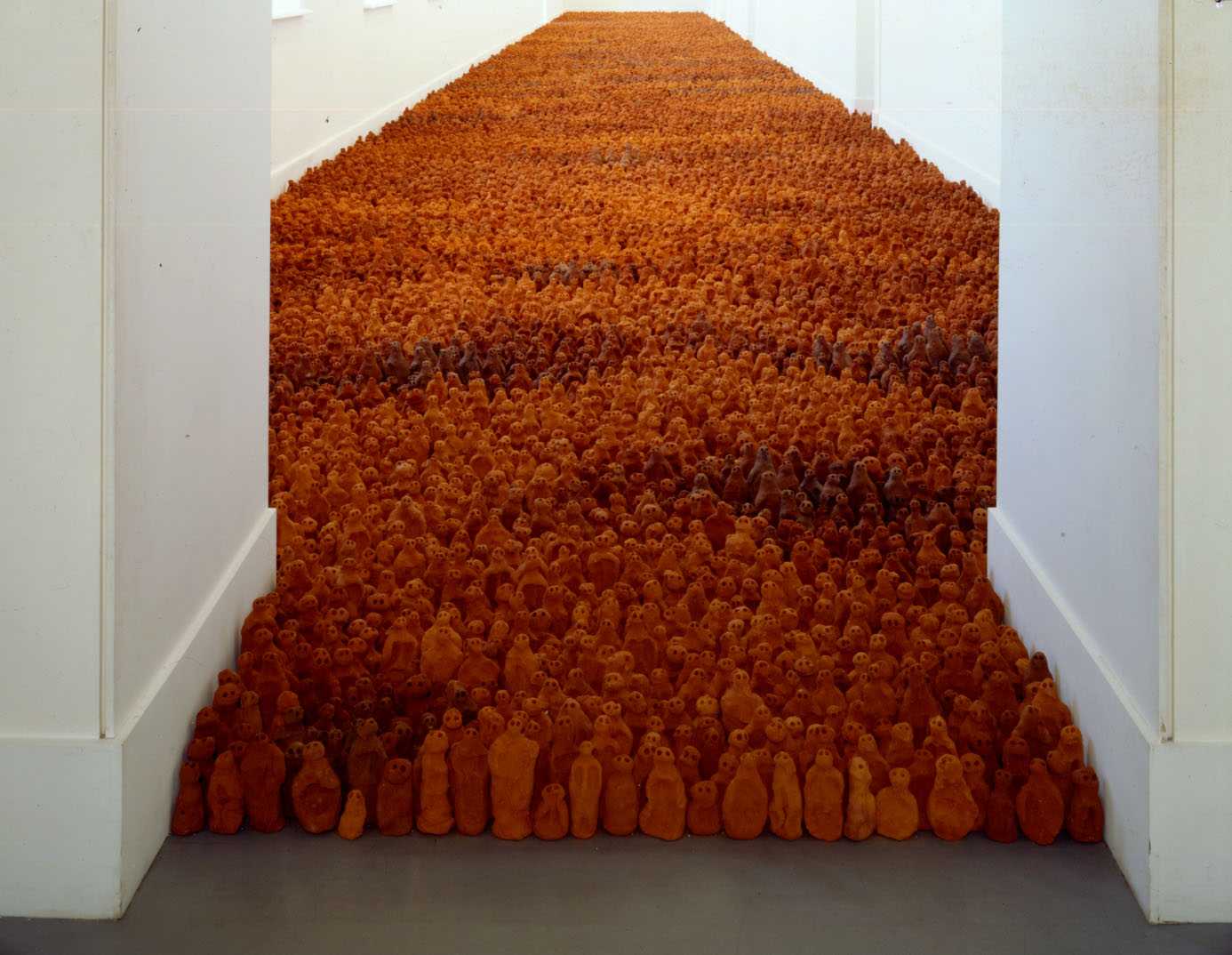
Well, this image here is of Anthony Gormley’s work entitled “The Field”. I saw this for the first time in Inverleith House, in the middle of the Royal Botanic Gardens in Edinburgh. I stood in the doorway and looked at these thousands of little creatures, all looking up at me, all the same. Then, as I looked a little more closely I realised that each and every model was different. Not only were they not all the same, but every one of them was unique.

That’s it, I thought! This is the paradox at the heart of my work as a doctor. Every single patient who I meet has some characteristics, some symptoms, some signs of change in their body, in common with other patients I’ve met before. That’s why I needed to learn anatomy, physiology, pathology, the natural history of disease. That’s why I had to learn how to make a diagnosis. But, at the very same time, every single patient who I meet is unique. Every single patient has a story to tell me which I’ve never heard before because nobody has lived an identical life to them. The diagnosis of the “pathology” or “disease” isn’t enough. I need to understand it in the context of a life story, and a present life. What exactly is this person, today, experiencing? How has this present experience and change come about? What sense do they make of this “illness”? What does this “illness” mean to them, mean in their life, mean to the others in their life?

Well, that became the core of my understanding of the Practice of Medicine.

But it went further than that, because I realised, just as quickly, that this insight wasn’t relevant only to my work as a doctor. This is the essence of what it is to be a human being. We share a lot, you and I. But we are also unique, you and I. We can’t be reduced to a single characteristic, demographic, or “data set”, but we can be gathered into those groups…..we can find some common values, beliefs, desires in those features and factors. But we can never, ever, stop there. We can never rest in our understanding of a person by summing up their data, by figuring out what group we want to put them into. We have to discover the individual. What makes this particular person different? What is distinct and different about this person’s life story?

Even as I write this today, I find this excites me. It delights me. It moves me. It activates my thinking, my feelings, even my body.

Art really can be that powerful.

Read Full Post »

« Newer Posts - Older Posts »