Feeds:
Posts
Comments

Archive for the ‘personal growth’ Category

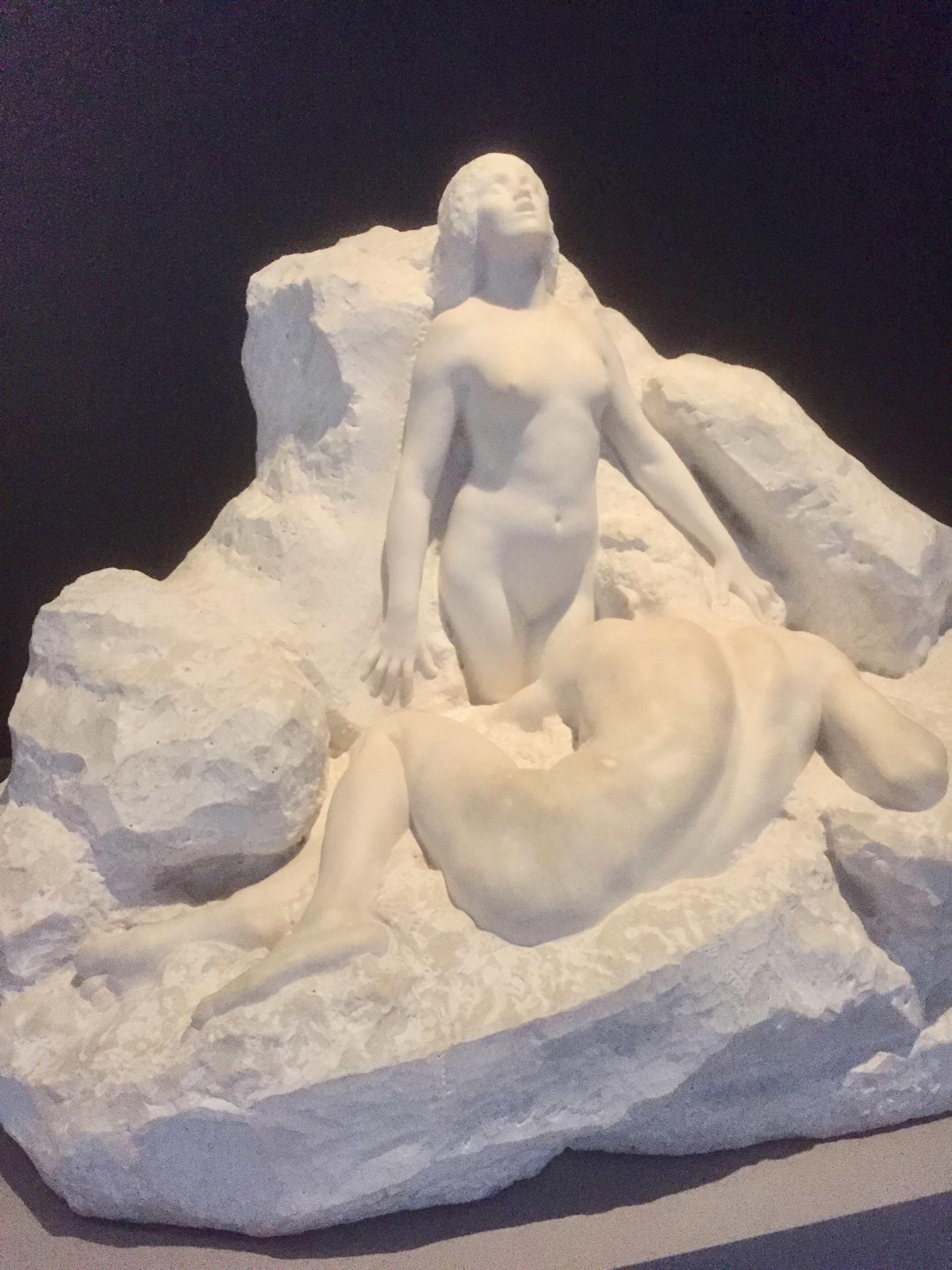
This sculpture in the Glyptotek Museum in Copenhagen is called “Creation Fantasy”, and it’s by a Norwegian-Danish sculptor called Stephan Abel Sinding.

It reminds me of some of Rodin’s work, not least the “Hand of God“, which is one of my most favourite of Rodin’s works.

I love how the male and female bodies are emerging from, but are not separate from, the rock. It think this captures a deep truth – that we are not separate from the Earth, not separate from “Nature”, not separate from each other. But instead we emerge within all that exists, and we remain forever, embedded in everything. I think one of the most pernicious beliefs human beings have adopted is the notion that we humans are “apart from” not “a part of” Nature, that Nature is something “out there”, maybe even something to go and visit from time to time. Worse still, that The Earth and all that “out there” Nature is a resource to be plundered, consumed, polluted at will, as if none of that activity will affect “us”, we humans, because we are outside of Nature.

I hope we are beginning to move away from that terrible misconception. I hope we are beginning to KNOW that we emerge within Nature, and that we live inextricably within all that exists.

It reminds of me of the “Universe Story” – which tells how all the elements of the Periodic Table were created in the giant furnaces of stars throughout the universe, and how once the Earth was formed, all the elements which had been created in distant stars were gathered together, almost like being dealt a hand in cards. How every material substance which has ever existed on Earth has been made from those initial elements. The Earth doesn’t create new elements. She transforms what she has into every molecule, every cell, every organism, every substance which we find on our one small blue planet.

This sculpture makes me think of something else – the relationship we have between men and women. It seems to me we need to learn from sculptures like this one. For far too long we’ve built civilisations and societies on the basis of male dominance. It’s well past time to redress that imbalance and create more loving, more respectful, more mutually nurturing relationships between the sexes.

So, there’s my “Creation Fantasy” – that we are called to live by – that we humans emerge within Nature on this single planet, and that men should not dominate women.
Read Full Post »

I can’t stress too highly the importance of art in life. We seem to be the only creatures on the planet who have the immense creative powers to produce drawings, paintings, sculpture, poetry, stories and music (OK, I know, there are other arts you can think of, but I’m just choosing these ones today)

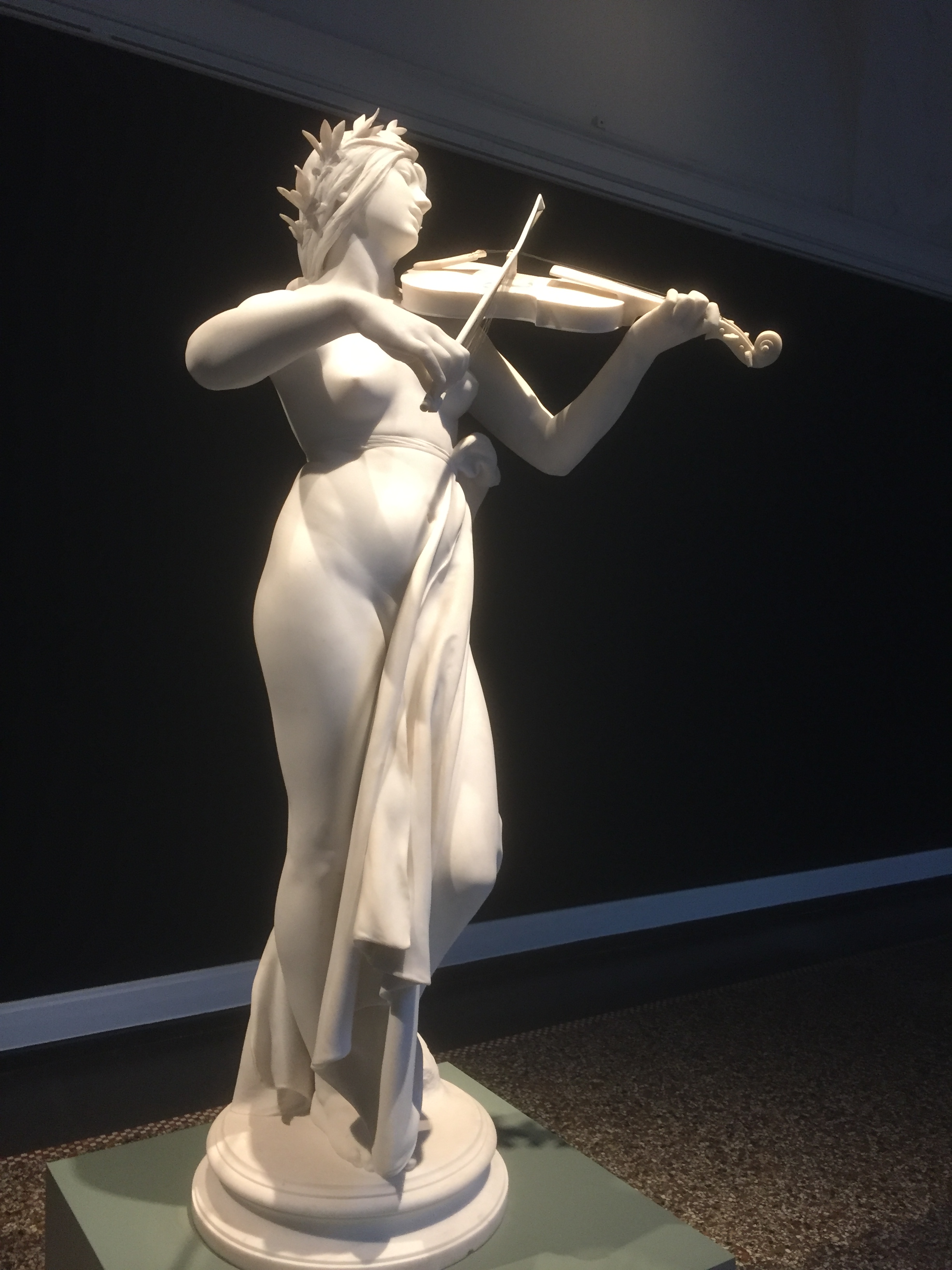
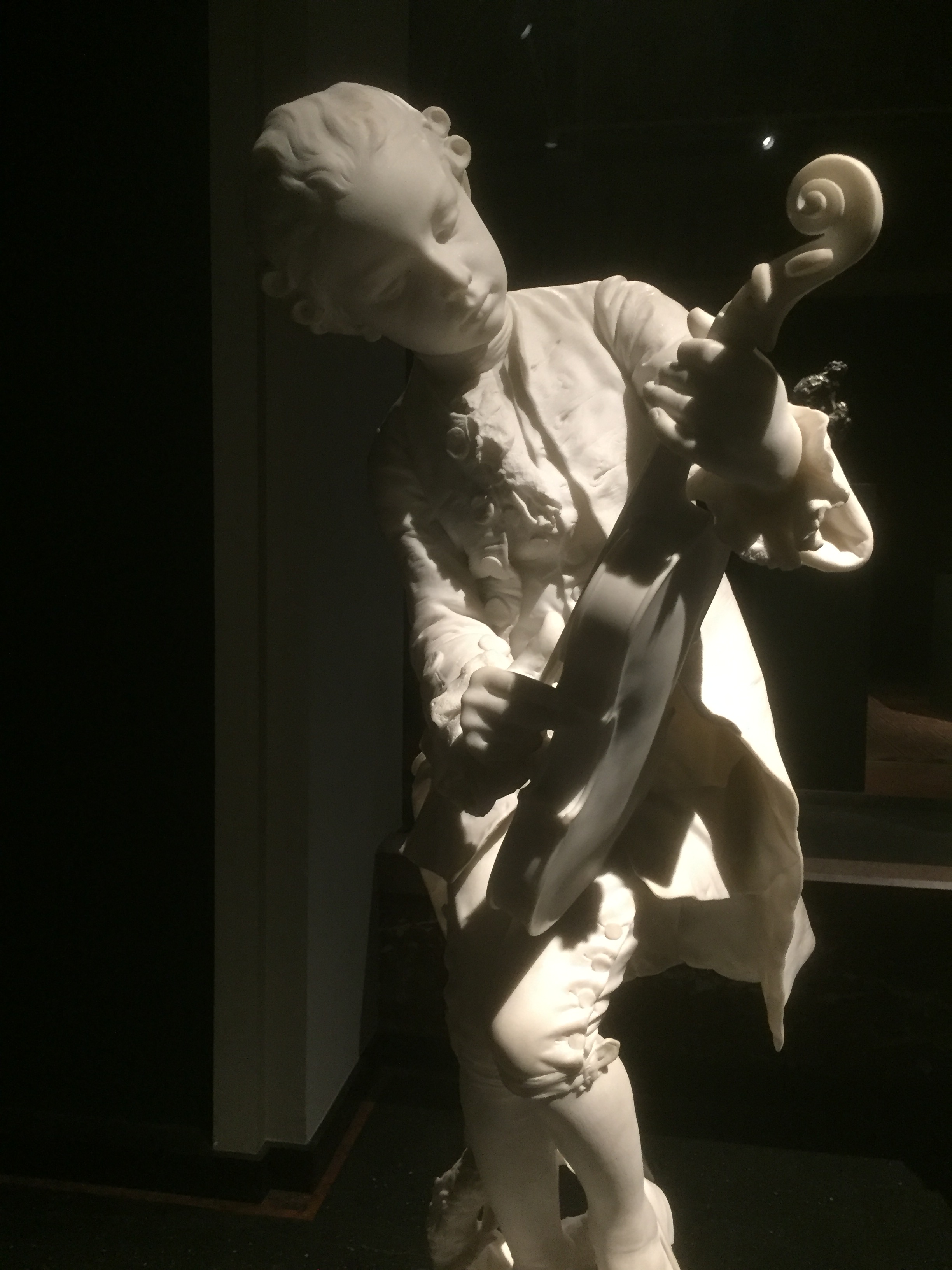
In the Glyptotek museum in Copenhagen you can find these three sculptures in a room filled with many similar gorgeous works of art. Part of the beauty we experience when we look at these images is created by the way the works are lit (and there’s another layer of creativity between my experience and yours because I’m the one who took these photographs).

At the top, are two sculptures about music. Look at the violins, the bows, and the musicians fingers….all carved out of blocks of marble. Aren’t they incredible? The one on the right is titled “Young Mozart”, and I’m afraid I can’t remember the title of the one on the left (if you know, maybe you could let me know in the comments?)

I read in Iain McGilchrist’s “The Master and His Emissary”, that one theory of language is that human beings sang before they spoke. It seems there is some evidence to support the idea that the first humans created a variety of sounds, and only later, turned some of those sounds into spoken language. Written language followed a long, long time later. Also, in his book, he explores how music works, not as a collection of notes, or moments or sound, but as a combination of notes and silences between the notes. When you stop to think about music it’s incredibly difficult to pin down what seems so simple – where is the music, actually? It’s not in the notes by themselves. It’s not in the spaces. It’s in the whole – in the phrases, the bars, the themes, the entire melody and the rhythm. I love how it seems to resist reduction – you can only appreciate it, and enjoy it, when it’s whole.

Another thing about music is how personal it is. I bet you had the experience when you were younger of your parents just “not getting” the music you enjoyed. Perhaps always telling you to turn it down? Or saying “That’s not music!” Then as you got older, if you’ve had children of your own, you might find they like a lot of the music that you like, but I bet you’ll also find that they enjoy some music that has you saying “That’s not music! Turn it down!”

Music is intensely personal. It’s one of the best, most powerful ways, to evoked memories. A certain song can take you right back to a particular moment years ago, or can evoke all the feelings you have for a loved one. It stirs us, moves us, changes our entire physiology, affecting our breathing, our heart rate, the mobilisation of chemicals and hormones in our bodies. It affects our muscles, our movement, our stomachs.

I saw a short piece on French TV recently about Melody Gardot, who at age 19 had a serious bike accident. She was in hospital for over a year and had many difficult neurological problems. At one point a doctor suggested music therapy and her mother bought her a guitar. She taught herself to play it, started writing songs, and made a full recovery. She is now an internationally famous, beautiful jazz singer. Check her out. Quite a story! And such beautiful music!

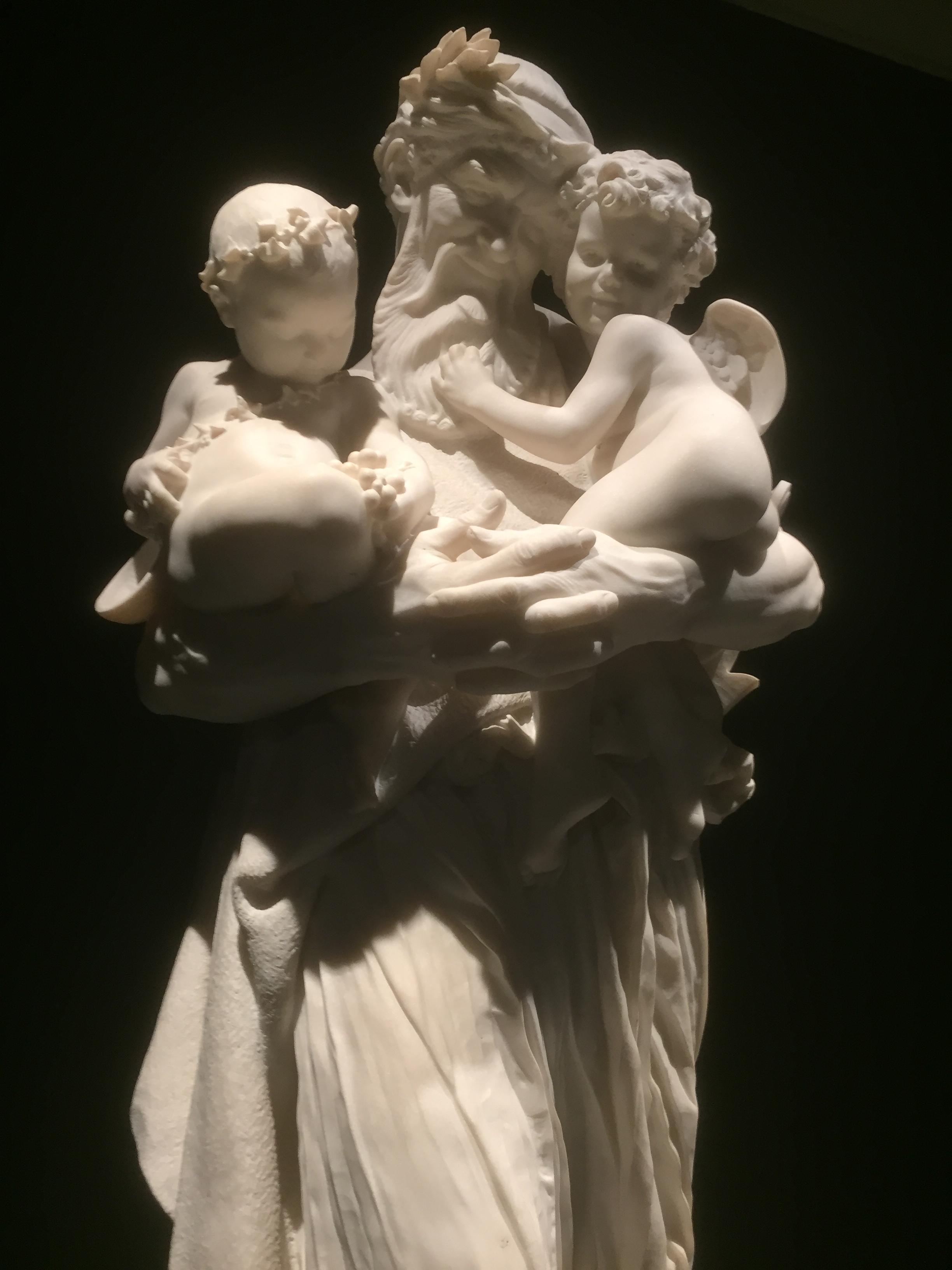
The lower photo above is of Anacreon the poet. Poetry, like music, is handled mainly by the right hemisphere of the brain (whereas language, words stories are largely handled by the left). Poetry is closely related to music. It’s not about conveying instructions or information. It evokes emotions, changes our bodies the way music does, and also has the power to evoke intense memories. In this sculpture, Anacreon has two infants in his arms….and doesn’t he so obviously love them? They are Bacchus and Cupid. Bacchus is the God of Wine, and Cupid the God of Love. Well, not hard to see why he loves them so, huh? Bacchus is also known as Dionysus. You can read a bit more about him here. He’s the God of a lot more than wine. Cupid, the God of passionate desire, of affection and attraction.

Finally, here’s an interesting fact connected to this issue of how our two cerebral hemispheres engage with the world in different ways. Iain McGilchrist’s thesis is that we’ve become a bit stuck in our left hemispheres and we need to develop a better integration of the two halves. One way to do that might be to consciously use the right hemisphere more – so, what better way than to start with spending more time each day listening to music and reading poetry?

Read Full Post »

One of my most favourite museums in the world is the Glyptoteket in Copenhagen. One of their permanent exhibits is a sculpture room filled with beautiful works by French and Danish sculptors. Many of them are utterly breath-taking. Over the next few posts I thought I’d share some photos I took during my visit there back in the pre-Covid era!

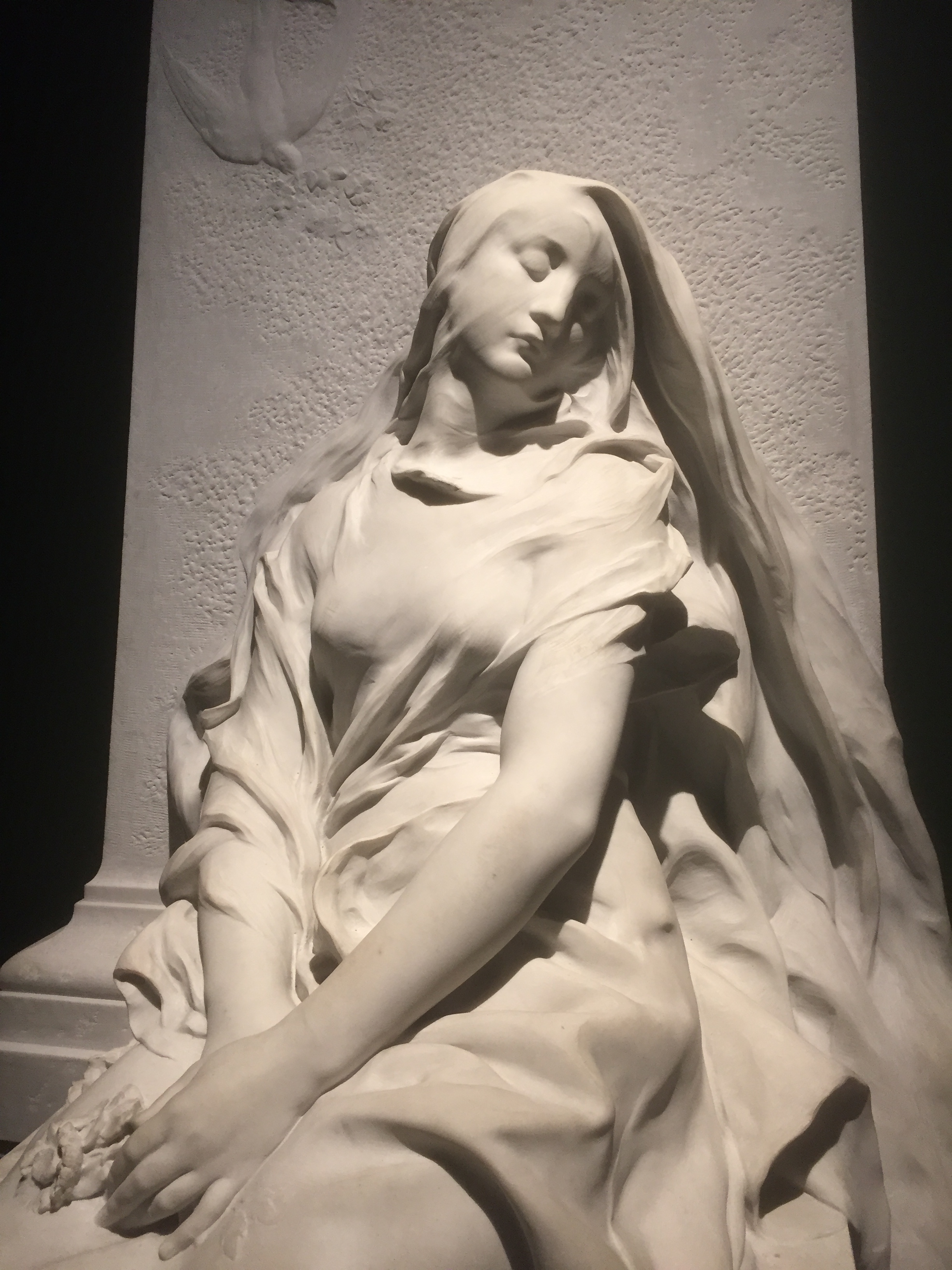
Look at this! Carved from a block of marble. I think it is astonishing. What incredible skill to make solid rock look like soft flowing fabric.

That’s what I wanted to focus on today, because I think when we pay attention to the perceptions and sensations of the everyday present, life seems better. And even though many of us are still living under stringent restrictions, we can experience sights, sounds, scents, tastes and textures every single day. I’m a very visual person. I take lots of photos, and I’ve been re-viewing and organising thousands of my images this year. Despite the fact I suffer from tinnitus and my hearing isn’t as good as it was when I was younger, I also love sounds. Where I live in the French countryside, I’ve been able to hear more bird songs this year than I’ve ever done before, thanks to the quietening of human activities – especially those human activities involving machines! I love music too, and a day doesn’t go by without me listening to, and/or playing music.

This image though, reminds me of the importance of the sense of touch. And with all this physical and social distancing going on, I suspect most of us are missing that kind of contact. Zoom calls, WhatsApp groups and so on can be good for communication but they aren’t a substitute for physical contact, are they?

So, I wonder if it might be an idea to focus on the sensation of touch for a day? What textiles are in contact with your body? How does that feel? What surfaces do your fingers touch today? How does that feel? How many different sensations of touch have you experienced today? And how would you describe them?

That’s my idea for today, inspired by this astonishing sculpture – take a day to consciously experience the sensation of touch. Notice each sensation and make a short note about it in your diary or journal……or in the Notes app on your phone. Then, at the end of the day, review what you’ve written. How does that make you feel? In other words, what emotions are created by the physical texture of your day?

Read Full Post »

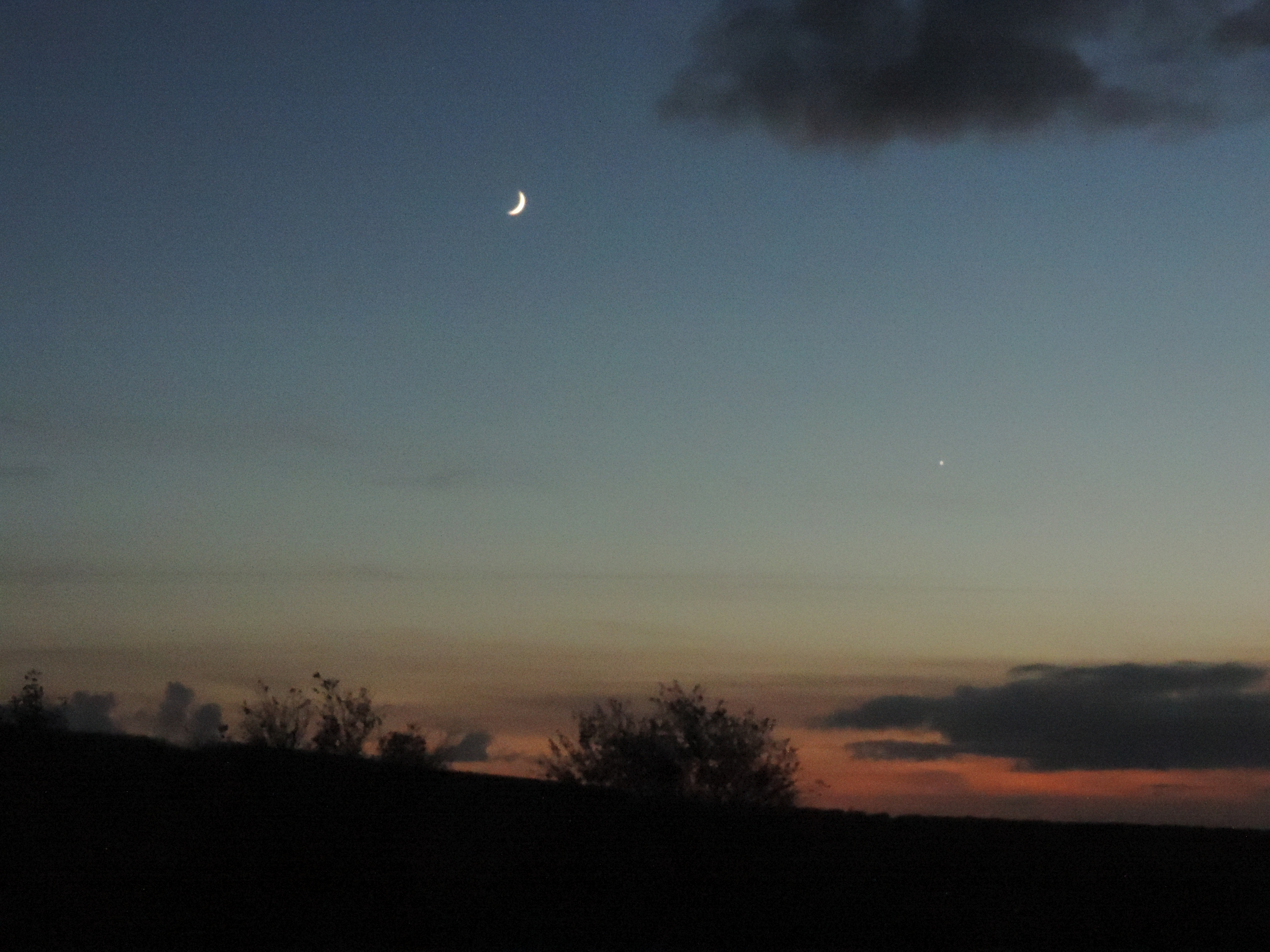
I wonder how much the sky influences our lives. I don’t just mean how a blue sky lifts our spirits, and a heavy grey cloud cover can dampen them. I’m not only thinking of the reds, tobacco browns, and goldens of a setting sun. I’m thinking about the evening sky, like this one, and the night sky which you know, looking at this, is only a few minutes away.

I don’t share this photo because it’s a great photo of the Moon and Venus in a twilight sky. I share it because it sets off a train of thought in my mind. It gets me thinking about the rhythms of our planet, and how, for millennia, we humans have learned to understand some of those rhythms by looking at the night sky. I know there are stories of how ancient peoples navigated by the stars and worked the Earth by the progress of the constellations. I know that even now, there are farmers and gardeners who plant, cultivate and harvest according to the phases of the Moon. I know I get a lift in my heart when I see Orion appear for the first time on the Eastern horizon, knowing that I’ll be able to see him make his journey to the West every night until Spring comes again, knowing that Orion is a winter companion in this part of the world.

But I also look at a sky like this and am struck by both the Moon and Venus, and, instantly I’m thinking of the Divine Feminine, as both the Moon and Venus are associated with goddesses. I wonder if they evoke the anima in me. I wonder if they start me thinking about intuition and beauty.

Actually, I don’t wonder that at all. They do. For sure. I look at this scene and I am entranced, I am enchanted, I am absorbed in feelings, thoughts and images of intuition and beauty.

Have you ever wondered how much the sky influences your life?

Read Full Post »

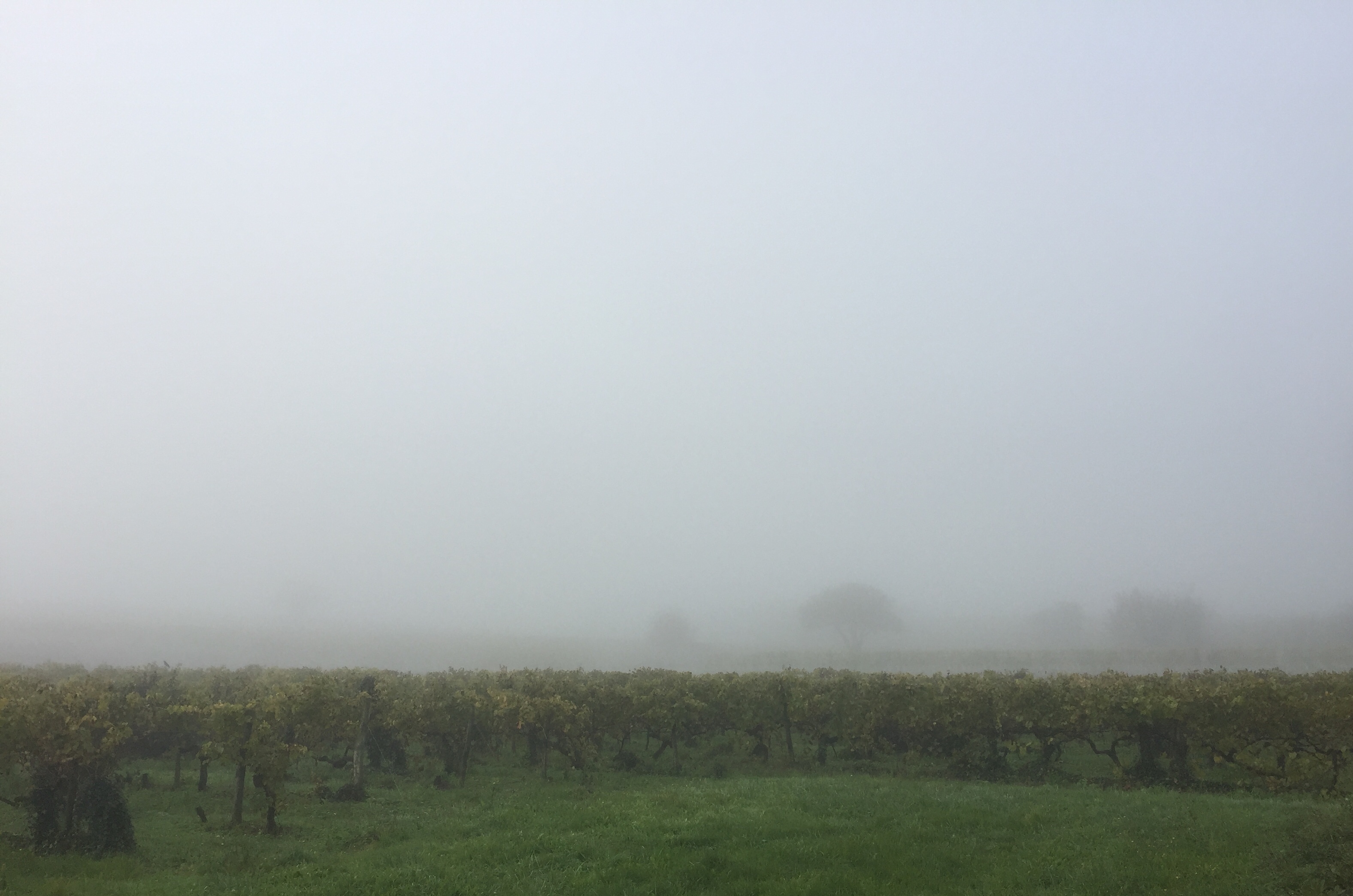
This time of year it’s not uncommon to wake up and find that the vineyards have disappeared. They are hidden in dense morning mist. Just like in this photo here.

I can almost see some of the trees. I can see the nearest vineyard but I know there are several others beyond this one. I can’t see the next village.

The fog brings the horizon much closer. I can only see what is close to me. I’m reminded of a passage by the late, great John O’Donohue –

Today the light is very low so the fog is covering the mountains. When the fog is there, half of them are missing. But, in some sense, that is the duty of the imagination: to help us connect with that which is invisible but is actually very close.

What a great reminder that we need our imagination to “help us connect with that which is invisible but is actually very close”.

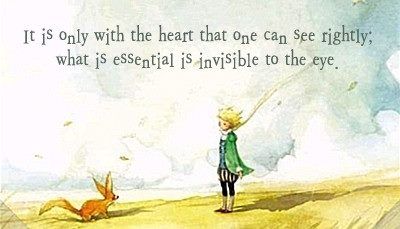
How do we see the invisible? Well, Saint-Exupery told us

Read Full Post »

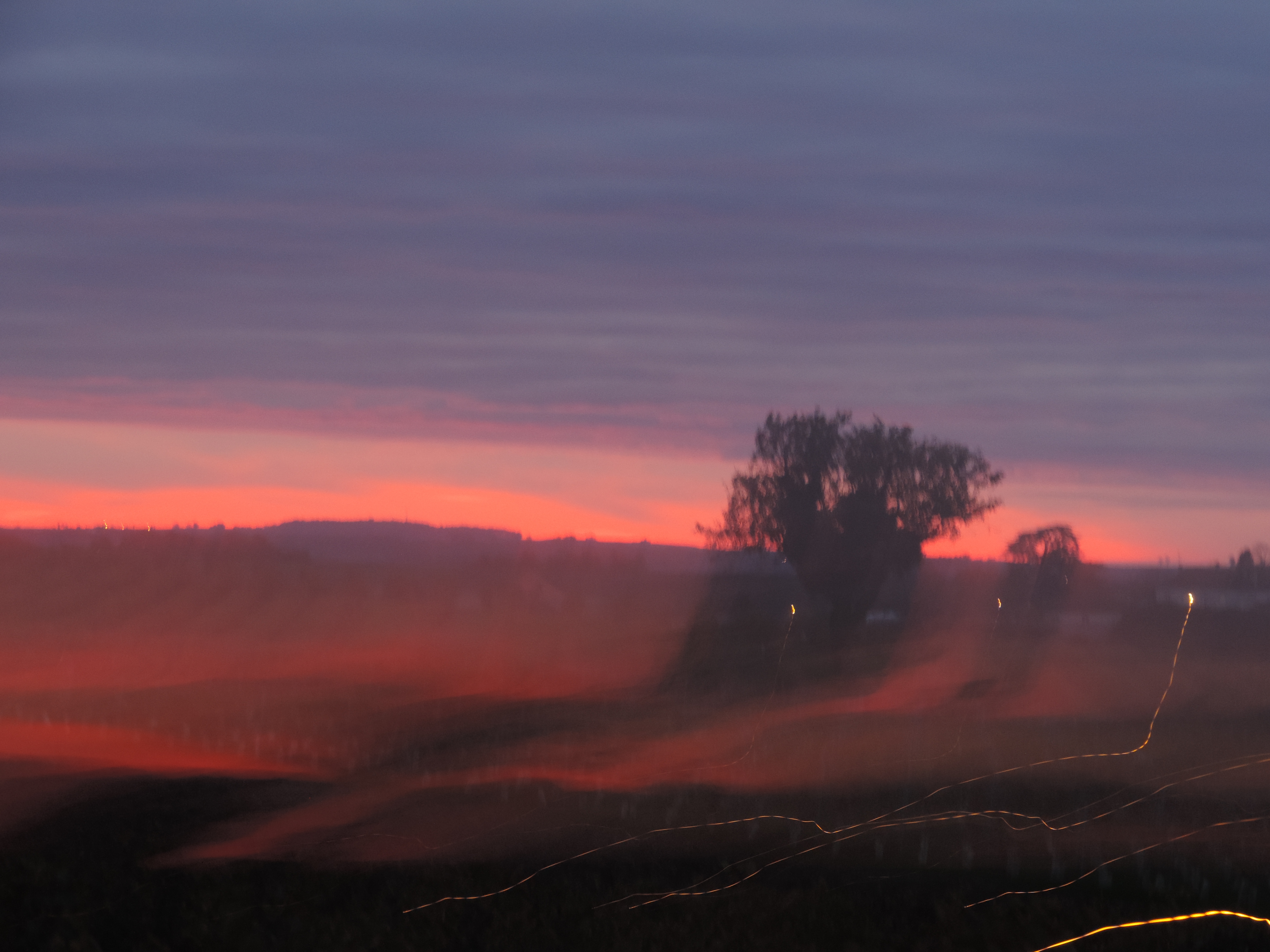
I took this photo of a sunset with a long exposure time and my hand moved a bit but when I looked at the result I really liked it.

OK, it’s obviously not exactly what I saw as I looked out over the vineyards that evening. In fact, it’s almost more like a water colour painting than an exact representation of what I could see with my eyes. But don’t you think that makes it, somehow, all the more appealing?

We have a tendency to prefer clear boundaries, to be able to pick out an object or an individual as separate from all the others, in order to recognise them, to name them. This recognition and categorisation skill takes us a long way. Such a long way that we tend to forget the power of fuzziness, the reality of uncertainty, and the unavoidable fact of dynamic change.

Nothing exists in isolation. Everything changes all the time. The future is unpredictable with any accuracy when we pay attention to the details, to the unique and to the individual.

Seeing how everything flows into everything else, how there are streams of substances, energies and information flowing through us and everything else constantly, streams which form us, which we process, which flow through us on into the future and into other beings and other objects.

We need that skill too. That ability to shift our perspective away from labelling and categorising to flows, to connections, relationships and uniqueness.

Maybe that’s why I find this image so beautiful. Because reality can’t be fully understood as made up of separate “bits”.

Read Full Post »

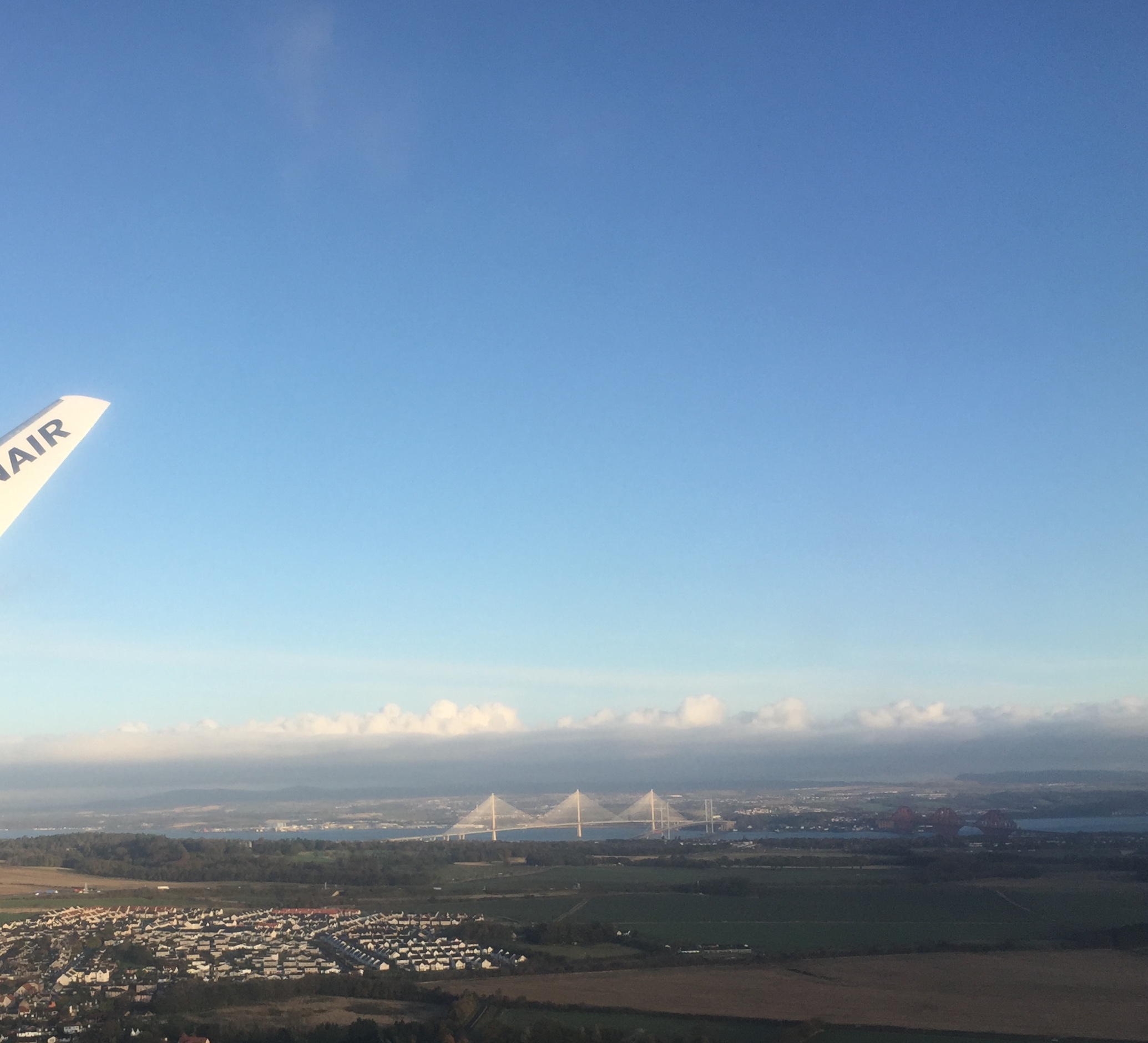
I haven’t taken a flight for almost exactly a year now. I suppose that’s a good thing for the planet. The sky above where I live in South West France is so empty of plane trails now that yesterday I was chatting with my landlord, Jacques, in the garden and he suddenly stopped speaking and pointed up to the blue sky and said “Regarde! Un avion!” (Look, a plane!). Well, there’s something that wouldn’t have happened before.

This photo was one I took the last time I was flying to Scotland and if you look carefully you can see all three bridges over the River Forth. First there is the famous red iron railway bridge, then next to it, the first road bridge, (I remember seeing its construction), and then the newest one, “The Queensferry Crossing”. One bridge built in each century for three centuries in a row.

Looking at this again I get thinking about the what bridges do – they connect. In this pandemic year we have been distanced and disconnected. Disconnected from our routines, our habits, our families, friends, and for many, our work. Jacques said yesterday how sad and strange it is now that when he saw his little grandchild the wee one held up his hand and told him to keep his distance in case he caught the virus. It’s little gestures, behaviours and episodes like that which deepen the strangeness and awkward disconnectedness of this year.

Maybe you’ve been making new connections this year, though. Maybe you’ve connected to family or old friends over video calls or meetings. Maybe you’ve been Whatsapping and texting more than you used to. Maybe you’ve reconnected to some people you might not have had so much contact with in recent years.

Maybe you’ve connected more to Nature, hearing more birdsong in the space opened up by the disappearance of noisy machines.

Maybe you’ve connected more to the seasons, the new growth in the Spring, the fruit trees in the Summer, the leaves turning red and golden in the Autumn, the first frost of Winter.

Maybe you’ve connected more to the here and now. Becoming more aware of colours, sounds, scents and tastes of the everyday.

Maybe you’ve re-connected to what’s important in your life, re-assessed your values, made decisions to change where you focus your attention and spend your energy.

One thing is for sure, as we come out of this pandemic, we are going to have to build new bridges, make more connections, make new connections, find different ways of living according to our most important beliefs and values.

Read Full Post »

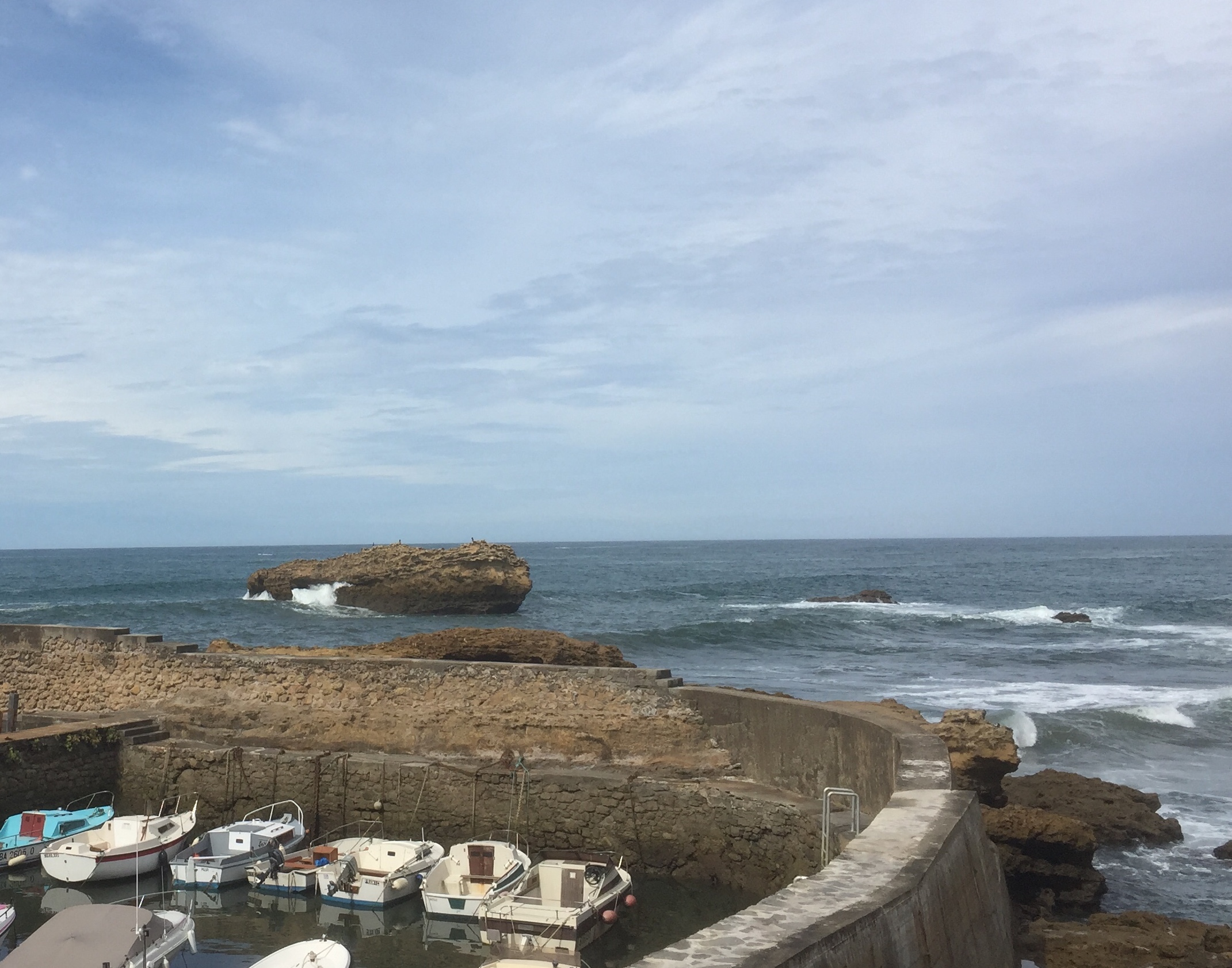
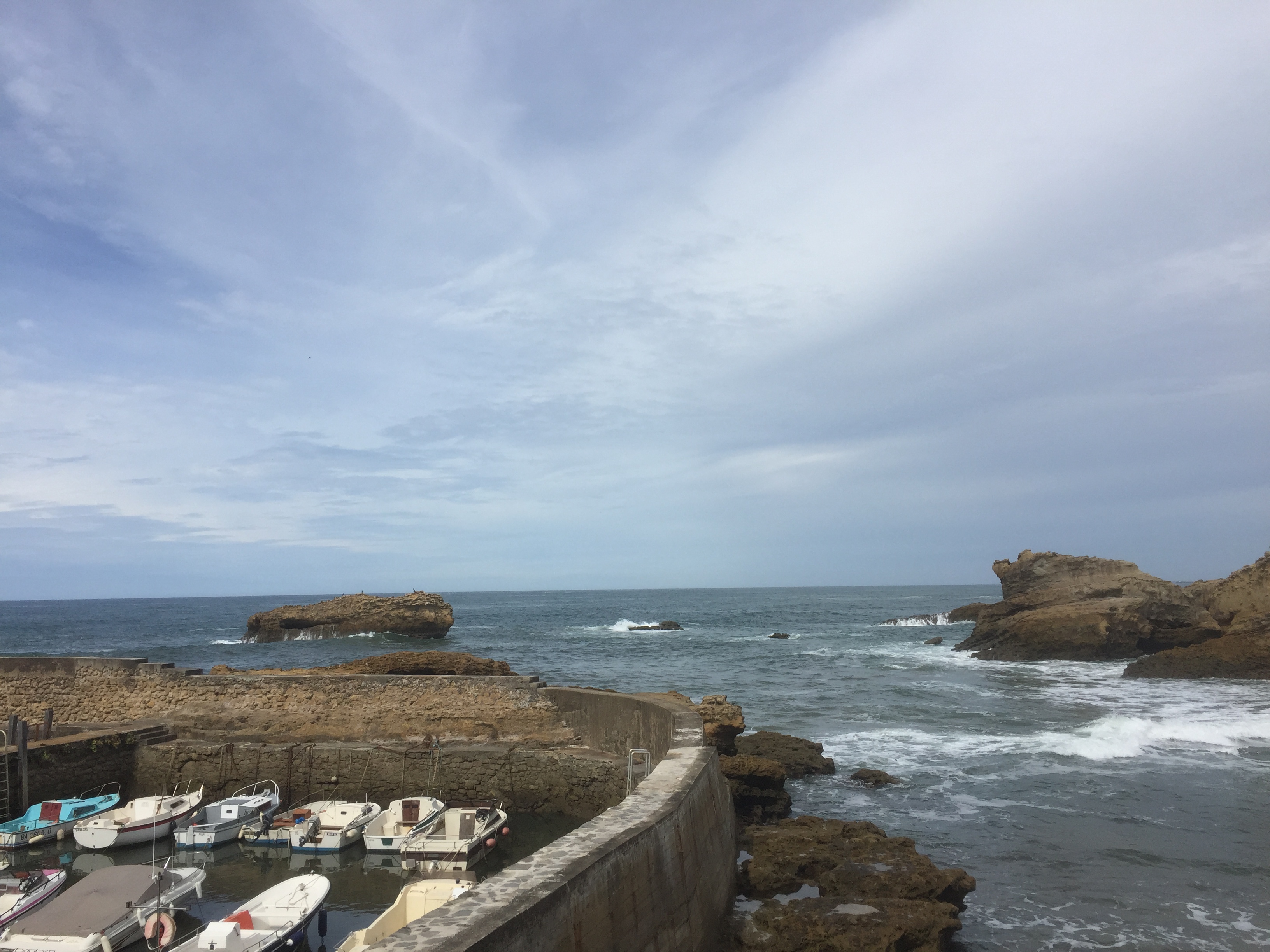
Do you see the rock just beyond the harbour wall? The white foam of the sea catches your eye, doesn’t it? At first, you think it’s water splashing against the rock, because, that’s something you’ve seen many, many times before. But if you keep looking the foam disappears and you can see this –

Click on the photo to get a closer look. Can you see the gap in the rock where the white foam was? If you look very carefully you can still see some water falling down the front of the rock from that gap.

This rock has a gap in it. A long narrow gap. The waves crash against the other side of the rock, the side you can’t see from the land (the dark side of the rock??) and some of the water flows through that gap and cascades down the front.

I don’t know how this began, and I’ve no idea when it began, but it’s quite mesmerising to watch. There’s a rhythm to it, as there always is when you are watching waves breaking on a shore line.

However it began, I know that every time some water forces its way through this gap it widens it just a little bit more. I can’t help but think about that power of water and what it can teach us.

Little by little, probably imperceptibly at first, constant, repeated, pressure of the water against the rock opens, and widens, a hole right through the middle of the rock. It would be tempting to think of the rock as solid and unchanging, and the water as soft and constantly changing, but this reveals that’s not quite right. It’s true that the presence of the rock changes the shape of the water – influences the speed and direction of the waves. But the water actually constantly changes the rock.

Gentle, constant persistence.

I’ve always been a fan of that. The ability to be present, and to pay attention, to sustain that attention, is a powerful skill. I’m pretty sure that’s one of the reasons why so many patients told me the same thing – that they had just told me something they had never told another human being. It always amazed me to hear that. Sometimes it would be an important, even a key, part of their story which made it possible to make a diagnosis. Sometimes it brought about a sudden revelation which allowed the person to make sense of what they were experiencing. One small part of a life story might be like that gap in the rock and as the water of insight flowed through it, suddenly we both understood.

I suppose it’s a bit like that famous line from Leonard Cohen –

There is a crack in everything
That’s how the light gets in

Read Full Post »

I’ve just finished reading Madeline Miller’s superb “Circe”. I can’t tell you just how much I enjoyed it. I found it a great read. I am a bit familiar with some of the Greek myths and legends, including the story of Odysseus, but this way of telling Circe’s story let’s Madeline Miller tell you some of those myths from a new perspective. I just loved it.

Last night I read a passage which made me think “Yes! I must share this!” Here it is –

When I was young, I overheard our palace surgeon. He said that the medicines he gave out were only for show. Most hurts heal by themselves, he said, if you give them time. It was the kind of secret I loved to discover, for it made me feel cynical and wise.

I have long believed exactly that. I used to say to patients something like “If you break a leg, the surgeon will apply a plaster to your leg to hold it still. The plaster doesn’t repair the fracture. It just holds the ends together while your body gets on with doing what it does – healing – or, in this case, repairing the fracture.” Or I’d tell someone “This antibiotic isn’t going to cure your bladder infection. What antibiotics do is to kill bugs. That’s a good thing. But your bladder wall is all inflamed because of the infection, and it’s that inflammation which is causing your symptoms. The antibiotic will have no direct effect on your inflammation. But it will reduce the number of harmful bugs in your bladder to allow your body to get on with doing what it does – healing.”

Does that seem unnecessarily pedantic? I don’t think so. I think it reinforces the patient’s belief that their body can self-heal – which is exactly what all “Complex Adaptive Systems” do – all living creatures have these abilities to self-regulate, self-defend, and self-repair. It’s what they do.

That’s the wisdom part.

But in Circe’s telling this knowledge also brings a certain cynicism, and for me, that’s always been about the place of drugs in health care. There isn’t a drug on the market which is designed to directly promote and/or stimulate self-healing and self-repair. Each drug attempts to redress an imbalance, or to suppress some symptoms or pathologies. The business of the body doing what the body does – self-healing and self-repair is left to be a hopeful sort of side-benefit at best.

There are ways to work more in harmony with the body’s natural powers, but, in my opinion, those ways aren’t taken seriously enough. Targeting pathology/disease and/or symptoms remains the dominant model. But I do dream of a time when the balance tips towards targeting health/healing and/or powers of self-repair, and self-healing. The present types of drugs and treatments will then be seen as the potentially useful adjuvants that they really can be. They will no longer be seen as enough by themselves.

Oh, by the way, “Circe” isn’t a book about health or disease. It’s a telling of some of the Greek myths. It’s just that passage really resonated with me so I thought I’d share it. And, on reflection, don’t those myths have something to tell us about disease and illness, and how we cope, heal and grow?

Read Full Post »

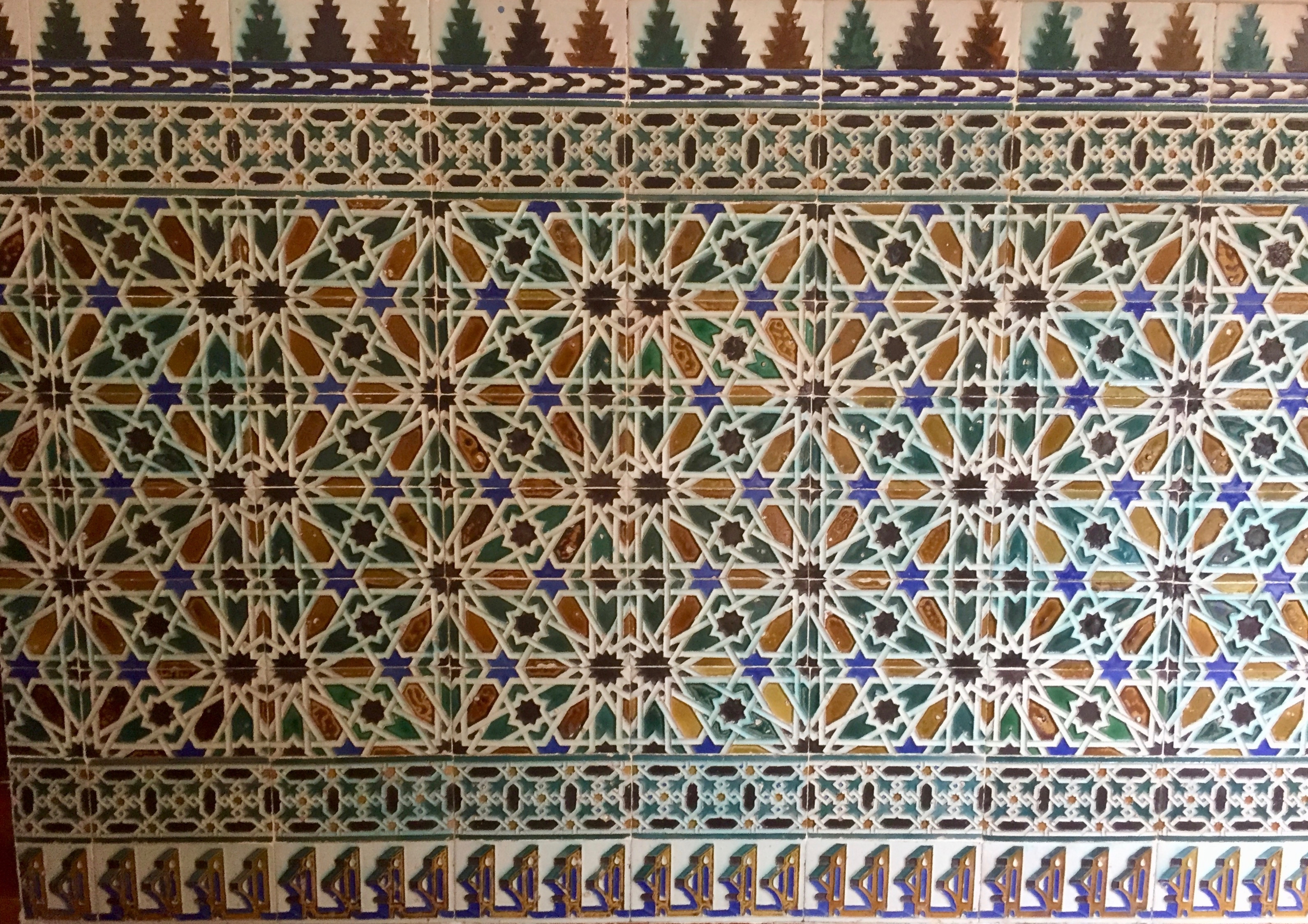
I’ve got a lot of photos I’ve taken which are of this type. They are examples of Islamic art in Spain. Actually there are several different types in my collection, one of which is tiles, like these ones.

I adore these repeating, interconnected, geometric patterns. I love the stars you can see in them. There are small six pointed stars, small eight pointed ones, and small twelve pointed ones. Can you find examples of all of those? Then as the lines spread out from each star, they create hexagons, squares and diamonds.

What I see most clearly when I look at an image like this is a representation of the fundamental connectedness of creation – I see nodes and bonds – an intricately, inter-laced network where nothing exists in isolation and every part emerges from the creation of the web of connections.

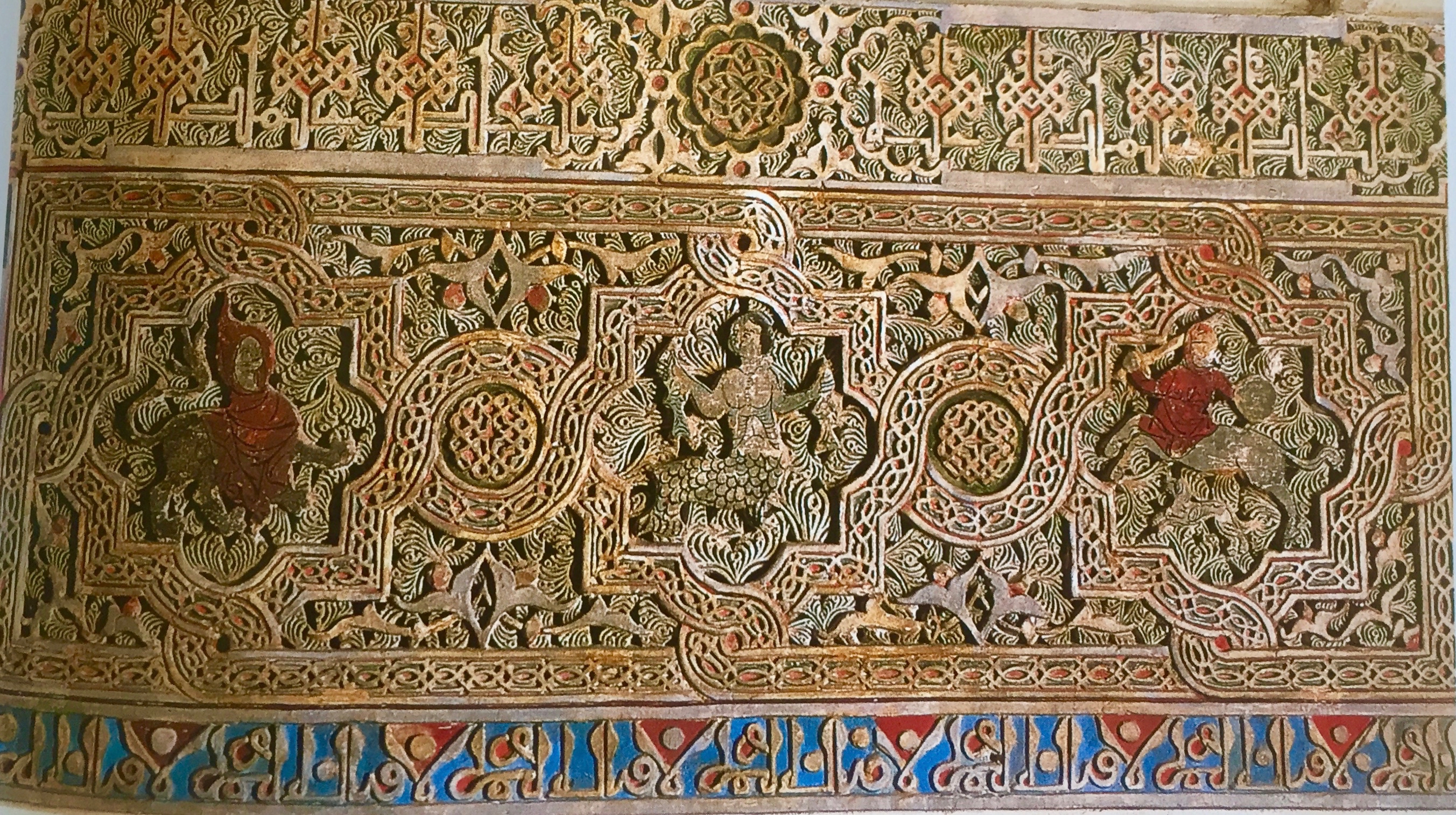
Here’s a somewhat different example. Now, I’m not a scholar of art history, but I do know that there are elements of different cultures in this particular image. There is a hint of Islamic art, a thread of Celtic art, and across the middle there are three chimerical creatures – perhaps a “manticore”, a “mermaid” and a “centaur”?

I love seeing these interwoven influences of different cultures, and it isn’t hard to find examples in Spain which has such a rich history of different peoples living there at different, and even overlapping, times.

These chimerical creatures are really strange to our modern eye and they are often seen as imaginary beasts or monsters, but when I see them here in this panel embedded in webs of inter-locking links and lines, I wonder if they actually represent something of an origin story. Do these half man/half lion, half woman/half fish and half man/half horse actually remind us of our shared origins – we humans and the rest of creation?

We have such a tendency to see human beings as separate from Nature. In fact there is a long tradition in the West in particular of seeing “Man” as superior to “Nature” and even having a God-given duty to subdue and control all the other creatures and forms of Nature on the planet. There are strains of religious teaching in there, but there are also roots in the origins of the “scientific method” and, in particular in a certain strain of darwinism (not put forward by Darwin himself).

We lose a lot when we separate ourselves from the rest of the planet we co-habit with all other forms of Life. We distance ourselves from other creatures and that seems to free us up to treat them with contempt and cruelty. There’s something deeply mistaken in thinking of all non-human reality as “resources” to be “exploited”.

But there is another way. I’m aware of at least three strands of knowledge which contribute to a more holistic, more inter-connected, and, I believe, healthier model.

I start with complexity science, and in particular the concept of the “complex adaptive system“. When I view myself, others, or any phenomenon on the planet through this lens, then the whole of Nature is one inter-connected organism. Nothing exists in isolation. Every action, every thought, every behaviour is influenced by, and influences the actions, behaviours and thoughts of others.

Next I am fascinated by genetics and embryology. It has always been a source of complete wonder and amazement to me that a single egg cell can be fertilised by a single sperm, then divide over and over and over again, differentiating the cells as it grows, to create the billions of cells which make all the tissues, organs and cells of the human body. And all in the right place! It continues to astonish me that all of our cells can be traced back to just two cells – one from each parent. But on top of that, it’s been amazing to see the incredible degree of “overlap”, or perhaps more correctly, of shared origin in the genomes of humans and other creatures. It’s pretty mind boggling to discover how many genes we have in common with earthworms for example!

Thirdly, I’m convinced about Lynn Margulis’ “endosymbiotic theory” – the idea that all multicellular creatures have evolved not only from unicellular ones, but that the individual cell components of nucleus, mitochondria, ribosomes, perhaps chloroplasts, were all originally separate creatures which evolved to live together and form these more complex structures of animal and plant cells. Each cell can be thought of as a little community, and each cell exists as a member of a larger community. This places co-operation, collaboration and symbiosis at the very heart of reality.

Read Full Post »

« Newer Posts - Older Posts »