Feeds:
Posts
Comments

Archive for the ‘personal growth’ Category

I’ve been familiar with Maslow’s hierarchy of needs for some time, but I’ve recently discovered I was only aware of part of his schema.

His idea was that we have many needs which motivate us to act and to choose how to act, and those needs are, to some degree, prioritised with the more basic needs demanding attention before “higher” needs emerge.

His most basic needs are those related to physical security – the needs for food, drink and shelter. Without food, without drink and without shelter we are unlikely to survive.

All human beings need love. We need relationships. If you think that’s not true, pause for a moment and ask yourself why solitary confinement is used as a punishment in prisons, or why “sending to Coventry” ie enforcing social exclusion has historically existed as a community punishment. These love and relationship needs are about emotional security. In Maslow’s hierarchy, first you need to attend to your physical security, then your emotional security.

However, he isn’t finished there. Next up is self-esteem, without which we don’t feel we matter. This is closely bound up in our sense of identity, our “worth”.

So far, so good, and this is where my familiarity ended. But in fact there is a whole other level above these needs in Maslow’s description.

All of these needs so far can be thought of as “deficiency needs”. They are based on “lack” and meeting them is useful to us, so they can be thought of as “utilitarian”, or as about “getting” things.

Above this, Maslow describes “being needs”, which are ends in themselves. They are about “giving”, and are more creative than utilitarian. Being needs are those related to purpose, value and meaning. These needs, he says, “express an overflow of our own being”.

It is these “being needs” which make us “fully human”.

When we recognise that animals occupy only the lower rungs of Maslow’s ladder of needs – those for sustenance, shelter, and some form of social life (but of course not all animals belong to groups) – we can see what this means. We are only fully human when we pass beyond these, as the being or meta-needs that lie ahead can be pursued only by us, or by beings like us ……. As far as we know, no animal wonders why it exists. Or, to put it another way, we are the only animals that do, and that wonder is precisely the threshold between our being only animals and being fully human. (Gary Lachman)

Read Full Post »

sunset over ben ledi


I look out at this mountain every day (It’s called Ben Ledi), but how different the world might look to me if I actually climbed to the top of it (I haven’t done that….yet!)

Climbing a mountain for aesthetic reasons was, apparently, a defining moment in the development of human consciousness. The famous climb was that of the Italian poet, Francesco Petrarca (Petrarch) in the fourteenth century. He was the first to record climbing a mountain to see the view.

We can say that the origins of our modern appreciation of nature go back to 26 April 1336, when the Italian poet Francesco Petrarca (1304–1374), better known as Petrarch, made his famous ascent of Mount Ventoux in France. This event has gone down in history as the first time someone climbed a mountain solely to see the view. Clearly people had scaled heights before, but Petrarch claimed he was the first to do so solely out of curiosity, for what we might call aesthetic reasons. He recounted his excursion in one of the letters making up his Epistolae familiares (1350)

That’s a quote from Gary Lachman‘s “Caretakers of the Cosmos”. He points out that several thinkers and writers reflected on this famous ascent.

Ernst Cassirer saw in Petrarch’s ascent of Mount Ventoux ‘testimony to [the] decisive change in the concept of nature that began in the thirteen century’ and which led to nature becoming a ‘a new means of expression’ for human consciousness, as well as to a ‘desire to immediately contemplate nature’.

Cassirer wrote brilliantly about how human beings create a world of symbols. Unlike other creatures which live on their instincts and sensory organs, we humans use symbolism to create a richer world and to live in it quite differently from other forms of life.

what began with Petrarch’s ascent, for Gebser, was the age of what he called ‘perspectival consciousness’, the perception and representation of the world from a unique human vantage point.

Jean Gebser’s “Ever-Present Origin” describes an evolution of consciousness from the archaic, to magical, to mythical and mental, and up to the present evolution of  an “integral” form.

I’m sure you can discover many other references to Petrarch’s ascent, but as I look out again at Ben Ledi, I’m able to imagine being at the top and to see Scotland from there. That profoundly influences my sense of who I am and my place in the world. I wonder what it’s like to live in a country without mountains?

Read Full Post »

Untitled

Mirror, mirror


In the A to Z of Becoming, R is for reflect.

What does it mean to reflect? I think reflecting has a number of elements. There’s a pace to it. When we reflect, we slow down. Instead of reacting, or “pressing on” with busy-ness, we temporarily stop, pause, take a breath. So taking a moment to reflect acts a natural break, creates that “necessary distance” the neuropsychologists talk about.

There’s an element of checking yourself out too isn’t there? The way we do when we look in a mirror. We see how we seem. We look at how others might see us. Or even without mirrors, but in conversation, or with the help of a journal, we can consider how we are living, what choices we are making, what habits we have acquired. We can think about our direction, our goals, hopes and fears. We can take a moment to reflect on how decisions we’ve taken are working out.

I think reflecting is something I do every day as a doctor too. In psychotherapy and counselling students are taught to reflect someone’s words back to them. This might even be called “mirroring” and when it’s done mechanically, or clumsily, it can feel a bit annoying (“What I hear you say is……..[insert clients own words here]”) but when it becomes a natural conversation, it lets the person reflect on the words they are using, the phrases they are repeating, and the beliefs which are underpinning their current state of mind or body.

When you can spend some time with someone who cares about you and will listen to you without judging you, you can gain some very fruitful insights as you reflect together.

So, here’s your verb for this week – reflect. Try it out and see what happens…….

Read Full Post »

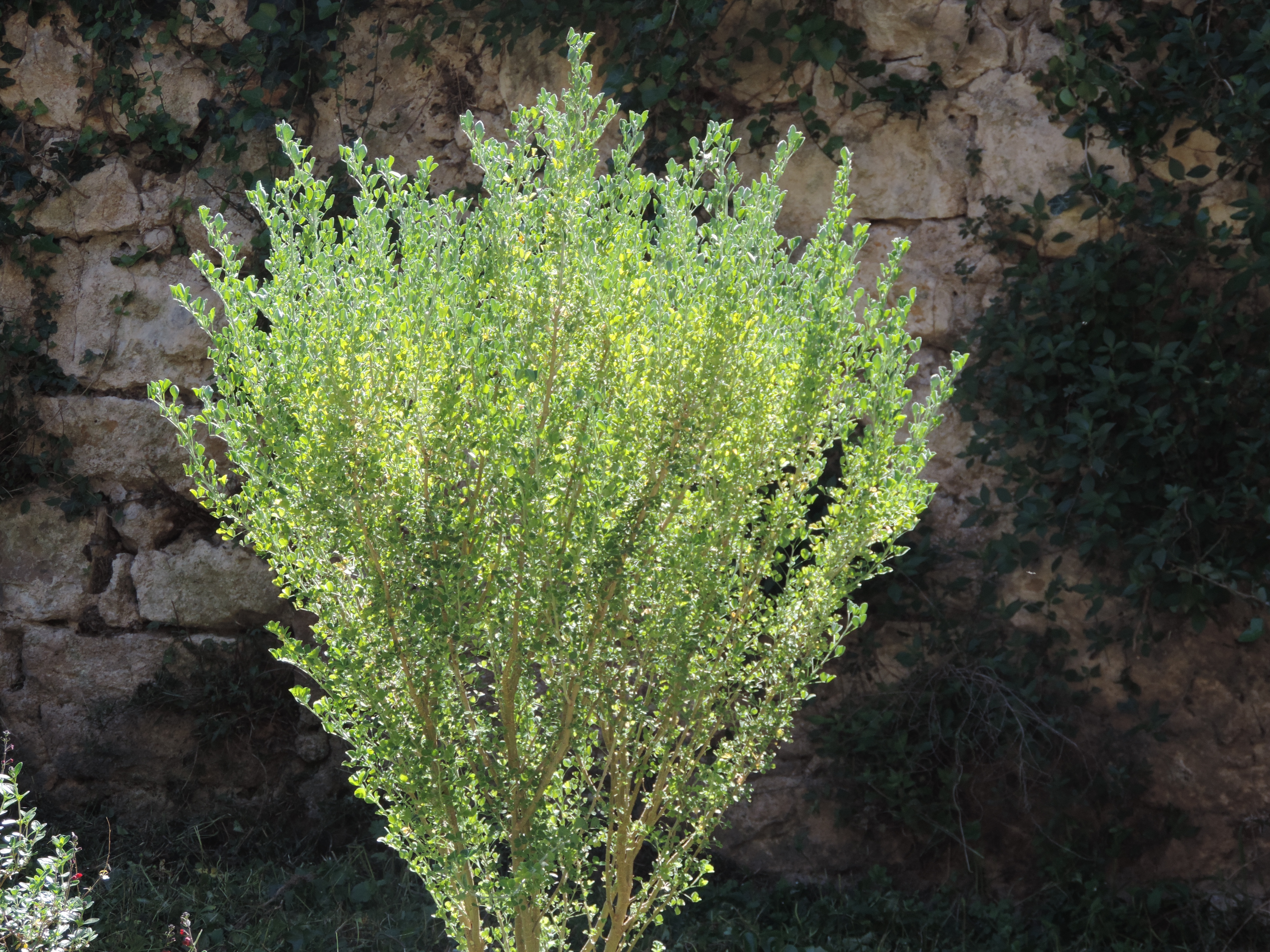
In my twelve monthly themes, May is the month of blossoms and new growth.

I wonder what is beginning to blossom in your life?

I wonder what new buds of opportunity are appearing, reaching for the sun?

I wonder what new direction your life will take this year?

DSCN1149 DSCN1152 DSCN1099

Read Full Post »

It’s very common for us to say something like “My head is sore”, or “My stomach aches”, or even “I have a rash” when we experience one of those symptoms. So who is it who has this head, stomach or rash? This way of talking confirms our feeling that we “have” a body, but that our bodies are not us. Stop and think about it for a moment. Are you your body?

You might answer that your body is part of you but it isn’t YOU. That the you who has this body is maybe your mind?

But then we do the same thing with our minds too, don’t we? We say “I’ve lost my mind”, or “I’m out of my mind with worry”. Who is the “I” who is referring to this mind?

So your body isn’t you. Your mind isn’t you. But both your mind and your body are a part of you.

The physicalist approach to this claims that this “you” which you experience is an illusion. It’s just something your brain makes up.

But stop and think about that one for a moment. If “you” are an illusion, who is having this illusion?

This is what Mary Midgley is exploring in her latest book, “Are you an illusion?”

I highly recommend you read it. It’s short, and it’s an easy but deeply thought provoking read.

She asks of those who write the books claiming that only the physical is real, and that the subjective sense of self is an illusion

Unkind observers sometimes enquire who, in that case, actually writes the books that expound this doctrine? Do the brain cells really do this work on their own?

She quotes the neuroscientist, Susan Greenfield, saying in an operating theatre, “This was all there was to Sarah, or indeed any of us…..we are but sludgy brains” and Colin Blakemore saying “The human brain is a machine which alone accounts for all our actions” and she responds

Thus if we want to understand why (for instance) Napoleon decided to invade Egypt or Russia, what we need is not – as we might think – some knowledge of the political background and of Napoleon’s state of mind, but simply facts about the state of his brain, which alone can account for his action.

Does the claim that you are only your brain cells, or only your DNA, ring true for you?

The materialist credo rules that thoughts, not being physical, cannot cause physical events. And as we know from every activity of our lives that thoughts actually can and do affect those events – that they are often all too effective, producing practical results in the world even when we wish they wouldn’t – this doctrine puts materialism into a radical conflict with reality.

This is the nub of it for me. These materialist beliefs don’t only not ring true, they don’t adequately explain reality. So why are they so prevalent? One of the authors she draws on to answer this is Iain McGilchrist who has shown us how the left and right hemispheres of the brain work together to produce and integrated understanding from their two very different ways of approaching reality. She quotes him saying

Mind has the characteristics of a process more than of a thing; a becoming, a way of being rather than an entity

This is almost identical to the way Dan Siegel and the Interpersonal Neurobiologists put it – “the mind is a process of regulation of energy and information flow”.

She hits the nail on the head time and again. Let me finish with this one

The bizarre anti-self campaign which is the main subject of this book is surely intended, among other things, to put us off taking notice of everybody’s inner life: to persuade us that this is a trivial, contemptible subject by the simple device of pretending that it isn’t there.


Read Full Post »

Do you ever wonder why we are here? Or are you someone who thinks there is no answer to that question because the Universe is totally random and meaningless?

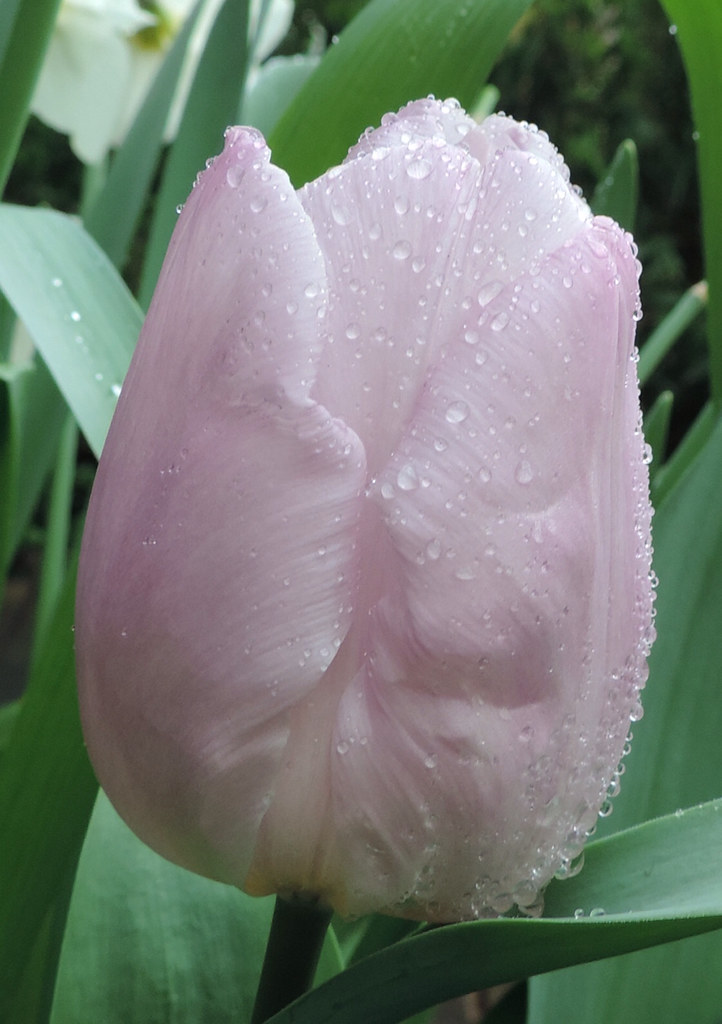
When the Universe created human beings, it created consciousness, and with consciousness came some new abilities – a combination of the ability to wonder (to be amazed by, to be in awe of, to have that émerveillement du quotidien), the ability to enjoy (to experience a wide range of sensations and subjective experiences), and the ability to care for (to look after, and to nurture).

Walking in the garden at the hospital where I work today brought all of that home to me….


Clematis

Tulip and rain

Read Full Post »

In the A to Z of Becoming, Q is for Question.

Human beings have an unstoppable curiosity and it appears very, very early. If you have children who are old enough to talk, you’ll probably have encountered the “why?” question. Repeatedly. “Why?” “Because X”. “Why?” Because Y”. “Why?” In fact “Why?” might be THE most common question children ask (just above “Are we there yet?” when they are in a car!)

We never really give up on the why question, do we? We consider our lives and wonder how to live and what purpose there might be to life, and the question why is an important part of that.

But “Why?” isn’t the only question you could be asking. “Who am I?”  is another good one, and Marc Halévy stresses “What for?” which is also great for breaking through the walls of unthinkingness. (Is there such a word? There is now!)

Gary Lachman, in “Caretakers of the Cosmos” says

As far as we know, no animal wonders why it exists. Or, to out it another way, we are the only animals that do, and that wonder is precisely the threshold between our being only animals and being fully human. Whoever asked the first question about his existence was, by this reckoning, the first human.

That makes asking questions pretty essential doesn’t it? To be “fully human” we should think about why we exist.

I also like Montaigne’s repeatedly asked question which he puts in his essays – “Que sais-je?” (What do I know?) – that’s a great question to keep you in touch with humility!

I’ve just completed Robert McKee’s four day “Story” seminar today and we did a scene by scene analysis of “Casablanca”. Here’s one of the passages which leapt out at me today.

Rick: Who are you really? What were you before? What did you do? What did you think?

Ilsa: We said “No questions”

Rick: Here’s looking at you, kid.

Well, here’s looking at YOU, kid, but I say keep asking questions!

Read Full Post »

Seedling


I woke up up the morning with this phrase in my head “witnessing not measuring”, which was quickly followed by “witnessing not controlling”.

I’ve been wondering about that since.

That’s the essence of my work. I sit with people, engage with them, enable them to tell their stories and be heard without judgement which leads to understanding and recognition. Everything I do therapeutically is intended to support and stimulate the individual’s self-healing. I think this is something we often forget in health care – there really is only one way to heal, and that’s by the person’s own ability to self heal. Stop and think for a moment. If you have a cut, how does it heal up? If you break a bone how does it knit back together? If you have a viral infection how does your throat return to normal? Ultimately it’s done to your amazing capacity to self heal and self repair. Any therapy should assist that process if it is to be effective. It’s not ME who produces healing. It’s not my therapies which produce healing. It’s the patient’s own healing system which does the work.

And I can’t control that. Nobody can accurately predict the outcome of any particular treatment given to any particular individual on any particular day.

We like to pretend that by making measurements we can predict and so control. It’s an illusion.

I amazed every single working day by human beings and their amazing healing powers. Witnessing this is powerful. Understanding and caring come with the witnessing, and therapies are then tried within that context. It’s humbling.

Today I read in Gary Lachman’s excellent “Caretakers of the Cosmos”

Love, for Scheler, was the sine qua non of phenomenology, which in its essential form, is a way of allowing the world to be what it is, without interference by human concepts or aims. It is, in a sense, a way of listening to what the world has to say to us, from which follows the recognition that it has something to communicate, and is not simply a vast inanimate machine.

I think, by the way, there is a lot to be gained from witnessing yourself……whether through mindful meditation, reflective writing, or however you might do that for yourself.

Maybe that’s the third variation of the phrase I woke with – witnessing not judging.

Read Full Post »

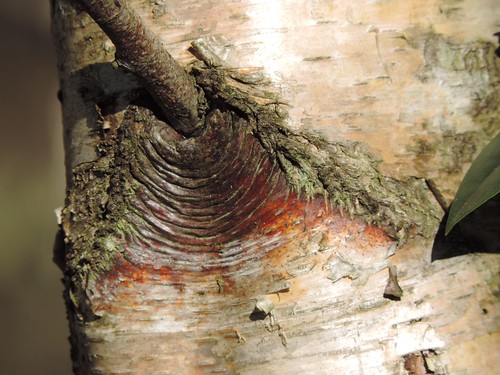
Emerging branch

Take a look at this photo. It shows the growing new(ish) branch emerging from the trunk of a birch tree.
What stuns me is the beauty and the complexity. We don’t just see the new branch emerge like a stick or a stem, but we see all those ripples of activity on the main part of the tree.

I find all new life amazing but this is the first time I have noticed such elaborate and beautiful effects on a tree. It’s clear that how this birch tree grows is surprising and, I suspect, neither completely explained by science, nor in any way predictable in detail.

Could anyone predict exactly where a particular tree will produce new branches, and can anyone explain how the cells organise themselves to differentiate and multiply in this specific pattern?

I find it engaging and wonderful.

Read Full Post »

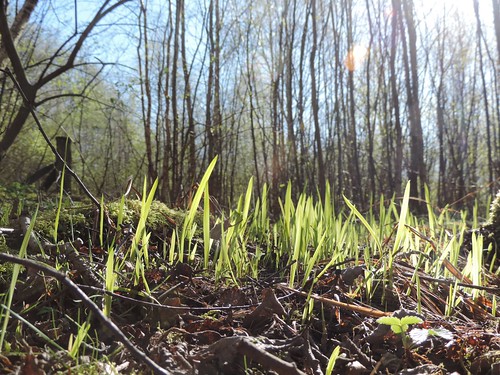
Irises on the forest floor

On the forest floor in the Spring it’s amazing to see whole carpets of new life suddenly bursting through.

The force that through the green fuse drives the flower 


Read Full Post »

« Newer Posts - Older Posts »