Feeds:
Posts
Comments

Archive for the ‘philosophy’ Category

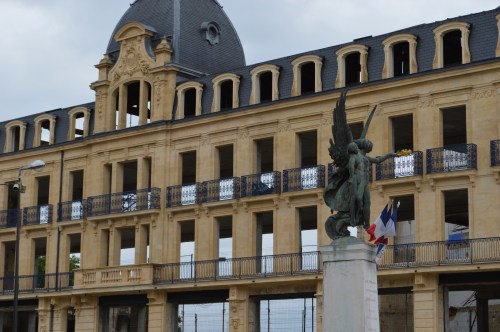
At first glance, this is a beautiful old building with its creamy, yellow stone all cleaned up and looking pretty glorious. But it doesn’t take long before you realise there’s something not right here. Something not whole. There’s no glass in any of the windows, which is the first clue, but when you look through the window frames you see…..the sky. When you walk around the building to the other side you see that there is nothing there. This isn’t a building any more. It’s a facade.

It’s not uncommon for towns to do this. The local authorities demand that the front of the old, beautiful building is preserved whilst the developers are free to demolish every other trace of it and replace it with a concrete, steel and glass box to put little offices or shops in.

It’s kind of sad. And yet, the front remains, and, when well preserved, it retains a lot of its initial beauty.

Have you ever visited a movie set? I don’t mean a movie theme park with rides and parades, but a set. I visited one once and it was the strangest experience to walk through a New York street, only to discover that every single building was a facade propped up from behind with great beams of wood and scaffolding. The building in this photo reminds me of that.

This sets my mind off down two quite different paths. The first is how we all present a certain face to the world. A certain look, style, a certain conformity really. Even when trying to be non-conformist, the “look” recreates conformity. I used to walk from Glasgow Central Station to Glasgow Queen Street Station on the way home from work. I’d pass the Gallery of Modern Art. On the steps of that gallery, goths would gather. Some evenings there would be a few dozen of them. Now, one goth in an office, or a shop, might stand out as really different, but several dozen of them together looked pretty much the same. (By the way, the pigeons used to hang about those same steps in large numbers too and I often wondered if there was some natural association between goths and pigeons!)

Our uniqueness is at its greatest on the inside. It’s not in our clothes, our “lifestyles”, our diets or our habits. We share all of those with many other people. (“Other customers who like X also like Y” – as the algorithms tell us)

So that’s the first thing I wonder about when I look at this photo. It’s uncomfortable because it isn’t “whole”, which, in my book, means it isn’t “healthy”. But, more than that it has no inside. So it’s lost its uniqueness.

The second line of thought is about imagination, because this image reminds me of the movie sets, and I know that whether it’s on TV, cinema or even in a theatre, “appearances” are manufactured to stimulate our imagination. So, I look again at this building and I wonder who built it and why. I wonder about the people who used to work there and how they related to the building they were working in. I wonder about the place this building had on this particular street, in this particular town. I wonder what stories these stones could tell, if only they could speak.

Here’s another photo which picks up that second thread.
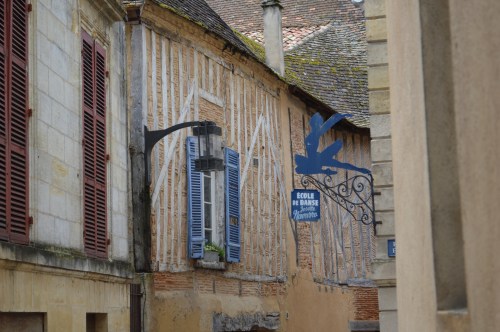
Josette Navarro’s Dance School. Isn’t that beautiful? Doesn’t it capture your attention and set your imagination running? What a name! Once I got home I looked up Josette Navarro and her “Ecole de Danse” and she was still giving lessons, but I couldn’t really find much detail about either her or her dance school.

However, I still find this an incredibly evocative image. I love the wind-vane style of the sign with the dancer in full flight. I love the name. “Josette Navarro”. And the fact she has a dance school. I love the blue of the sign and how it echoes the blue paint on the shutters opposite. I love the light hanging directly opposite, and wonder if it casts a spotlight on the dancer at night.

Even when we can’t see what’s inside, what we do see can really stimulate the imagination, and/or bring back memories, such that it’s easy to imagine stories, scenes from movies, drama, romance, or whatever your favourite genre, and just spend a while enjoying that. Following where it leads you.

Read Full Post »

I took this photo one winter in Scotland. It’s a particular kind of image which really pleases me. There is straight line running across the entire scene and splitting the image into two parts, but the two parts, at first glance, don’t seem enormously different.
However, there are clear differences. The foreground field is flat and the earth beneath the snow forms parallel lines running up to the border from the front of the photo. The field over the border is on a hillside and it’s markings are like contours of a map of a hill. The snow on the hill is whiter than the snow on the field and, somehow looks deeper.

Between the two there is a border zone. That appeals to me. There is not a solid wall or fence, more a rough line of stones, containing an unworked area of land partially marked off with a fence. In fact, as I look more closely now, I think that line of stones is the top of a dry stone wall and there is a dip in the land just beyond it.

Apart from the trees at the bottom and the top of the image the only “Life” in the picture is one sheep and one tree, both in that in-between zone.

That reminds me of the fact that Life itself exists in a kind of in-between zone. The zone between order and chaos. Thomas Berry describes this beautifully in his “The Great Work” where he calls the two forces of the universe “wildness and discipline”.

When first the solar system gathered itself together with the sun as the center surrounded by the nine fragments of matter shaped into planets, the planets that we observe in the sky each night, these were all composed of the same matter; yet Mars turned into rock so firm that nothing fluid can exist there, and Jupiter remained a fiery mass of gases so fluid that nothing firm can exist there. Only the Earth became a living planet filled with those innumerable forms of geological structure and biological expression that we observe throughout the natural world……….The excess of discipline suppressed the wildness of Mars. The excess of wildness overcame the discipline of Jupiter. Their creativity was lost by an excess of one over the other.

For Life to exist there needs to be an ordering principle, something which builds and creates, turning small, apparently disconnected pieces, like atoms, into elaborate complex networks, like the multicellular human body and the astonishingly interconnected human brain.

But too much order is counter to Life. Rigidity isn’t much good without flexibility. We live in a changing universe. Year by year, month by month, week by week, day by day, even second by second. We have a word for that kind of phenomenon – dynamic. The universe is a manifestation of a dynamic, living, breathing, integration of order and chaos, of discipline and wildness.

All of Life exists in this dynamic, “far from equilibrium“, zone. It never stands still. It’s never “complete”, “finished” or “done”. It’s a flow, a process, a complex, vastly inter-connected network. Maybe that’s why it’s hard to pin down definitions of “Life” and “Health”. They aren’t fixed objects.

Read Full Post »

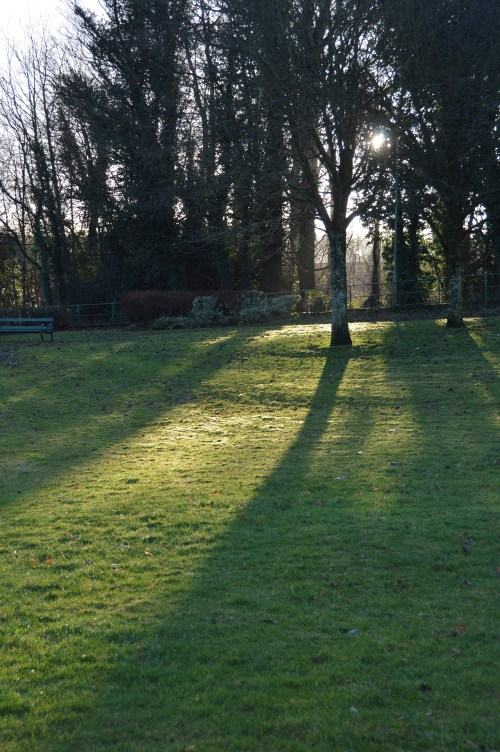
I took this photo at noon one January 1st.

You might think its pretty much just a photo of some grass, so, hold on, let’s look more carefully, and consider the contexts. If it was simply a photo of a patch of grass it wouldn’t be particularly interesting but what caught my eye wasn’t the grass, it was the interplay of shadow and light.

Despite it being noon, the Sun is still pretty low in the sky. Well, it’s taken in the wintertime in Scotland, so that’s normal. But, normal or not, the effect of the low sunlight streaming through the trees is spectacular. The angle of the light makes the shadows SO long and the spaces between the trees show frosted grass sparkling brightly.

I love the forms and the patterns of the shadows, the light, the frost and the grass. It takes all of them together to create the scene.

Here’s another scene –


This is a huge puddle which is there more often than it’s not in this particular field. I once saw swans swimming on it! But today, what makes this image so beautiful is the trees and their reflection. Without the trees, the clarity of the light and the stillness of the water, this just wouldn’t be the same. It has echoes of the previous photo but it’s completely different. However, both photos were taken within minutes of each other, the flooded field lying just a short walk along the road from the shadowed park.

I’m struck by how important the contexts are in these photos. If I’d “abstracted” just one element in each – a grassy patch, a section of the puddle, a single tree – I’d lose all the context. It’s the interplay of all the elements which makes these images more than the sum of their parts.

Life is like that.

When we focus too narrowly, when we consider only a part in isolation, we achieve only a partial understanding. It’s the whole experience, in all it’s contexts and environments, with the story which holds them together, and the remembered subjective experience of being there which makes them so unique, so particular to me.

So, if I am to share any of that with you, I need to show you, and tell you, at least some of the contexts. That way, you’ll come closer to experiencing what I experienced.

That was my everyday working reality. Every single patient who came to see me had a unique story to tell. If I were to understand them I had to hear their story. I had to try to have some experience of their experience, to feel what they were feeling, to know what they knew, if I was to understand, diagnose and help them.

But it’s the same for all of us. If we are to understand anyone, friend, relative, colleague, stranger, we have to hear their story, and try to experience some of their experience.

It’s always partial. It’s never fixed. It’s never completely knowable. But there’s no substitute.

Read Full Post »

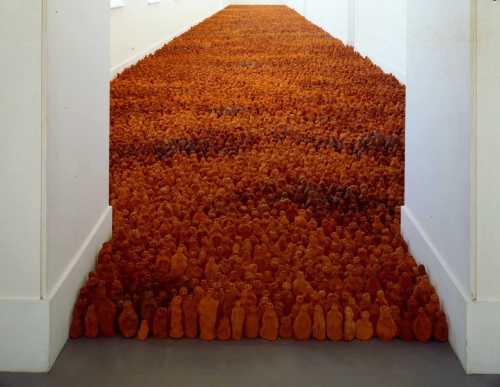
Anthony Gormley’s “The Field” is an installation which made a lasting impression on me. I saw it many, many years ago in Inverleith house in the Royal Botanic Gardens, Edinburgh.

When I first looked into the room and saw all these terracotta creatures I thought, how amazing, look at all these wee guys, all the same! Then I started to look more carefully and realised that they were not all the same. In fact, Gormley hadn’t made all these models himself. He’d invited hundreds of people to each make their own one. So every one of them was unique.

That image stayed with me because I thought this was an essence of the work of a doctor. Every patient would present me with features which they had in common with other patients who had the same diagnosis, but every one them was unique. I had to juggle with the opposites of sameness and difference every day.

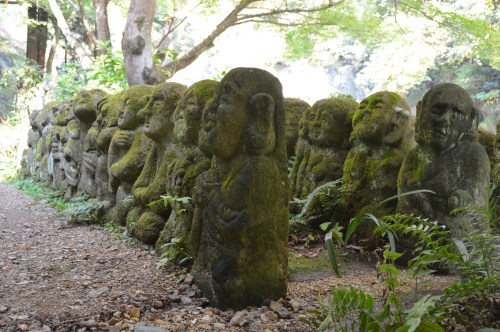
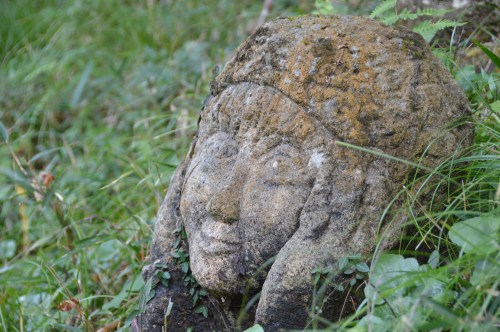
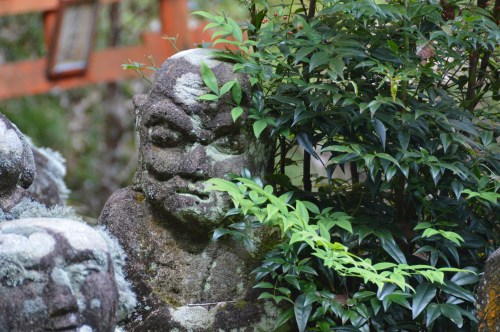
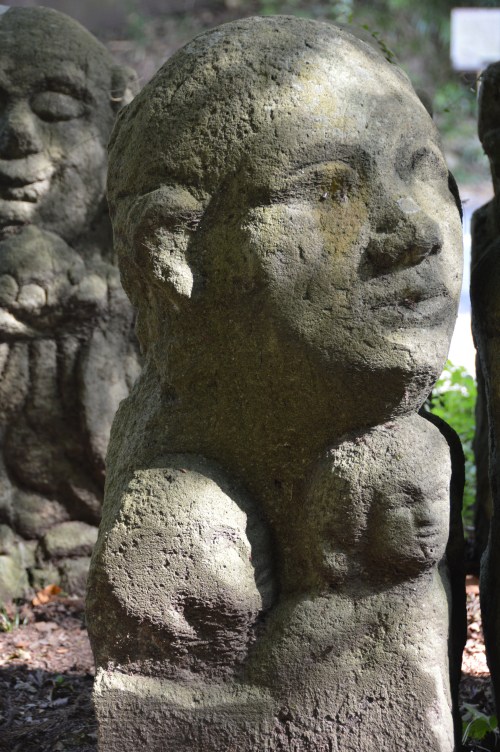
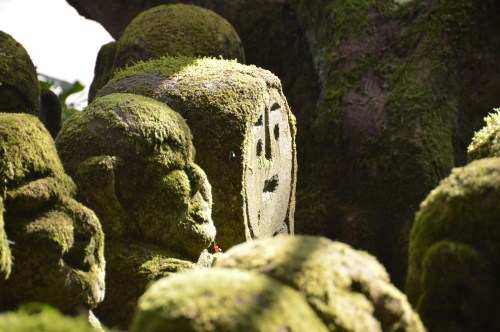
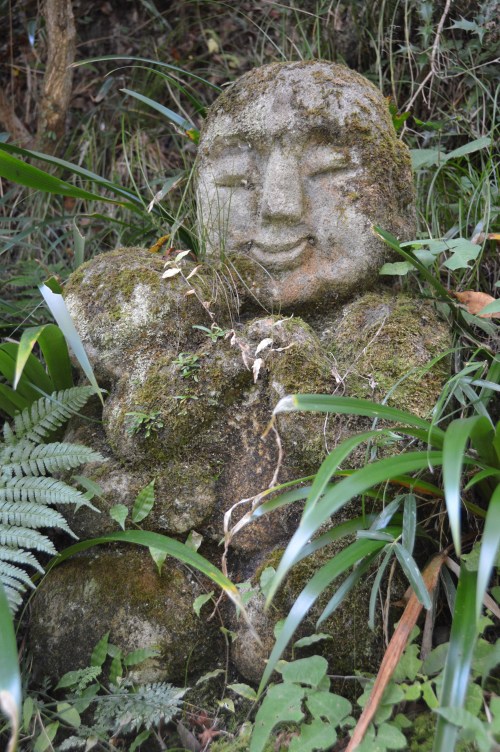
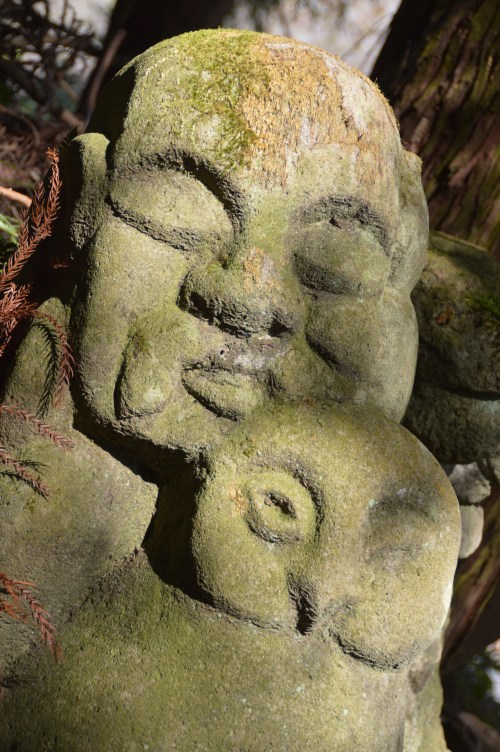
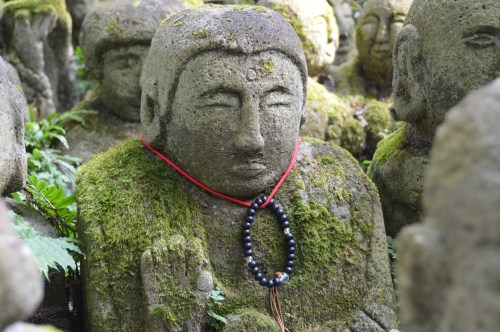
Years later I visited Otagi Nenbutsu-ji Temple on the edge of Kyoto. In the grounds there I found something similar to Anthony Gormley’s “The Field”. Under the direction of an artist dozens of people had created their own stone sculptures. Again, at first glance, they looked the same, but, quickly you can see that every single one of them is unique.


Look at some of them….I bet you find a favourite or two

Read Full Post »

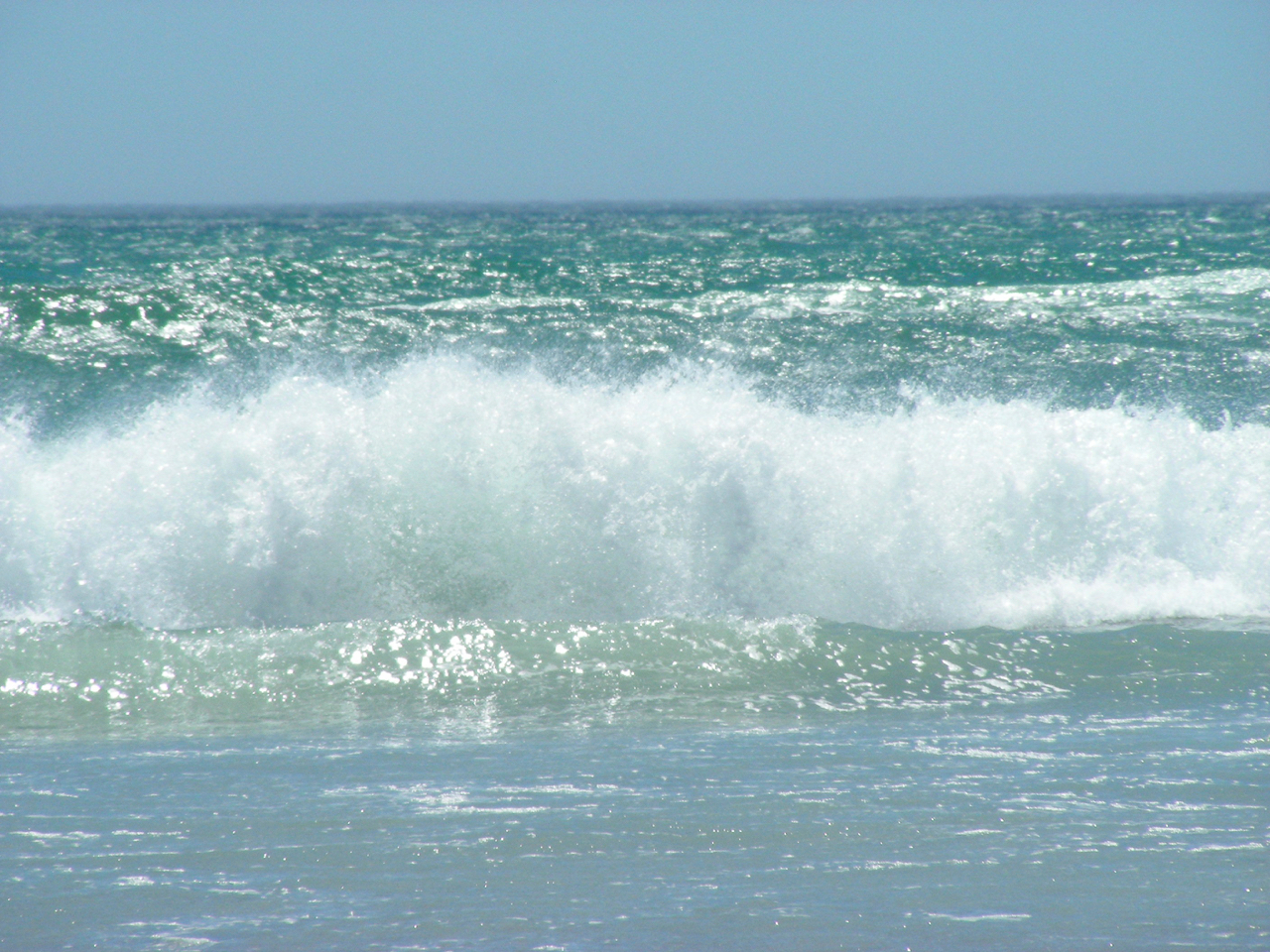
I can remember science lessons in High School where we studied waves. I thought they were fascinating. I still do. All kinds of waves. Waves in the sea

waves in a pond

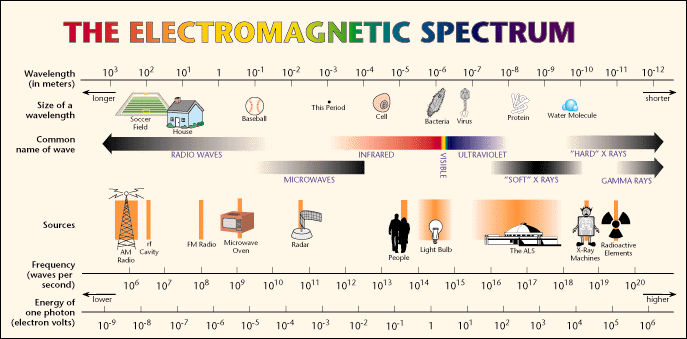
the electromagnetic spectrum which includes the light and colours we can see, the radio waves we can tune into and many other varieties of invisible waves which affect us.

the waves produced by our hearts and brains which we can’t see, but we can measure and represent on charts (did you know that when your heart rhythm emits a wave pattern which can influence the heart rhythms of people who are physically close to you? 

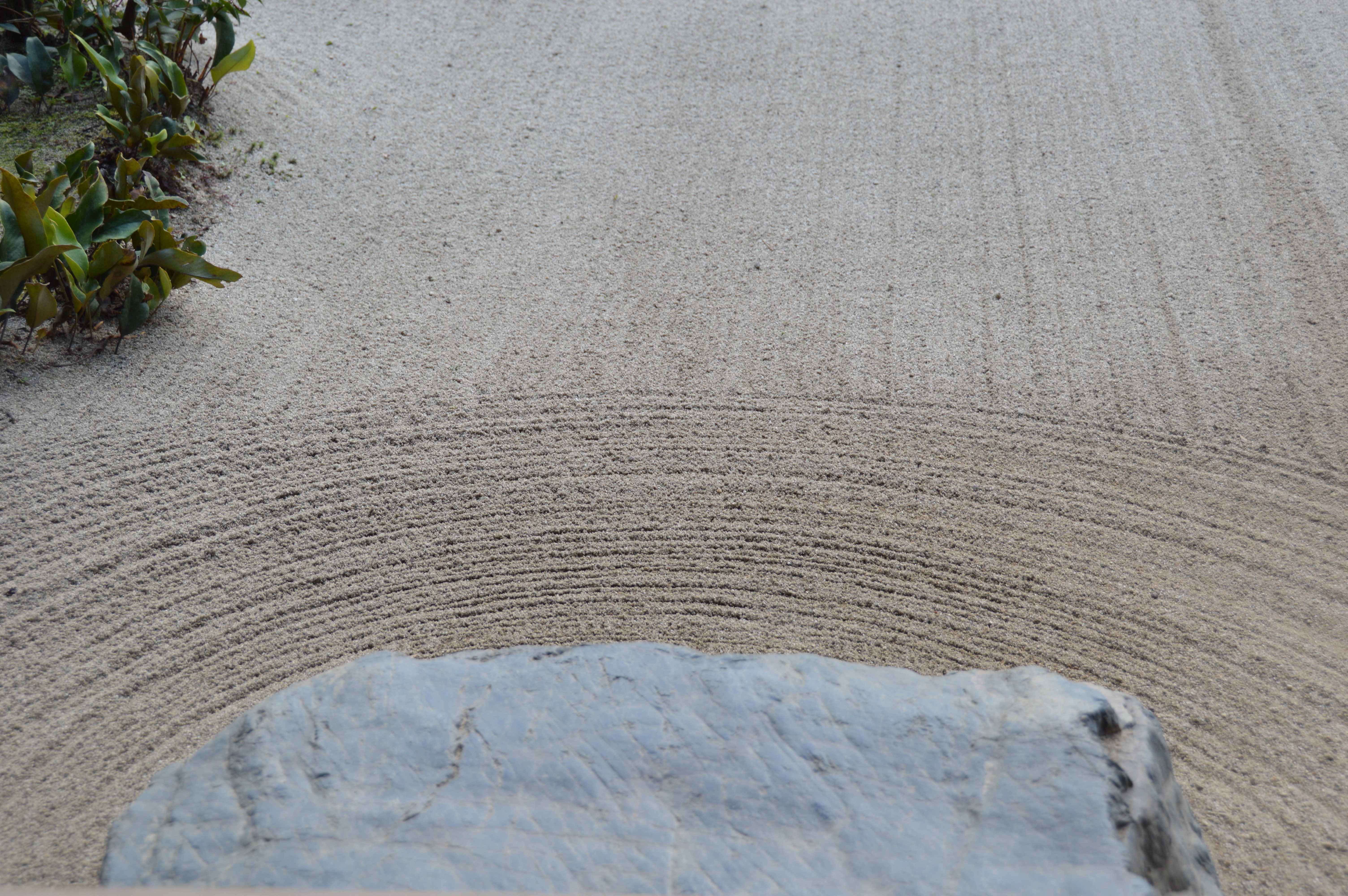
Even the representation of waves drawn in the stones in a temple or shrine (like the one at the start of this post).

Waves change us.

Waves carry energy and information.

As energy and information reaches into our bodies and minds it changes us.

I read the other day that “influencers” are having a hard time. Bear with me, I’m 66 next month, and “social media influencers” are not my specialist subject, but as best I can tell people who make a living from advertising and marketing revenues from companies by sharing pictures and videos of themselves wearing or using those companies’ products have seen a sharp decline in their income.

Seems one of the things during this pandemic is that people are consuming less “stuff”. Well, given that around the world millions of shops are closed and production lines are at a standstill, maybe this is no surprise. But there’s another element to this story which seems to be a sort of re-evaluation that’s going on. Less people seem interested in the lives of “celebrities” (ie people who are famous for being famous) just now. Priorities and values are changing.

However you want to look at this, the underlying reality is that we are all influencers. There is nothing I do, from the breaths I take, to the beating of my heart, to the communications I make and the behaviours I show, which doesn’t change the world. OK, yes, of course, not the whole world! Well, probably a very small part of the world actually. But collectively we are all influencers.

We send out materials, energy and information into the world constantly. Unceasingly.

What materials do you send out? What “waste” do you produce and what do you do with it?

What energy do you send out? How does that energy affect your relationships?

What information do you send out? What are your messages? How do you say them? Are they based on kindness or hate? Hope or fear? Anger or Joy?

You cannot escape being an influencer.

The question is – what waves are we making? You and I.

Read Full Post »

I was so very fortunate to travel to Japan several times over the last decade or so of my working life. Every time I was inspired by the people I met and the places I saw. There’s an aesthetic which seems characteristically Japanese and I find it SO appealing.

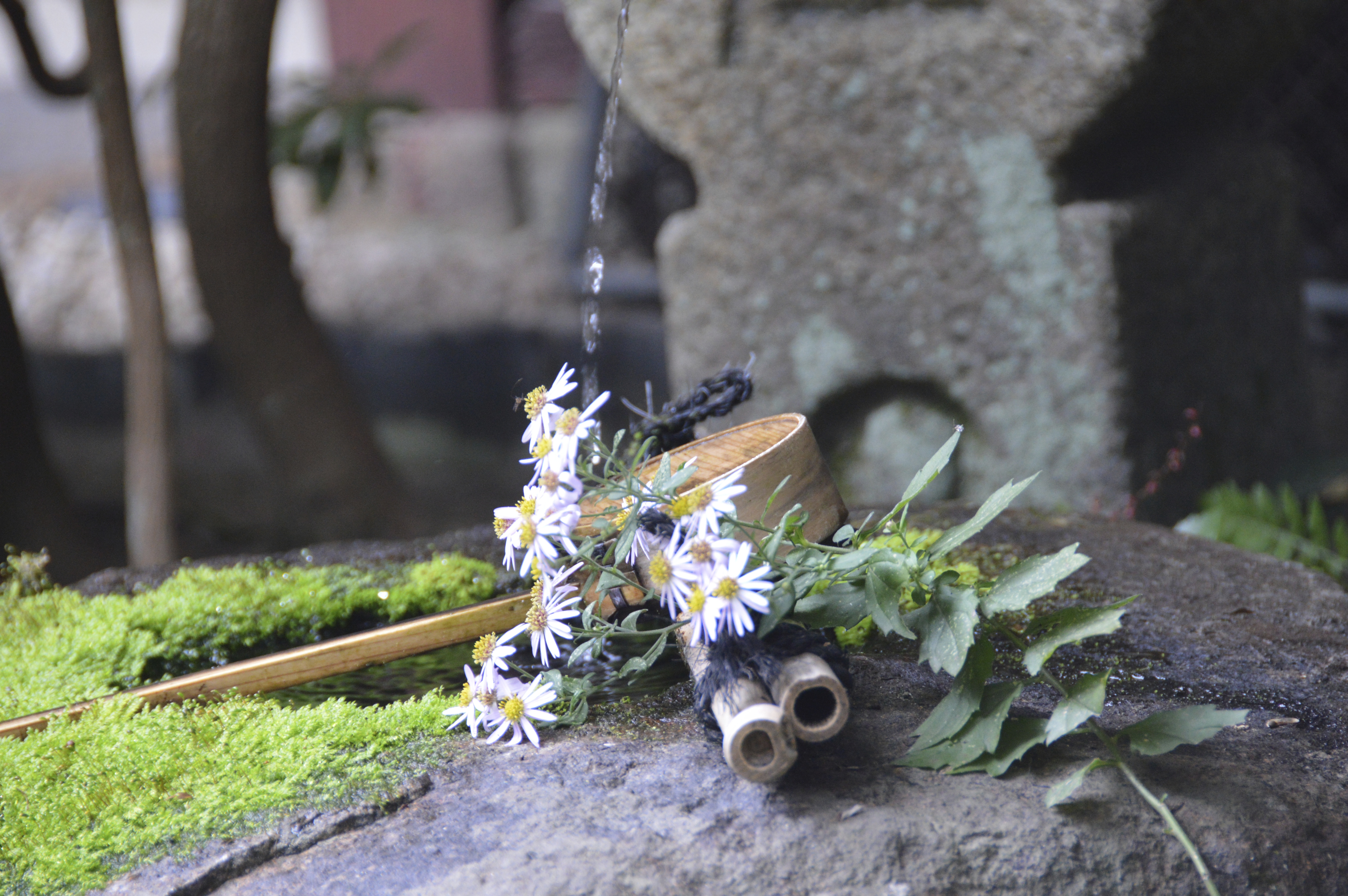
This photo is a good example, I think.

I don’t quite know how I’d capture what makes this so beautiful but I think its a simple, small combination of natural and hand-crafted elements.

Here you can see a rock, with some moss growing over part of it, a stone carving in the background and a simple stream of water pouring down into a stone basin (which you can’t see in this image). Laid on the stone is a bamboo ladle of the type you can find at any temple or shrine. It’s resting on two stalks of bamboo tied together with rough, black rope, over which lies a stem of flowers.

Everything looks as if it might have just fallen there accidentally, but you know everything has been carefully placed. I love that combination of natural elements, living and flowing elements, and hand crafted items fashioned from natural materials.

I have a notion that the principles of this aesthetic might become more widespread in other parts of the world if this current crisis inspires people to enjoy and savour the simple everyday pleasures, and maybe also begin to desire a better relationship to the natural world.

Some of the key principles of this Japanese aesthetic are described in wabi sabi – if you want to explore this further!

Read Full Post »

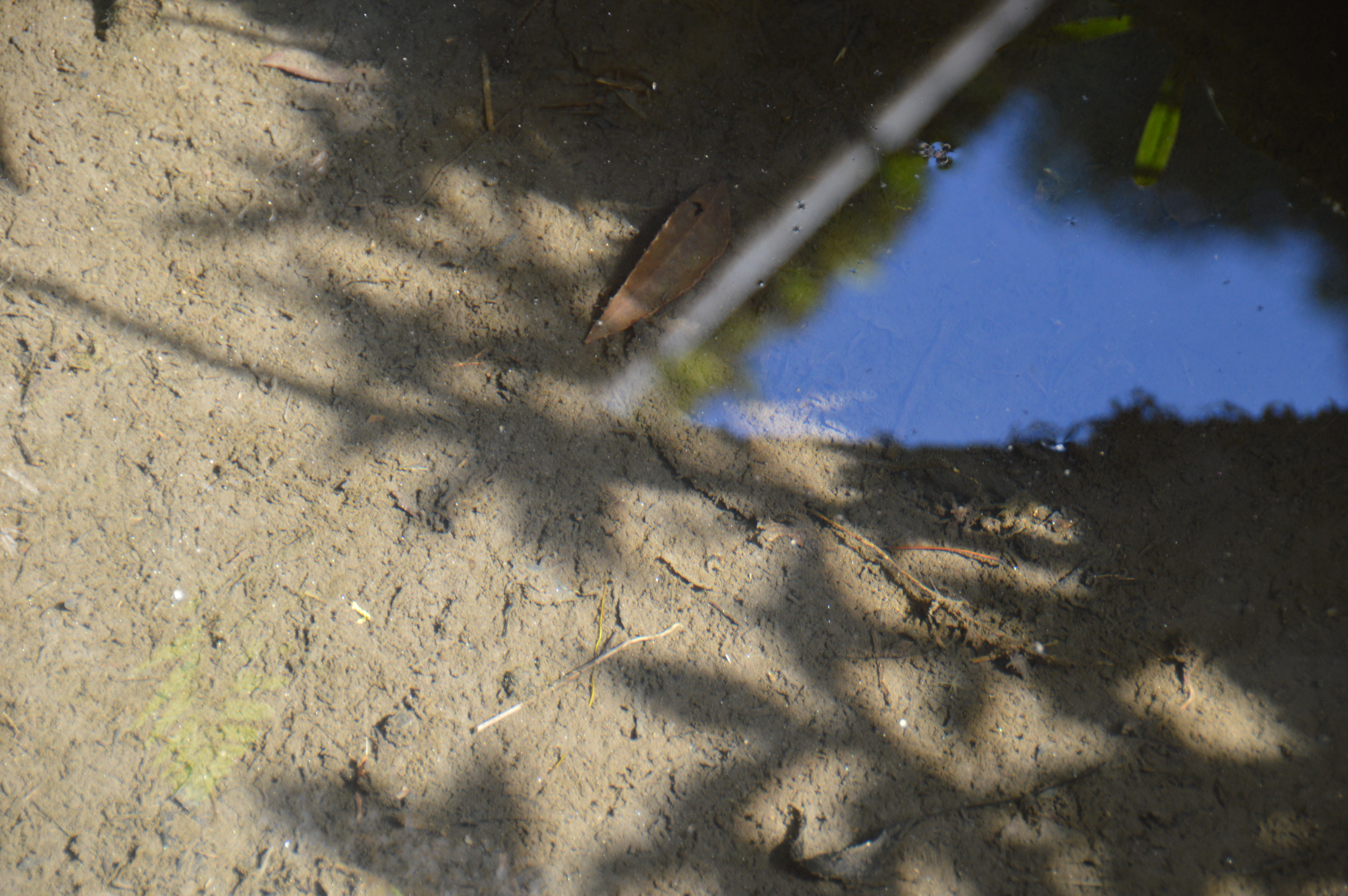
When I looked at this image I saw an earthy path with a puddle lying on it. The puddle is beautifully blue because it is reflecting the sky above. There’s an enticingly intricate pattern of shadows on the earth, cast by the sun shining on the leaves of some trees. At the edge of the puddle the reflected green of the leaves borders the sky.

Then, I thought, hold on, there’s something odd about this. That puddle is a really, really strange shape. It’s almost a triangle. Something’s not right here.

So, I looked more carefully, and a different interpretation leapt out at me.

This isn’t an earthy path, and that isn’t a puddle.

This is a photo of a pond. The water is so clear you can see right through to the muddy floor. The shadows are cast right through the invisible water and the reflected sky is on the surface of a pond, not a puddle lying on the earth.

When I realised this I was quite surprised. No matter how hard I look I still can’t see any water lying over the earth. The reflected sky, however, reveals the water. It makes it more obvious.

This got me thinking (well, if you’ve read a few of my posts, you’ll be familiar with how my images provoke my thoughts). It got me thinking, I wonder how often I don’t see reality because I don’t look carefully enough? I wonder if taking my time allows me to notice the peculiar, and how often it’s the peculiar, the strange, the thing that doesn’t fit, which is the key to the door of perception.

There are two lessons in that thought…..slow down, and be open to what’s different, what seems peculiar.

I guess a lot of the way I engage with the world is at a superficial, faster level, with an eye open for what’s familiar, what I know already…….that way I can quickly tell myself I know what I’m looking at, and move on. I’m sure those mental behaviours are valuable, but I do think they are over-used.

That’s my lesson to myself today –

Remember to slow down and savour.

and

Remember to look out for what is strange, rare, or peculiar.

Read Full Post »

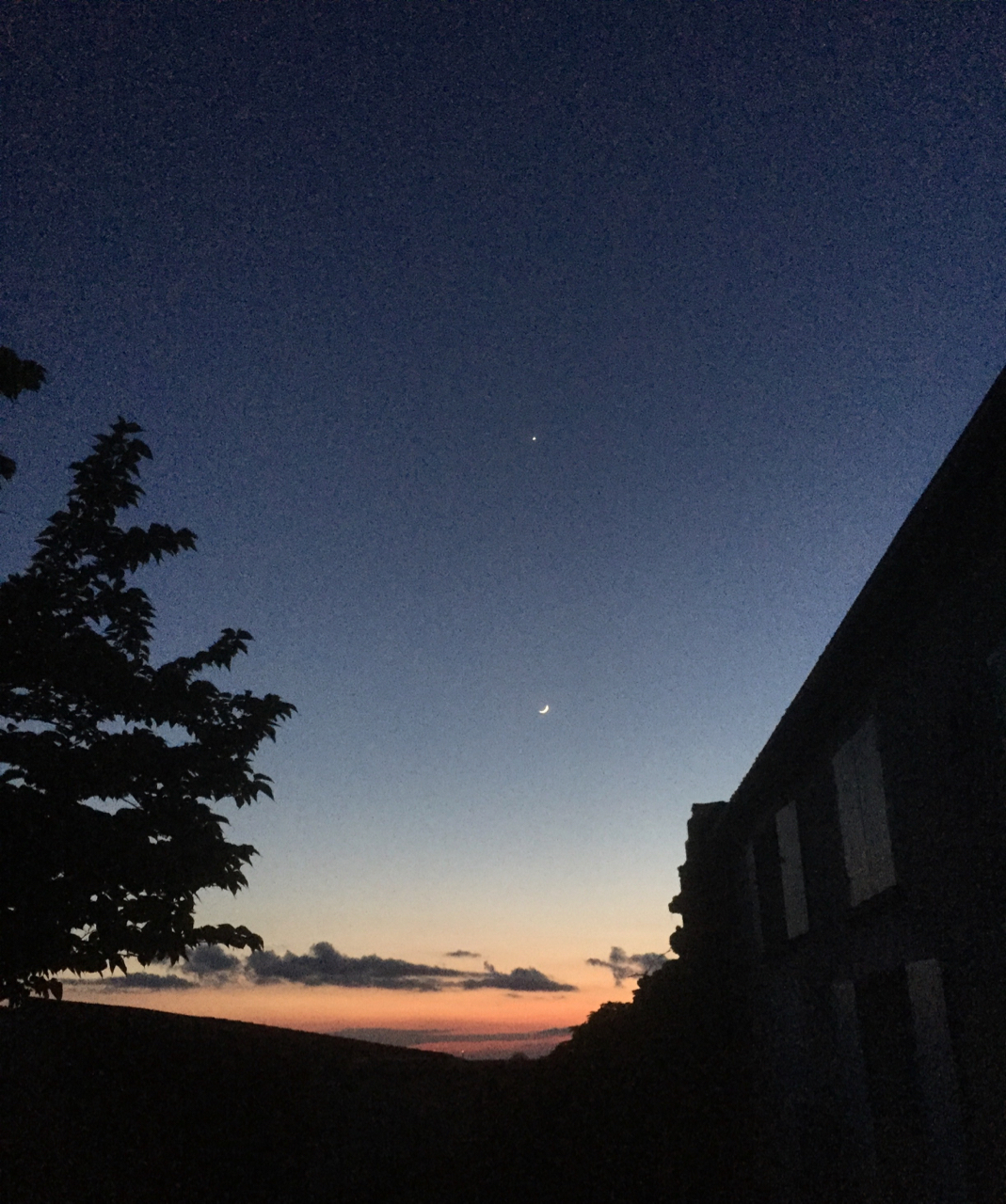
When I stepped out to close the shutters on the windows a couple of nights ago I looked up and saw Venus and the Moon shining so brightly they were almost dazzling. When I looked closely I could see the full black disc of the moon with just a thin silver crescent on the lower right edge. Above the Moon sat Venus, like a queen on her throne.

Both Venus and the Moon are symbolically and mythologically linked with the feminine. And, oh how we need that energy now. Actually, oh how we are seeing the flourishing of that energy now.

Taking a perspective from myth, symbol and spiritual experience, I have always found it helpful to think of two energies, two streams or channels of flow, within each of us at an individual level, within our societies, and, within Life. We call these two forces the masculine and the feminine. I’m not talking about gender or culturally determined social roles for men and women here. I’m thinking instead of something much deeper, something more fundamental.

I wear a yin-yang symbol around my neck. I’ve worn it for decades. Although I was born in Scotland and brought up in the Church of Scotland during my childhood years, by the time I was a teen I discovered Buddhism and Taoism. I bet the way I came across those schools of thought is pretty unusual. It was in reading the novels of Jack Kerouac. Books like Dharma Bums and Satori in Paris. I guess we all have our own particular paths and stepping stones which we’ve followed to develop our beliefs and values. I have never called myself a Buddhist or a Taoist but I’ve read a lot of books about these and other Asian philosophies. They are a constant source of inspiration for me.

Probably the single most powerful and useful concept I learned in those readings was idea of yin and yang. The feminine yin and the masculine yang, sometimes referred to the receptive and the active principles. I don’t intend exploring these ideas in detail here but when I look up at the Moon like this I immediately think of the yin-yang symbol.

Interestingly, when I looked up a couple of night ago and saw what I’ve photographed in that image at the start of this post, I saw vastly more yin than yang.

That seems appropriate. I see signs of a strengthening feminine energy all around.

I’m sure there are whole books exploring these two forces but one simple version which I’ve found helpful is to think of the male energy as “provide and protect”, and the female as “nurture and nourish”. Remember, I’m not talking gender or gender-based social roles here. I think these two forces exist in all of us and an imbalance produces illness and dysfunction at both the levels of the individual and of society.

In the UK Thursdays at 8pm have become the time for people to get to their window or front door and “Clap for the Carers”. This is an astonishing new level of recognition and collective expression of support and gratitude. It’s not only happening in the UK. It’s happening around the world. And it extends out from front-line nursing, medical and care staff to all kinds of workers who are now seen as “essential” – all the people without whose daily efforts society would collapse. I saw a photo online today of someone’s garden gate in a French town. The person living there had made a variety of posters, covered them in plastic to protect them and pinned them up on their gate post. One said thank you to the refuse collectors. One said thank you to all the health workers. One said thank you to the postie.

I’m seeing those sentiments expressed every day now. I’m seeing and hearing people say thank you to others every day now. Saying thank you and declaring support. Showing appreciation. How ironic, you might think, given how under-valued these very jobs are. Often they are poorly paid with precarious job contracts and work which is under-resourced. If there is one sliver of silver lining (like at the edge of that moon up in the sky just now) then I hope its a re-evaluation of what is important in society and how we resource and reward those who make life possible.

How often are women the ones who are the carers – both from nursing and caring professions, but also in child care, teaching, in nurseries, and on the checkouts in the supermarkets? This is a strong feminine energy and these new “heroes” we are asked to clap for, are more often “heroines”!

Of course, there are many, many men who are doing essential jobs too, from the refuse-collectors to the lorry drivers, delivery men, farmers, emergency services and those who keep the power supplies and communication systems flowing. Employment and work activity is too gendered. Are we ready to recognise that more clearly?

There’s much to think about and discuss about the economics of work and social life, and I do really hope this pandemic is shining a light on the dysfunctions which have made us more vulnerable as well as laying out new paths to follow as we go forward.

I think there is a surge of the yin – we are seeing an increased emphasis on the importance of relationships, of caring and of collaboration.

Can that surge flourish? Can it change the landscape? Can it move us away from acquisition, consumption and competition? Can we build a new world by pouring our energies and resources into nurturing and nourishing…not just bodies, but minds and spirits too?

Venus and the Moon…..your time has come!

Read Full Post »

Last year there was a wave of complaints from people about “over-tourism”. Several cities, like Venice, Barcelona, Prague and Edinburgh were accommodating so many tourists that locals felt life was becoming difficult. There were even problems with the number of people visiting the Isle of Skye in Scotland.

Well, this year, look what’s happened. Nobody last summer could have seen this virus coming, and none of us have lived through an experience like this, but as I read yesterday about Spain, Italy and France all experiencing a complete collapse of tourism and making plans to prevent holiday travel into their countries for the foreseeable future I couldn’t help but be amazed at how much things had changed.

That also got me thinking about the old phrase “Be careful what you wish for. It might come true.”

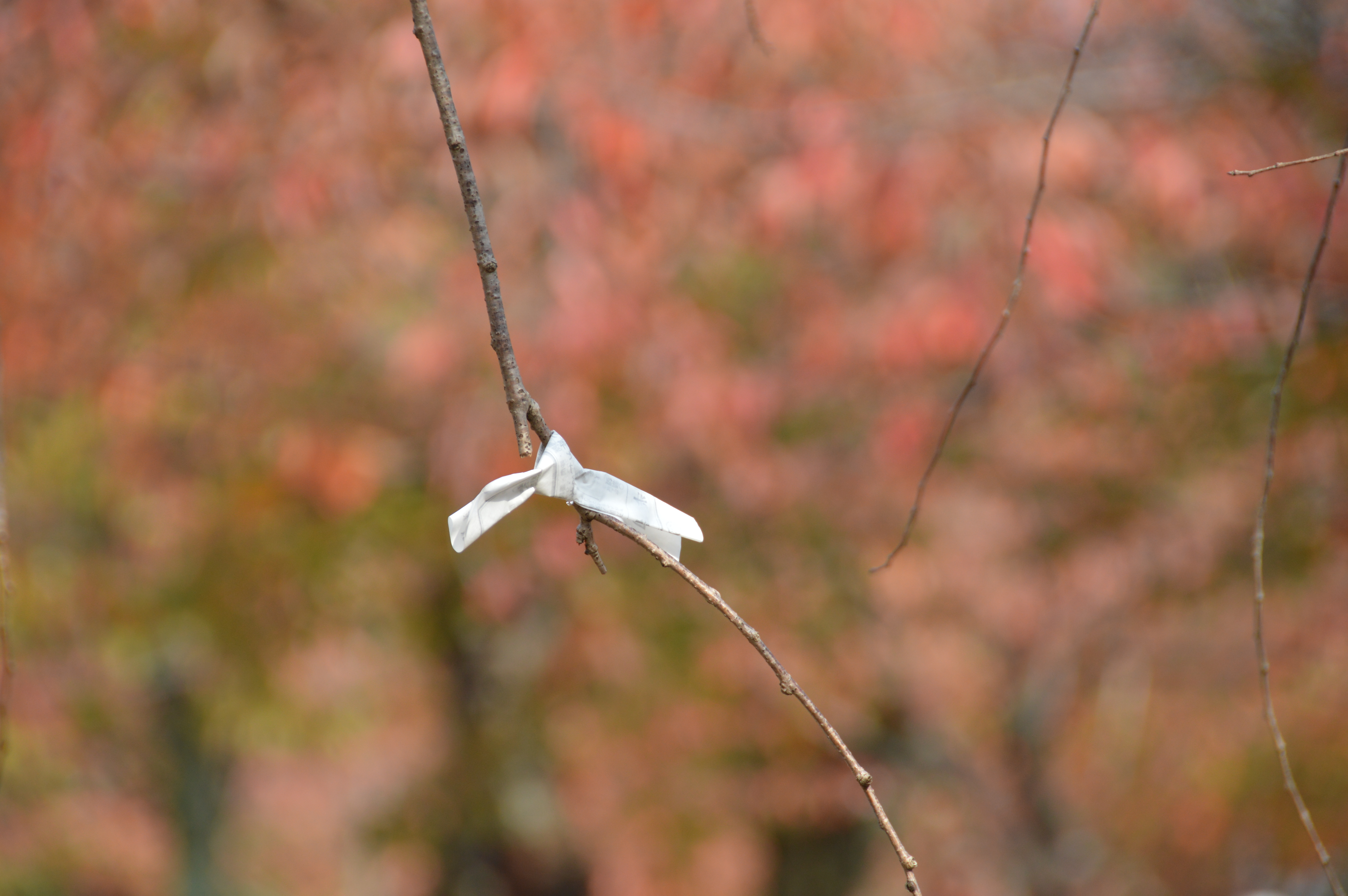
I’ve visited Japan a number of times and one thing which has always struck me is the practice of writing down wishes and hanging them up in temples and shrines. That photo above is of one such simple wish. Often you’ll see a whole tree covered in little paper wishes like that.

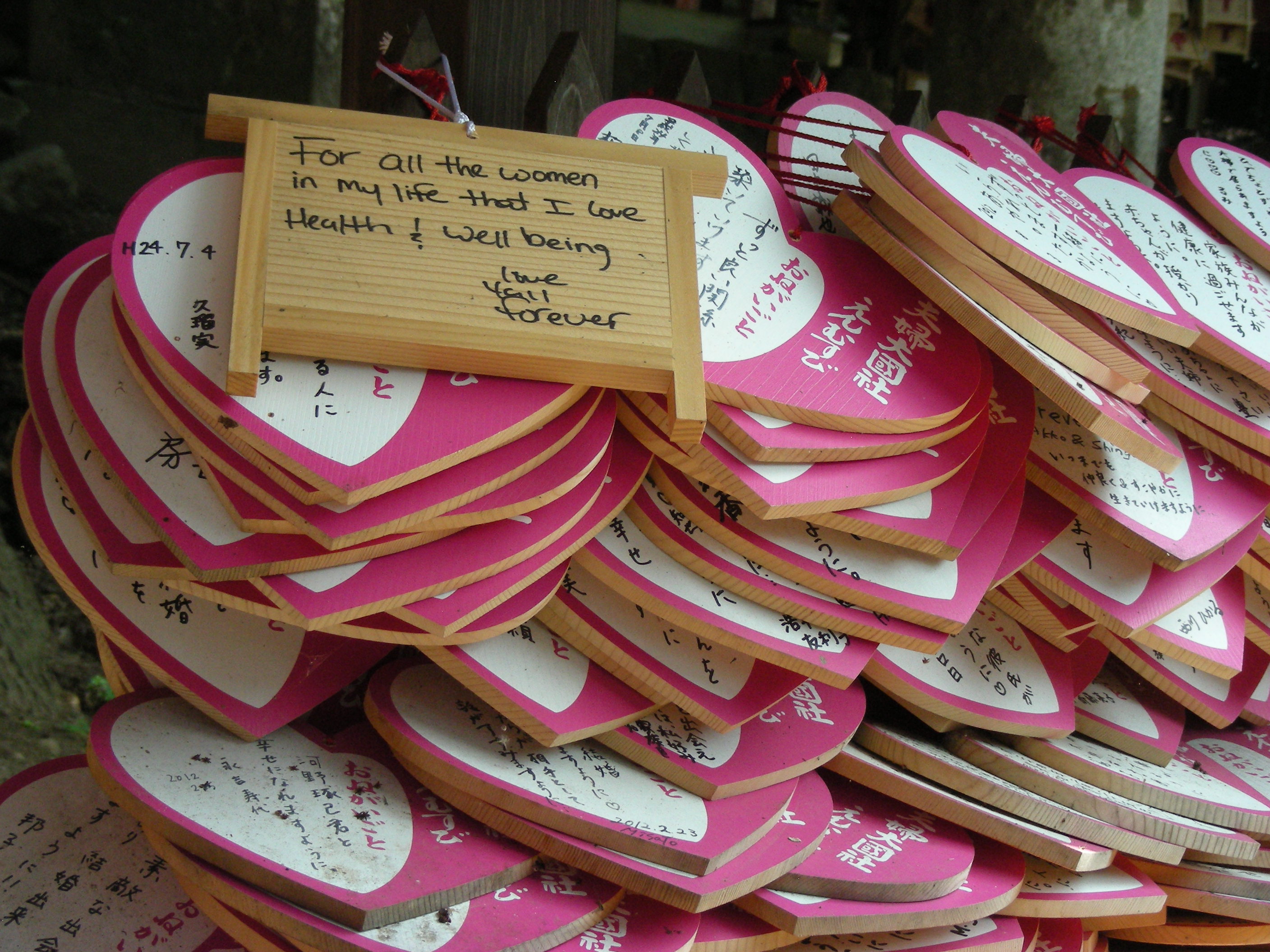
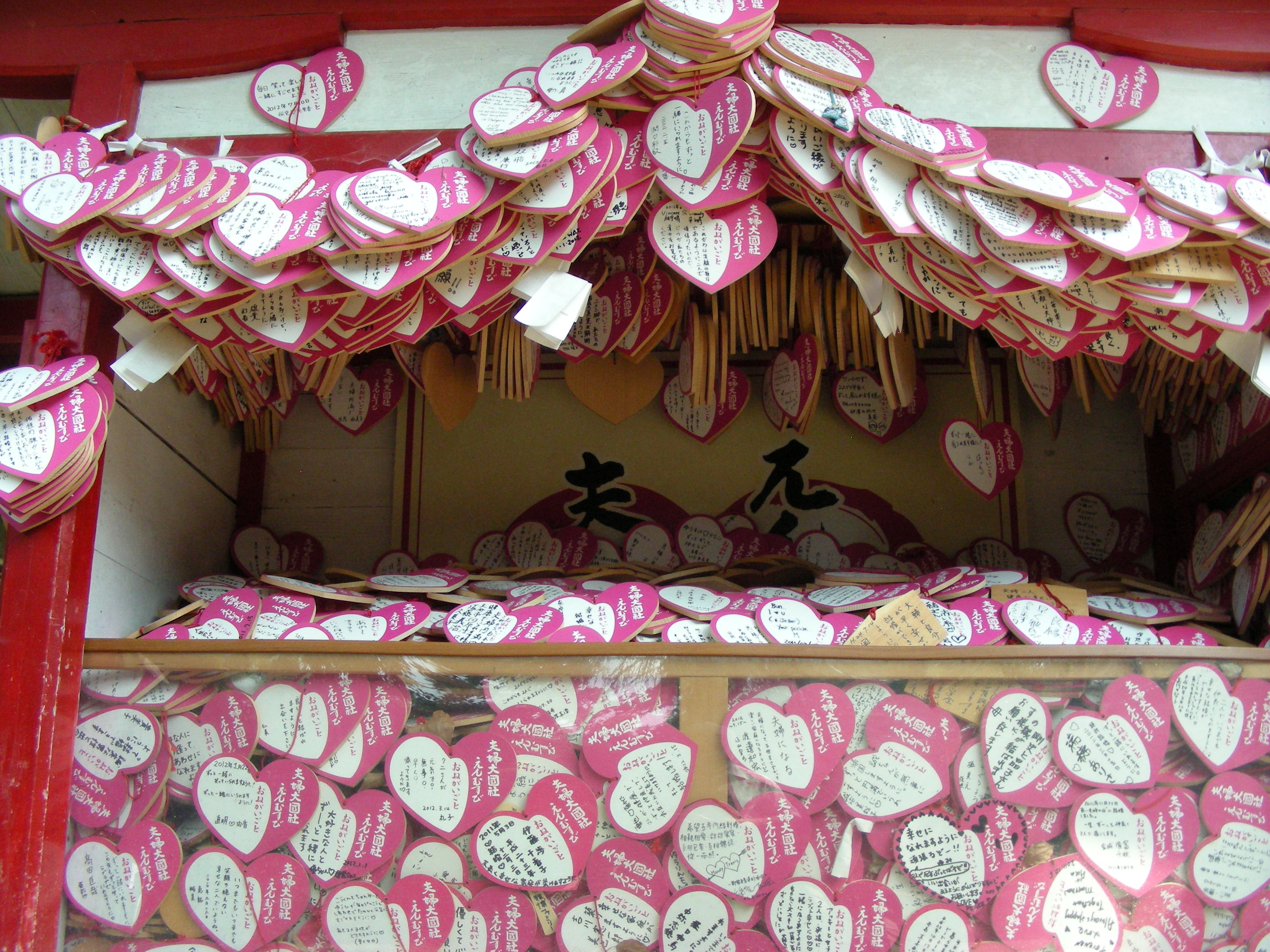
In some shrines, wish-making is more organised and focused. For example, in Nara, I came across this one –

I understand these particular ones are from married or engaged couples and are hopes for a good future for their relationship.

Though, it would seem some non-Japanese speaking guy didn’t quite understand that….

Of course, I don’t know if the author of this wish (and where did they get that different, non-heart shaped plaque?) was referring to their grandma, mum and big sister, but it sure struck me as strange!

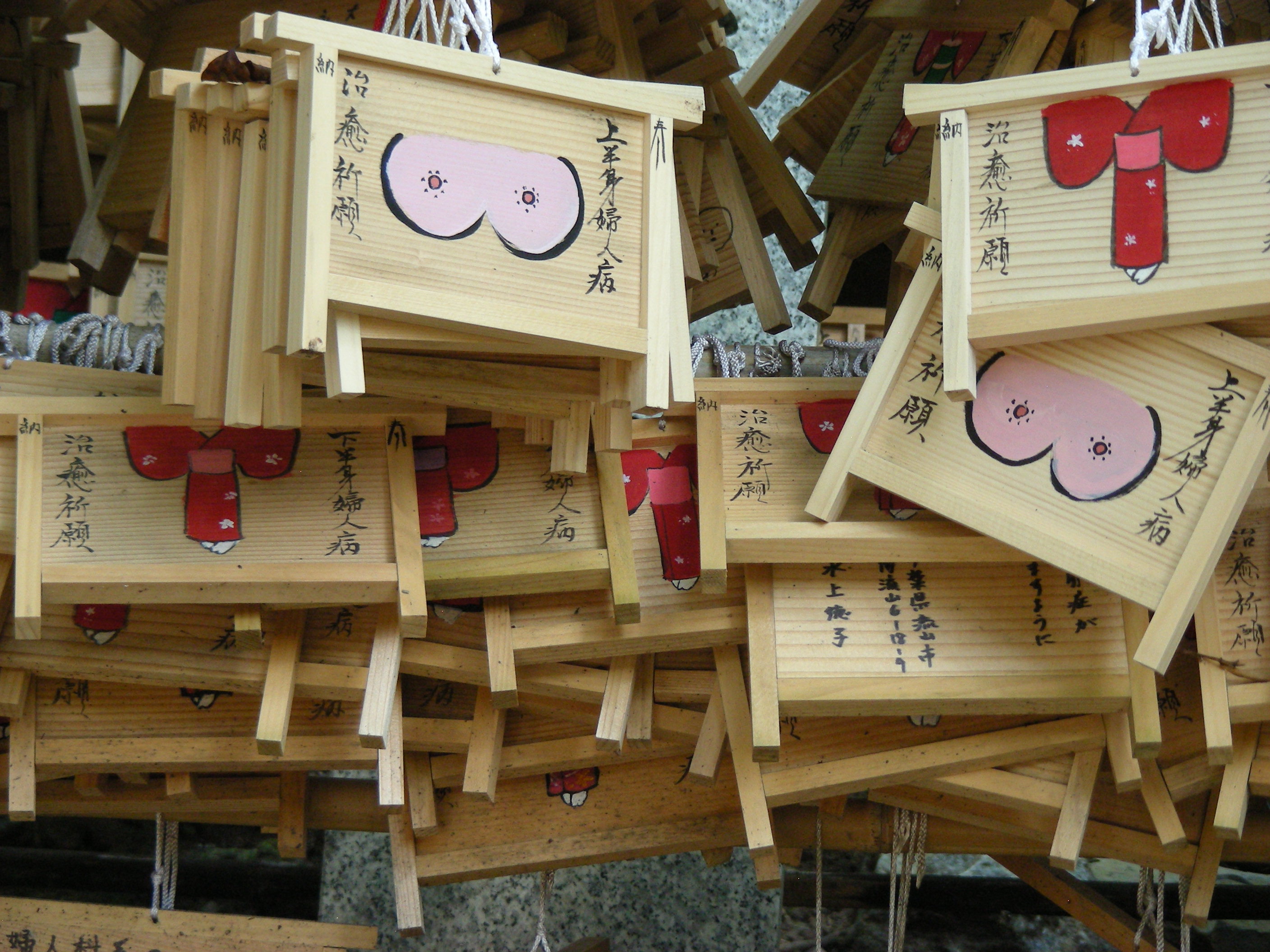
Connected to that particular shrine in Nara is one where the focus is on women’s health and wellbeing.

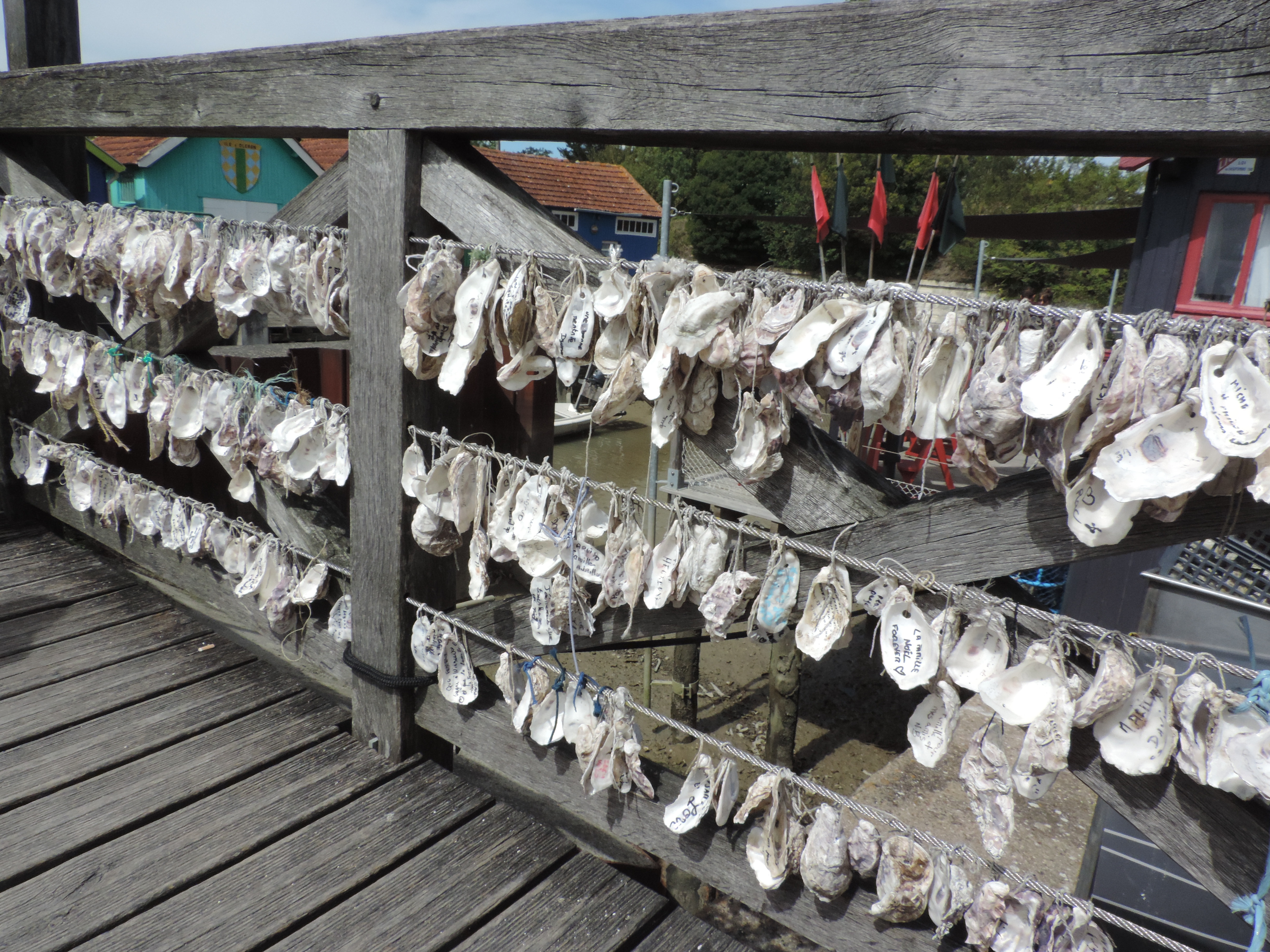
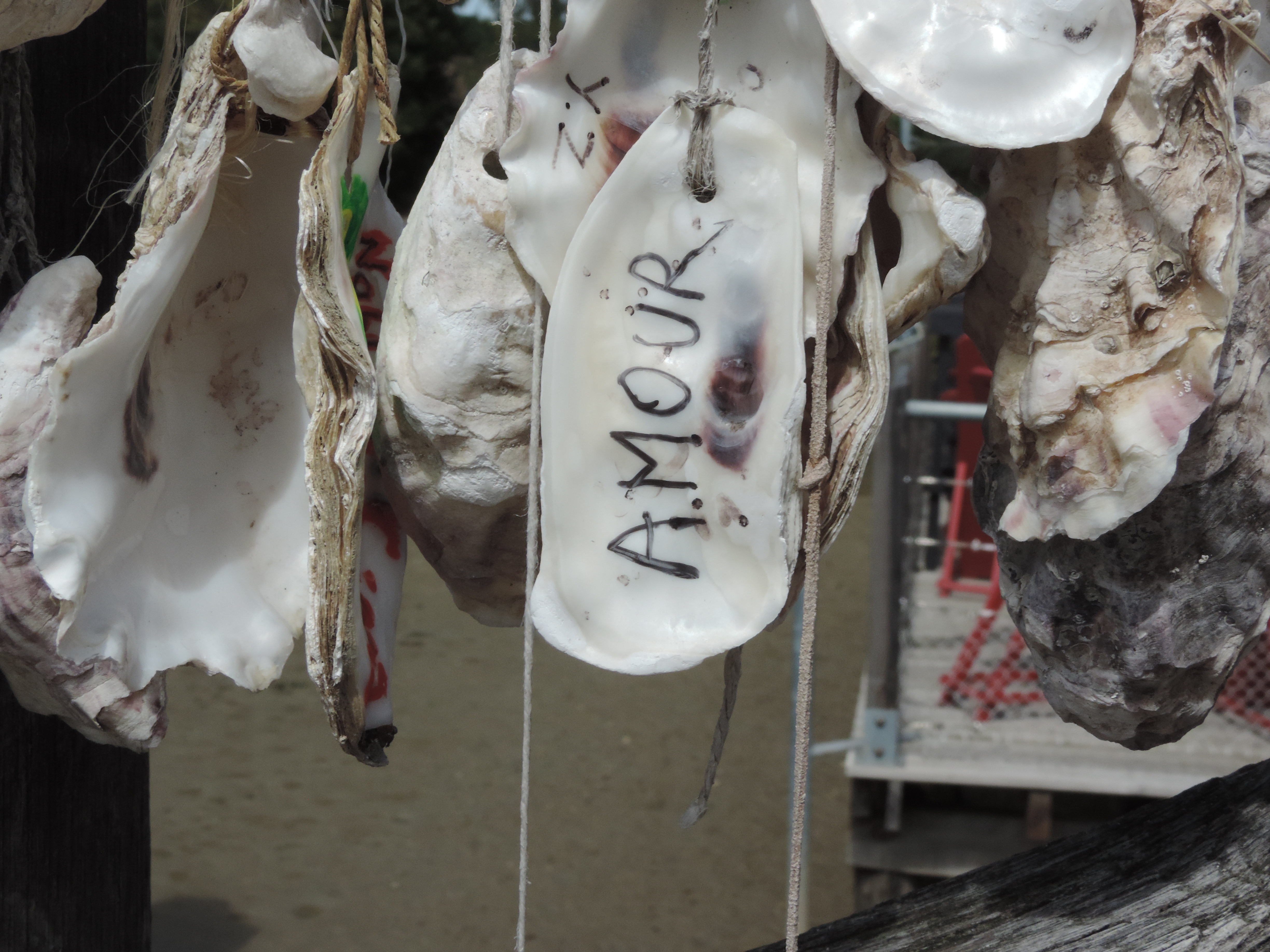
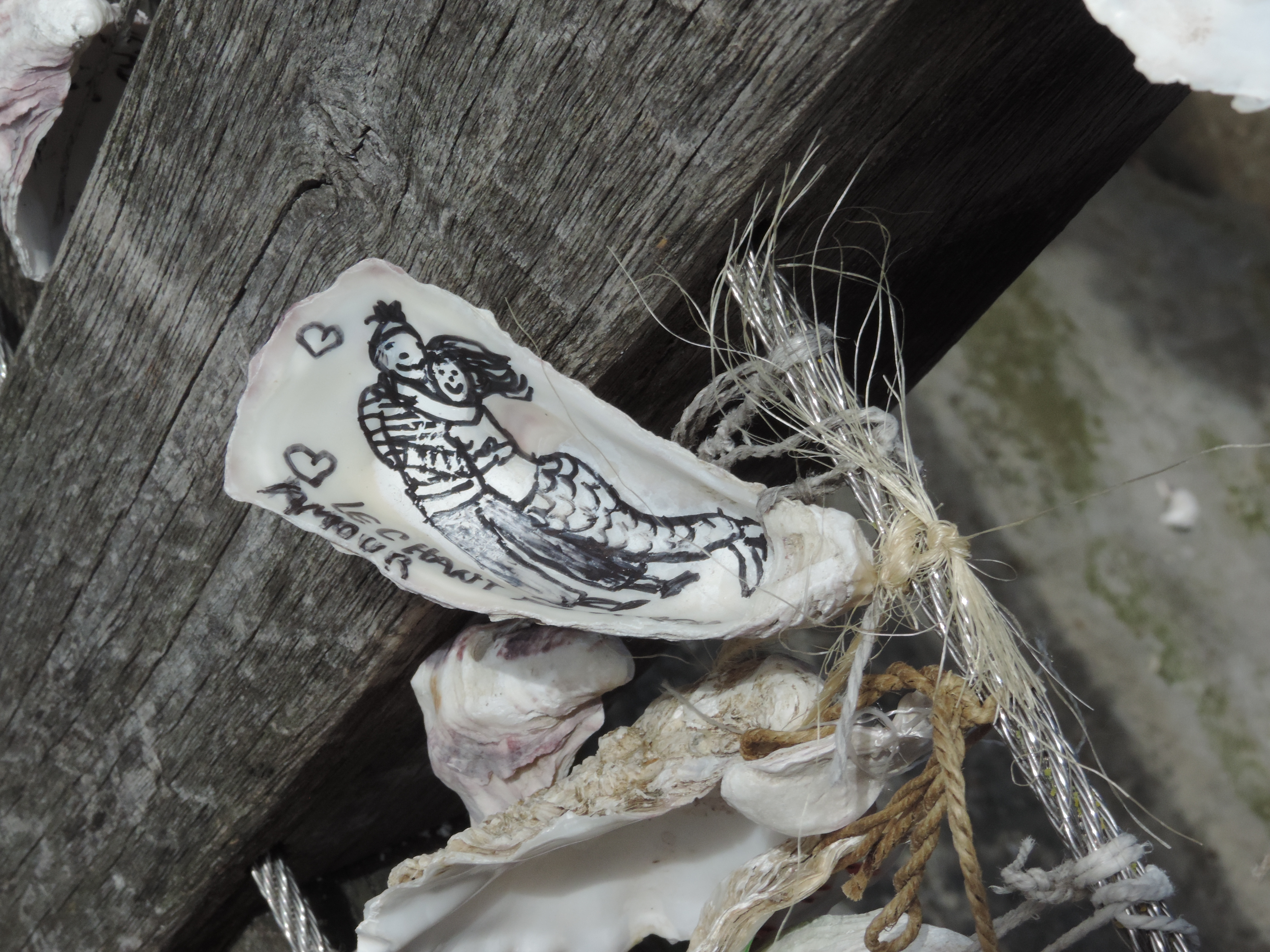
Back here in France, last year, I came across these wishes on an island where the main industry is oyster farming.

It’s interesting how many of these practices are perhaps not so much wishes but love hopes. They are declarations of love and an expression of desire for that love to last.

But not all, are about love. This person clearly loved their holiday on the island so much they’d like to live there full time.

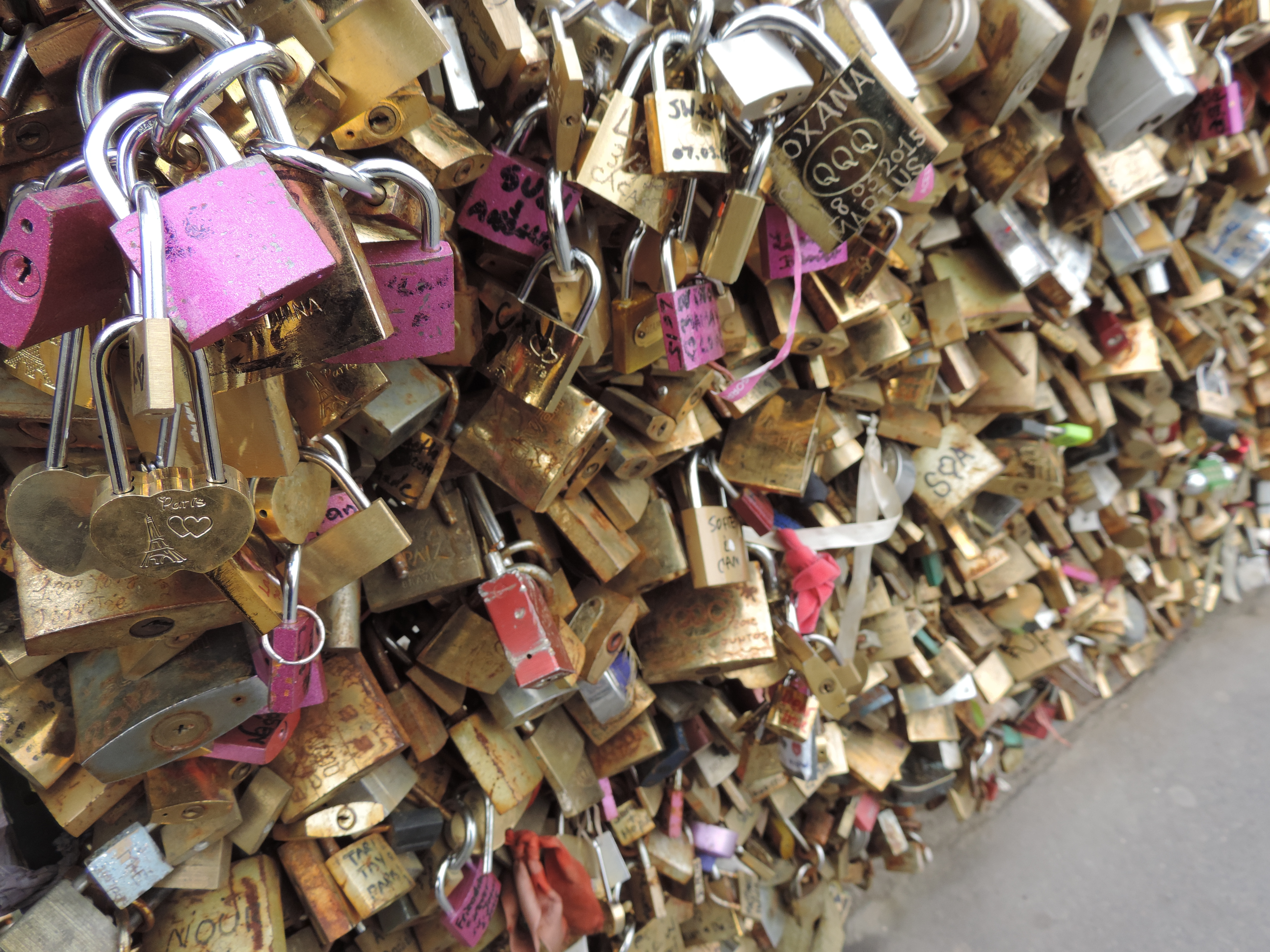
In many parts of Europe you can find the padlock version of the love hope/wish –

I do find it heartening that so many people choose to focus on a relationship and their hope/wish for sustainable love when they make these public declarations. The first time I came across the padlock version on a bridge in Paris I found it really incredibly moving.

So, I wonder what you are wishing for at this strange time in our lives.

And I wonder what will change if your wishes come true.

Read Full Post »

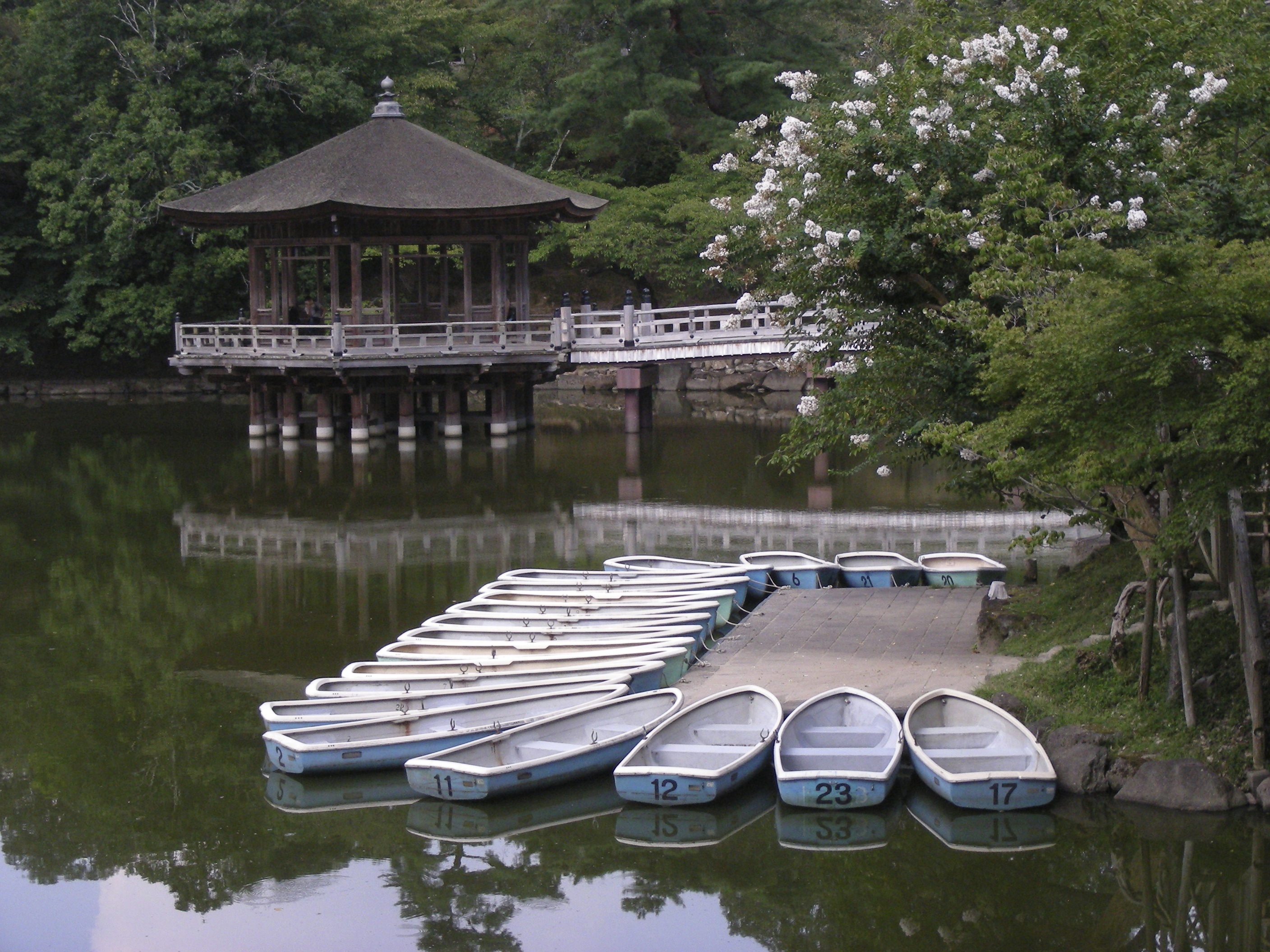
It strikes me that this is a pretty good image for this present moment.

All our boats are tied up at the dock. Empty. Nobody there.

Actually, when you look really carefully there is somebody in the pagoda. It’s hard to see them. I have the impression they might be a ghost!

Moored is the word we would use to describe the situation these boats find themselves in. They’ve been carefully set aside, brought home, tied up to the dock to keep them safe. I guess we’re all a bit moored just now, aren’t we? Although, frankly, an increasing number of people are feeling quite the opposite – un-moored!

But let’s stick with this image for a wee bit longer.

I see nineteen boats arranged around this platform, and, yes, it bugs me that they aren’t aligned by number – what does that say about me? – but, worse than that, one of them is number 23 – and I can only count 19 of them! Are there are at least four missing? Where are they? Are they OK? So, already, what at first glance looks like a completely peaceful scene, with the reflections of trees, clouds and blue sky on the surface of the still, still water, starts to become a little…..unmoored?

Then I see the blossom of the tree above the boats, and instantly, I’m back to enjoying the beauty of the scene. My gaze follows the hidden path to bridge, and across to that gorgeous pagoda, itself perfectly reflected in the calm lake. Then I notice that indistinct person, that ghostly presence, and I start to unravel again.

Now, here’s the thing, until today, every time I’ve looked at this image I’ve seen and experienced nothing but calm, and I’ve delighted in its beauty. This “un-mooring” is new. It doesn’t come from the photo itself. It comes from where I am, here and now.

Well, this is a great truth…..whatever we perceive, whatever we see, notice, appreciate and experience, is always, but always, an interaction between our “self” and what is around us. This is the way I understand the teaching that there is no real world “out there”. This is how I understand relativity. It’s not that there is nothing objective, or that nothing exists unless I see it, hear it, or otherwise sense it. It’s that my lived experience of reality always, but always involves my memories and my imagination.

We co-create our world.

Read Full Post »

« Newer Posts - Older Posts »