Feeds:
Posts
Comments

Archive for the ‘philosophy’ Category

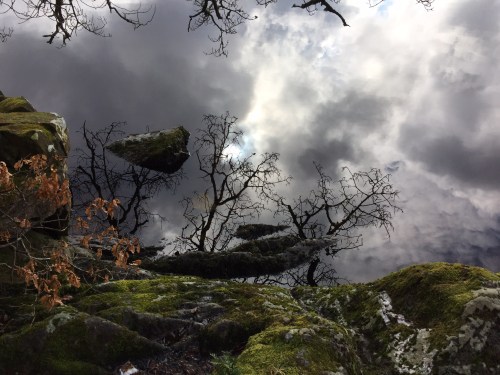
Yesterday whilst out in the Trossachs just north of Stirling in Scotland, the clouds opened up to reveal some patches of blue sky and allow the sun to reveal itself. Loch Venachar was as still as I’ve ever seen it. The reflections were simply stunning. I took a number of photos. Here’s one I’m particularly pleased with.

What you’re looking at here is the edge of the loch at the bottom of the image. The rocks are at the water’s edge. The branches stretch out from a few leafless trees which grow amongst the rocks and the rest of the image is the still water reflecting the sky.

I love how this image catches my attention straight away. My first thought is just how beautiful it looks. Then as I start to look more closely I feel a bit disorientated. What’s that rock doing up in the sky? Is it just hanging there, or is it impossibly supported by the tree’s spindly branches? Then the image resolves itself as I become more aware of the reflection.

I think it’s like this in life sometimes. We engage at an intuitive, emotional, even aesthetic level, taking in the whole as it is, then we start to focus on elements, or parts, and become a bit thrown off course, until we put what we are focusing on back into the contexts where they exist. Then the whole experience of standing at the edge of the water comes together again, but now intensified by our way of engaging with it.

Read Full Post »

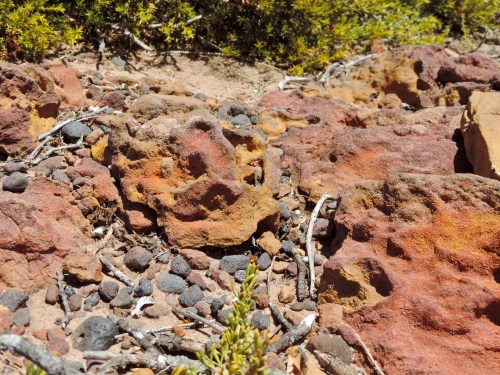
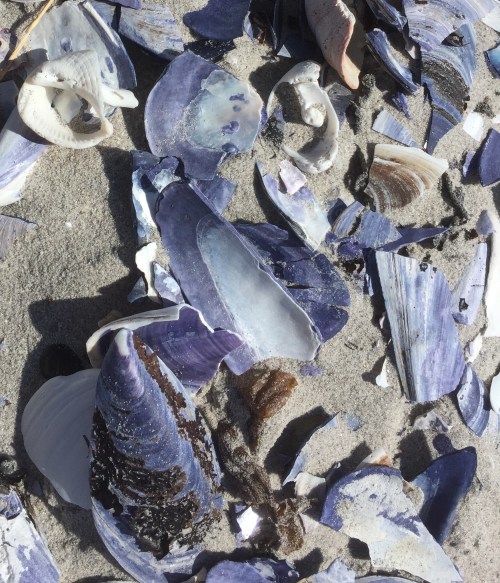
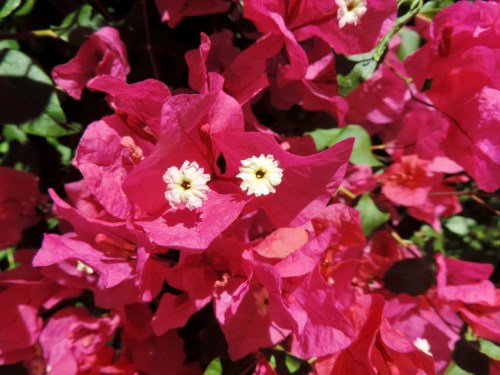
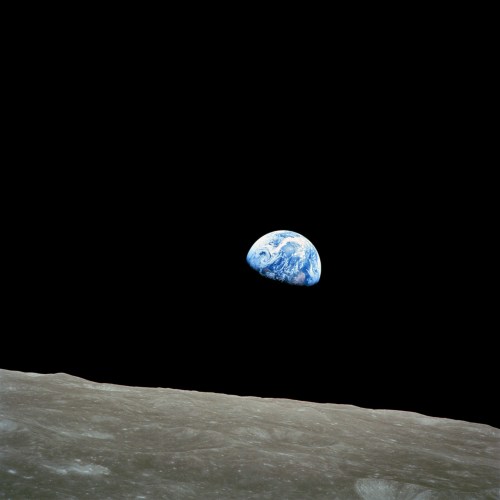
The range and intensity of colours in these recent photos takes my breath away. Here are rocks, shells and petals, representing the kingdoms of the minerals, the animals and the plants. These three kingdoms are part of a whole. In my mind’s eye I see an image of the blue planet, the Earth seen from the surface of the Moon

and I recall the story of Edgar Mitchell’s journey back to Earth after walking on the Moon. He saw the alignment of the Moon, the Earth and the Sun appearing each time his spacecraft turned on its axis and had a profound experience of seeing the particular and the whole in the same moment. He looked at the beautiful planet he called home and wondered about human beings waging wars and killing each other over invisible lines they called borders and over beliefs in invisible gods and this new perspective gave him a deep desire to see humans live together peaceably.

When I look again at the beauty in these photos I’m motivated ever more strongly to contribute to such a change. We share this little planet, not just we humans, but we, the members of all the kingdoms of Nature.

We desperately need to find more creative, more just, more sustainable ways of living together.

Read Full Post »

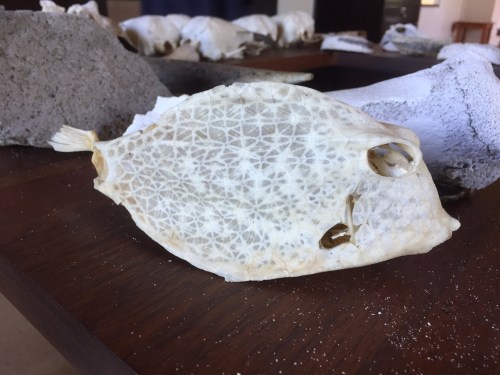
Look at the skeleton of this beautiful fish. The intricate and delicate structure of the bones is a stunning demonstration of the nature of networks. We can see the whole skeleton is made up from two simple elements, nodes and connectors. Whether we zoom in to study just one group, or out to look at the larger regions we see a variety of different patterns based on these two simple elements.

If you start at any point on this skeleton you’ll be able to trace a path to any other point without ending up down some disconnected cul de sac. In other words every single point is connected to every other one….either in simple one or two step connections, or through an almost infinite variety of pathways across the whole structure.

This is one of the most fundamental patterns at the heart of reality – networks of nodes and connectors.

You can see the same design in all forms of life, especially in multicellular organisms, all kinds of plants, animals and human beings.

Networks of nodes and connectors are the essential fabric of the universe.

Two of the best books I know about this phenomenon are Linked by Barabasi, and Connected by Nicholas Christakis and James Fowler. I recommend them both. They show how this apparently simple structure builds up into the most complex of phenomena, from individual organisms, to social groups and whole ecosystems.

Once you see things this way you can’t help but see connections everywhere. It’s the science which demonstrates the limitations of reductionism and abolishes the notion of atomisation.

Read Full Post »

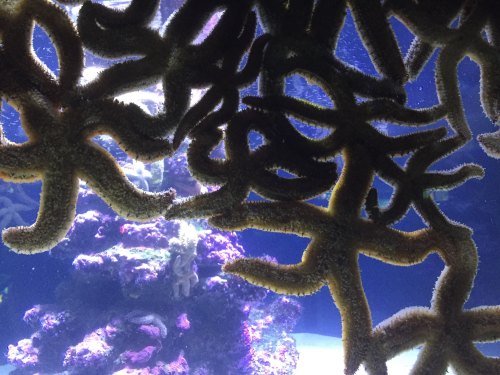
starfish vines

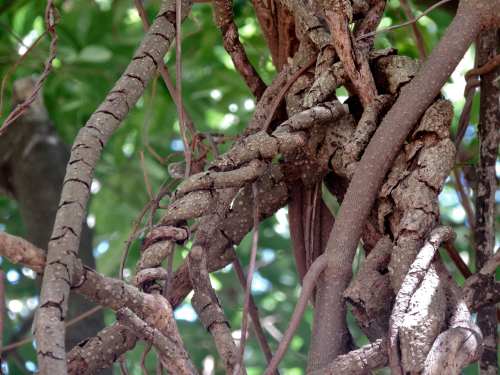
Nature loves to be entangled.

Life seeks entanglement.

Nothing living can survive in complete isolation. We thrive when we are in active relationships with others, with other members of our own species, but especially with other forms of Life.

We need to connect, to make bonds, to entwine our energies and our destinies.

What kinds of connections can we make? What types of bonds will we form? How will we share our energies with each other?

Isn’t the most important question today – “how are we going to live together?”


Read Full Post »

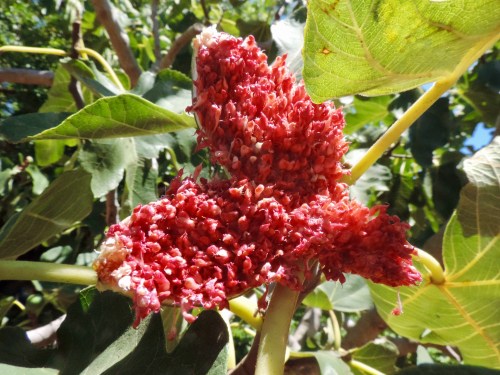
I’ve never seen a fig on the tree like this before. The fruit has burst open to reveal all the wonderful juicy flesh. I’ve picked figs straight from the tree many times, and opened them up with a knife, or just my fingers, but I’ve never seen one open itself up like this.

It’s like an exuberance, as if the tree couldn’t hold itself back. It poured its energies and its life force into producing these succulent, delicious fruits and couldn’t wait another second to show them to the world.

Look! See what I’ve made!

And there’s something else I see here beside this enthusiasm to be the best fig tree it can be….there’s a generosity of spirit.

The tree doesn’t hide its fruit. It declares it, and says, come, taste, share my delight.

It’s inspiring don’t you think….it inspires us to flourish and to give, to create and to share.

Read Full Post »

dscn8059

Here’s an example of the type of photograph I enjoy so much. At first glance it’s pleasing. It delights me. I can sit and gaze at it for ages, enjoying its beauty. But it stimulates my thoughts too.

I see this and I think about ways of engaging with the world. Iain McGilchrist shows us in his Master and His Emissary that our two cerebral hemispheres allow us to simultaneously use two different types of focus….narrow and broad.

The left hemisphere separates out whatever we are looking at from the contexts in which it exists. It allows us to set a kind of frame around what we are looking at, to distinguish it from the whole. That lets us label it, put it into a category, and so grasp it. Literally. Get a handle on it so we can manipulate it. It’s a narrow focus, one which drills down to separate out and analyse aspects or components.

The right hemisphere focuses on the connections rather than the parts. It lets us see the broad view, the over view. It helps us to see whatever we are looking at in the fullness of its context. We don’t see the separate parts, we see the connectedness of everything. In the terms of classical philosophy, it helps us to take the “view from on high”.

The view from on high lets us do something else too….it allows us to stand apart from whatever we are looking at. It lets us put a little distance there…a distance in space, and/or a distance in time…a pause, or a moment to reflect and consider.

Some people argue this is one of the most distinguishing characteristics of human beings, this ability to create a distance which allows us to choose responses rather than simply react in programmed or patterned automatic ways. But I think it is equally characteristic of human beings that we have this huge cerebral cortex divided into two distinctly different hemispheres allowing us to focus on the world in two such distinctly different ways.

Read Full Post »

person-in-box

It strikes me that one of the biggest questions facing us now is “how are we going to live together?”, and the answer to that depends on the extent of our consciousness and awareness.

How big is the box you are living in?

Is it only big enough for you? Do all other human beings exist outside of your conscious limits? I bet they don’t. For some people their box isn’t much bigger than their own family, or the village, street or town in which they live. For others its the size of their network of like-minded souls – the ones who agree with them, who share the same values, behave the same way, speak the same language. For yet others the box is a whole country. They want to put their own country first, and others can just get on and do the same. If there’s to be competition over space or resources, they’ll fight the others for it, hoping for one winner, and for the rest to be losers.

Maybe the box is the size of our species, though. Maybe it contains every living human being. After all, in this increasingly networked world of relationships, travel, agreements, and exchanges, artificially created boxes the size of a single country are increasingly hard to maintain.

Some people call this bigger box, globalisation, and kick against it. What they experience is personal loss, due, they believe, to others’ gain. But the current model of globalisation is just a way of us living together. We all live in the same world. It’s increasingly impossible to live as if others in other parts of this planet either don’t exist, or don’t matter. When people kick against globalisation, I think they are kicking against a way of us all living together. The answers will lie in finding a better way, not in pretending we all live in disconnected, entirely separate boxes.

Let me just stretch this out a wee bit further. Because I think the reality is not that we humans live together in a separate box on this earth. We are part of Nature. We live in constant interaction with the air, the soil, the water and the energy from the Sun. We are an integral part of the biosphere – living in an intricate web with the entirety of Life on Earth.

How often are we conscious of that? How often do we take that awareness and apply it to come up with good ways to live together….not just all we humans, but with the entire biosphere on the finite planet which we share.


Read Full Post »

tree-vine-fog

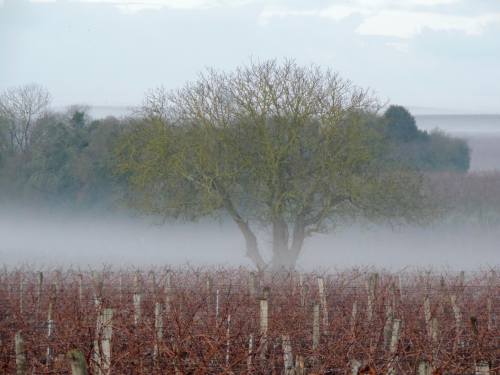
As I was opening the shutters yesterday morning I caught sight of some swirls of mist lying amongst the vines towards the next village. I took a few photos. Here’s one of my favourite ones. It pleases me. Enormously. There’s an entrancing beauty to it. And it’s one of those photos which stimulates all kinds of thoughts for me.

I look at this and I think of two of the fundamental forces of the universe – the ones which Thomas Berry called “wildness” and “discipline”. The large tree in the centre of the image grows wild. It grows naturally and it spreads out above and below ground creating this ever branching structure which looks like its reaching out to the world. It looks like it’s stretching upwards and outwards to feel the sky and the moist air. In front of it are rows and rows of vines, trained and pruned by human hand, disciplined to grow along the wires. The vines form a complex web of life. As I look at them now it’s hard to discern where one plant stops and the next one begins.

When I think of these two forces, I think of the two hemispheres of the brain, each with its distinctive style of engaging with the world. The right hemisphere exploring, seeking the new, making connections. The left hemisphere exploiting, grasping, structuring. Iain McGilchrist writes in “The Divided Brain“, that the right hemisphere characteristically seeks to care, it seeks to engage with “the other” empathically. The left hemisphere seeks to control, seeking to deal with “the other” by categorising, labelling and separating.

How we see these forces at work in the world today!


Read Full Post »

wishing-well

I’m quite a fan of having my eye caught.

When the sun goes down just west of the village over the hill, it frequently turns the sky a gorgeous shade of red gold. It’s a quality of light which catches my eye.

I can be walking through a room and suddenly see the faint pink tinge on one of the walls, or sitting reading and look up to see a spreading, deepening glow, or walking to the front door and notice the wall change colour in front of my very eyes. Wherever and whenever it happens, I’m drawn.

First it catches my eye, then it focuses my attention. I move towards it. Either to stand on the wall in the far corner of the garden and just watch as the sun sinks below the horizon, and then to wait for a while as a tobacco colour seeps up from the ground once the sun has gone, or I turn my back to the sunset to look at the way the light and the colour changes the world to east, colours the whitewashed walls, and tints the earth and the air in front of me.

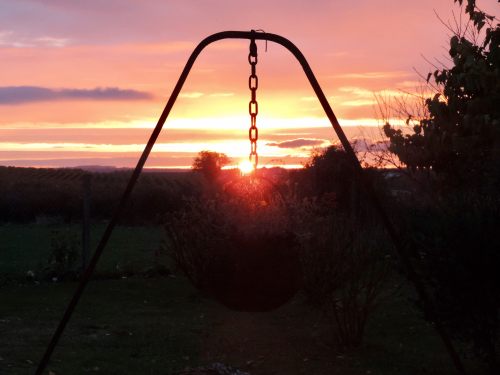
Often, I take a photograph. This particular day I adopted a different position. I walked across the garden and round the well then looked back at the setting sun through the well’s iron arch. I had to wait a few minutes until the sun sank a bit lower in the sky, then I saw this…the end of the day’s burst of setting sunlight shining as if from the end of the chain….creating the effect of a radiant light emerging from the bucket which hangs above the well (except there is no bucket hanging above the well, only the one in my mind’s eye)

Is this well a wishing well? It’s certainly a source, albeit of water a long, long way down beneath the ground.

This is the kind of experience which I find magical. It’s the magic of attention, which is first caught, then focused. The kind of attention Iain McGilchrist describes in The Master and His Emissary as having a quality of care, a right hemisphere directed attention. It changes what I see and it changes me. In that moment, I’m standing still, holding my breath, feeling connected. Feeling as if I belong. Here, in this moment, on this particular piece of the Earth, with water lying silently far beneath my feet, and the very air around me glowing with the fiery rose gold of the setting sun.

The sun sets, the Earth rises, on a day of my life, a day I’d never experienced before, and one I’ll never experience again. Until tomorrow, when another one will come, a new day, a different day, a unique day.

Read Full Post »

fluffy-seeds sunlit-seeds

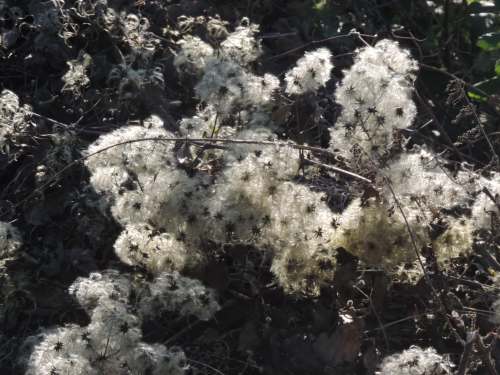
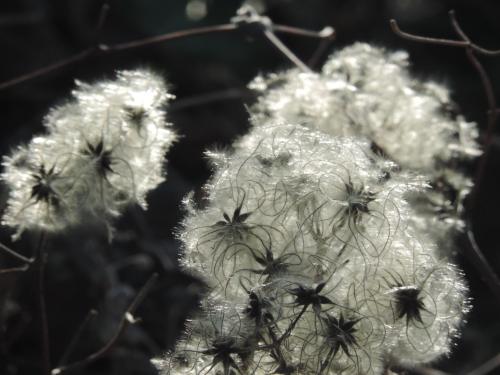
The sun illuminating these seeds caught my eye the other day. Aren’t they stunning? The way the light caught them they were glowing, almost as if the source of the light was from within them. When I looked closer I was stunned by their proliferation. It seemed they just suddenly appeared in the corner of the field. Look how soft and fluffy they are! There are various ways for plants to travel around the world, catching the wind is one of them, and it’s the method this particular plant intends to use.

What popped into my mind after I took this photo was part of a review of a book about the history of France which was published in “Le Monde” the other day. I know, that sounds strange, but bear with me. The part which really caught my attention was the author’s statement of his intention – he wanted to write a history of France from the perspective of the global forces which have shaped it, rather than the more traditional approach which focuses on personalities and events within France. It’s a shift from thinking of a country as a separate entity to be understood by looking within, to thinking of a country as it emerges in relationship with global phenomena – especially the global phenomena which pass over frontiers and the ones for which borders are irrelevant.

Migrants and goods pass over frontiers. They always have, and they always will. The British government’s determination to harden its borders focuses on the first of these – the movement of people. They seem to see people moving from one country to another as THE problem, which, if solved (they mean stopped completely or at least significantly), will allow a flourishing, healthy, happy country to emerge. However, at the same time, they want the free flow of the second of these phenomena – goods – claiming they want to create a “free trade” “global” Britain (as if they even knew what “free trade” is).

My own feeling is that of Europe’s “four freedoms” – freedom of movement of people, goods, services and capital – a government’s desire to stop only one of these reveals its underlying values. It’s the freedom of people they want to inhibit, not the freedom of goods, services and money.

The historian went on to describe some other country-shaping phenomena which pass over frontiers – ideas, symbols, pandemics, climate and technological revolutions. I think he could have at least added stories because whether its “fake news” or life-shaping mythologies, stories spread amongst human beings irrespective of frontiers.

Whether its the spread of the politics of populism, the scattering of radiation over thousands of miles after nuclear power plant disasters such as Chernobyl or Fukushima, global warming, the spread of “particle pollution” in the air, the actions of multinational corporations, or the growth of global economic inequality….there are countless examples of this insight that what shapes a country are the phenomena which cross frontiers.

No country can be understood from a narcissistic perspective which sees itself as disconnected and walled off in this world we all share.

The question facing us all is “how are we going to live together?” Because we all ARE living TOGETHER.


Read Full Post »
« Newer Posts - Older Posts »