Feeds:
Posts
Comments

Archive for the ‘philosophy’ Category

road

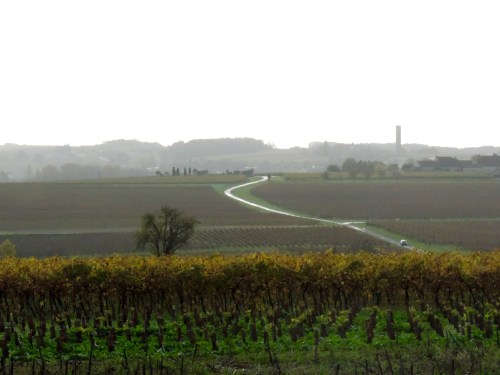
I was out for a walk recently and took this photo. The winding road lit by the morning sun caught my eye. The road draws us along it, doesn’t it? We instantly, and largely unconsciously, follow its path through the vineyards, turning at the top of the hill to disappear over the top and behind some trees. Yet beyond that lies another hill, less distinct in this light, with a tower standing high on the right. What is that? What’s over there? Where does this road go?

It feels like there is a story here in the making. It feels like we are being encouraged to look into the future, to see what “lies beyond”. That’s such a great thing to do. Our brain thrives on novelty. The right hemisphere, in particular, is always on the lookout for the new, always paying its broad attention to the world around us, sensitive to changes, to new sensations, and seeking to connect us to them.

The other side of that metaphor however is “who laid that road?” Because if I want to go and explore over that hill and see what’s there, chances are I’ll automatically, without thinking about it, follow exactly that path. And there’s something else we all do every day. Follow the paths that others lay for us. We hear a lot these days about propaganda, about the slant on reality pushed by mass media owned by a handful of people, and rumours, lies and conspiracy stories spread through social media. Which all raises the question, “how am I to make my way through this life?” “Whose stories, whose paths, whose directions, am I going to allow to determine the paths I’ll take?”
charente-at-saintes

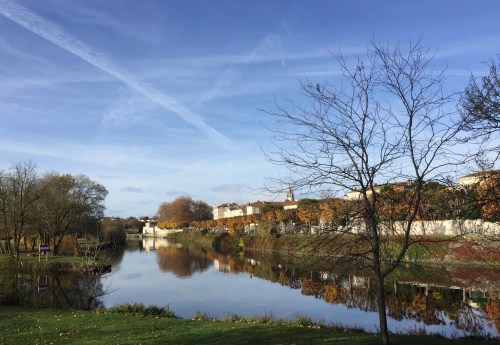
Here’s another image. I took this one while walking to the Saturday market in a nearby town. This is the Charente river. It looks like this pretty much anywhere you encounter it as it flows through this region (which is also called “the Charente”). It flows with a kind of ease. It rarely looks turbulent. People in this area use it as a metaphor for a way of life. No, maybe more than that, people in this area are influenced by the physical appearance and behaviour of this river in a way which encourages them to live “the slow life”, or, as is often said around here “soyons zen” (“let’s be zen” – relaxed, chilled out, calm).

I think I prefer the metaphor of the river to that of the road. The road seems more fixed somehow. Heraclitus famously said it isn’t possible to step into the same river twice. That’s so clearly true because you can see the water flowing by and you know it’s not exactly the same river now as it was even a few minutes ago. That teaching applies to everything in life of course. Even if a tarmac road isn’t all that different from day to day, you’ll never repeat exactly the same experience of travelling that road.

The river forks at this point where I took the photo. You can see some of it heading off to the left, whilst the rest heads to the right. Life is very like that too. We come to these natural branches, these forks in the road, and we have to choose which one to follow. I think its true that there isn’t necessarily a right choice and a wrong one, and if we at least choose consciously we can feel more “in the flow” in our own life.

Finally, look up into the sky of this photo of the river. There’s a third metaphor about travelling through a life. The contrails in the sky show us where the planes have been (approximately….these trails move and begin to disappear from the instant they are created), but they don’t show us where the plane is going (well, only very vaguely). This reminds me of how we make sense of life by looking back. We understand the present moment in the light of our life so far, the experiences we’ve had, the decisions we’ve taken.

As best I understand it we also make sense of the present moment by factoring in the possible futures we can imagine, so maybe all three of these metaphors have something to contribute – the road, the river, and the trails in the sky…..
 

Read Full Post »


I recently rediscovered Charlie Chaplin’s “great dictator speech”. I’ve never seen the full movie but this scene is where the man who looks like the dictator makes a speech to the country and says what he actually thinks (not what the actual dictator thought!)

There are a couple of sections which really stand out for me and seem more relevant now than ever.

We all want to help one another. Human beings are like that. We want to live by each others’ happiness, not by each other’s misery. We don’t want to hate and despise one another. In this world there is room for everyone. And the good earth is rich and can provide for everyone. The way of life can be free and beautiful, but we have lost the way.

I believe that. We seem to live in a time of rising hatred and fear, of increasingly divided societies, but is it helpful to generalise so much? To see a world of “us” and “them” rather than a world of richly diverse individuals? There may be individuals who do really want to live by others’ misery, not their happiness, but that’s not been my experience in life. It’s not hard to encounter everyday, simple acts of kindness. But there’s not enough emphasis on that is there?

Greed has poisoned men’s souls; has barricaded the world with hate; has goose-stepped us into misery and bloodshed. We have developed speed, but we have shut ourselves in. Machinery that gives abundance has left us in want. Our knowledge has made us cynical; our cleverness, hard and unkind. We think too much and feel too little. More than machinery ,we need humanity. More than cleverness, we need kindness and gentleness. Without these qualities, life will be violent and all will be lost. The aeroplane and the radio have brought us closer together. The very nature of these inventions cries out for the goodness in man; cries out for universal brotherhood; for the unity of us all.

We humans have created a way of living together based on competition and greed. But aren’t we just as capable, if we so choose, to create a way of living together based on kindness and gentleness?

Don’t give yourselves to brutes, men who despise you and enslave you; who regiment your lives, tell you what to do, what to think and what to feel! Who drill you, diet you, treat you like cattle, use you as cannon fodder! Don’t give yourselves to these unnatural men—machine men with machine minds and machine hearts! You are not machines! You are not cattle! You are men! You have a love of humanity in your hearts! You don’t hate! Only the unloved hate; the unloved and the unnatural.

You are not machines! You are not cattle!

Well that is right at the heart of the reason why this blog is called Heroes not Zombies. We humans are unique, amazing, fabulous creations. The machine model goes nowhere near an explanation of what we are like. We are not like machines. We are more like “complex adaptive systems“. And by saying “you are not cattle” he means you are not “the group”, “the herd”, “the tribe” even, or any such generalisation. There has never been anyone identical to you, not now, not before and there never will be. Your personal experience of this life is utterly unique. You can’t be reduced to a statistic.

You are a “one off“, not a “one of”, a unique human being, not an example of a “kind”.

I don’t know, but I think it’s worth remembering that these days…..

Read Full Post »

autumn-moon

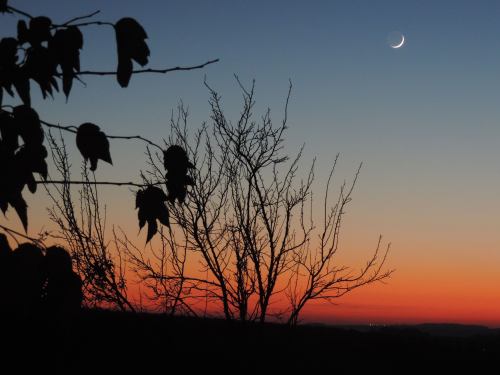
The other evening the faraway glow of the sunset and a tiny sliver of moon both caught my eye at the same time. So I stepped outside with my camera.

I’ve got some shots of just the sunset, just the moon, and the sunset and the moon in the same frame, but this one includes the foreground and I love it all the more because of that.

Here I can see the last leaves of the mulberry tree in front of the now bare plum tree with the silvery sliver of moon hanging high above them as the sun, which has by now sunk below the horizon, casts such a gorgeous palette of reds, oranges, tobacco and yellow, and the lights of the neighbouring village begin to twinkle before the stars do.

I love the setting sun, and I love the dawn. I love that rhythm of day becoming night, and night becoming day. I love that we can’t pin either the dusk or the dawn down to a precise time, in the way that the meteorologists tell us the exact time of the sunset and the sunrise. I love how the light disappears so slowly and reveals just some of its diversity which is hidden in the white light of noon. I love how it reappears in the same way it disappears but in an entirely different place.

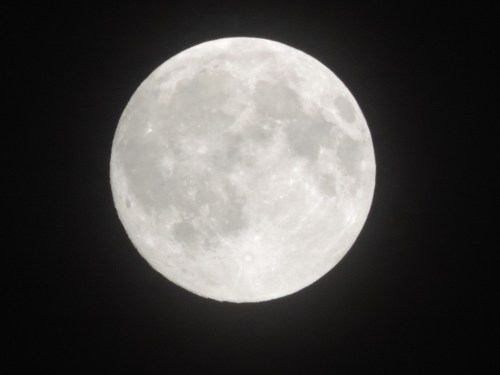
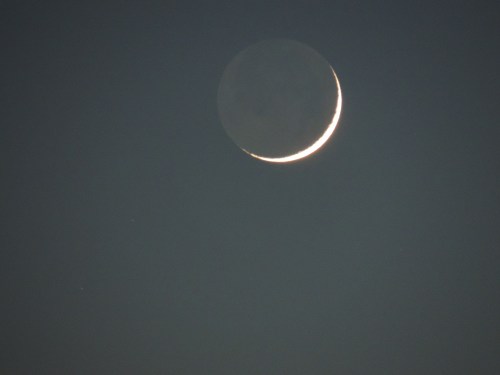
I love the phases of the moon. Look closely and you can see the whole moon in this photograph. Here’s a close up which shows you that more clearly

first-phase

This isn’t a fantastic shot, but it’s handheld and spontaneous. It does show the whole sphere of the moon and the white crescent is more obviously the reflected white light of the sun than we sometimes realise. But just think how this photo was taken at the same time as the one above. That deep, deep red light of the setting sun caressing the Earth, and that radiant, dazzling white light of the now hidden sudden bouncing off the Moon.

I love the autumn too. Like the Spring it’s a season which makes you more aware of the rhythms of the Earth, and in particular, more aware of the constant nature of change.

So in this one moment I see the rhythms of the seasons, of the sun and of the moon.

I rather like that!

Read Full Post »

gathered-leaves

In this season the leaves begin to fall and one of my daily activities is to rake them up. Before I moved to France I lived in a second floor apartment so leave raking wasn’t part of my life. I’ve found that I really enjoy it. It gives me great pleasure. I know it’s not the same as a zen monk raking his stones, but there is something of that quality to it. I don’t rush it and the sweeping movements with the rake feel strangely relaxing. It’s also really pleasing to gather the leaves into a heap, then to scoop them up to take them away to the “déchetterie” for composting another day.

I am constantly amazed by the variety of shapes, sizes and colours, and often pause to look at a leaf more closely, to turn it over in my hand and feel its texture.

Once I’ve finished raking it feels like having tidied up, or cleaned a room. It’s satisfying. You can immediately see the results of your efforts.

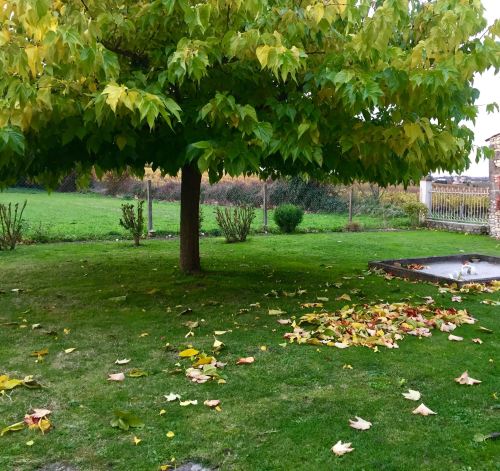
The other morning I opened the front door, unlocked the shutters and stepped outside to see what I’ve captured in this photo. During the night the wind had worked differently from usual. Instead of scattering the leaves everywhere it had gathered them together into this heap under the tree. I hardly needed the rake that day. I just had to scoop up the leaves with my hands.

I remember years ago I used to read an American magazine entitled “Wired”, and they had a regular column of “new words”, neologisms which people were starting to use. One which really impressed me at the time, and has stayed with me ever since, was the word “pronoia”. You know the word “paranoia”? Which means the delusion that the world is conspiring against you. Well “pronoia” means the delusion that the world is conspiring to help you out!

I had a real sense of pronoia the morning I took this photo……

As I sat down to write this post I remembered a thought which has been attributed to Einstein, although I believe there is no record of him ever having actually said it.

“I think the most important question facing humanity is, ‘Is the universe a friendly place?’ This is the first and most basic question all people must answer for themselves. For if we decide that the universe is an unfriendly place, then we will use our technology, our scientific discoveries and our natural resources to achieve safety and power by creating bigger walls to keep out the unfriendliness and bigger weapons to destroy all that which is unfriendly and I believe that we are getting to a place where technology is powerful enough that we may either completely isolate or destroy ourselves as well in this process. If we decide that the universe is neither friendly nor unfriendly and that God is essentially ‘playing dice with the universe’, then we are simply victims to the random toss of the dice and our lives have no real purpose or meaning. But if we decide that the universe is a friendly place, then we will use our technology, our scientific discoveries and our natural resources to create tools and models for understanding that universe. Because power and safety will come through understanding its workings and its motives. God does not play dice with the universe,”

Well, even if he never actually said it, it’s still an interesting thought to turn over in your head for a bit, isn’t it? So many people live as if the universe is harsh and hostile and they need to struggle against it, to overcome it. Yet others believe the universe couldn’t care less and that everything that occurs is completely random and meaningless, even an individual life. But there is this third option, which is that the universe is actually a creative, “friendly” place. If you think that way, then every day becomes filled with wonder and delight. Every day you encounter something, or someone, astonishing.

I prefer the third stance. I think there is too much beauty and elaborate complexity in the universe for it all to come down to either malign intent or apathy. There’s something amazingly wonderful about a leaf, a season, an ecosystem, a bird, a person…..I’ll never tire of being amazed by, and trying to understand, my daily life.

Read Full Post »

img_5663

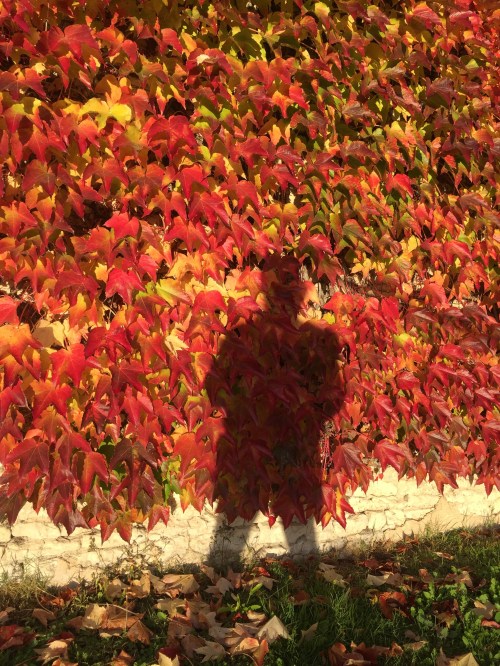
I stood with the morning sun at my back and gazed at the leaves of the vine which covers the high wall at the edge of my garden here in the Charente.

This is my third autumn living in France and from the Autumn Equinox I’ve been anticipating the glorious sight of these leaves. I can’t look at it too much. It captures my attention and utterly delights me.

This third time round strengthens my awareness of the cyclical nature of the seasons. Time no longer feels linear to me. It’s beginning to feel more like a spiral.

As I prepared to take this photo I noticed my shadow and instead of changing the direction of the shot, I consciously decided to include the shadow. Shadows pass much more quickly than seasons do but laying the one transience over another multiplied the effect for me.

I’ve written before about transience, and how it is celebrated in the Spring at the time of the cherry blossoms in Japan, and those memories and ideas popped up in my mind as I prepared to take this photo.

As I look at the image again now, I’m drawn more to ponder how my experience of time has changed in these last two years. The Charente in France has a snail as its logo to represent the “slow life” which is characteristic of this region. That’s one of the reasons I moved here. Slowness, in this way of thinking about it, increases awareness. A “slow life” involves taking the time to savour, to relish, to delight in the everyday – the air, the colours of Nature, the birdsongs, the flavour of vegetables grown in your own garden – you get the idea.

But I realise now that time has changed for me in other ways too. It’s not just that it passes more slowly. I’m more aware of the seasons now than I have been at any other time in my life. We had quite a cool and wet Spring, but from the Summer Solstice, the temperatures shot up and stayed in the high 20s, low 30s (centigrade, my American friends!) pretty much every day up to the Autumn Equinox which came with mists and cooler morning air. When autumn comes the vineyards which stretch in every direction from my garden turn golden, yellow, brown and red. It feels like living in a work of Art.

There are two more rhythms I’m aware of. My every day begins with my opening the blue wooden shutters which cover every window of the house, and ends with my closing them again. The shutters need to be opened and closed from outside, so my day starts with my stepping out into the morning, and ends with my gazing up at the stars. And there’s the final rhythm I’m aware of – the moon. Tonight is a full moon, a “super moon” apparently. I’ll look forward to seeing it.

dscn6732

How do you experience the passing of time? What rhythms are you aware of?

Read Full Post »

img_5648

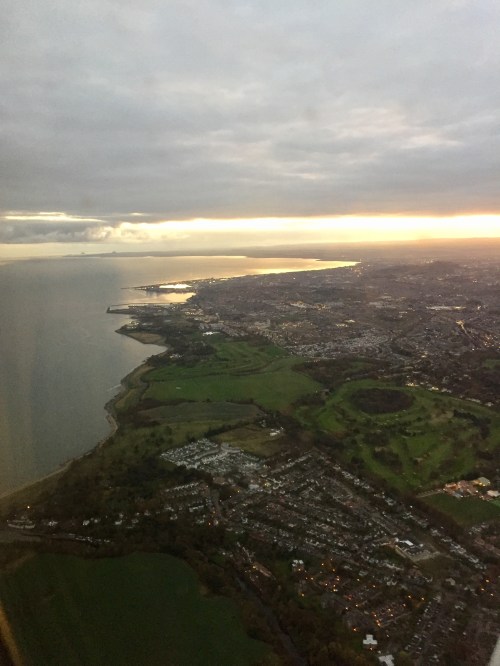
Edinburgh from above.

img_5653

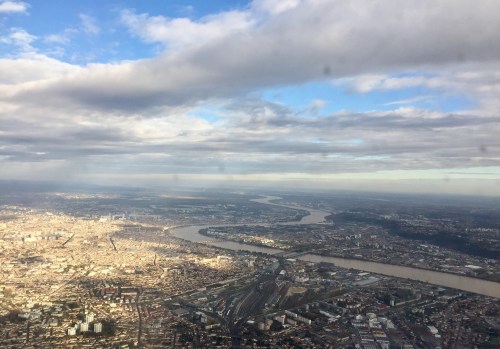
Bordeaux from above.

The other day I flew from Edinburgh to Bordeaux and took a photo of each from the plane.

These images immediately make me think of the concept from classical philosophy…”the view from above”, or “the view from on high”. It refers to the practice of standing back and taking an overview. It’s useful when we feel we can’t see the wood for the trees and when we want to see anything in its contexts…the contexts of time, space, environment, culture etc.

I often found this helpful for people who were experiencing high levels of anxiety or grief. Standing back a bit to see the bigger picture helps us to regain our stability when we are feeling a bit wobbly. That bigger picture might be the sweep of an era, spread over many decades, or it might be seeing the connections between whatever we are focused on and the global reality.

It’s important to consider details too, of course, and that’s the other pole – the ability to see the individual uniqueness of each moment, event, or person. But taking the “view from above” is, I would argue, equally important.

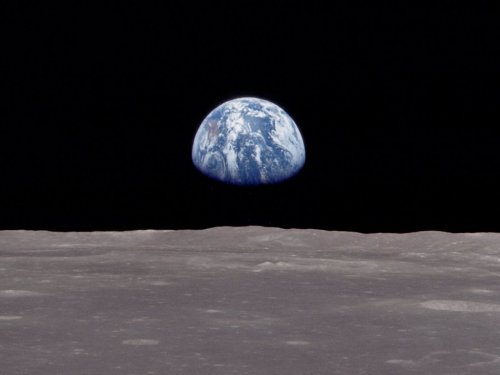
Think of that classic image of the earth rising over the horizon of the moon. Didn’t the sight of that beautiful, fragile, small blue marble hit us right between the eyes? Didn’t it make us realise that the Earth and all of us living on it is a single, living, vibrant whole?

earthrise-1-1myztsb

Read Full Post »

pink-and-green

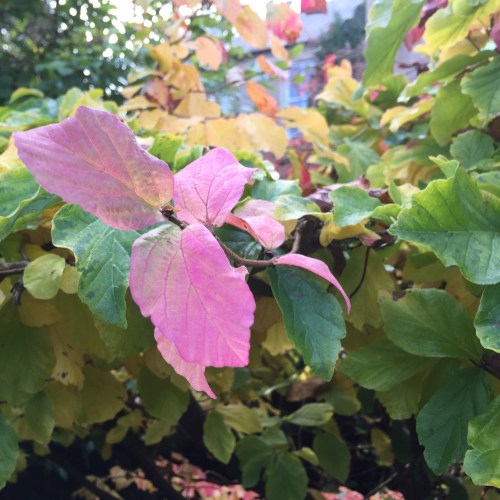
Of all the hundreds of trees and thousands of leaves I saw on my walk the other day, why did I stop and photograph this particular group?

It was difference which caught my eye. The striking pink of these leaves amongst the abundance of green ones stopped me in my tracks.

I love diversity. I find it beautiful.

Everywhere I look I see uniqueness. Every patient who walked through my consulting room door was different. Every one brought a brand new, unique story to tell me. And next time, when they would return, they, too would be different, because all of us change all of the time.

Mary Oliver begins her new collection of essays, “Upstream” with

One tree is like another tree, but not too much. One tulip is like another tulip, but not altogether. More or less like people – a general outline, then the stunning individual strokes.

Nature loves diversity. Mono-cultures are more vulnerable, less resilient. By making new connections between diverse, well-differentiated individuals, the processes of integration create novelty and stimulates growth.

So I hope this current wave of division and hatred of “the other” which we are witnessing in the world today will diminish.

I hope the current wave of homogenisation which characterises globalisation will be countered by millions of us reclaiming, not just our individual uniqueness, but the beauty and value which we find in diversity.

We need to find a better way to live together than the creation of binary divisions and calls to exclude, remove or eliminate “the other”.


Read Full Post »

img_5606

I named this blog “heroes not zombies” because we humans have a tendency to go about the world on autopilot. As we walk through the day the thoughts which fill our heads are often ones from the past or the future. We go over what people said or did, recall events and circumstances which made a big impact on us….even the ones which seemed quite inconsequential to others. And we go over and over what might lie ahead and worry about it. All these thoughts squeeze out our attention to the present. I’m sure you’ve had that experience of traveling from one place to another, maybe even driving a car, only to arrive and realise you were so preoccupied with something you are surprised you’re at your destination already.

There’s something else which prevents us from experiencing the here and now. We become habituated. We are creatures of habit and when we stay within the bounds of the familiar we have a tendency to become oblivious to the detailed differences of the every day.

And there’s another thing. People who want power over others, whether that be politically, socially or commercially, pressurise us to conform and be compliant. Difference is singled out as a negative and suppressed. Governments, institutions, authorities, corporations want to control us a mass. The Romans did that through the provision of “bread and circuses”, but maybe now its “sugar and screens”.

Living in a zombie-like autopilot submissive way means we lose touch with reality. Reality is the here and now. Reality is uniqueness. Reality is diversity. Reality is freedom, opportunity and change.

The alternative is to become the authors and main characters, or heroes, of our own life stories. We can co-create our daily reality and claim this one wild and special life as our own.

OK, so how did I get all that from that photo today?

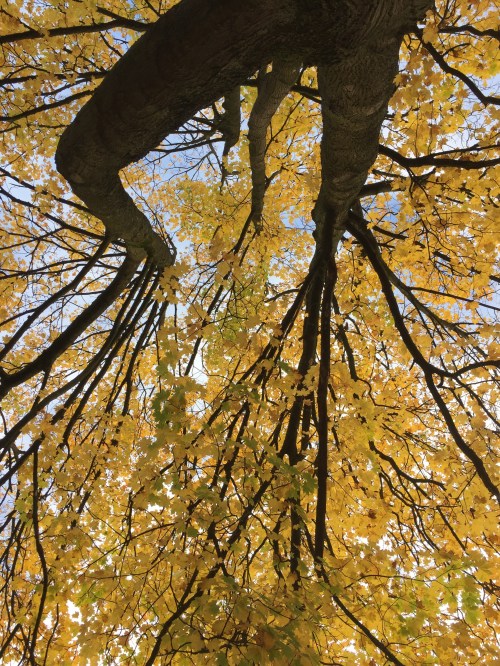
The other day I was walking a route I’ve walked thousands and thousands of times over a lifetime. It’s autumn here in the northern hemisphere and the colours of the leaves on the trees this year is particularly eye catching. In fact I think to walk amongst trees is one of the best ways to draw yourself and your attention into the here and now. So I was stopping every now and again and taking a photo. Then, I don’t know quite why, but I looked up from the base of a tree towards the sky and took this photo.

It wasn’t just the colours which caught my eye, it was the shape and form of the branches. As I look at it now my imagination kicks in and I’m more and more convinced I just managed to glimpse the legs of one of the spirits of the forest as they leapt over my head in the canopy of the trees.

Well, I did say my imagination had kicked in……

Read Full Post »

big-door-little-door

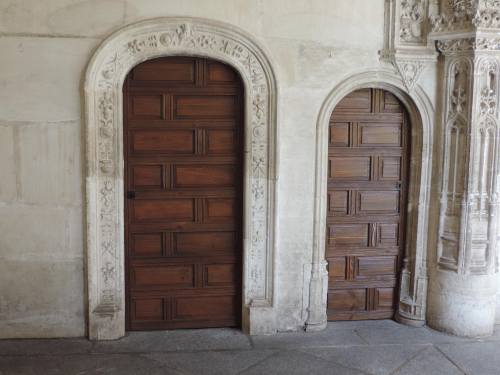
In the cathedral in Segovia I recently spotted these two doors right next to each other. They immediately struck me as curious.

Firstly, one is so much bigger than the other, and secondly, the little one seems to have been squeezed in as some kind of after-thought. Look how it almost disappears behind the pillar, and how the stone work overlaps the arch around it.

Why have two doors so close to each other but such different sizes? Are there two rooms behind them? Is the room on the left a bigger room than the one of the right? Or do they both lead into the same room – that would be even more strange.

But maybe there is another reason. Maybe each door is for different people. Maybe the bigger door is for more “important” people, and the smaller one for servants, or those of lower standing. That would be odd, wouldn’t it? I know lots of old mansions had a main door at the front and a servants, or “merchants” door at the back, but this is different. Here they are right next to each other.

Then this morning as I looked at this photo again I thought well just as each of us engage with the world from our own perspective, our own unique subjective viewpoint, I wonder if we enter into each day through an individually shaped door?

And if we do, then are you starting today by going in through the big door, or the smaller one? What will that be like?

Read Full Post »

dragons-and-crystals

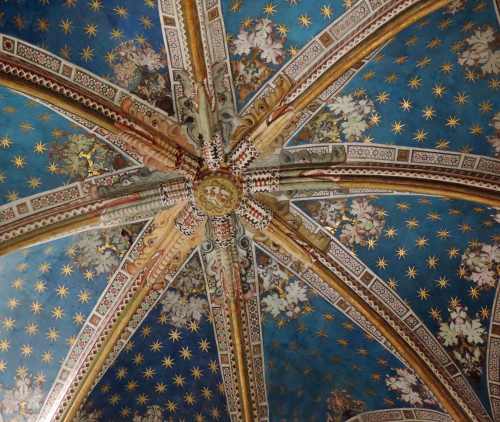
Everywhere you look you can see the effects of the interplay between the universe’s two forces.

When I looked up at the ceiling of the Chapel of Saint Blaise in Toledo I was entranced by the colour, the gold and the eight pointed stars. It was only later when I was back home that I realised that the centre piece contained eight dragons, out of whose mouths poured not fire but crystals…..at least that’s how it looks to me.

Dragons for wildness, crystals for discipline, to bring together David Ward and Thomas Berry, for this is how they each describe the two forces.

Without the integration of these two polar opposites our planet would not exist, and nor would we. Astonishing. Awe inspiring. Wondrous.

Look around and I’m sure it won’t take long for you to spot these forces at work.


Read Full Post »

« Newer Posts - Older Posts »