Feeds:
Posts
Comments

Archive for the ‘philosophy’ Category

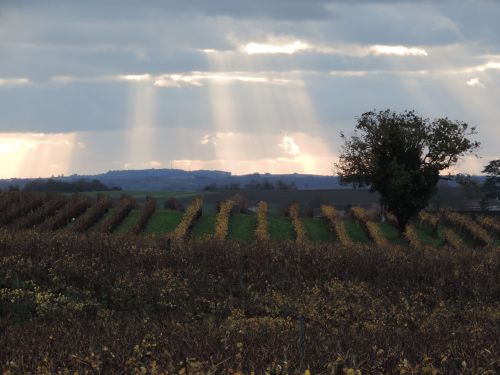
sun on vines

There are moments when the universe catches your attention.

Hey, says the universe, look at me! Look what I can do!

And you look and you see sunbeams pouring down onto the surface of the Earth from so high in the sky, and you see the flourishing of millions of years of evolution as trees and vines and grass reach up and capture these rays.

And you know that with apparently no effort at all, they are turning the sunlight into colour and oxygen and nutrition for Life.

And you see the fruits of years of human toil and imagination stretching over the hills, working with the elements of fire, earth, water and air, collaborating with the plants and nurturing them.

It looks, and, it is…….wonderful.

L’Émerveillement du quotidien.


Read Full Post »

fig

What is good or bad for me?

Let me ask “what is good or bad for you?”

Are the answers to those questions going to be identical?

I don’t think so. We could get into a big discussion about what “good” and “bad” even mean, but without disappearing down that rabbit hole I’d just like to express the opinion that no-one can know you better than you can. No-one is better placed to know how you should live than you are.

We forget that in our increasingly controlling autocratic societies.

Here’s Montaigne

Tiberius used to say that whoever had lived twenty years should be responsible to himself for the things that were harmful or beneficial to him, and know how to take care of himself without medical aid. And he might have learned this from Socrates who, advising his disciples, carefully and as a principal study, the study of their health, used to add that it was difficult for an intelligent man who was careful about his exercise, his drinking, and his eating not to know better than any doctor what was good or bad for him.

Socrates who lived almost 2500 years ago……his teaching on health?

Take care about exercise, your drinking and your eating.

Wow! Public Health advice has come such a long way! (hmm….)

But the main point Montaigne is making is one I agree with.

I’d be astonished if anyone claimed they knew better than I did what was good for me, or bad for me. Take the relatively common place circumstance of pain. Can anyone tell me better than I can whether or not a treatment I take for pain reduces my pain? No, they can’t. Only my personal experience will tell.

What better advice than to be aware, to be reflective and to learn about yourself?

Without that you end up swallowing the advice of someone who isn’t living your life.

(Oh, and what about today’s photo? It’s a fig. It’s a fig which grew and ripened on the tree we planted in our garden and it tasted….mmmmm….words fail me…delicious! Like no fig I’ve ever tasted before. Are figs good for me? Well that one certainly contributed towards my pleasure in being alive that day, and I’m looking forward to more figs growing next season. Are figs good for you? You’re the better judge of that one!)

Read Full Post »

bubbles

I’ve recently pulled my copy of Montaigne’s “Essais” off my shelf and dived in again. The stimulus was a special edition of a literary magazine which I found in the local “librairie” (a common confusion for the English speakers in France is that a “librairie” is a bookshop and a library is a “bibliothèque”). The focus of the special edition is Montaigne so I’ve been reading a few writers and thinkers perspectives on the man and his writing.

Given that he lived almost 500 years ago his writing seems astonishingly modern. According to the articles I read he was the first French writer to write as “je” (“I”) – his essays are reflective and he made no claims for them to be anything other than an exploration of what it was like to be Michel de Montaigne. One of the writers called him “patron de bloggeurs” – the “boss/leader of the bloggers” – which made me smile.

I’d say that this blog, and many other blogs I’ve seen, are exactly that. They are one person’s unique reflections and expressions of what it is like to be [insert blogger’s name here]

I reckon I only have each day once, and nobody can tell what this day was like for me. That’s up to me. And it’s up to you to share your unique experience of the everyday too.

Because when we do that, not only do we enrich ourselves with the sharing, but we find that we learn what it is to be human.

I’m going to share a few of the gems I uncover in Montaigne’s “Essais” with you and I’ll start with this, (which I read yesterday)

Men do not know the natural infirmity of their mind: it does nothing but ferret and quest, and keeps incessantly whirling around, building up and becoming entangled in its own work, like our silkworms, and is suffocated in it.

It thinks it notices from a distance some sort of glimmer of imaginary light and truth; but while running toward it, it is crossed by so many difficulties and obstacles, and diverted by so many new quests, that it strays from the road, bewildered.

Isn’t that so true? Thoughts never seem to stop, do they? I remember reading about the Tibetan Buddhist concept of the “bardo” many years ago. A bardo is a kind of gap. The author of the book I read suggested a good meditation technique was to become aware of the bardos, or gaps, between our thoughts – the spaces between the ending of one thought and the start of the next.

Good luck with that!

It’s not a skill I’ve ever managed to achieve.

Most meditation techniques seem to involve gently, patiently and repeatedly bringing the focus of the mind back to something specific, be that a mantra, an image or an awareness.

I do think it’s good to practice some form of meditation. It can help to counter that incessant “whirling around”.

There’s a second aspect to that passage of Montaigne’s – how difficult it is to stay on track. Isn’t it true that we often set off with a new insight, a new goal or a new intention, only to stumble when the going gets tough or something else interesting comes along – and there we go again, off the road, “bewildered”.

I think it’s good to read these reflections from five hundred years ago. They are insights into the natural condition of the human mind. If we are aware of these features we can begin to learn how to work with them, rather than beating ourselves over the head for having minds like this in the first place, or trying to wrestle ourselves into submission.

The photo I chose for this piece is one I took a couple of weeks ago. One day I noticed these little blobs of bubbles in the grass. I’ve no idea what they are, what kind of creature made them, or why, but I thought they were pretty wonderful!

Busy, busy, busy….busy blowing bubbles….oops, there I go again – that’s interesting. What is it? Yep, there’s a certain pleasure in following your mind as it “strays from the road”….

Read Full Post »
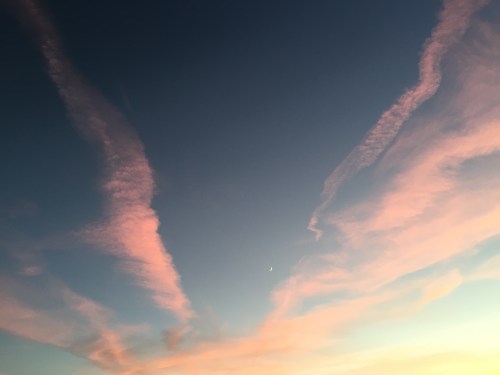
moon sky

The Guardian has published 15 quotes from Saint-Exupéry’s Little Prince (one of those books which has so many quotable sentences in it) and it seemed appropriate to me to post this in this week when the world’s thoughts are turned to Paris.

One of my own personal favourites is this –

It is only with the heart that one can see clearly. What is essential is invisible to the eye.

We can all quite easily take a moment to reflect on something – anything – it can be a choice which has presented itself to us, a decision to be made, a person, a relationship or an event. The way I like to do this is to sit somewhere quietly, take three slow, deep and even breaths, call whatever it is I want to reflect on to my mind, place my hand over the area of my heart, and ask myself the question “What does my heart say about this?”

Give it a few moments and see what, if anything, emerges. It won’t always, but sometimes, suddenly, something seems crystal clear.

I like the second sentence in that quote too – “what is essential is invisible to the eye”. I’m a big fan of that one.

As I looked down through the list of quotes I was remembered this one –

Grown-ups love figures… When you tell them you’ve made a new friend they never ask you any questions about essential matters. They never say to you “What does his voice sound like? What games does he love best? Does he collect butterflies? “ Instead they demand ‘How old is he? How much does he weigh? How much money does his father make?’ Only from these figures do they think they have learned anything about him.

….which is some ways is a continuation of the “what is essential is invisible to the eye”.

Why do we put such emphasis on numbers, when what is most important to each of us is the personal, the subjective, the invisible?

This little scene from “Gregory’s Girl” (from a LONG time ago!) popped into my head –

In particular the line which Claire Grogan says about a minute into the scene.


Read Full Post »

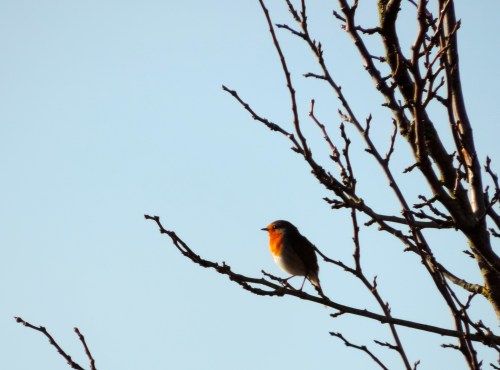
robin

He’s back. The robin who hangs around my garden. Here is up taking up position in the most-favoured tree at the south-western corner of the garden. He’s looking east as the sun rises and the warming rays are making both his red feathers and his eyes shine.

Bright eyed, and looking to the dawn of a new day. Watching over his familiar ground  and singing loud and long.

I don’t know where prayers go,
or what they do.
Do cats pray, while they sleep
half-asleep in the sun?
Does the opossum pray as it
crosses the street?
The sunflowers? The old black oak
growing older every year?
I know I can walk through the world,
along the shore or under the trees,
with my mind filled with things
of little importance, in full
self-attendance. A condition I can’t really
call being alive
Is a prayer a gift, or a petition,
or does it matter?
The sunflowers blaze, maybe that’s their way.
Maybe the cats are sound asleep. Maybe not.

While I was thinking this I happened to be standing
just outside my door, with my notebook open,
which is the way I begin every morning.
Then a wren in the privet began to sing.
He was positively drenched in enthusiasm,
I don’t know why. And yet, why not.
I wouldn’t persuade you from whatever you believe
or whatever you don’t. That’s your business.
But I thought, of the wren’s singing, what could this be
if it isn’t a prayer?
So I just listened, my pen in the air.

Mary Oliver. I Happened to be Standing.

Whether it’s a wren or a robin or another species of bird entirely, we need to hear these prayers, these hymns, to Life.


Read Full Post »

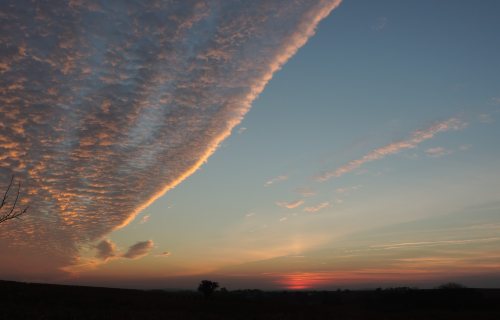
the edge

The most amazing weather system built up in the sky over the course of yesterday and as the sun set I saw this fabulous sight.

Transience and flow. These two phenomena are closely connected and lie at the heart of what I see everywhere in life. Life is a dynamic flow of energy, information and materials. In fact, not only “Life”, but Nature. All natural phenomena are dynamic, moving, changing, developing from one form into another.

I love this sense of flow. It invigorates me!

Transience is appreciated in the changing of the seasons. The most intense celebration of transience I’ve witnessed is in Japan when the cherry blossom appears. I remember seeing charts on the TV in Tokyo, like weather charts, but instead of showing the development of the rain or the sun over the country, they showed the spreading of the cherry blossom from the south to the north. I’ve seen cherry blossom photographs on the front pages of the national newspapers in Japan and I’ve milled around with crowds of picnickers, photographers and wanderers amongst groves of cherry blossoms. It’s a delight.

But there’s something else which comes with transience and flow and I think this weather system I saw yesterday really captures it. Dynamic change shows us how difficult it is to split our reality into pieces, pieces with clear boundaries or edges.

There are two edges which catch my eye in this photo. The edge of the cloud and the somewhat more metaphorical edge of the sunlight.

Clouds don’t have distinct edges of course, as you’ll have seen for yourself if you’ve ever looked out the window of a plane as it flies into, or out of, a cloud. The closer you look, the harder it is to see an edge. It’s that old “becoming not being” thing I have at the top of my blog. That constant becoming makes it pretty tricky to separate any one thing from another….from the cloud, and the “not-cloud”!

Have you ever just stood, or sat, and watched as the sunlight fades?

I don’t just mean watching the sun sink beneath the horizon (or, form another perspective, watching the Earth rise). I mean watching the light fade, the shades of colour change…..you can’t really separate it out into pieces can you? It’s a beautiful way to experience flow.

So we can get close to the edge can’t we? But the closer we get, the harder it is to pin it down!

I love that.

Read Full Post »

Good old “Cles” magazine! This magazine probably opens up more avenues for me to explore than any single other publication. There is currently a fifth anniversary special out with “5 reasons to be hopeful” forming a major section of the issue. The fourth reason is ecology taking root, and it’s here that I read about “biomimicry”.

It’s one of those concepts that when you read about it you think, why didn’t I know about this already?

From the home page at biomimicry.org here’s a short definition

Humans are clever, but without intending to, we have created massive sustainability problems for future generations. Fortunately, solutions to these global challenges are all around us.

Biomimicry is an approach to innovation that seeks sustainable solutions to human challenges by emulating nature’s time-tested patterns and strategies. The goal is to create products, processes, and policies—new ways of living—that are well-adapted to life on earth over the long haul.

The core idea is that nature has already solved many of the problems we are grappling with. Animals, plants, and microbes are the consummate engineers. After billions of years of research and development, failures are fossils, and what surrounds us is the secret to survival.

Here’s the founder, Janine Benyus, explaining it all eloquently and with fabulous imagery in a short (20 min) film.


I find this totally inspiring. What a fabulous way to look at life! To think that the solutions to all of our problems might just be there in the Natural world, just waiting for us to learn! What a different approach to technology – to develop technological solutions based on natural methods instead of much poorer, less efficient artificial ones. What a different approach to science – to apprentice ourselves to Nature in order to learn what has already been learned through adaptive processes over millions of years, instead of trying to find ways to control and battle against Nature.

And, potentially, what a fabulous research agenda, to learn how living organisms grow, defend and repair themselves – all without the use of any artificial or toxic “aids”. Now there’s the foundation of a new approach to health care.

Go on, take 20 minutes out of your busy day and watch that video. I hope you’ll be as inspired as I am!


Read Full Post »

IMG_3721

I took a walk yesterday up to the viewpoint and used my iPhone to take this panorama shot.

The viewpoint is at the top of the hill just above the village where I’ve lived for exactly a year now.

In my monthly themes I think of November as being a month for reflection. And one of the ways I like to reflect is to take what’s referred to by French philosophers as the “view from on high” or “view from above“.

It’s a way of reflecting which involves pausing, standing back, and taking an overview. It’s not about analysing or considering the details.

So I took a little pause, standing there at the viewpoint, and gazed slowly in all directions, drinking in the fields of gold, and then I took a deep, slow breath or two and asked myself “how does this feel?”

It feels good.

What I feel is contentment.

I’ve been in touch with that pretty frequently recently, and when I first had that word, contentment, pop into my head I wanted to reject it. I mean it feels such a weak word, doesn’t it? A mediocre word. Couldn’t I come up with something a bit stronger than that?

So, I looked it up on my blog and found this from five years ago

Positive affect is defined as the experience of pleasurable emotions such as joy, happiness, excitement, enthusiasm and contentment. These feelings can be transient, but they are usually stable and trait-like, particularly in adulthood. Positive affect is largely independent of negative affect, so that someone who is generally a happy, contented person can also be occasionally anxious, angry or depressed.

Here’s what they found [I’m referring to a study here]

After taking account of age, sex, cardiovascular risk factors and negative emotions, the researchers found that, over the ten-year period, increased positive affect predicted less risk of heart disease by 22% per point on a five-point scale measuring levels of positive affect expression (ranging from “none” to “extreme”).

So, weak or strong, turns out contentment might well turn out to have a health benefit.

But there’s more – I’ve just finished reading Robert Brady’s “The Big Elsewhere”, which I highly recommend, and in there this week I found a passage he’d written “on contentment”. He refers to the Tao Te Ching where Lao Tzu says “There is no disaster greater than not being content” –

What does contentment have to do with disaster? Lao Tzu knew, and cryptically passes along the intimation, that contentment is the beginning of all that is worthy, that contentment is the seed and germ of every happiness, its absence accordingly the tiny breach that ruptures into every disaster, the pinhole in the dam, the lost horseshoe nail. Contentment is all the rest: pride in the way of one’s life and the fruit of it, whether one is a shepherd or chieftain, a fact that hasn’t changed since back in the tribal days when miracles were everywhere and museums were not yet needed to remind us of what is gone.

Contentment is the core of all that truly matters, it is the root of passion, the height of honesty, the beating heart of every joy, the embrace of a family; for there is no self in contentment; it is other-centred. The self-centred, in contrast, is perturbed, discordant, writhes with discontent and seeks release (insert the ‘seven cardinal sins’ here for starters).

What do you think? Is contentment something you recognise? Is it something you feel? Today?

It seems to me it’s not such a weak or mediocre feeling after all!


Read Full Post »

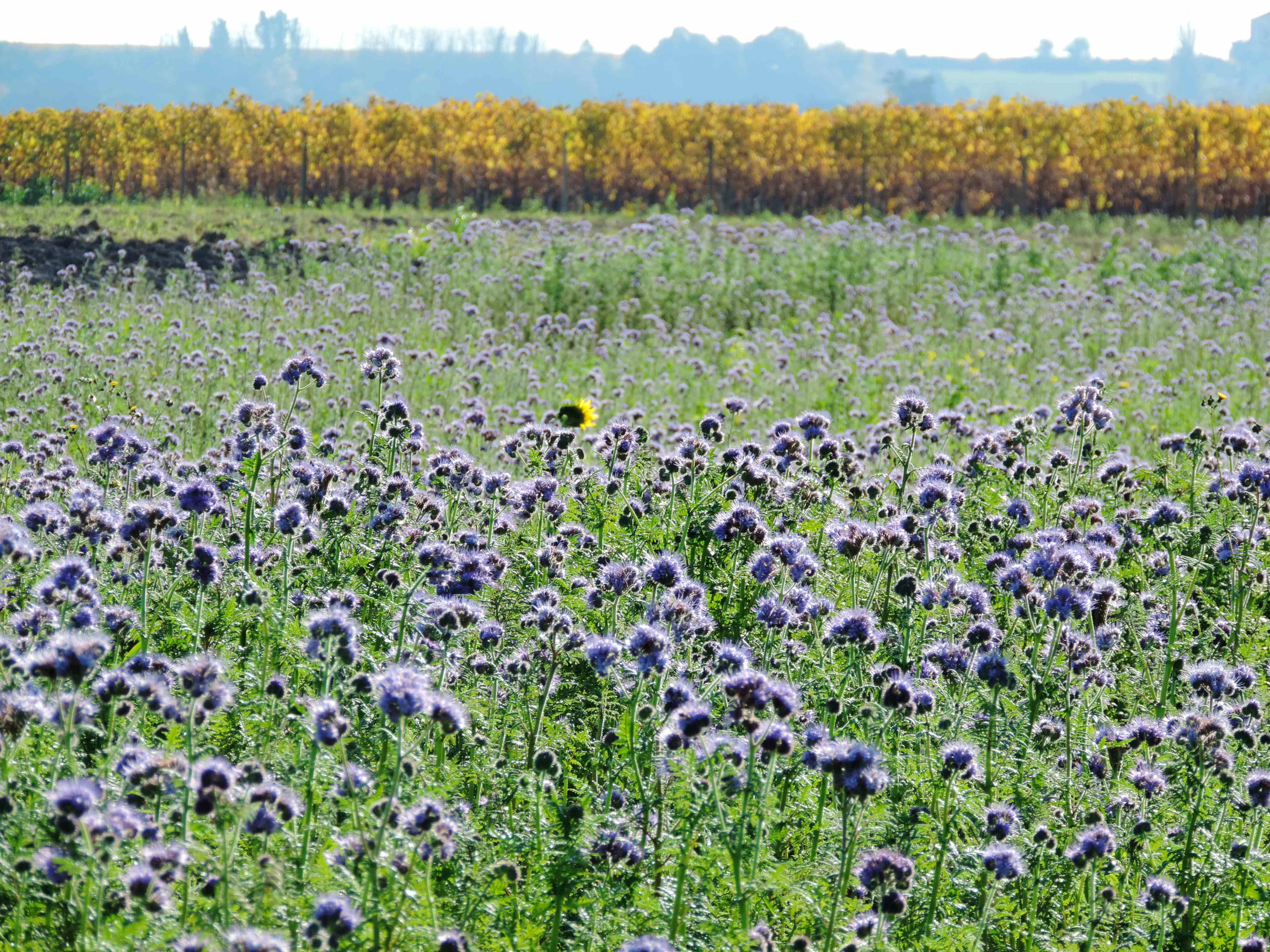
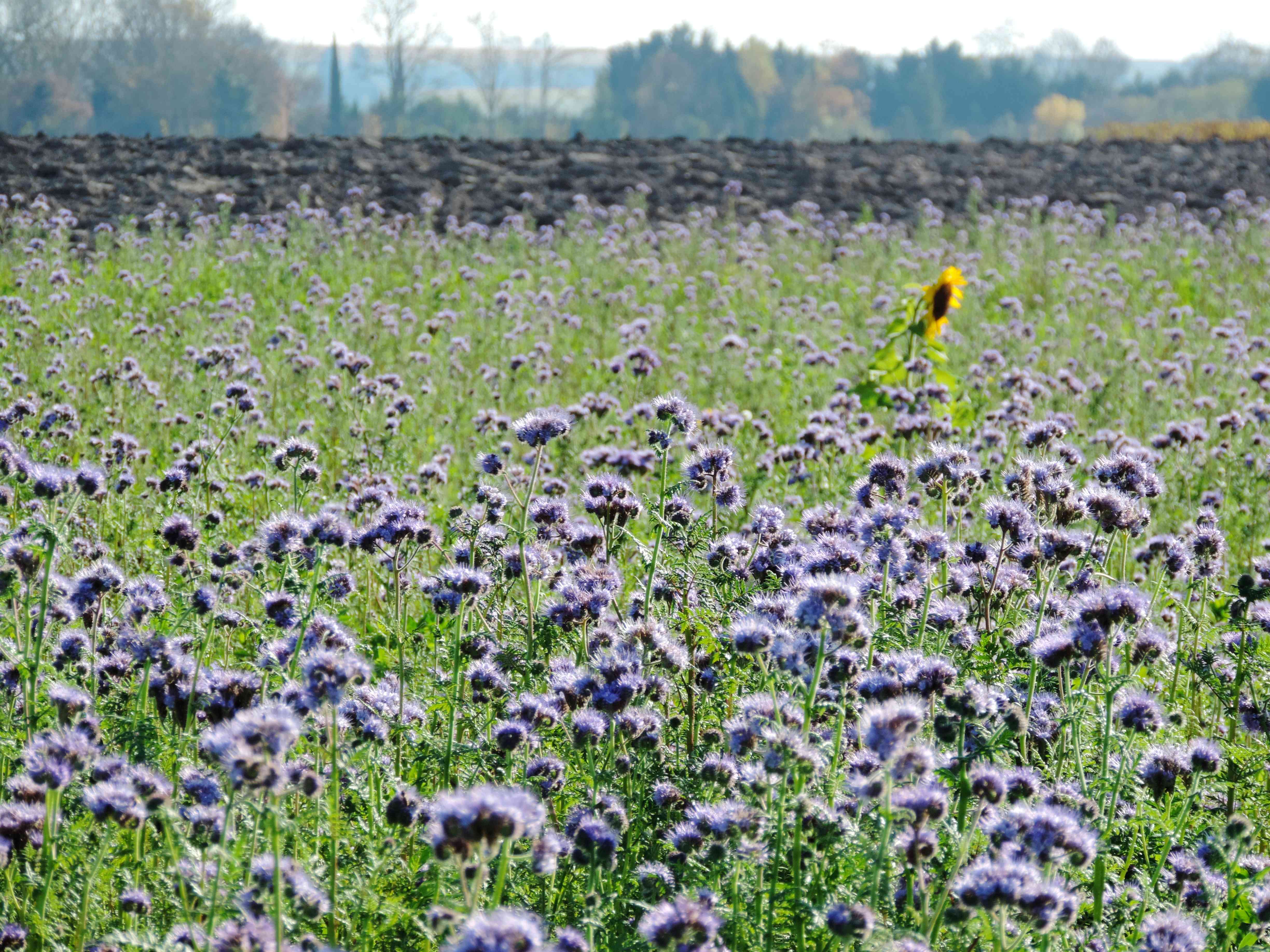
Ellen Langer says the way to live mindfully is to be on the lookout for novelty. See what’s new (new to you). Another way to think of this is to be aware of difference. Not just aware I suppose, but to seek and to delight in, difference.

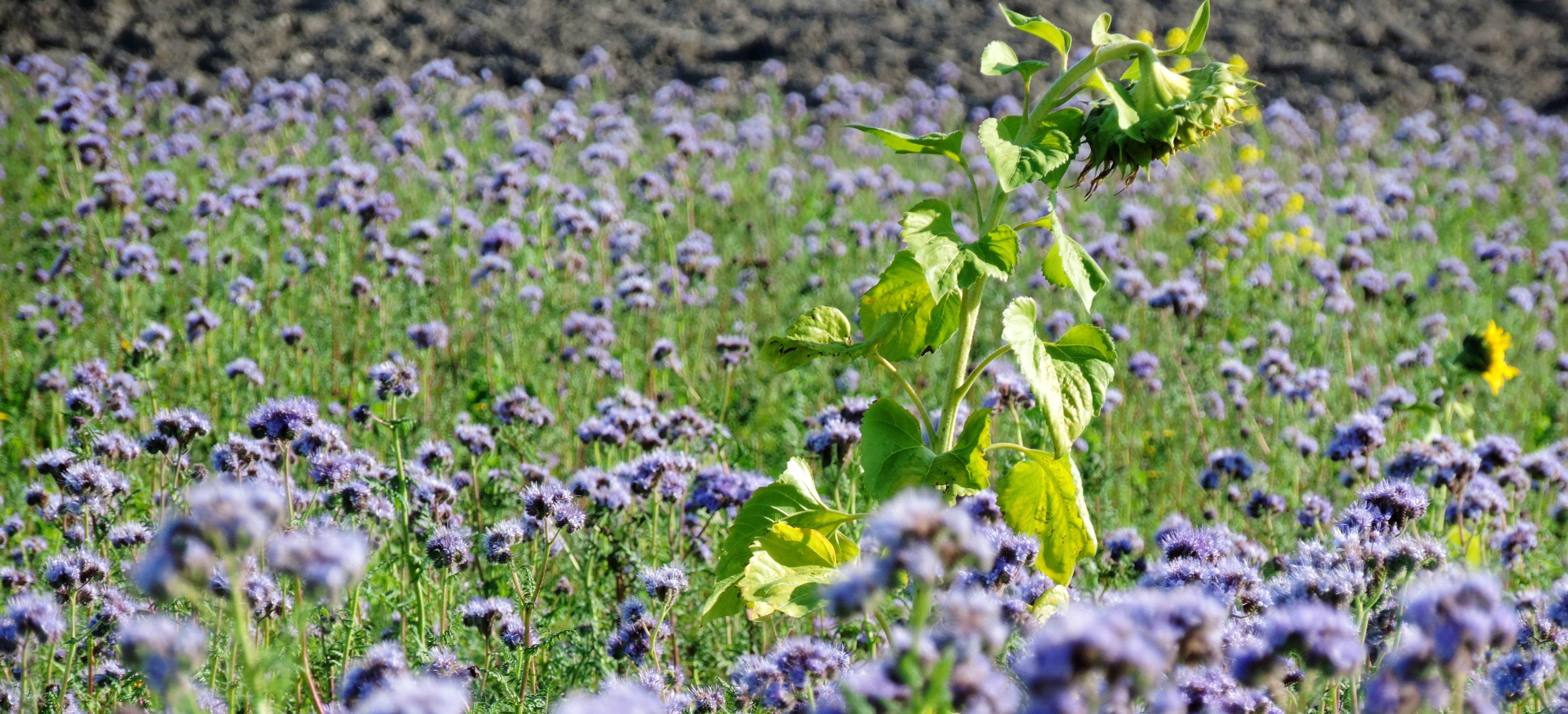
There is only one field of purple near me.

crop of purple

I don’t know what this purple flower is, but it was the field of colour bounded on one side by a vineyard,

purple and vine

and on the other by a ploughed field,

ploughed

which caught my eye, and you’ll notice that there are half a dozen, or less, sunflowers, standing up boldly and proudly, head and shoulders above the crop – that kind of difference appeals to me too.

If you know what these purple flowers are please say in the comments section, but whatever they are called its their difference which literally stopped me in my tracks. It’s their difference which prompted me to pull the car over on the side of the road, clamber over a ditch and take these photographs.


Read Full Post »

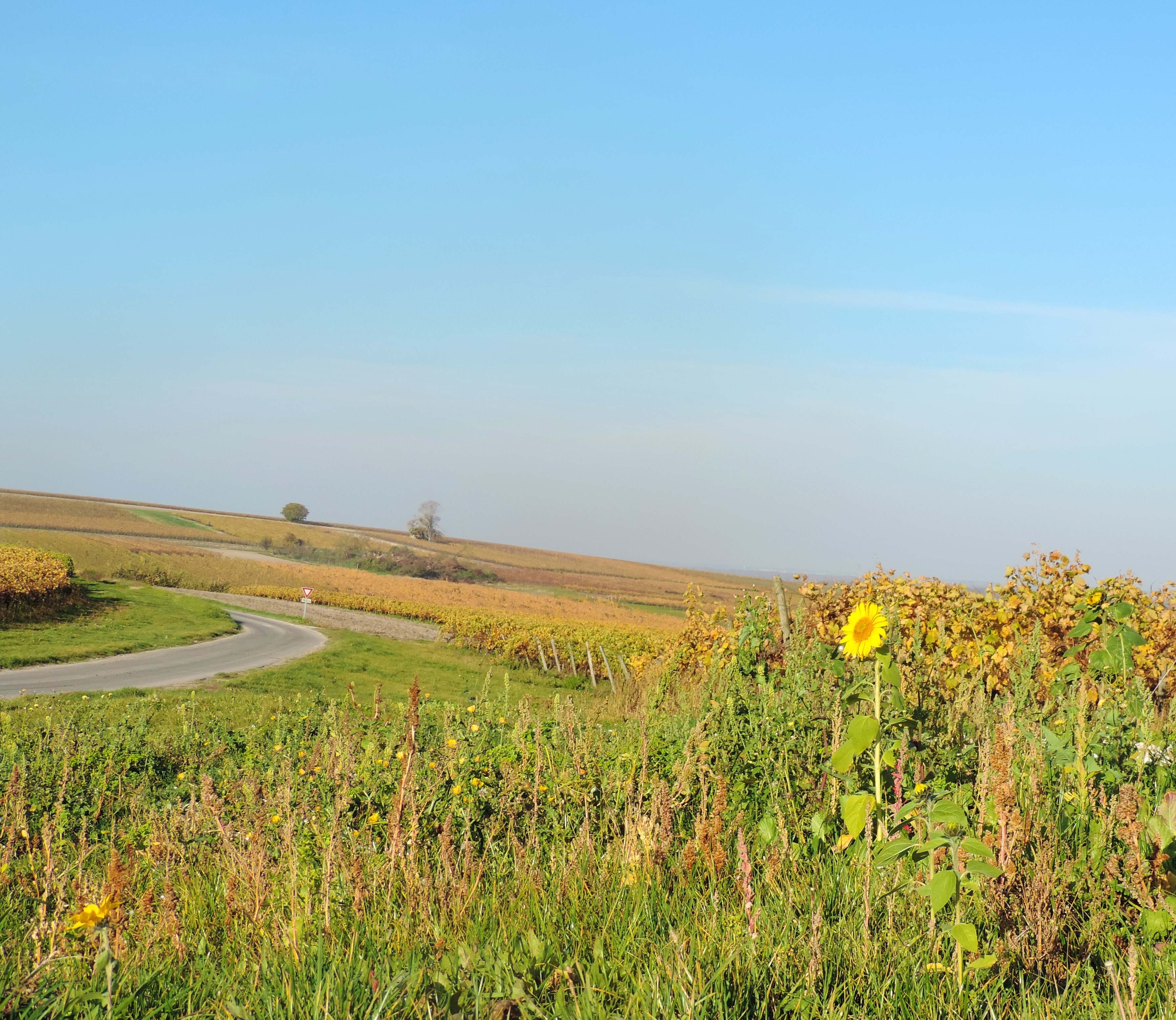
road to gente

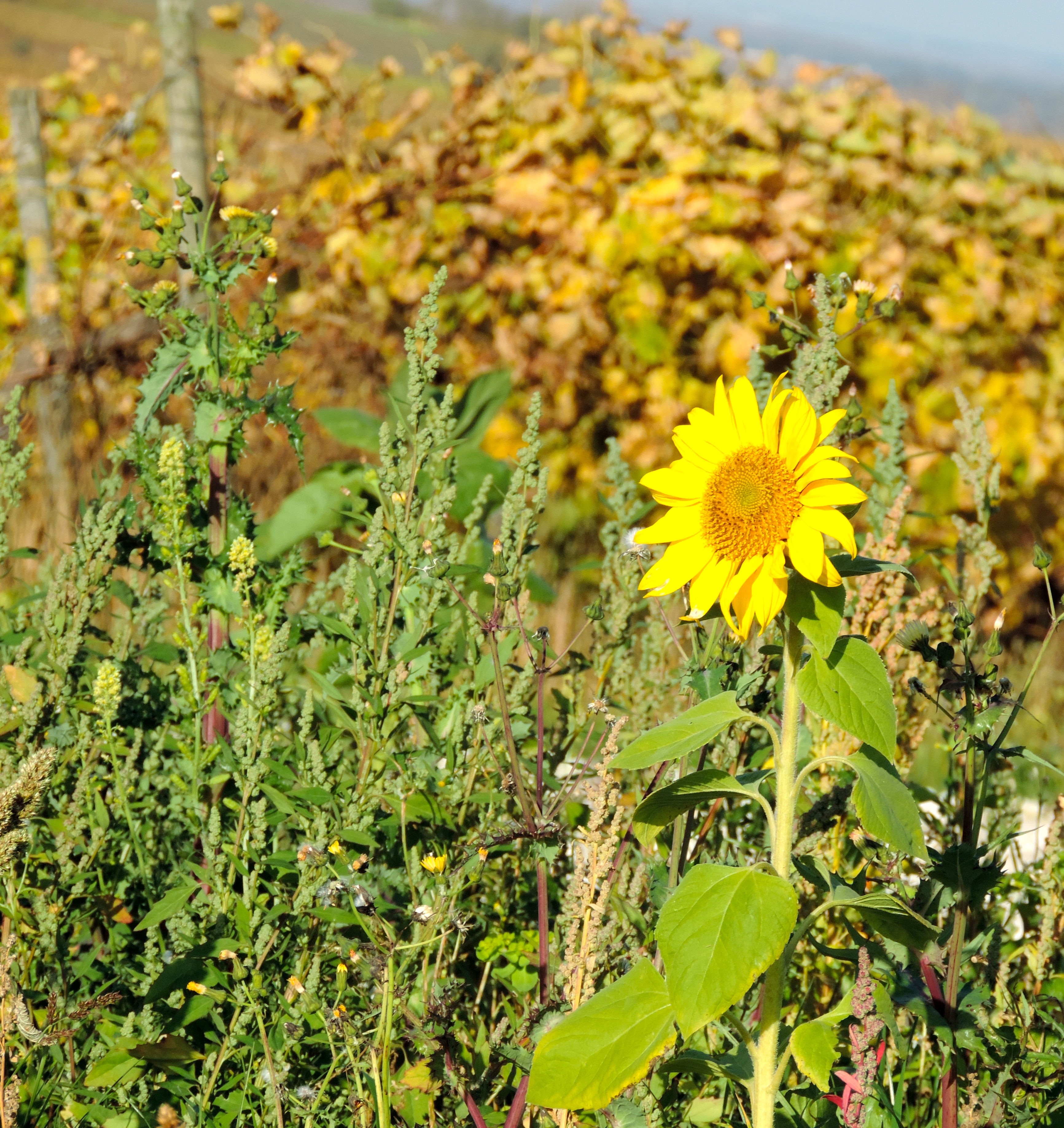
On my way out of the village a couple of days ago I was surprised to see this sunflower flourishing beside the autumnal vines. A sunflower? At this time of year? In the vineyard? And there it is standing tall, face turned to the south, basking in the november sunlight.

DSCN4558

The vines are all turning golden and I’m photographing them quite a lot just now, but it was the uniqueness of this sunflower that made me pull over, get out of the car, and take these photos.

I think that’s why we are all here.

Seems like the universe has taken almost fourteen billion years to go from the time before even only hydrogen atoms existed to the rich diverse complexity of life on planet Earth as we experience it today. In the course of that journey there’s been a constant trajectory towards ever greater uniqueness. No two living organisms are identical, and every living organism changes constantly throughout its life.

I think there is one thing we can all do – fully express our uniqueness.

Nobody else can do it for us.

Read Full Post »

« Newer Posts - Older Posts »