Feeds:
Posts
Comments

Archive for the ‘philosophy’ Category

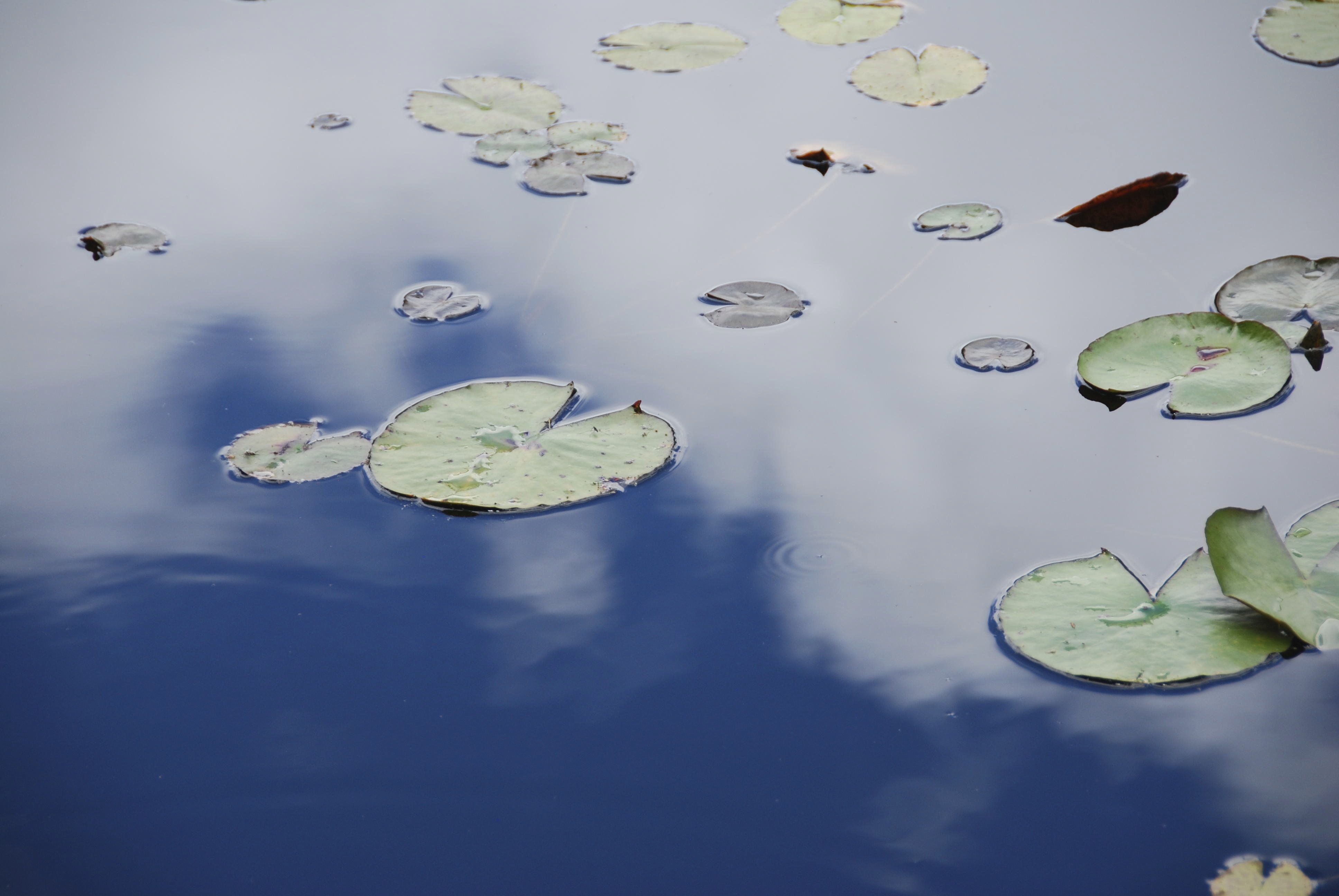
The phrase “The Floating World” is a beautiful one. I thought it was quite magical the very first time I came across it. I think where I first read it was in Kazuo Ishiguro’s novel, “An Artist of the Floating World”, a book which I still think has the ability to put me into an entirely different state of mind.

The original Japanese term for “The Floating World” is Ukiyo.

Ukiyo means “floating/fleeting/transient world”.

In the past it referred to a “pleasure seeking” urban culture but in modern usage

“the term ukiyo is used to refer to a state of mind emphasising living in the moment, detached from the difficulties of life.”

I really like the phrase and, in particular, I like the modern usage of the term. Living in the moment, detached from the difficulties of life, sounds pretty appealing to me. But there’s a strange paradox there, isn’t there? From one perspective I think the advice to be present, to be really aware of the time, place and circumstances which we call “here and now” is the only way to really engage with reality. After all, if our minds are busy wandering off down memory lane, or busy creating fantasies and fears about the future, then life, itself, is passing us by.

But on the other hand, what’s this “detached from the difficulties of life”? Is that a good piece of advice? Is that not escapism? Well, I suppose it could be escapism. T S Eliot said humans beings couldn’t bear too much reality after all. The entertainment industry and the psychoactive drug industry are both heavily focused on detaching people “from the difficulties of life”. Didn’t the Romans say the way to rule a people was through “bread and circuses”? In other words, make sure they aren’t hungry and keep them distracted with entertainment. Well, seems to me that’s still the most used strategy by those who wish to wield power over others in this world – whether they be politicians, businessmen or members of the 0.01%.

But isn’t there also a long, well established teaching about the power of non-attachment to reduce suffering in the world? Actually, I don’t think “non-attachment” and being “detached” are the same thing, but I won’t go into that in any more detail here.

My dilemma is how to be fully present, fully engaged with my life, moment by moment, yet not drown under the weight of difficulties, my own, those of others, or those of society.

Well, here’s where the floating world idea comes back strong. Look again at the ways of translating “ukiyo” – floating, fleeting, transient. Let me pick up that last word first. I have no doubt at all that an awareness of transience heightens my senses of delight and wonder. I relish the seasons of the new fruits and vegetables. I’m glad that those seasons don’t last all year round. I love to see the migrating birds arrive in my garden, and knowing that they will only be here for a few weeks before the fly south again, somehow, intensifies my delight in seeing them. I’m already looking forward to the hummingbird moths and the different coloured butterflies which will be attracted to the buddleia bushes in the garden once they flower. Knowing that we don’t live forever makes it all the more important to engage with life every single day…….not to run away from it, or pretend it doesn’t exist, but to fully engage with it.

Ultimately, this idea of a floating world is a counsel to “flow” through life, and that, I would say, is one of my highest aspirations. I want to experience the flow of Life through the cells and fibres of my being. I want to experience the flow of Nature, of existence, of the Universe, through the creation of every single unique moment and experience of my life.

I like it. This notion of a “floating world”.
Read Full Post »

I graduated in Medicine from The University of Edinburgh back in 1978. During my medical education and training I was taught about the heart. I remember we were taught about the heart muscle, the system of electrical conduction which produced the rhythm of beats, about the heart valves and how to diagnose different valve problems according to the sounds we could hear when we listened through our stethoscopes. I learned how to administer and read an “ECG” – that series of spikes and waves you see on heart monitors and printed out on long strips of paper.

I didn’t learn that there was a neural network around the heart, nor what that might do. Back then if we thought about it all, the heart was a sophisticated pump for keeping the blood flowing around the body, and phrases like “heart felt”, “broken heart”, “having a heart to heart conversation”, and so on, were considered flowery or poetic metaphors.

I know better now.

We now know that there are sophisticated networks of nerve cells around all the hollow organs of the body, but especially around the heart and the gut. We also know that there is a LOT of communication between the heart and the brain, and that, contrary to what we used to believe about those connections, most of the flow of information is from the heart TO the brain, not the other way around.

We’ve also learned that the beating of the heart creates electromagnetic waves which radiate out around the whole body, and can even be detected outside the body. Those rhythmic waves seem to have a role to play in co-ordinating, or “integrating”, a wide range of functions of the whole body, and even connect with, influence and can be influenced by the waves radiating from other peoples’ hearts.

It turns out that those metaphors we use have a biological, neurological, physical basis in the person. We have a certain kind of “heart intelligence” which allows us to “know” and to “communicate” from one heart to another.

Isn’t that amazing?

Since I came to understand all that I’ve realised just how important it is for we humans to have a “heart focus” – to try to connect to others and communicate with others “from the heart”, not just from the rational brain.

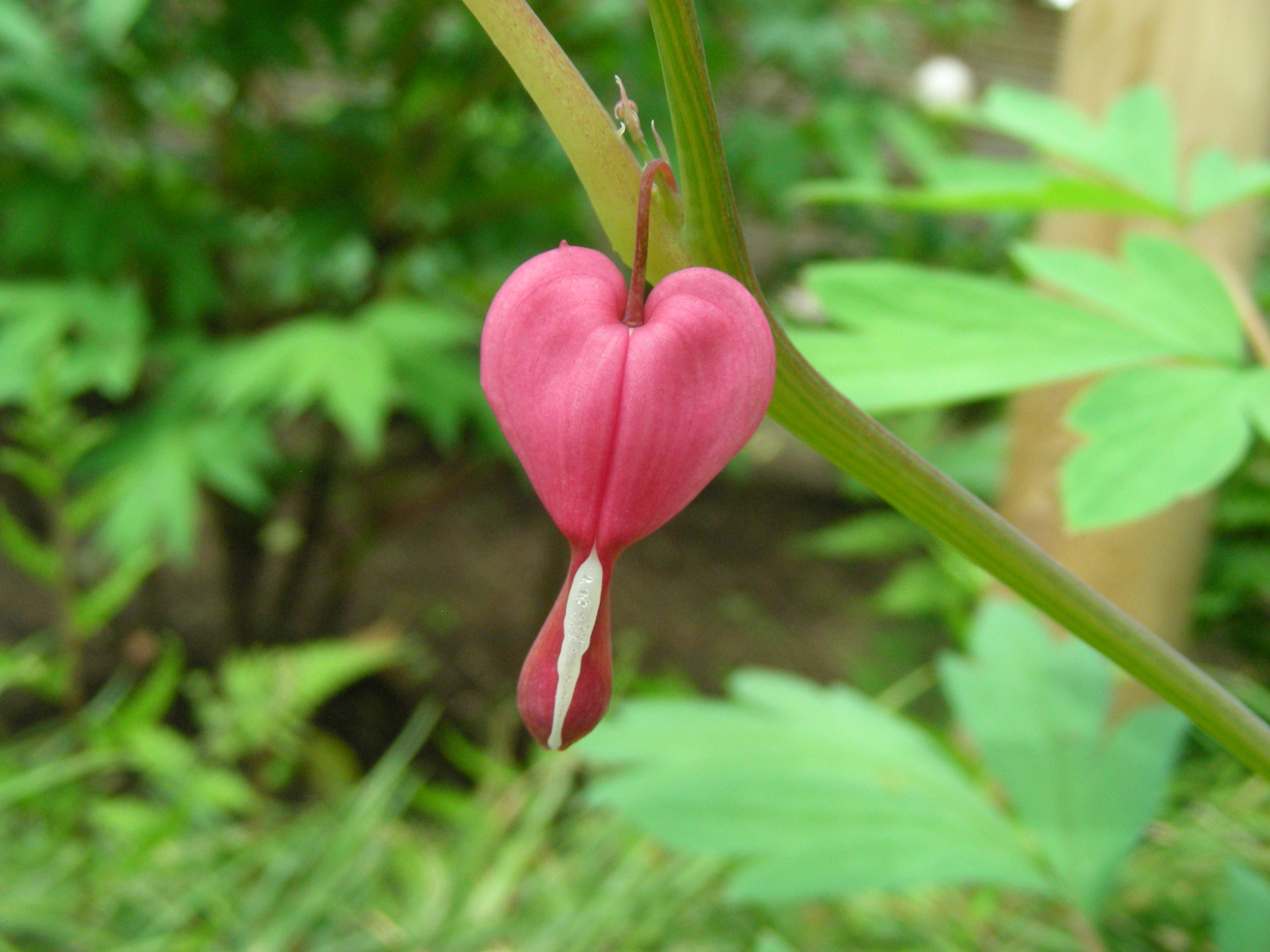
We all love to find heart shapes in Nature, don’t we? Like this little flower in today’s image. Or in the bark of a tree, the shape of a stone, or in a work of art. Why is that, do you think?

I think it speaks to the core importance of everything we think of when we use these heart metaphors in our language, in our poetry and in our songs.

After all, who thinks it’s a good idea for someone to act in a “heartless” way?

Not me!

Read Full Post »

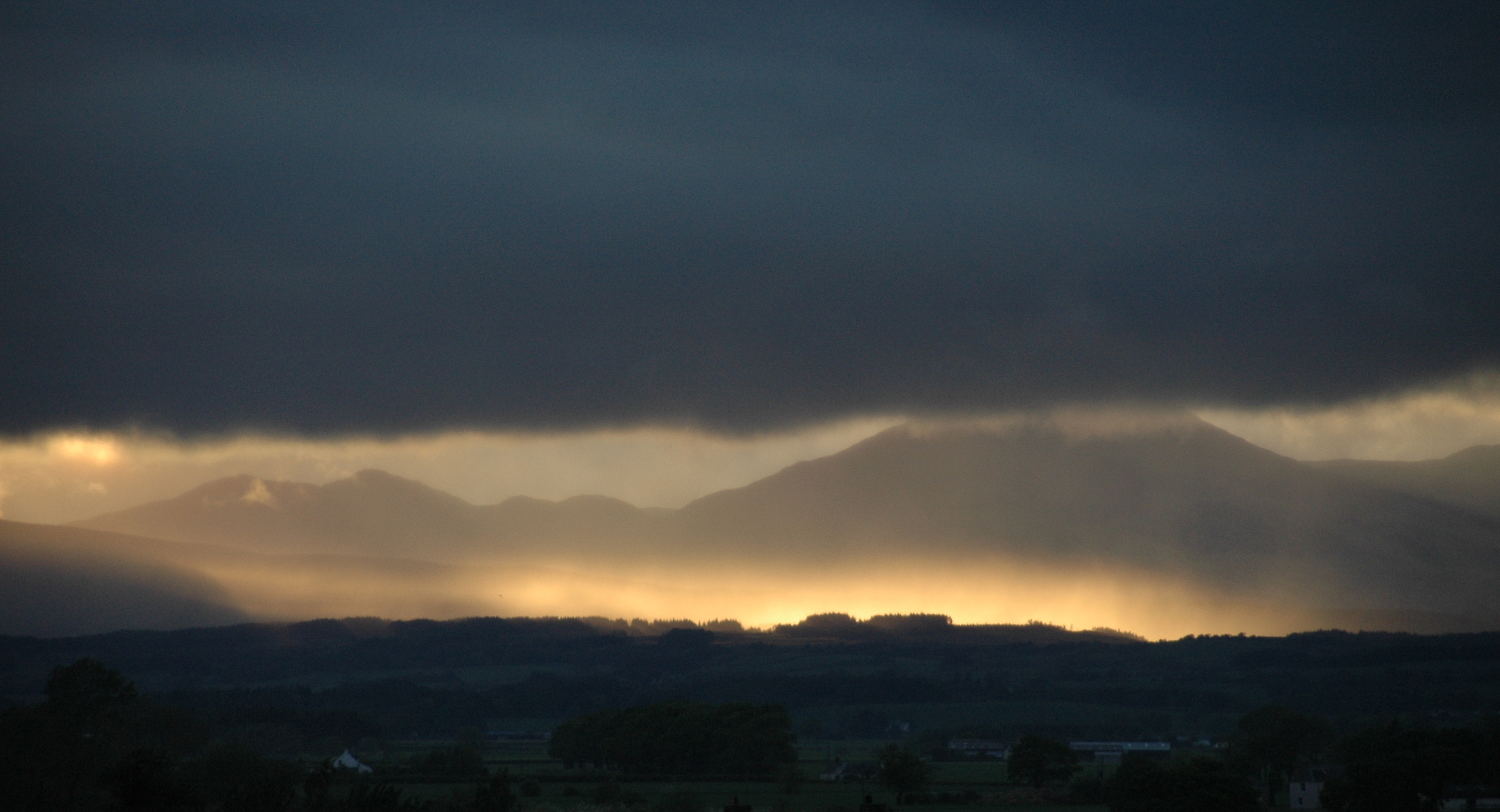
This is another of my most favourite photos. I took it one day from where I was living back then, just outside of Stirling, in Central Scotland. The largest mountain here, whose peak is hidden behind the dense, black cloud, is Ben Ledi. I’ve taken many, many photos of Ben Ledi because when I lived there and looked out towards it every morning I realised it didn’t look the same two days in a row, and that surprised me. I suppose I thought of mountains as unchanging, or, at best, as changing very, very slowly over millennia (although maybe they formed over extremely short periods of time as the Earth’s crust heaved and shook, and deep layers of ice flowed down from the North Pole).

When I was struck by just how different Ben Ledi appeared to me every single day, I realised that “the mountain” wasn’t just a piece of rock sticking up above the rest of the land. I realised that my experience of looking at the mountain was formed by all the elements…..the rocks, the plant life, the sunlight, the rain, the wind and the clouds. That realisation brought about a new understanding for me about the embedded nature of everything that exists. We don’t see “any thing” in isolation. We see whatever we are looking at in its dynamic, complex web of interactions and relationships with the rest of the world in which it exists. And we see whatever we are looking at within a relationship too – the relationship between me and the mountain – and that as I changed each day, so did my perception of the mountain.

This particular day we had pretty dramatic weather. You can tell from the colour and density of that cloud which fills the top half of the image that it was a day of rain and storms. The cloud base, as you can see, was low. It completely obscured the top of the mountain. But then suddenly the Sun broke through and sent these searchlight beams of intense, vivid light, below the cloud, and yes, even below the mountain……It looked as if the ground itself had caught fire!

How unusual – to see the sunlight BELOW the mountain! To see the sunlight BELOW the heavy black clouds!

That inversion of the normal reminds me of the famous image printed on the classic tarot cards – the image of the “Hanged Man”. I’ve read that some think that image relates to the Norse myth of Odin hanging upside down. Here’s a passage I remember about that myth (from Rachel Pollack’s commentary on Haindl’s paintings)

As an older and wiser version of the God Odin, the Hanged Man sacrifices the Emperor’s desire to dominate the world around him. He reverses his previous beliefs, and so gives up what other people find important: success, power, pride, the ego’s sense of being unique and special and separate from the rest of the universe. He gains understanding, peace, union with the Earth, the joy of life.

It also reminds me of the Leonard Cohen line – “there’s a crack, a crack, in everything, that’s how the light gets in.”

Finally, as I thought of a title for this post, I came up with “The Sun under the Mountain”, which immediately sounded like a hexagram from the I Ching. I looked it up – “Ken” is the trigram for the mountain, and “Li” is the one for the sun or fire. Ken over Li gives the hexagram number 22 – which goes by the name – “Grace”.

Isn’t that fabulous?

Maybe this image brings up other stories, lines from poems or songs for you. Maybe it evokes other memories or sensations. Does it?

Read Full Post »

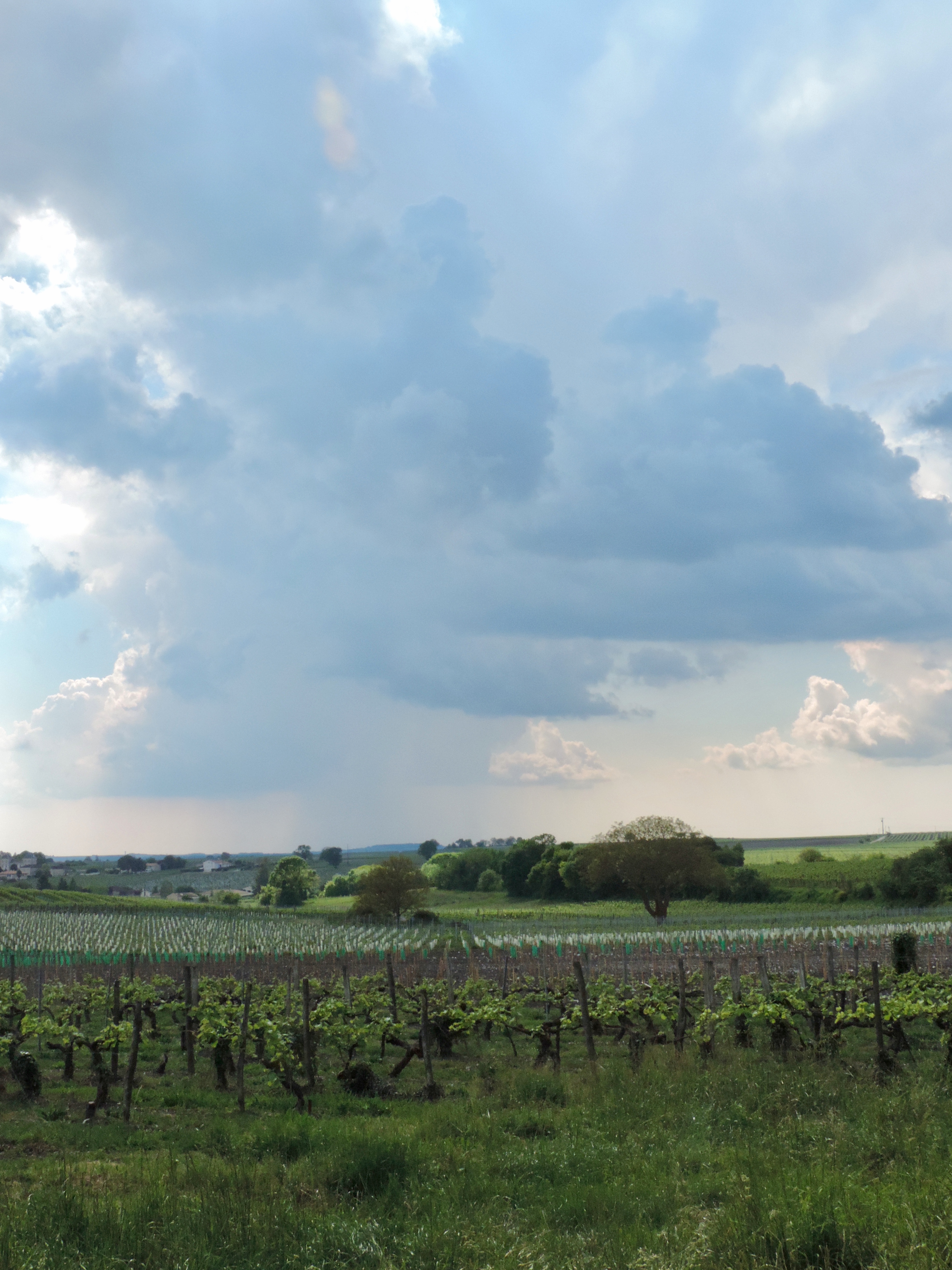
Here’s something which I reckon is part of the daily experience of the vast majority of us…….the weather changes all the time. This weekend, it’s mid Spring in the Northern Hemisphere, but I read on both the UK and French weather forecasts that it will be more like Autumn than Spring today. There’s obviously one of those big weather systems active over Western Europe and its bringing lower temperatures, rain and wind. But yesterday afternoon we sat outside in the garden, in the sun, and chatted with one of our neighbours, and, earlier, we hung out a washing on the line and it dried in no time.

I know that we can hit a run of days where the weather seems much the same, but, mostly, it changes every day, and it changes all day long.

This photo I’m sharing today shows rain falling on the next village across the other side of the vineyards. Sometimes it’s like that. We can see the rain coming, or passing us by. We can see the storm gathering, or the sky clearing. We can see the sun’s rays making their way across the Earth towards us.

My point is……change is an inherent characteristic of reality. We live in a dynamic, lively, changing, evolving universe. Our lives don’t stand still (even when it feels like that). The communities of cells which constitute a human body are alive, growing, dying, developing or being replaced, minute by minute. The human mind doesn’t stand still. Our neurones fire constantly. Even when we are asleep.

How are we going to respond to that?

Get angry, frustrated and upset that reality won’t bend to our Will?

Many spiritual teachers have taught that there lies the root of human suffering.

But it often doesn’t feel good to be constantly reacting to circumstances and bending to the Will of others does it?

Is there an alternative?

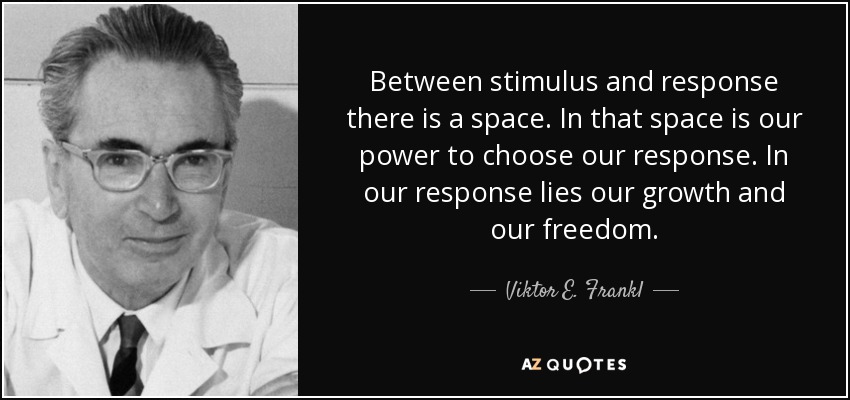
I think there is. It’s in adapting. It’s in flexibility combined with integrity. It’s in making the time and space to allow response rather than reaction. It’s in knowing that we have freedom. Freedom to choose, what Victor Frankl, said was the ability to decide how we wanted to respond in any given situation (I strongly recommend his “Man’s Search for Meaning”)

Read Full Post »

Meditation in a huge variety of forms has become incredibly popular in recent years. “Mindfulness” seems to be marketed as the solution to almost everything, perhaps because it has contextualised the original Eastern teachings for a Western, twenty-first century audience, and removed the references to spirituality and belief.

However, I think there’s an equally ancient “classical” practice stretching right back to Greek philosophers. It’s the combination of slowing down and observing.

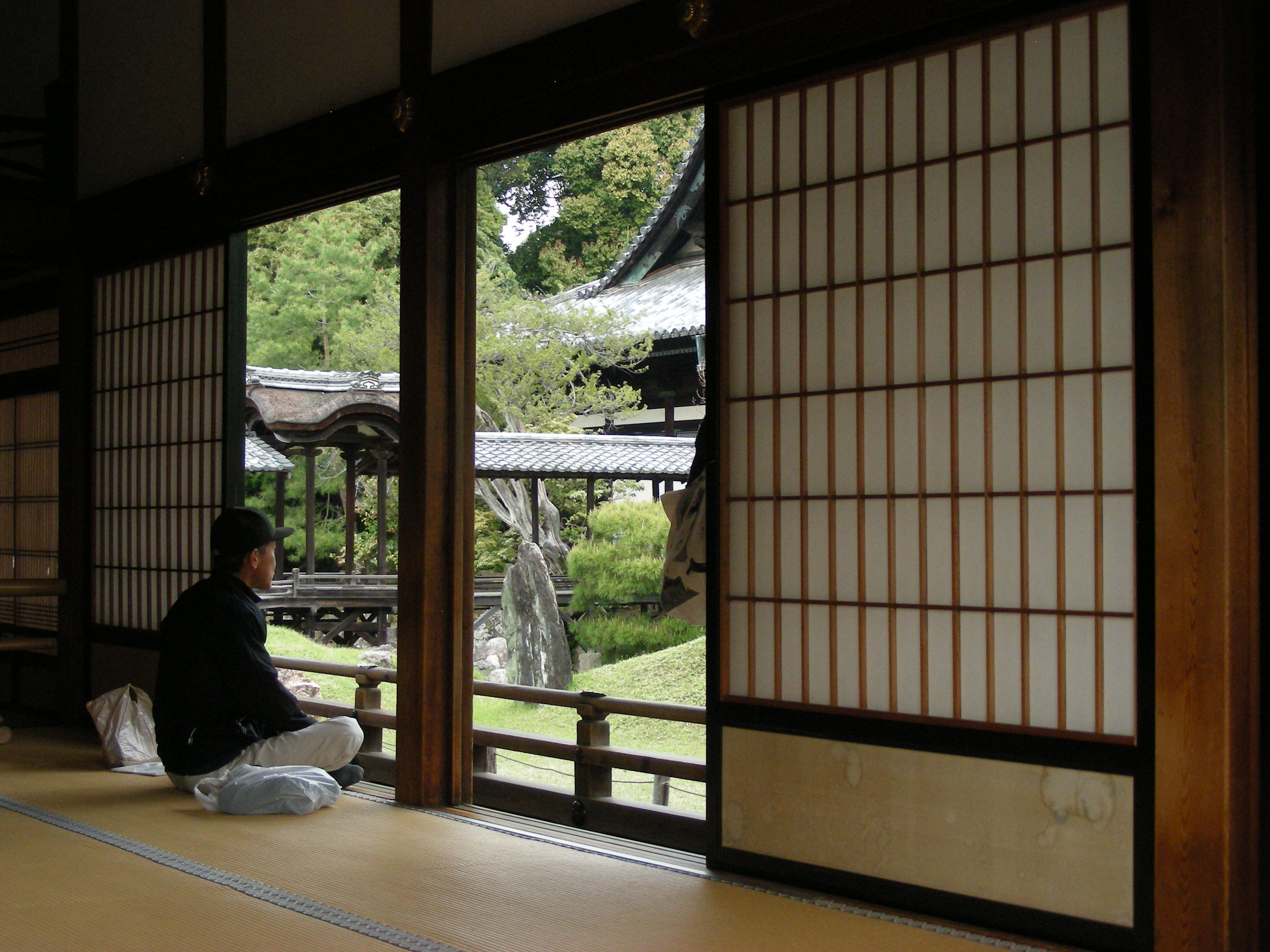
“Sitting and looking” is one of my favourite “activities”. Since I retired and moved from Scotland to South West France, I have spent many, many more hours outside than at any previous time in my life. Sometimes I’m outside to tend to the garden. I’ve discovered the delights of growing, harvesting and enjoying a wide range of fruits and vegetables, and I get a huge amount of joy from seeing the beauty of different trees, shrubs and flowers. But oftentimes I like to just sit on a chair in the garden and look.

I look up at the blue sky and watch a few buzzards soaring effortlessly on warm air currents swirling so high above me that the birds are just little specks, and their high pitched cries sound far away and near at one and the same time. I look up and see kestrels hovering on a single point in the air, their wings beating so fast I can’t see them, then watching them drop like a stone to the earth when they spot some prey far below them.

On cloudy days I get lost in the ever-changing tableau of characters which I can see in the clouds.

Throughout the year I see the seasonal changes in the long parallel lines of vines stretching from here to the horizon.

Sitting down makes me slow down. It allows me to pause, to take a few deep breaths (without even thinking about my breathing), and to become more present. It allows my awareness to open up and come alive, so that I notice what would otherwise pass me by.

It’s a great, life-enhancing, combination.

Sitting and looking.

I recommend it. (Health warning: too much sitting is bad for you health. Use it in moderation. Movement, walking and other forms of exercise are also necessary!)

Read Full Post »

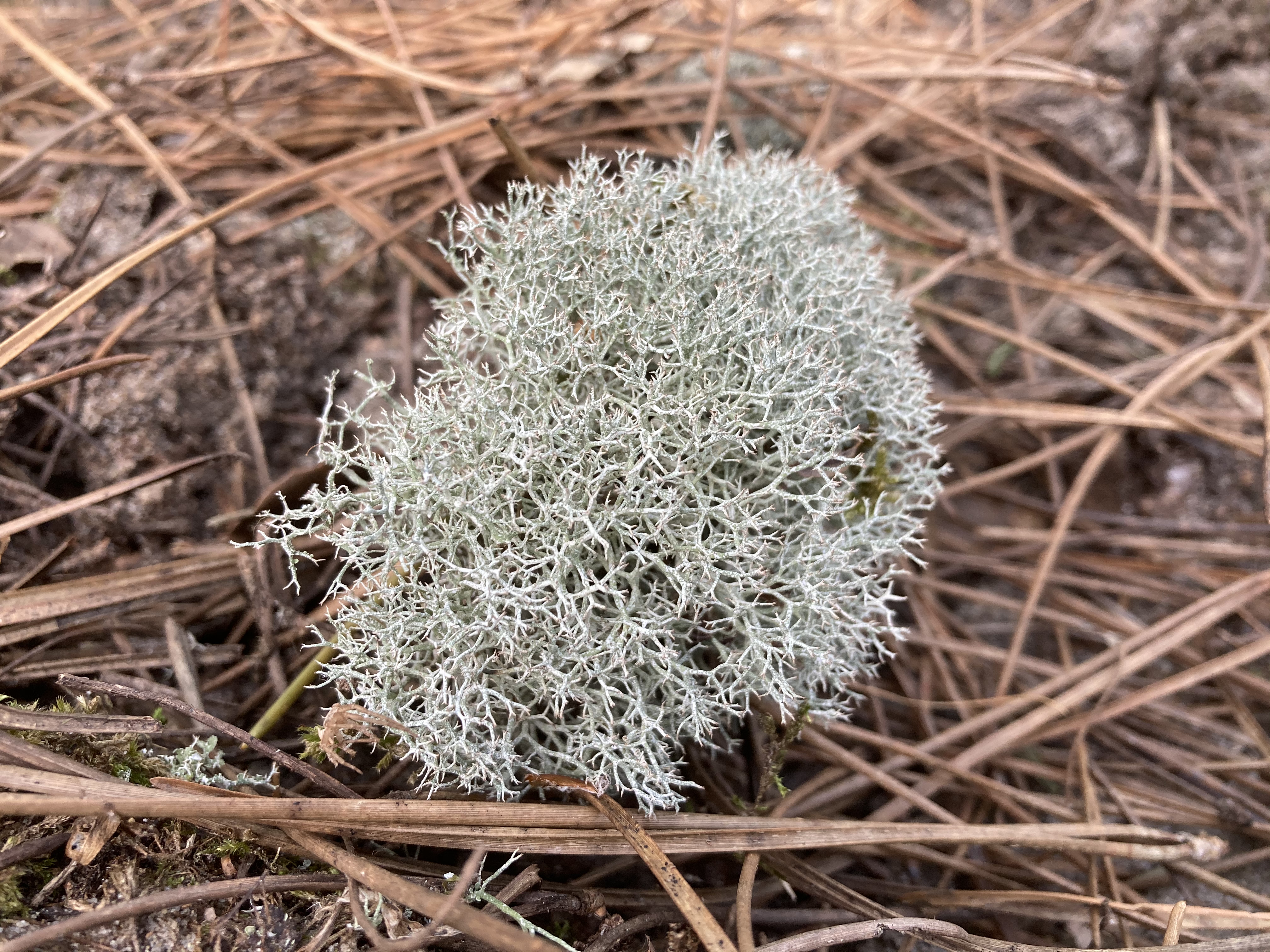
I saw this lying on a pine forest floor recently and stopped to take this photograph. I don’t know if this is a kind of moss, or a lichen, or what. It’s the colour of lichen, but the shape of moss, but its structure is more open than I’ve seen in either moss or lichen before. If you know what this is please leave me a message in the Comments section below.

Although my eye was caught by the pale green ball, after taking the photo and looking at it once I got back home, I found that the image was way more attractive than I had even thought when I took the shot……because of the mass of brown pine needles on the forest floor on which this structure is lying.

That took me by surprise, but, then again, it doesn’t surprise me. It took me by surprise because I was focused on just this pale green ball of interlaced fibres. I thought, and still do think, it’s almost like a model of the neural networks which make up our brain. Not that I’m saying I looked at this and thought, oh, look, a little brain! But I looked at it, found it beautiful, found it sparked my curiosity and drew me in, and thought that it was a good example of the complex inter-connectedness which is at the heart of universe.

It doesn’t surprise me to find my pleasure and interest both increase once I notice the ball is lying on a carpet of brown pine needles. Because I have learned over and over again that seeing whatever I am looking at in its contexts and environments pleases me and interests me in equal measure.

I can look at this and because of the pine needles instantly remember my walk in this particular pine forest. I remember the smell of the pine needles, the heat of the sun, the roar of the Atlantic Ocean just metres away. I get an enhanced, lived experience, which is specific to me. But then maybe you can see this too and remember a similar time when you, yourself, wandered through a pine forest. Maybe you also noticed mosses and lichens and enjoyed the scent of the pine needles. Or maybe you’ll decide now that one day you’ll have a walk in pine forest because this photo and these words inspire you.

You see, we all live in this vast, complex inter-connected network, this beautiful Planet Earth, in this mind-boggling Universe. And from the scale of a single pale green ball on a pine forest floor, right up to our web of relationships, to our shared life on this living planet, to the unfathomable depths of the universe stretched out in the night sky above our heads……..it’s all one vast, inter-connected web.

It’s all a matter of scale.

Read Full Post »

My daughter, Amy Palko, who produces a knitting blog on youtube, entitled “The Meaningful Stitch” did a poetry advent in the month of December with one of her online friends from the knitting community, Jackie, of Cady Jax Knits. You can find their videos here

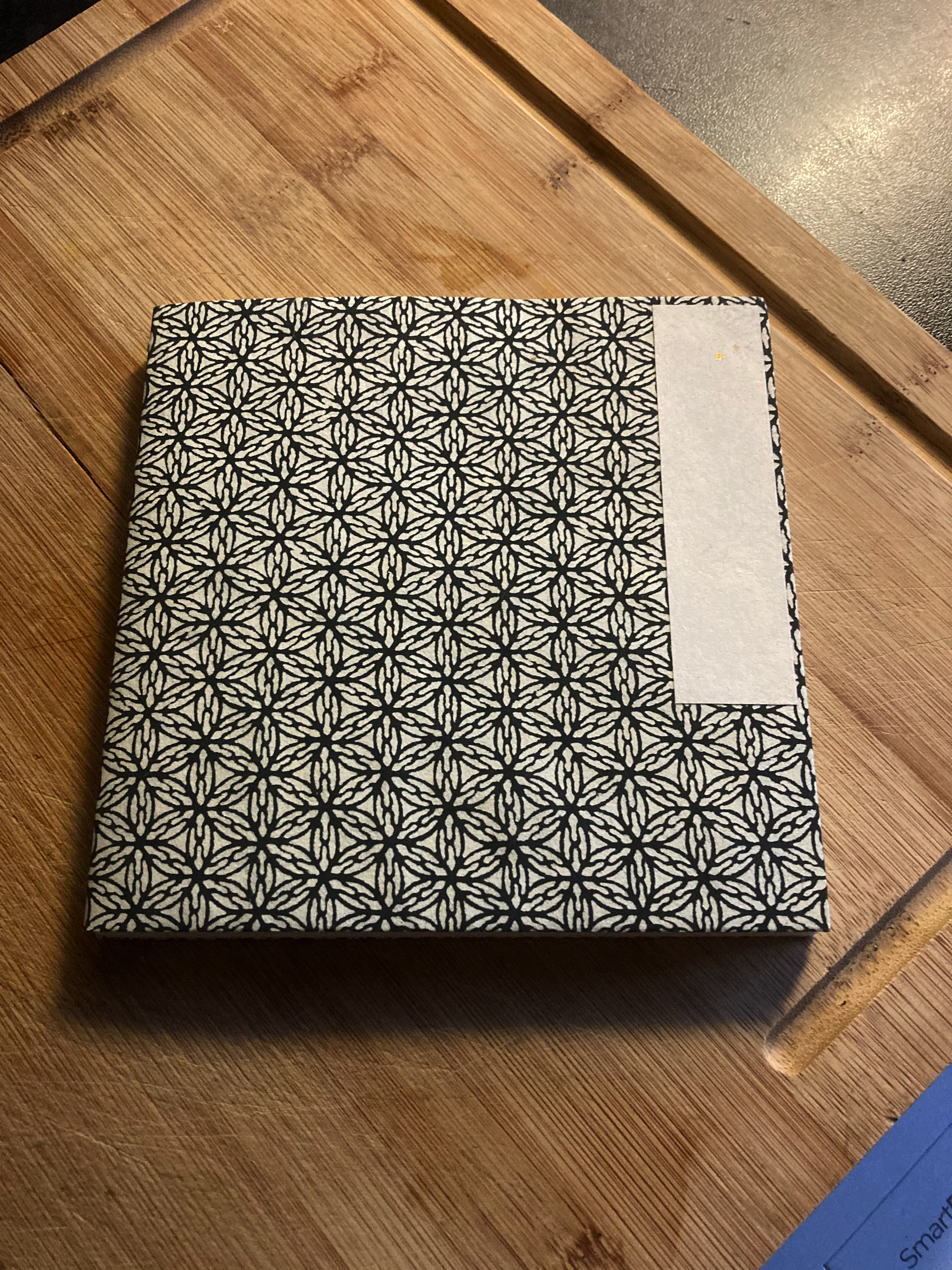
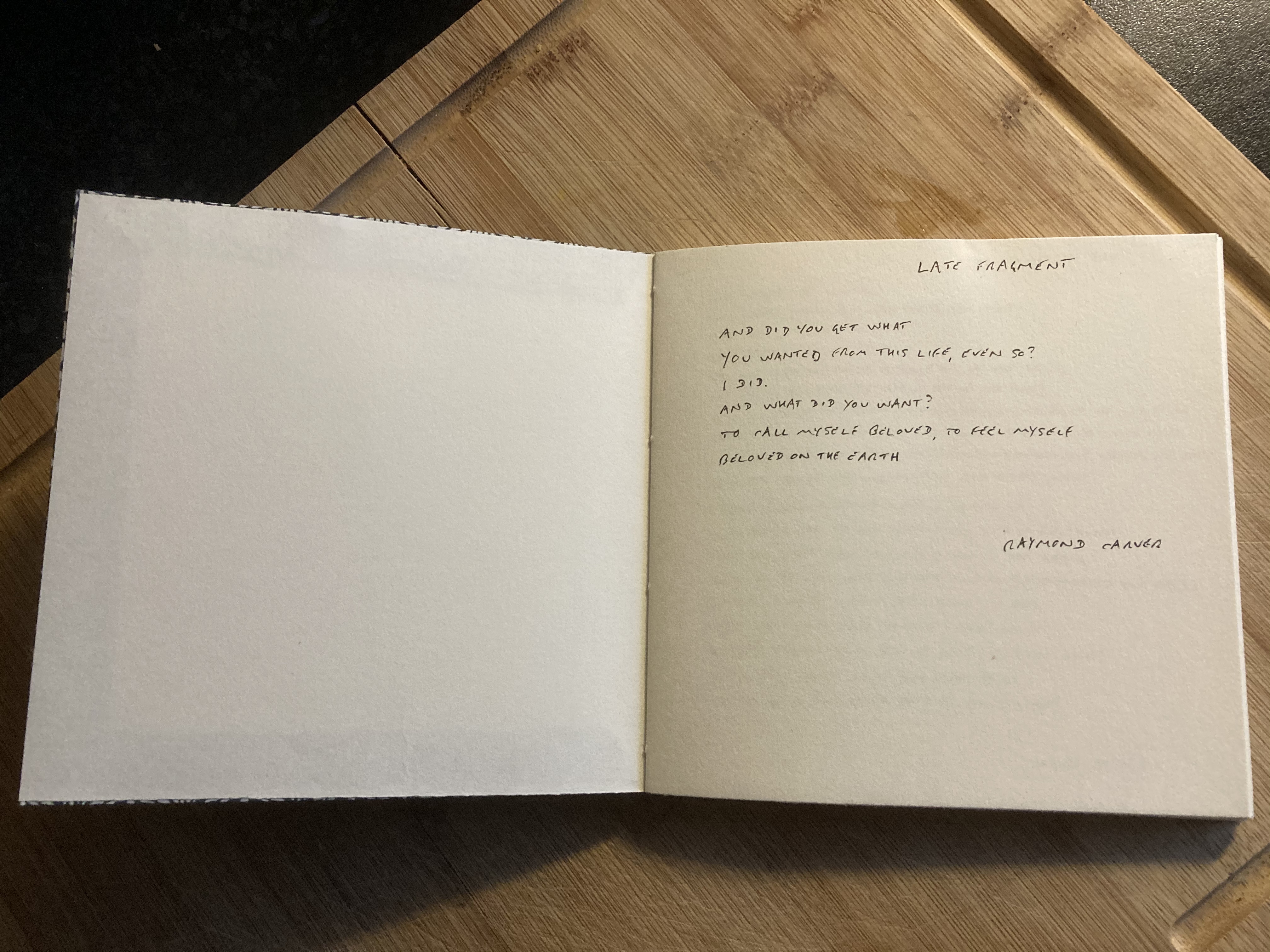
One of the things they discussed was creating a personal anthology of your favourite poems. I thought that was a great idea and got out this handmade notebook which my wife, Hilary, had created and given to me, and started writing some of my favourite poems in it.

I think it’s important to actually write the poems in, not to print them out from the internet and paste them in, though, if that would work better for you, then go ahead. I find that taking the time to hand write each poem enhances my experience of the poem itself.

I keep this notebook on my desk beside my computer and from time to time I read a poem or two, or I copy in another poem that I really love.

I really recommend this. It’s one of those practices which takes something meaningful and enjoyable – in this case poetry reading – and increases the time and attention you give to the poems you select. In the process you create a unique collection of exactly the “best” poems for you.

If you’ve read a few of my posts on this blog, I’m sure you’ll be aware of how Iain McGilchrist’s thesis on the differences between the left and right cerebral hemispheres. Well, if he’s right, which I think he is, then there is an imbalance for each of us, and for our wider societies, between the approaches, the world views, or the ways of engaging with reality, which each hemisphere offers us. We have become left brain dominant, and it would be much better to use our whole brain more, and re-set the balance, to put the right brain back in its rightful role as “The Master” and use the left brain “Emissary” to do what it does best. Since I came to understand that thesis, I’ve been more aware of trying to support and develop what the right hemisphere can bring to my life.

Well, there are many ways to do that, but I’ll just share three with you here.

The right brain loves novelty and finding connections, so as I practise curiosity and the sense of “émerveillement du quotidien” I’m building up the right hemisphere.

The second thing is music. The right brain relishes music – both creating music and listening to music. I play music a lot. Mostly I listen to music, but I also try to play a bit of piano and guitar from time to time. Music is very personal and what I like, you might not like, but I’ve recently discovered Paradise Radio, a commercial free, internet radio station from the US, and I love, love, love it. You can select between “main mix”, “mellow mix”, “rock mix” or “world mix”. Check it out.

The third thing I’ve identified is poetry. We activate our right hemispheres a lot when we read and write poetry. More so than we do when reading stories, or articles.

So, there are my three daily practices, which I hope lead to development of a more whole brain way of living……curiosity, music and poetry.

Read Full Post »

There’s a tiny, beautiful little village on the coast about an hour’s drive west from here. One day while wandering down its medieval streets I saw this sign on a door.

It says, (in my translation), restaurant recommended by the Club of those who life a good life. Actually in French it’s much more elegant than that, but I had trouble translating “vivants” – “livers” would seem the obvious word but that looks like an organ in the body! “lifers” on the other hand makes you think of prisoners! “living beings” is closer, but doesn’t feel quite right, so I’ve opted for “those who live a good life”.

I immediately wondered about this “club” and looked it up online later. It seems to be a restaurant recommendation website in France. Perhaps not terribly exciting!

But I loved the name, and it stimulated my imagination.

Philosophers have wrangled with the question “what is a good life?” for hundreds of years, and it’s something which feels simple and obvious, but when you stop to consider it, it seems impossible to pin down.

I also suspect that we might all give different answers to the question. So, I thought I’d pose it for you today –

How would you describe “a good life”?

I was going to add something myself here, but I’ve decided to just leave this as a prompt for now…….for two reasons. Firstly, I think we can all benefit from taking a little time now and again to contemplate this question. It gets us thinking about our values, our beliefs and our desires, and it also challenges us to consider to what extent we are already living a good life, or whether we think that one day we will. If you think you’re already living it, how would you describe it? What makes your life a good one? And if living a good life is something you hope for one day, what do you imagine it will look like? Because if you don’t know what it will look like, you might not recognise it when it arrives!

Just answer this for yourself after reading this, or discuss it with friends or family. Or, if you like you can tell me – either by leaving a Public comment here, or, privately, by emailing me at bobleckridge@gmail.com

Read Full Post »

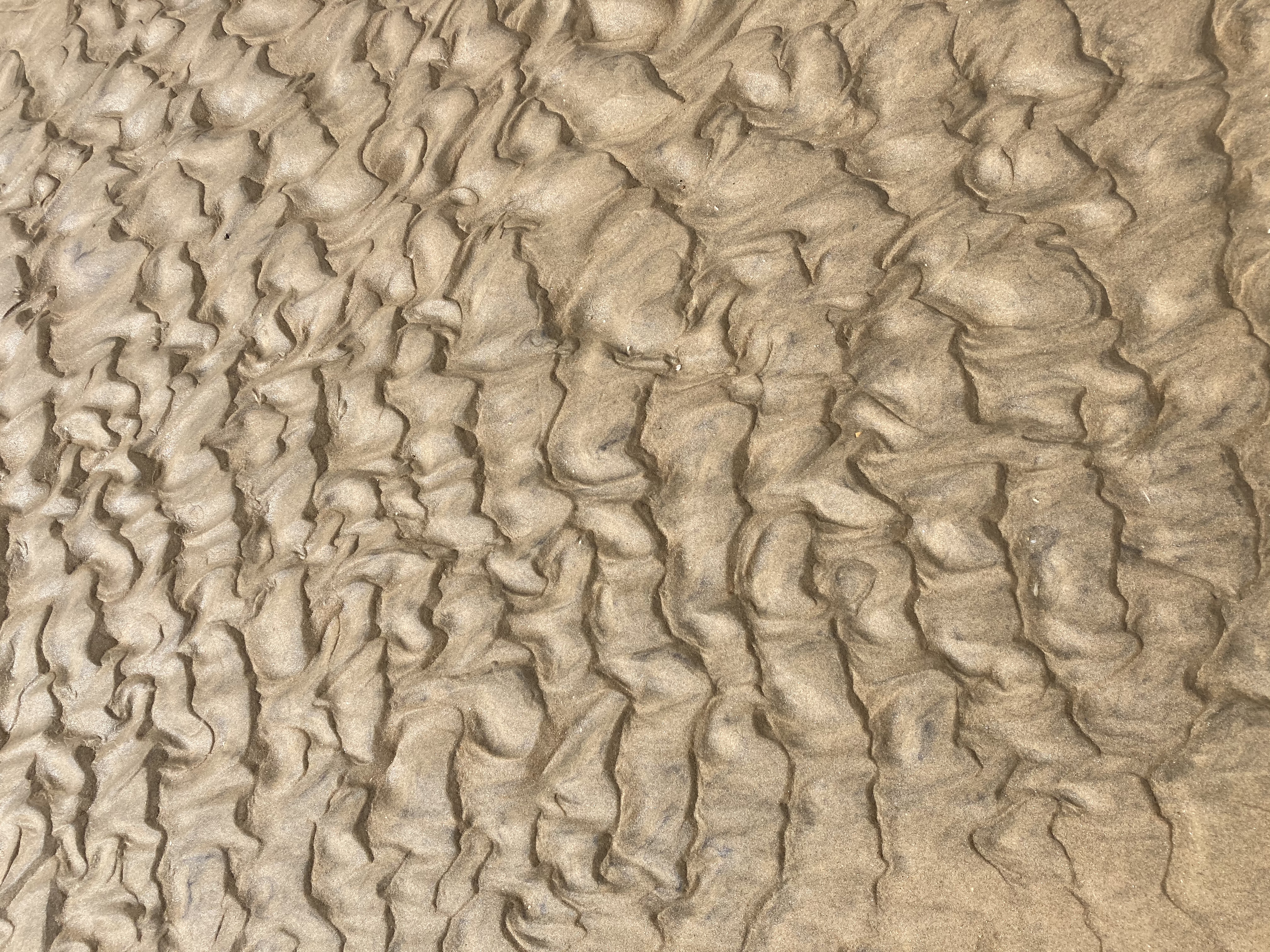
Look at this amazing pattern left on the sand by the action of the water after the tide has gone out again at the beach.

When you look at this you know immediately that the sand has been shaped by the water, although, to be honest, I don’t understand how water manages to make such intricate patterns like this on the sand. Maybe somebody does!

There are other striking patterns on the wet sand at the beach, some clearly made by plant material, seaweed I expect, and some obviously from the imprints of shells, some little worm-shaped piles caused by burrowing creatures throwing up the sand behind them, and often many footprints of birds which have run across the beach.

What impresses me most about all these patterns is that they are the traces left by some activities which occurred a little while ago. They are the evidence of the past imprinted on the present. That reminds me of how we are shaped by the events and experiences of our lives. Our encounters with others change us. Our experiences don’t just create memories, they set up patterns of chemical, electrical and cellular response in our bodies.

We can become aware of some of that in bodily changes, from tightenings of muscles, to changes in heart rate and breathing, to sweating and trembling, and so on, usually before we are even aware that we reacting to something.

I spent much of my career working with patients who had chronic, long-standing illnesses, and we could often make some sense of what was going on by teasing out the threads and themes which ran through their stories over many years. It certainly wasn’t always the case, but sometimes the actual disease and its precise location in the body was clearly related to the body’s responses to events or experiences long forgotten.

It’s pretty clear to me that just as the movement of the water shapes the sand in the way you can see in this photo, so do our experiences and relationships shape us. Realising that makes me want to be more aware of my own actions and words. It makes me want to choose to spread constructive, supportive and creative waves in the world. After all, whatever we do, whatever we say or write, has effects far beyond the limits we could imagine.

Read Full Post »

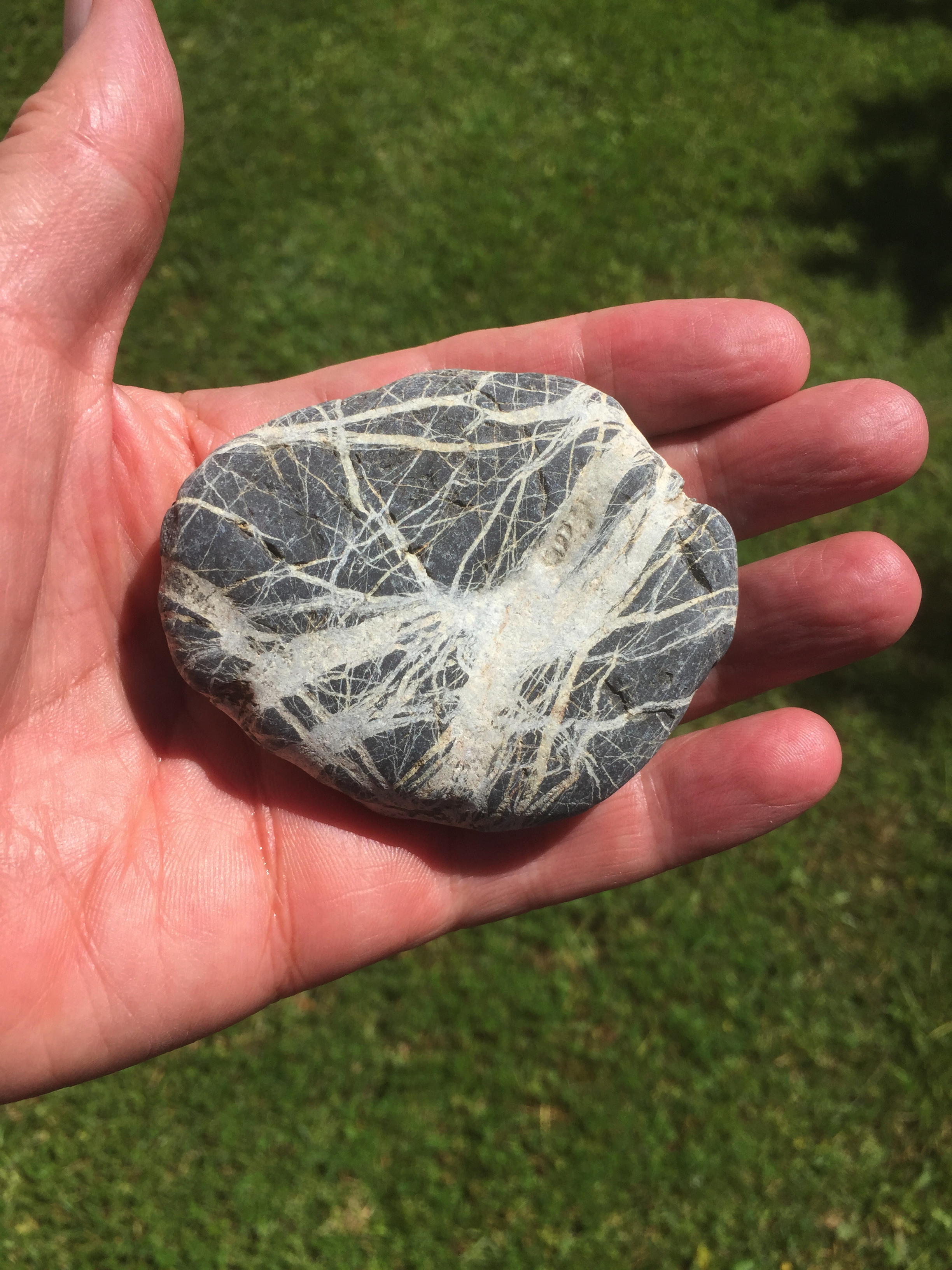
Sometimes you come across a stone that just demands to picked up, turned over, contemplated and brought home. That was the case with this one which I still have with me. I like it partly for its almost heart shaped form, but I like it most for the pattern you can see on it.

When I look at this, I see a number of lines of varying breadths and lengths, criss-crossing the surface and I think of each of them as a representation of a path, or a journey.

When I trained in Medicine, we were taught “how to take a history”. While I developed a bit of discomfort around the use of the verb “to take” there, I kept the concept of the history. In fact I’d tell people a large part of my work was about enabling people to tell their own personal history…..or their story. I used the idea of “story” a lot in my work. I’d ask people to tell me about their present experience in the light of past events and within the scope of their fears and hopes for the future. The traditional life story has a clear timeline, starting at birth and ending with the person’s death. Except, I quickly discovered, that in order to understand a person well I had to explore the family stories too….in other words to hear what happened before the patient was even born……as well as exploring the stories of many of the others (brothers, sisters, other relatives, friends and colleagues) whose stories intersected with the patient’s story.

So, I was quite surprised when I read a small article in “Philosophie” magazine about maps – they described how the French philosopher, Giles Deleuze said that our “subjectivity” was created from our movements, from our meetings, and from the relationships we had with other beings, other things, and other places. He said the map was an imprinting of all these movements, encounters and relationships which was laid down in our psyche, and so, when analysing ourselves we had to explore more as a geographer than as a historian.

Now, as you know, I’m a great “and not or” person, so I wouldn’t replace the work I did, or the way I make sense of my life with a geographical approach instead of an historical one, but I find that notion incredibly appealing.

What if, next time you are exploring your life, your experience, and your “self”, you make a map – a map of the journeys you’ve taken, the places you’ve gone, the experiences and encounters you had there, and the relationships with people, other living creatures, things and places which you’ve woven into your soul as you have lived?

What might that map look like?

It strikes me that adding this geographical approach to my life opens up new insights because it reveals and highlights the interactions, relationships, encounters and experiences of my life. The historical approach, of course, can reveal the characters, the events and the chronology of a life, but this shift of focus from my “story” to my “map” has, I think, loads of potential.

Read Full Post »

« Newer Posts - Older Posts »